


Siphonophores
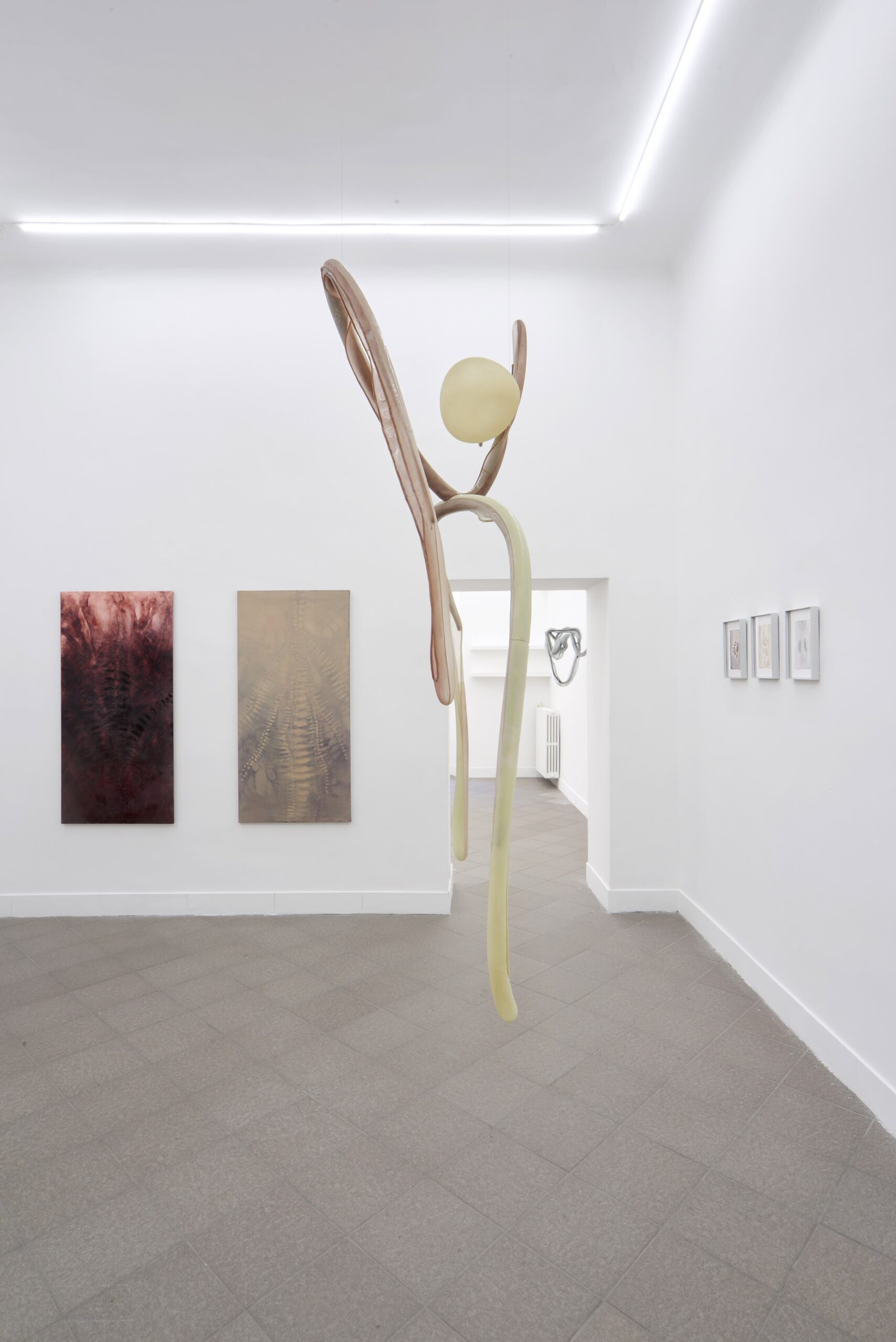
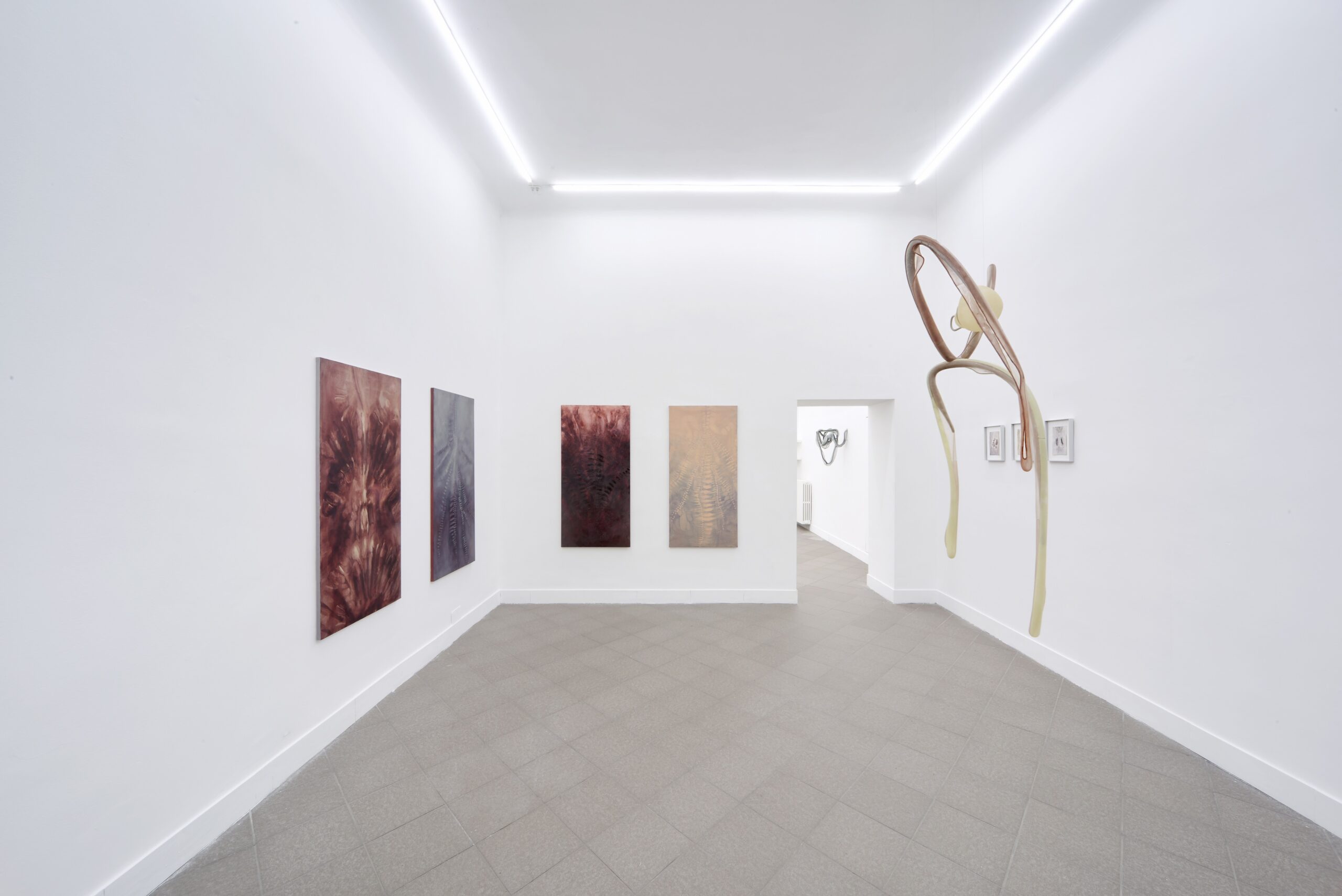
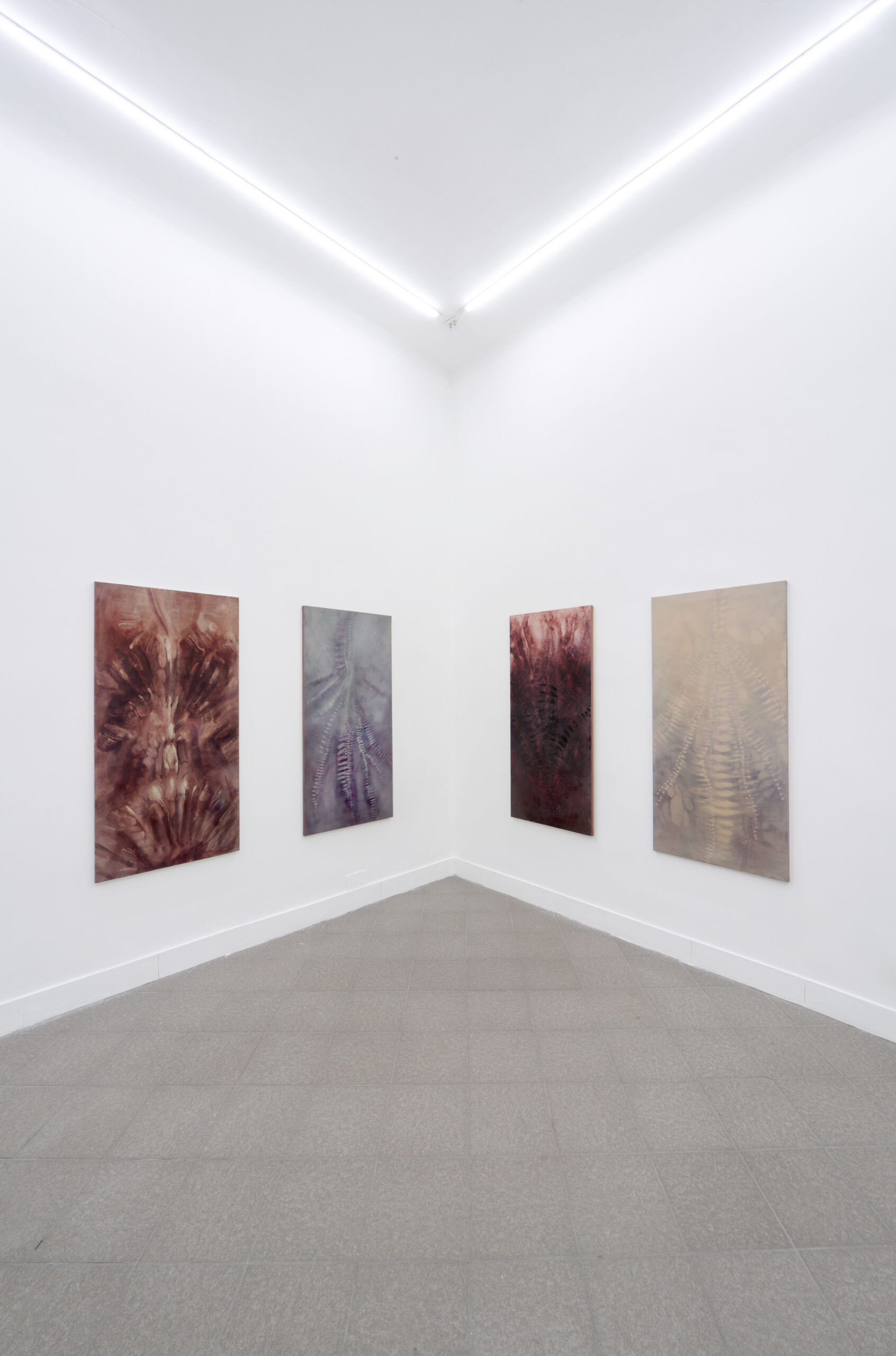
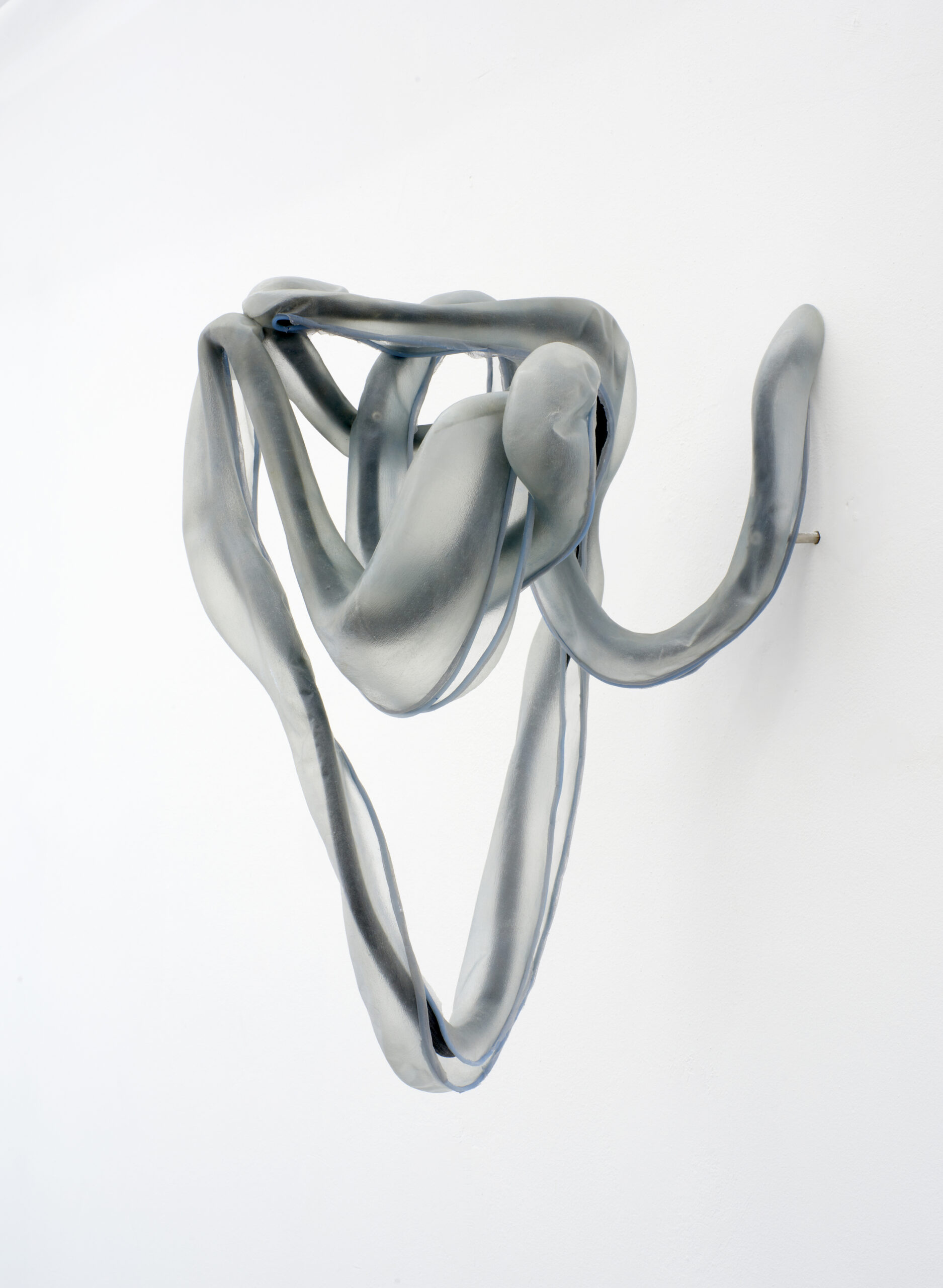
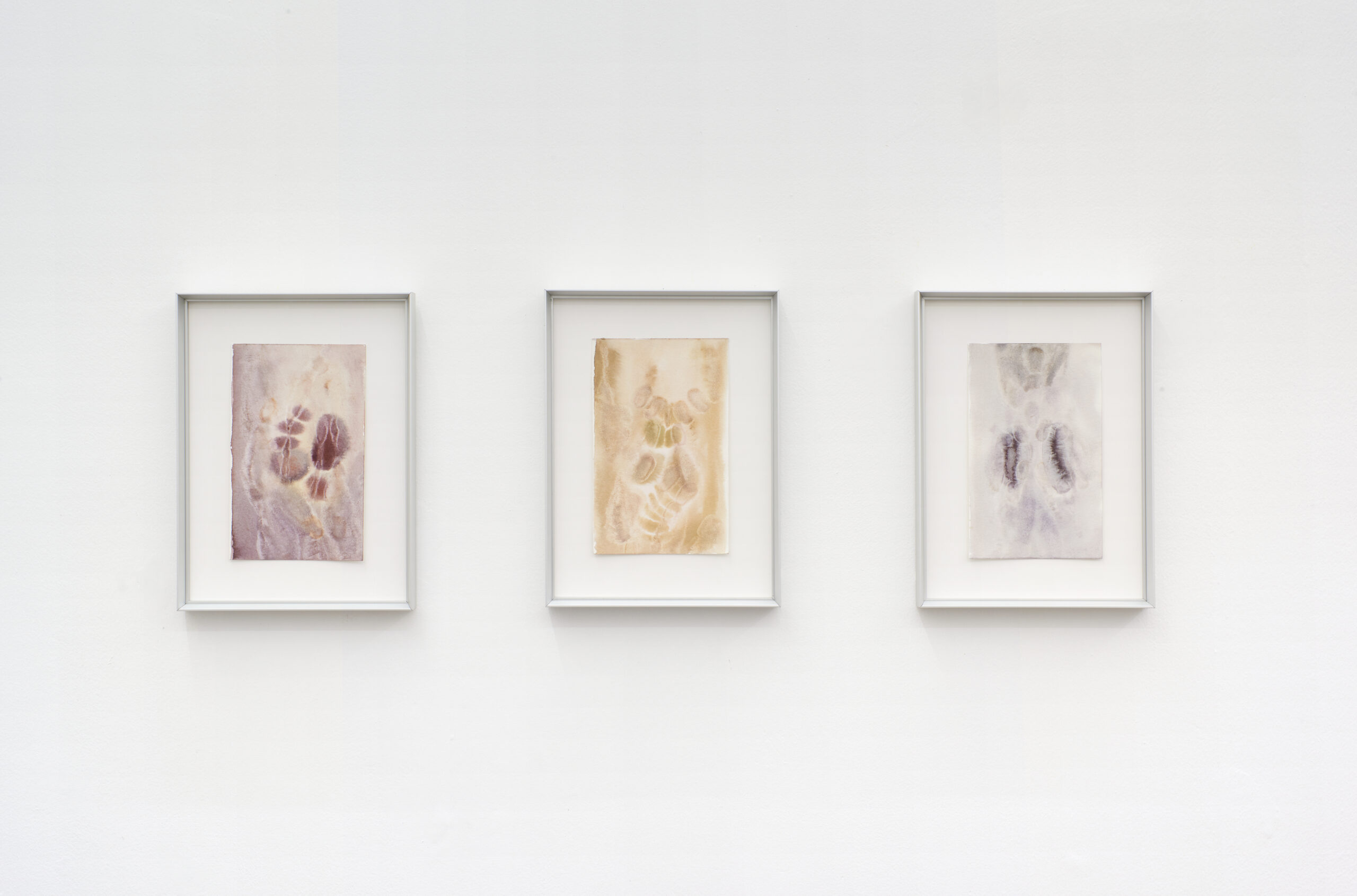
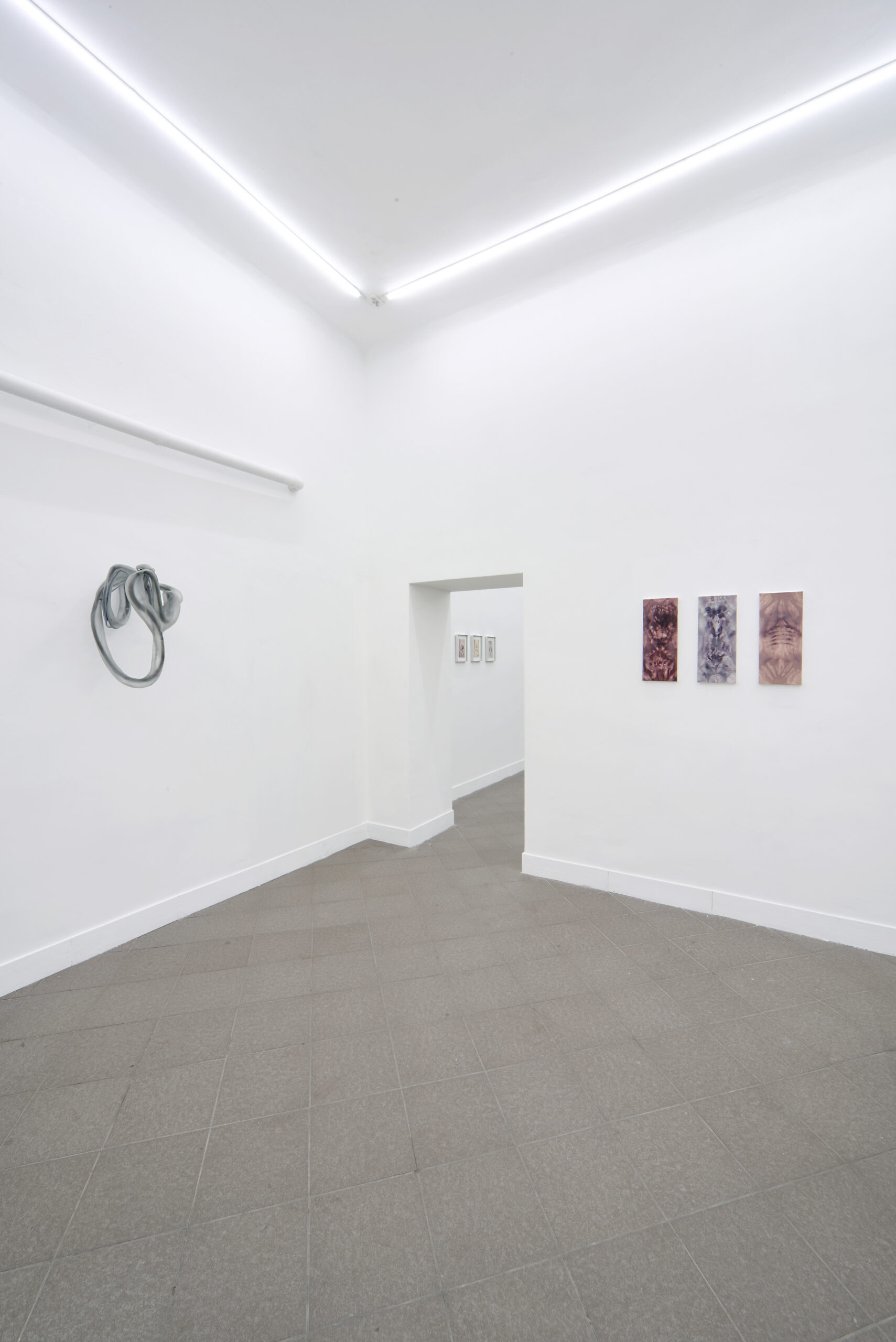
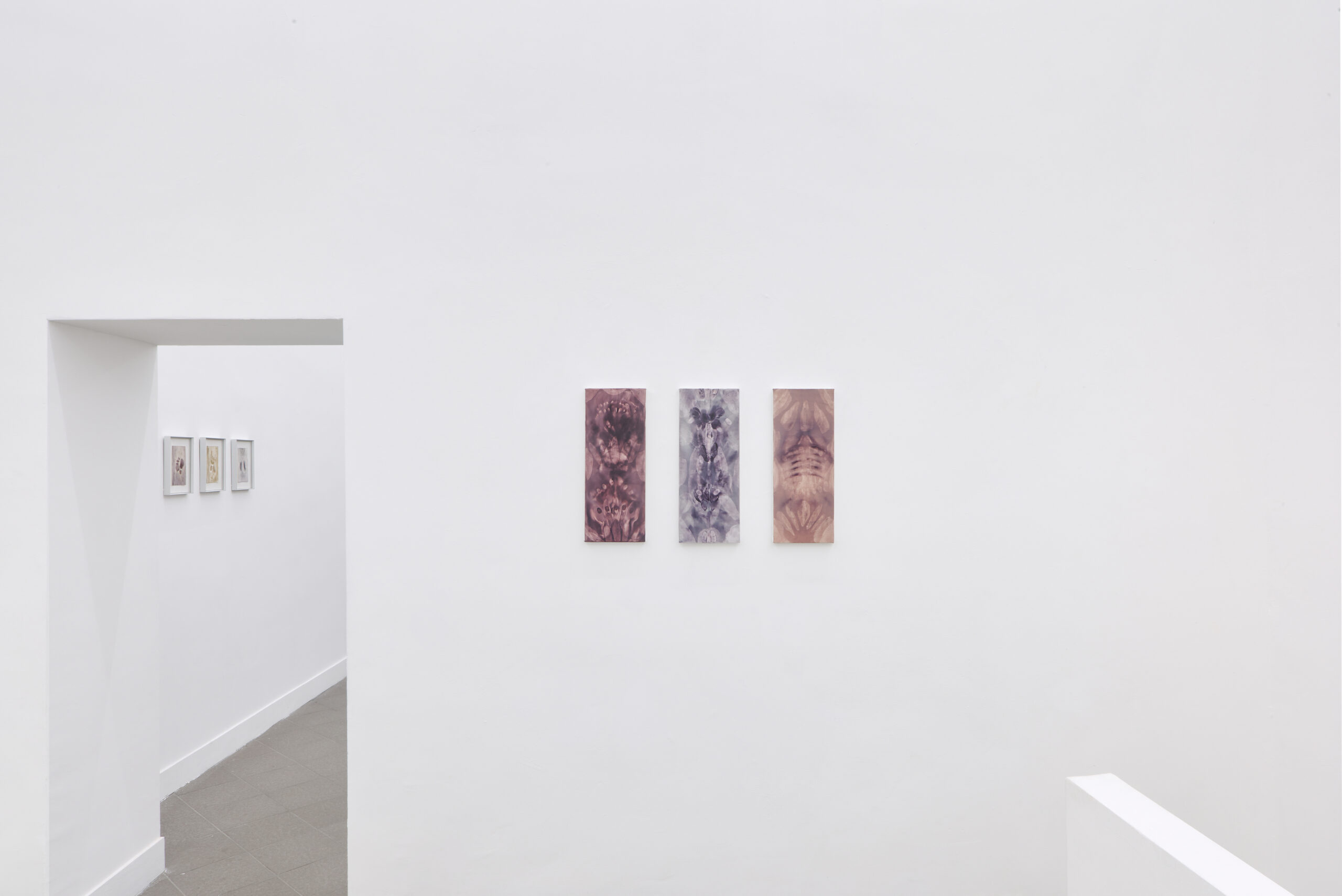
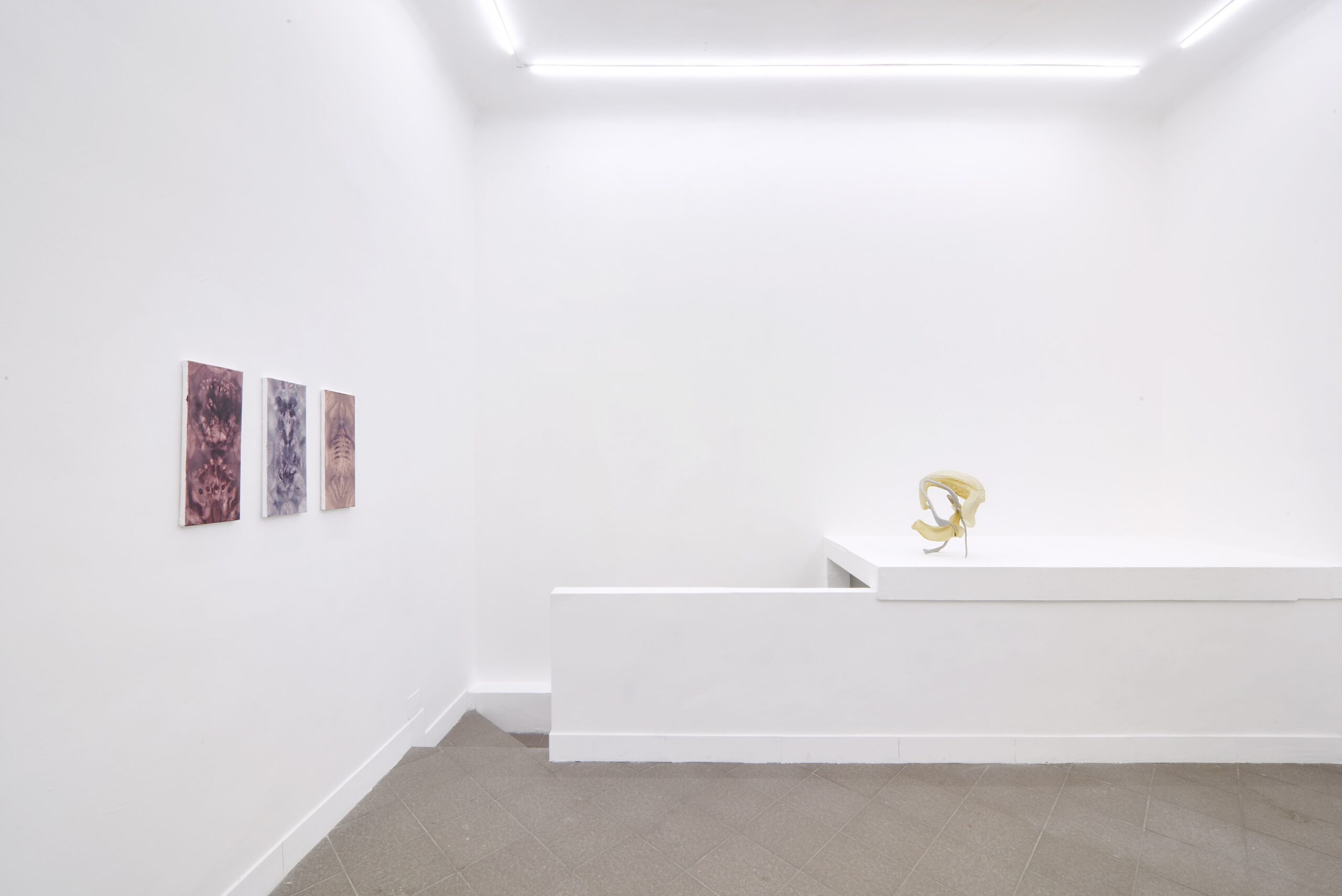
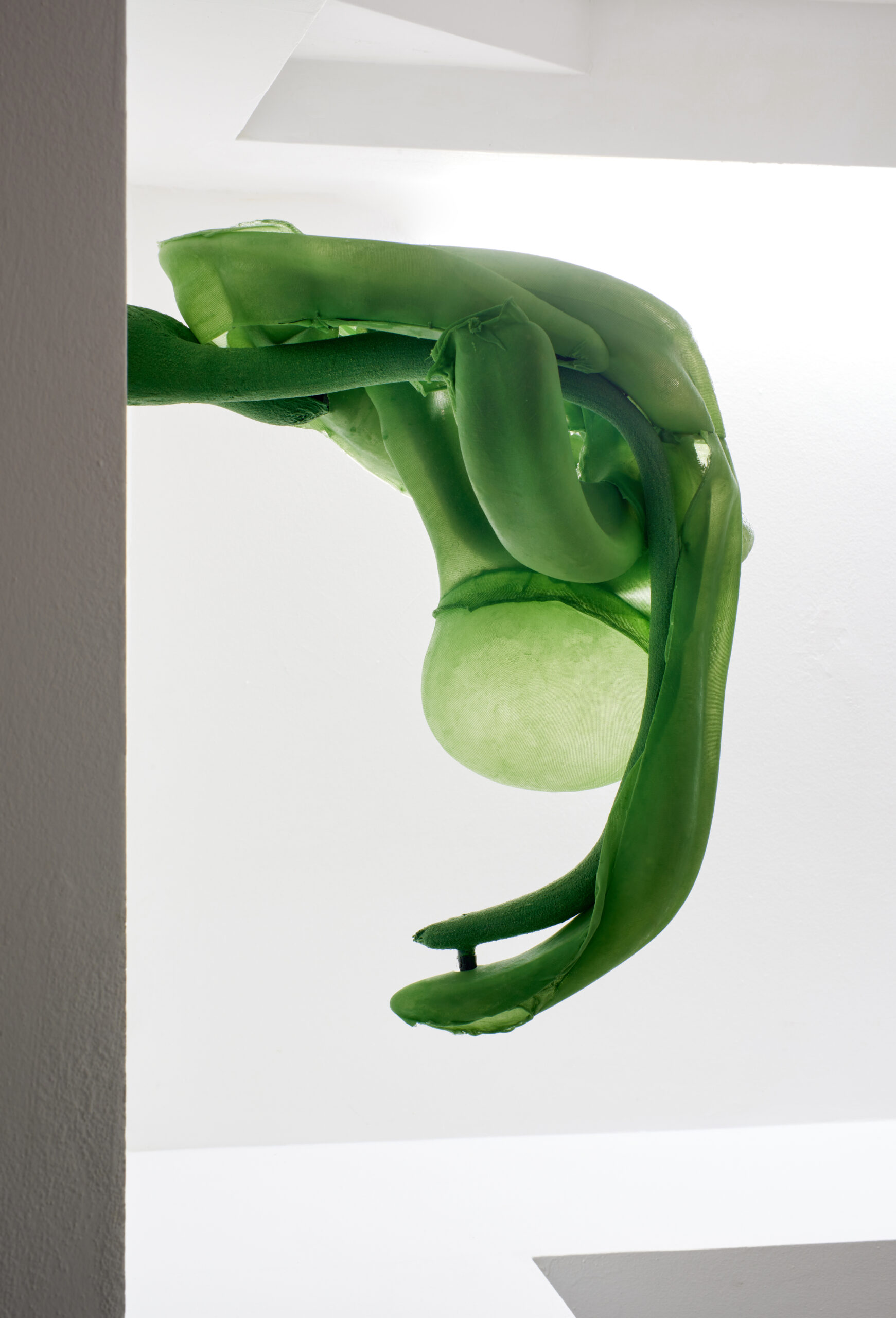
To enter the exhibition is to be caressed, enveloped, and permeated by a subterranean force. To enter the exhibition is to cross a threshold where every boundary and every identity is temporarily suspended. This is a haunted exhibition, a porous environment. A zone of instability in which the image never presents itself as a fully formed presence; instead, it emerges slowly through dispersion, accumulations, and sudden condensations.
When I first saw the work of Ludovica Anversa and Manuel Cornelius, although these encounters took place at different moments, both intimate and historically situated, a reflection emerged that resonates across both practices: an awareness of life’s fundamentally chimeric nature. A pre-and posthuman impulse, an ancestral, telluric, and unsettling tension. A metamorphic drive through which the force that traverses and transforms us is not an act of conscious will but rather an ancient force, older than the body it shapes, operating in complete autonomy. Amphibious in character, this force
refuses singularity, inhabiting and embracing multiple forms simultaneously. After all, we are the result of a chain of relational processes that includes every living being: we inhabit the world in continuity with the forms that preceded us. We are the outcome of countless relationships with the environments we inhabit, part of a common body from which all species emerge, ontologically inseparable. Every organism can be understood as the temporary outcome of an infinite series of metamorphoses; transformation is no longer an exceptional event occurring within a pre-existing condition, but the very structure of life itself. We are therefore inclined toward becoming other, to borrow a Deleuzian notion. Variations of a single life moving across bodies, species, and generations, we are temporary forms through which the same life continues to mutate.
In Anversa’s works, images surface through an oscillating movement that simultaneously gathers and dissolves matter. I fondly recall a conversation in her studio about the serial nature of her practice, a characteristic clearly present throughout her work, though one that does not imply the repetition of the same image. Rather, each work appears as a variation or evolution of those that came before it. The vertical tension recurring in several pieces functions as a creative axis around which the composition expands and contracts, giving rise to ectoplasmic presences of unstable morphology, where construction and collapse coincide. Nothing appears entirely stable. The painted surface does not describe, instead, it absorbs, retains, and allows things to pass through. It does not record a finished image but rather the fragile instant preceding its disappearance. Some forms silently expand, while others contract until they nearly dissolve. Even when an apparent symmetry emerges, equilibrium remains deferred, as though suspended within precarious membranes subject to torsion and collapse. Her painterly language arises from a layering of traces that continue to vibrate through glazes, abrasions, and acts of removal. These surfaces retain multiple temporalities, sustained by a continuous process of contamination that enables both sedimentation and return.
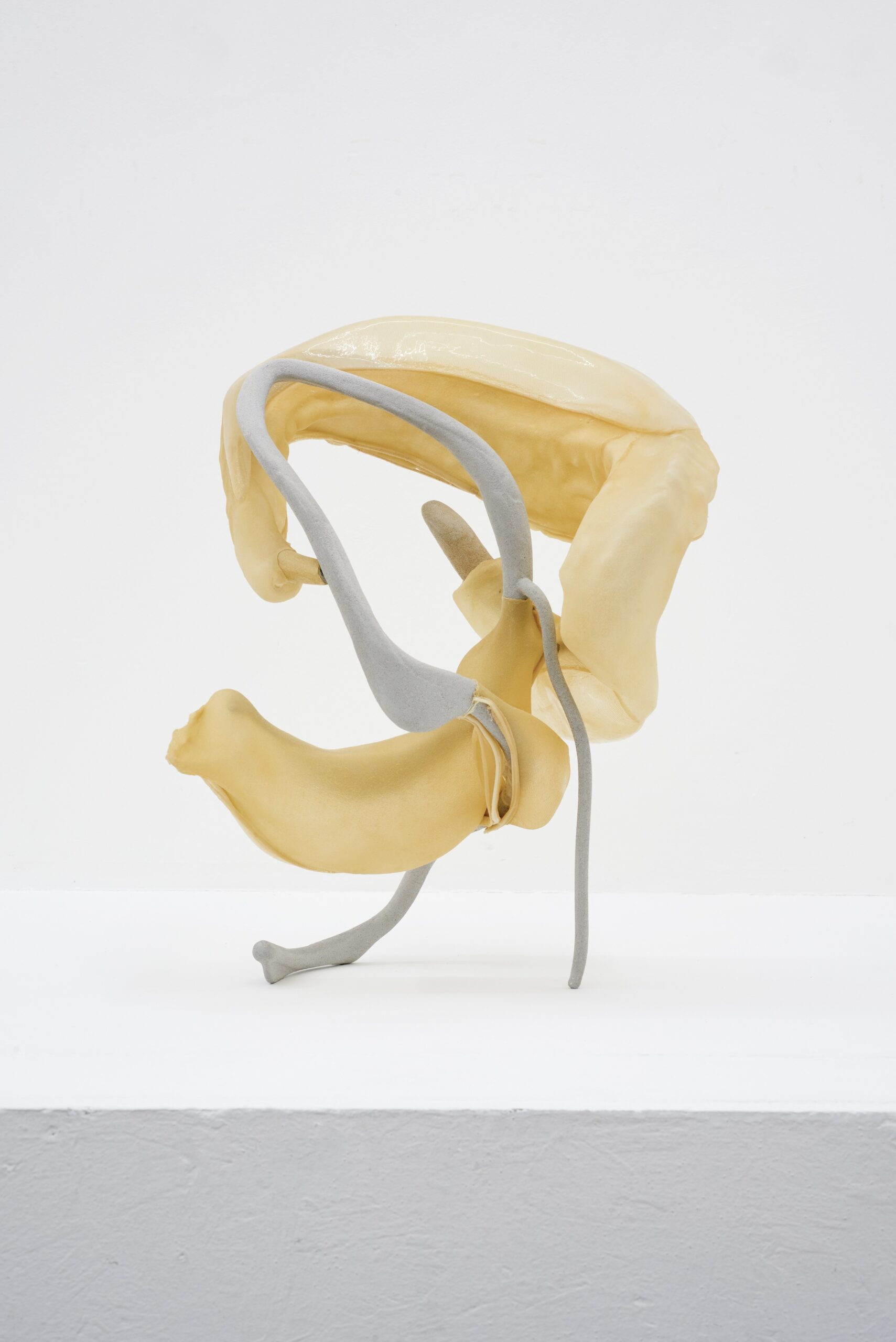
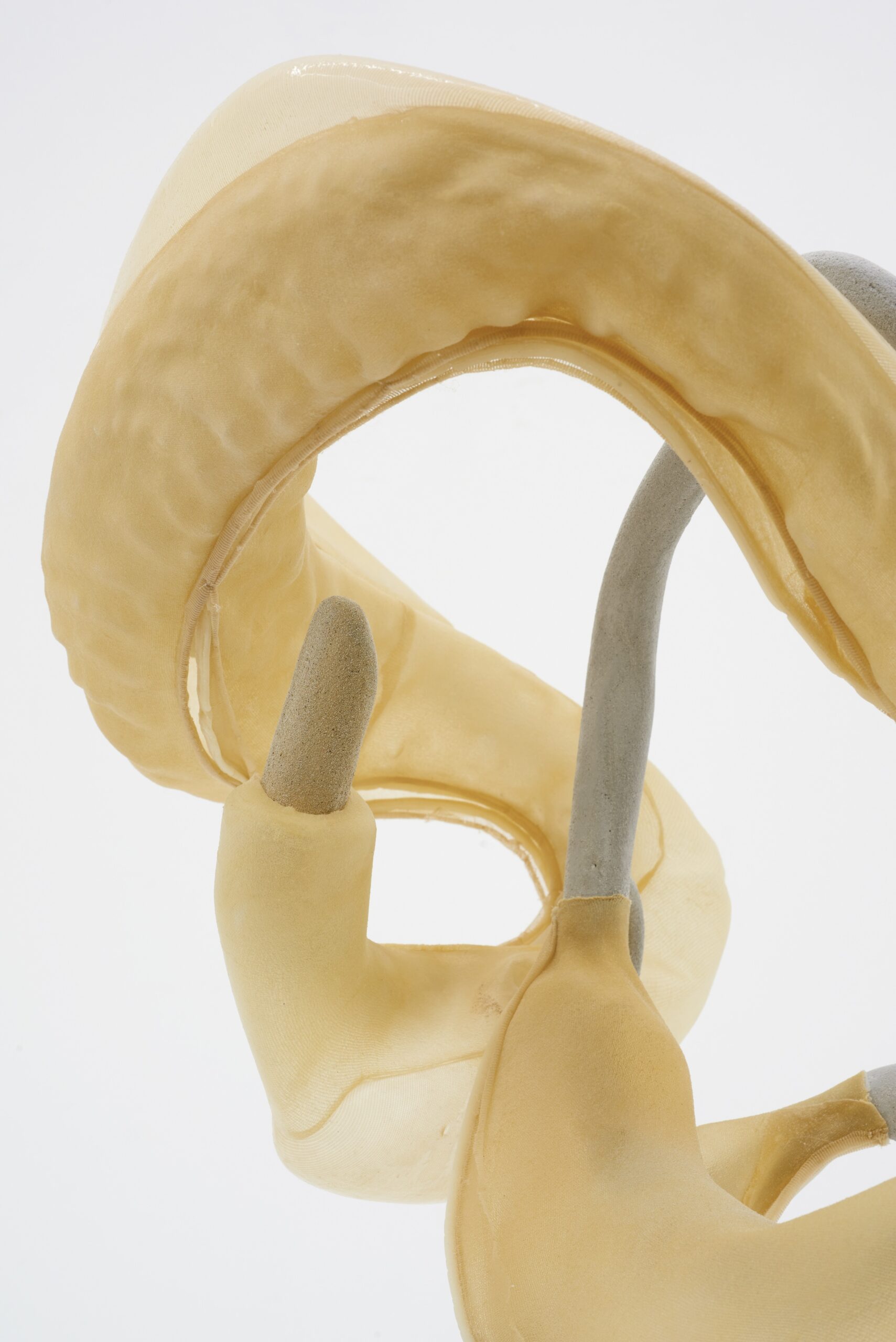
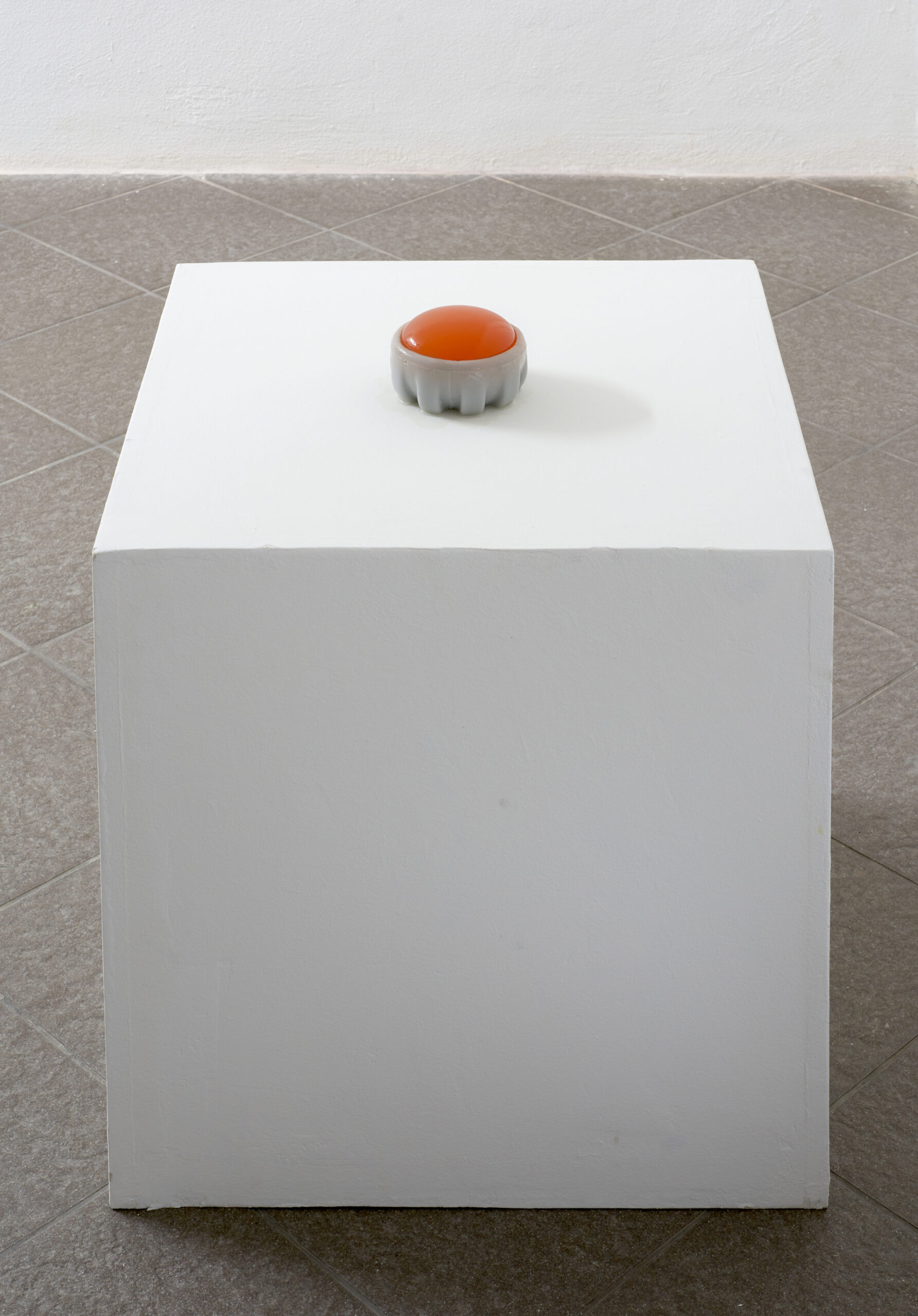
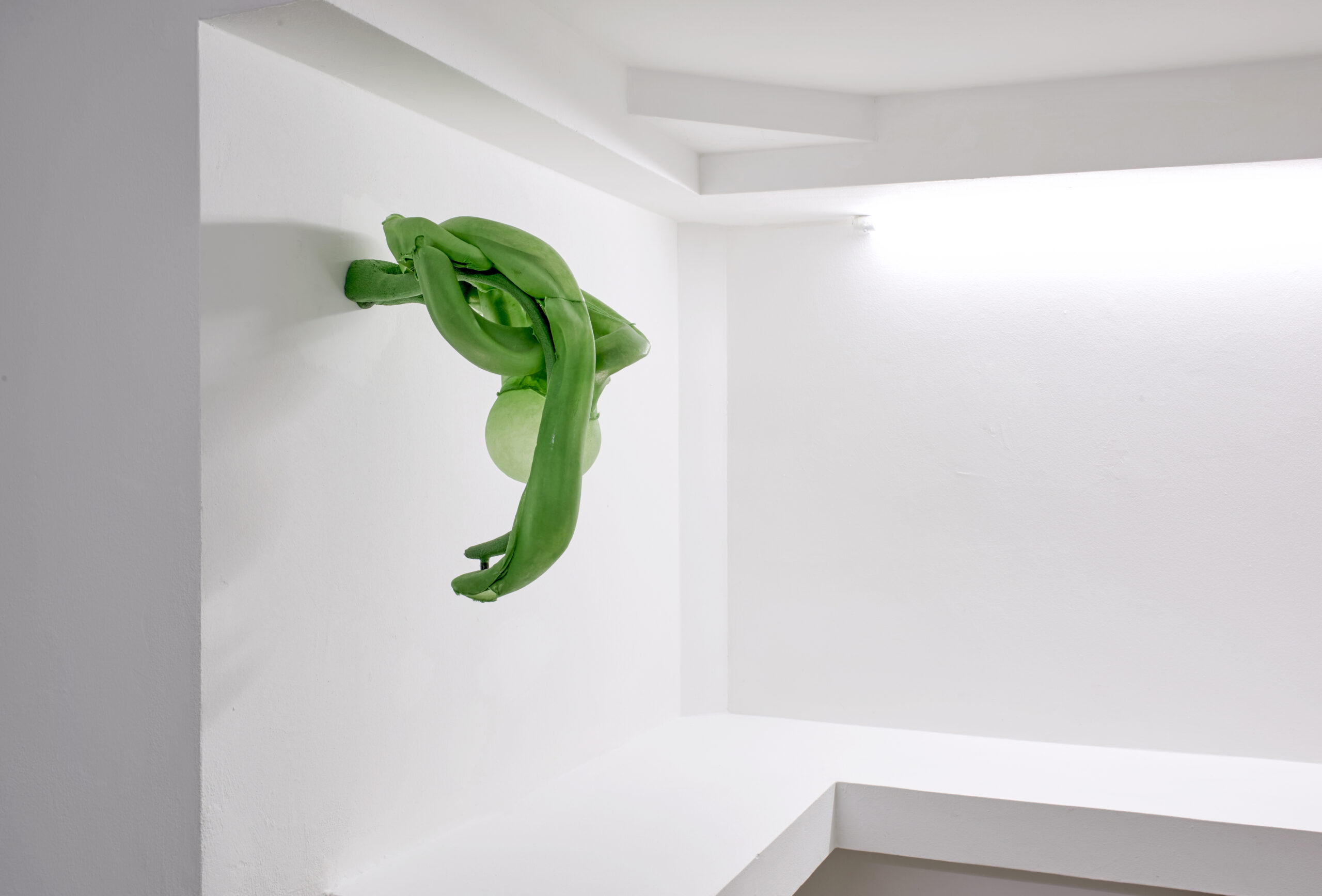
Within Cornelius’s practice, structures emerge that alternate between density and rarefaction, fragility and decay. Filamentous systems, openings, milky accumulations, and translucent fields intertwine according to irregular rhythms. The result of an intuitive process that employs digital tools for the formal modelling of the work, his sculptures develop as composite bodies made up of modular units that together constitute a larger organism. These are forms in constant becoming, retaining a visceral and unsettling quality; ambiguous configurations generated through a creative process in which boundaries fragment, surfaces appear permeable, and the interior seems to spill outward. By working with agar gels, a plant-derived material obtained through the boiling of marine algae, non human agents become active participants in the sculptural process, gradually wearing down and partially decomposing the structure of certain works. As a result, the sculptures arrive only at a partial resolution, vulnerable, contingent, and committed to change.
The practices brought together in this exhibition testify to an attempt to reconfigure the exhibition space through a condition of suspension, a field of possibilities in continuous transformation. The works inhabit a liminal dimension and, through perpetual metamorphosis, operate according to relational and cooperative logics: distinct entities come together, contributing to the formation of a larger body generated by their shared existence. Much like the polymorphic siphonophores, planktonic marine organisms, hybrid and tentacular creatures composed of multiple individuals that function collectively as a single living being. Their specialized roles can be understood as organs within a shared body, exemplifying mutual collaboration and interdependence within a symbiotic form of life. A composite individual embodied by an entire colony; a multitude becoming one.