


Giulia Poppi – Boccacce
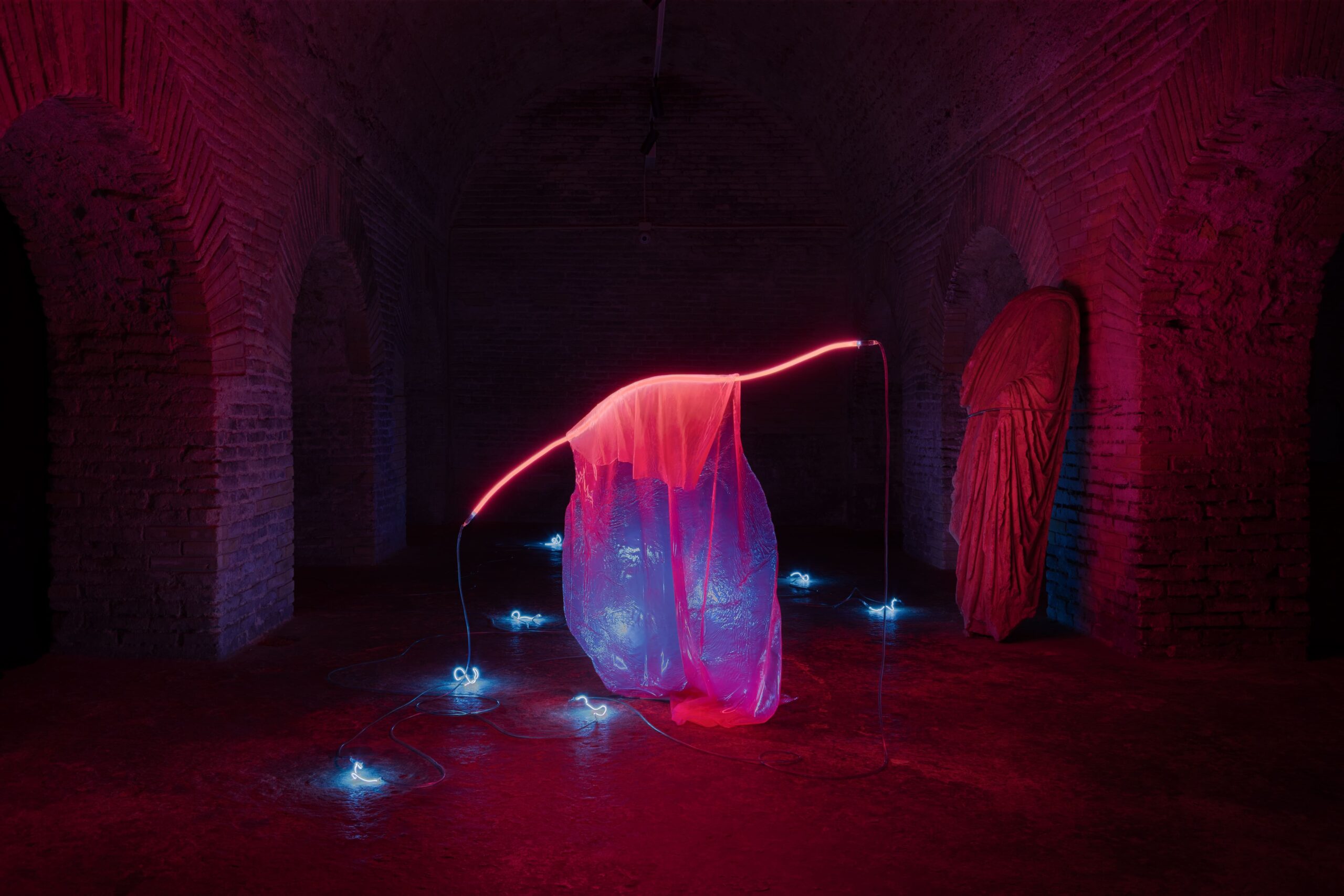
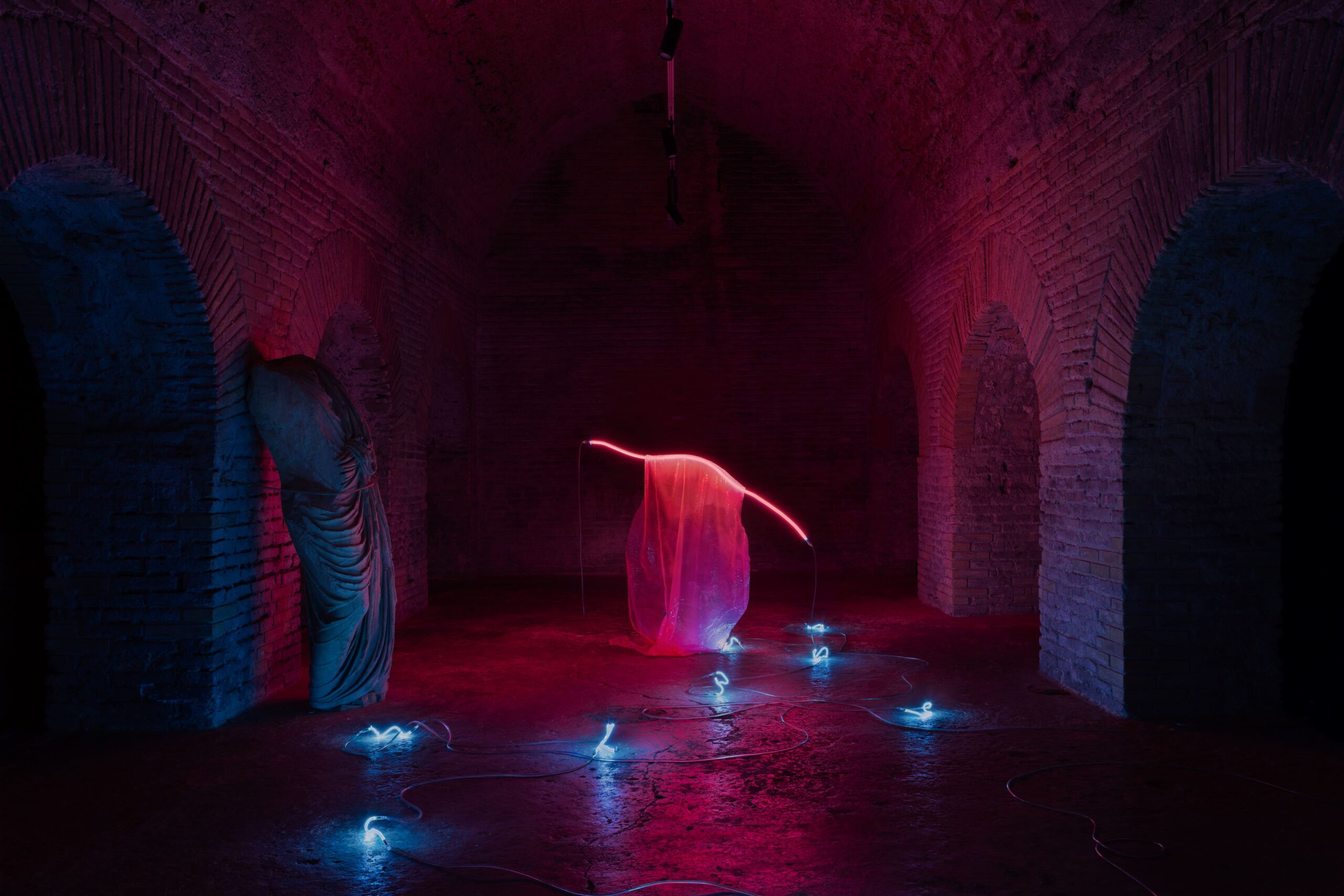
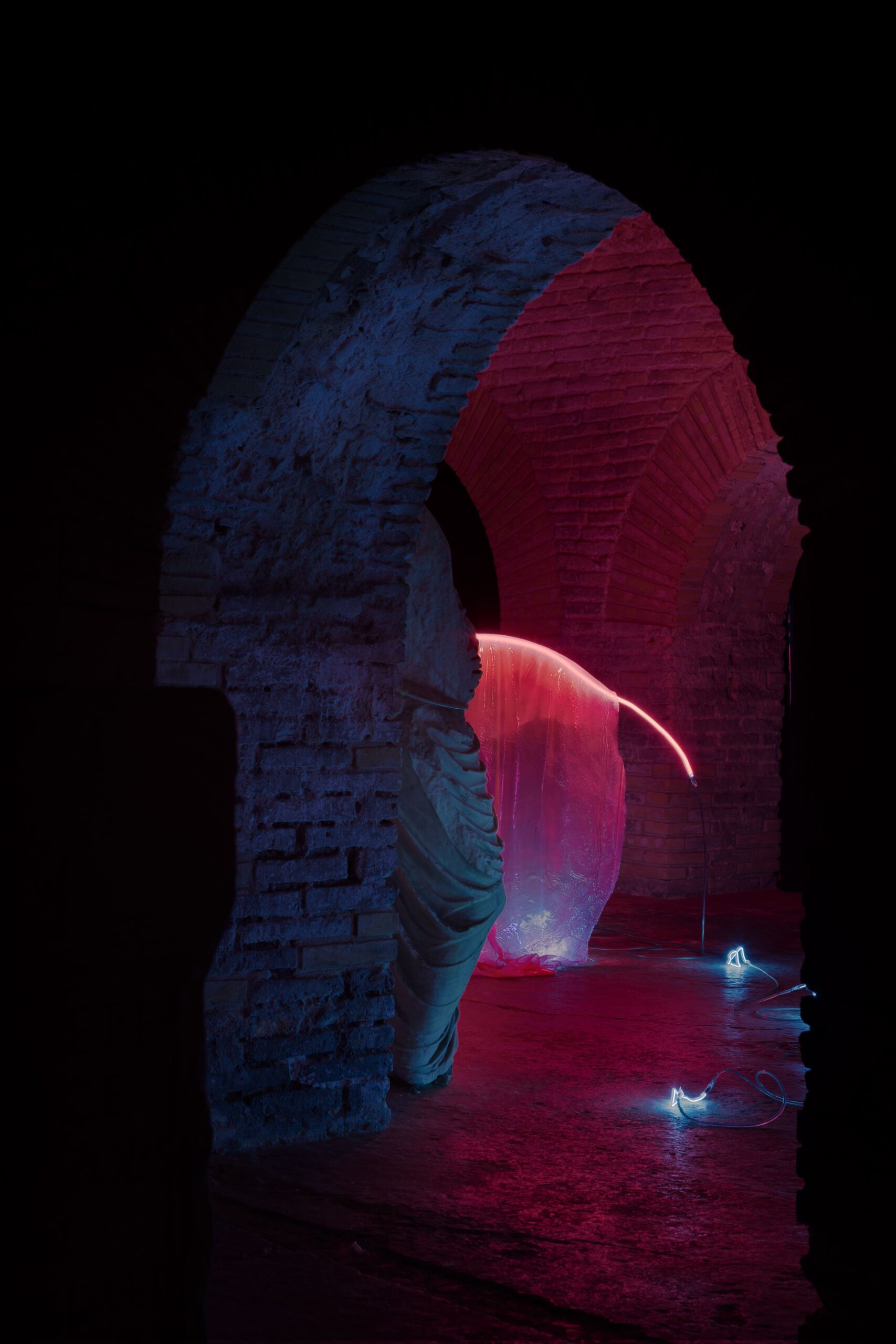
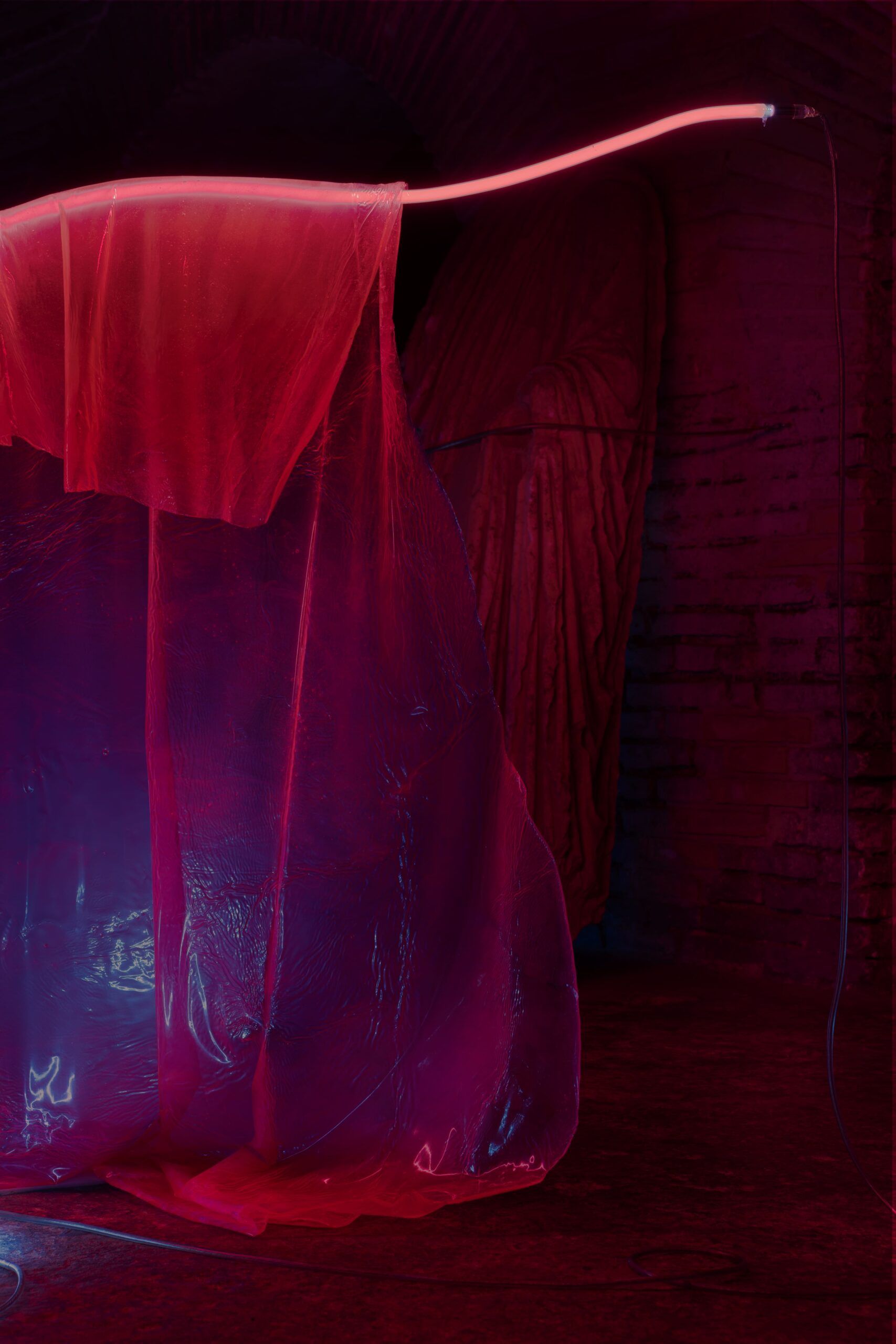
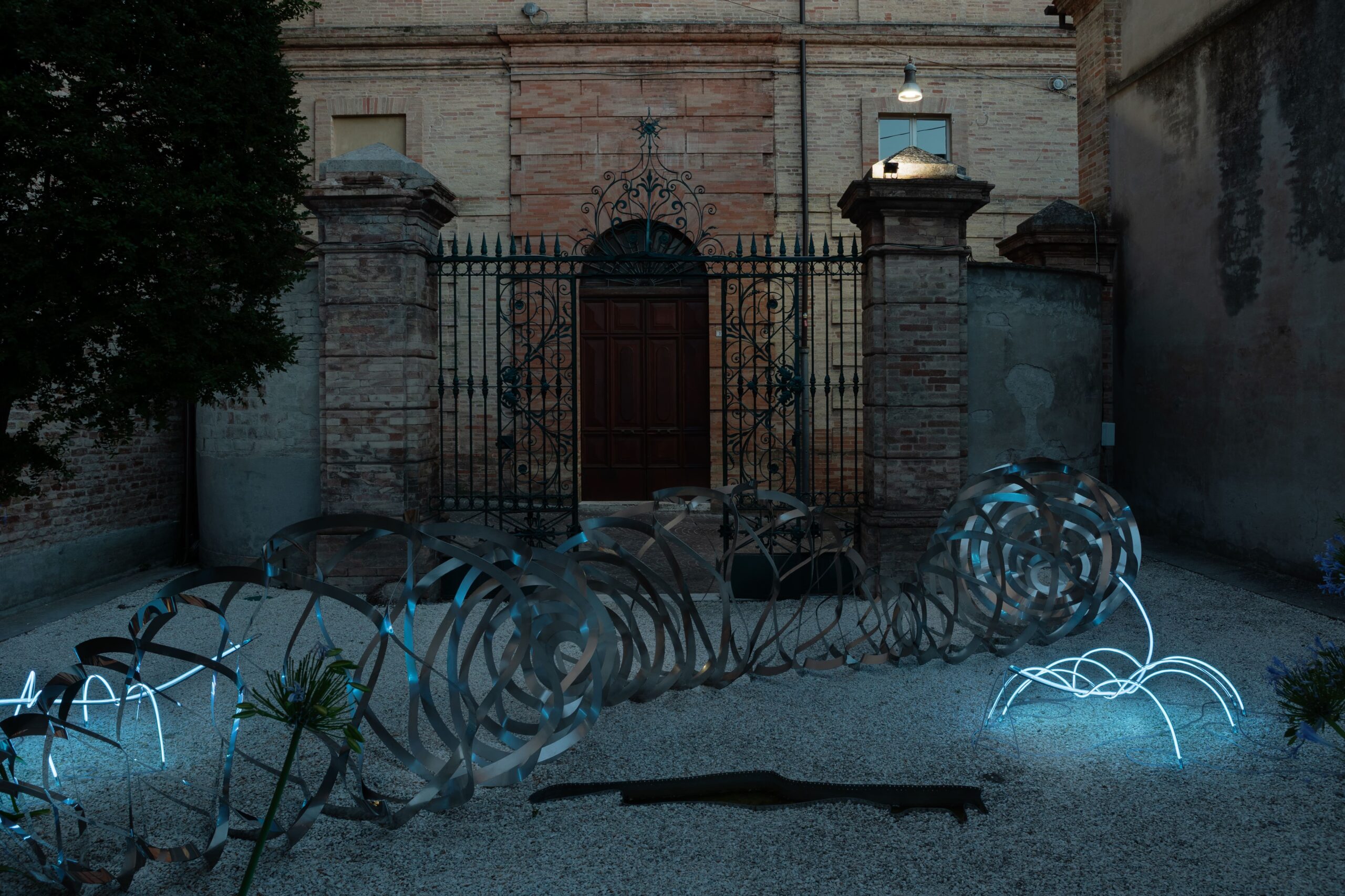
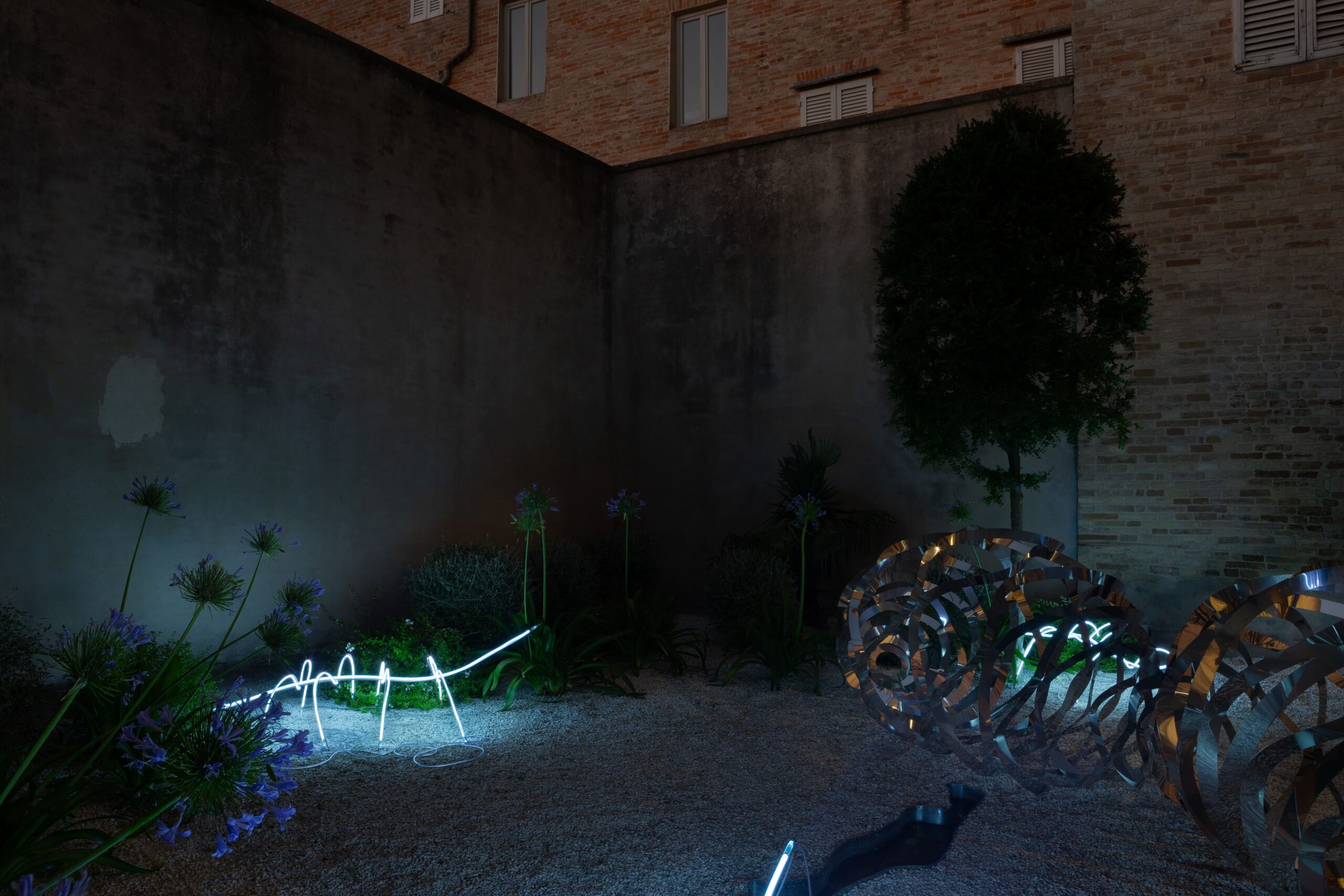
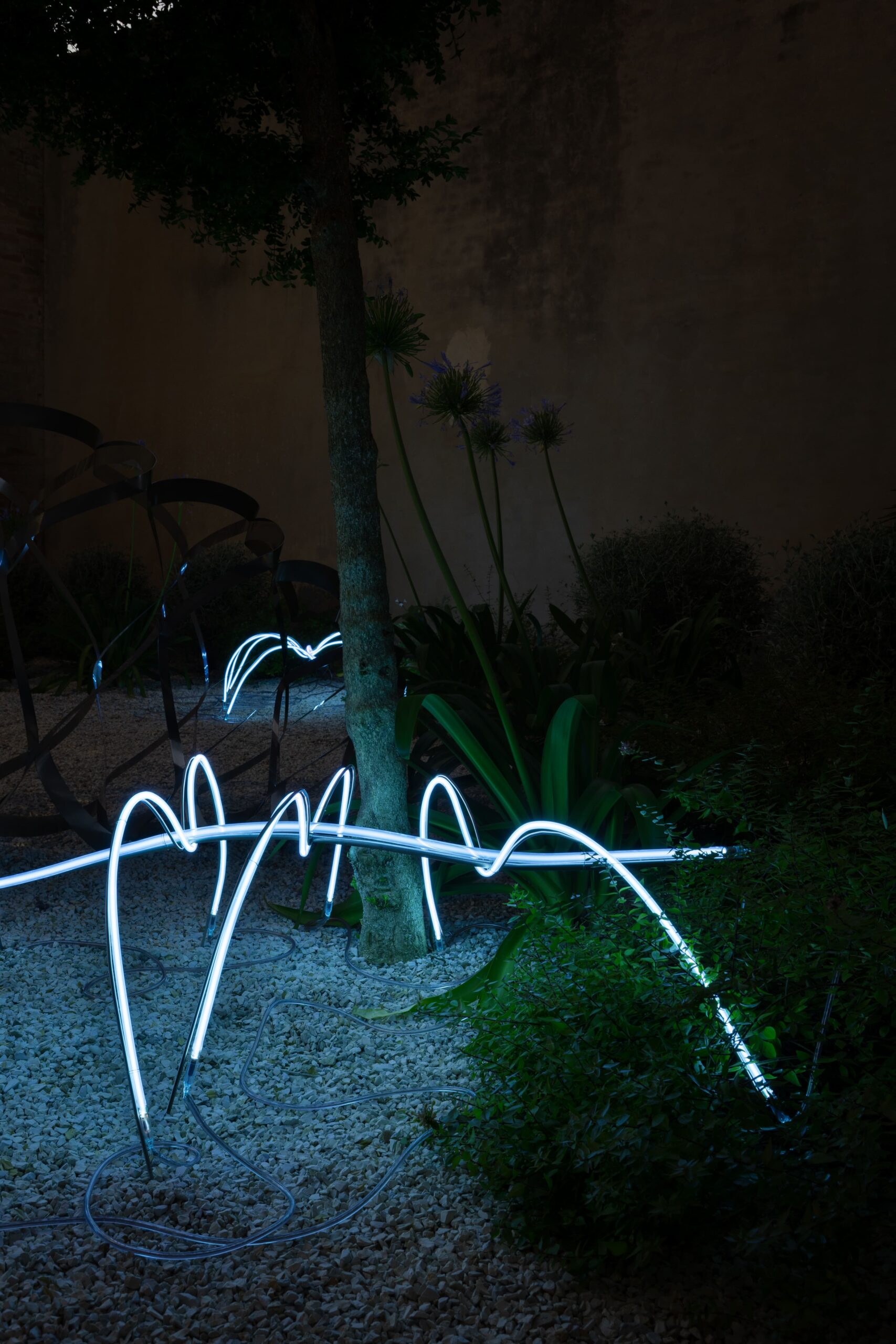
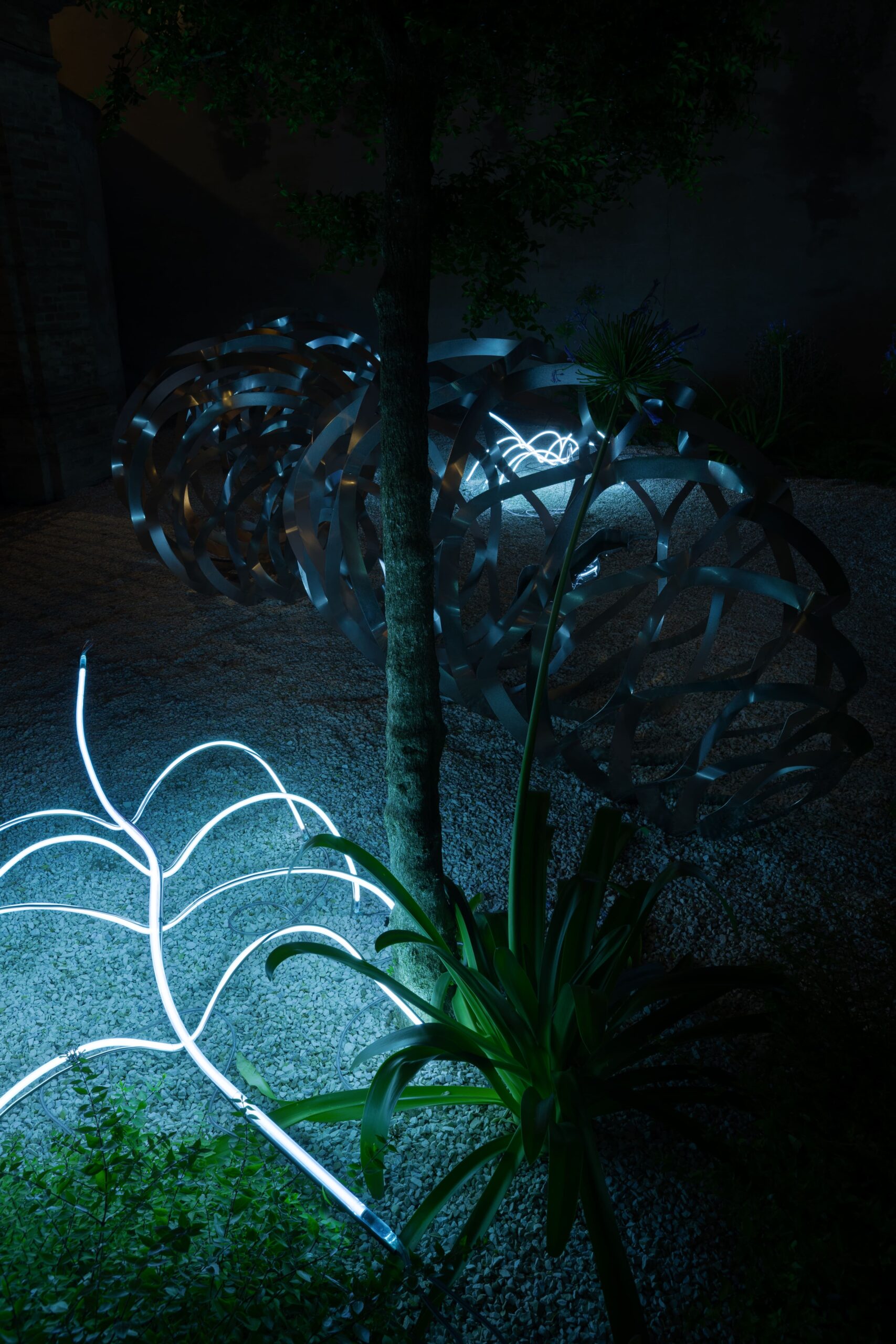
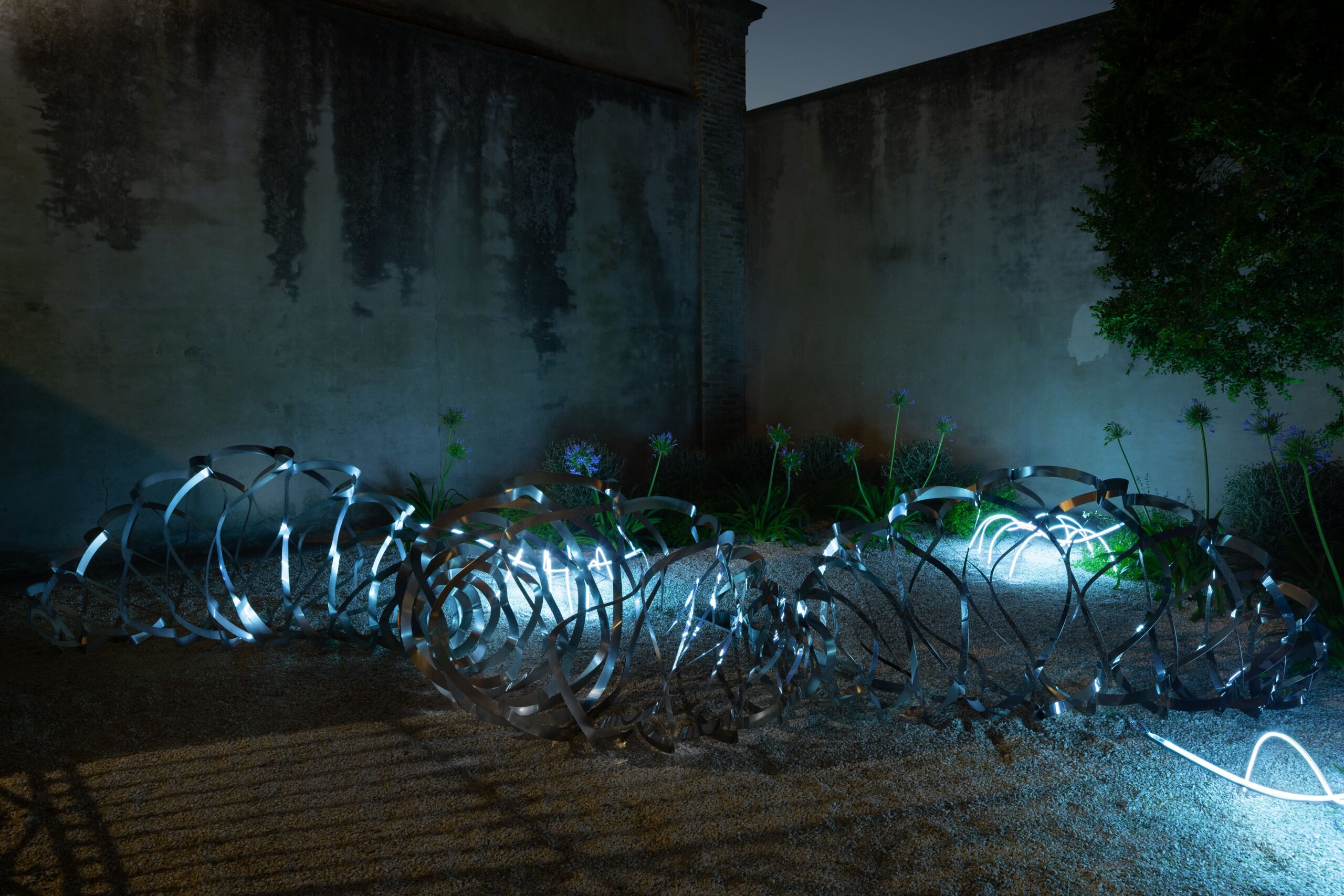
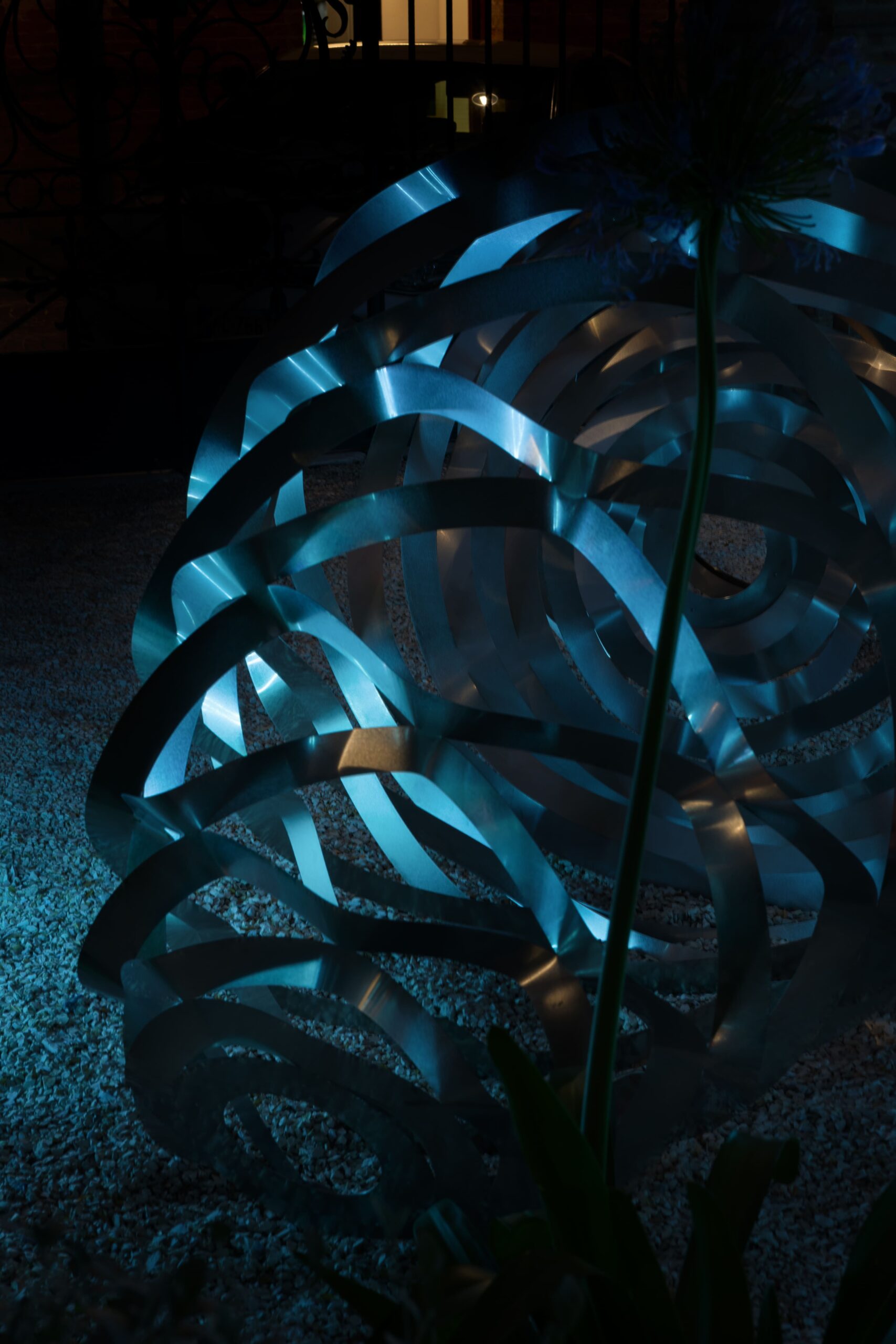
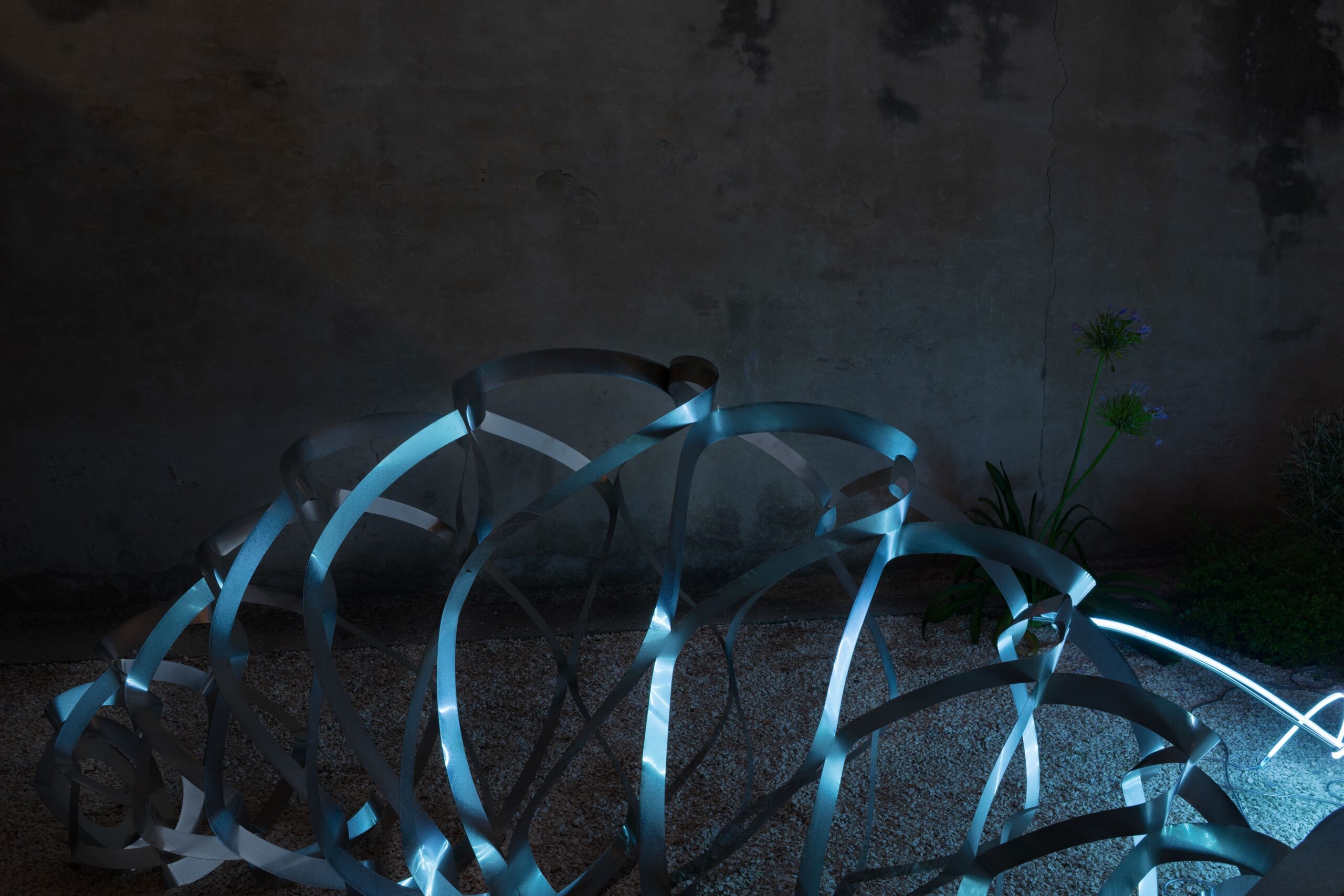
“Boccacce is the irreverent grimace of a happy child. It follows with its gaze a centipede on its way to a party, among palm trees, silver glittering debris from garlands, and lights. An enlarged microcosm, a change in the texture of reality to be followed closely, without distractions. Something is thrown from the tower, but it is only a diversion, because it is in the dark silence of the underground waters, among the dust of the old walls, that something is taking shape.” With these somewhat wandering thoughts, Giulia Poppi briefly described the project she was developing. In fact, we had already been working together on “Boccacce” for some time, but her attention had been more focused on shaping images or listening to impressions than on stopping to articulate what was happening. Giulia followed two directions in constructing this exhibition: on the one hand, reflecting on the new material she wanted to engage with; on the other, thinking of something more fully formed that could occupy the spaces, functioning as a descriptive sign. In 1967, Richard Serra wrote the “Verb List”, later published in “Avalanche” in 1971, a magazine that functioned as a “two-dimensional exhibition space” for post-minimalist, or rather conceptual, land art, performance, and process-based practices. It exclusively hosted contributions by artists, their projects, and, more generally, content that did not involve critical voices. The “Verb List” consists of a long series of gestures that Serra subsequently performed on and with the materials available in his studio, imprinting actions that opened up multiple possibilities for manipulation. Through these actions, matter was pushed in order to force its transformative potential, taking on forms derived solely from mechanical action rather than from a pre-organised design, bringing its physical properties to the fore in sharp resonances. Many artists have attempted to follow the possible trajectories of matter, pushing materials in order to probe their inherent capacities. This research was driven by a desire to break away from the assertiveness of minimalist forms and by a curiosity to experiment with new products that were just entering the market. A perfect example is Eva Hesse’s research, which, during the very brief period of time devoted to these kinds of experiments, produced works that still retain the force and brilliance of a pure investigation into the energy of matter and its transformations, including those brought about by time. Hesse shaped latex, fibreglass, rubber, and plastics into sculptures whose structures surrender to gravity and to the pliability of transformation, leaving open themes such as fragility, surprise, error, and precariousness. These are not narrated literally, but activated through the encounter between the viewer and the materiality of the work. Touching, handling, manipulating are central to Giulia Poppi’s practice: grasping matter through tactile sensitivity and attuning oneself to its transformations accompanies many of her works, which come into being in the moment and must be read in that same moment. For this reason, they often develop as complex crystallisations of plastic materials, poured silicone and resins that rise into space or attune themselves to it through a contrapuntal dialogue, declaring delicacy and intangibility as constitutive themes. The works “Caravelle”, “SplashSplapCiaff”, and “Sffsssshh” are created through transformative processes based on a sensual manipulation of materials. After the more mechanical preparation phase, they take shape during the working process, when Poppi caresses and cares for the material, oscillating between the desire to push it towards a sensibility she has intuited and the temptation to be enchanted by its sensual viscosity. During the first site visit to the city, at the beginning of the production of these new works, I suggested that Giulia consider working with neon and introduced her to Franco, the artisan I have collaborated with for several years. Working with neon is not simple: it is a material with a very strong artistic history and, consequently, very little is needed to take the work in the wrong direction, slipping into parody or a play of signs. There were many reservations and little initial interest; curiosity, rather, persuaded her to go and see it, and she was subsequently seduced by the beauty of those small gas-filled tubes that become light. From that moment on, she began to understand how she could manipulate such a delicate object without breaking its chemical poetry and while preserving its freshness. She therefore imagined working with it on two registers, one more formal and the other generative, reflecting the way of proceeding that has accompanied her practice over time. Thus, while at the Piccole Cisterne Romane the installation remains connected to a more transformative understanding of the materials employed, and the neon forms are the result of several days spent “playing” with the thin glass tubes, in the work presented inside the Giardinetto della Cassa di Risparmio di Fermo, the manipulation of neon and steel becomes functional to a narrative that originated from the site itself. Here, the construction of the images followed suggestions arising from the vegetation and from the passage of various animals through this small garden, leading the artist to imagine something more fully formed that could occupy the spaces, functioning as both a descriptive and narrative sign. This prompted her to approach the work in a playful and amused way, imagining that she was acting not so much on the material itself as on the scale of the subjects she had decided to create: bodies of metal and light that resemble staggering centipedes wandering among the remains of a party that has just ended, its elastic garlands lying exhausted on the gravel. Matter thus becomes a playful game of transformations and simulations, expanding into oversized presences that emphasise its physical qualities. The pleasure of “formatività” that Giulia Poppi brings into play is always present, regardless of the formal qualities of her works, whether they are more conceptually oriented or lean towards a more pop lineage. This had already occurred in works such as “Algedi”, a luminous star dressed in synthetic fur, and “Sbranksbunkdum”, the photograph of an enlarged mould. It also occurs in the “aerial” intervention emerging from the highest window of the medieval Torre Matteucci: a form, an experiment, a vision arising from its insertion into the splay of the small window.