


Frammenti di un discorso amoroso
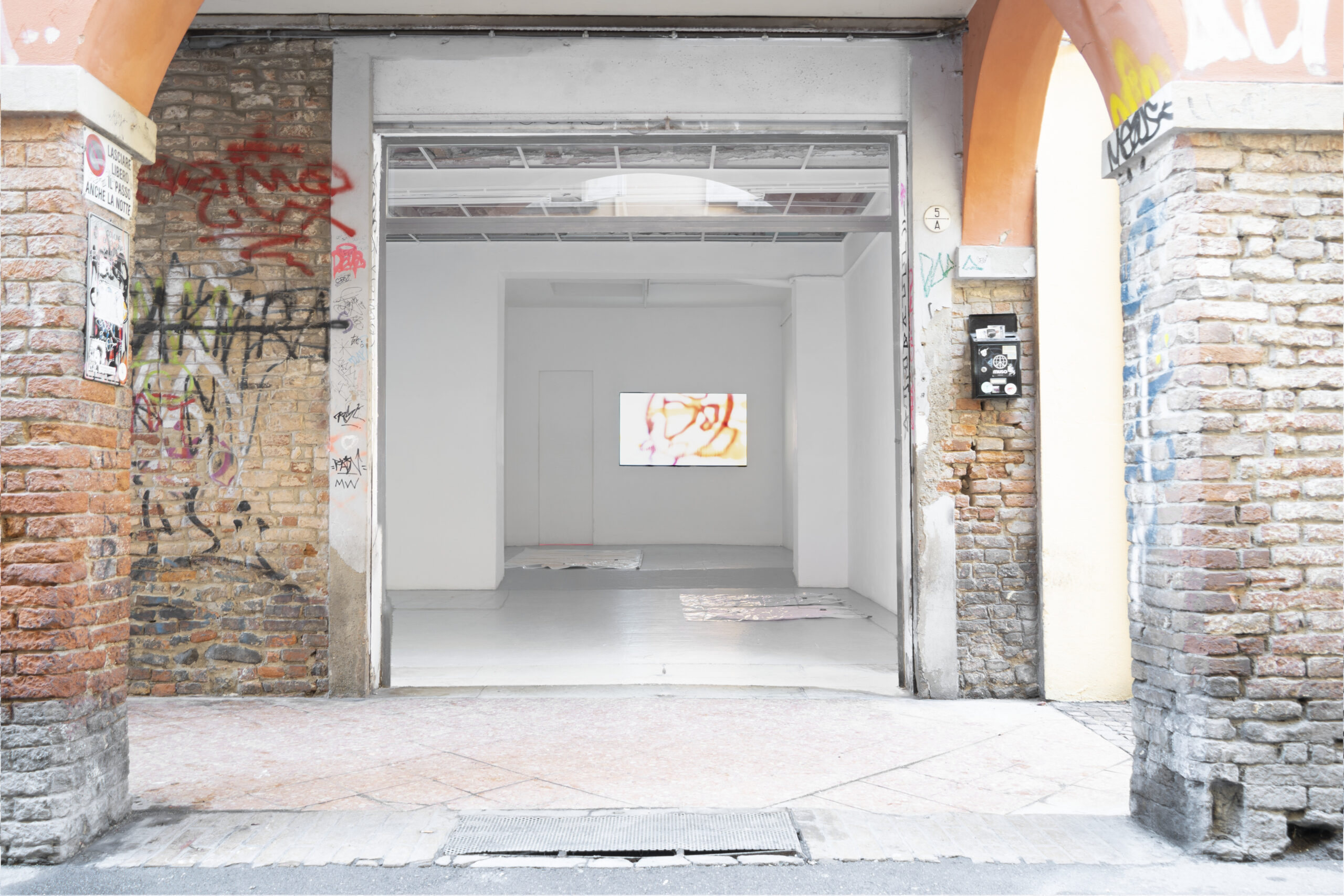
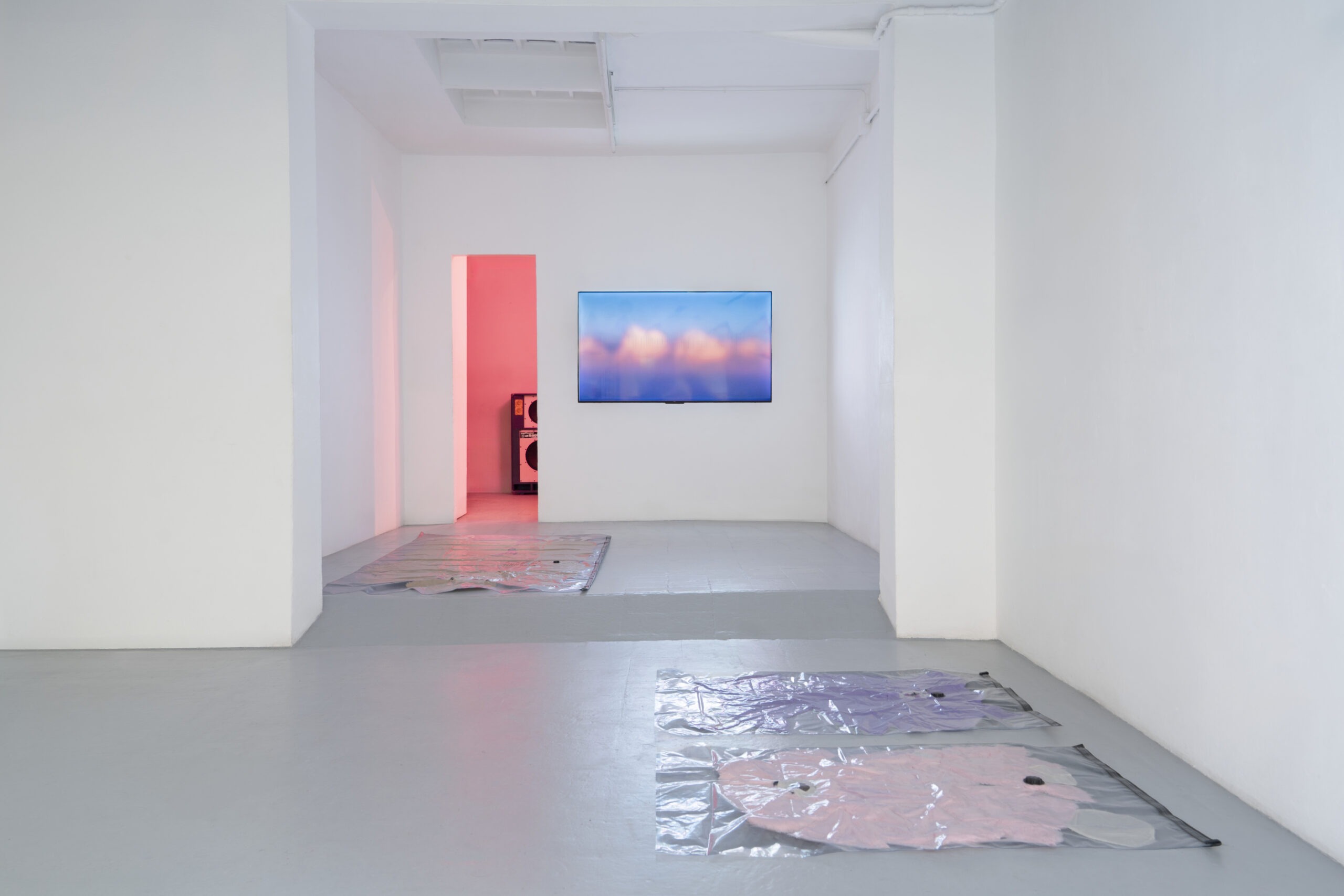
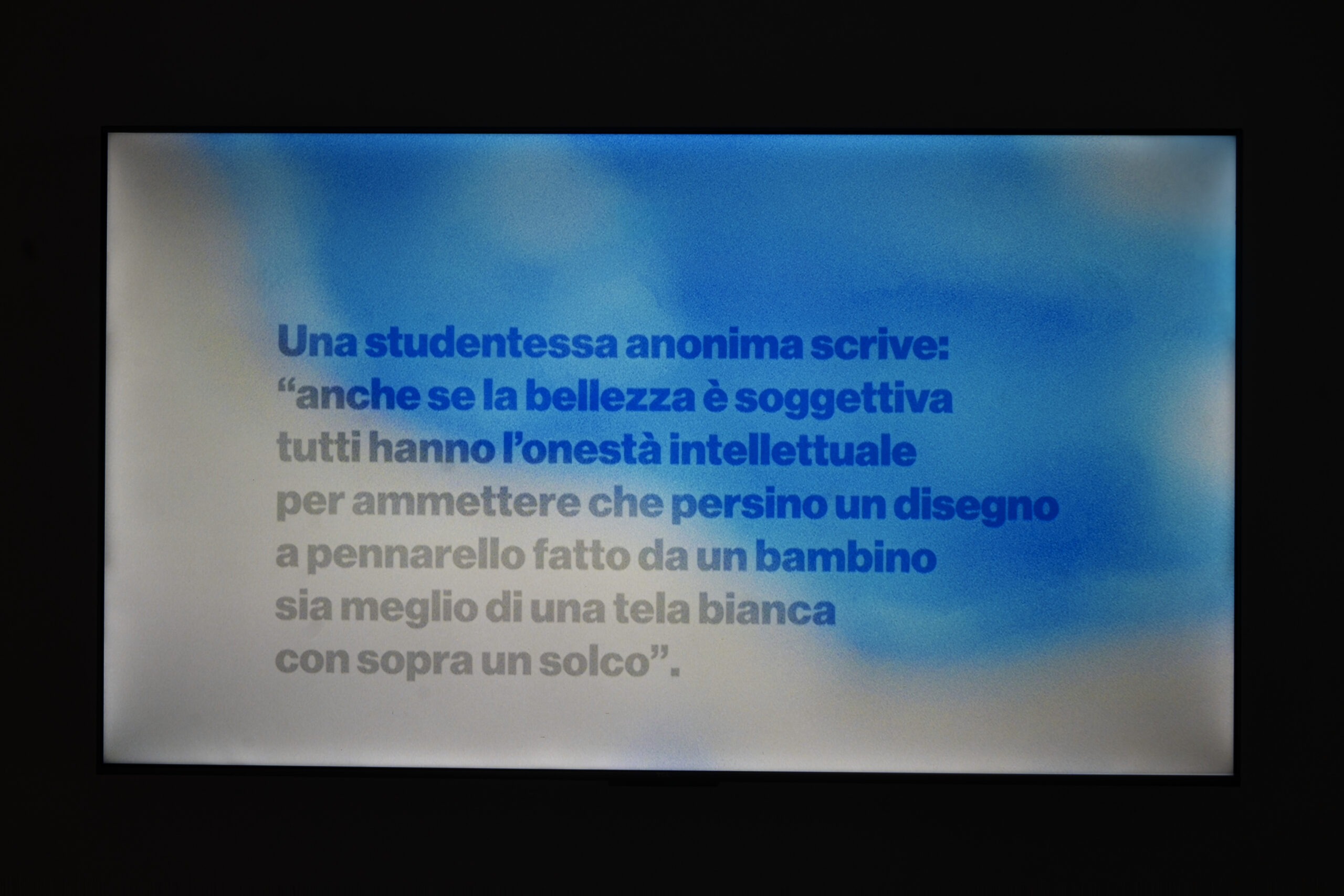
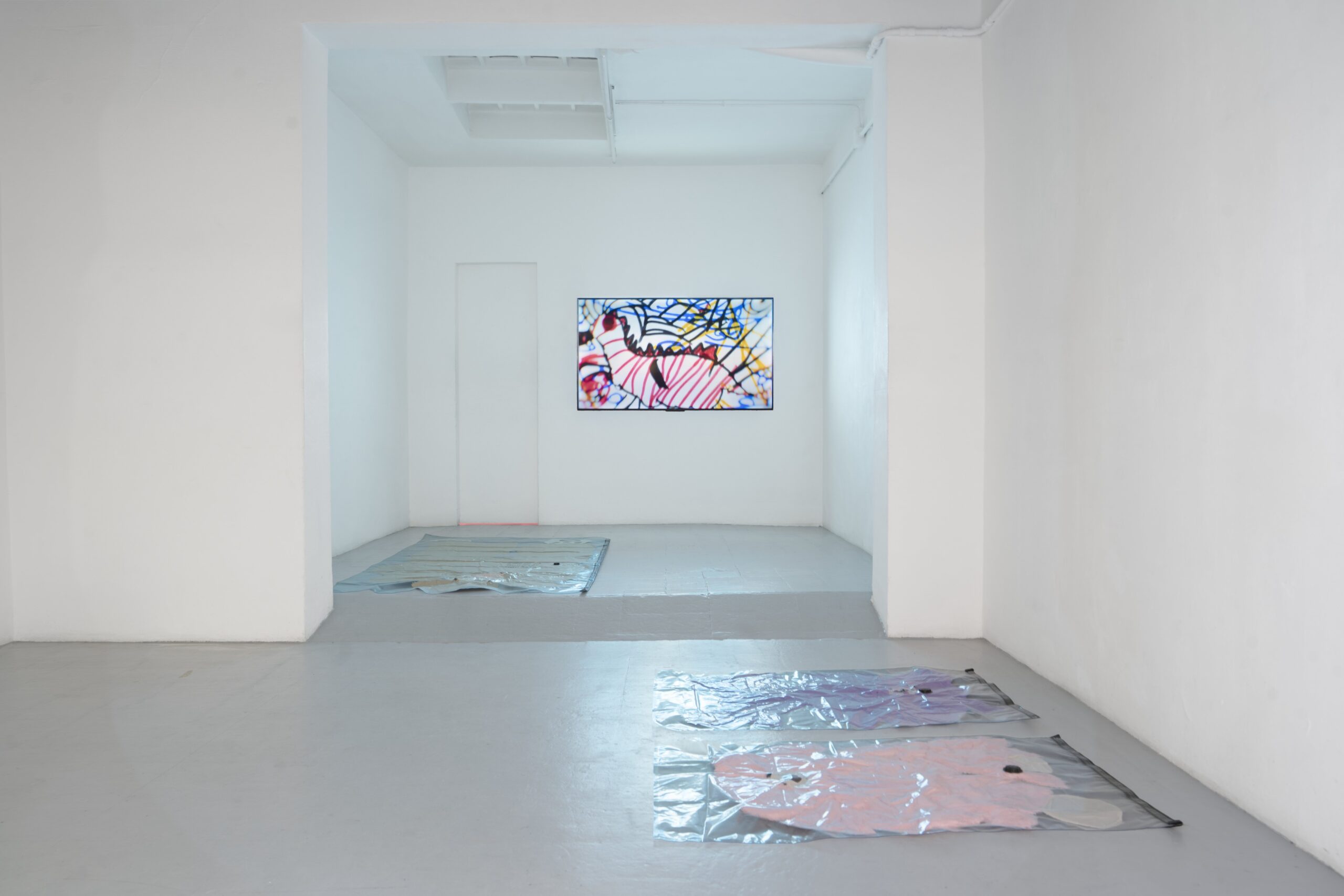
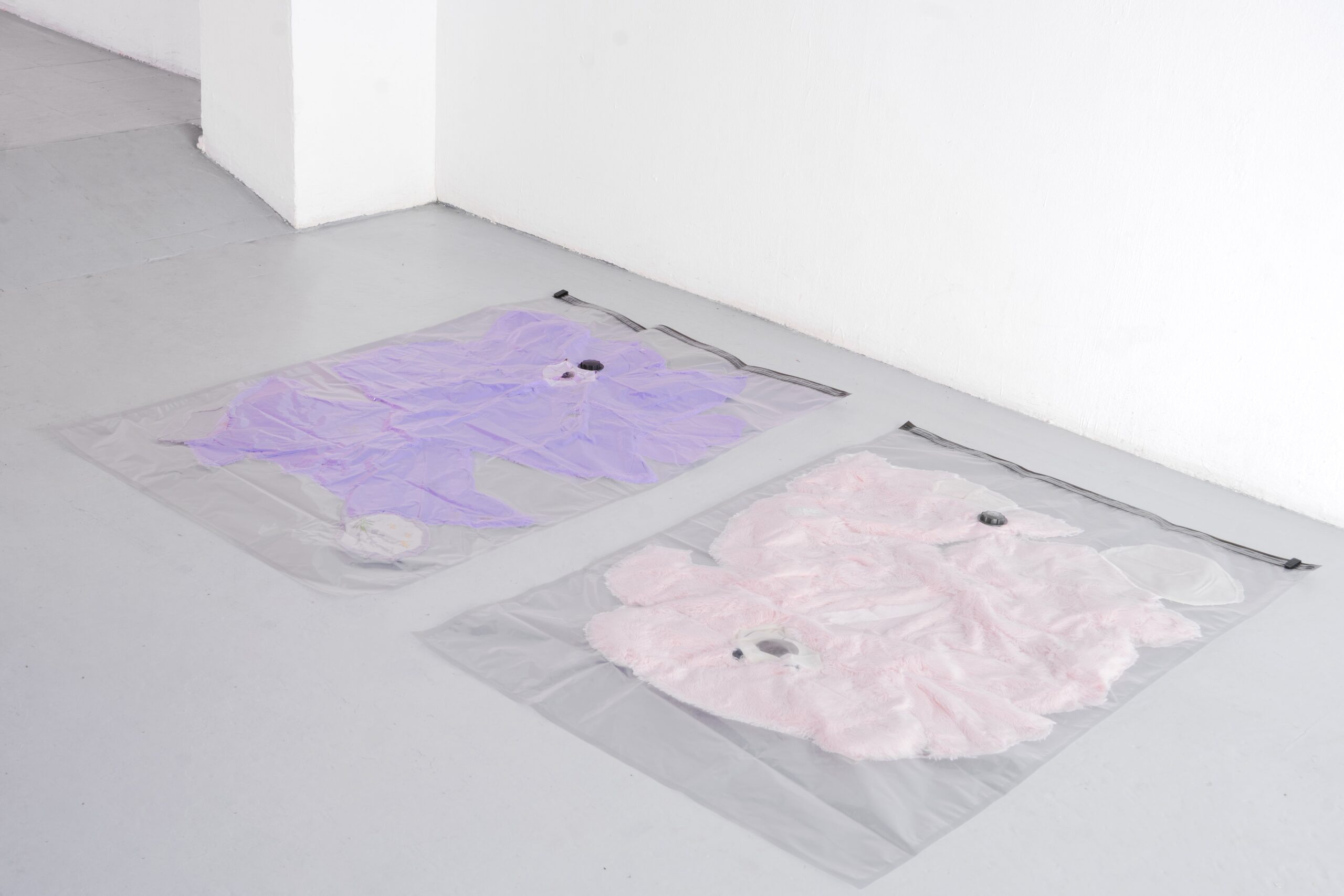
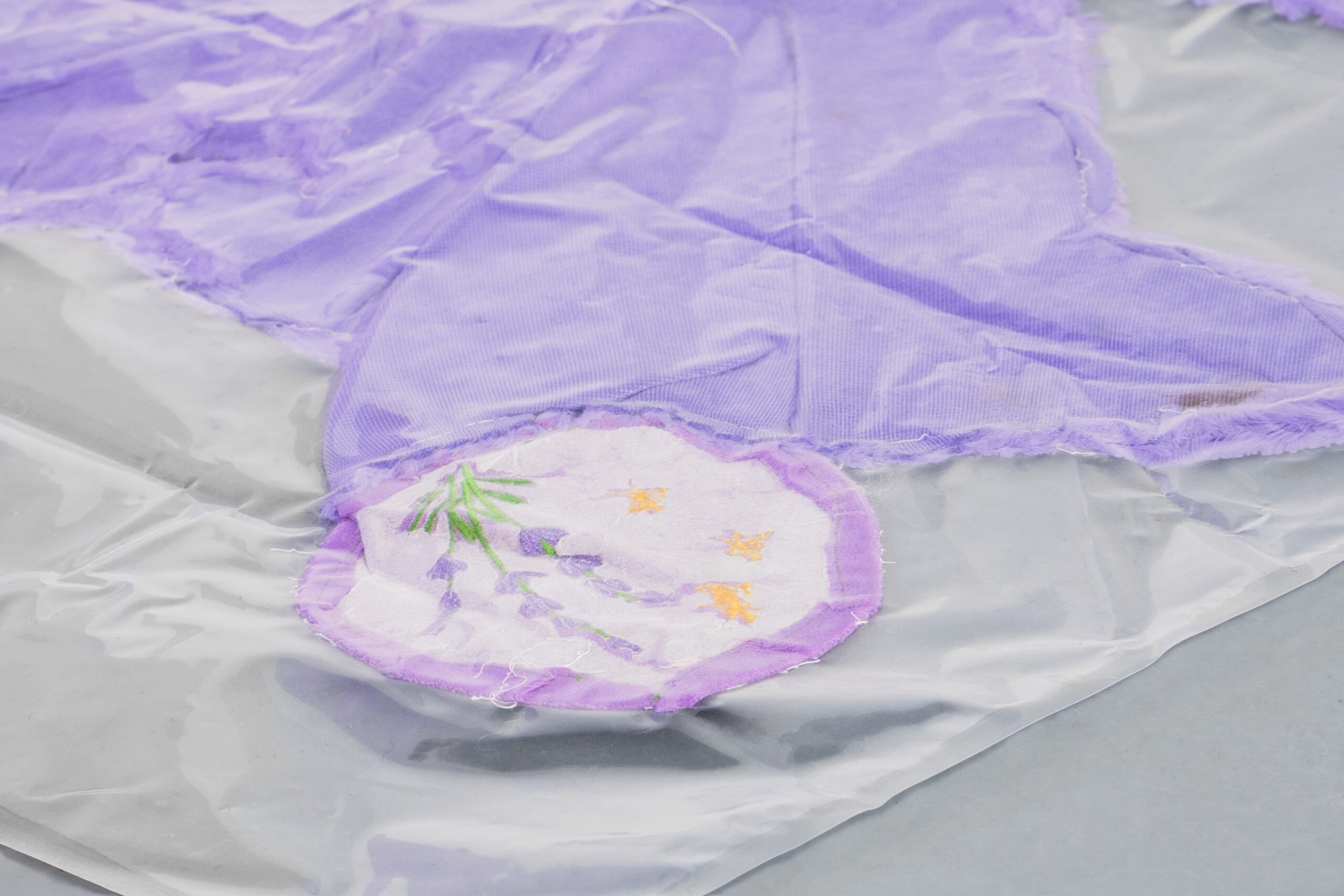
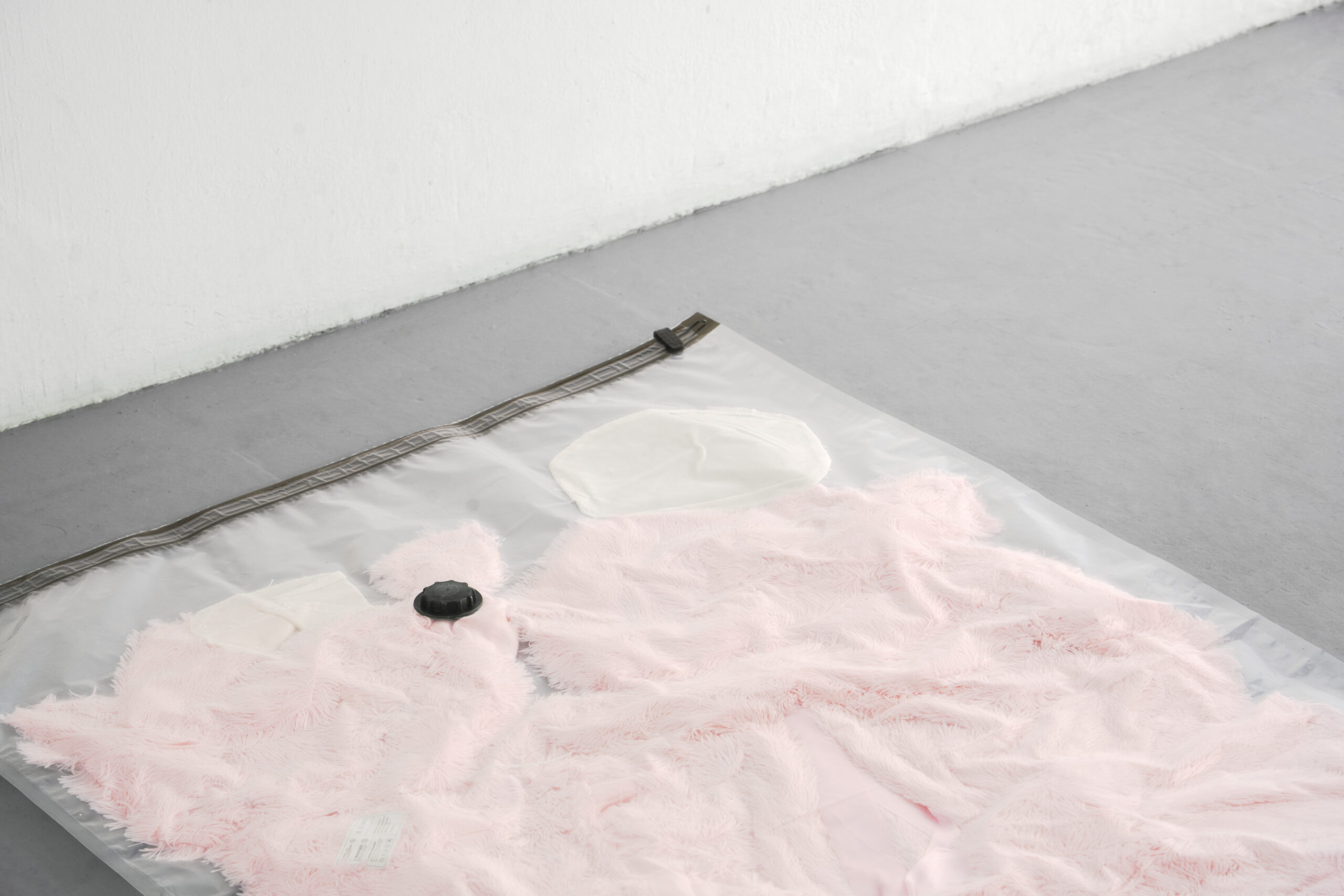
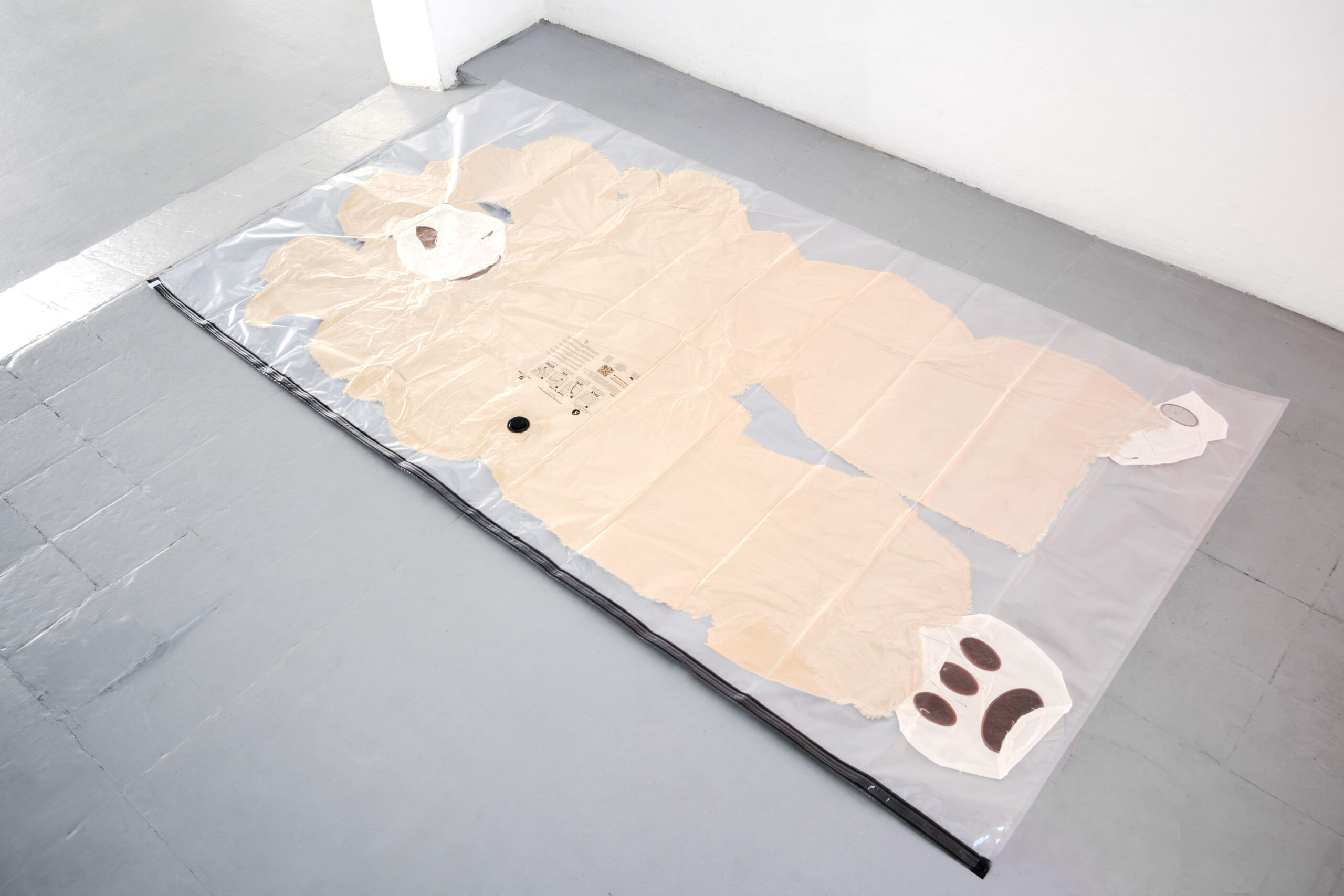
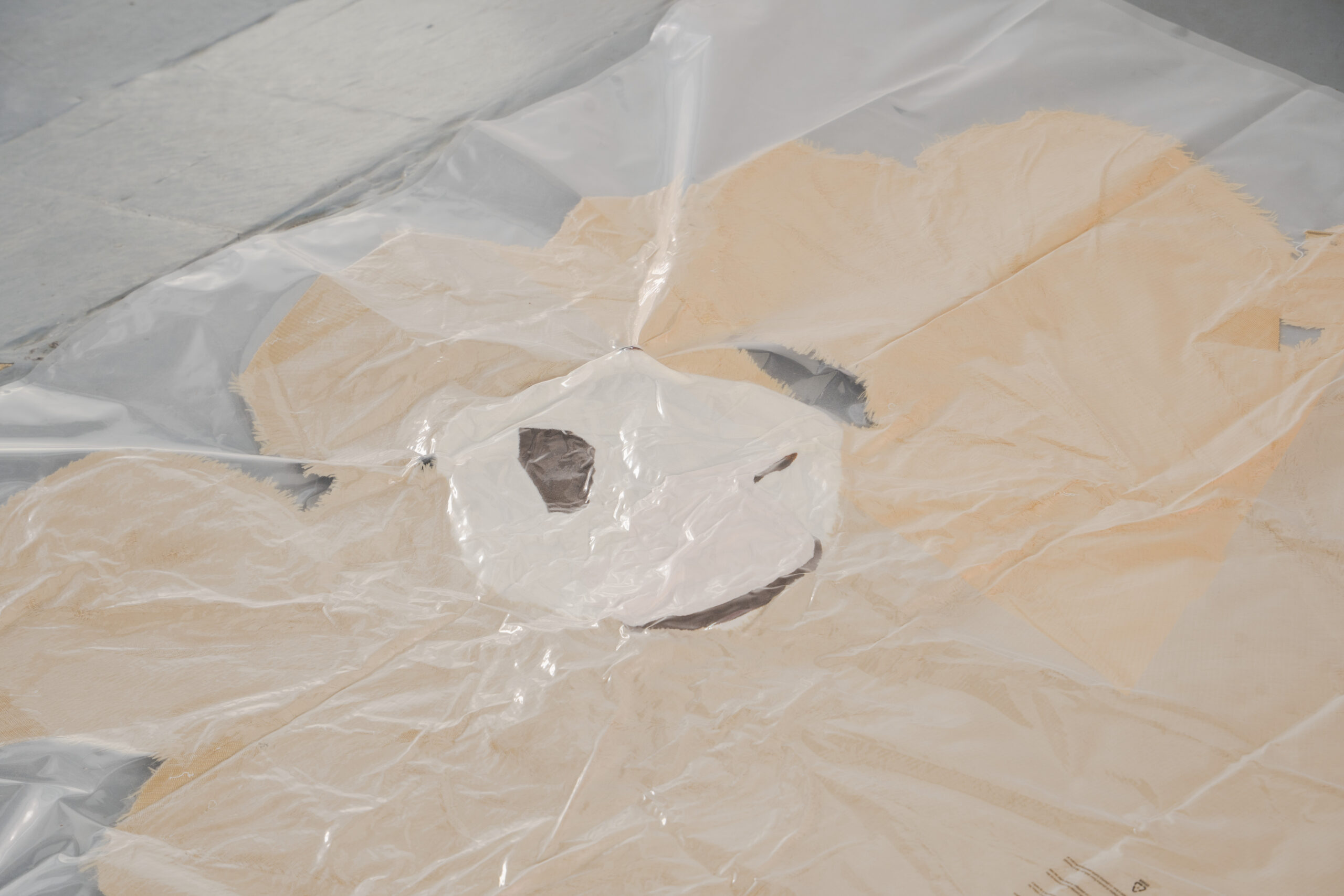
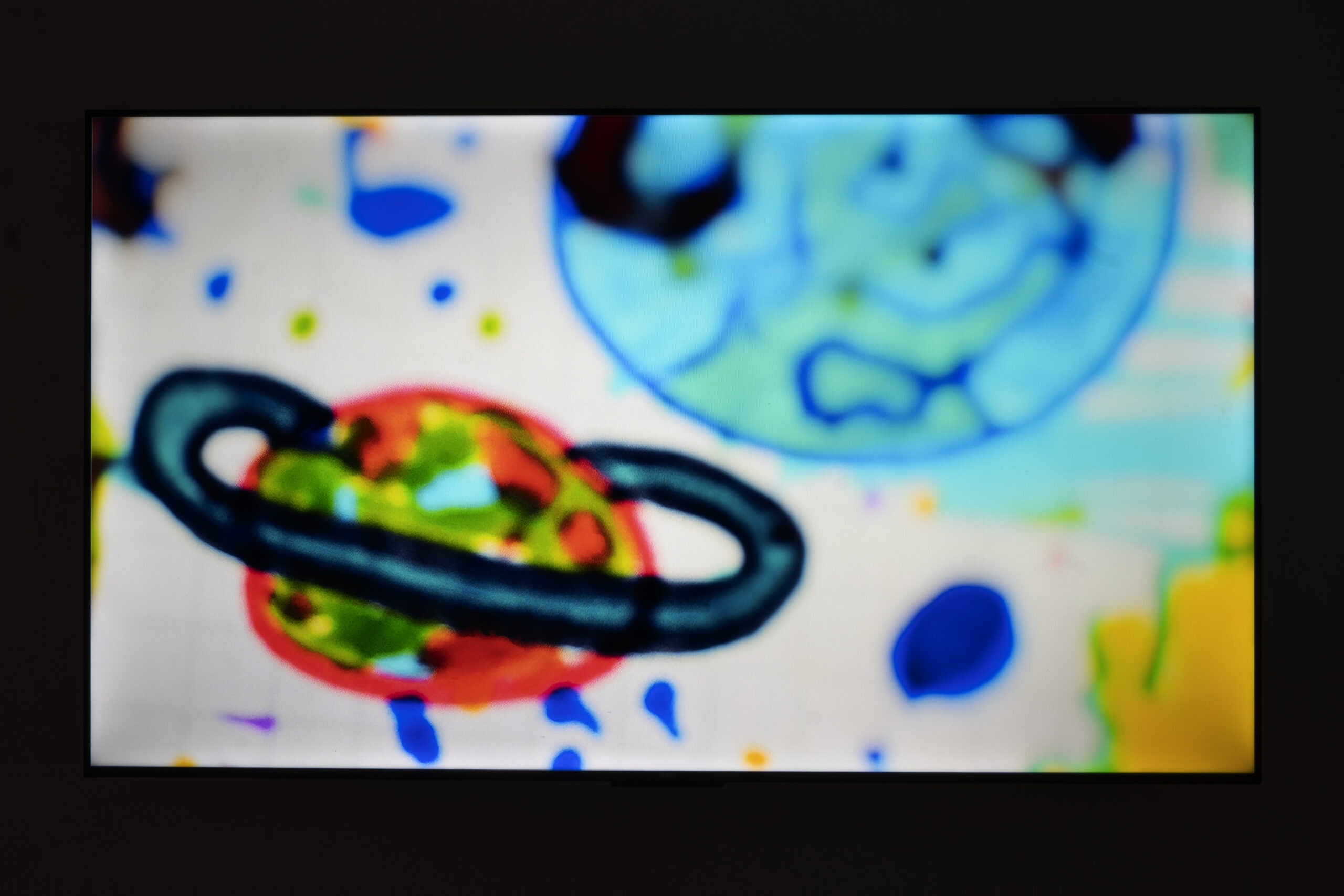
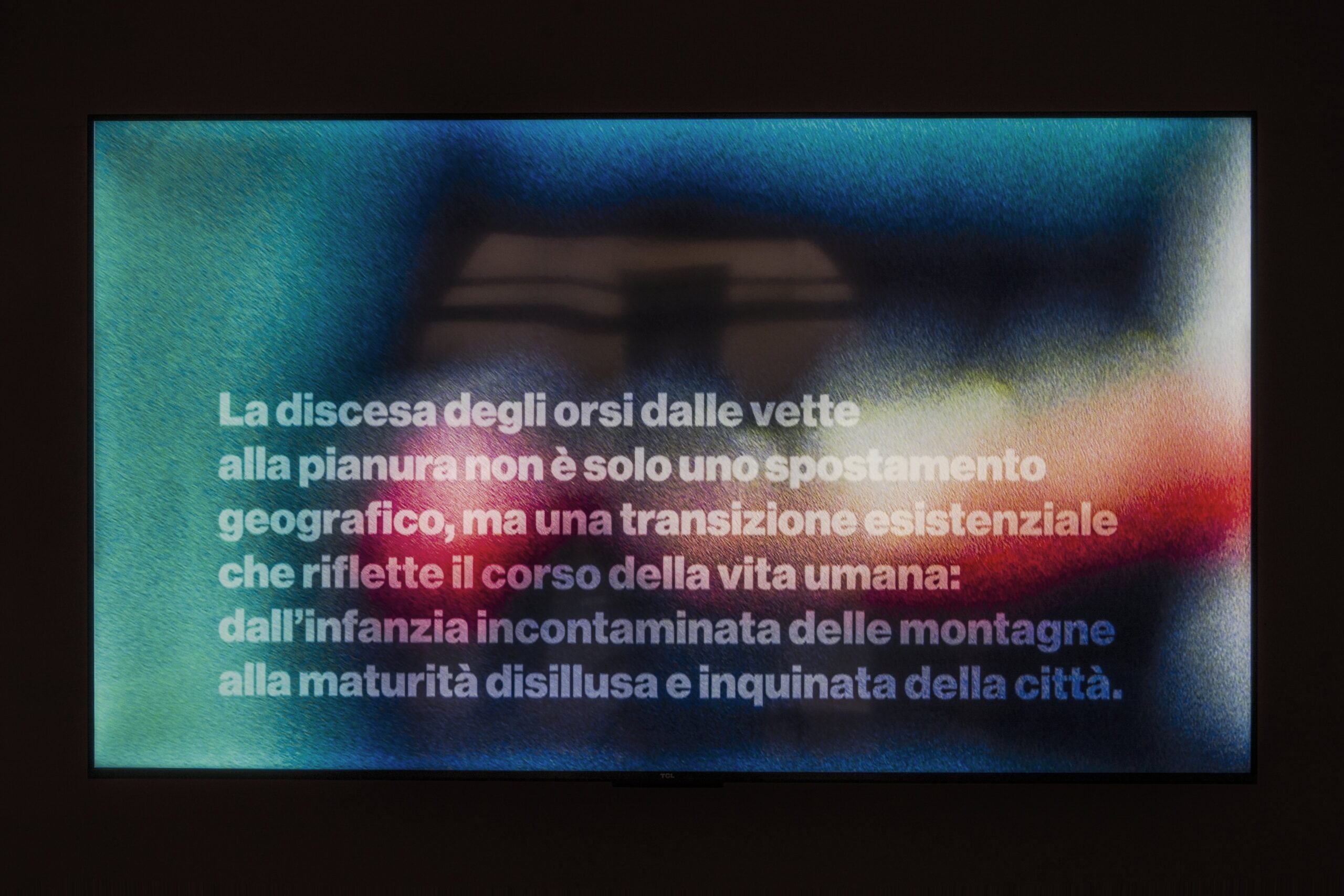
Gelateria Sogni di Ghiaccio presents “Frammenti di un discorso amoroso” (A Lover’s Discourse: Fragments), a spatial composition of objects and moving images by Enrico Boccioletti. The installation borrows its title from Roland Barthes’ famous essay (1977), staging the emotional expenditure we devote to childhood objects, a phase of radical intensity that precedes and resists the normativity of linguistic and social contexts. “Frammenti di un discorso amoroso” begins with the discovery of a notebook containing sketches made by the artist during his preschool years. Its protagonists are Gaveri Roferoff and Grattocchia, mythical figures who, in the artist’s childhood imagination, preside over the cycle of day and night, manipulating meteorological and elemental events, thus influencing human affairs. Playing with the conventions of autotheory, Boccioletti uses the sketchbook as a starting point to construct a medium-length animated film in which macro shots of these figures alternate with images of clouds created using the pinhole technique, a process dating back to the early days of photography. The editing simulates the unstable movement of a handheld camera, while the already claustrophobic depth of field is further compressed in post-production, creating a feeling of forced proximity. The images are accompanied by a sound composition consisting solely of acoustic feedback, which amplifies the perceptual tension of the work and contributes to creating a suspended, at times disturbing atmosphere. Within the same exhibition space, there are three plastic assemblages: teddy bears of different sizes and colours found in flea markets, emptied of their stuffing and compressed into domestic vacuum bags. Morphologically altered, deprived of air and its usual softness, the teddy bear betrays its promise of love and reassurance, revealing a second, harsh and overwhelming nature. The exhibition is conceived as an exercise in elusive storytelling, poised between improvisation and clairvoyance, in a counterpoint of references that explore self-referentiality, daydreaming, abstraction and mythopoesis. By overturning the conventions of childhood memory, Frammenti di un discorso amoroso presents itself as a fragmented narrative in which darkness and tenderness coexist ambivalently, resisting univocal interpretation and the clichés associated with the world of childhood.
As a child, I experienced the world in shoegaze mode. Severe hyperopia with astigmatism, still undiagnosed, blurred the contours of things, making distant lights appear as a series of coloured double circles, and nearby surfaces smooth and uniform, lacking texture and almost devoid of depth. It was comforting to float in an undefined and vague world, where edges, textures, wrinkles and details were absent.
What is sadness, and where does it come from? Is it more in the things around us, or does it start from within ourselves and contaminate things? How do you explain sadness to a child? They say that the greatest catastrophe comes when no one can see it.
The Duracell commercials used to make me cry desperately. I recall the anger and dread of those moments when all the teddy bears stopped moving, all except for the one with the right batteries.
Billy Corgan sings: ‘Time is never time at all/You can never ever leave/Without leaving a piece of youth’ in Tonight, Tonight. It is the second song on Mellon Collie And The Infinite Sadness, and these are the first words we hear on the album, after the instrumental title track, a piano ballad with orchestral arrangements. ‘The more you change, the less you feel,’ Corgan sings on, ending the verse.
There is a passage at the beginning of Giorgio Agamben’s Infanzia e Storia (Infancy and History) that quotes Walter Benjamin on the condition of people who grew up between the two world wars, which has never ceased to haunt me: “A generation that had gone to school by horse-drawn tram stood under the sky in a landscape where nothing had remained unchanged except the clouds […]”. Leaving aside the trams and horses, it still seems very apt for us too.
A glimmering, inscrutable sadness resonates in flea markets, scrap yards, and your mother’s wardrobe that once fascinated you but that you haven’t opened for twenty years. They are involuntary monuments, stumbling blocks of life within life, on the outskirts of the universe. Passager clandestin d’un voyage immobile.
Alda Merini writes: ‘I was sleeping, dreaming that I was not in this world’.