


If time is an onslaught, love is a mission
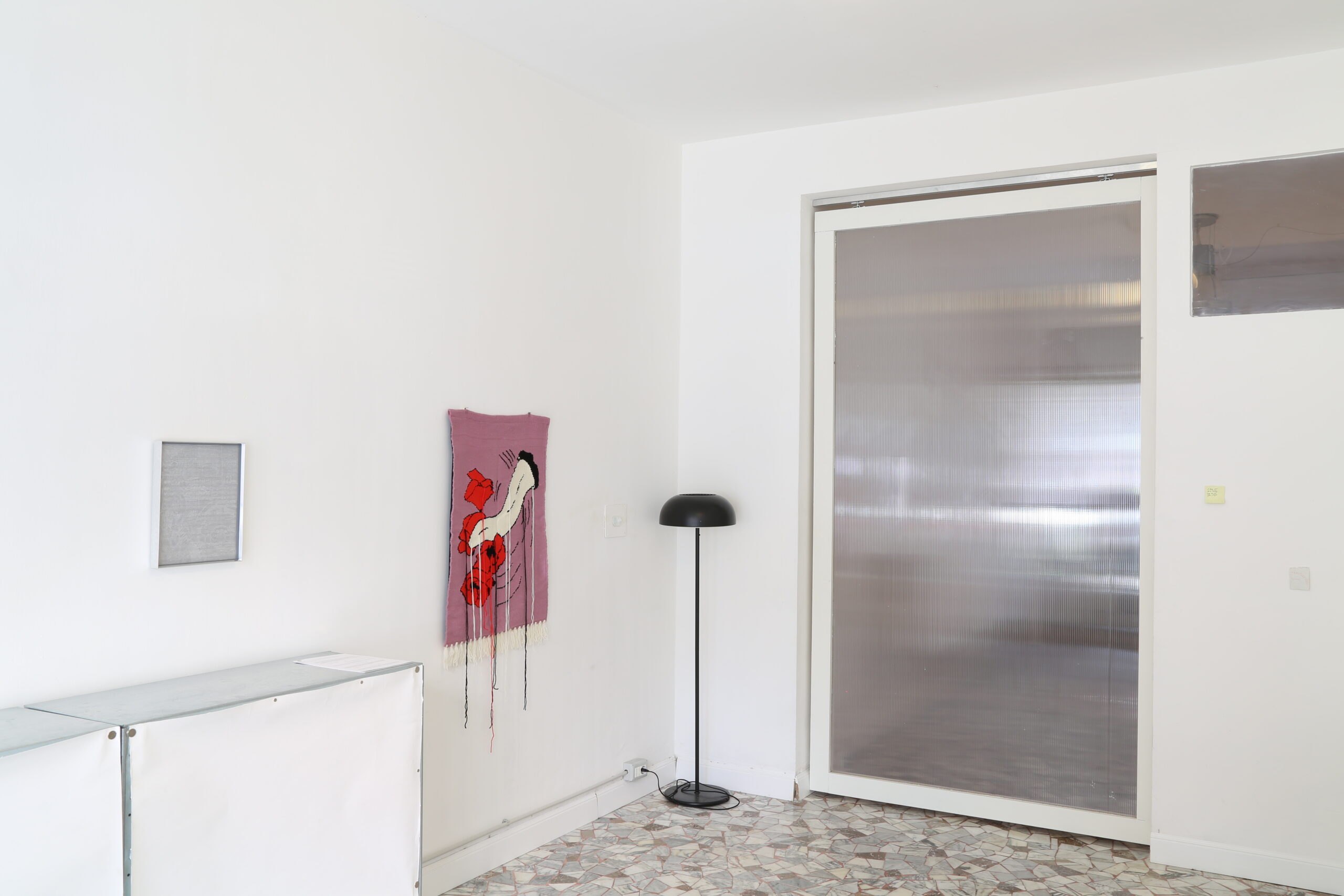
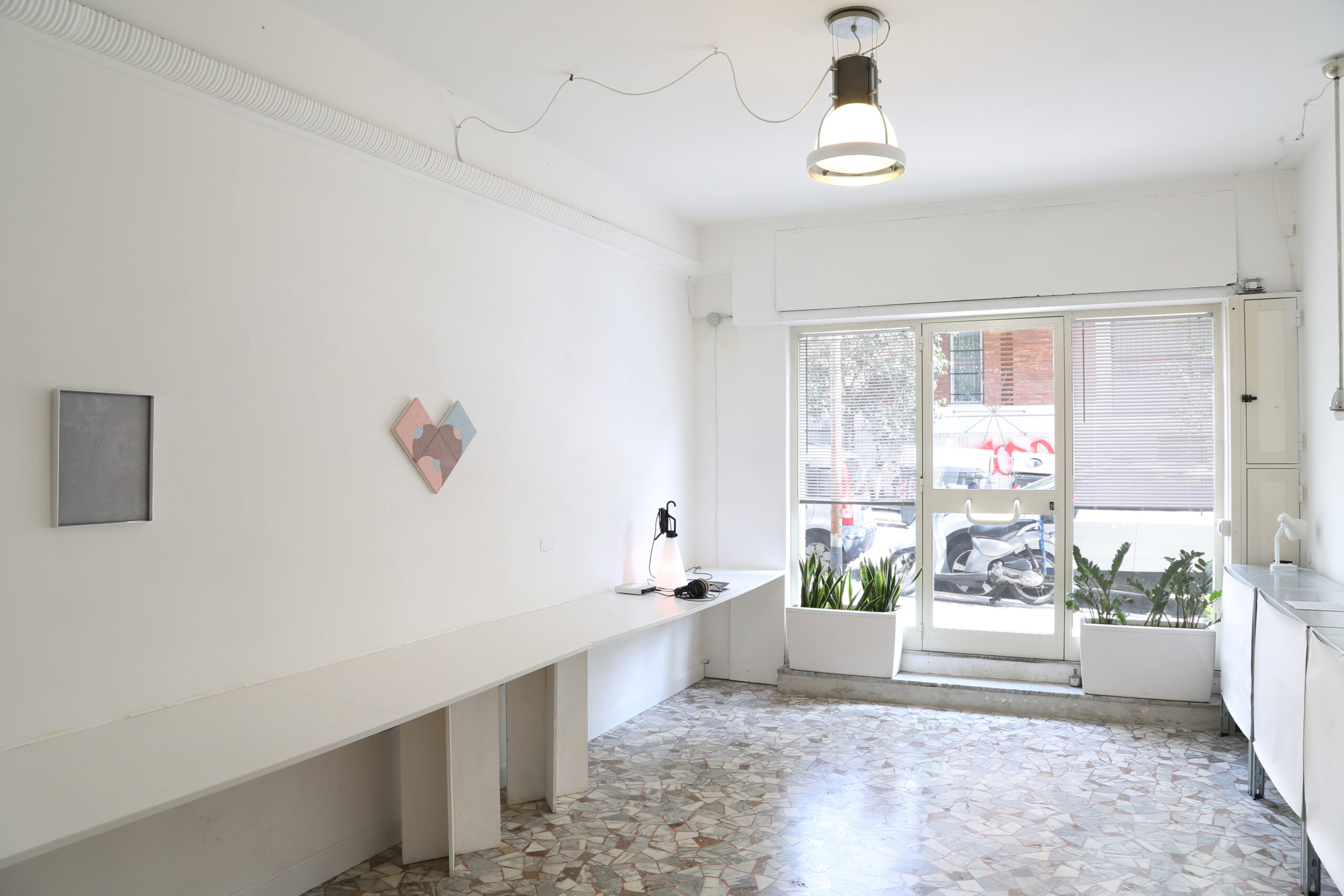
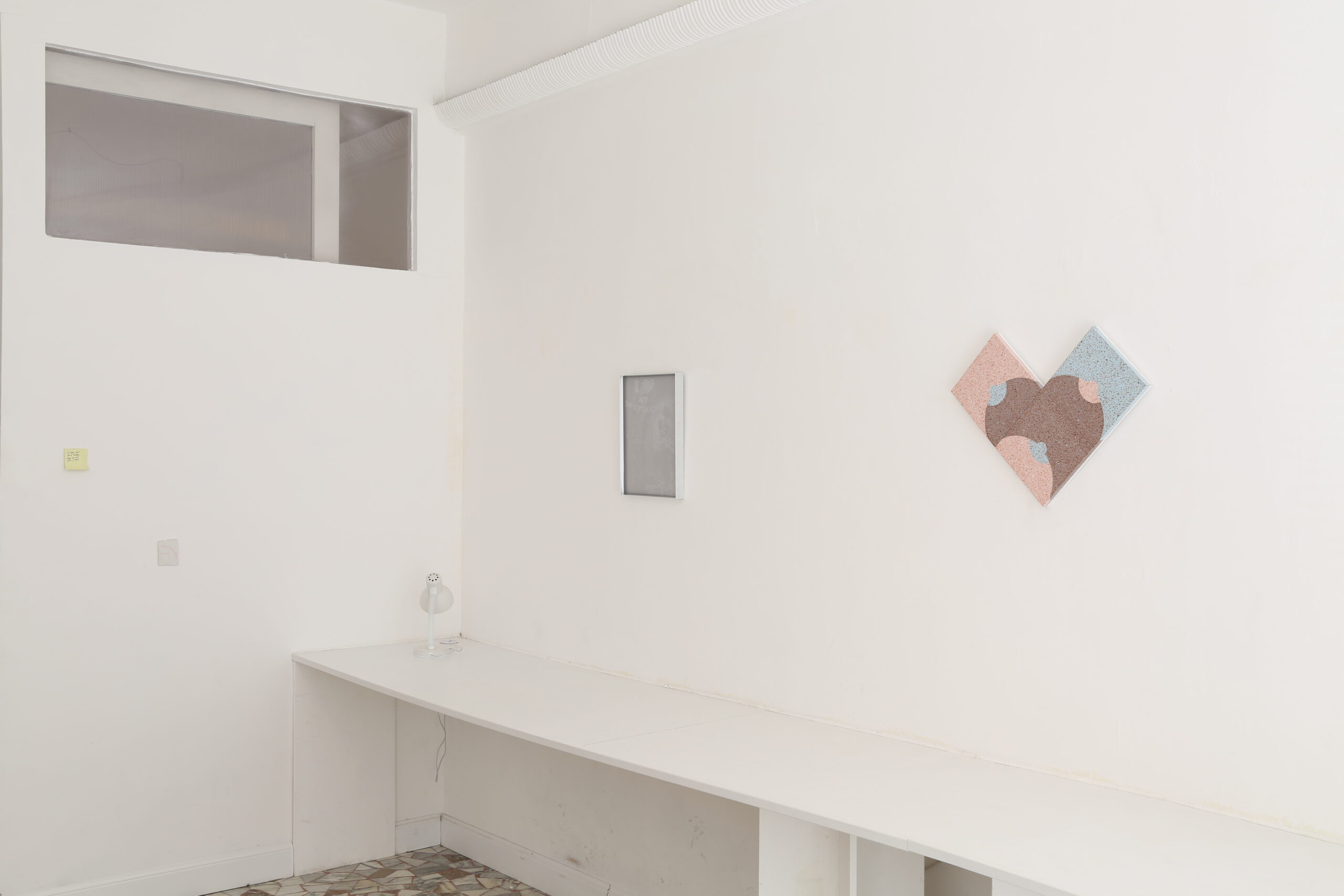
The group exhibition If time is an onslaught, love is a mission unfolds within a temporal regime dominated by acceleration and the compression of experience, in which the continuity of bonds is constantly put to the test. If time acts as a force that presses and disintegrates, love—understood as a practice of relation and responsibility—emerges as an exercise in duration, a gesture capable of holding together what tends to fragment and of opening spaces of possibility. The title, drawn from a verse by Kae Tempest, activates a tension between an overwhelming force and a responsive act, between individual vulnerability and shared construction. Within this gap lies the invitation to continue weaving relations even as history accelerates, making care a concrete and situated form of collective resistance.
With this project, 10 documents continues its public research program dedicated to affection as a relational force: that which moves bodies, shapes communities, and redefines critical thought. Through exhibitions, workshops, publications, and sonic and performative acts, 10 documents investigates how relationships, bonds, and proximity can become aesthetic, political, and social material.
The event brings together artistic practices that operate within a shared field while adopting different positions in relation to the central theme. The invited artists belong to the same generation but work across diverse languages and media—from drawing to writing, from audio to performance and video, to sculpture and installation. Rather than constructing a unified narrative, the works present plural ways of being in relation, allowing a multiplicity of voices to emerge without resolving into synthesis.
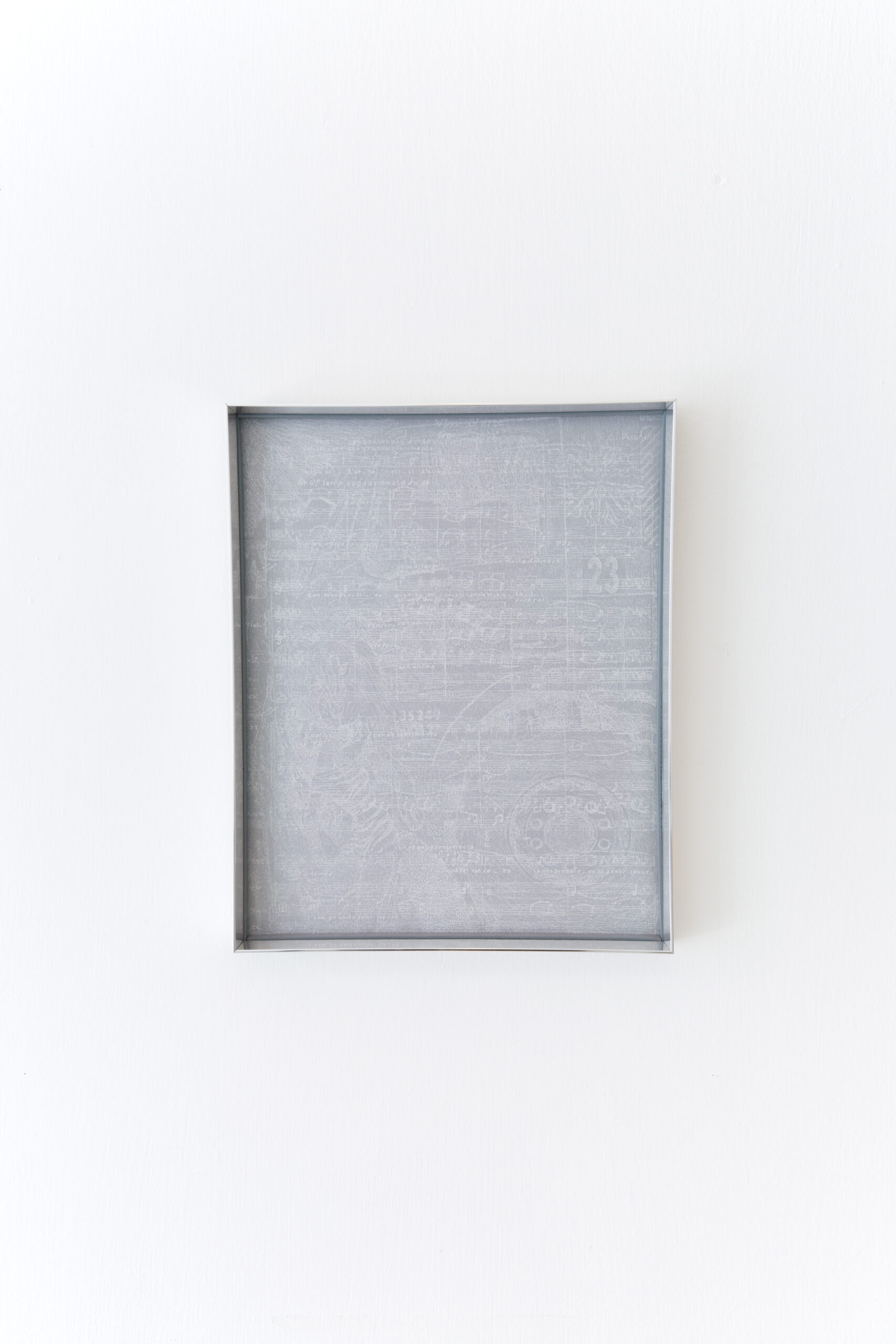
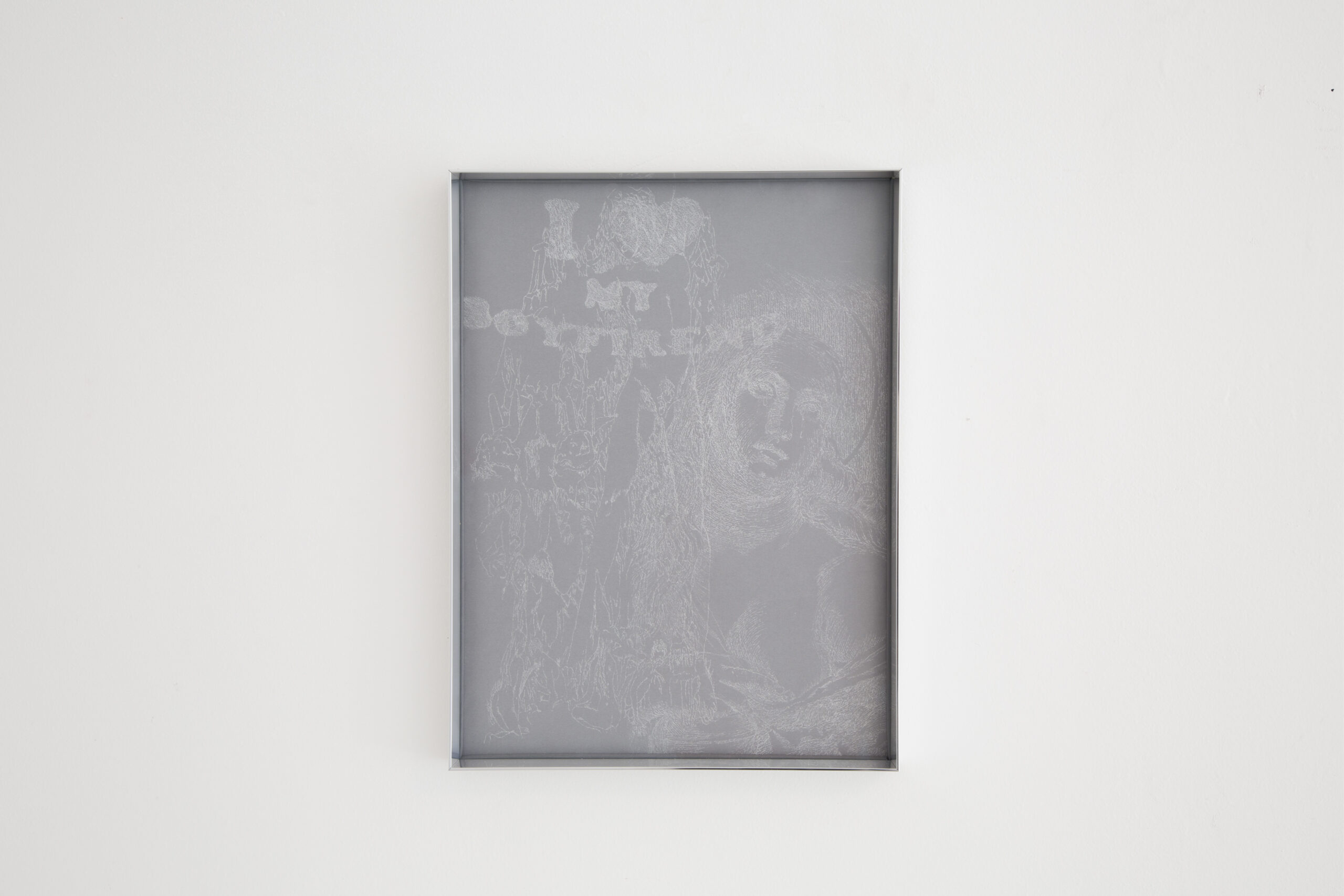
The show opens with a series of new productions (2026) by Andrea Lo Giudice, centered on a research into the voice as a space of resonance. Tracing paper, a material connected to his father’s architectural practice, becomes a surface for projection: a space where what does not yet exist can take shape through layering and transparency. Drawing—also rooted in Lo Giudice’s experience as a tattoo artist—acquires an incisive, corporeal quality, constructing images through iconographic mashups that intertwine historical, mythological, and personal references. The mark does not merely describe; it accumulates density to the point of producing an almost sculptural rendering. The drawings oscillate between figuration and abstraction, generating visual fields built through superimposition. Their stratification becomes perceptible only through prolonged looking, gradually revealing the different layers that traverse them.
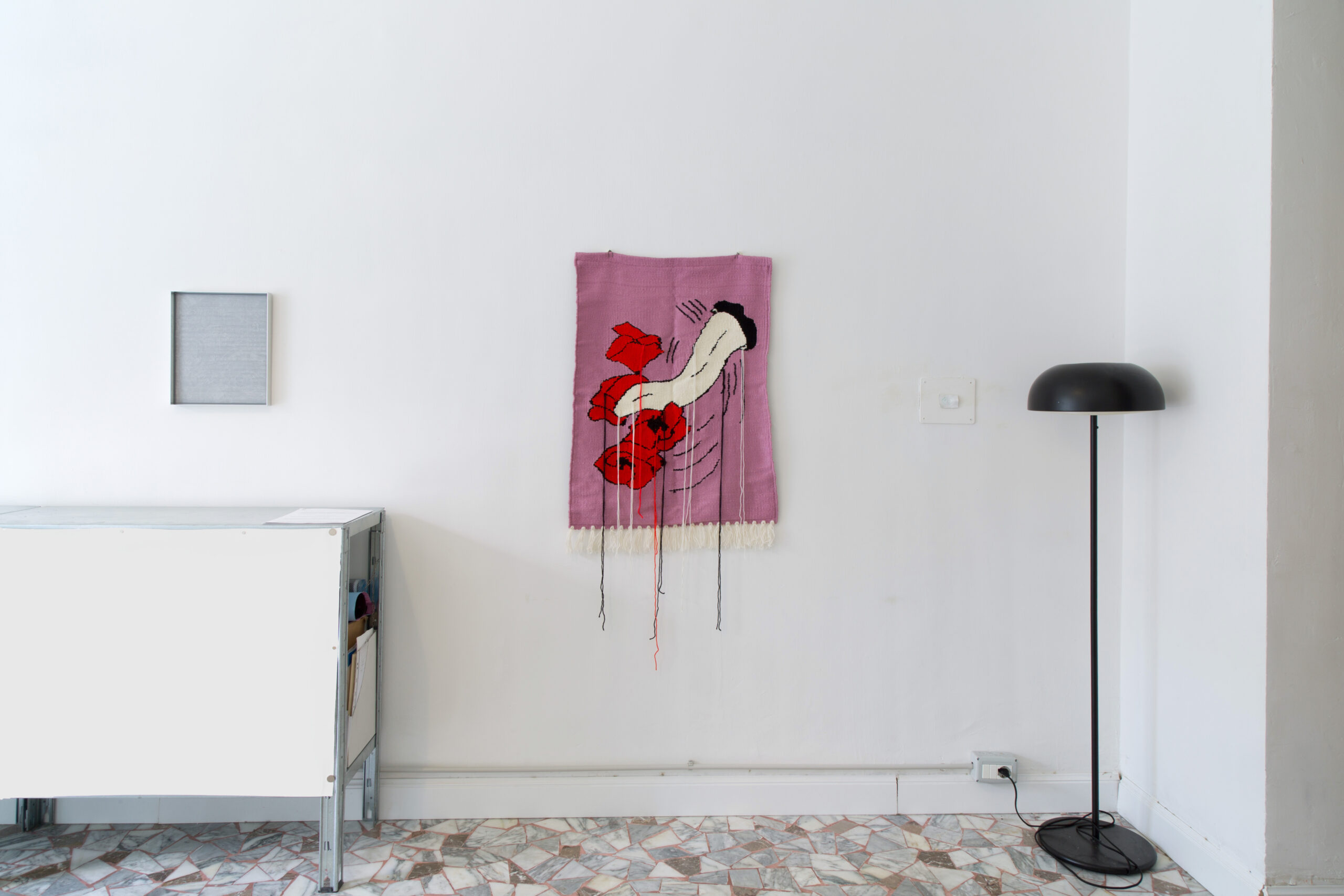
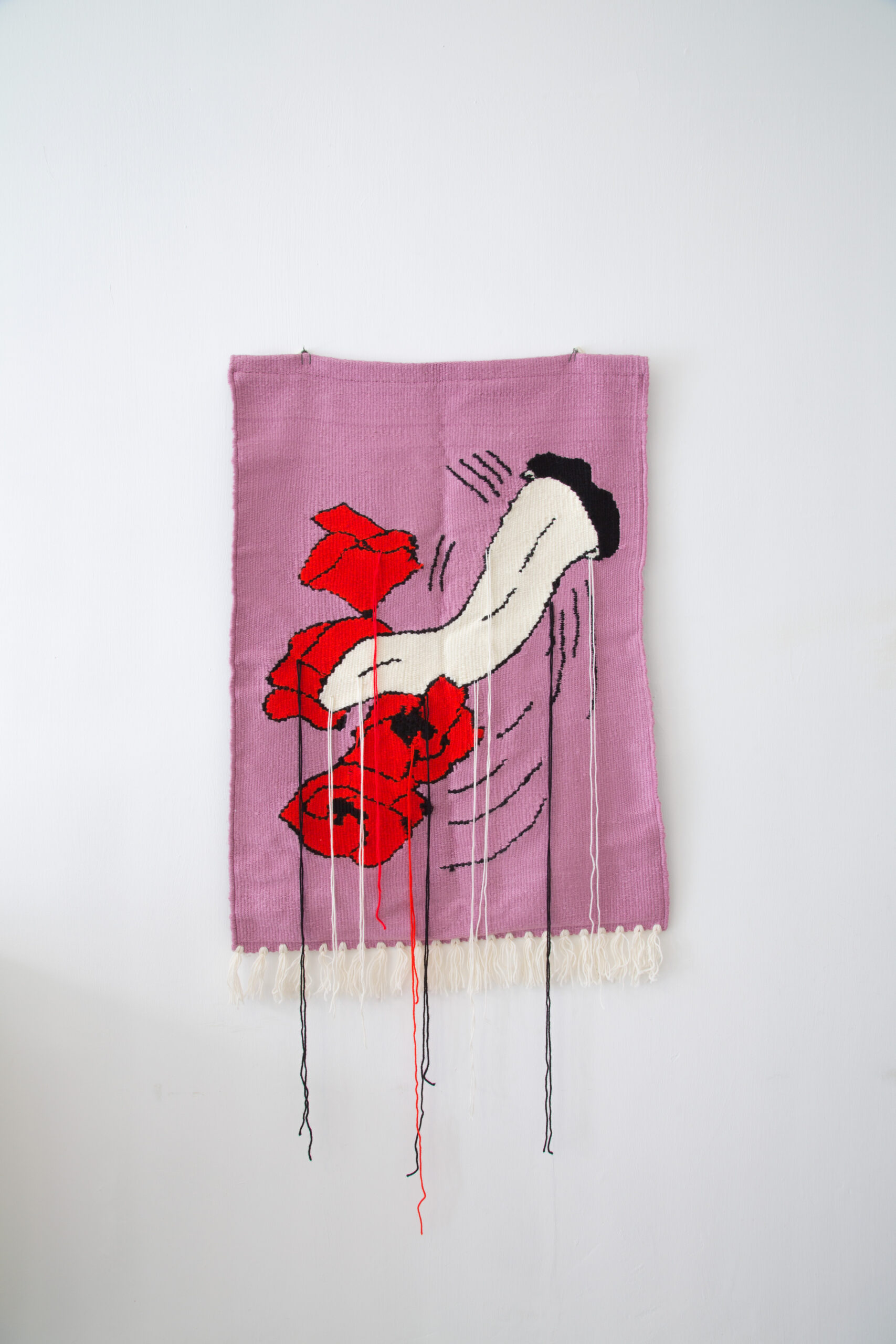
With Pulled Tongues (2022), Chiara Pagano shifts the reflection toward language as a political device. Starting from the 1952 song Papaveri e Papere and its propagandistic appropriation during the anti-communist campaign, the artist deconstructs the binary structures and gender hierarchies sedimented within the text. The tongue—organ of speech but also surface of control—becomes a figure of tension between expression and censorship. The tapestry, conceptualized by Pagano and developed in collaboration with PELORUGS, operates as a textile field of rewriting: a material weave that restores a body to what has been silenced. Accompanying the work is a text by the artist that deepens its theoretical framework, extending the historical-political analysis of the song and interrogating the performative dimension of language and the discursive construction of identities. Pagano’s practice, moving between visual research and performance theory, thus assumes the word as a space of conflict and critical re-elaboration.
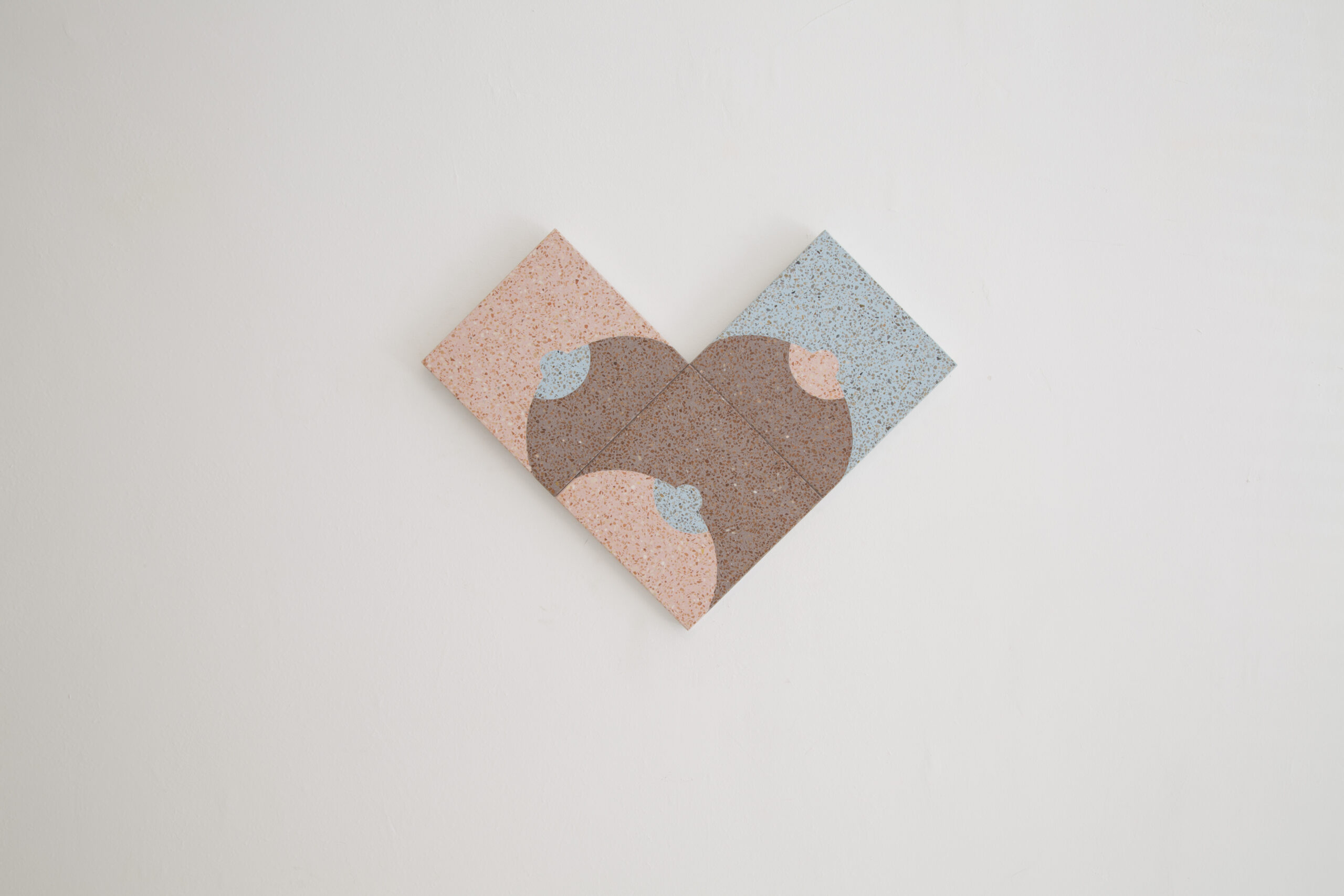
With Lettere Efesie (Madonna del latte), Caterina Morigi works on a symbolic genealogy that intertwines ancient and contemporary dimensions (2025). Through the manipulation of graniglia—a material suspended between the industrial and the domestic—the artist constructs dense surfaces that evoke contemporary relics. The reference to magical formulas from ancient Greece and to the popular iconography of the Madonna del latte activates an apotropaic and ritual dimension, removing the image from an exclusively devotional reading. By isolating the element of nourishment, Morigi restores its structural force: care as a foundational gesture, a function that protects, sustains, and preserves. A silent mission that traverses time and inscribes itself in bodies and images.
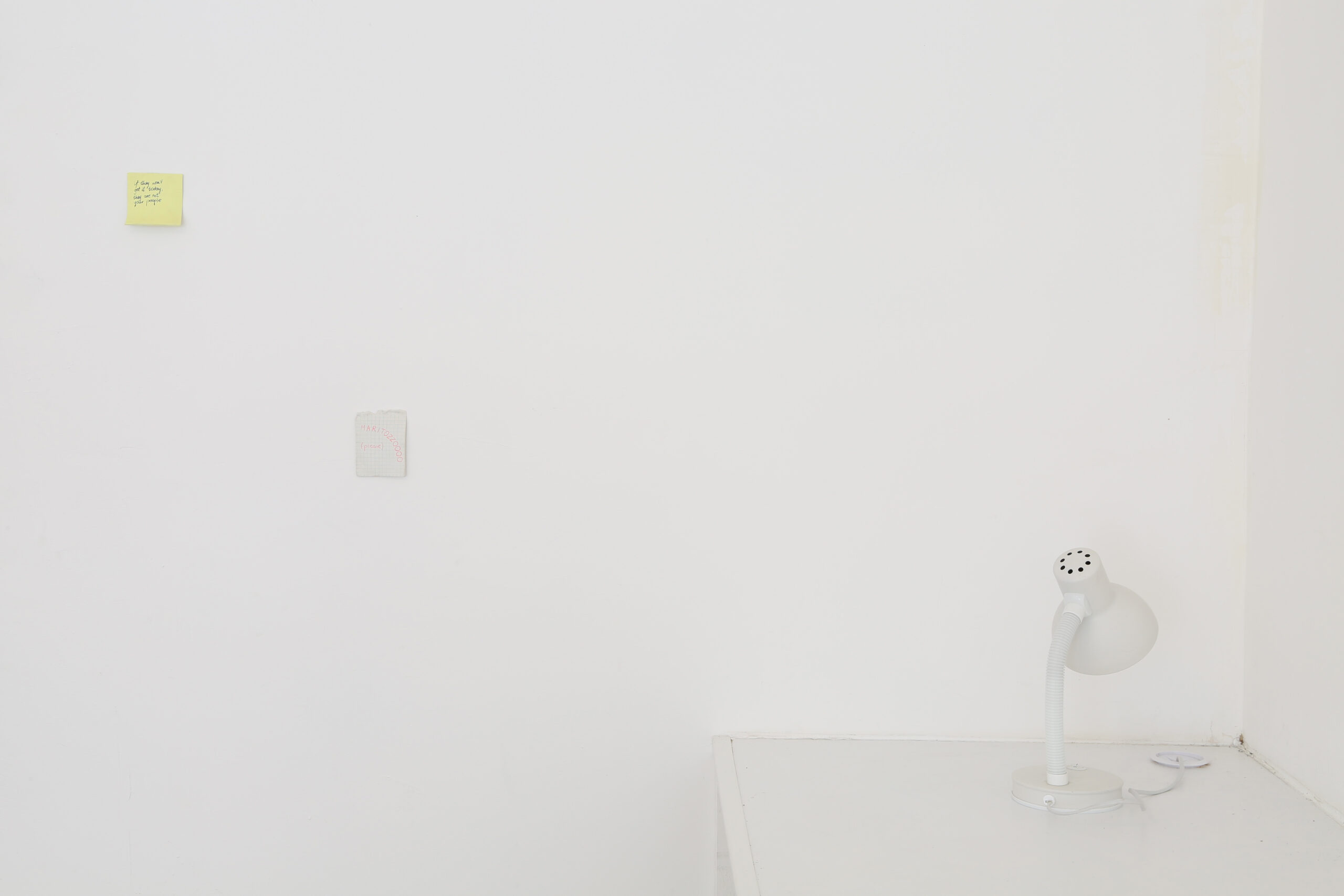
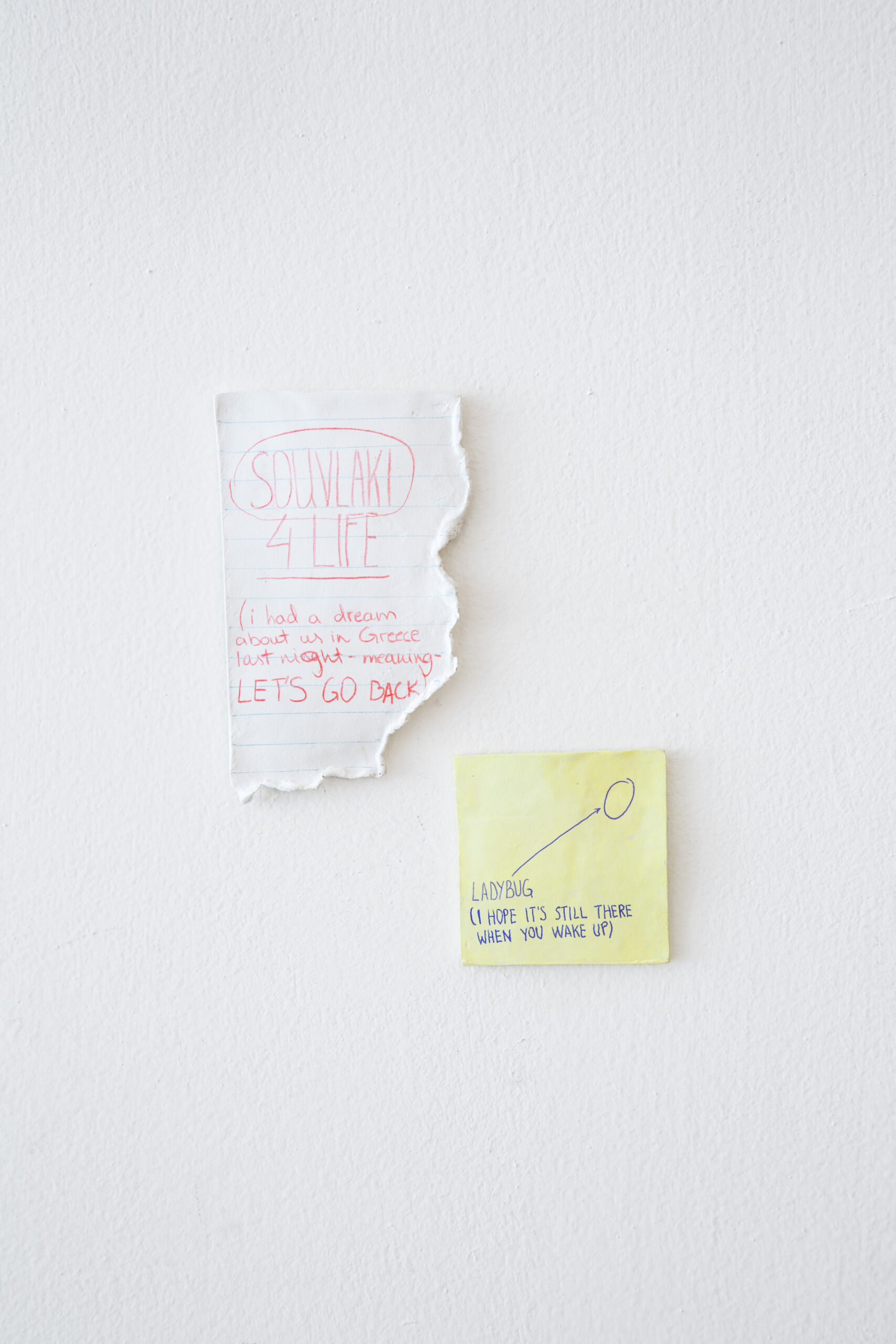
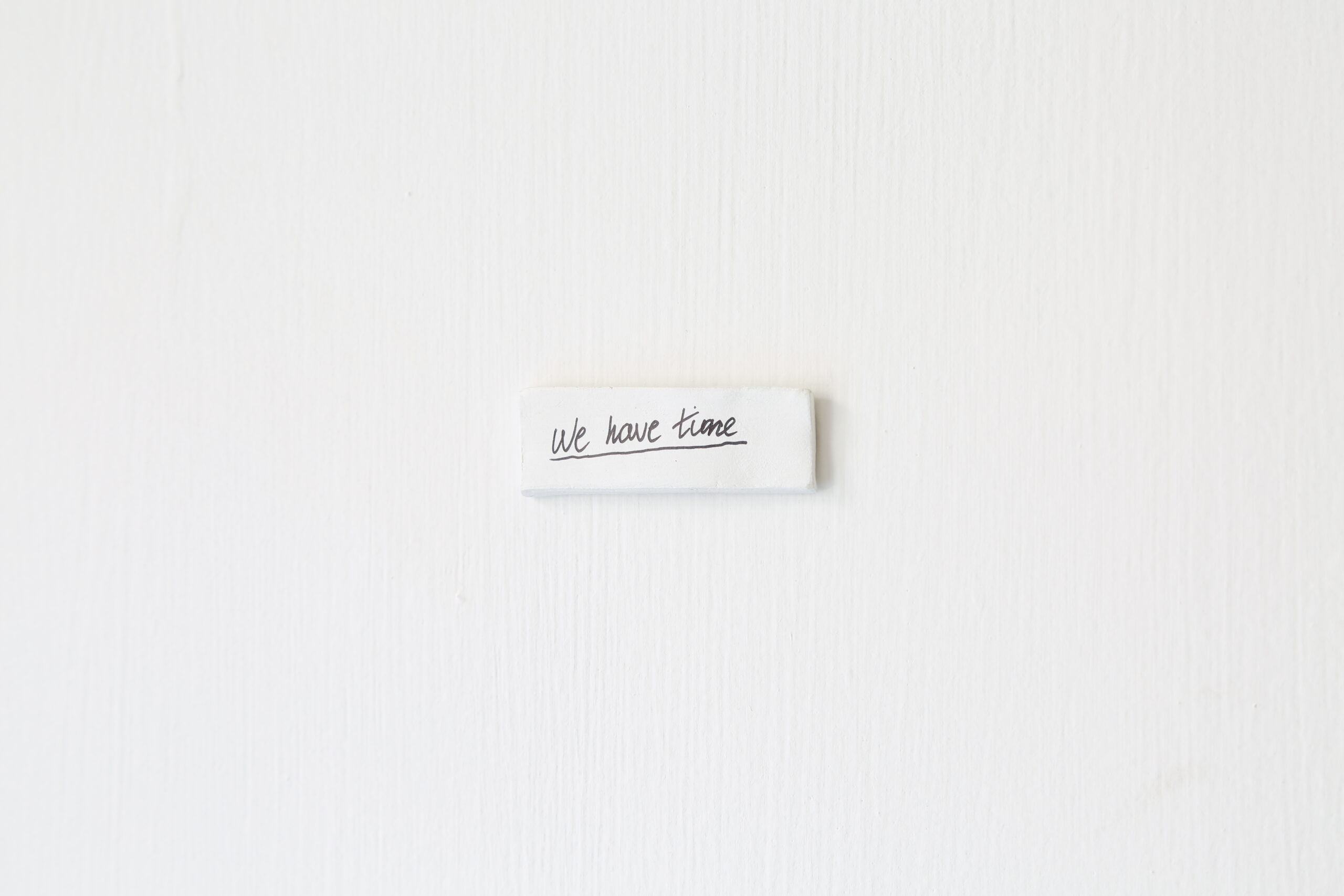
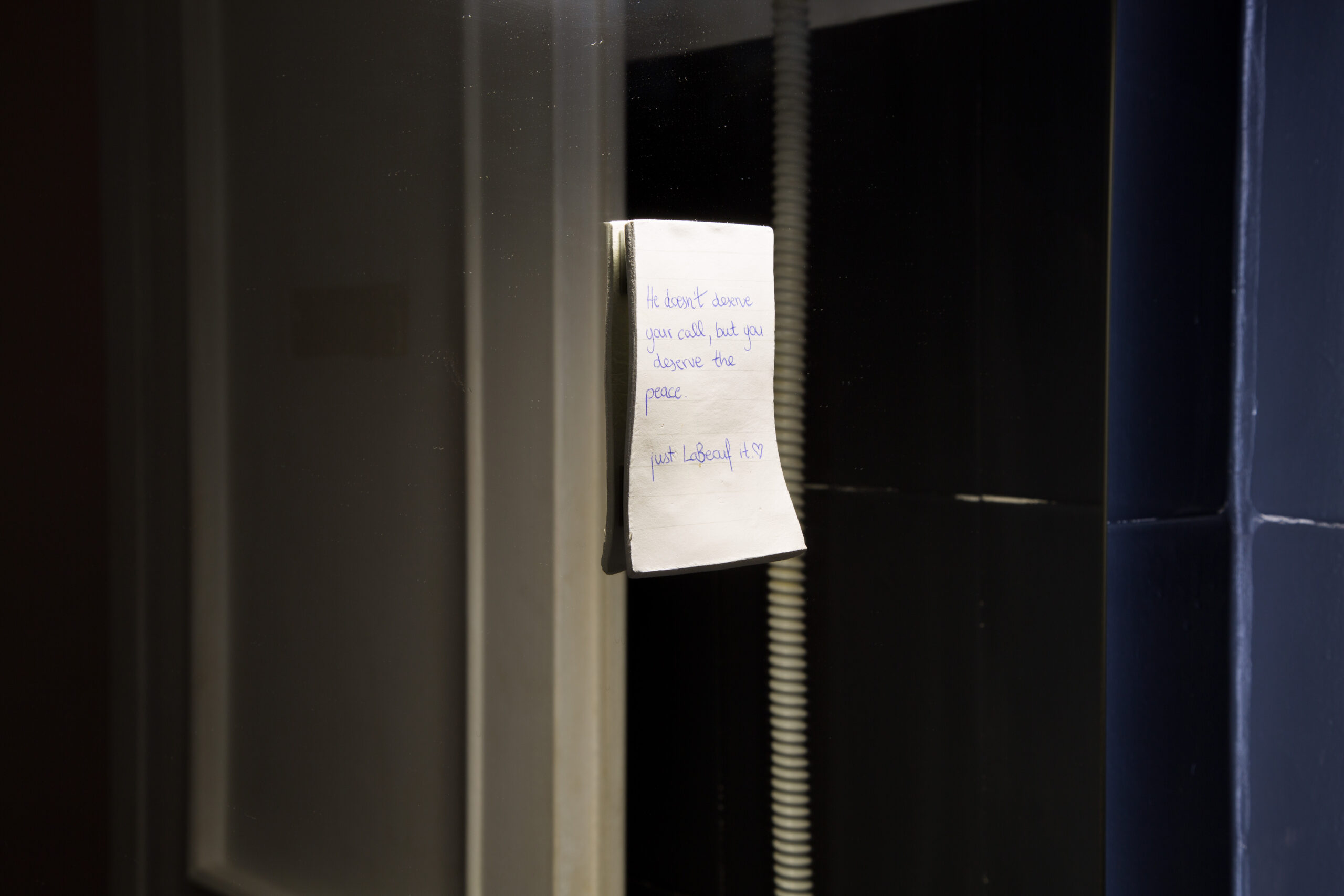
Intimacy becomes micro-history in Dalija Kaukėnaitė’s sculptures, Notes (2025). An imagined couple, situated in a pre-digital time, communicates through notes and post-its left in domestic space, constructing a language made of allusions, reminders, and minimal gestures. Translated into ceramics and scattered throughout the gallery, these messages become tangible traces of a relationship that manifests itself through fragments. Clay—both fragile and resilient—crystallizes the everyday gesture and suspends its temporality, transforming absence into presence and the ephemeral into shared memory.
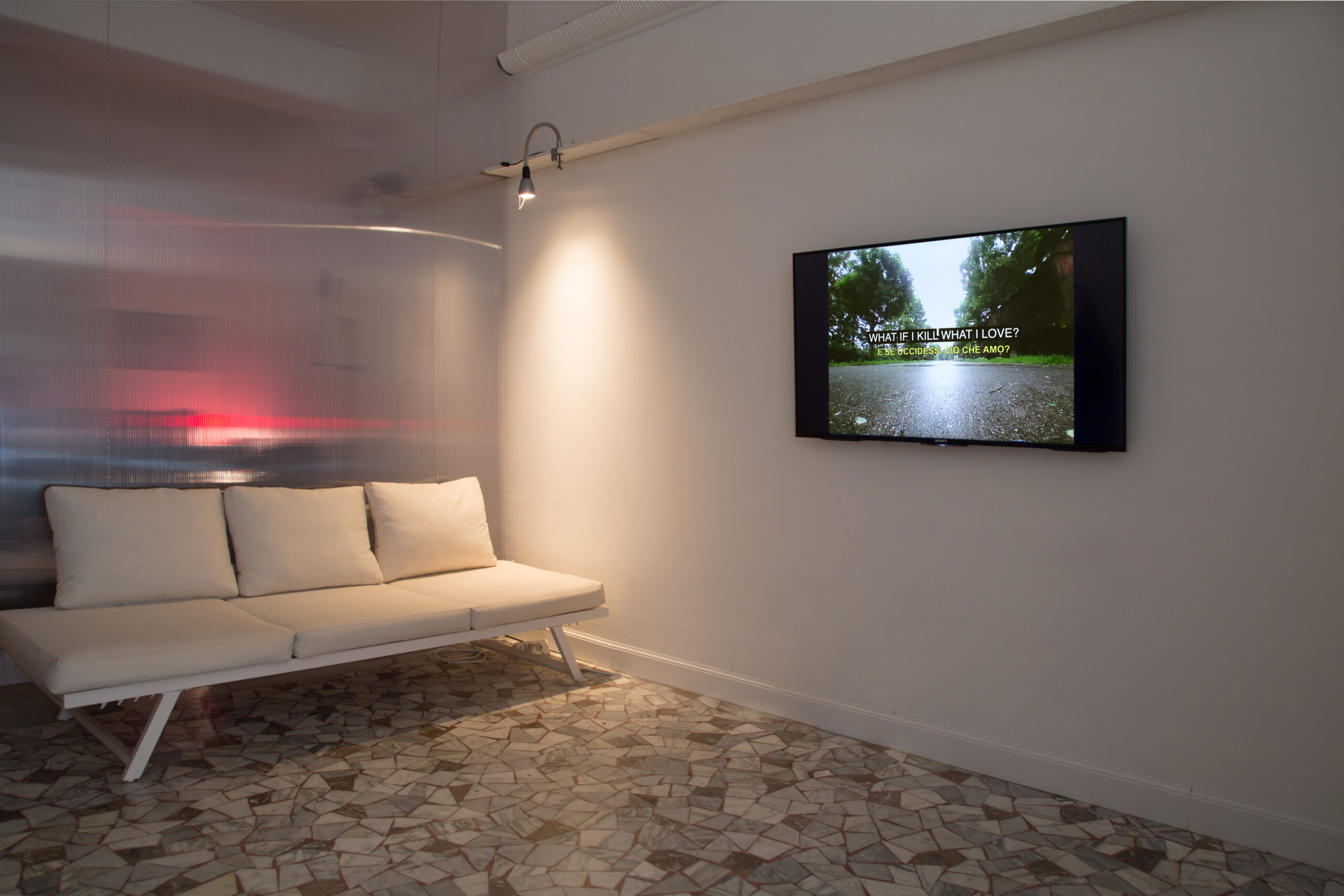
The dimension of fiction returns in Anouk Chambaz’s video To Have an Existential Crisis (2016). A non-human subjectivity—a robot—moves through the public space of an unidentified location, navigating at ground level. The camera adopts its point of view, leaving the body out of frame and showing only what it encounters: squares, streets, fragments of ordinary reality. The questions that emerge from the robot’s traversal—intimate and seemingly contradictory—expose a disarming sensitivity, staging a crisis that is at once ironic and radical. Indecision becomes a device of openness: a vulnerability that suspends judgment and transforms the act of looking into an exercise of relation with the surrounding world.
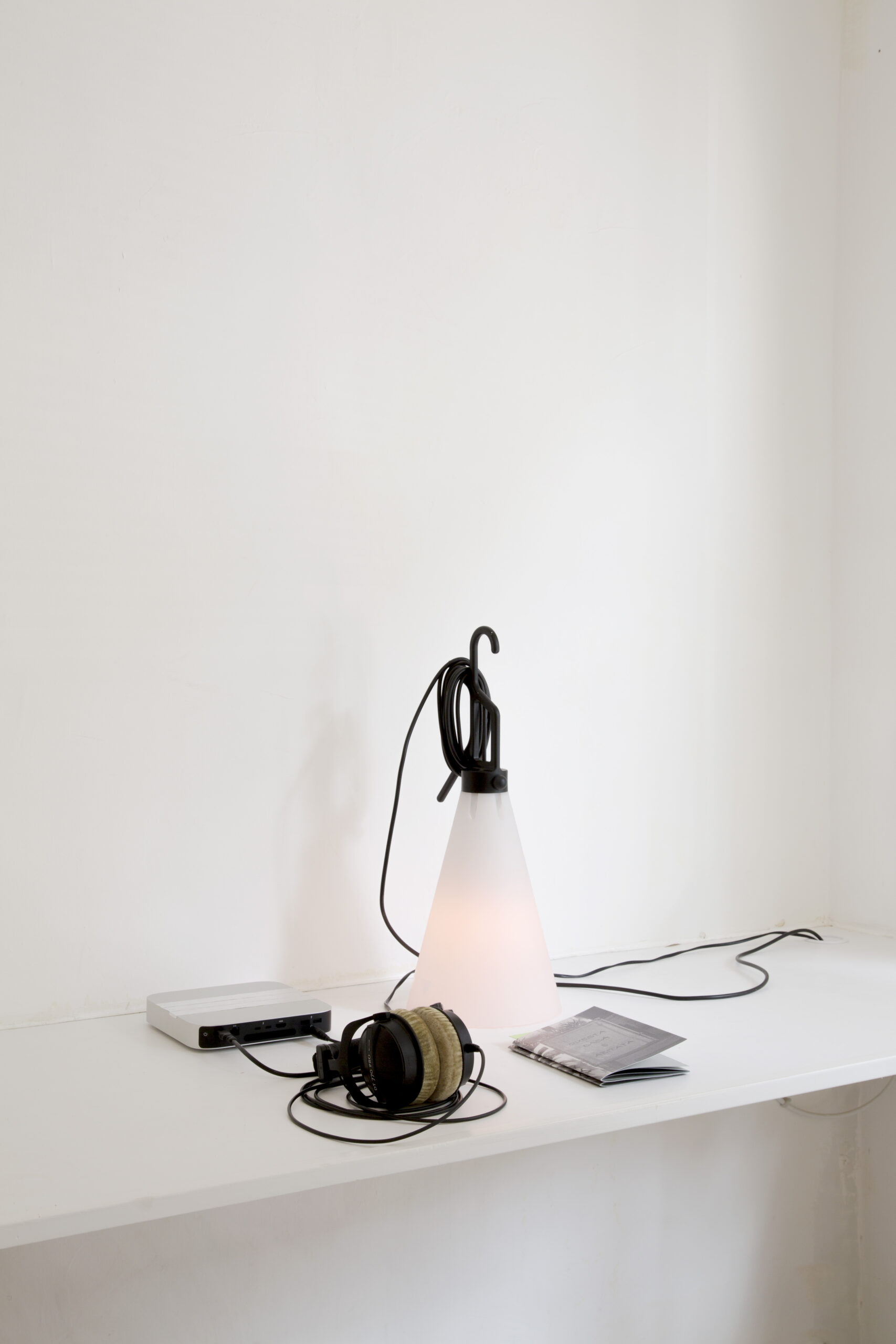
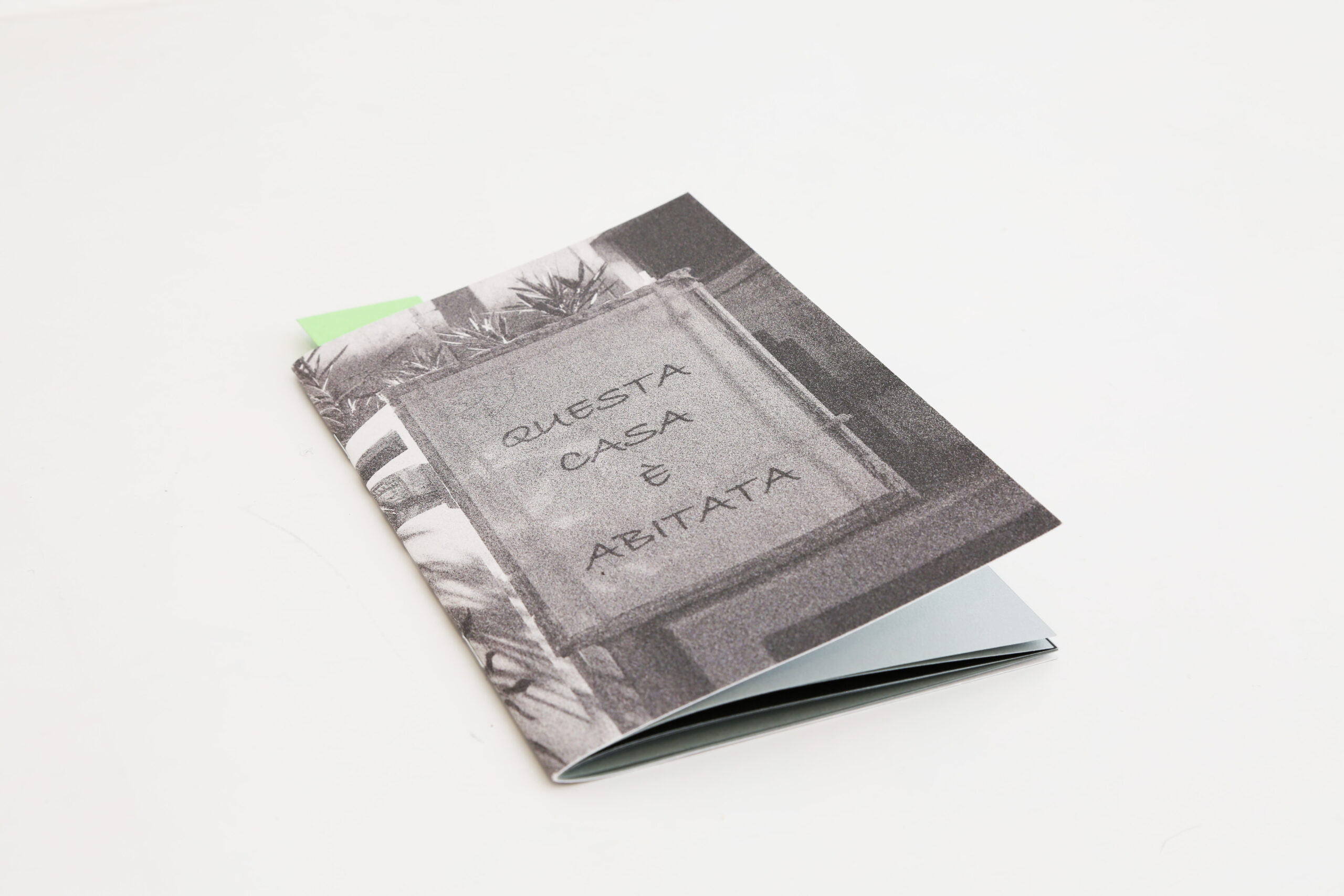
The exhibition concludes with the research of Agnese Fieno Spolverini, which brings the reflection back to the situated dimension of territory. Questa casa è abitata (2024) emerges from a co-creation process with young residents of Guardia Sanframondi, a small town in the province of Benevento, and takes shape as a collective narration of place. The fanzine intertwines texts and images recounting explorations of abandoned houses, local memories, and practices of re-appropriation, constructing an affective archive of the rural landscape. This editorial dimension is accompanied by a sound research developed through field recordings, rendering audible the resonances, presences, and invisible stratifications of space. In the exhibition, a dedicated station allows visitors to read the fanzine and listen to the audio track.
During the opening, Fieno Spolverini will present Is this vomit fruitful anyhow? (2025), a reading performance that investigates the threshold between the desire for insurrection and the paralysis of action, asking when it becomes possible to transform intention into gesture.
___________
Anouk Chambaz (Lausanne, 1993) is an artist and filmmaker exploring thresholds between spaces, dreams, and subjectivities. Her films have been presented at MACRO – Museum of Contemporary Art of Rome, Solothurn Film Festival, Rencontres Internationales Paris/Berlin, and the Rio de Janeiro International Short Film Festival. She is also a teaching assistant at ECAL – École cantonale d’art de Lausanne and a programmer for LUFF – Lausanne Underground Film and Music Festival.
Agnese Fieno Spolverini (Viterbo, 1994) is an artist working with installation, sound, writing, and workshop-based practices. Her research investigates the intersections between intimacy and the public sphere, exploring the frictions and conjunctions between bodies, spaces, and the politics that traverse them. She has participated in residencies and exhibitions at Associazione Barriera, Una Boccata d’Arte, Palazzo Re Rebaudengo, Kora, Polo del ’900 in Turin, and Fondazione Elpis. She is currently a student at the Dutch Art Institute.
Dalija Kaukėnaitė (Vilnius, 1995) è un’artista visiva attualmente residente a Roma. Con una formazione in graphic design e art direction, la sua pratica nasce dall’osservazione della vita quotidiana, di cui rielabora i significati attraverso la ricerca visiva. Il suo lavoro si muove con fluidità tra diversi media, guidato dal concetto e dal contesto più che dalla forma. Ha esposto presso COSMO Trastevere, Spazio Y, AWAI, PAV – Parco Arte Vivente e ha partecipato a progetti di display urbano come Oripeau a Nantes e Montréal.
Andrea Lo Giudice (Rome, 1994) is a visual artist whose research focuses on the semantic re-determination of places, words, and images. Through drawing, tattooing, installation, and performative action, he recontextualizes the environments in which he intervenes, offering new poetic visions in which the Subject blurs its boundaries to merge with the Other and the surrounding space. His work has been presented at Short Theatre, ADA, Villa Medici, Litografia Bulla, and Fondazione Sandretto Re Rebaudengo.
Caterina Morigi (Ravenna, 1991) is a visual artist whose practice focuses on the vital transformations of matter. Through installations, sculptures, and images, she identifies and investigates connections between the human and natural spheres, triggering subterranean flows between art history, architecture, and technology. Her work has been exhibited in Italian and international institutions including Palazzo Reale, Art Rotterdam, Fotografia Europea, Museo Nazionale della Montagna, Fondazione Archivio Casa Morra, and MAMbo.
Chiara Pagano (Rome, 1993) is an artist and scholar of performance whose work investigates power structures, the politics of (in)visibility, and collective memory from decolonial and feminist perspectives. She is a PhD candidate in Music and Performance at Sapienza University of Rome. Her current research focuses on the politics of frequencies and their affective and political force. Her work has been presented at Triennale di Milano, Fondazione Giuliani, Art Center of Gracanica, and Canale Milva.
10 documents is a platform for artistic, curatorial, and theoretical research developed through public research programs, each dedicated to a different object of inquiry. Through exhibitions, gatherings, publications, conversations, and sonic or performative acts, it creates a living archive each time — a collective lexicon built through presence, reiteration, and listening. Founded in 2025 by Ginevra Ludovici and Flavio Michele, 10 documents falls for almost anything.