


I’m here, but not entirely yours
Opening: Tuesday, January 27, 5–9 pm
Open Monday to Friday: 10:00 am – 1:00 pm and 2:00 pm – 6:00 pm
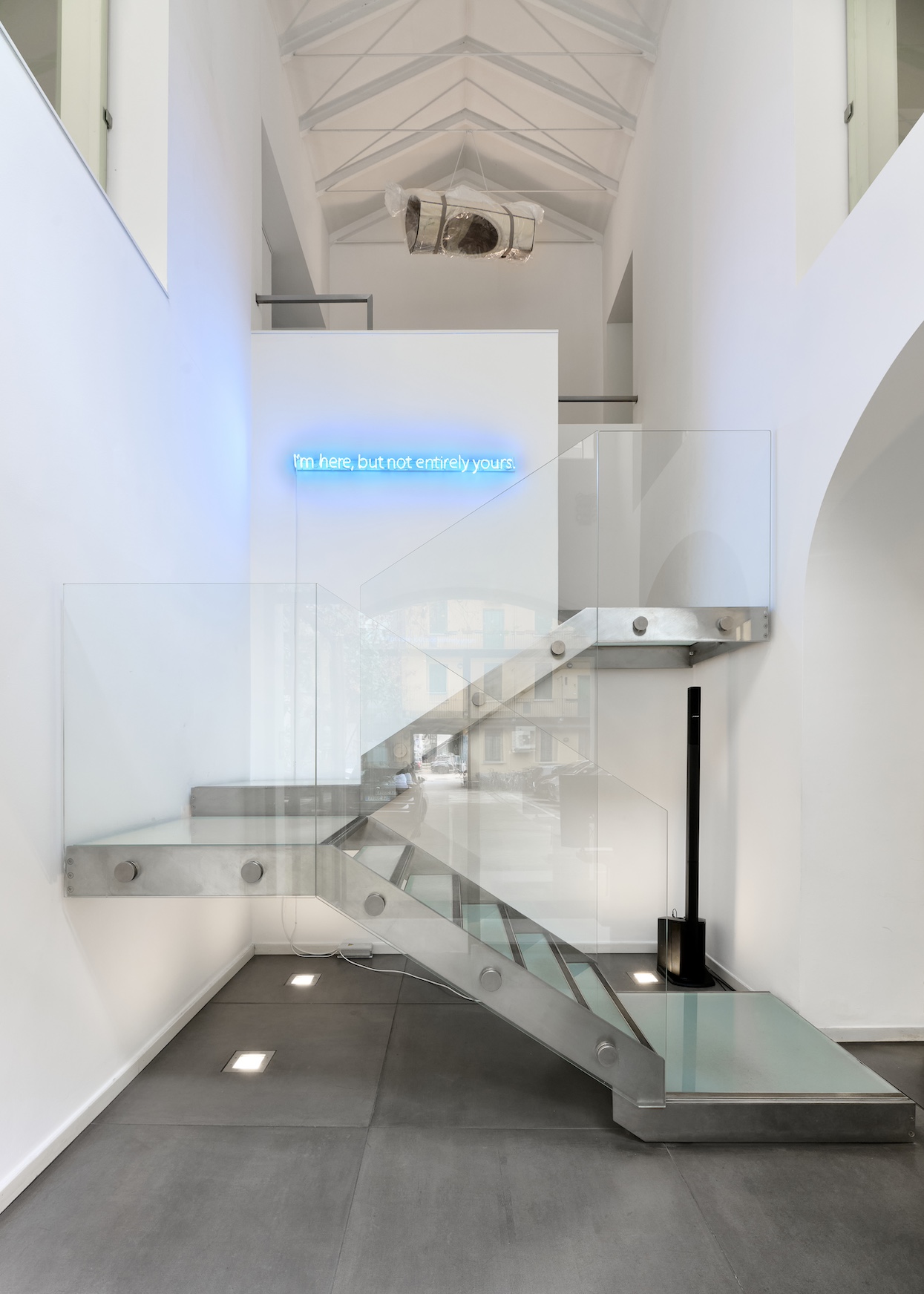
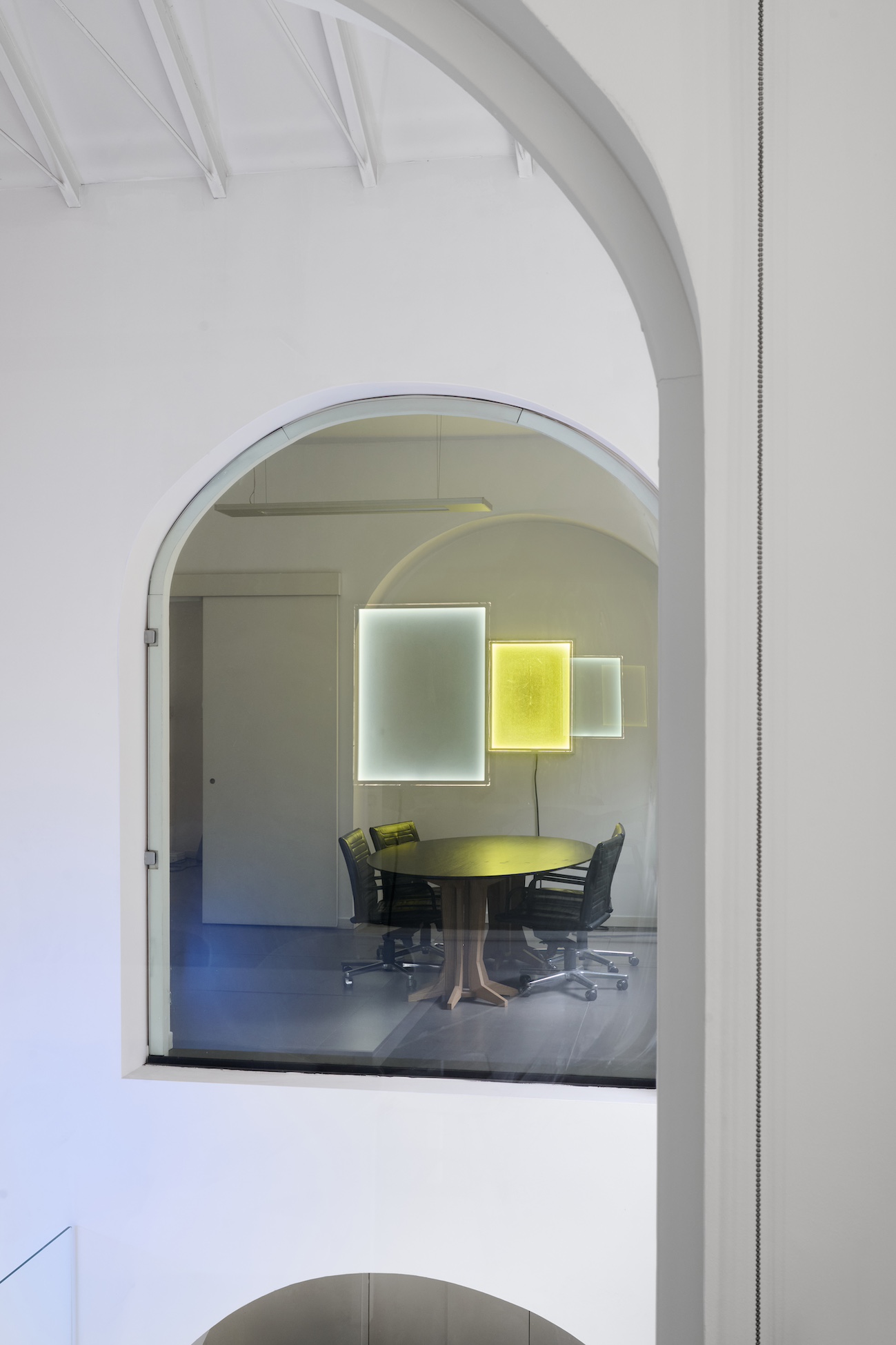
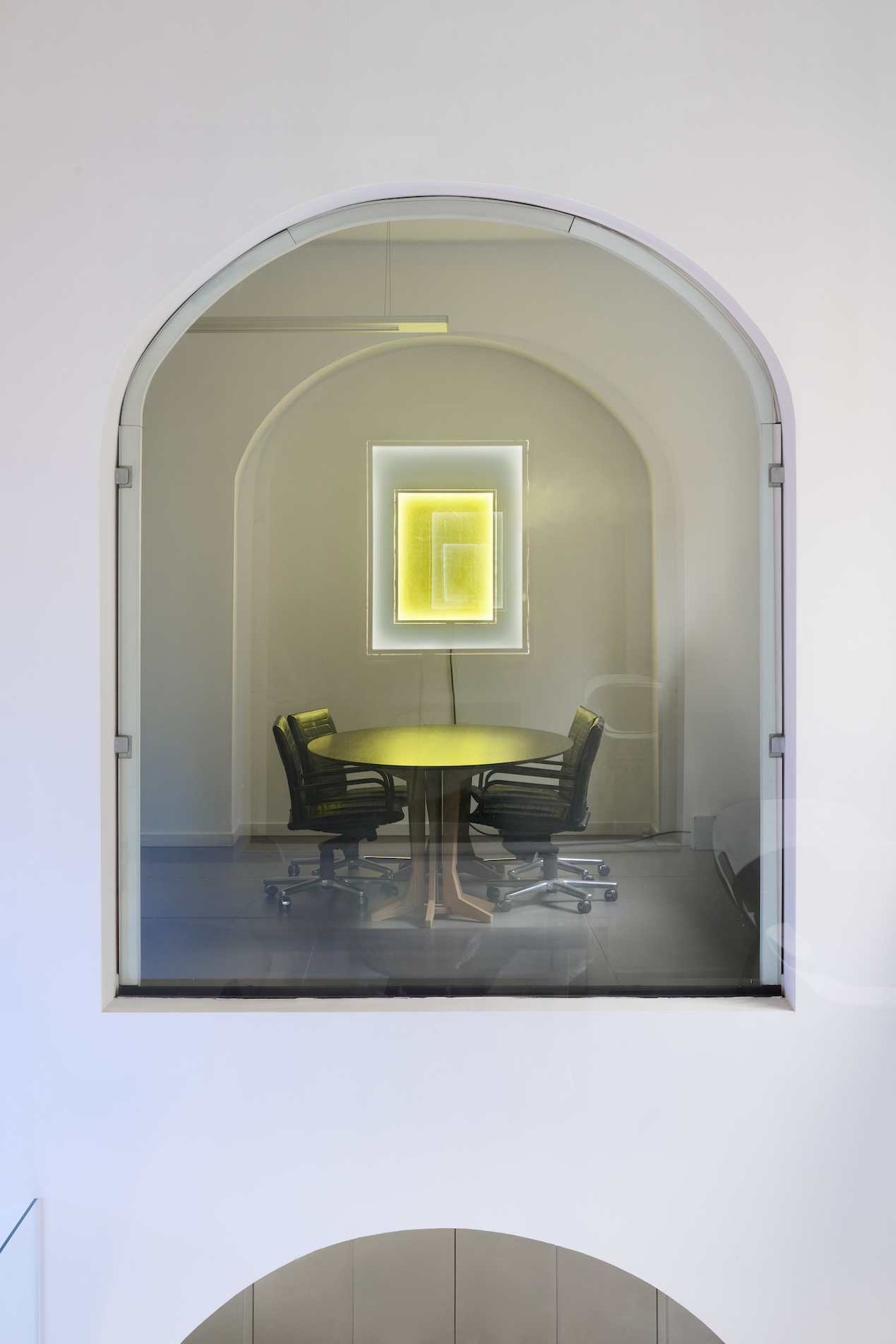
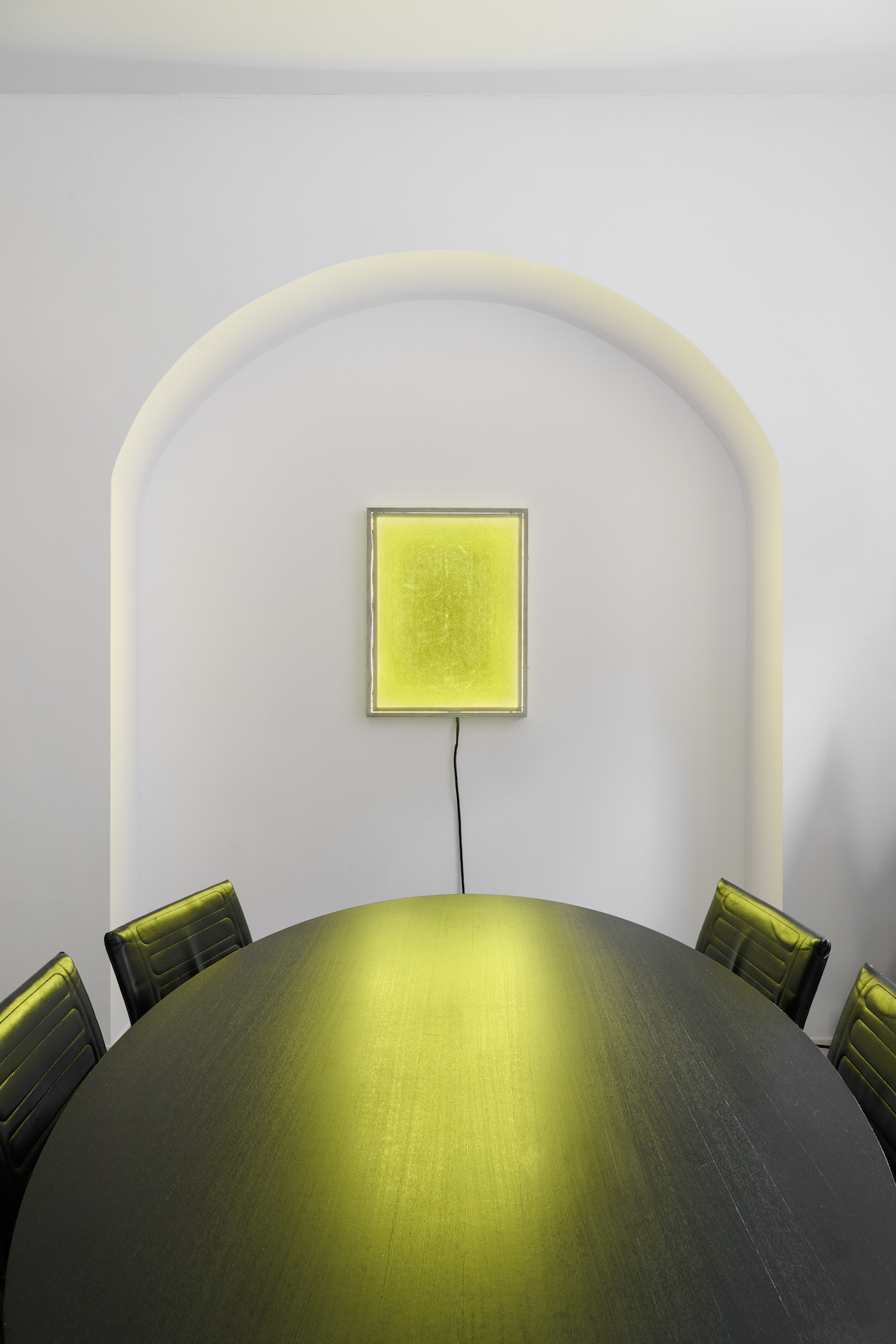
PROGETTO LUDOVICO presents I’m here, but not entirely yours, a solo exhibition by Niccolò De Napoli at Studio Lombard. The exhibition project investigates the phenomenon of quitting as a widespread condition of contemporary labor and as a form of everyday emotional resistance.
Within the vocabulary of contemporary labour, the term quitting has gradually lost the clarity of a decisive gesture. It no longer refers solely to the act of leaving a job, but increasingly describes a widespread condition of misalignment between subject and role, between presence and identification. One remains, yet without fully identifying; one participates, yet while withholding a part of oneself. In this sense, quitting becomes a threshold: a liminal space in which emotional tensions, suspended desires and everyday micro-dissociations accumulate.
As Roberto Ventura observes, “we are no longer called to fulfil ourselves, but to demonstrate that we want to fulfil ourselves.”¹ Within this shift, the promise of self-realisation turns into a performative obligation, while unhappiness ceases to appear as an accident and instead assumes a structural dimension. This analysis resonates with Mark Fisher’s reading of contemporary capitalism, which no longer merely organises labour but colonises the subject’s entire affective and imaginative horizon, making it increasingly difficult to distinguish between productive time and personal time.² Quitting therefore emerges not as a solution but as a symptom: a strategy of emotional survival that allows individuals to remain within the system while reducing their degree of subjective involvement.
The exhibition by Niccolò De Napoli³, produced by PROGETTO LUDOVICO⁴, unfolds within this critical framework, investigating quitting as a daily practice of emotional resistance and as a form of subterranean agency.⁵ Not a heroic escape, but a calibrated withdrawal; not an overt refusal, but an intimate and persistent fracture. The exhibition develops along three conceptual axes: withdrawal as a minimal form of self-determination, the privatization of workers’ leisure time, and the identity fracture produced by contemporary labour.
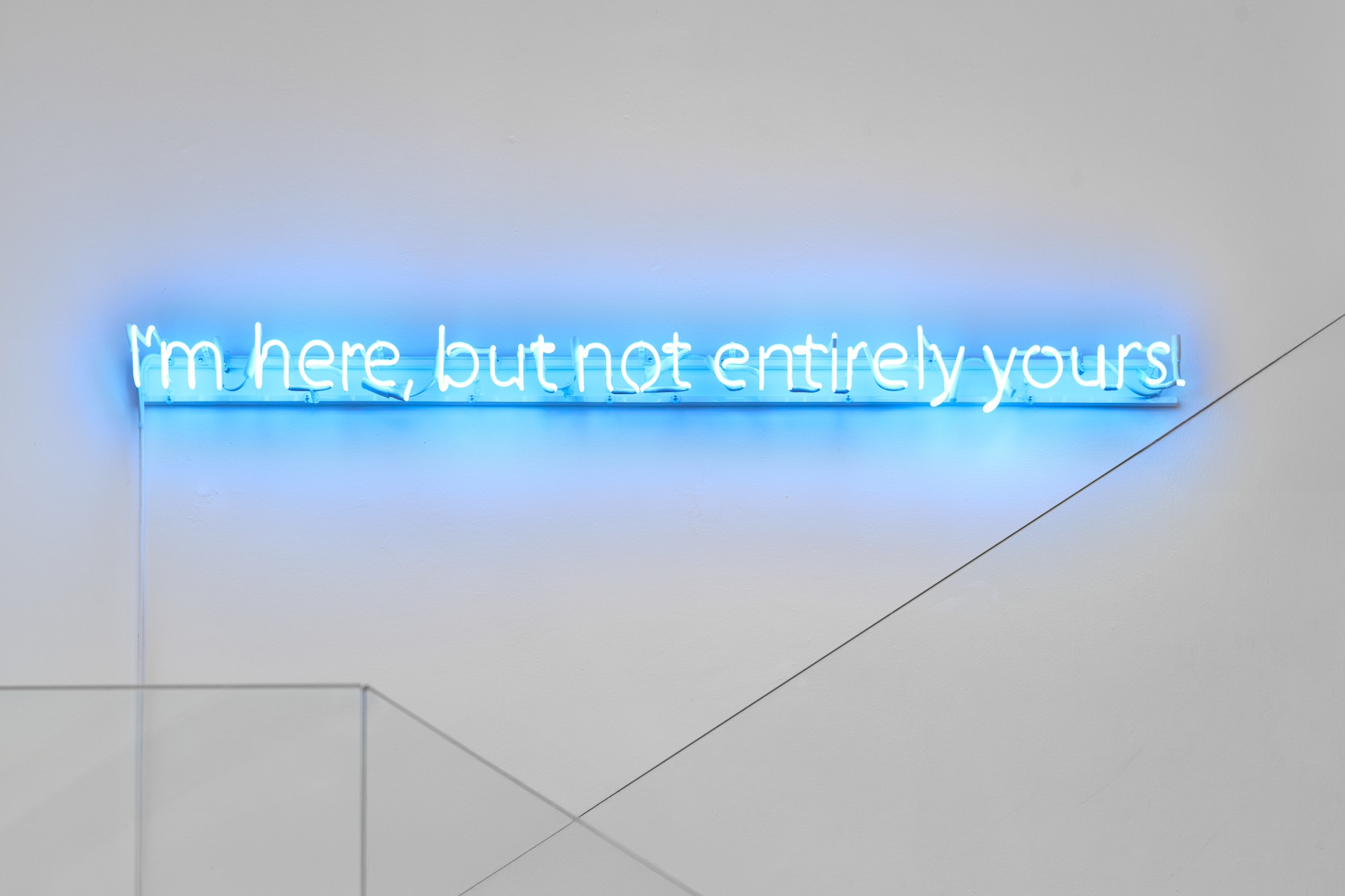
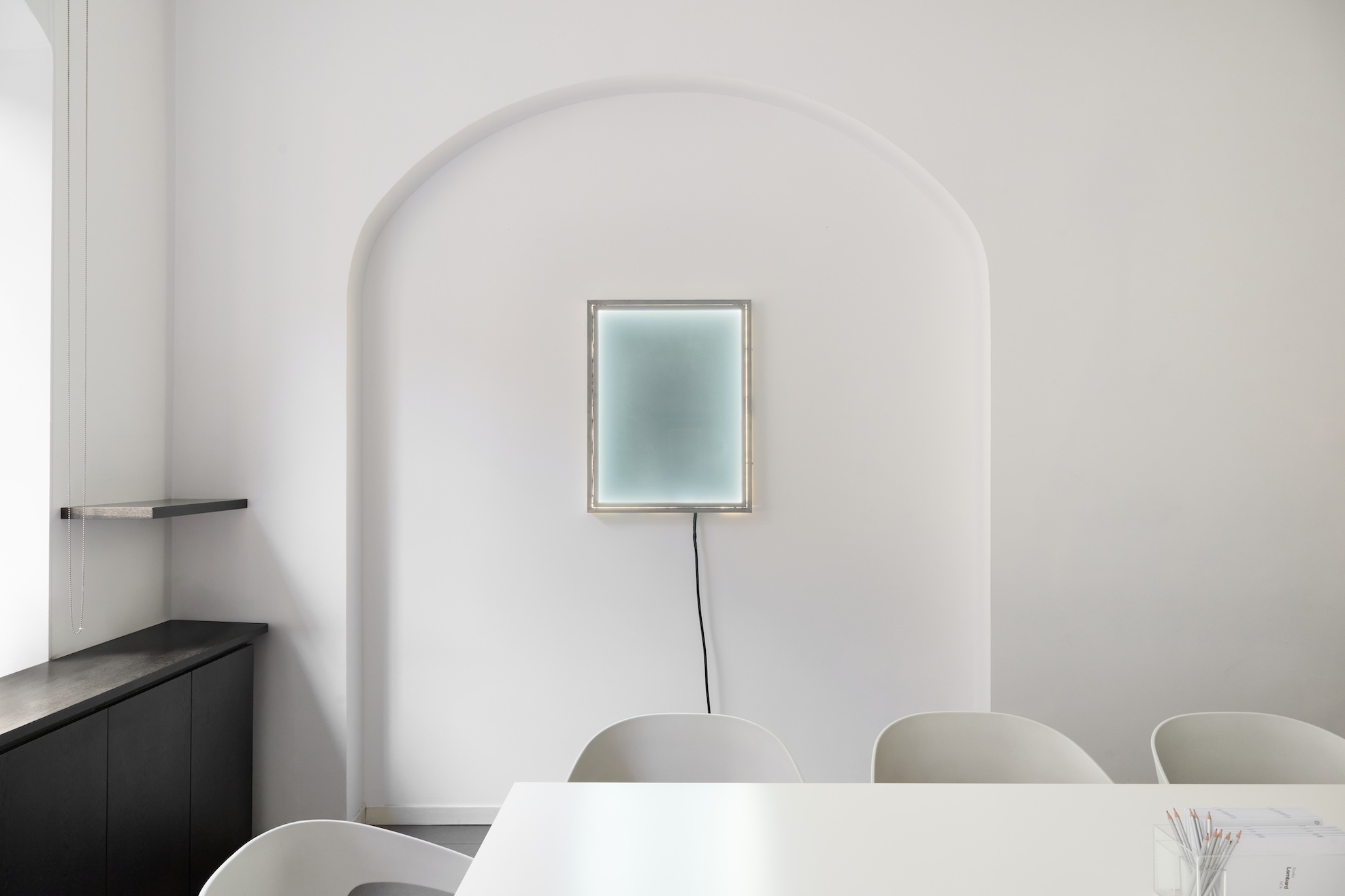
The neon work I’m here, but not entirely yours, which also gives the exhibition its title, immediately introduces this ambivalence. The sentence declares an incomplete presence, a willingness that is stated yet simultaneously withheld. The light-blue colour—typical of digital and corporate environments—reinforces the ambiguity of the message: reassuring on the surface, yet emotionally distant. Here quitting manifests as partial presence: a body that remains, a will that withdraws; an execution without identification; a form of presence that refuses to be entirely surrendered. In Fisher’s terms, this can be understood as a response to the constant demand for enthusiasm and engagement that transforms affect itself into performance.
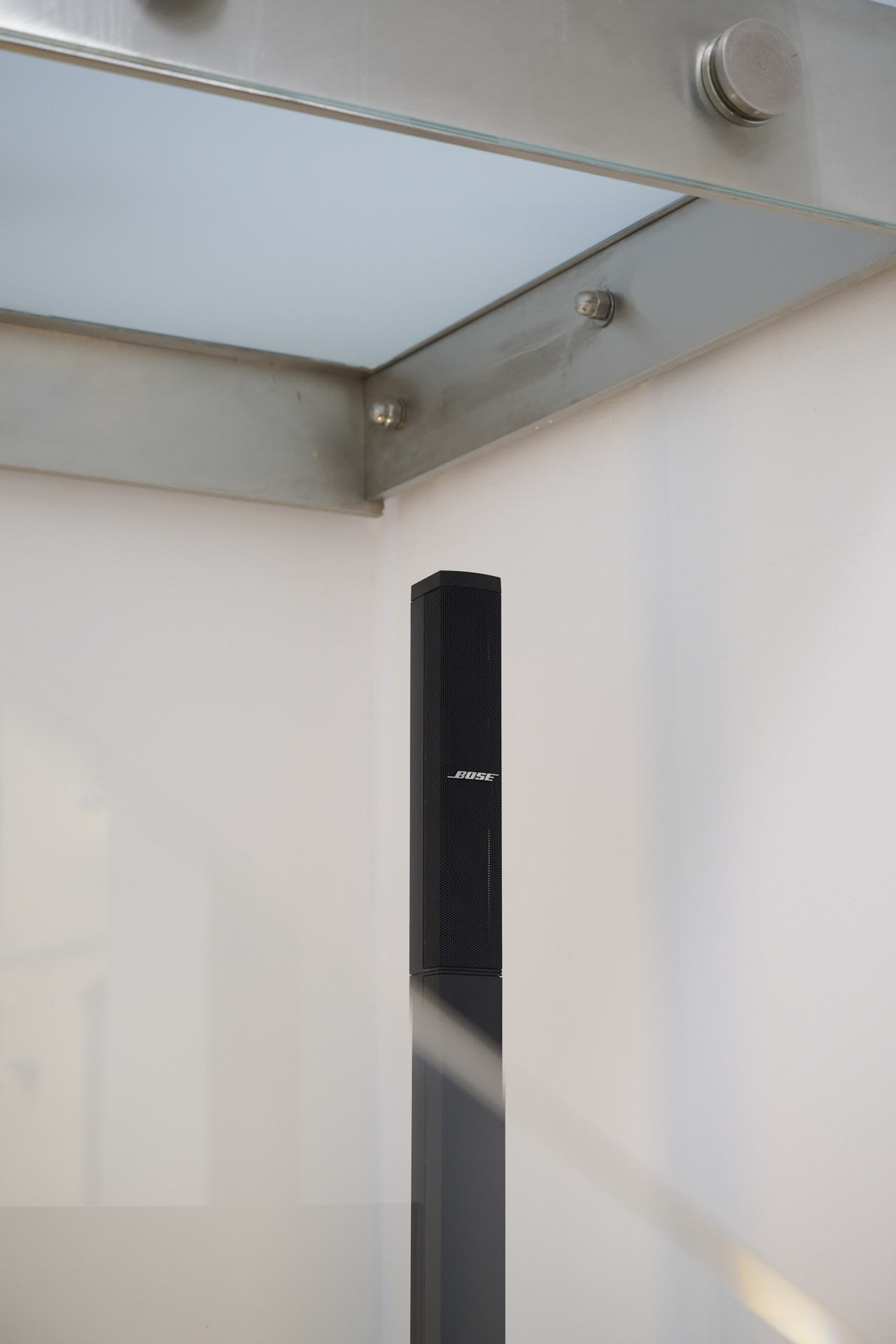
The tension between participation and withdrawal reappears in the sound installation Claim, which cyclically broadcasts a phrase from the Italian film “Vieni avanti cretino”. The twenty-minute rhythm echoes the micro-breaks prescribed by workplace psychology while simultaneously subverting their function. The slogan of satisfaction, heard today, acquires an ironic and unsettling tone. The character played by Lino Banfi—perpetually adaptable yet never truly integrated—embodies a grotesque form of quiet quitting: he works without identifying, performs without meaning, until eventual expulsion. The phrase thus becomes a melancholic counterpoint to what Fisher describes as the normalization of frustration as an ordinary condition of working life.
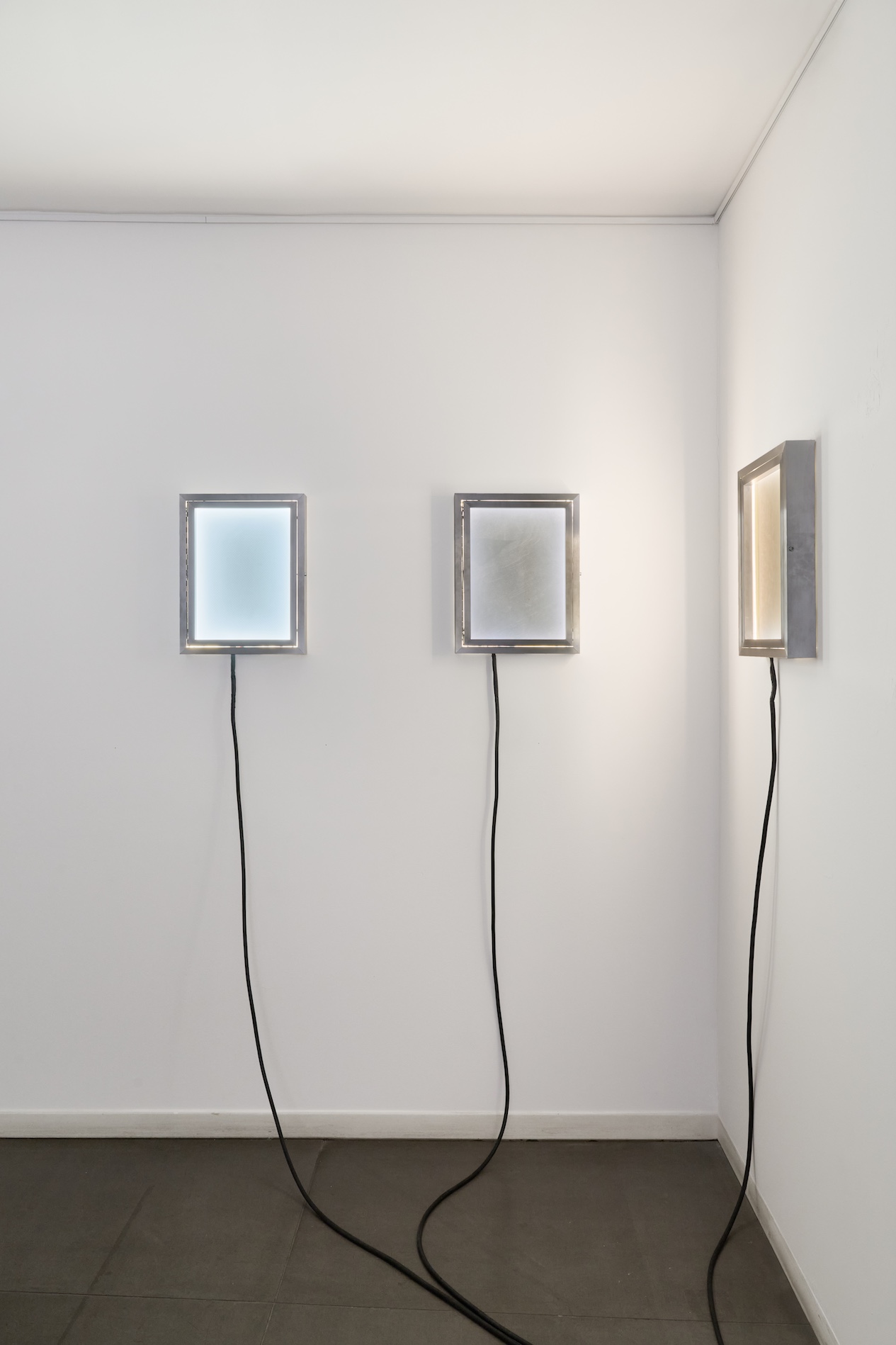
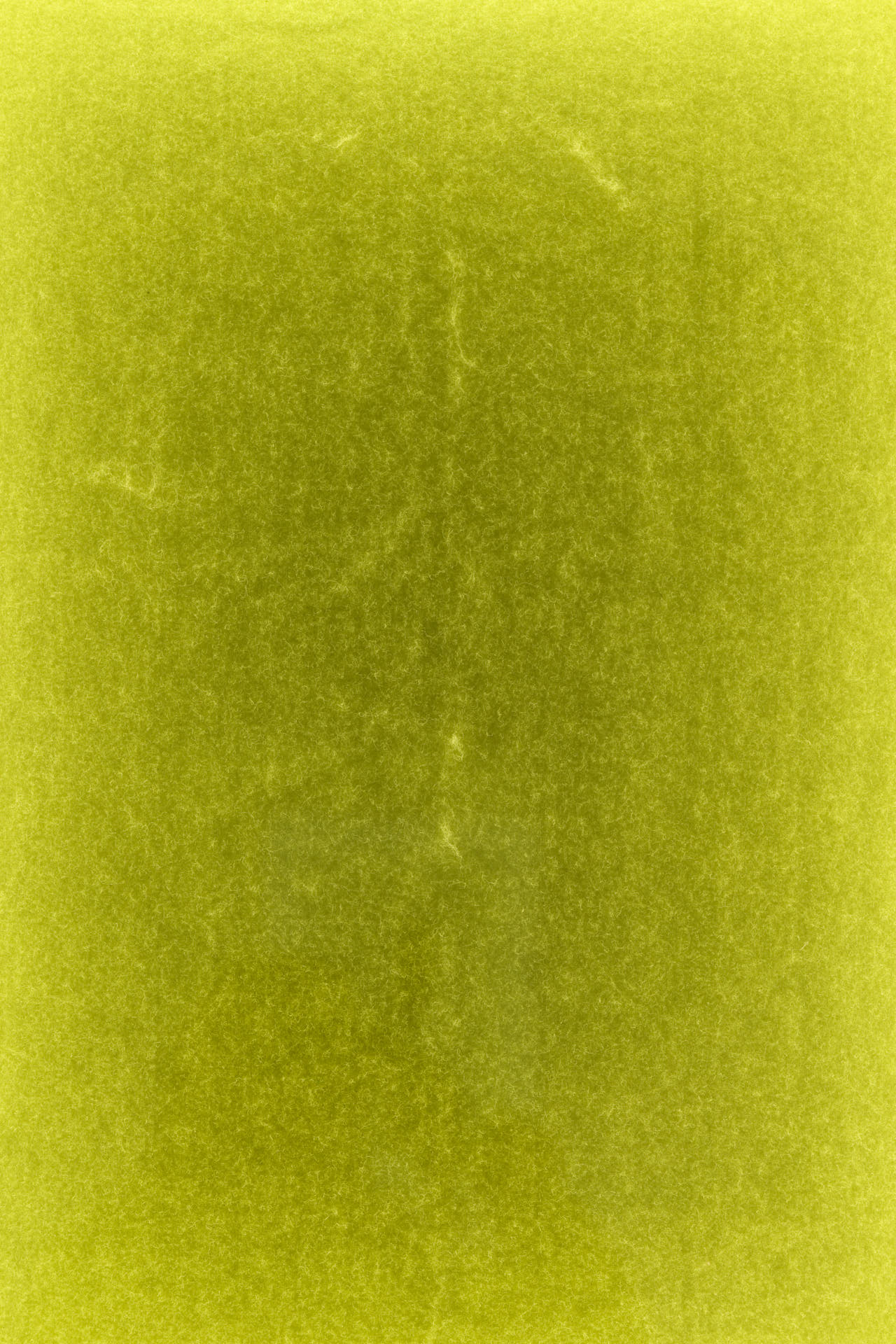
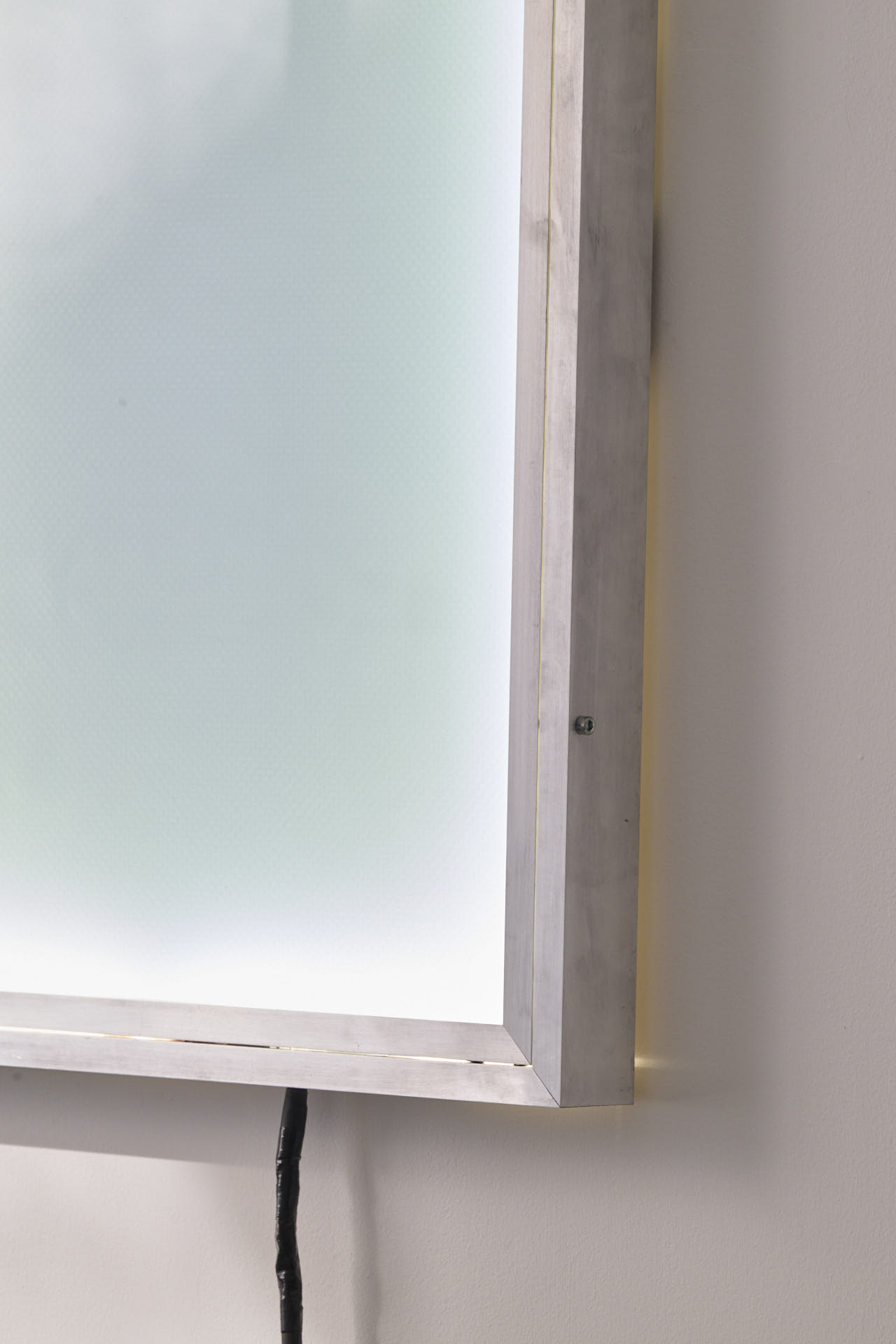
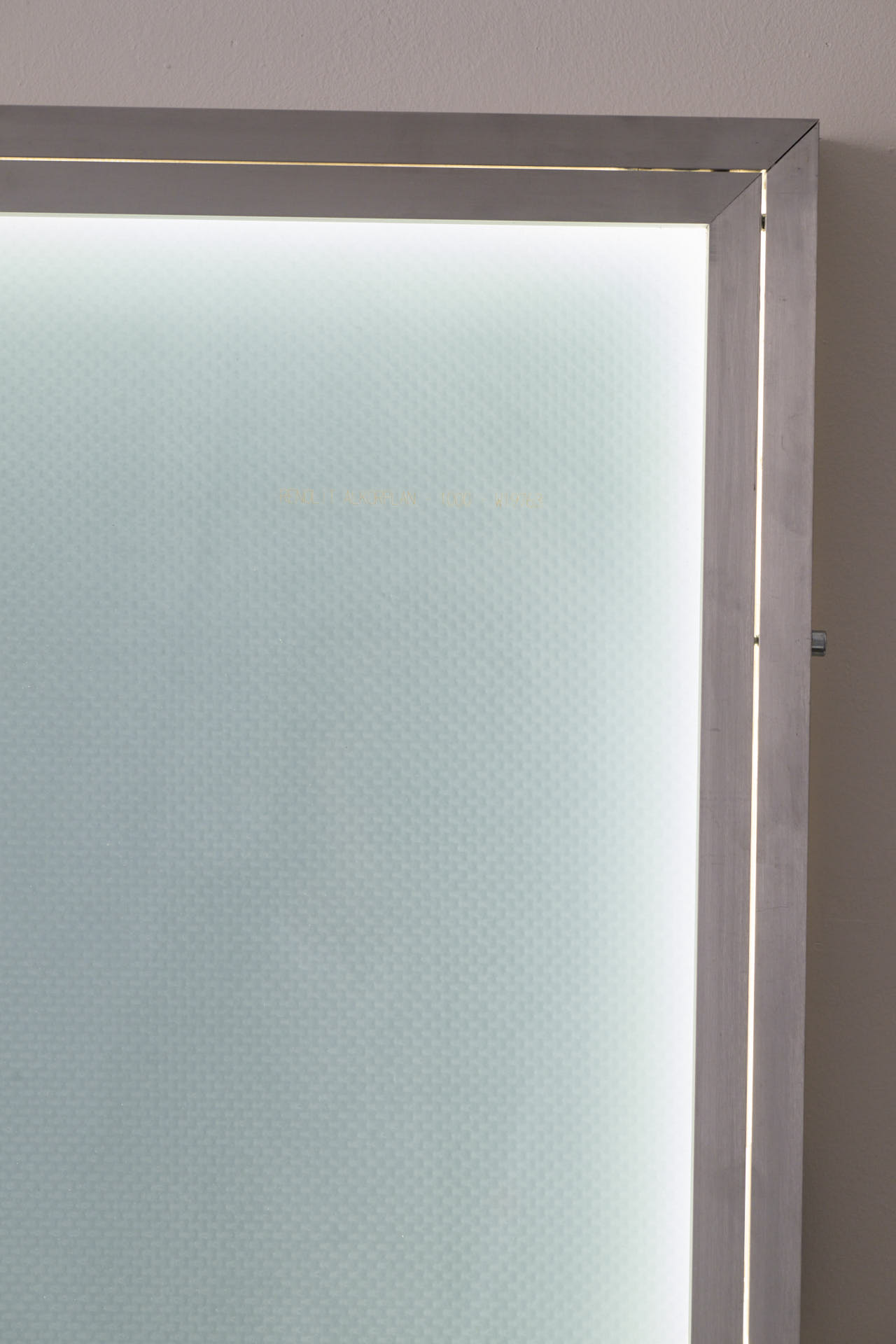
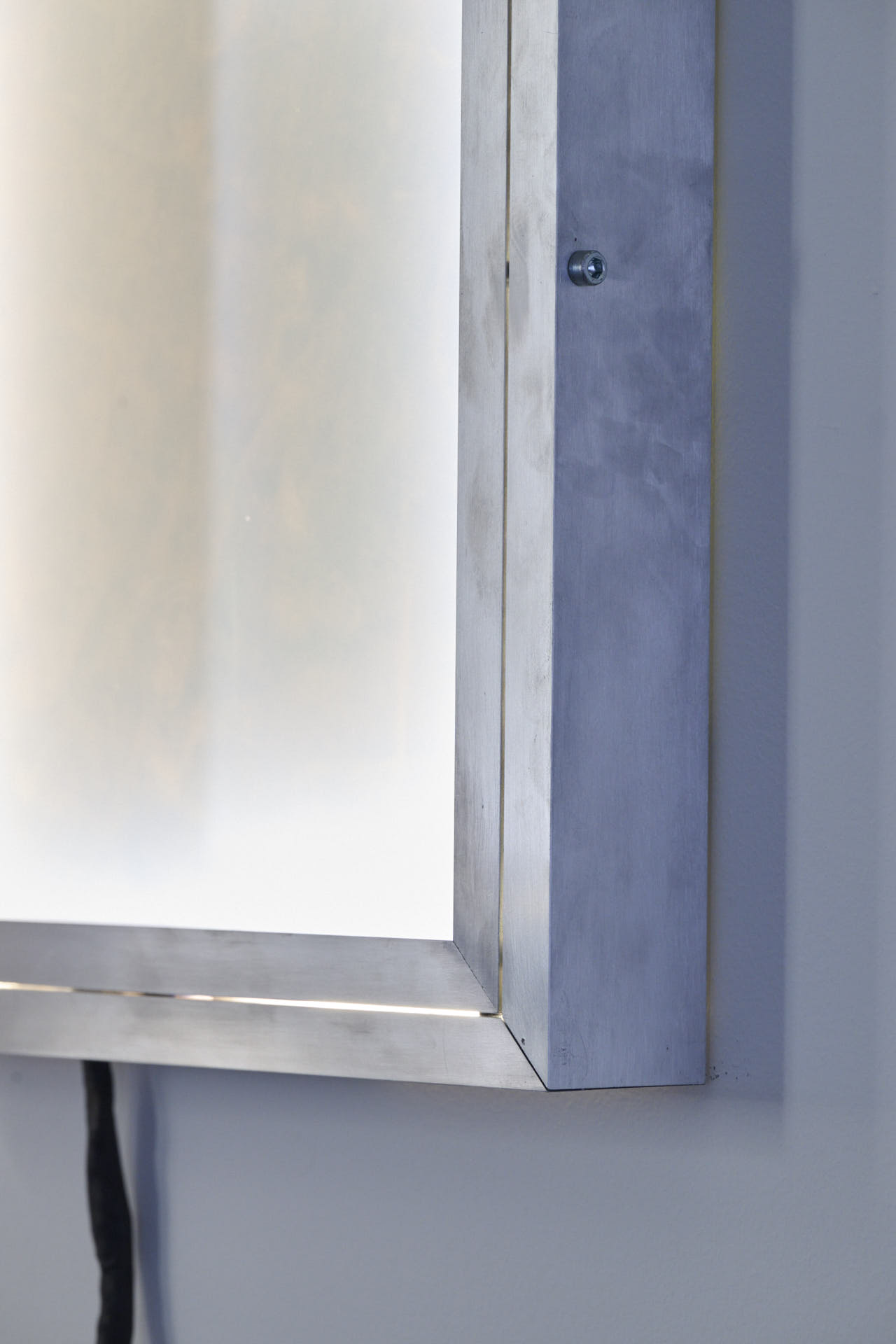
The series of monochrome bulletin boards shifts the reflection onto a perceptual register. Materials associated with hobbies and leisure activities are compressed into compact, apparently uniform surfaces. Here the monochrome is not abstraction but compression: a field of tension in which the image withdraws, allowing what remains marginalised in labour to surface. The switchable glass that darkens as the viewer approaches introduces a dynamic of mimetic frustration: the more one attempts to see, the less one sees. As in the world described by Fisher—where access to desire is continually promised yet systematically deferred—the subject’s identity appears trapped within an ongoing process of self-obscuring.
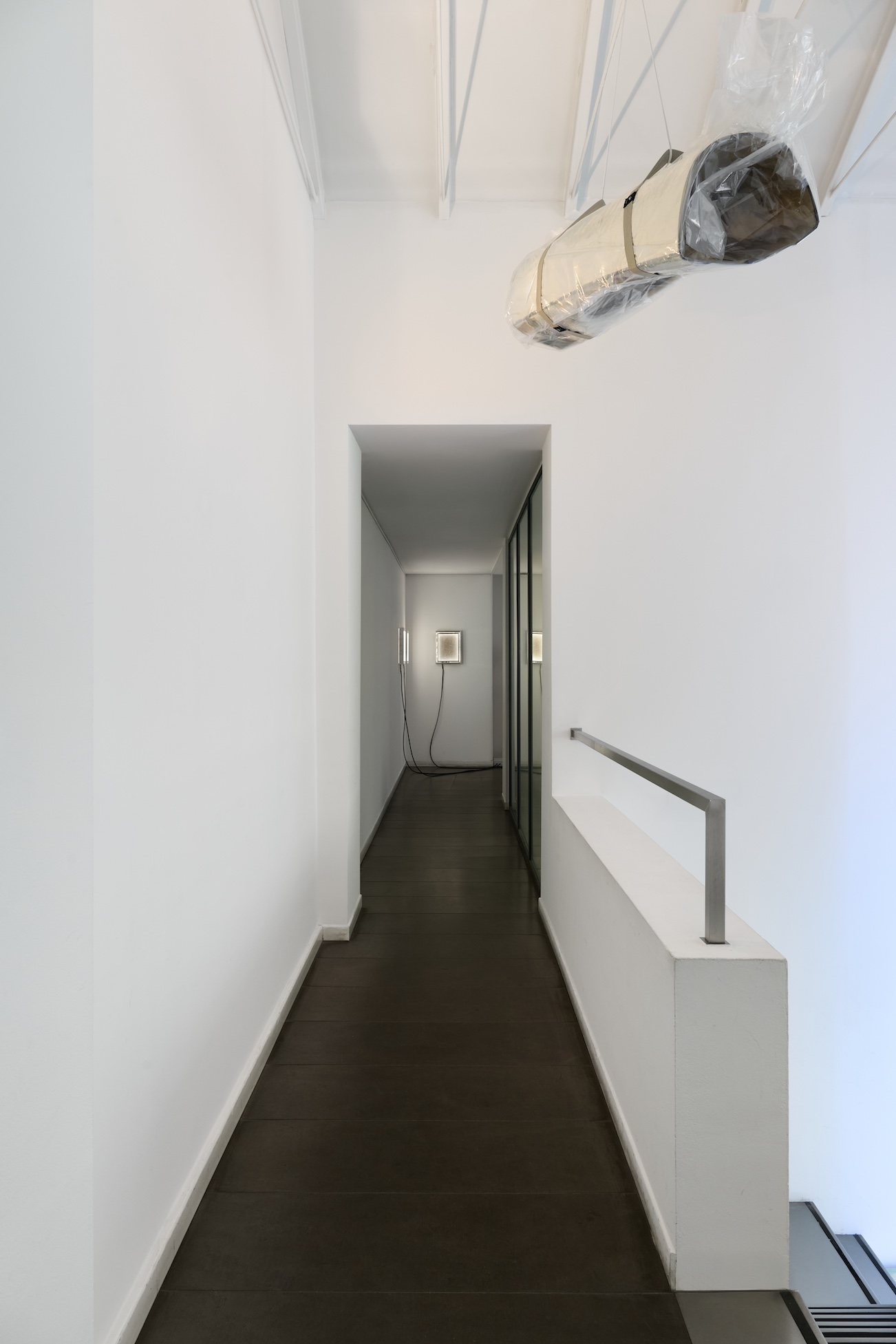
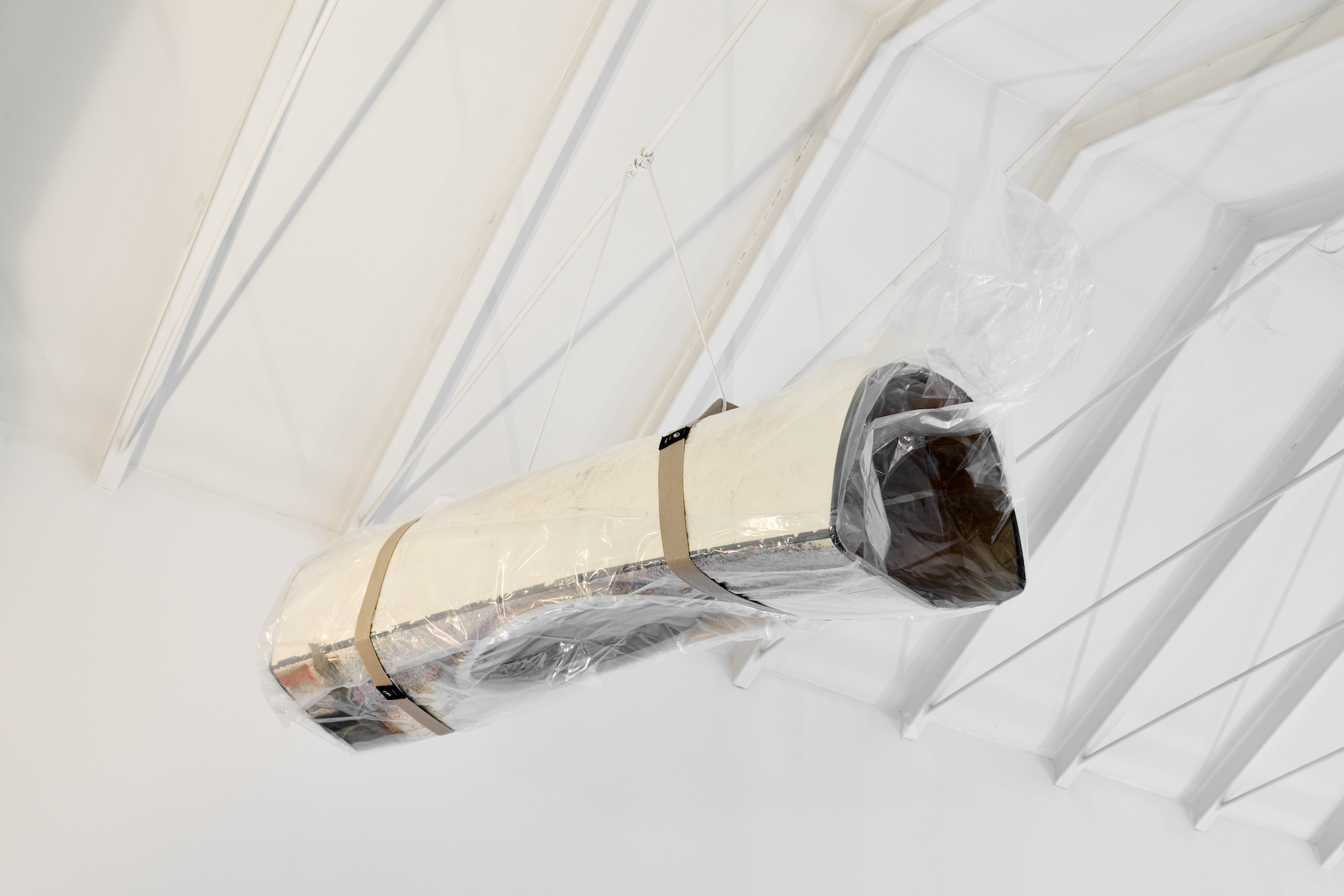
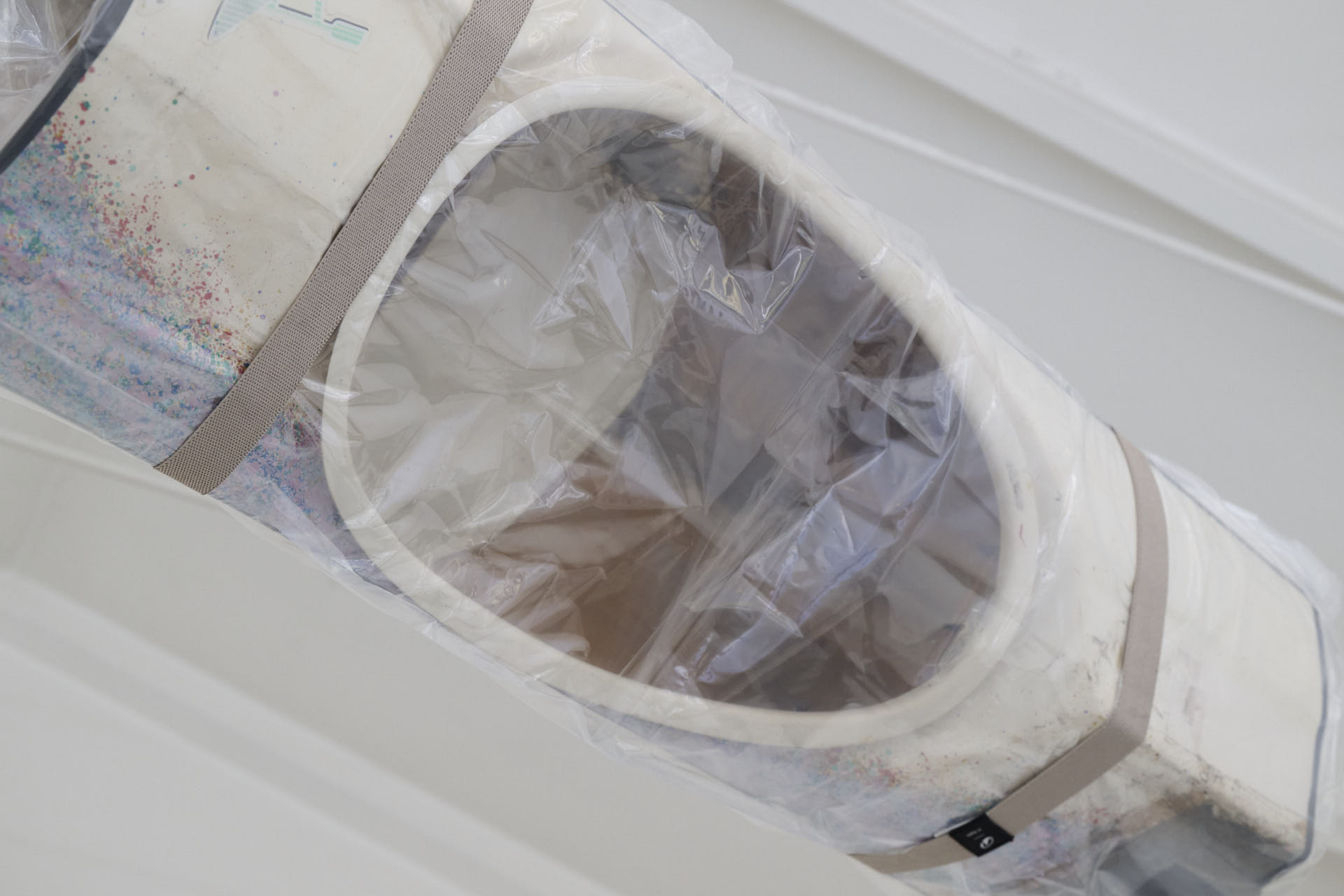
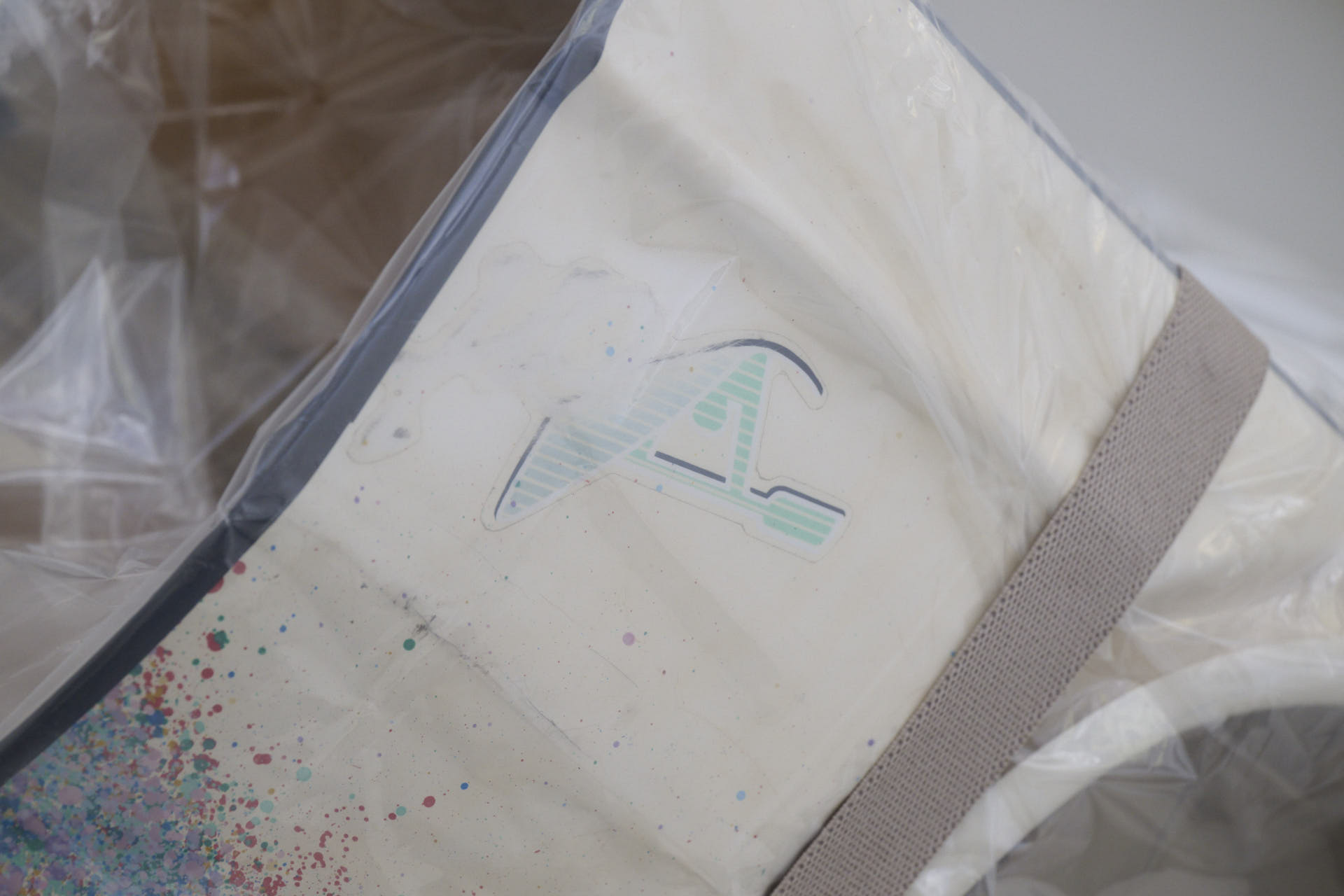
The work Boof concludes the exhibition with an image of suspended finality. An object originally designed for movement and exploration is sectioned and immobilised through a domestic gesture of preservation. Vacuum sealing does not destroy but neutralises. What once allowed one to “navigate” one’s identity is archived as residue, protected yet simultaneously rendered inert. Leisure time, rather than a space of reinvention, becomes a repository of frozen possibilities.
Taken as a whole, the exhibition does not propose quitting as a way out, but rather as a shared and structural condition of the present. As Ventura writes, “unhappiness is not an individual failure but a structural condition.”⁶ De Napoli’s works render this condition visible, giving form and material presence to a subjectivity that remains active, yet no longer entirely available.
Camilla Previ
Notes
Roberto Ventura, La conquista dell’infelicità. Perché aspirare al successo ci rende infelici, Einaudi, Turin, 2019.
Mark Fisher, Capitalist Realism, Nero, Rome, 2018.
Niccolò De Napoli (Cosenza, 1986) lives and works between Vienna and Rome. His practice unfolds through installations and site-specific interventions that investigate the transformations of labour, production and contemporary subjectivity.
PROGETTO LUDOVICO is a cultural platform dedicated to the research, production and presentation of contemporary artistic practices in relation to industrial, economic and productive processes. Through exhibitions, site-specific projects and collaborations with public and private institutions, the platform promotes a critical dialogue between art and non-conventional contexts, with particular attention to the material conditions of cultural labour and the productive dimension of the artwork.
Agency refers to the human capacity to exercise conscious control over one’s behaviour, enabling individuals to act according to specific goals and intentions rather than simply reacting to environmental stimuli.
Roberto Ventura, La conquista dell’infelicità, cit.
Produced by PROGETTO LUDOVICO, I’m here, but not entirely yours does not propose quitting as a way out, but rather as a shared and structural condition of the present. A critical inquiry that gives voice and material form to a partial presence—aware, persistent, and stubbornly misaligned.
The project was realized with the support of Vitrik and Ascend and FTALENT.
Niccolò De Napoli
Niccolò De Napoli, born in Cosenza (1986), lives and works in Cosenza. Trained at the Akademie der bildenden Künste in Vienna, where he studied Expanded Pictorial Space and Textual Sculpture, De Napoli has developed a language oscillating between material concreteness and symbolic ambiguity, subtracting objects and structures from their original function in order to transform them into indicators of precarity, suspension, and identity friction.
His work has been presented in institutional and independent contexts in Italy and abroad, including MNAC Bucharest (All System Collapse Tonight), Manifesta 12 – Collateral Event (Misconception. A Way to (Mis)Understand Reality, Palermo), the National Gallery of Cosenza, Das Weisse Haus (Vienna), Akademie der bildenden Künste (Vienna), Galleria ELLEBI (Cosenza), VARTAI GALERJA (Vilnius, LT), and non-conventional exhibition spaces activated through relational and site-specific projects.
Alongside these exhibitions, he has taken part in artist residencies such as BridgeArt Residency (Noto), BoCS Art (Cosenza), and STATO IN LUOGO (Latronico).
During his career he has received selections and recognitions in several contemporary art awards, including Premio Francesco Fabbri, Premio Celeste, Premio Combat, Premio SmartUp Optima, and Premio Italia–Cina IGAV (National Art Museum of China, Beijing).
His works construct situations of perceptual and conceptual ambiguity, inviting viewers to confront a subjectivity that remains present but no longer fully aligned with the logics of the productive system.
PROGETTO LUDOVICO
PROGETTO LUDOVICO APS is a platform for research, production, and exhibition of art connected to industry. Founded in Milan in 2021 by Lorenzo Perini Natali, it operates in dialogue with private actors and public institutions, supporting residencies and art projects under the direction of Camilla Previ.
In recent years it has realized several projects, including:
BIOSPHERIC CITY, Xavier Mary (September 17, 2025 – January 12, 2026), Antonini Milano;
GREX, Sacha Kanah (February 12 – March 15, 2025), ICA Milano;
1 MB LINE, Eva & Franco Mattes (October 26 – December 15, 2024), Ctrl+Alt Museum, Pavia;
PER OGNI ORA, Sergio Limonta (September 18 – October 5, 2023), Casa degli Artisti, Milan;
FAR BRILLARE LA POLVERE, Stefano Comensoli and Nicolò Colciago (February 15 – March 28, 2024), Cittadella degli Archivi, City of Milan.
Studio Lombard DCA
Studio Lombard DCA is a firm of chartered accountants active in Milan for more than twenty years, specializing in strategic consultancy for companies, corporate restructuring, extraordinary transactions, economic and financial analysis, and taxation.
In recent years the firm has increasingly engaged with issues related to the circular economy, sustainability, benefit corporations, and social and cultural enterprises, convinced that these areas represent the future of society, business, and the profession.