


Mauro Staccioli. Basta un segno per cambiare un luogo
Gallery Il Ponte continues its exhibition season with a solo show dedicated to Mauro Staccioli, an artist the gallery has supported for over thirty years and whose work is protected by the Mauro Staccioli Archive.
“A mark is all it takes to change a place; Mauro Staccioli’s sculpture, with its knack for interpreting its time and translating it into shapes that can talk to their observers, demonstrated this for almost fifty years.
His sculpture spanned the second half of the twentieth century, constantly adapting and renewing itself in the face of historical and cultural change, and never straying from his vision of sculpture as a critical tool.
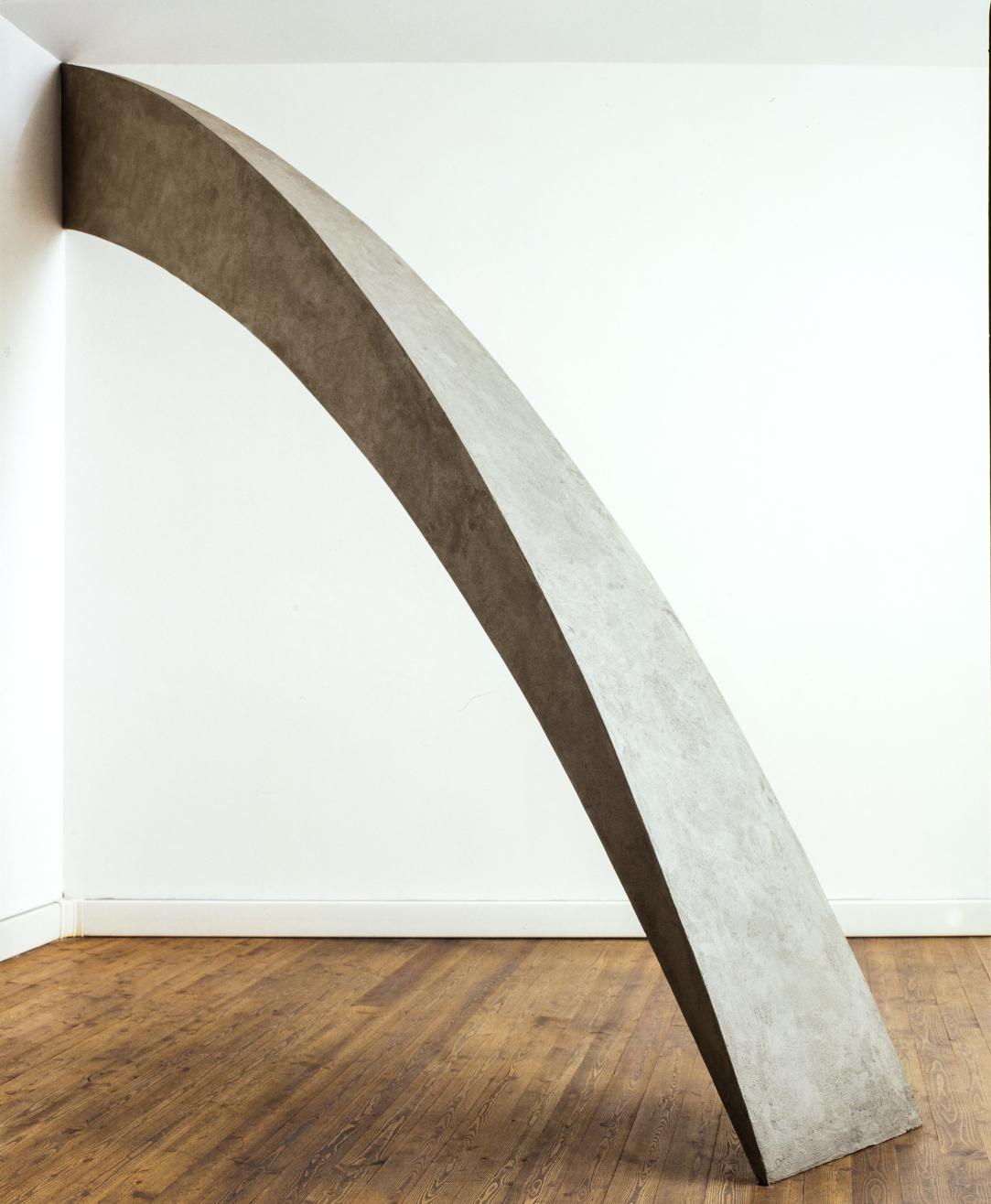
While this attitude reflects the artist’s keen vision of sculpture as a device that acts in space, it is the curved line that fully expresses Staccioli’s ability to intervene in places, becoming a part of them while never foisting himself upon them.
In the 1970s, Staccioli’s work reflected a here and now scarred by tensions and divisions: iron and concrete barriers, symbolic and real walls – such as the famous Muro at the 1978 Venice Biennale – stamped their harsh, dramatic presence, representing the separation between spaces, classes and worldviews.
The 1980s saw a change in society and with it the way Staccioli related to history, space and the individual. Curved lines entered his sculptural lexicon as a sign of openness and movement, stepping past the rigidity of his earlier forms but not relinquishing their critical impetus. It was a conscious evolution, without abandoning previous principles by the wayside.
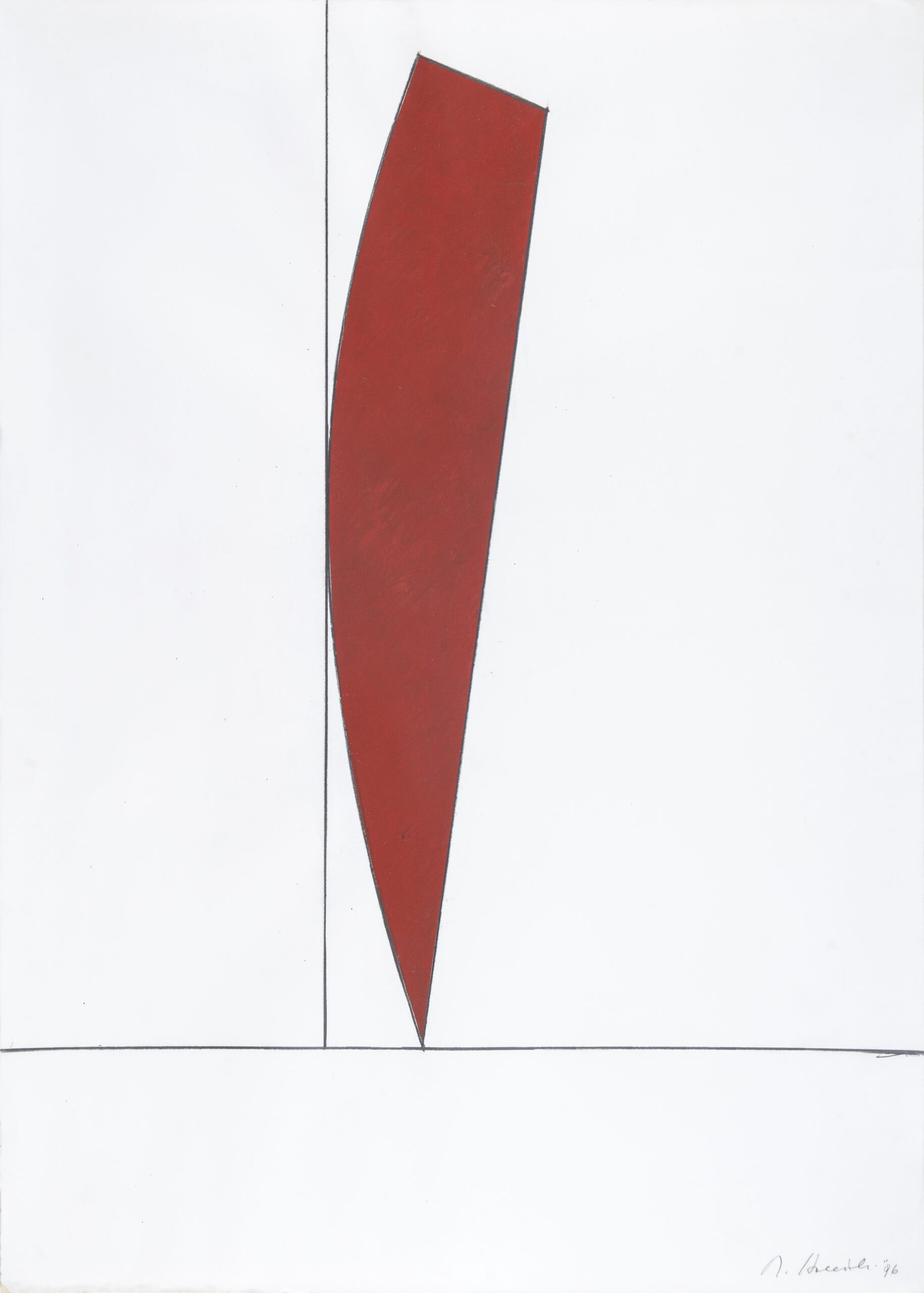
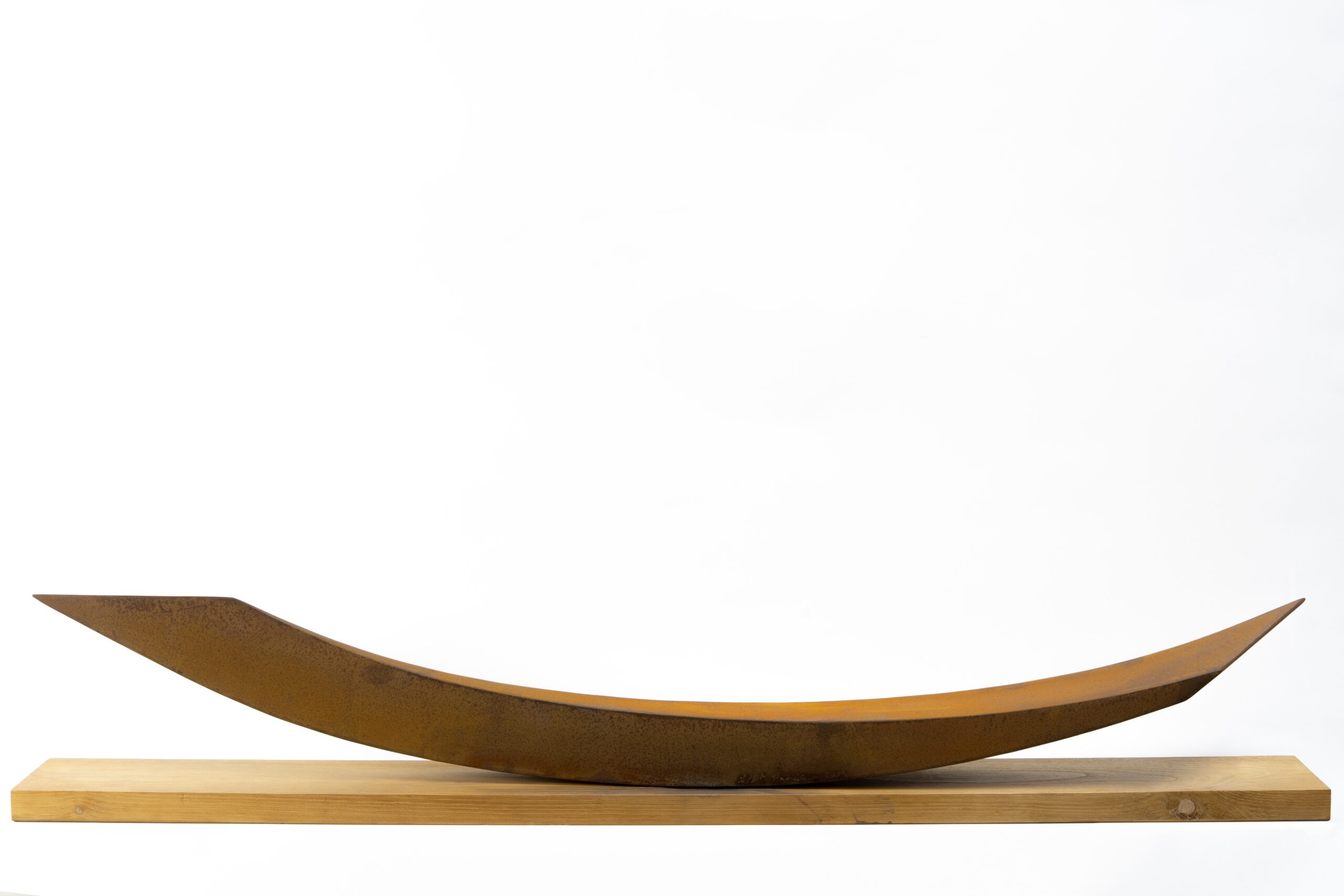
While Staccioli’s 1970s work has been the subject of numerous in-depth studies, to date there has been little investigation of his production that began to take shape in the 1980s. The exhibition presented by Galleria Il Ponte in Florence and reproposed in a reduced form at Arte Fiera Bologna 2026 focuses precisely on this segment of Staccioli’s research. The exhibition places the impressive environmental works installed between the 1980s and early 2000s in dialogue with a series of works whose “homely” dimensions make them no less rigorous or incisive. Indeed, these works allow a close look not only at the precision with which Staccioli measures the mark in space, but also at the continuity between his monumental research and small-scale experimentation.
The large installations of the 1980s – from the Rotonda della Besana in Milan (1987), to Seul ‘88 (1988) and Prato ’88 (1988) – show how the curve became his favoured tool for transforming urban and natural spaces into places of reflection and participation.
From then on, Staccioli’s repertoire, developed in both his sculptures and drawings, began to burgeon with rings, tondos, ellipses, squares and triangles with curved sides, shapes inviting the viewer to move around the sculptures, look beyond them and perceive the relationship between shape, environment and body.
While his 1970s shapes were angular and repelling, his curved lines now began to generate “gentle”, though never neutral sculptures. Their visual softness welcomes, guides the eye, suggests possible pathways, nevertheless retaining the ability to spark critical reflection.
Works such as the ring in Andorra (1991), the tondos in San Casciano (1996), the square with curved base in Brussels (1998) and the Triangolo dai lati curvi (Triangle with Curved Sides) at Villa d’Este (2006) are shapes suspended between earth and sky, expressions of an unstable balance. They invite observers to reflect on their place in the space, which is transformed by the sculpture just like our perception of the present.
In this sense, as Staccioli would say, sculpture is an intelligent mark, a trace of the human in a place. Not an object of contemplation but a route into the senses, a tangible presence capable of transforming the place so that it can trigger a shared experience”. (Caterina Martinelli, 2025)
Biography
Mauro Staccioli was born in 1937 in Volterra, where he graduated from the Art Institute in 1954. In 1960 he moved to Sardinia where he taught, then in 1963 he moved to Lodi and then to Milan where he became director of the Brera Art School in 1974/75 and 1978/79 and of the State Art School in Lovere (Bergamo).
The beginnings of his artistic career are intertwined with his teaching experience and political activism. From the late 1960s, he devoted himself to sculpture, developing the idea of a close relationship with the place where the work is located.
In the 1970s, he developed “intervention sculptures” characterized by essential geometry and the use of simple materials such as concrete and iron. In the 1980s, his work lost its harshness and aggressiveness, openly challenging space by subverting static and dimensional balances.
He thus began to explore the relationship between sign and landscape, a theme that characterizes his most famous monumental works. Staccioli passed away in 2018 in Milan, leaving behind his archive, presided over by his daughter Giulia and directed by Andrea Alibrandi.