



(ENG) Still/ Moving: Korea Video Art Based on Performances
28.04.2026
As vast as Rome’s artistic offerings may be, those who have seen many exhibitions sometimes feel the urge to step away from the various expressions of the European school and turn instead toward shows with a viscerally distinct approach—where not only form, but also the underlying thought, is shaped by different premises.
This desire led me to the Korean Cultural Institute in Rome, without prior preparation, to engage with what eleven Korean artists—represented by the SONGEUN Foundation—bring to Rome and then to Vienna in the exhibition curated by Minjung Kim.
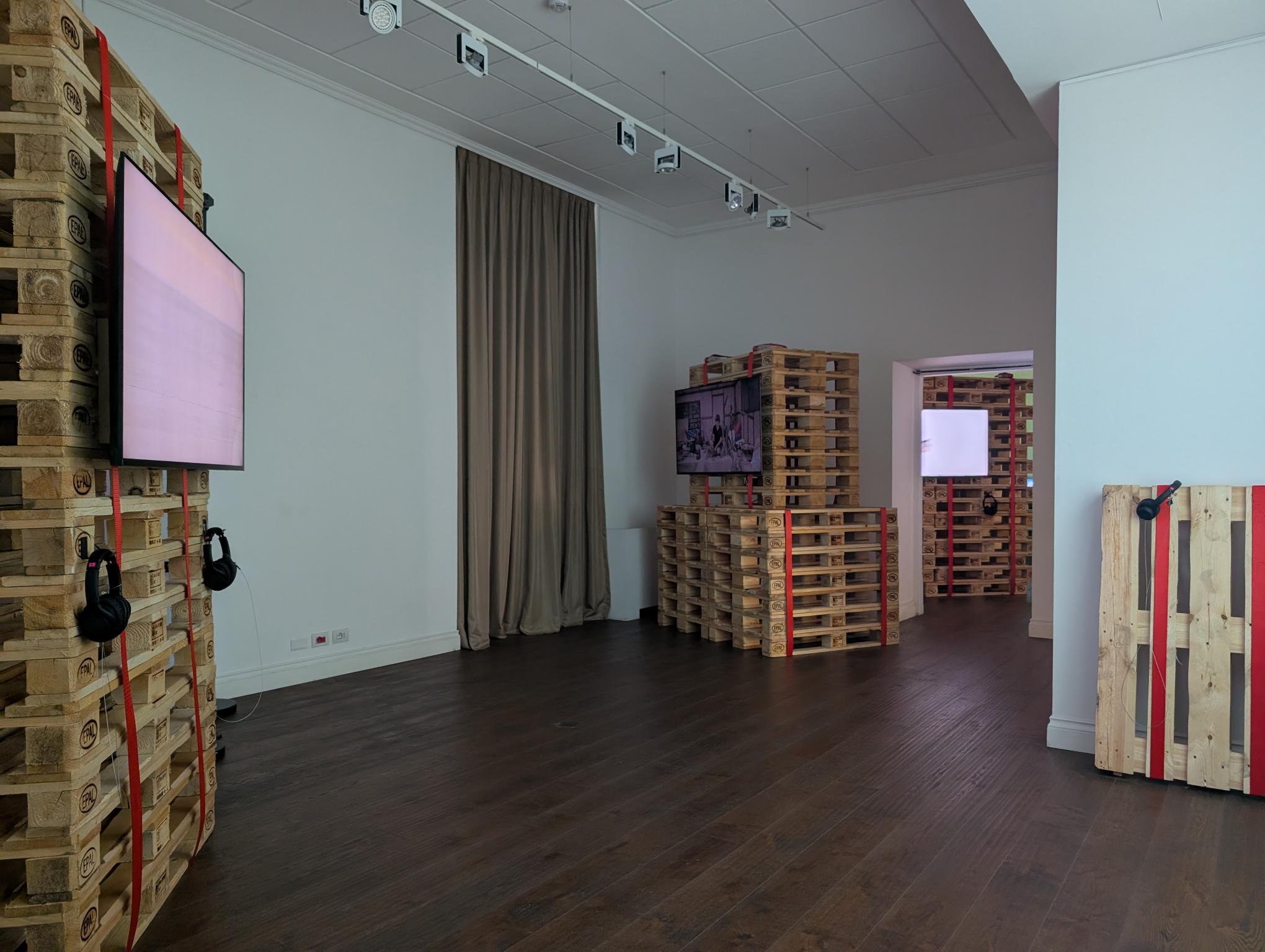
“Still/Moving Korean Video Art Based on Performances” exhibition view, Korean Cultural Center in Italy, ph Dobroslawa Nowak, courtesy the artists and Istituto Culturale Coreano in Italia
The exhibition consists exclusively of video works, distributed across several darkened rooms and hung on stacked Europallets, with the aim of amplifying the sense of transience and movement within the display.
“Still/Moving” can mean “Static/In Motion,” but also “still in motion,” a double interpretation that reveals itself subtly in some works marked by anxiety about a dystopian future.
They arrive. Silently, quickly (2016) by Ji Hye Yeom is a turbulent accumulation of cutouts with stylistic references to film noir, created as an echo of the 2015 MERS coronavirus (Middle East Respiratory Syndrome) epidemic. A slow-motion portrait of a gorilla and human hands gesturing in sign language intertwine with a clenched female jaw emerging from the darkness amid dense smoke, declaring: “They are life and non-life. If we don’t exist, they don’t exist. If we die, they also die. They are very terrifying. […] They are coming. Be careful.” Then it disappears into the darkness.
The narrative is not linear, but rather a concentration of tensions, fragments of storytelling with a cautionary tone, and titles of films by other directors abruptly introduced, such as Fear Eats the Soul, whispered among the black-and-white visions. In this way, new connections arise between past and present, memory and dream, image and legend.
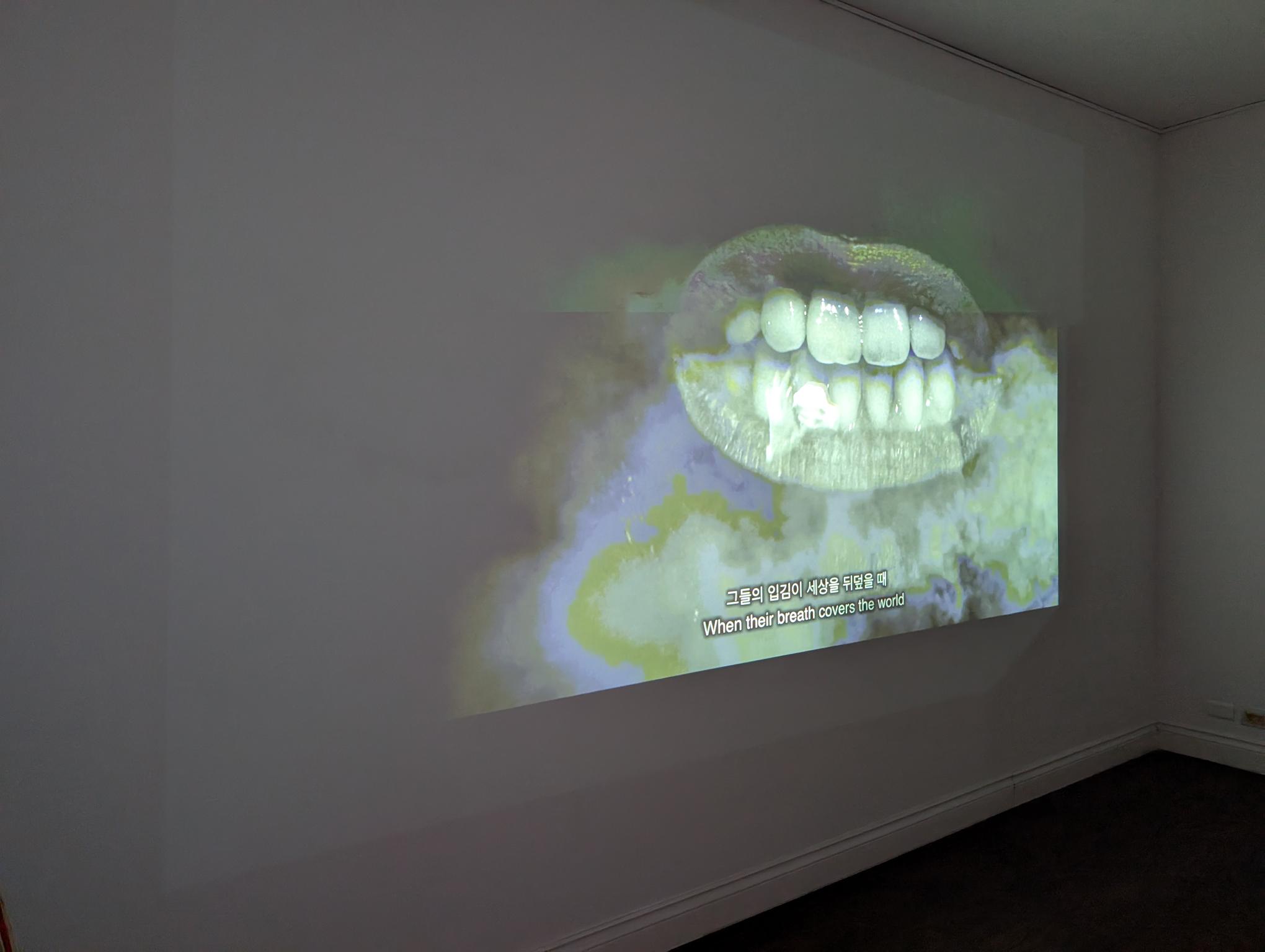
They arrive. Silently, quickly (2016), Ji Hye Yeom, “Still/Moving Korean Video Art Based on Performances” exhibition view, Korean Cultural Center in Italy, ph Dobroslawa Nowak, courtesy the artists and Istituto Culturale Coreano in Italia
Next to it, on both sides of the itinerant structure made of Europallets, two screens are suspended, presenting the works Suite 1 (2012) and Sit (2015) by Min Oh. Instead of layering numerous artistic impressions, Min Oh reduces the elements to just three: sound, movement, and light. After creating a minimal, controlled, and closed system within his entirely white scenography, she observes it with precision.
In Suite 1, in which an actress interacts with the space by moving in black heels (a reference to musical notes) from one overturned chair to another, the action is subjected to repetition, intervals, and variation in the form of minimal errors.
In Sit, by contrast, the focus is on the simple act of sitting, where movement is reduced to minimal gestures and sounds that suddenly begin to generate rhythm and tension. The actress claps her hands on her thighs, hums, lifts her foot, raises her eyelids: the repertoire becomes richer the longer we observe.
The work raises questions about the perspective from which we experience, about relationships, and about errors that, by generating minute fractures, end up overturning the system.
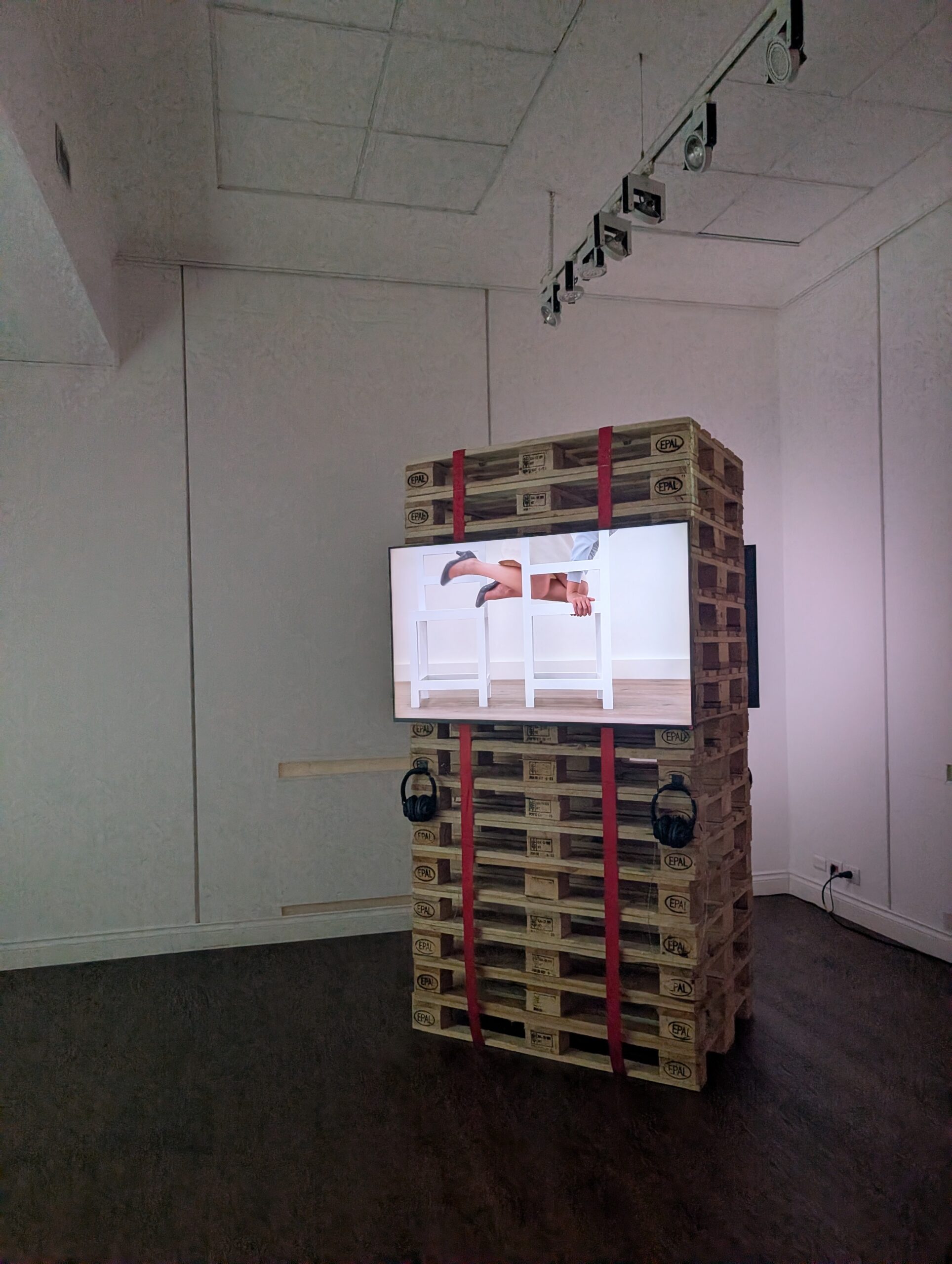
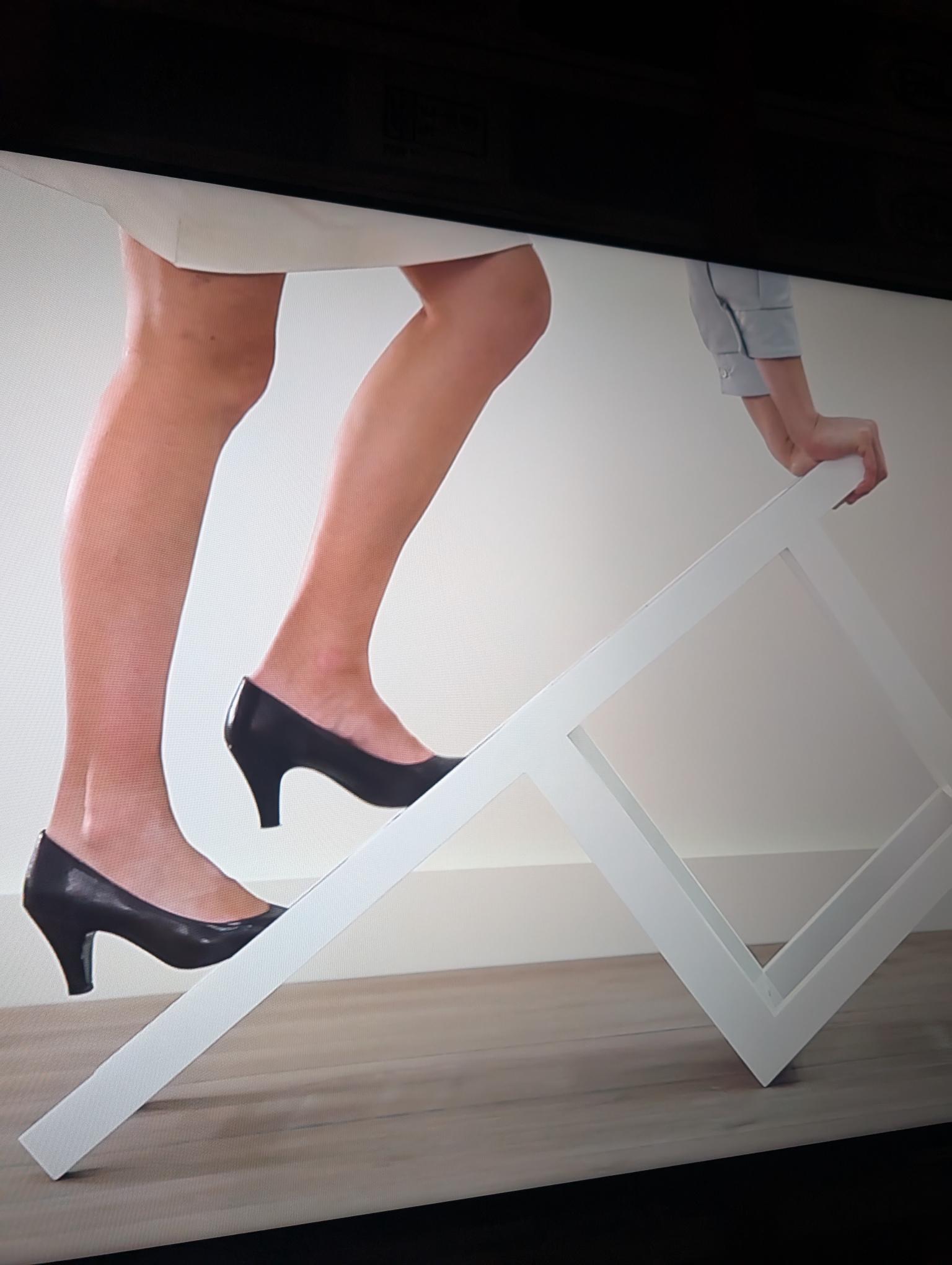
Suite 1 (2012), Min Oh, “Still/Moving Korean Video Art Based on Performances” exhibition view, Korean Cultural Center in Italy, ph Dobroslawa Nowak, courtesy the artists and Istituto Culturale Coreano in Italia
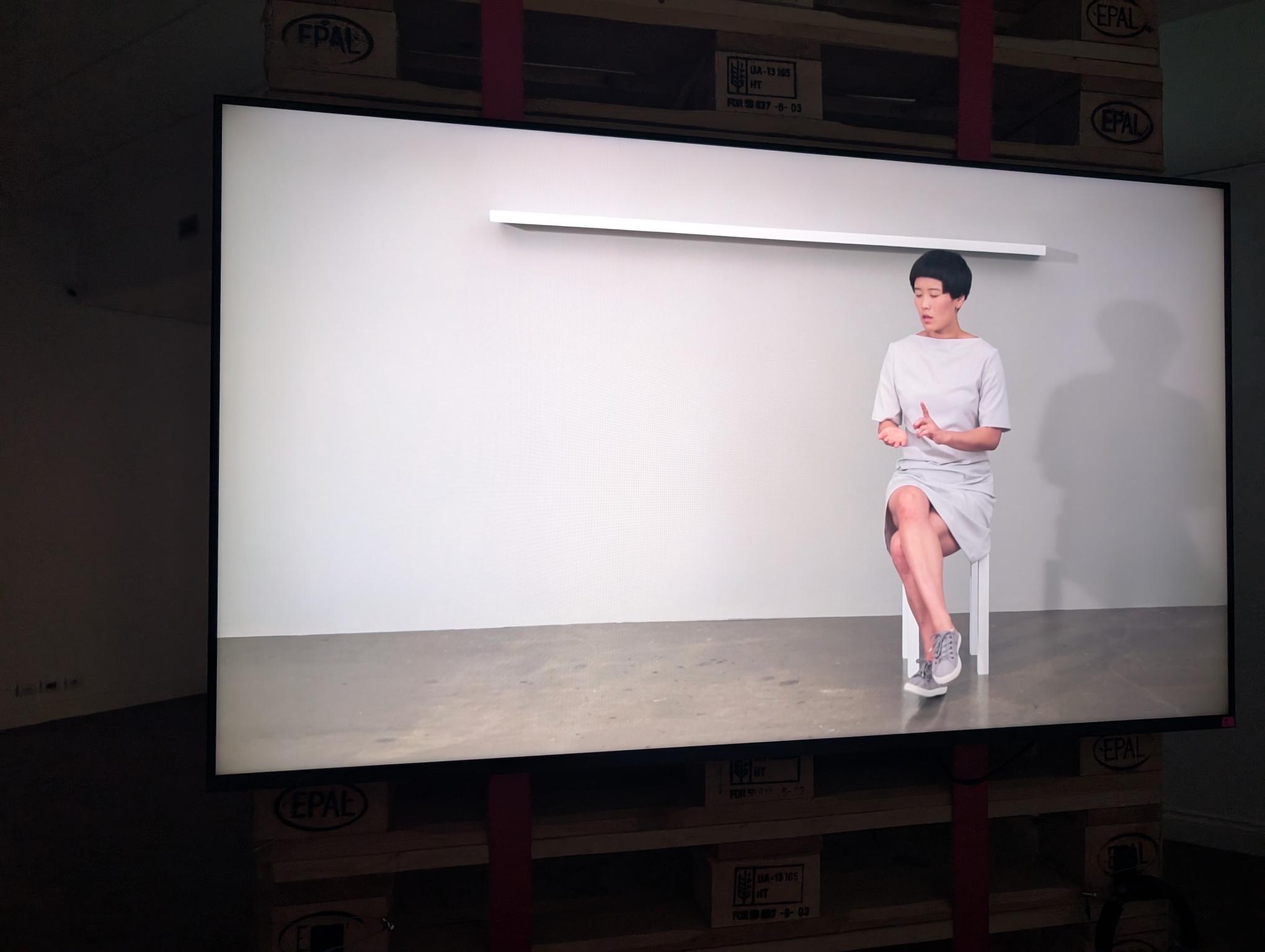
Sit (2015), Min Oh, “Still/Moving Korean Video Art Based on Performances” exhibition view, Korean Cultural Center in Italy, ph Dobroslawa Nowak, courtesy the artists and Istituto Culturale Coreano in Italia
Also in other works featured in this exhibition, such as 1967_2015 (2015) by Bona Park and Twelve Rooms (2014) by Sojung Jun, sound is brought to the forefront, even if only on a formal level.
The first work is inspired by the story of miner Changsun Kim, who was trapped for 15 days beneath the rubble of the Goobong mine in South Korea in 1967 following a collapse. At Bona Park’s request, a Foley artist Chung-gyu Lee recreated six sounds related to the miner’s rescue, including the sound of a phone call and movement within the tunnel, thus transforming temporal distance into a sonic experience.
At that time, Korea was undergoing the consolidation of an authoritarian regime under Park Chung-hee, who strengthened his control through surveillance, censorship, and political repression. Major industrial accidents and disasters were often reported within a heavily controlled media environment and were sometimes used to divert public attention from political tensions.
By presenting the video in the environment of the SONGEUN Foundation, the artist also draws on the fact that its president—who is also the honorary president of ST International (a global energy and investment company)—previously managed bituminous coal mines.
Bona Park’s works investigate and disrupt the operating mechanisms of social systems, including that of art itself.
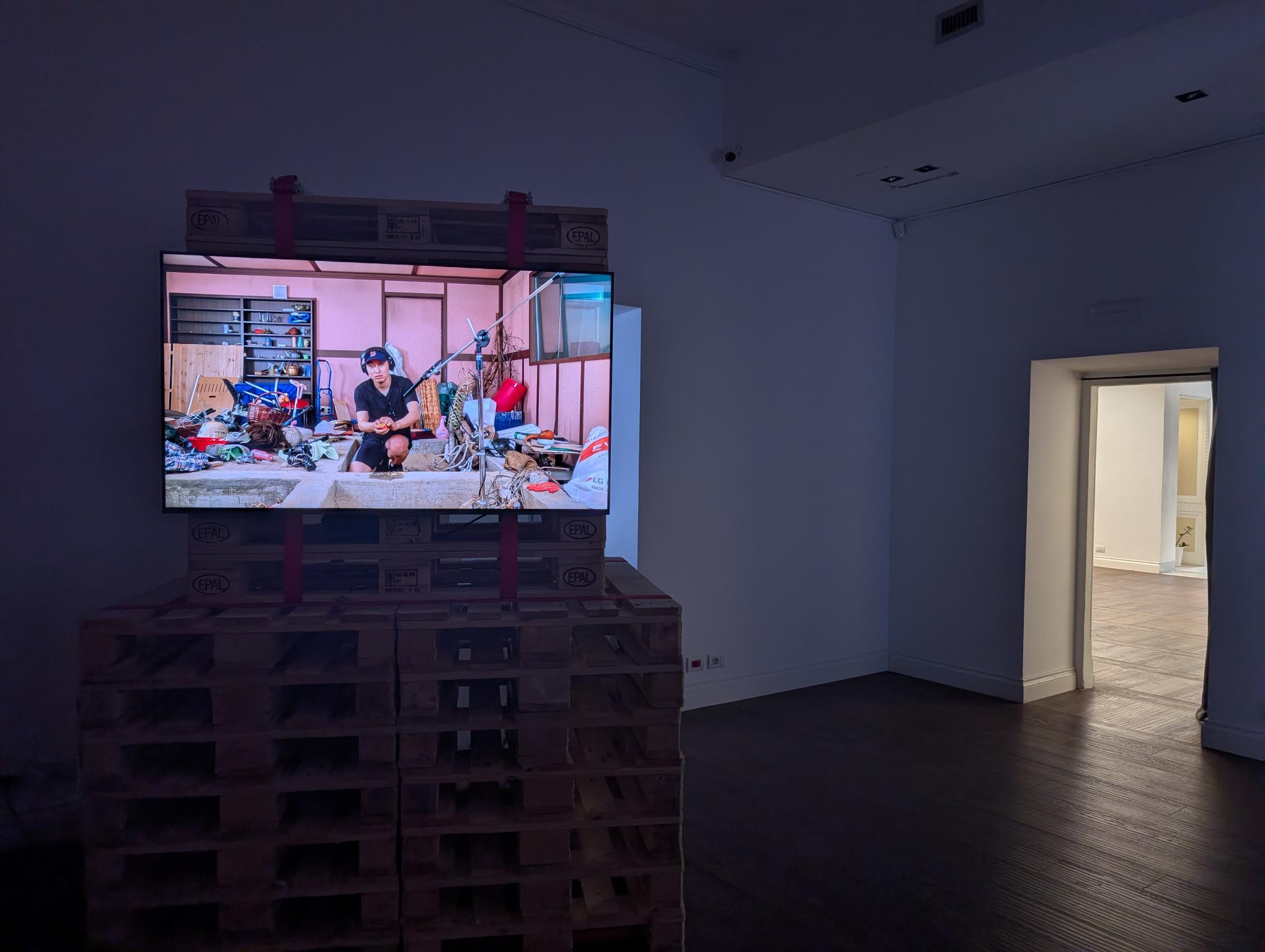
1967_2015 (2015), Bona Park, “Still/Moving Korean Video Art Based on Performances” exhibition view, Korean Cultural Center in Italy, ph Dobroslawa Nowak, courtesy the artists and Istituto Culturale Coreano in Italia
Twelve Rooms (2014) by Sojung Jun also uses sonic language to approach the experience of a concrete person, only to then transform the story it tells in its own way. In this case, the subject is the piano tuner Lee Jong-ryeol, who, with the generous support of the artist’s sensitivity, shifts from a technical figure to a true creator.
Sojung Jun deconstructs and recomposes narratives based on interviews and archival materials; she “creates a nonlinear space-time to awake a new awareness of history and the present” and “pays attention to people standing on the boundary amid the ruins of modernity and invisible voices”. (as outlined in the artist’s statement).
In Twelve Rooms, drawing inspiration from the research of Arnold Schoenberg and Wassily Kandinsky, Sojung Jun shapes the preparatory actions typically performed by the tuner into a resonance that creates correspondences between sound and color, between music and painting.
While discussing this work may attempt to explain its intentions, only the experience of its symphony of sounds and colors allows one to fully undergo the metamorphosis, in which it becomes clear that what initially was meant to be a technical sound no longer is—or rather, never was.
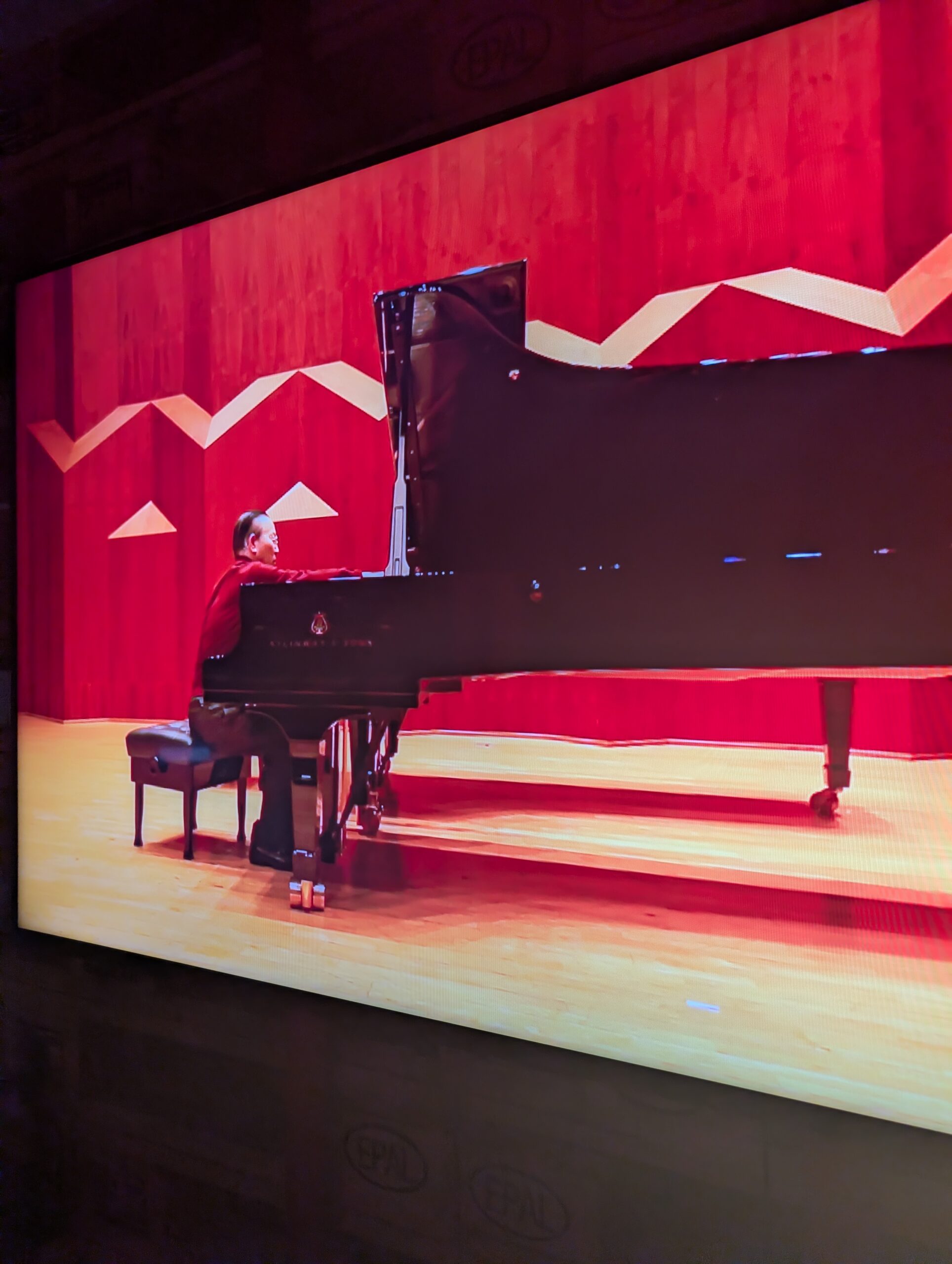
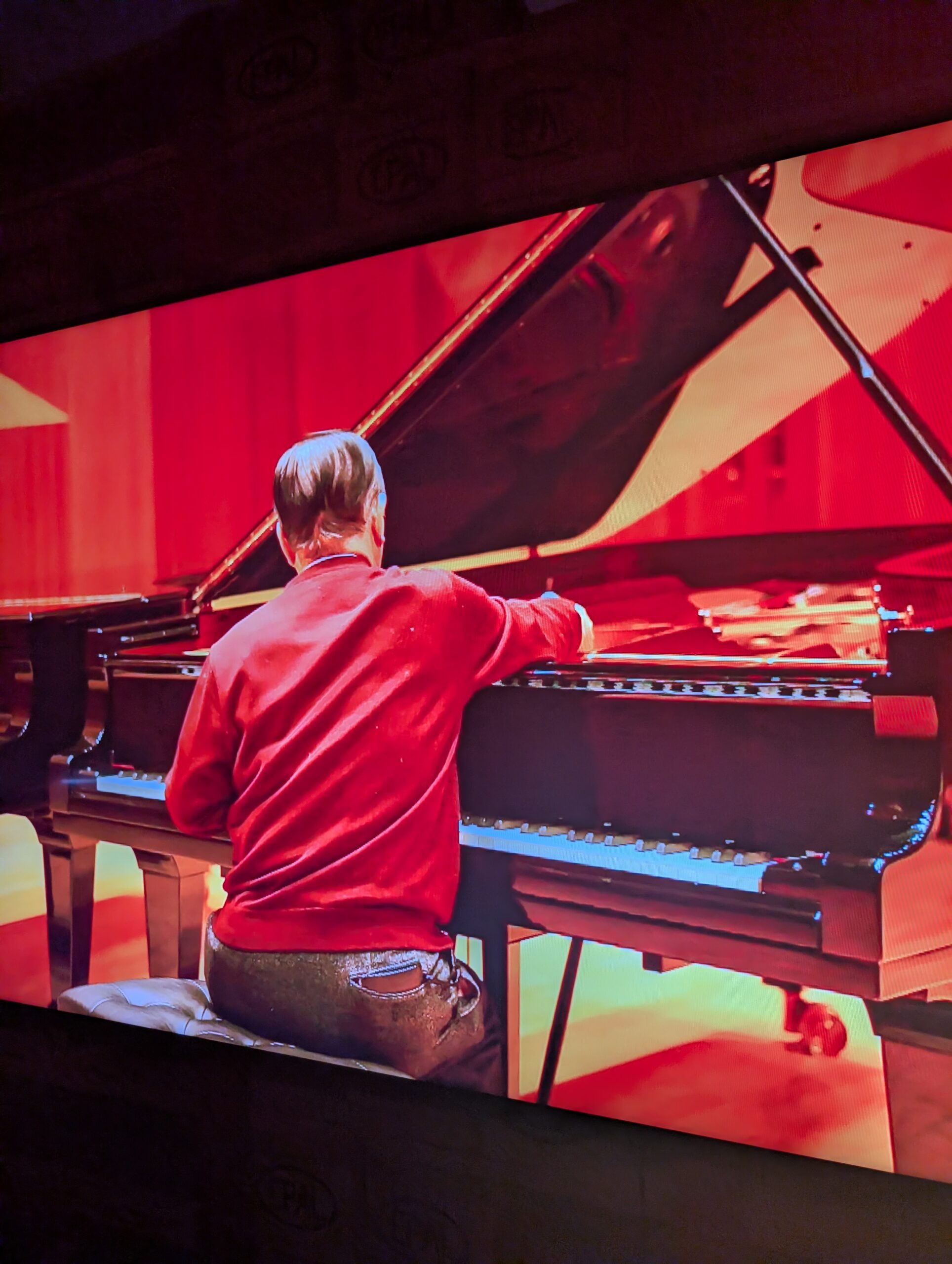
Twelve Rooms (2014), Sojung Jun, “Still/Moving Korean Video Art Based on Performances” exhibition view, Korean Cultural Center in Italy, ph Dobroslawa Nowak, courtesy the artists and Istituto Culturale Coreano in Italia
The same artist presents her new work on the lower floor: Borrowed Landscapes (2025) draws inspiration from the Korean practice of chagyeong. The applied principle—also used in the famous Secret Garden of Changdeokgung—follows the idea of “hidden design”: architecture is present, but never overpowers nature. This technique is a fundamental principle of Korean garden architecture and consists of designing architectural spaces in such a way as to “frame” the external landscape—mountains, trees, sky, gardens—so that it becomes part of the interior. From this perspective, architecture does not dominate nature, but visually intertwines with it.
In the video, a reflection emerges on the relationship between landscape, image, and architecture, transferring the principle of chagyeong into the environment of digital media through an AR (Augmented Reality) application. The digital landscape created by the artist forms a provisional space that overlaps with the time of the city, opening up a series of questions: today, with technology mediating perception, which elements do we “borrow,” and which do we actually see?
On the same screen, we can see three other works, including Breath and Blood (2025) by Hyewon Kwon, which emphasizes the issue of perception. Here, the artist adopts the point of view of an extraterrestrial robot (a techno-organic hybrid, a sensory entity) that explores the aquatic ecosystem of our planet, inviting viewers to observe the environment from a non-human perspective. Through this means, Hyewon Kwon renders typically familiar elements such as water and light foreign, bringing visibility to a more complex issue related to the technical and institutional frameworks that structure perception. The artist also calls into question the linear conception of time that separates past and present.
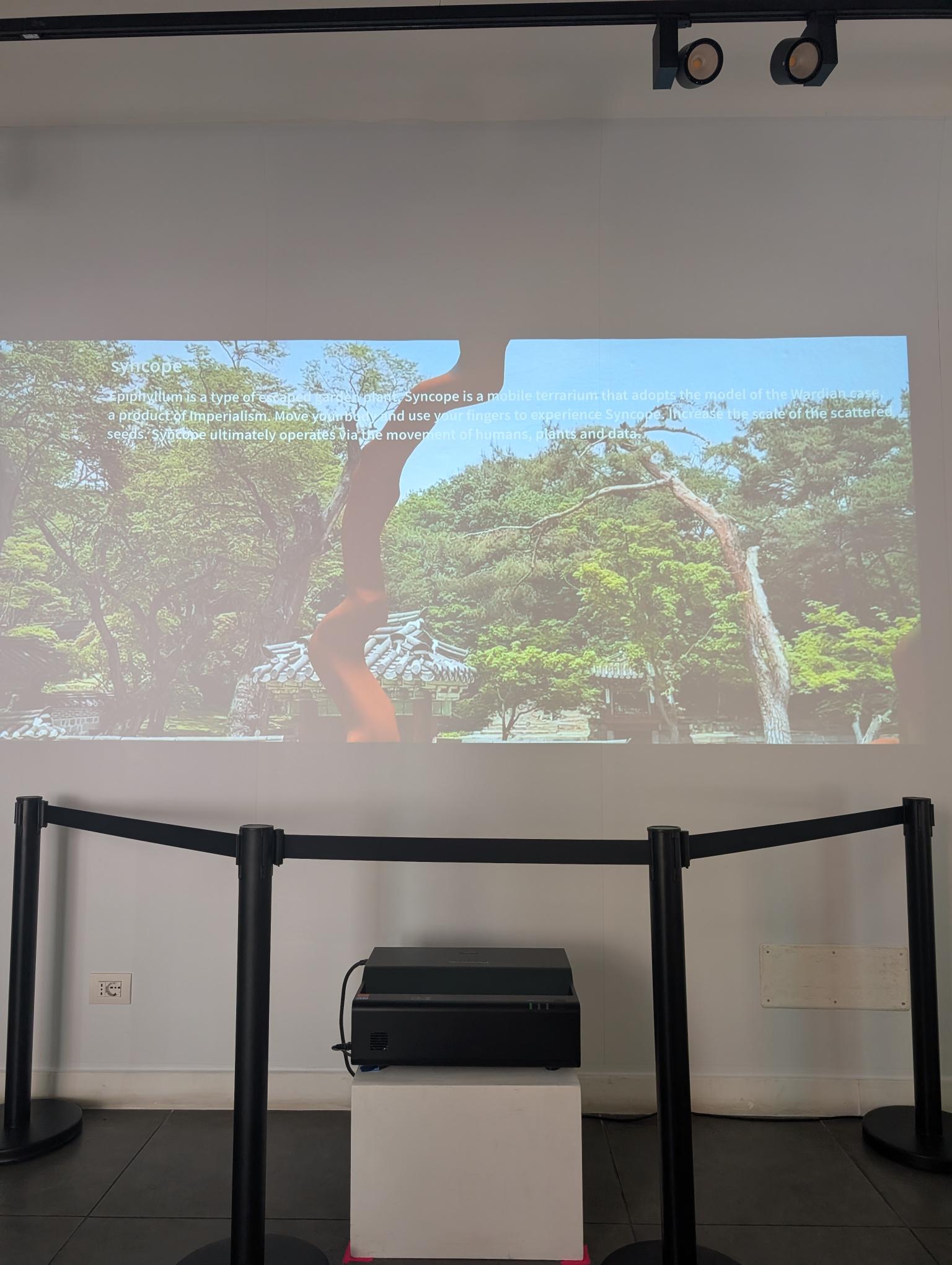
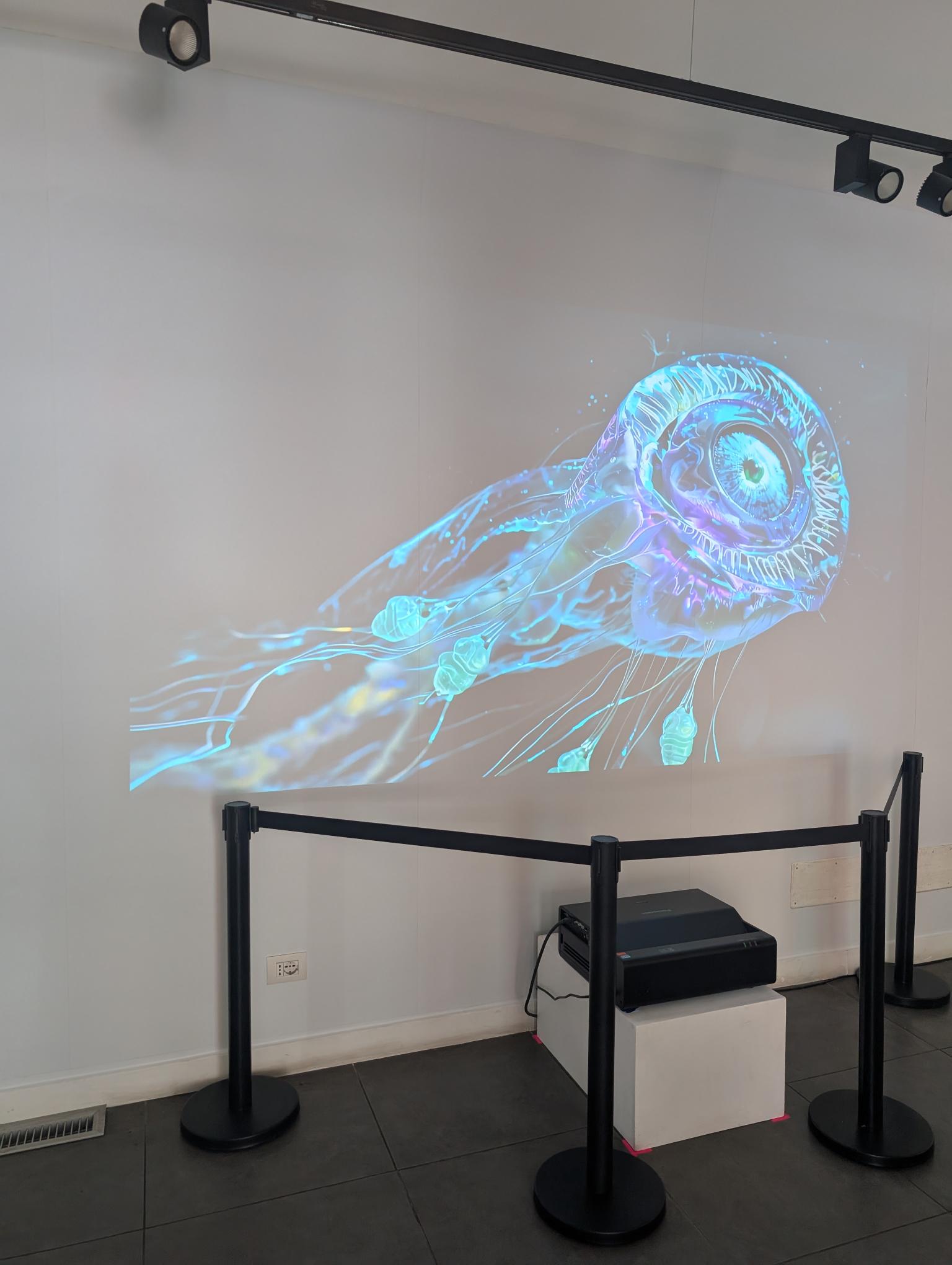
Left: Borrowed Landscapes (2025), Sojung Jun; right: Breath and Blood (2025), Hyewon Kwon, “Still/Moving Korean Video Art Based on Performances” exhibition view, Korean Cultural Center in Italy, ph Dobroslawa Nowak, courtesy the artists and Istituto Culturale Coreano in Italia
Two other videos are animations. In the first, Exercises in Expression (2025), Seung-Hye Hong focuses on emoticons, highlighting their social and communicative function. The artist deconstructs their features, digitally applying a fluid and elementary movement to the geometric shapes that compose them. Seung-Hye Hong, born in 1959, thus reflects on the process through which complex human emotions are translated into a simple visual language.
On the same screen, appears the video Nibble Nibble (2025) by Rae Jung Sim. Although initially playful, the image quickly fractures, revealing the exposed viscera of the brain in a palette of cheerful colors.
The video explores violence and the contradictory desires inherent in the human psyche. From elements that are initially harmless, both in form and content—such as childlike coloring and the drawing of a mouth—the animation goes on to address themes of violence, cannibalism, and autophagy.
The depicted mouth expands, gradually transforming until it becomes the entire human body, ultimately devouring and chewing itself. The artist’s works emerge from unsettling experiences and everyday anxieties, giving life to an artistic corpus that is as cruel as it is liberating.
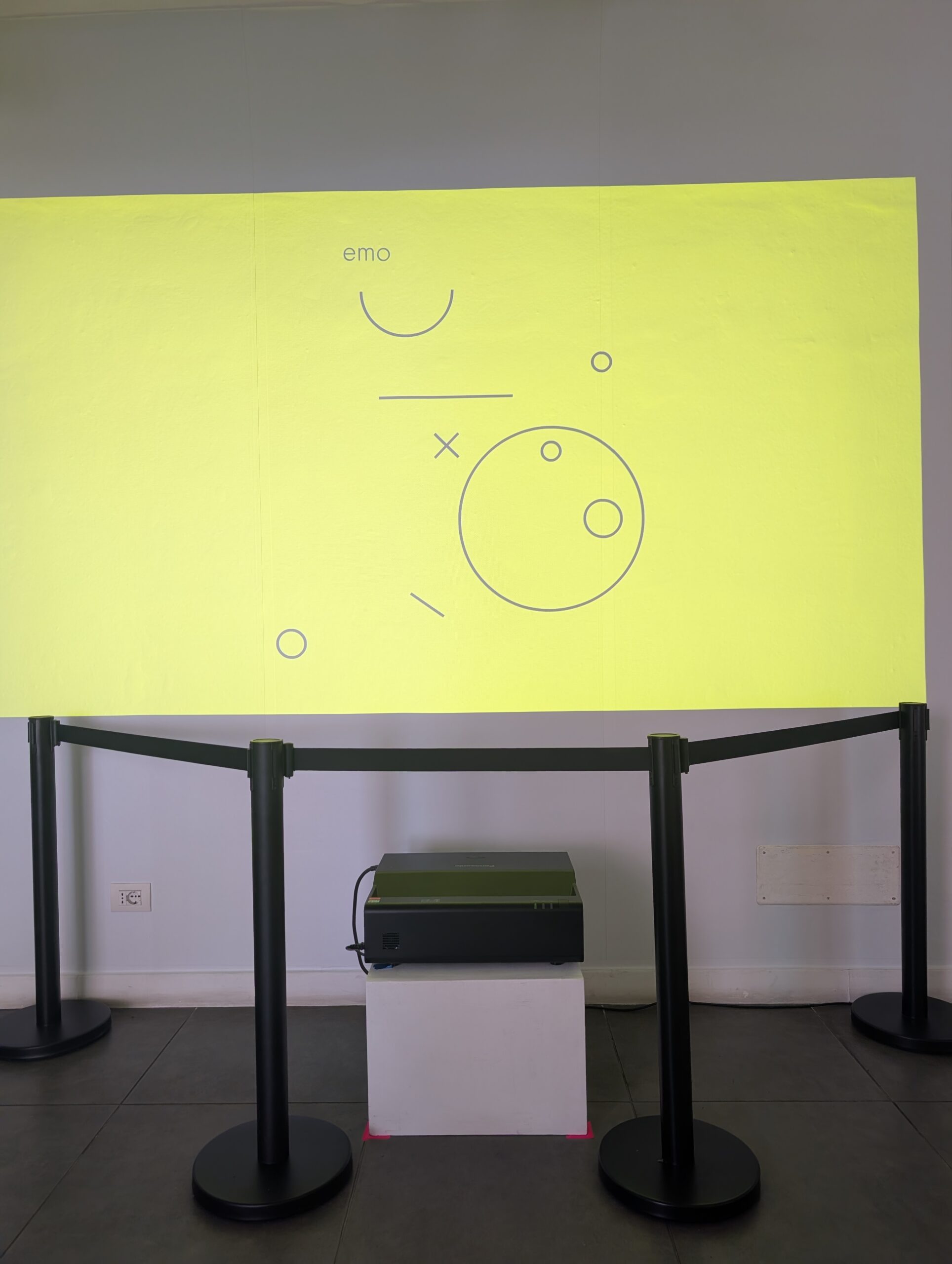
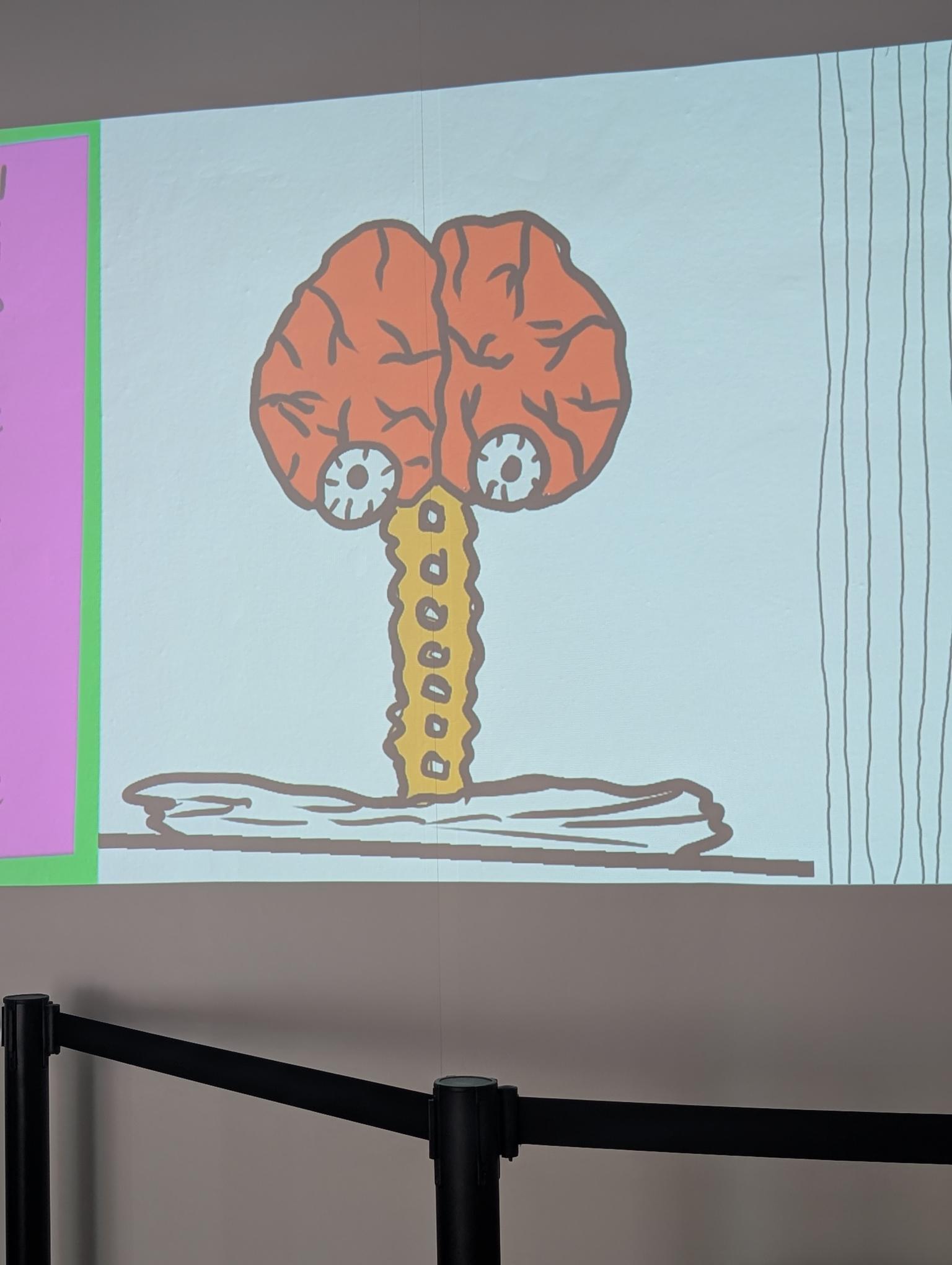
Left: Exercises in Expression (2025), Seung-Hye Hong, right: Nibble Nibble (2025) di Rae Jung Sim, “Still/Moving Korean Video Art Based on Performances” exhibition view, Korean Cultural Center in Italy, ph Dobroslawa Nowak, courtesy the artists and Istituto Culturale Coreano in Italia
A condition of tension emerges in a completely different way in the work of Youngjoo Cho. In the video Feather on the Lips (2020), four women against a white background intertwine and press their bodies tightly against one another. In this video, where the meaning of relationships touches on various themes—from childcare, in which close physical contact becomes inevitable, to power dynamics—the artist investigates the pressures exerted on the female body.
Through various expressive media, including performance, photography, installation, video, sound, and dance, the artist exposes the anxieties of living as a woman within social structures.
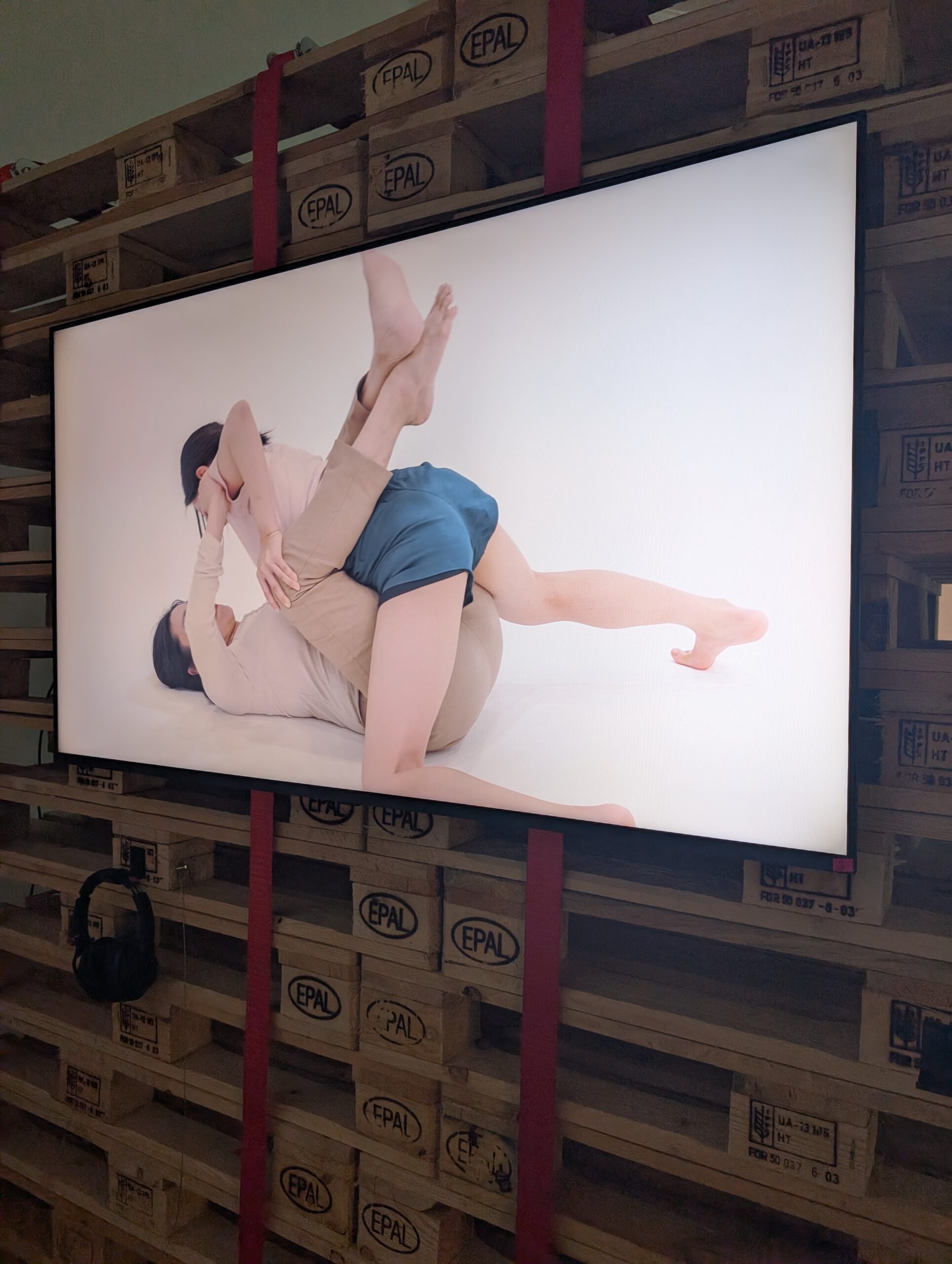
Feather on the Lips (2020), Youngjoo Cho, “Still/Moving Korean Video Art Based on Performances” exhibition view, Korean Cultural Center in Italy, ph Dobroslawa Nowak, courtesy the artists and Istituto Culturale Coreano in Italia
With similar care and sensitivity, the body is treated in the video by artist Young-jun Tak, titled I Will Love Your Pure Feet on Thursday (2023). The video, accompanied by Manon Balet’s musical track, juxtaposes the Holy Thursday procession in Andalusia—linked to the ritual of foot washing during the Easter period—with a classical dance choreography performed by dancers in an isolated location at the edge of the forest.
Young-jun Tak combines themes of queer identity with religious beliefs and rituals, destabilizing boundaries and opening up the possibility of an unexpected unity.
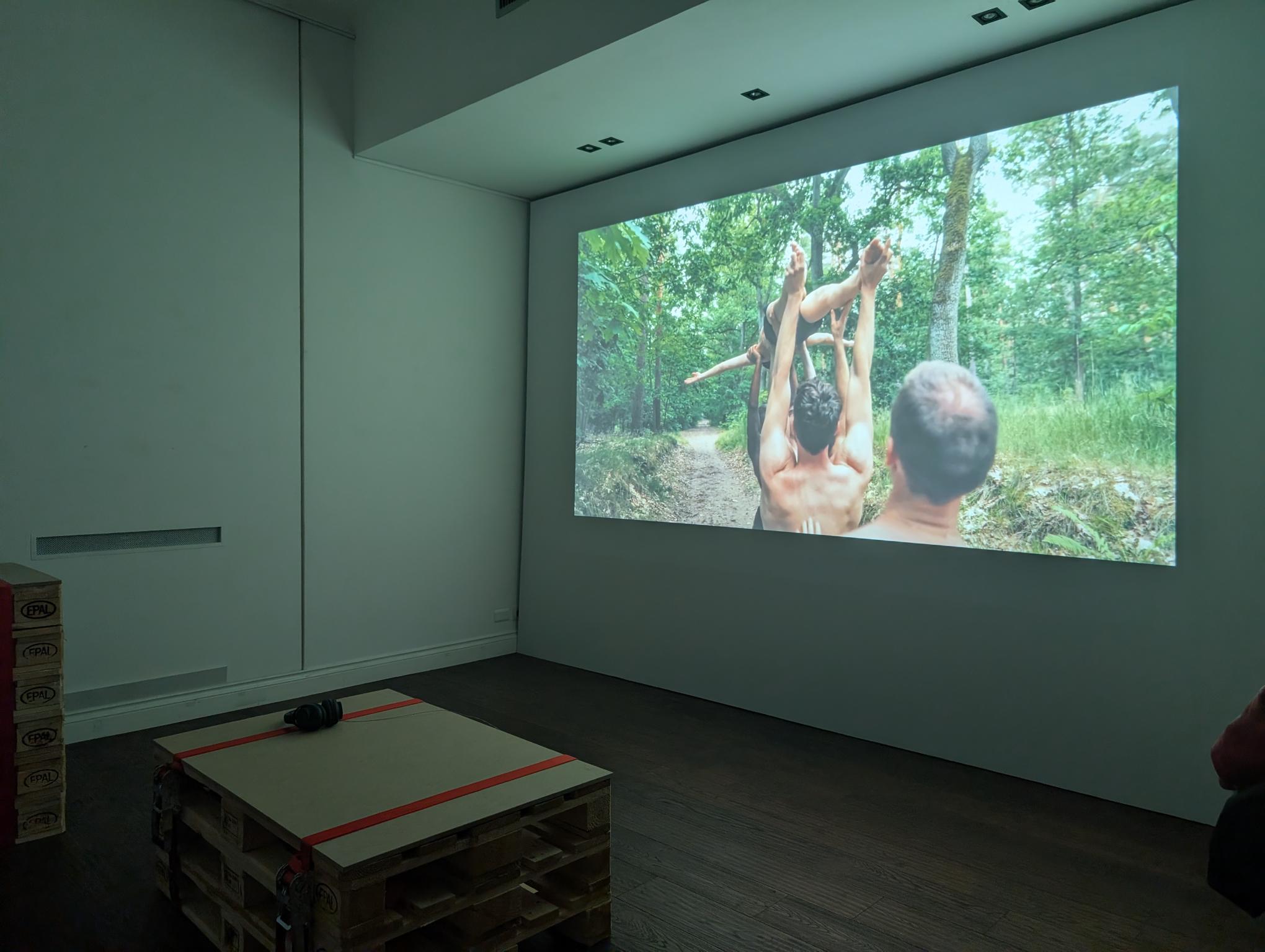
I Will Love Your Pure Feet on Thursday (2023), Young-jun Tak, “Still/Moving Korean Video Art Based on Performances” exhibition view, Korean Cultural Center in Italy, ph Dobroslawa Nowak, courtesy the artists and Istituto Culturale Coreano in Italia
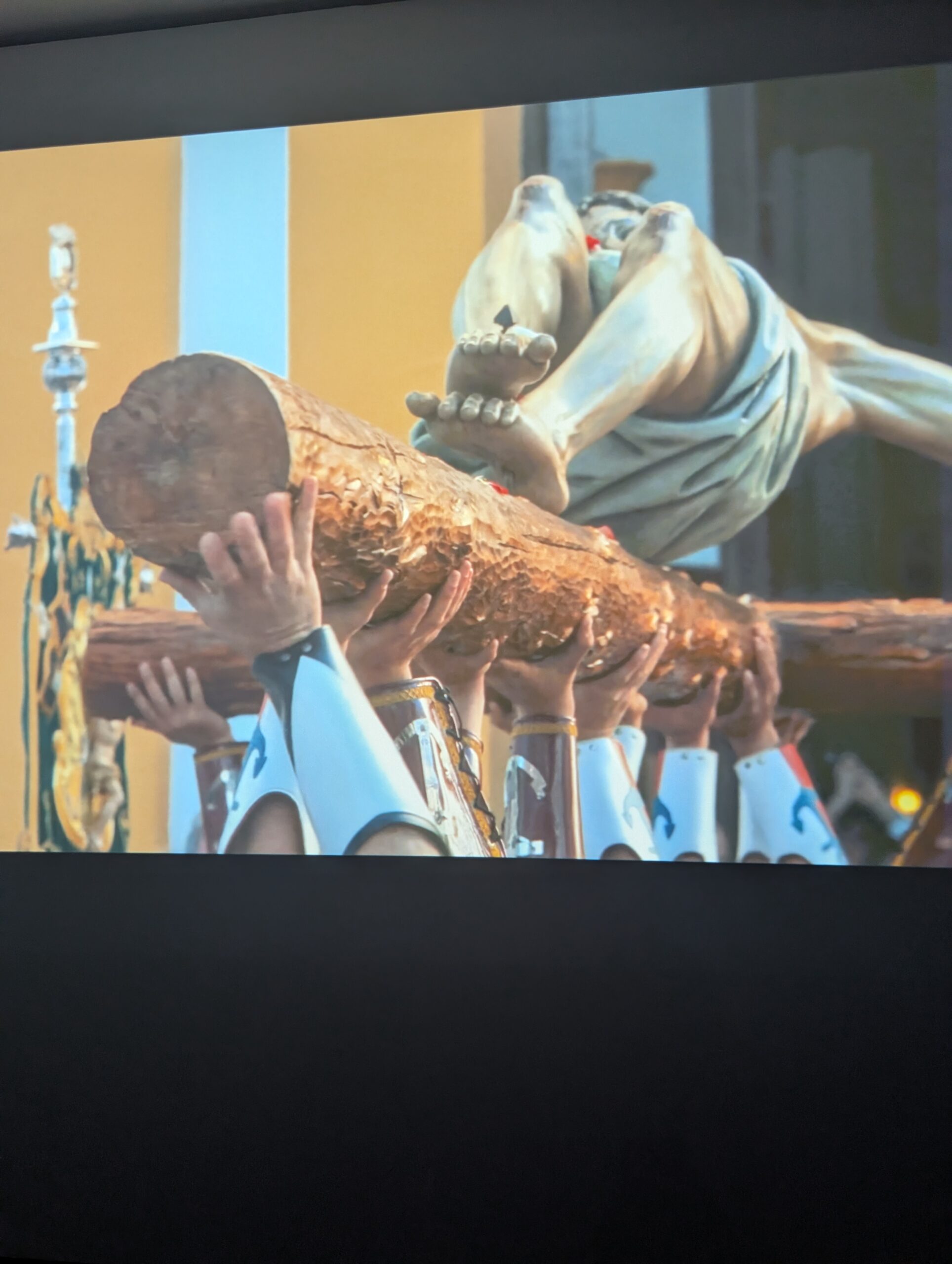
I Will Love Your Pure Feet on Thursday (2023), Young-jun Tak, “Still/Moving Korean Video Art Based on Performances” exhibition view, Korean Cultural Center in Italy, ph Dobroslawa Nowak, courtesy the artists and Istituto Culturale Coreano in Italia
Four Similar Corners (2015) by Junebum Park, a video lasting less than three minutes and presented in a loop, begins with a monochrome photograph of the corner of a hybrid space.
Suddenly, in the foreground, hands appear. They begin removing elements of the initial image layer by layer. Beneath the main image, another is already present, waiting to be revealed. This action repeats in successive iterations: at times it adds metres of depth to the surface, at others it uncovers the light of a window, and so on. Each part of the room undergoes an unexpected transformation, sometimes so subtle that it is difficult to perceive what has changed.
The artist decodes complex situations of everyday life by transforming them into models and simulations of a simplified structure. Through these simple visual gestures, Junebum Park investigates in depth, ultimately questioning socio-political norms and structures.
Going Far (2005) is a work by Jaye Rhee in which the artist appears to float from left to right across the center of the screen filled with white balloons. Not everything is as it seems: the scene originates from a performance in which the artist performs numerous jumps, carrying out meticulous physical work followed by careful editing. The result is a video whose core lies in the illusory nature of representation.
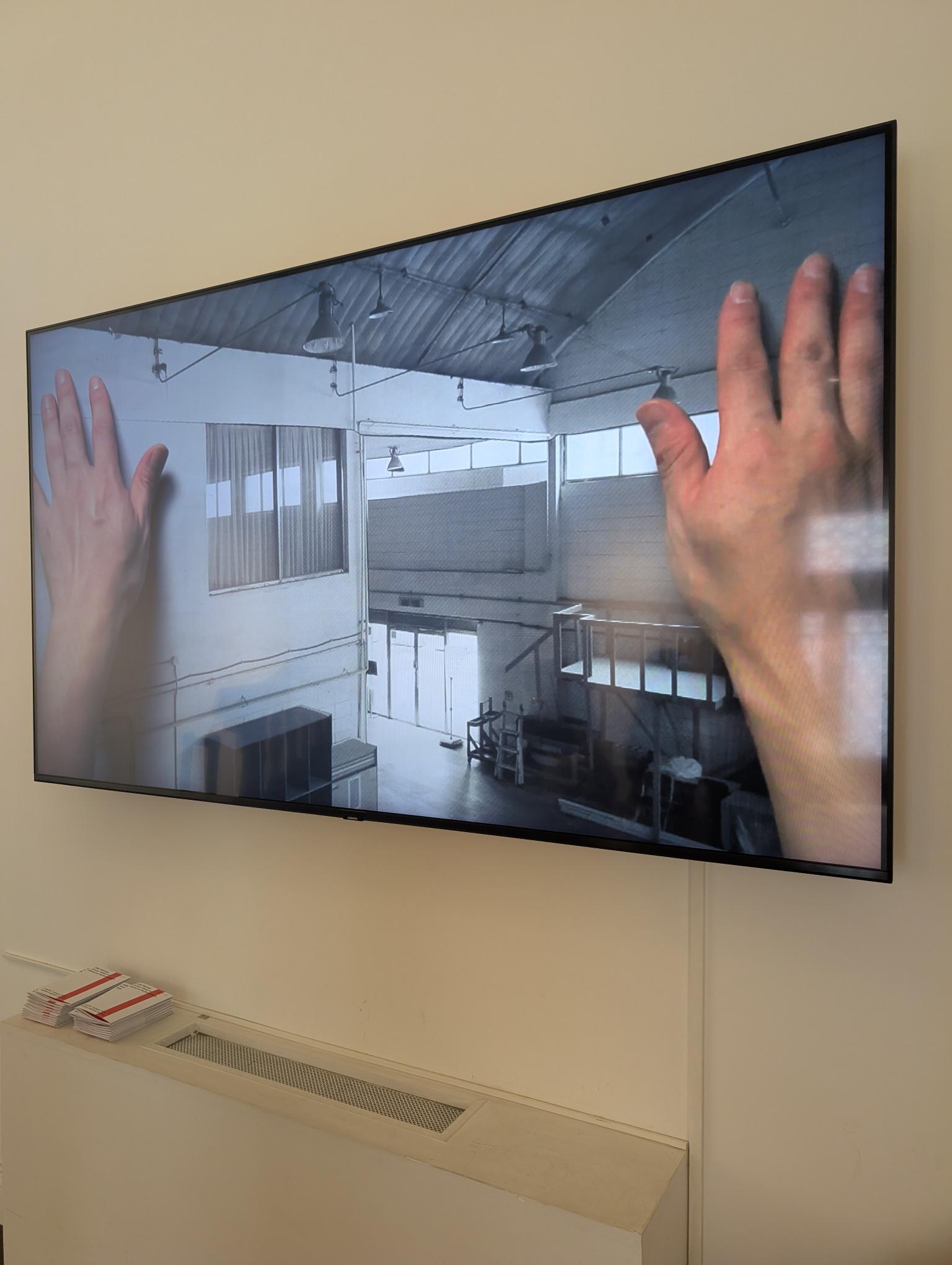
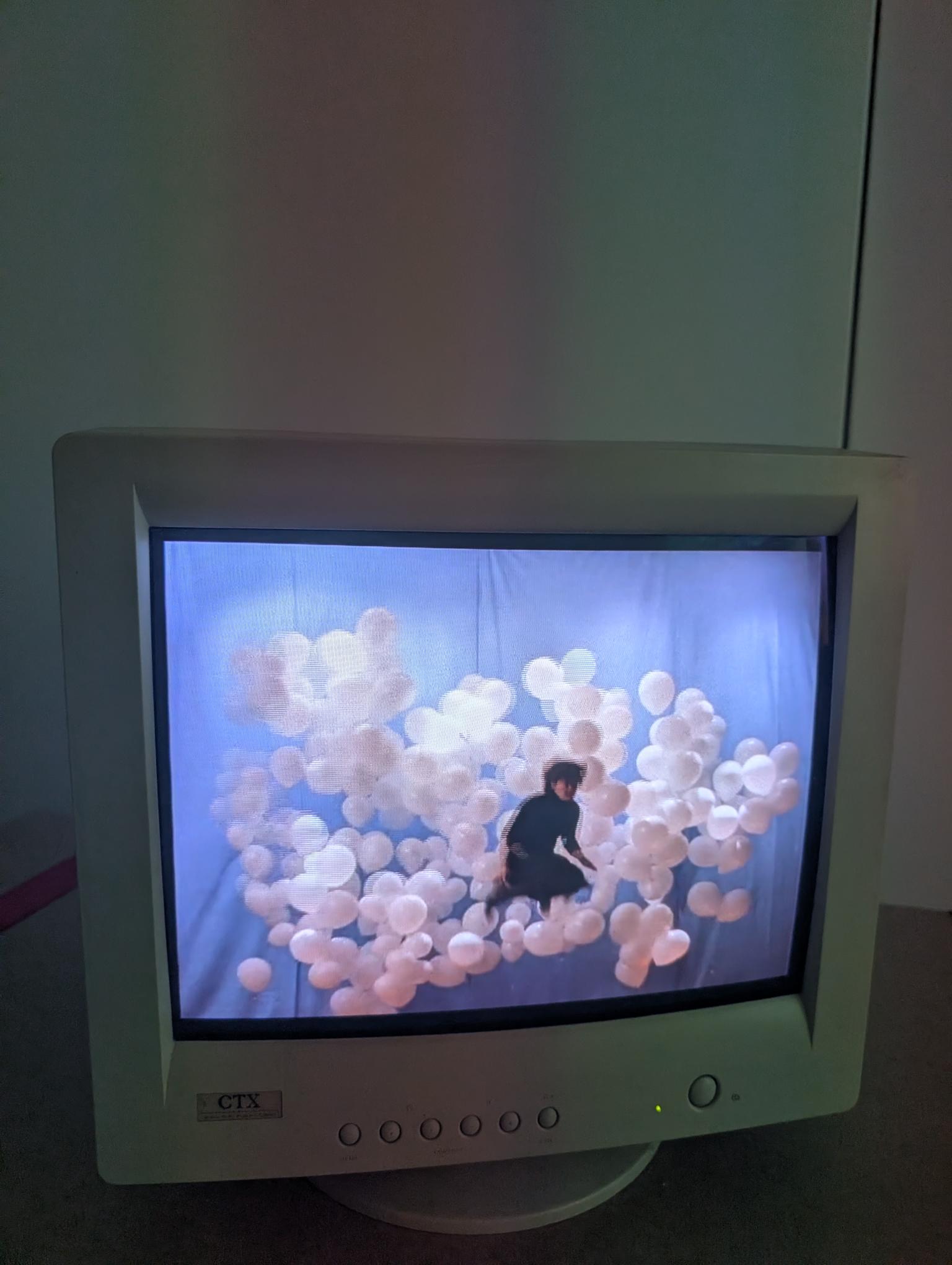
Left: Four Similar Corners (2015), Junebum Park, right: Going Far (2005), Jaye Rhee, “Still/Moving Korean Video Art Based on Performances” exhibition view, Korean Cultural Center in Italy, ph Dobroslawa Nowak, courtesy the artists and Istituto Culturale Coreano in Italia
Exhibition details:
Title: Still/ Moving: Korea Video Art Based on Performances
Artists: Ji Hye Yeom, Min Oh, Bona Park, Sojung Jun, Hyewon Kwon, Seung-Hye Hong, Rae Jung Sim, Youngjoo Cho, Young-jun Tak, Junebum Park, Jaye Rhee
Curator: Minjung Kim
Location: Korean Cultural Center in Italy, via Nomentana 12, 00161, Rome
Dates: 9 aprile – 5 giugno 2026
Organized by SONGEUN
Part of the traveling program “Touring K-Arts”
Promoted by Ministry of Culture, Sports and Tourism of the Republic of Korea and by Korea Foundation for International Cultural Exchange (KOFICE)