


3 Exhibitions to See in July
Our guide to exhibitions in Italy
07.07.2026
Often, the most radical form of resistance is expressed not through monumental forms, but through the evocation of categories that have historically been devalued or consigned to the shadows. What emerges is a quiet process of deconstruction, dismantling established codes and systematically calling them into question by transforming marginality from a place of subordination into a space free from constraint.
Along this shared threshold emerge practices that choose as their field of inquiry the essential vocabulary of play, a femininity long demonized, or the impossibility of controlling the physiological cycles of nature. To express oneself through materials and objects destined not to last, or tied to a slow and patient form of making, thus becomes an act of quiet sabotage against the rhythms of an hyper-productive, performance-driven society.
The three exhibitions selected for July present three distinct perspectives that reject monumentality and claims of objectivity to bring into focus the political value of boundaries and constraints.
The Materiality of Judy Chicago - Alberta Pane, Venice (until 22 November)
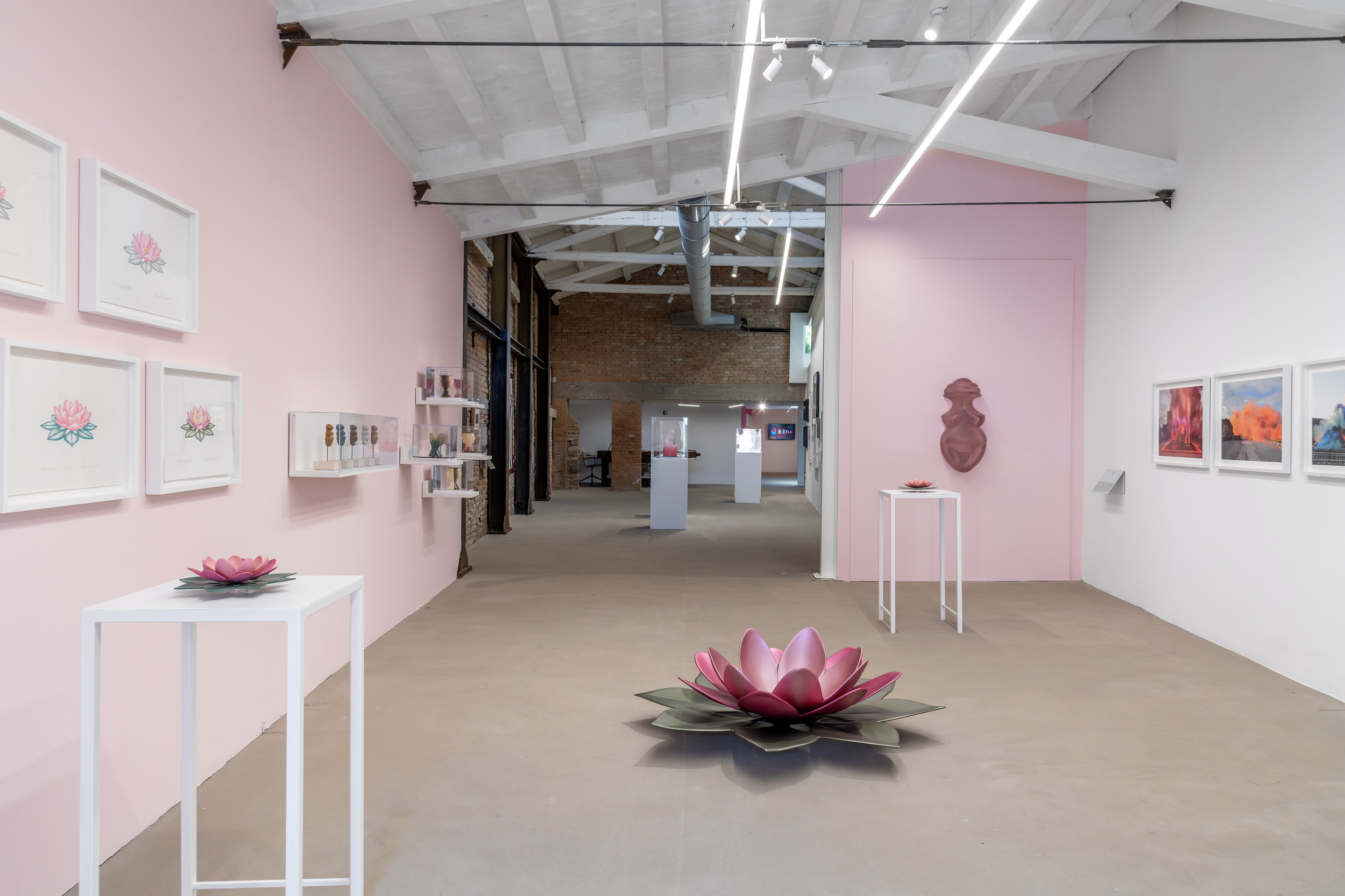
The Materiality of Judy Chicago, exhibition view, Alberta Pane Gallery Venice, ph Irene Fanizza
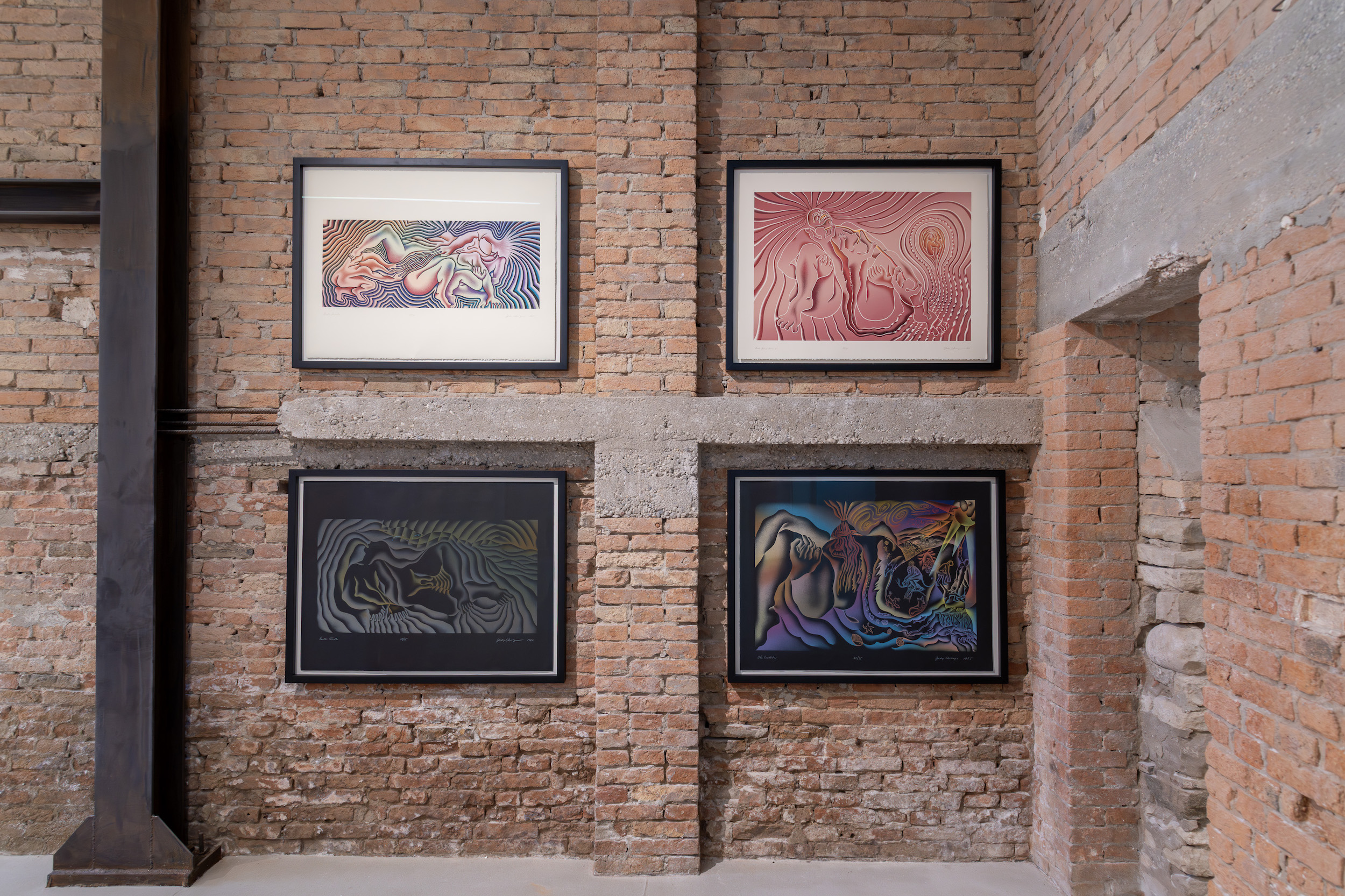
The Materiality of Judy Chicago, exhibition view, Alberta Pane Gallery Venice, ph Irene Fanizza
Judy Chicago’s is a form of silent subversion, one that does not rely on forceful or authoritative gestures, but on a radical rejection of the very notion of power itself. Across more than six decades of practice, spanning media historically regarded as “minor” because of their association with decoration and craft, the pioneering American feminist artist has overturned established hierarchies. Through installation — most notably The Dinner Party, the landmark work that led her to ask, “Will my art ever emerge from the shadow of The Dinner Party?” — Chicago has restored the names of women erased from history, addressing an unforgivable absence.
In her exhibition at Galleria Alberta Pane, presented within the framework of the Venice Biennale, Chicago brings together historical works with a new body of work rooted in the past, transforming the many facets of her practice into a broader reflection on the rejection of hierarchies and an attentiveness to what has been pushed to the margins.
The new series Judy Chicago: Lilies/Goddesses, shown to the public for the first time here, revisits the motif of the water lily — an explicit and direct reference to Claude Monet and the Impressionists — translating it from painting into sculptural installation. By varying its scale, Chicago adapts the work to different contexts and surfaces, from tables to fountains. A symbol historically associated with grace and the exceptional painterly elegance becomes an element suspended between the monumental and the childlike: a warning of impending climate collapse, yet also a colourful form that invites touch, resembling a toy.
Chicago creates ruptures and reconfigurations of meaning by drawing on the ephemeral, the feminine, decoration, and fragility — all categories historically marginalized and devalued within a patriarchal system that celebrates grandeur, power, centrality, and strength while overlooking the richness of everything that exists beyond those parameters.
Guendalina malatesta - Galleria Umberto di Marino, Naples (until 30 July)
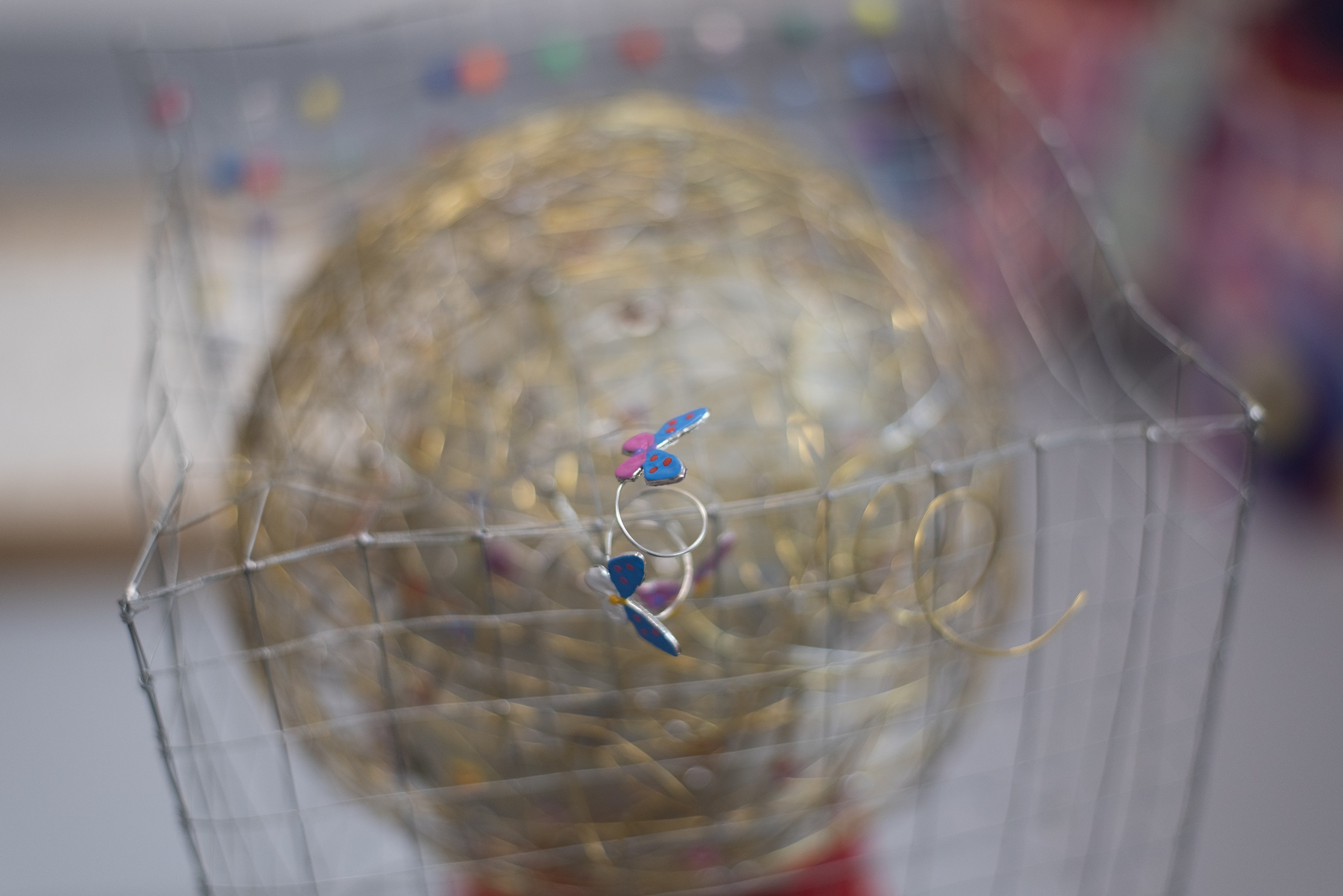
Guendalina Cerruti, Guendalina malatesta, 2026, courtesy l’artista e Galleria Umberto Di Marino, Napoli, IT, foto Francesca Rossi
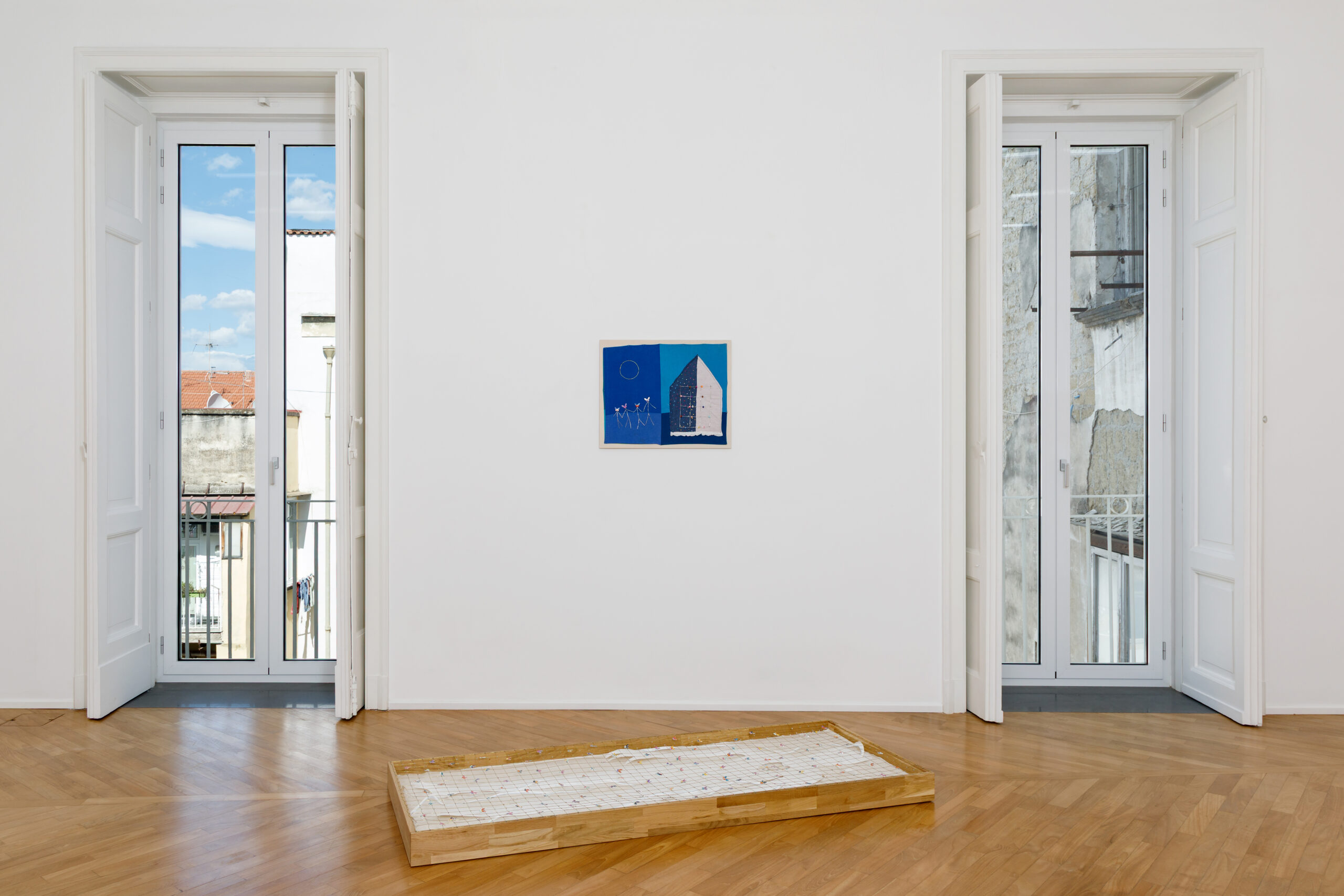
Guendalina Cerruti, Guendalina malatesta, 2026, veduta della mostra presso Galleria Umberto Di Marino, Napoli, IT. Foto di Danilo Donzelli
The vocabulary of play defines Guendalina Cerruti’s sculptures. Coloured beads, butterflies, and metal mesh become the elements of a slow and patient craft-based practice that breaks away from the demands of hyper-fast, performance-driven production.
The recent works presented at the Neapolitan gallery — the first in the city to exhibit Cerruti’s practice — are shaped by a childlike aesthetic built through meticulous and attentive processes, through the repetition of gestures and procedures, within a broader reflection that transforms the fragility of structural supports into an emotional, social, and collective condition: “My sculptures and paintings channel a desire for emancipation and self-expression in order to challenge contemporary tendencies towards cultural and intellectual conformity.” What appear to be toy-like constructions, exercises in handcraft by a little girl dressed in pink, are in fact the outcome of a deeply political discourse.
Who decides which creations hold value and which do not? Who establishes the rules within the field of artistic production? Cerruti reflects on the psychological consequences of a system driven by overproduction, choosing an alternative path to rhythms that are incompatible with an artistic practice grounded in honesty and an awareness of limitations.
Anafora - Palazzo Collicola, Spoleto (until 10 January 2027)
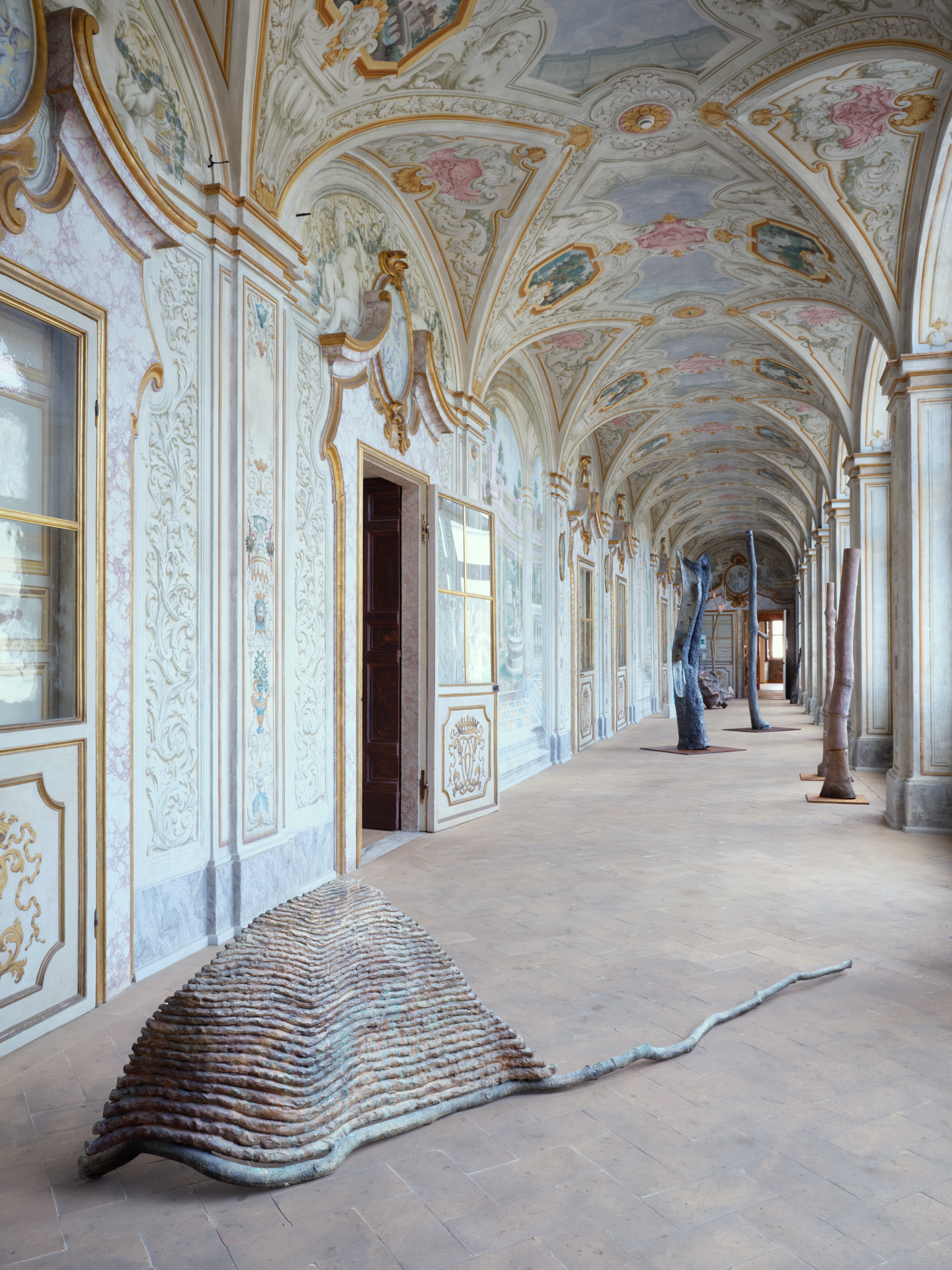
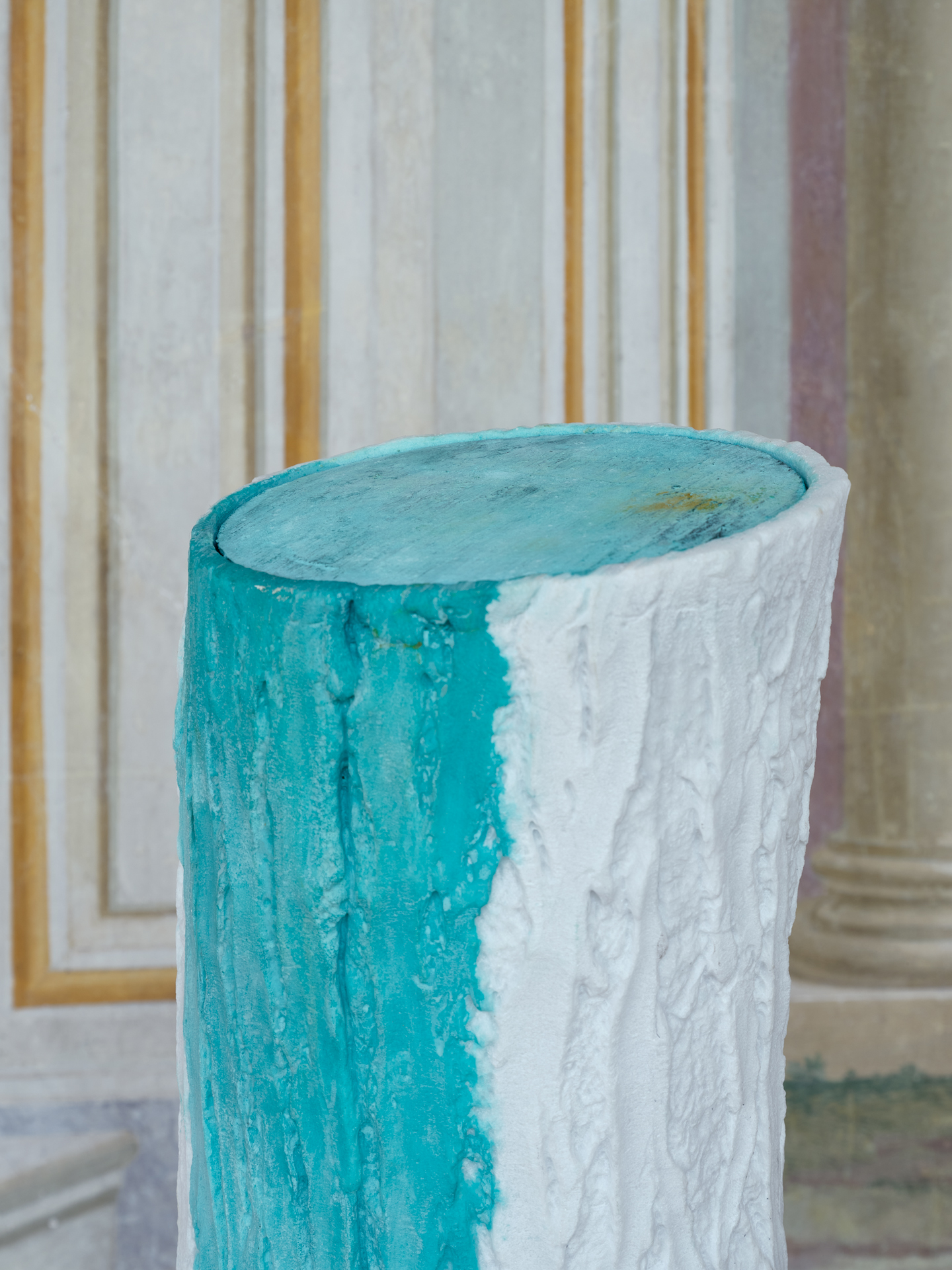
Giuseppe Penone, Struttura del tempo, 1992. Bronze, 70 × 40 × 302 cm. Exhibition view Anafora curated by Saverio Verini, Palazzo Collicola, Spoleto, 2026. Photo: Giuliano Vaccai. (left); Giuseppe Penone, Indistinti confini Rhenus, 2012. White Carrara marble, 147 x ø 20 cm; base 27 x 33,5 x 21,5 cm. Exhibition view Anafora curated by Saverio Verini, Palazzo Collicola, Spoleto, 2026. Photo: Giuliano Vaccai. (right)
Anaphora is a form of verbal repetition that generates continuity, cohesion, and stability within the living structure of language. In his exhibition at Palazzo Collicola, Giuseppe Penone overlays this idea of “syntactic security” with the ephemeral and the transient — elements that have always defined his practice. A selection of some of the most significant sculptural works from his career is arranged along the gallery spaces of Palazzo Collicola, each work placed in direct dialogue with the windows. Within Penone’s ongoing exploration of the relationship between the human and the natural, the enduring and the perishable, the exhibition takes shape across the historic spaces of the palace, focusing on the material’s vulnerability and on the unstable boundaries between interior and exterior.
The rhythmic and stable cadence suggested by the title is realised through natural elements and, for this very reason, inherently elusive ones: from the atmospheric light filtering through the glass and spreading across the sculptures, shifting throughout the day, to the wooden material of the works themselves, where metallic traces or grafts are embedded, disrupting the organic development of biological matter. Penone thus dismantles the seventeenth-century monumentality of the hosting space: sculpture is no longer an assertion of power or an immutable form over time, but a living, permeable, and vulnerable body.
In perfect continuity with the anti-systemic approach of Arte Povera, the exhibition becomes an exercise in listening and attunement to non-human temporal scales. It redefines artistic practice not as the imposition of a controllable form, but as an acceptance of limitation and biological transformation.
English translation: Dobroslawa Nowak