

On the Existence of an Italian Art Identity
15.09.2026
Writing today about the identity of Italian art means confronting a question that is as complex as it is necessary, but unfortunately still largely underestimated by specialized critics. If the concept of identity presupposes the identification of common elements, contemporary art seems to elude any attempt at univocal classification, any possibility of recognizing “constant” aspects. Rather than searching for identifying traits, it is instead necessary to analyze the national context from a “relativist” perspective, considering the cultural, institutional, and historical conditions that have contributed to shaping it, in the awareness that art responds first and foremost to specific intellectual needs. As Claude Lévi-Strauss’s structural anthropology suggests, differences between forms of knowledge cannot be interpreted according to a hierarchy of values or through absolute models, since different cultural forms do not differ on the same level or in the same way.1 Therefore, to question the identity of contemporary Italian art, it is necessary not to limit ourselves to examining the legacies of the past, but to adopt a synchronic perspective, focused on the present and on the dynamics that run through it.
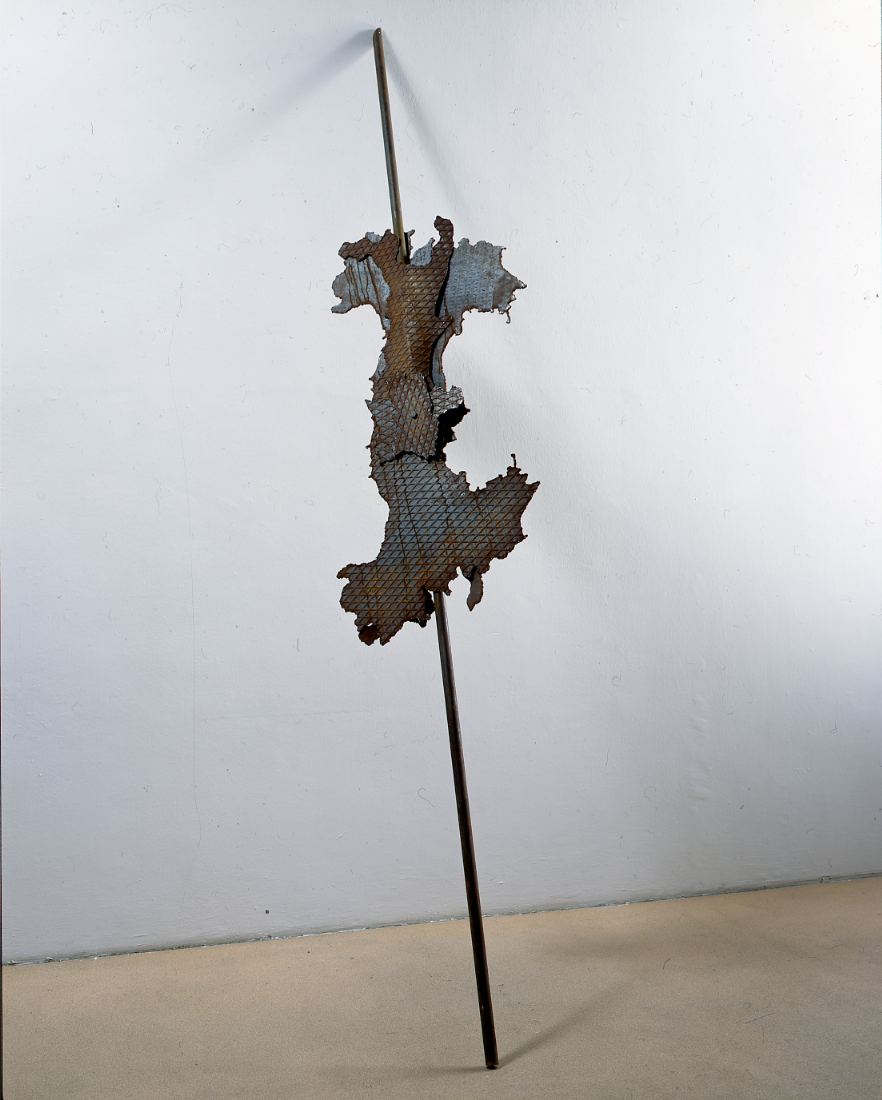
Luciano Fabro, Italia all’asta, 1994, iron, 335 × 70 × 10 cm, Castello di Rivoli Museo d’Arte Contemporanea, Rivoli-Turin, on loan from Fondazione Arte CRT, 2004. Photo Paolo Pellion, Courtesy Castello di Rivoli Museo d’Arte Contemporanea, Rivoli-Turin.
This approach to the study of the subject may seem questionable in relation to the historicist tradition, but if we want to understand the identity of Italian art, it is necessary to do so through the dual perspective of the “here and now,” turning our attention to the structures of power and the relationships between art criticism, artists, and institutions that still characterize the national territory today. In particular, it is precisely institutional exhibition contexts, first and foremost the Venice Biennale and the Rome Quadriennale, which, recognized as national entities, contribute to constructing and identifying an image of this identity. This recognition derives from an unconscious mechanism that characterizes us and can be applied to any sphere of life, which sociologist Pierre Bourdieu identifies with the term doxa. According to this mechanism, dominant cultural values are “internalized” until they are considered so established and shared that they are no longer perceived as constructions to be questioned. Applying this concept to the contemporary art system raises a far from obvious question: are we certain that what is proposed by the institutions responsible for representing a national artistic identity truly conveys the complexity of that identity? Although the curatorial choices in the two cases already mentioned, the Biennale and the Quadriennale, are autonomous, they nevertheless operate within political choices oriented toward broader strategic directions than the cultural missions they are supposed to pursue.
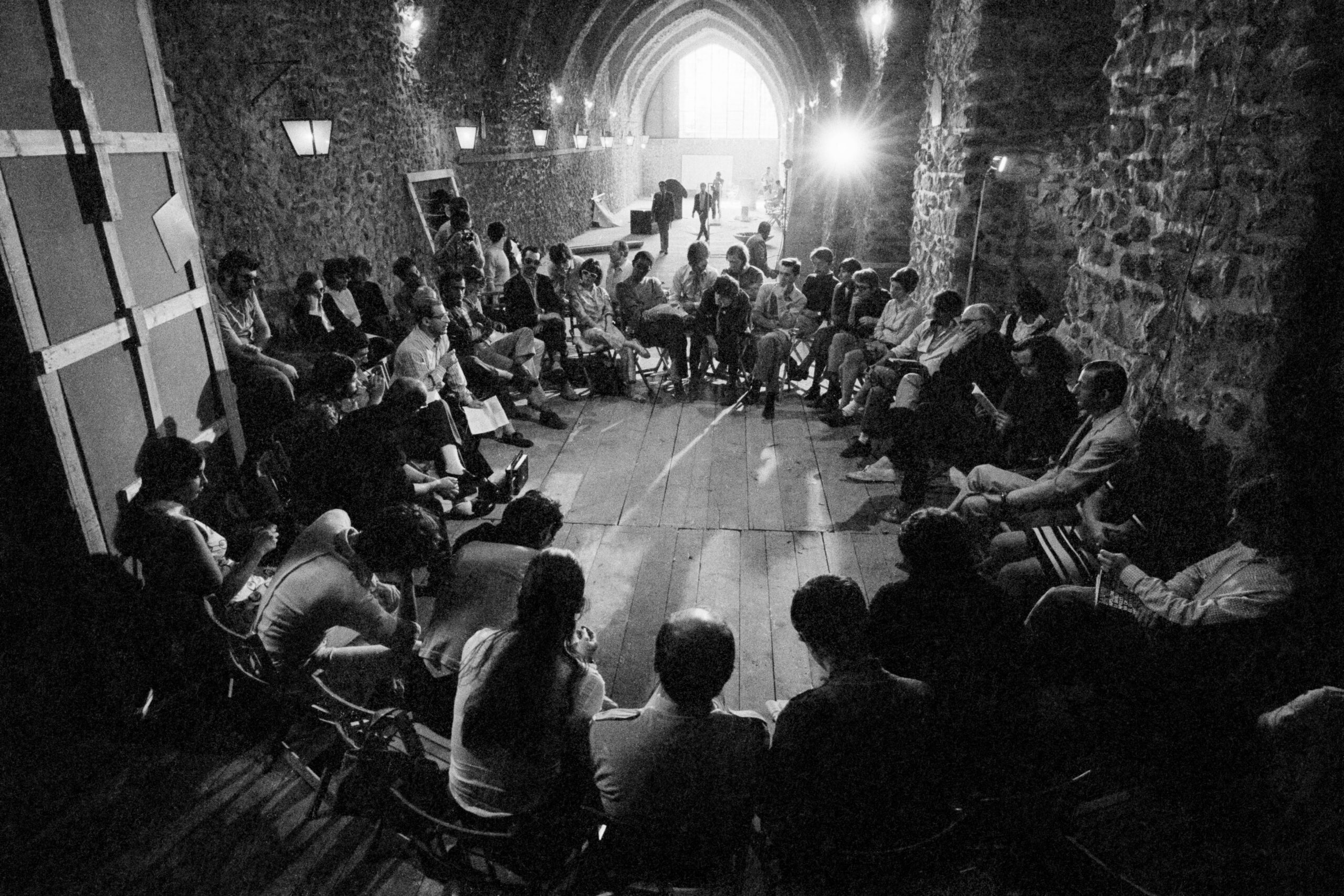
Assembly during arte povera più azioni povere, Antichi Arsenali di Amalfi, October 4–6, 1968. © Archivio Claudio Abate, Photo Claudio Abate.
So, in which areas of research does the identity of Italian art emerge with greater force, autonomy, and awareness? Could it be precisely outside institutional contexts, in “independent” realities operating outside the established system, that the identity of art reveals its ability to make an impact on the history of contemporary art through its own expressive form? One possible answer could emerge from the exhibition held approximately sixty years ago at the Antichi Arsenali della Repubblica di Amalfi, titled arte povera più azioni povere, which, in addition to marking a turning point in the affirmation of Arte Povera, proposed an exhibition as a space for research and exchange aimed at constructing new models of knowledge. This and other similar events suggest that independent forms of research are currently considered among the areas in which the identity of Italian art emerges in its most vivid, authentic, and innovative character.
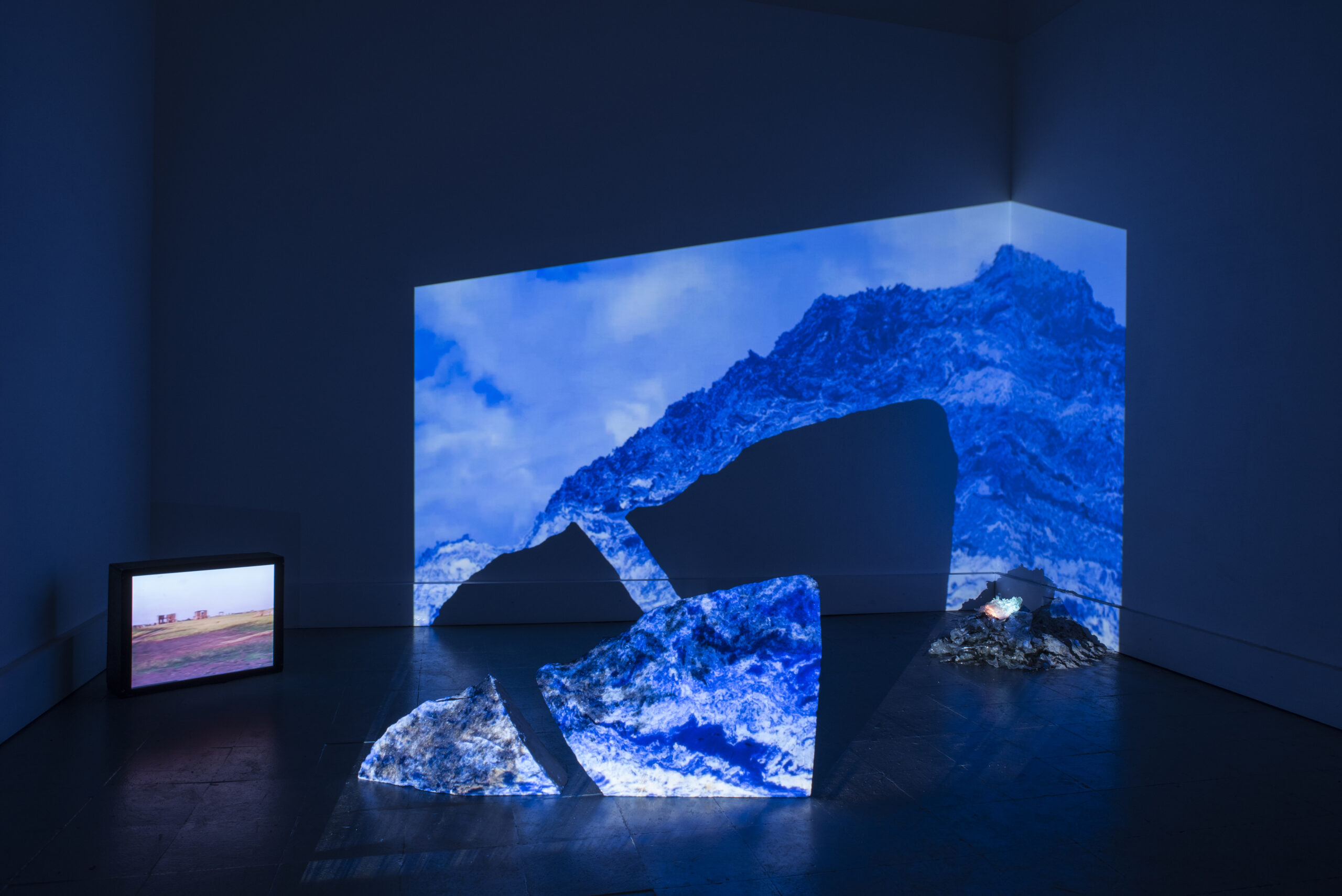
SPAZIO Y, Installation view, ABACO – Collettivo Il Pavone, 2019, Photo credit Emilio Orofino and Germano Serafini. Courtesy Spazio Y, Rome.
To mention some of the realities still active across the country today, we can recall residencies and independent spaces that host artists’ studios and research activities, operating as places of production and exchange: from Viafarini and Careof in Milan to Dolomiti Contemporanee and Centrale Fies in the Alpine region, and from Gelateria Sogni di Ghiaccio in Bologna to Spazio Y in Rome, alongside shared spaces for artistic education and practice such as Luigi Presicce’s “Il simposio di pittura” and Lorenza Boisi’s “Landina – Esperienze di pittura en plein air.”
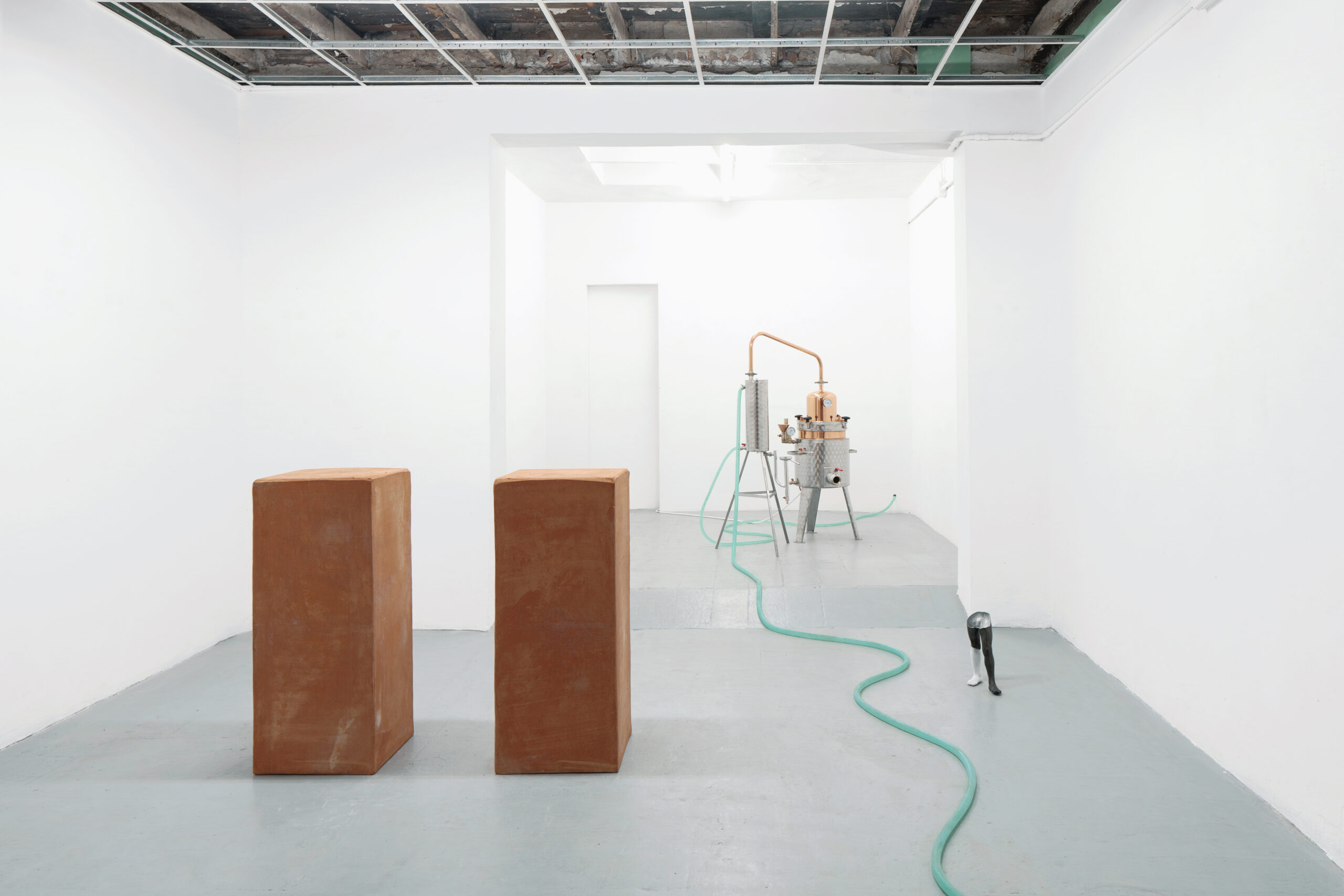
Namsal Siedlecki, Testa cuore coda, installation view, Gelateria Sogni di Ghiaccio, Bologna, 2026. Photo Marco Erpete and Leonardo Quaglieri.
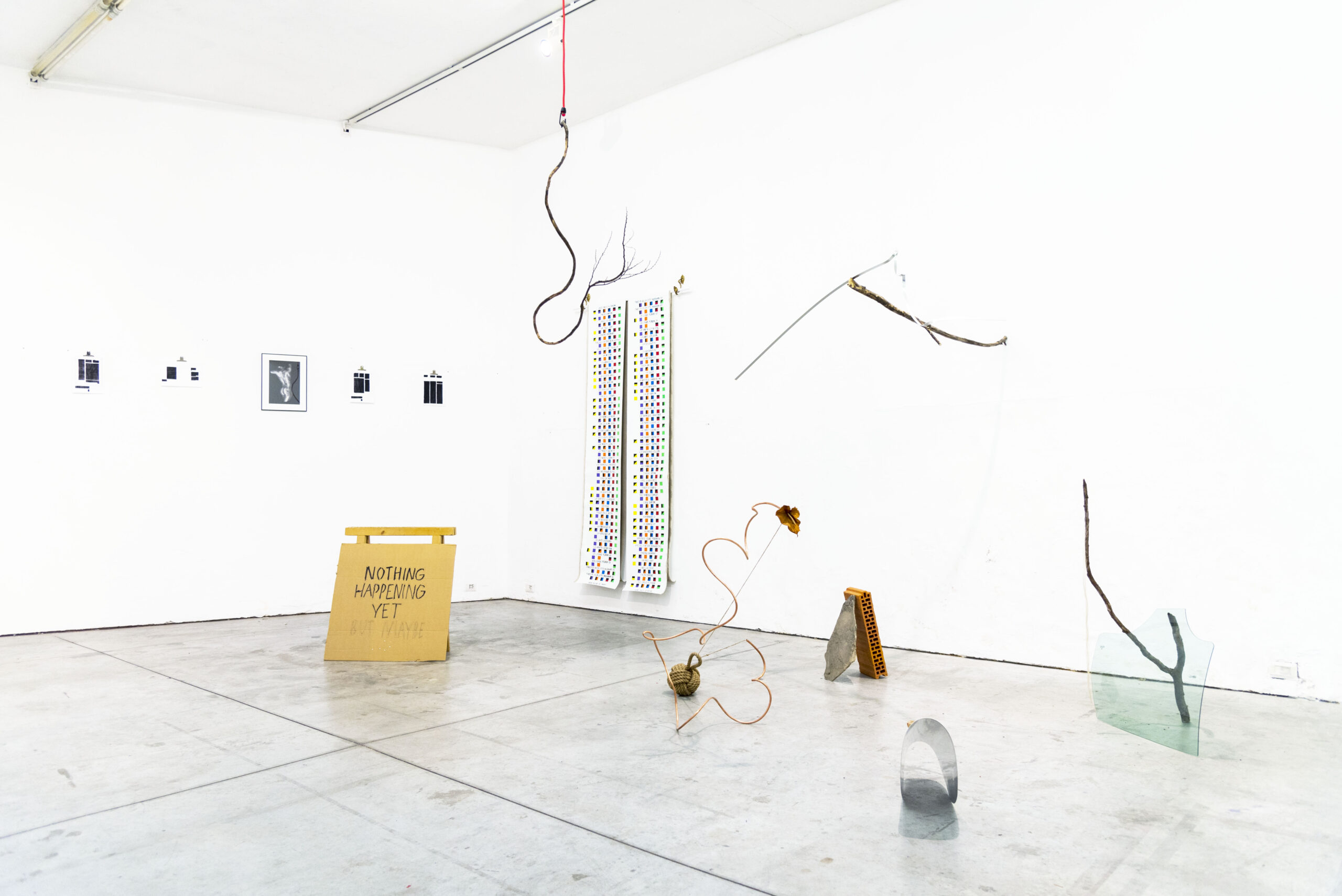
Viafarini Open Studio, Milan, 2019, Courtesy and Photo credit Valerio Torrisi.
These experiences testify to the vitality of a creative production that continues to develop through autonomous, radical, and constantly evolving practices. In recognizing these positive cultural dynamics that particularly characterize our society, anthropologist Ida Magli identified in Italians a particular capacity to respond to the historical experiences they have lived through, highlighting how their collective identity has been marked by a recurring condition of “betrayal,” characterizing the national history from ancient Rome to the present day.2 According to Magli, the Italian people responded to this experience through an extraordinary intellectual capacity and an uninterrupted production of thought across different fields of knowledge, including art. However singular this hypothesis may seem, it is certainly plausible that free, intelligent, and qualitatively significant artistic creativity finds a privileged ground for expression in autonomous, non-institutionalized contexts.
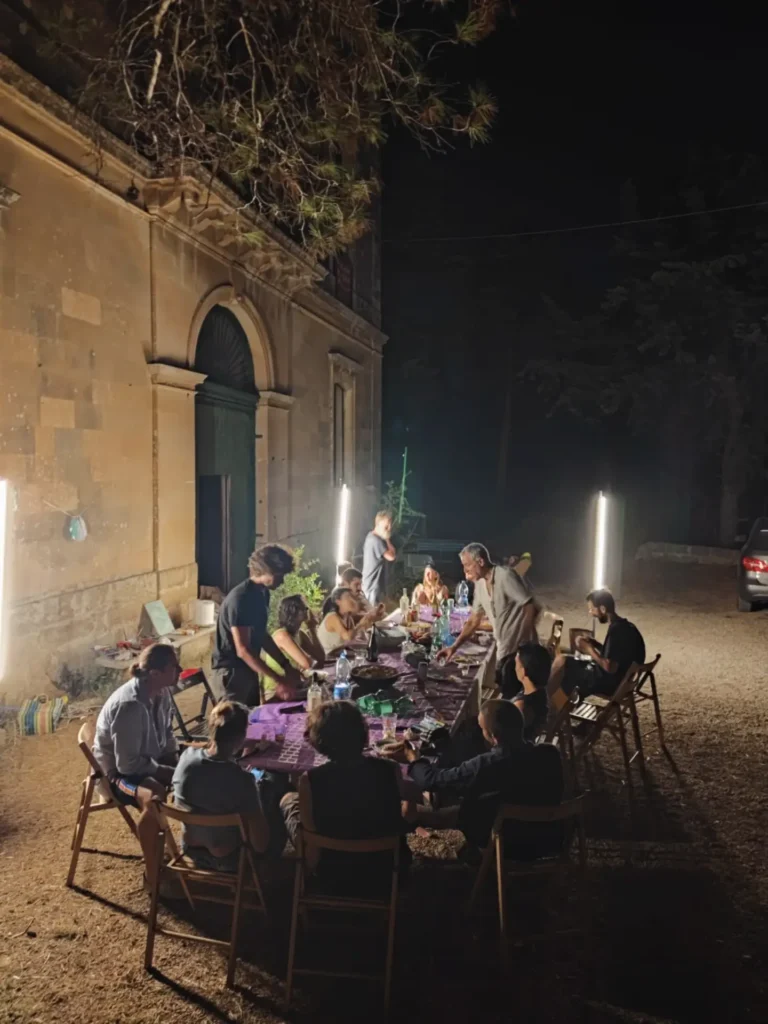
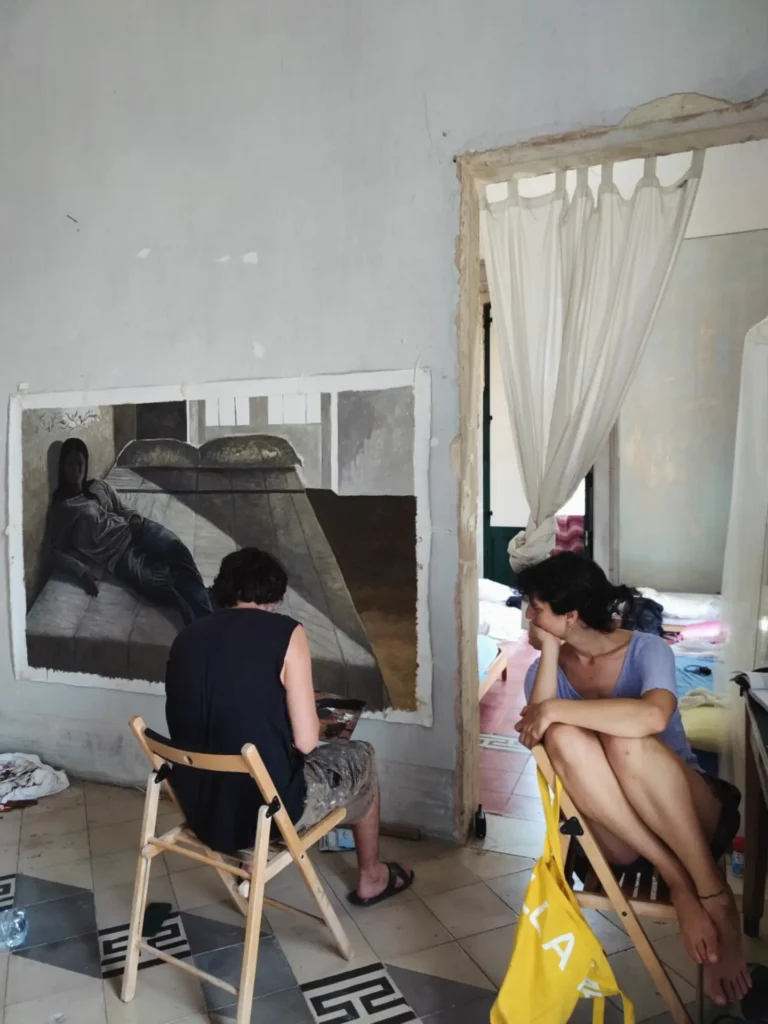
Eighth edition of “Il simposio di pittura,” 2026. Photo courtesy of Luigi Presicce and Fondazione Lac o Le Mon, San Cesario di Lecce.
As Pier Paolo Pasolini wrote, “my independence, which is also my strength, implies solitude, which is my weakness.”3 This statement reveals how isolation, for Pasolini—but probably for any artist—represents both a necessary condition for creativity and a personal limitation. All of this brings us back to the complex relationship between the artist as creator and those who interpret, study, and critically support their work. This relationship—which it is desirable to remain conflictual, as it is animated by profound vitality and an intelligent dialectic—is one of the foundations of part of our national identity, which, as Gianpaolo Cacciottolo has observed, emerges particularly clearly in twentieth-century intellectual debate, especially in the confrontation between different critical models, emblematically represented by the “duel” between Germano Celant and Achille Bonito Oliva.4
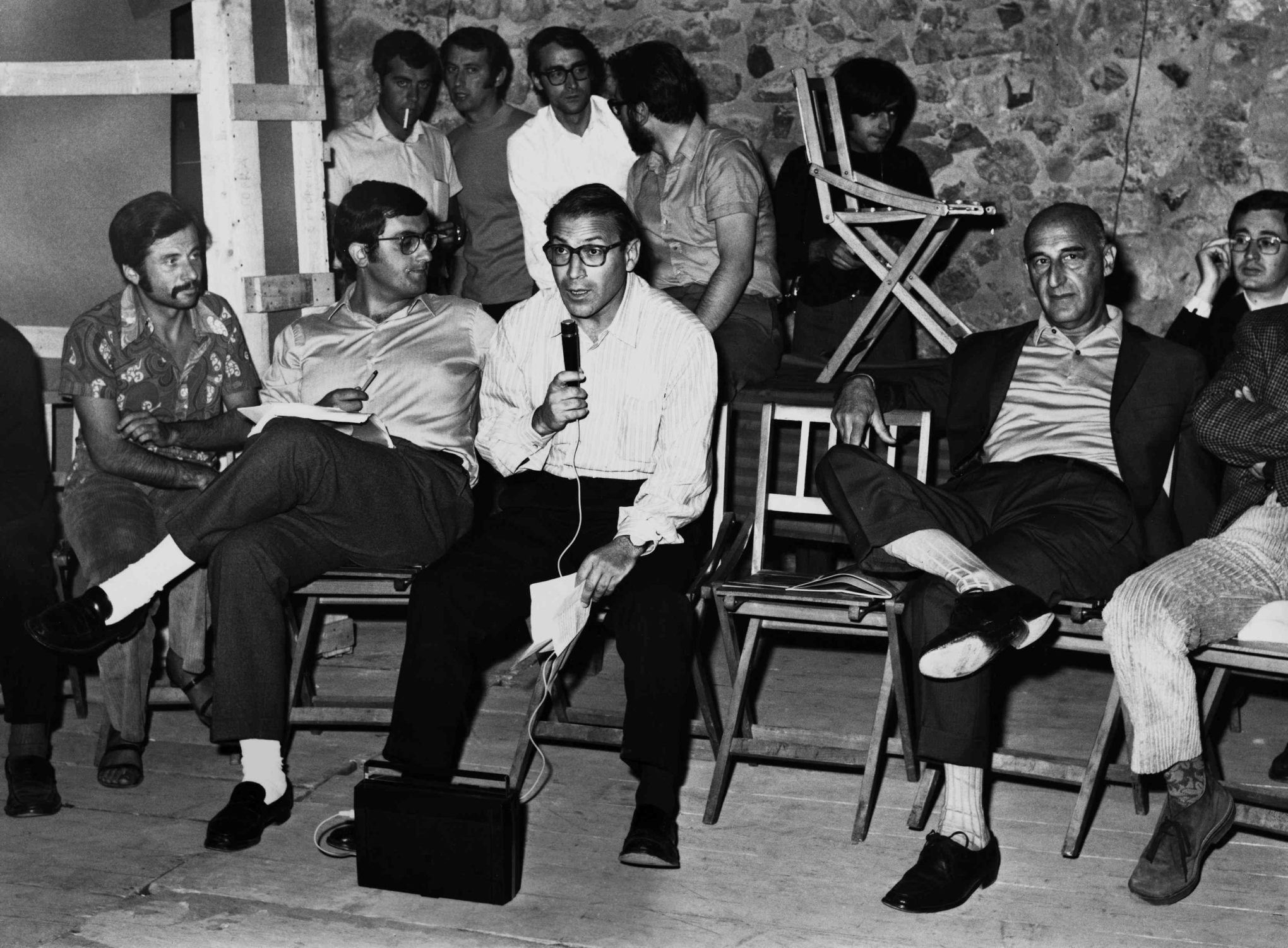
Achille Bonito Oliva, Germano Celant, Filiberto Menna, Gillo Dorfles, Marcello Rumma, in Terza Rassegna Internazionale di Arti Figurative di Amalfi – RA3, arte povera più azioni povere, Antichi Arsenali di Amalfi, October 4–6, 1968. Courtesy Archivio Lia Incutti Rumma. Photo Bruno Manconi.
Returning to the present, it is likely that the difficulty in defining a clear, distinct, and recognizable identity for Italian art lies above all in a “disconnect” between critical activity, which is capable of supporting and accompanying what is proposed, and the artist themselves. There are historical figures who established important partnerships based on growth and exchange, such as Giorgio Morandi and Giuseppe Raimondi in their poetic and interpretive affinity, or Filiberto Menna and Marcello Rumma in their shared vision of curatorial and critical practice as concrete action. This text, therefore, without wishing to fall into a form of worn-out nostalgia or an emphatic, idealized celebration of the genius loci, intends to highlight how contemporary Italian art possesses a complex and fragmented identity, especially outside official contexts, which still needs to be narrated and explored. Moreover, if we remain confined to institutional environments alone, the identity of Italian art takes on the appearance of a tragic “missed encounter” with the present, also because of the weight of our history, which is exceptionally rich and layered.
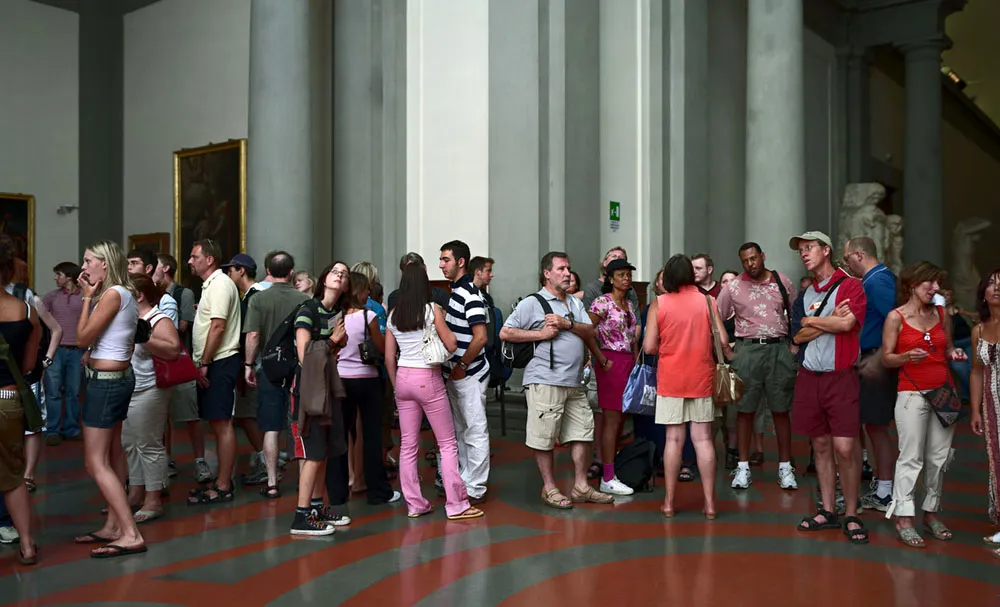
Thomas Struth, Audience 11, Florence, 2004, C-print mounted on UV plexiglass, 185 × 298 × 6.5 cm, edition 3/10, Castello di Rivoli Museo d’Arte Contemporanea, Rivoli-Turin, on loan from Fondazione Arte CRT, 2006. Photo Paolo Pellion, Courtesy Castello di Rivoli Museo d’Arte Contemporanea, Rivoli-Turin.
At times, the relationship with this heritage and its historical-cultural references, while representing an indispensable resource, risks turning into a sterile relationship based on repetition and citation. Likewise, museum programs struggle to construct critical narratives capable of making an impact on the international scene and, beyond some significant exceptions, are not fully able to develop substantial exhibitions capable of conveying the complex identity of Italian art. For this reason, the investigation of this specificity must necessarily also be undertaken by curators, critics, and writers outside established institutional contexts, recognizing independent research as one of the most authentic and vital sites of contemporary artistic production.
Translated by Dobroslawa Nowak
Bibliography
1 Claude Lévi-Strauss, Razza e storia e altri studi di antropologia, a cura di Paolo Caruso, Nuovo Politecnico, Einaudi, 1967, p. 101.
2 Ida Magli, Omaggio agli Italiani. Una storia per tradimenti, Bur Rizzoli, Milano, 2019, p. 9.
3 Pier Paolo Pasolini, La mia provocatoria indipendenza, dalla rubrica Il Caos, in «Tempo», n. 2, a. XXXI, 11 gennaio 1969, p.10.
4 Gianpaolo Cacciottolo, Traiettorie italiane. Critica d’arte, curatela e identità nazionale, Postmedia Books, 2024, pp. 59 – 70.