


Alcove – Dialoghi sulla scultura (II Edizione)
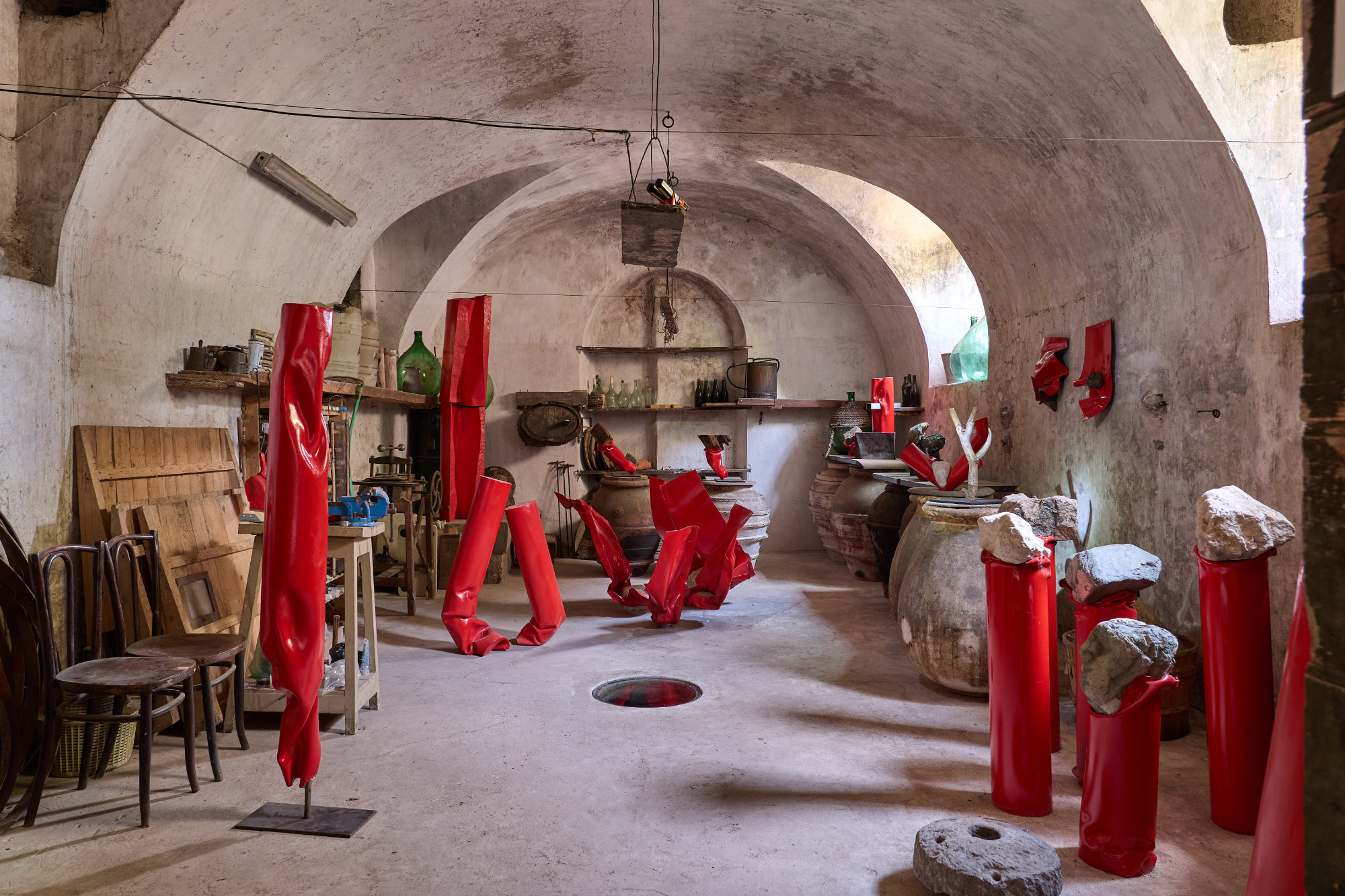
The second edition of Alcove – Dialogues on Sculpture, an exhibition and cultural project curated by Ilaria Monti and Alberto Timossi, unfolds across Studio Specus and the Museo della Città e del Territorio in Cori (LT). Five artists from different generations and with distinct practices — Claudia Di Francesco (Rome, 1992), Pino Genovese (Rome, 1953), Giovanni Longo (Locri, 1985), Veronica Neri (Sora, 1995), and Francesco Petrone (Foggia, 1978) — inhabit three different material and spatial conditions: the Museum’s Renaissance Loggia, part of the Sant’Oliva Monumental Complex; the garden, opening onto the surrounding landscape; and the subterranean spaces of Studio Specus, artist Alberto Timossi’s studio in the historic centre of Cori, with its rock-cut niches and former pantry.
The exhibition is unfolds as a dialogue between above and below. Each artist is represented by two works, one in the light and one in darkness: on one side, the arches of the Loggia and the grass of the garden; on the other, the dampness and half-light of the grotto. Between these two poles, the works are not simply installed within the spaces: they respond to them, while the spaces themselves become part of the works.
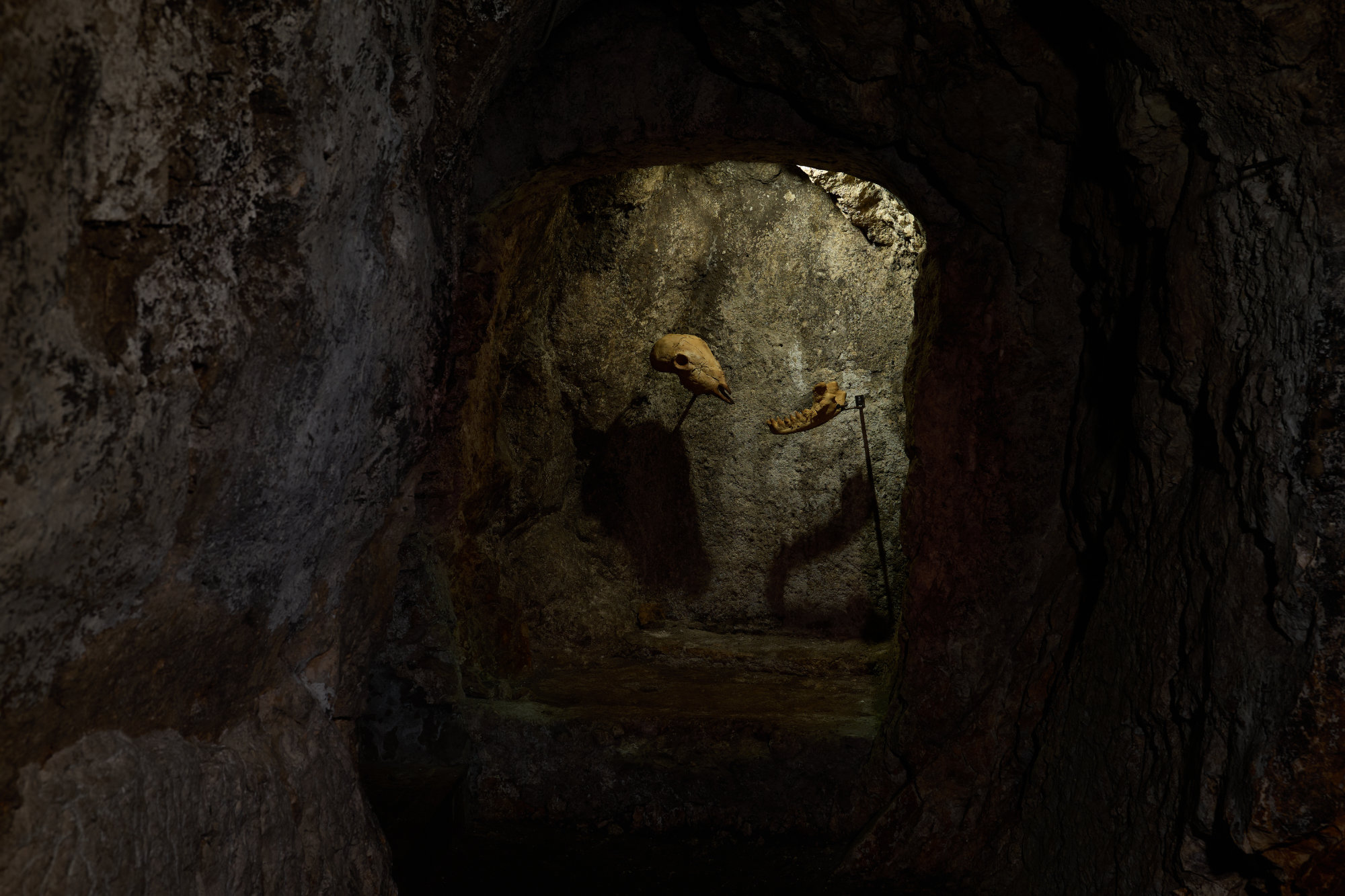
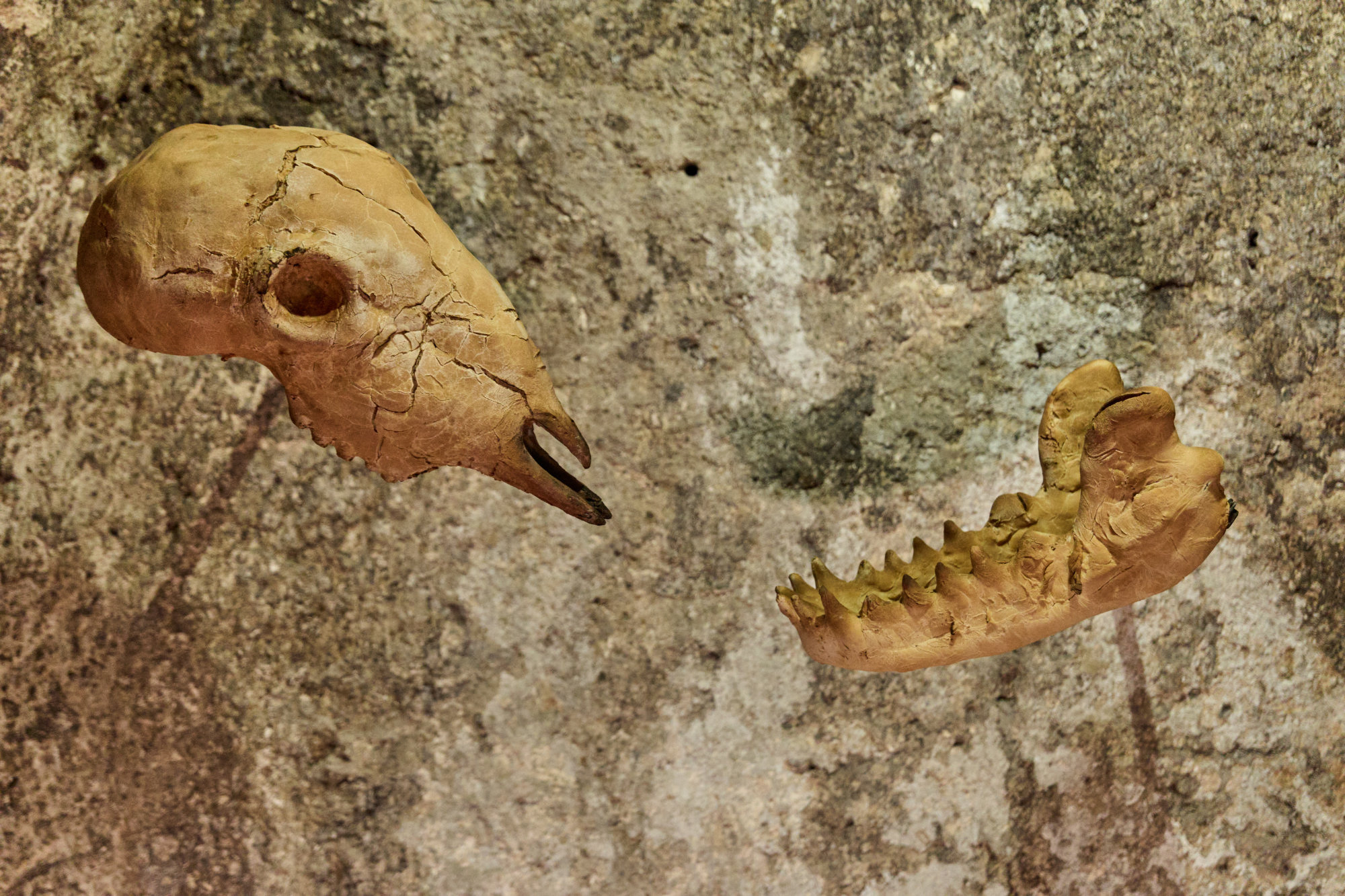
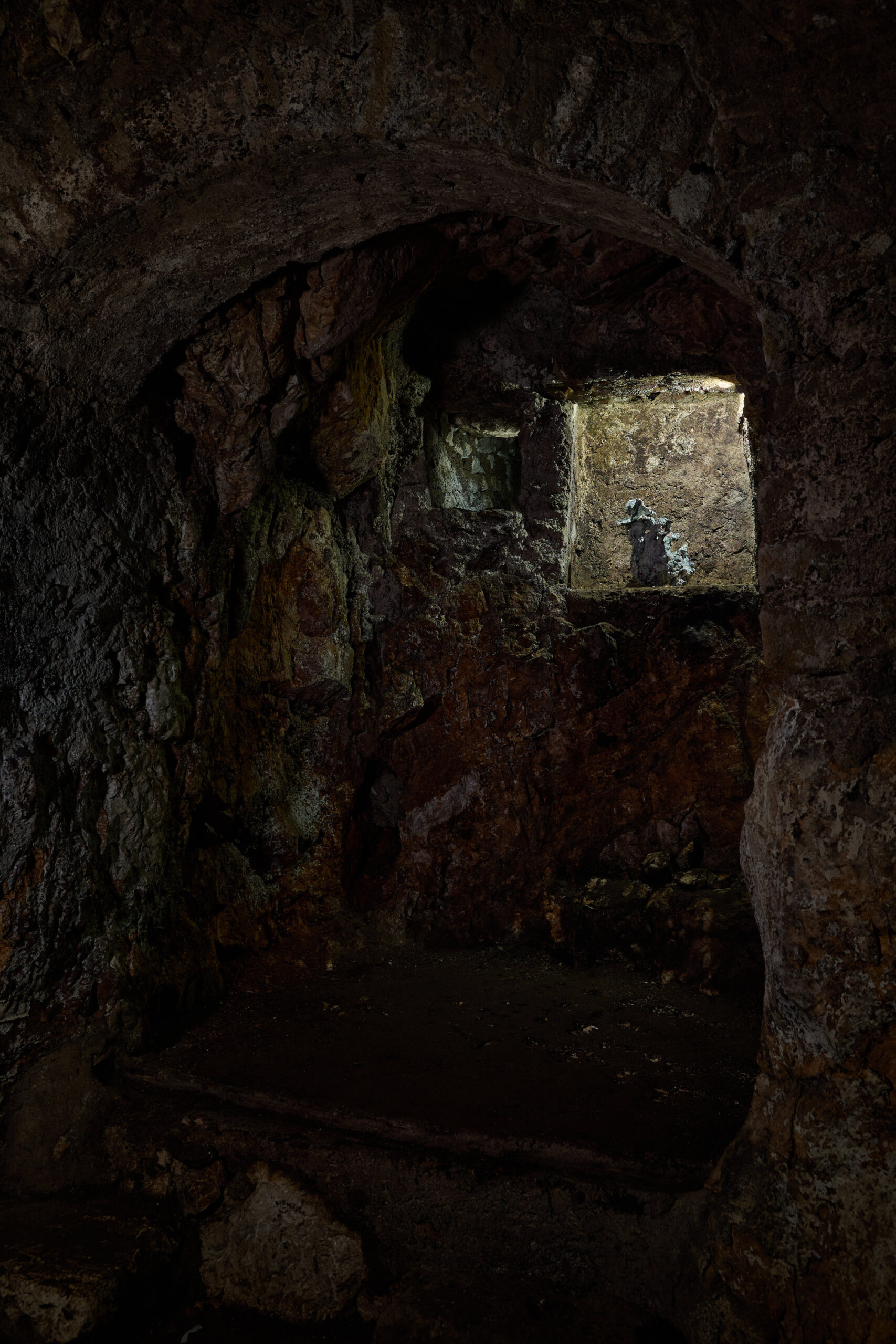
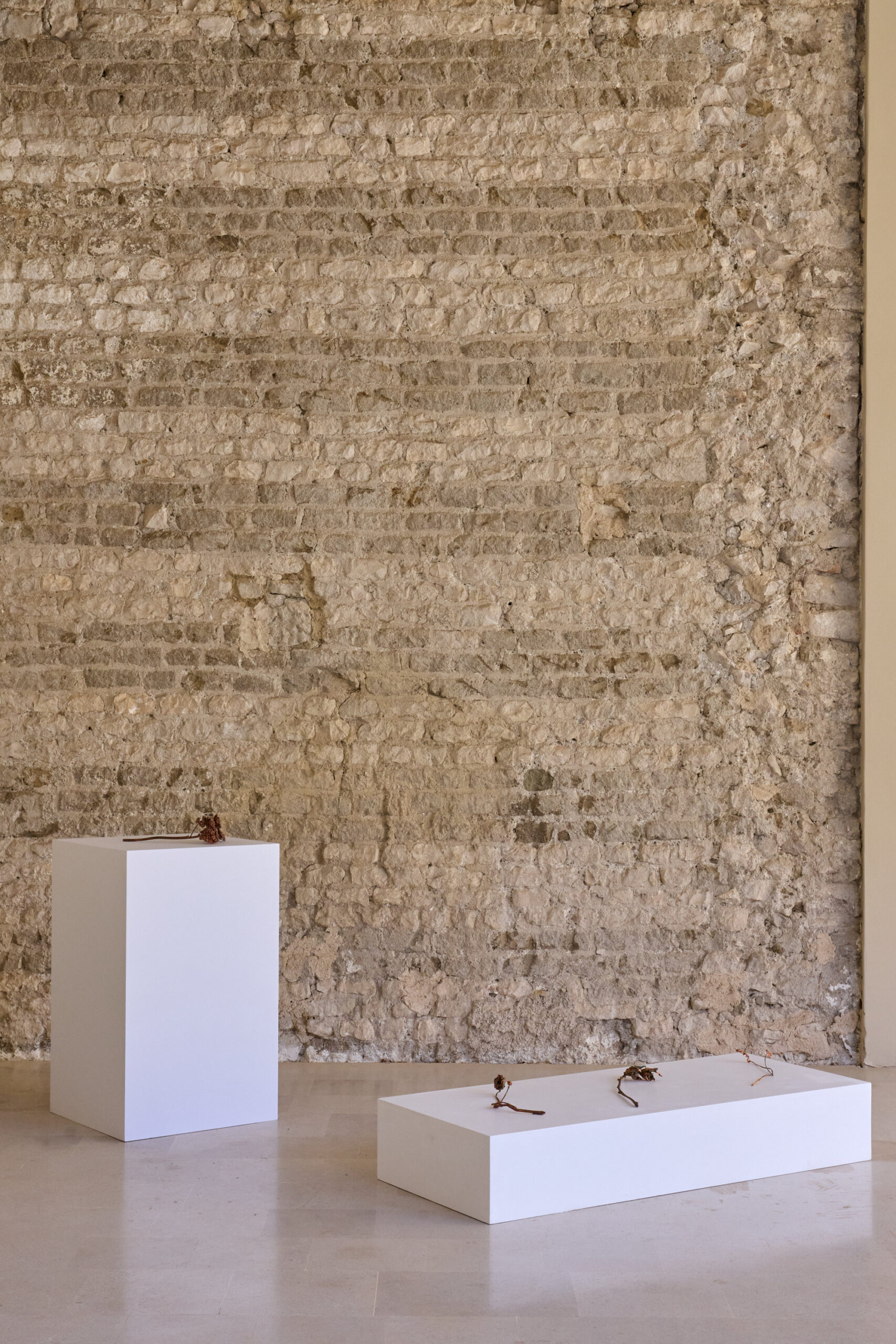
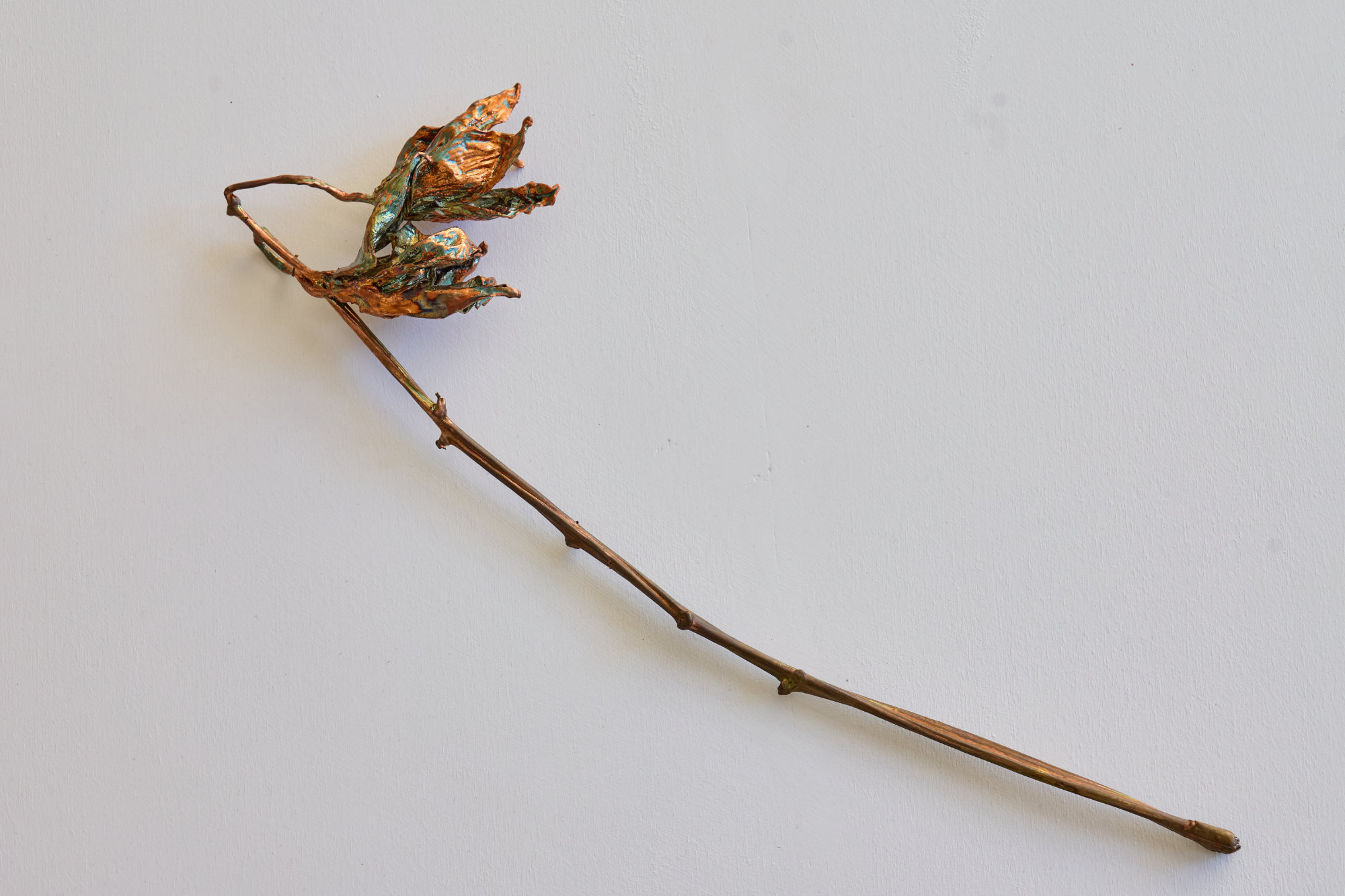
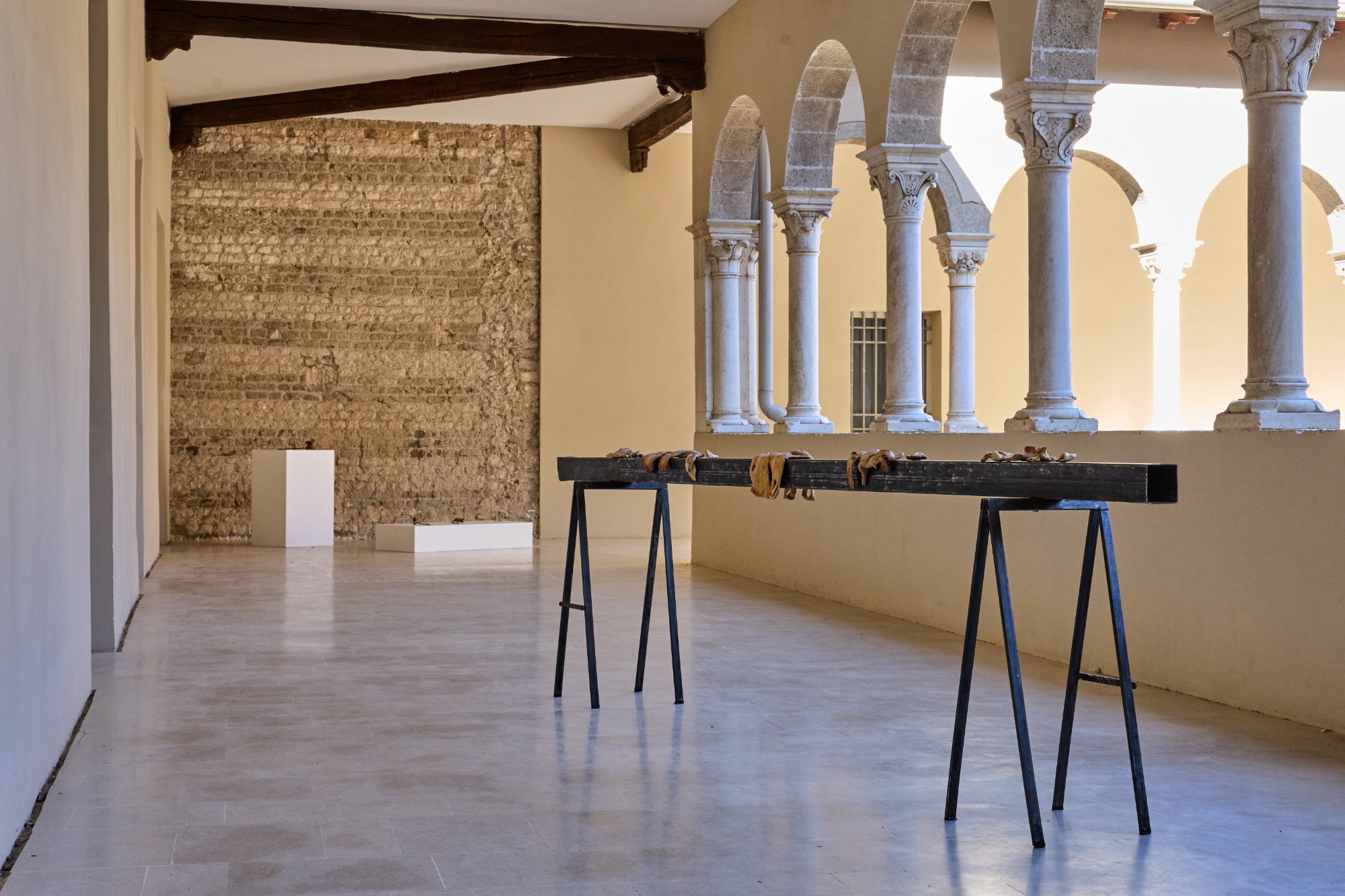
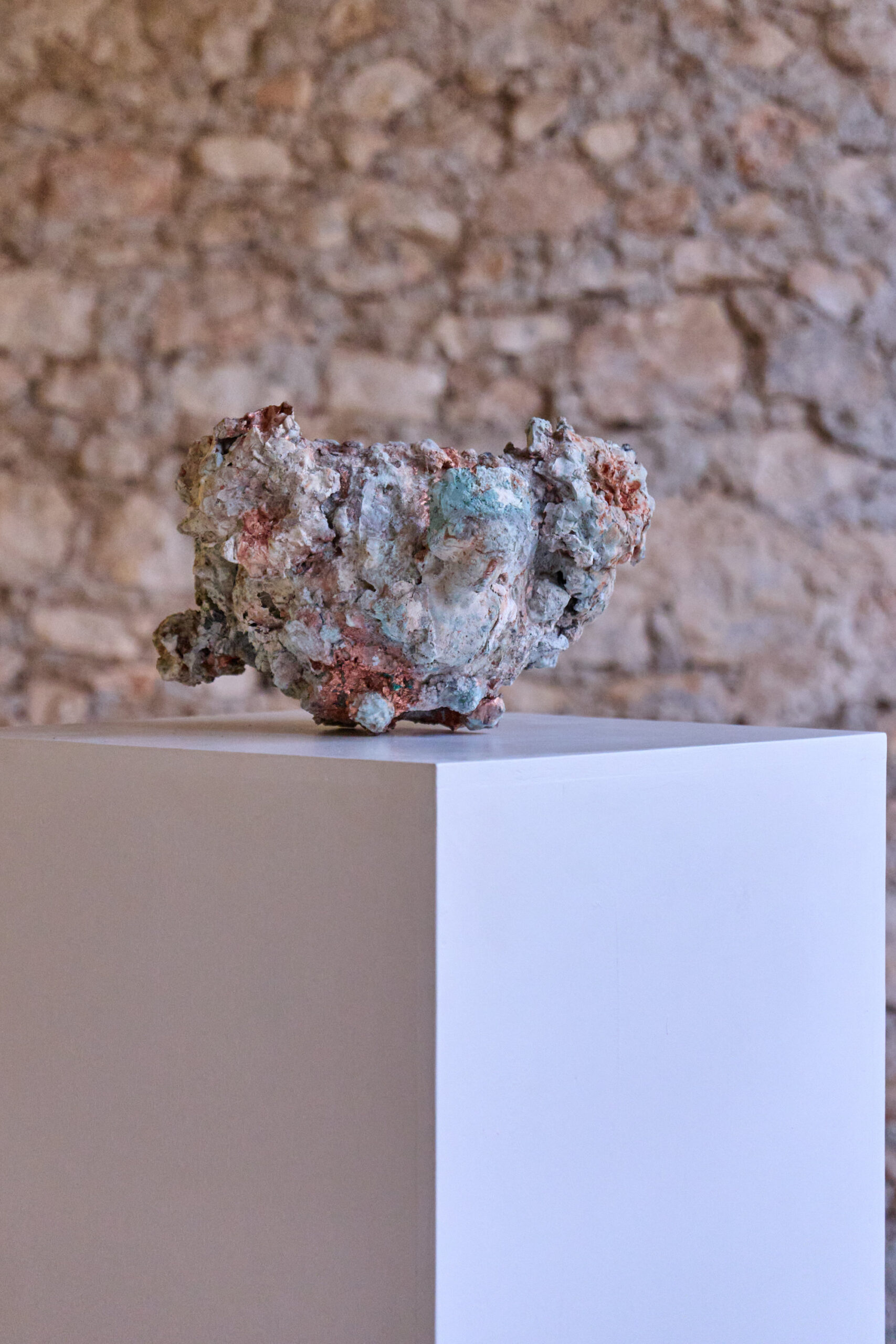
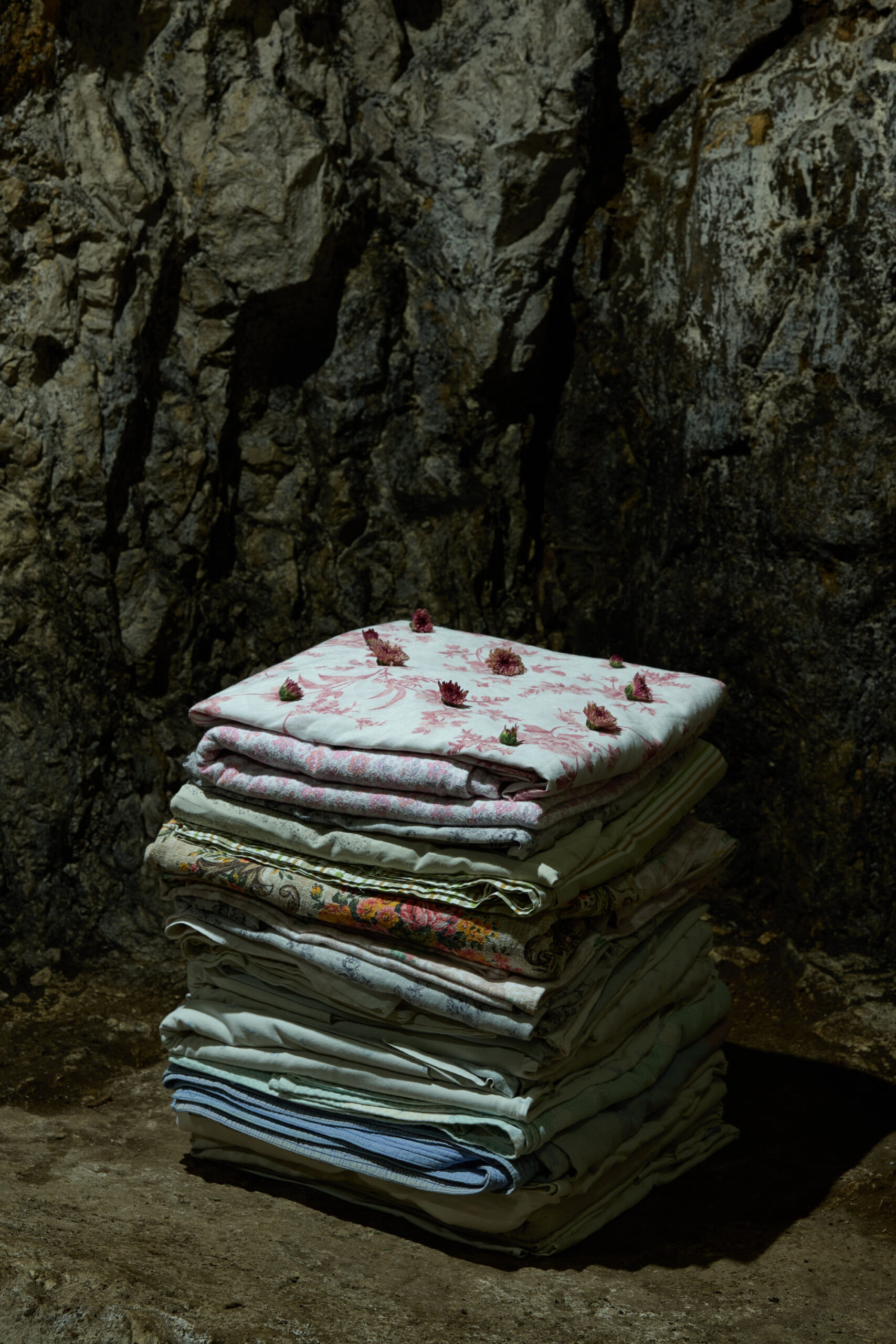
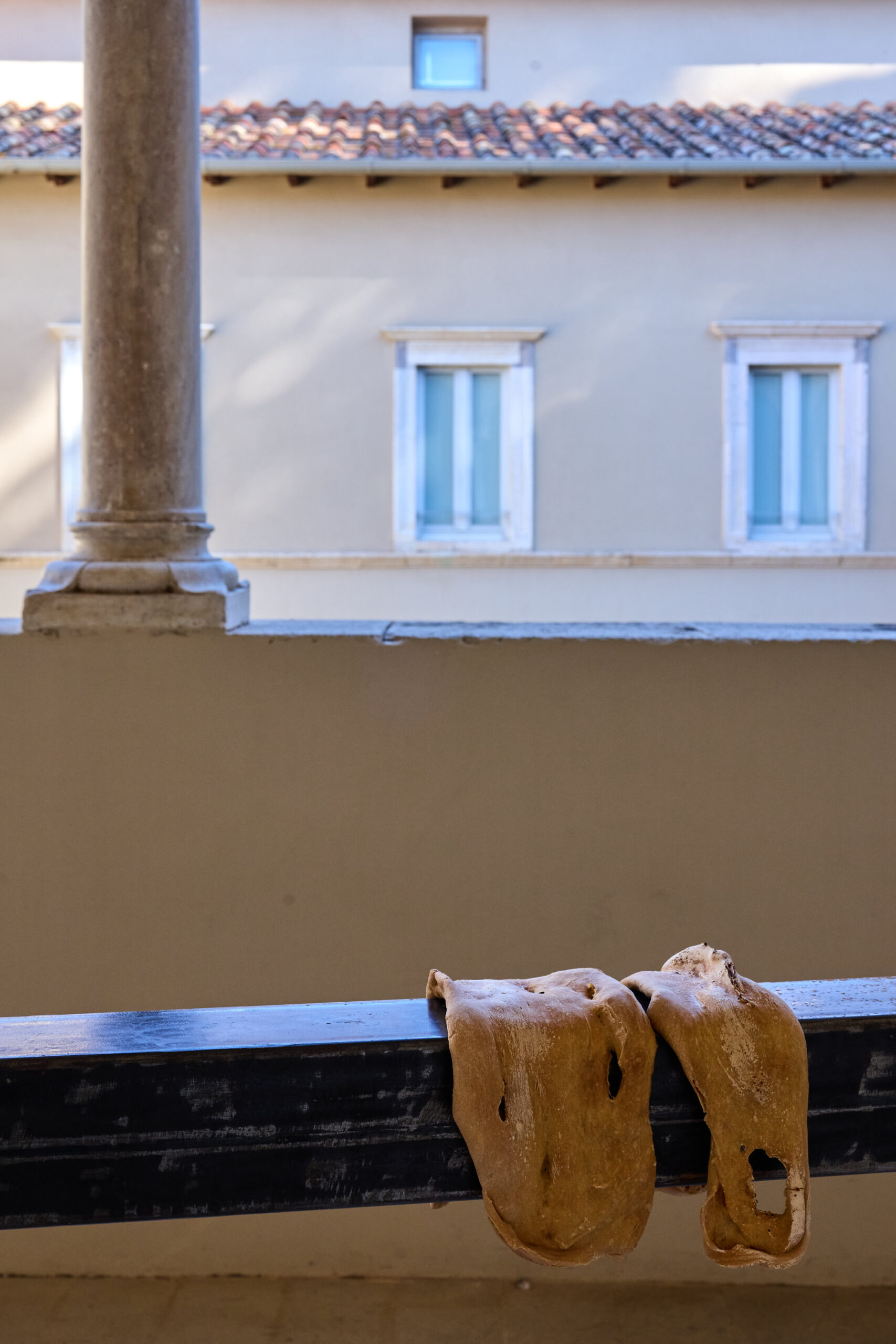
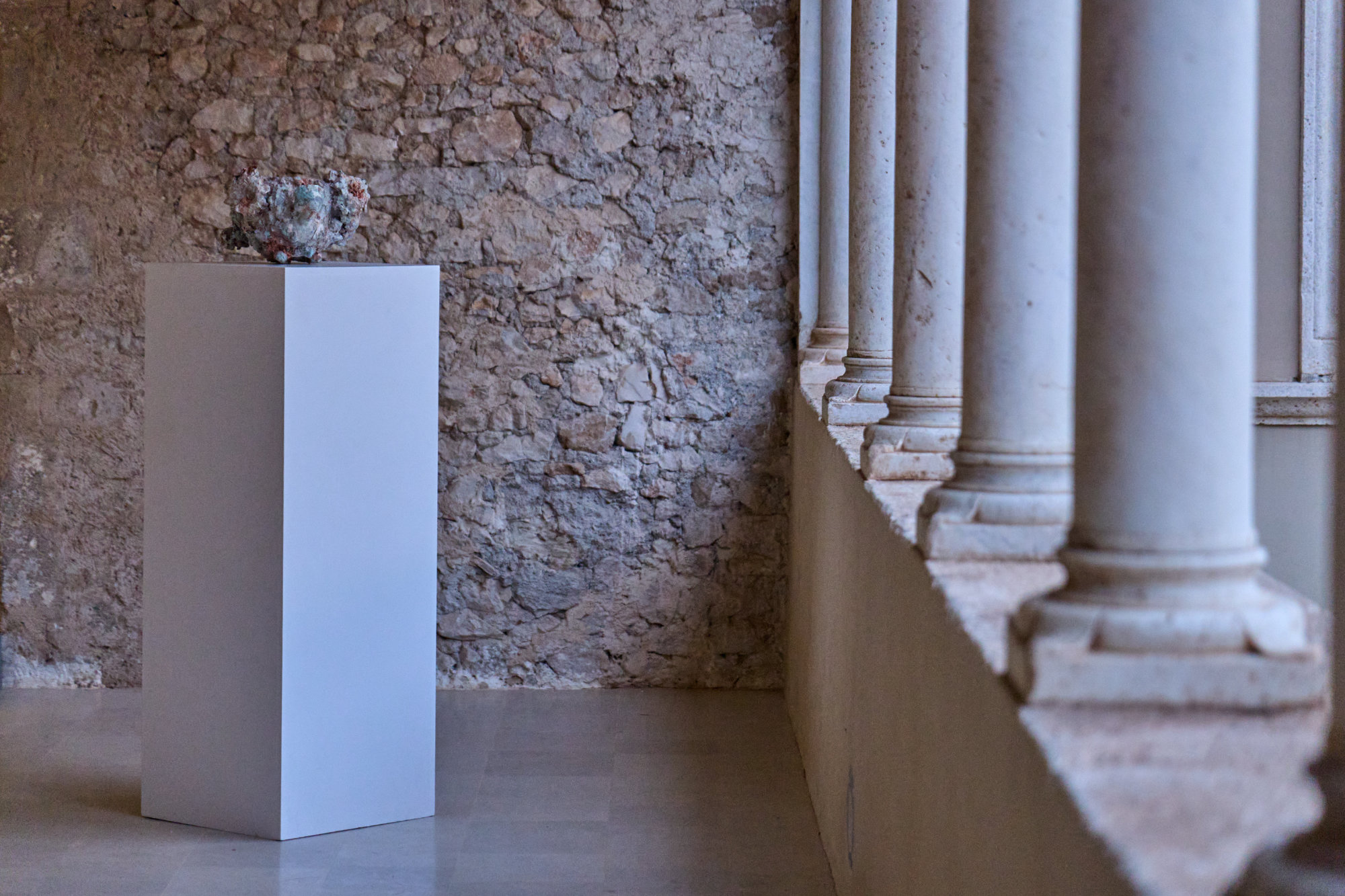
The result is an exhibition shaped by a series of gestures: preserving, offering, sacrificing, decomposing, classifying, inhabiting. Claudia Di Francesco works with the vessel as a form: Le Tre Custodi della Lekánē and Vas Miraculi Aesculapii appear as contemporary archaeological finds, bodies that seem to bear traces of a time they have never lived through and which, placed alongside the Museum’s artefacts, call their authority into question. Veronica Neri coats in copper flowers gathered from cemetery waste (Semprevivo), while in the grotto she places fresh flowers over the printed floral pattern of a stack of bedsheets (Stanotte, amore, non ho più pensato a te). The work sets up a play of emulation and representation between real and printed flowers: the former wither over the course of the exhibition, while the latter remain unchanged. Francesco Petrone shapes bread into the forms of bone and flesh: a wolf’s jaw and a sheep’s skull confront one another within the rock (Vittima Carnefice), while in the Loggia thirteen pieces of bread arranged on an iron pole form L’ultima scena, “a ferocious Last Supper.”
Bread absorbing moisture and flowers slowly wilting introduce biological time into sculpture, a process the exhibition allows to unfold in front of the viewer; copper, resin, and iron, by contrast, attempt to arrest it. It is within this tension — between what is consumed and what endures — that the works of these three artists enter into dialogue, even at a distance.
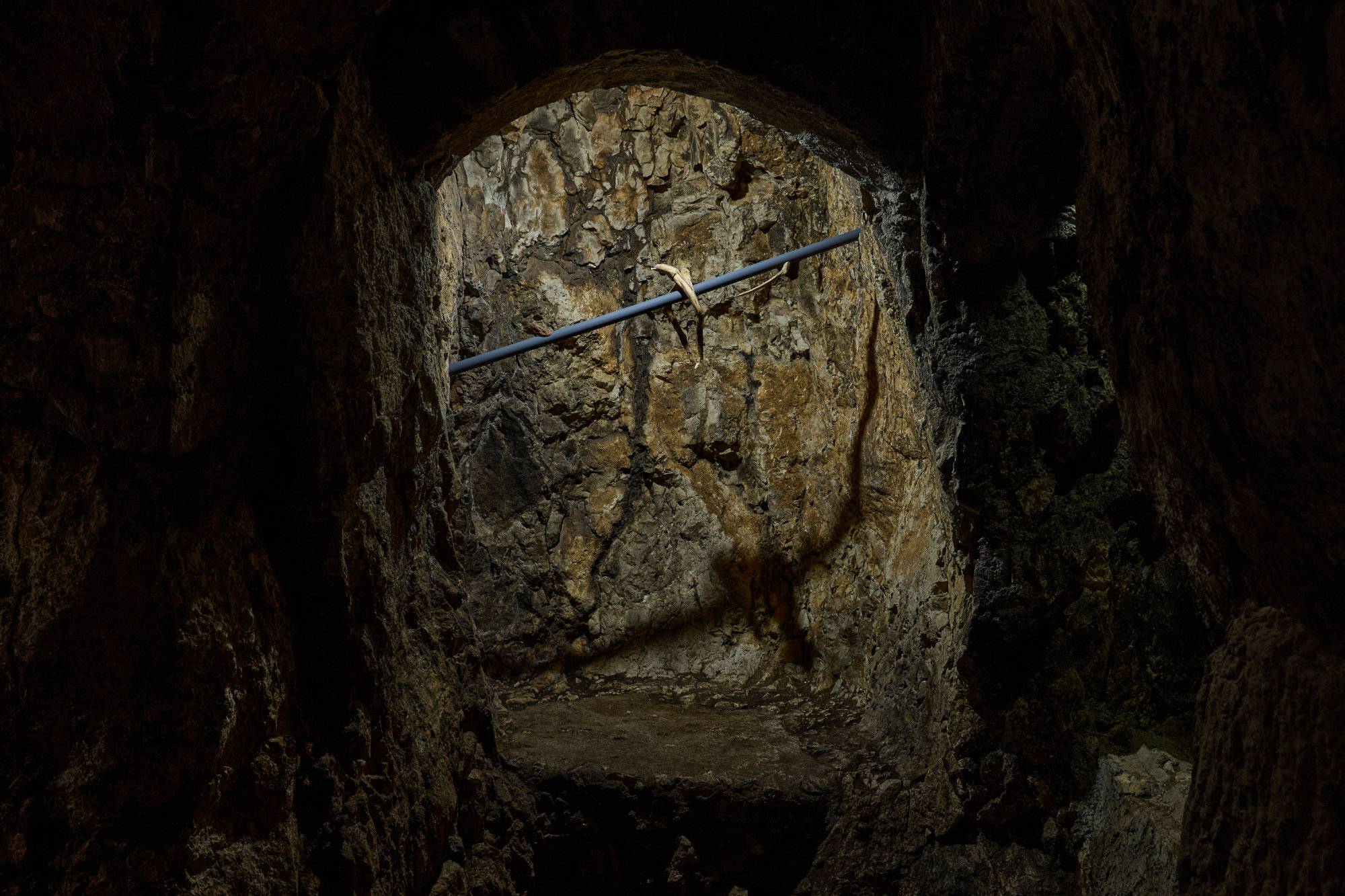
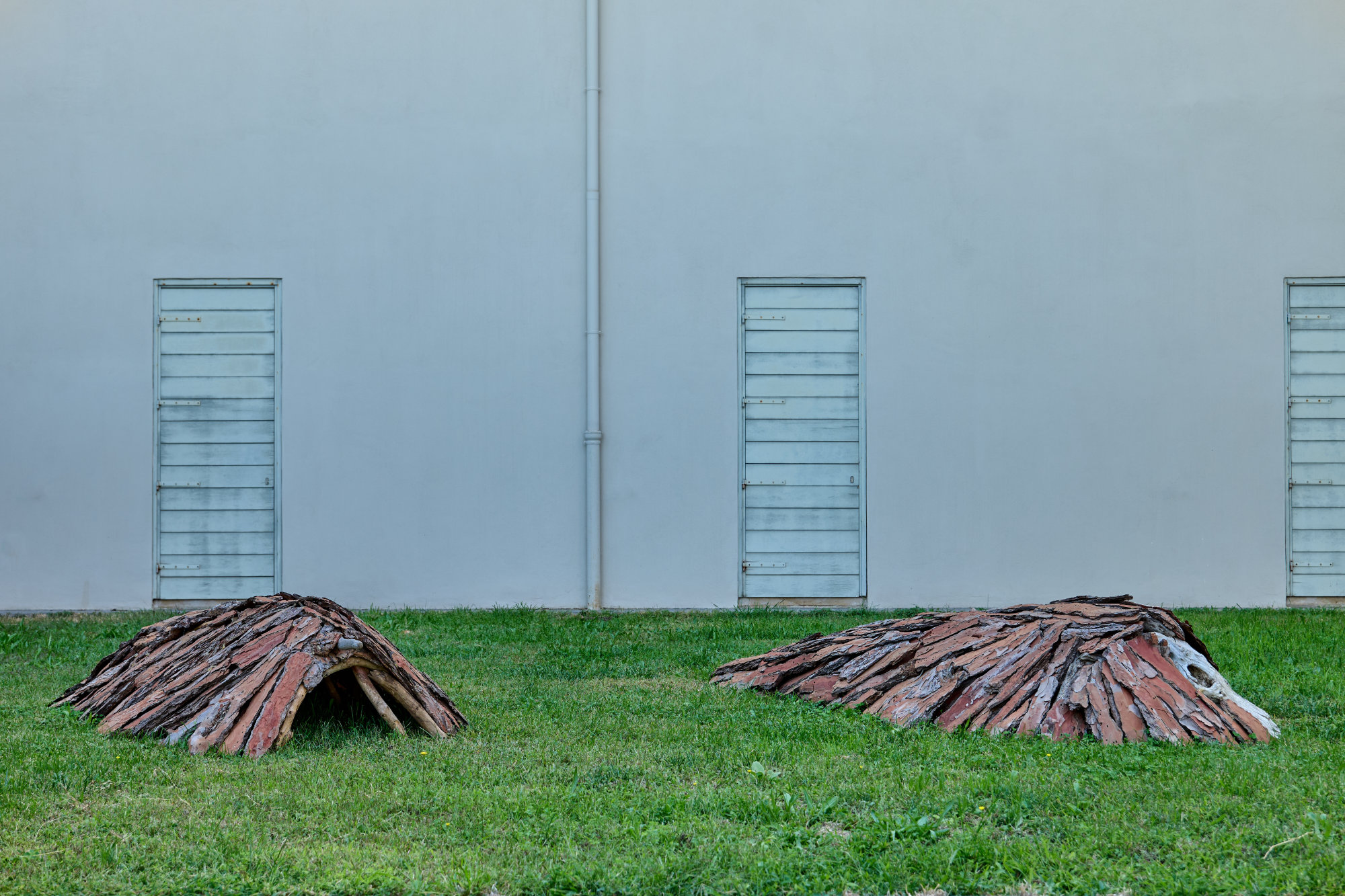
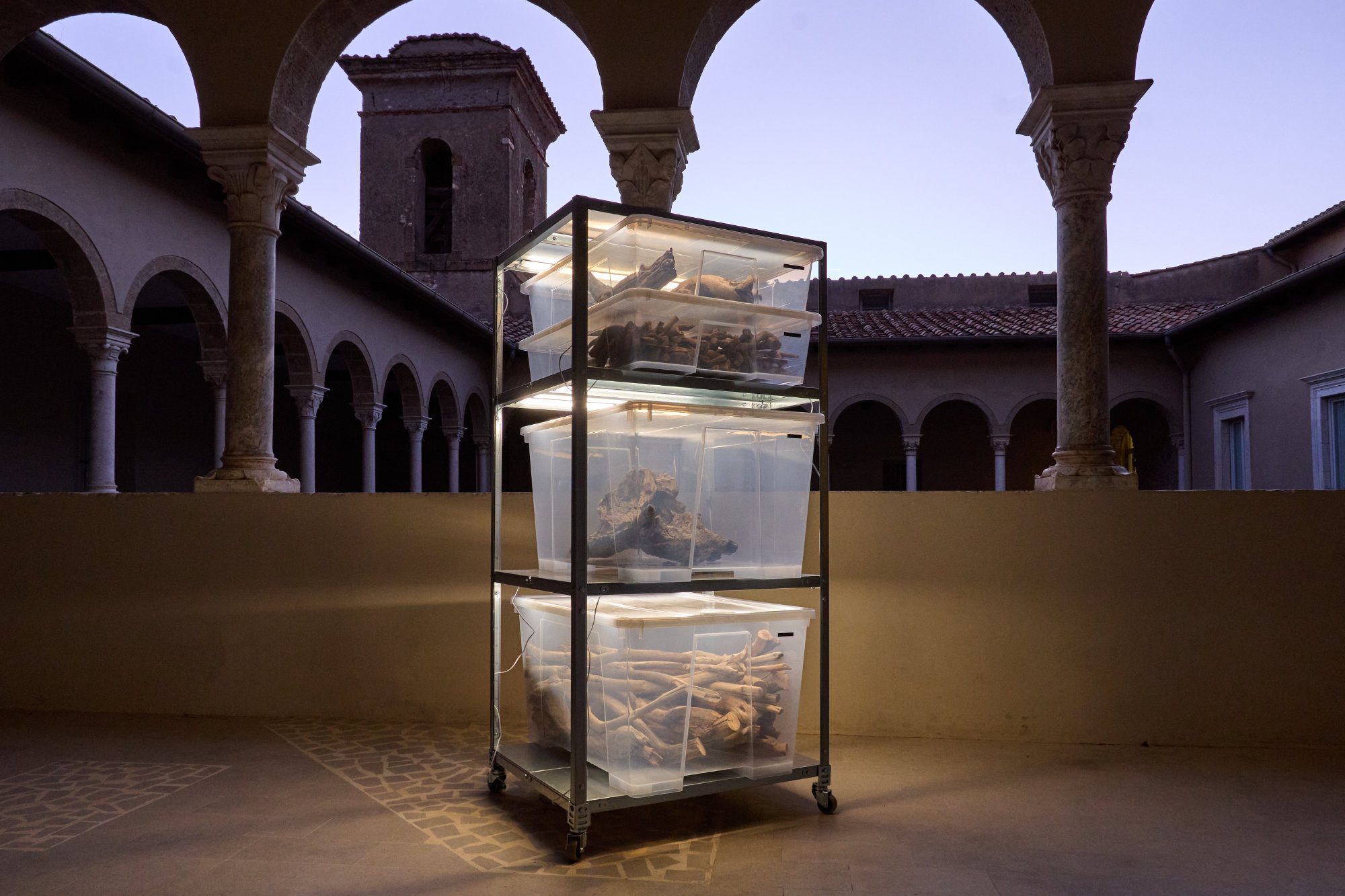
Elsewhere in the exhibition, Giovanni Longo and Pino Genovese both work with wood, but from different materials and geographies, through gestures that are almost specular. Longo dismembers the landscape: in Like a Dam (form archive XXL), fragments of wood gathered over twenty years along the riverbeds of Calabria are selected, labelled, and arranged in transparent containers on mobile shelving, evoking a museum storage facility. In Props, similar forms — horns, ribs, sternums — are reassembled along a diagonal rod into a skeleton without an animal. Genovese, by contrast, reconstructs it: Tane, two low shelters made from pine bark and driftwood, take root in the soil of the garden, while Albero, composed of a pine branch and goat horn, inhabits the former pantry of Studio Specus. On one side, landscape becomes archive; on the other, gathered matter returns to landscape and dwelling. Between Longo’s wooden bones and Petrone’s bread bones, between a skull and the entrance to a den, the exhibition builds a network of internal correspondences.
As with its first edition, this second iteration of Alcove will develop into a forthcoming catalogue, with critical contributions by Ilaria Monti and Gianlorenzo Chiaraluce. Conceived as an extension of the exhibition, the publication will further explore its trajectory, the relationships between the works, and their dialogue with the sites of Cori.
Alcove is a project by Studio Specus – Cantiere per l’arte contemporanea, developed in collaboration with Polygonal, Arcadia, and minima, with the patronage and support of the Municipality of Cori. The project was established to create a recurring programme dedicated to contemporary sculpture and to the ways in which sculptural practices can engage with space, landscape, and local cultural heritage.