


Madri Padri Figl*
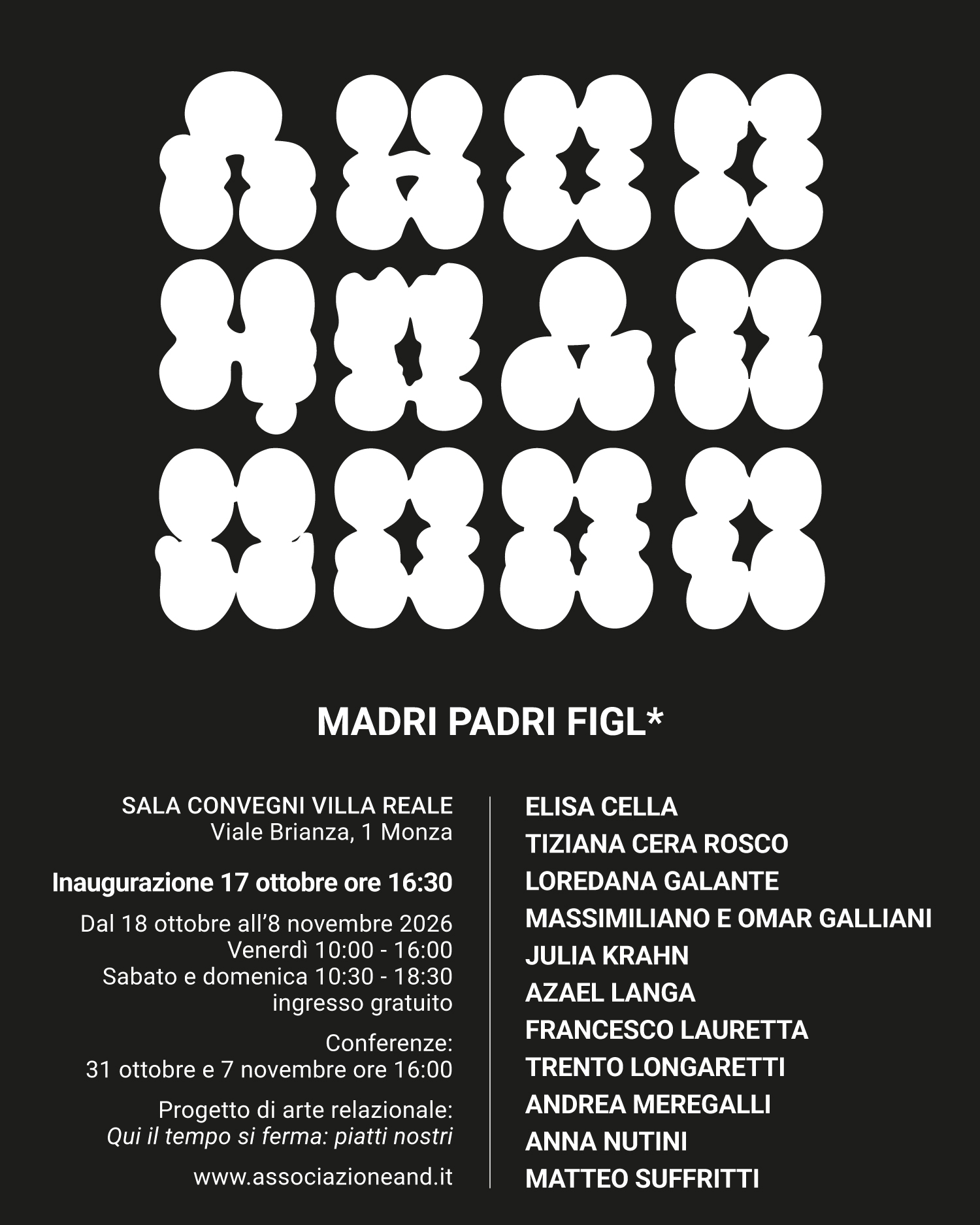
Madri Padri Figl*: a title that lists the key roles in our lives: we are all children, and many of us are mothers and fathers.
The relationships are deliberately listed separately because the most intimate bonds in our lives, whichever perspective we take, harbour within them loneliness, misunderstandings and chasms. At the same time, however, they are the deepest relationships in our lives and bring us joy, a sense of belonging, care and a purpose in life; they are powerful drivers of personal growth.
The family is the basic unit of our society. Over the last century, it has undergone profound changes: from a patriarchal model, with many children, embedded in a network of extended family and local community, and subject to strong social and religious control, we have moved towards a redefinition of relationships and roles within the parental couple – which have become formally equal and are, in practice, in the process of being redefined; the number of children has fallen dramatically; the extended family network has fragmented; and the local community network has all but disappeared. ISTAT confirms the demographic winter.
The definition of the family unit has changed: alongside the traditional family, we now have families with separated parents, rainbow families, those who choose not to have children, single-parent families, blended families, families with adopted children, and those who regard their pets as children…
Within the same cities, communities of different origins and traditions coexist. There are those who suffer the ravages of war and those who emigrate. Wherever they may be and whatever form they may take, families have to contend with the political, economic, social and religious structures of the areas in which they live.
Science has enabled us to control birth rates; it has given us the option of assisted reproduction, fertility treatments and surrogacy; we can monitor and care for the unborn child during pregnancy, and we have medicines and surgical procedures to facilitate or terminate pregnancies.
All this has brought us new opportunities and new ethical dilemmas.
Ever since the emergence of psychotherapy and educational theory, the family has been thoroughly examined and called into question.
In our society, which is having fewer and fewer children, which is constantly ageing, which views youth with suspicion, which controls and manages its children – often only children – without allowing them any space for freedom or playful self-direction, and which often deprives them of the chance to develop resilience, what role does art play? The impression is that it does not address these issues. As for artists, however, do they feel that family relationships are a pressing issue?
Madri Padri Figl* answers this question in the affirmative: the works on display trace inner landscapes, where affection coexists with emptiness, care with control, and transmission with interruption. There is no single representation of the bond: there is only the unstable outline of what we call family.
In the exhibition will be exposed also the relational art project Qui il tempo si ferma: piatti nostri
In collaboration with the Pistoletto Cittadellarte Foundation
Produced in partnership with the Confalonieri, De Amicis and Volta schools
and with SOS Children’s Villages
Saturday 31 October: Lecture open to the public, 4.00 pm
Qui il tempo si ferma: piatti nostri – with Saverio Teruzzi and Fortunato D’Amico
Saturday 7 November: Public lecture, 4.00 pm
Families in perspective – A dialogue with the professionals and organisations who have contributed to the catalogue, exploring themes of affection, vulnerability, community and support
Contributions to the catalogue by: Councillor Arianna Bettin, Santa Nastro (deputy editor of Artribune – author of the book *Mamme nell’arte*), Matteo Rossini (Rossini Art Site), Francesco Saverio Teruzzi (Director of the Pistoletto Cittadellarte Foundation), Anna Arcari (psychotherapist, Minotauro – Institute for the Analysis of Affective Codes), Felicita Merati Midwives’ Association, Cascina San Vincenzo Association (families and autism), Cinzia Colombo (family lawyer), Annalisa Gaviraghi (psychotherapist), Silvio Danese (film critic), POP Cooperative Society, SOS Children’s Villages, Claudio Tosi (national cultural director of Arcigay), Giacomo Pomati (chartered accountant), Martina Pierazzuoli (dog trainer).
Literary works in the catalogue by: William Blake, Giovanna Cristina Vivinetto, Alessandro Manzoni, Sophocles
Catalogue: a limited, numbered edition of 200 copies