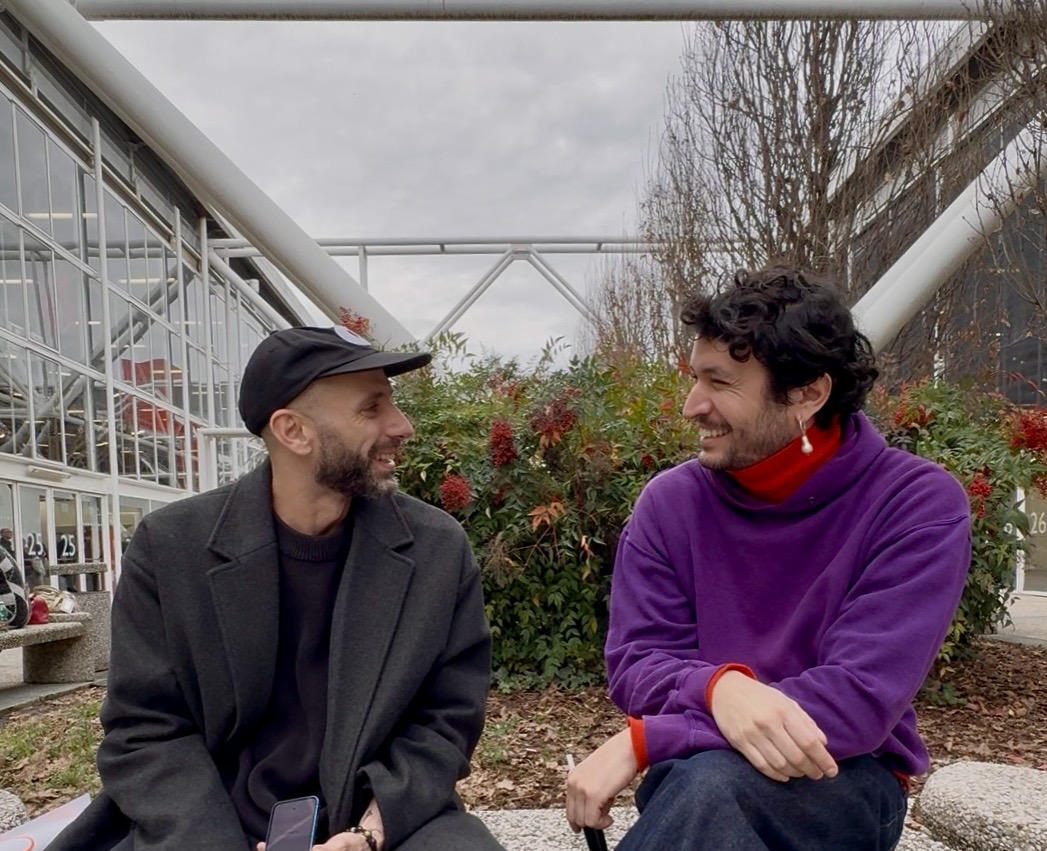
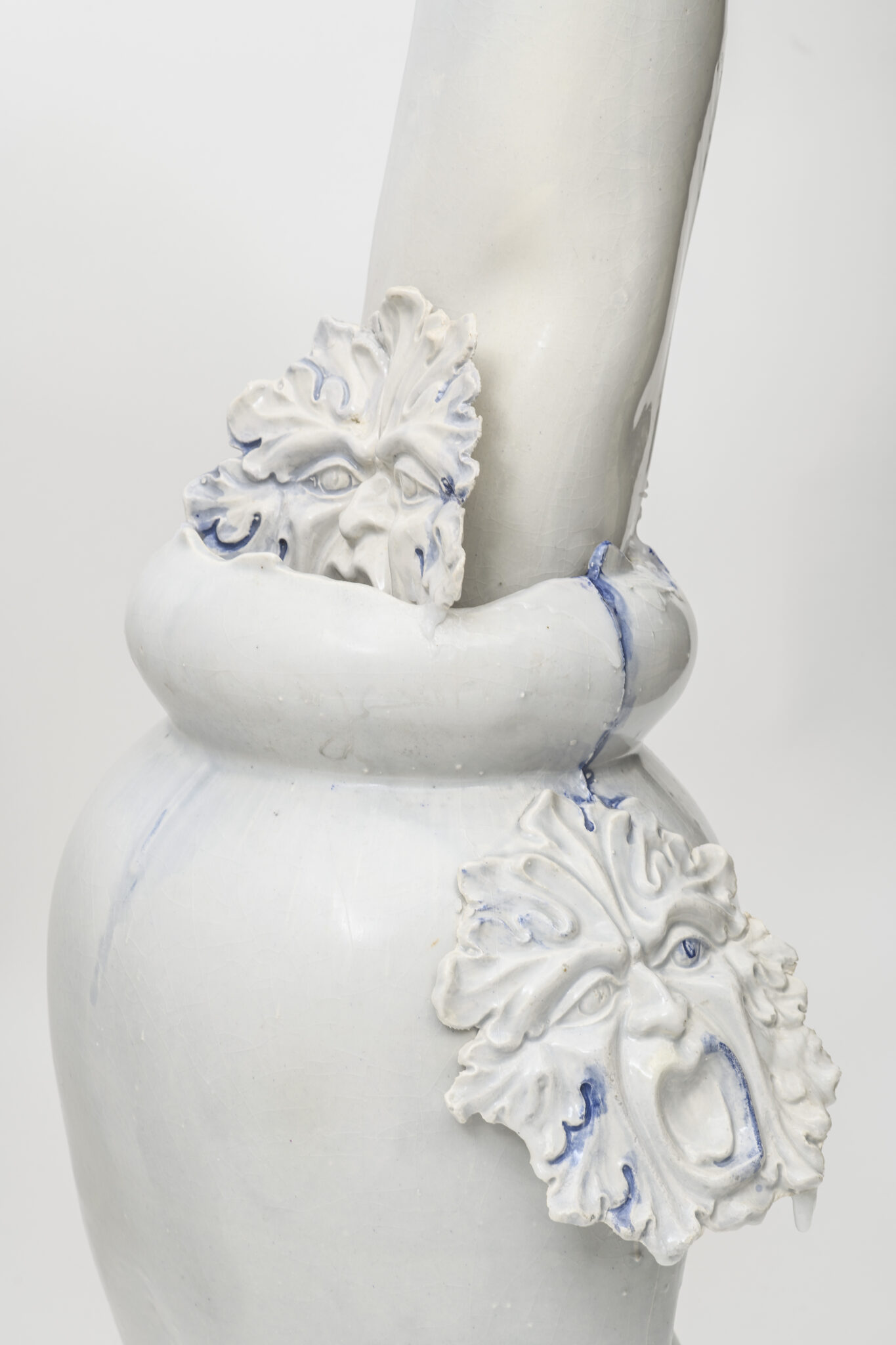
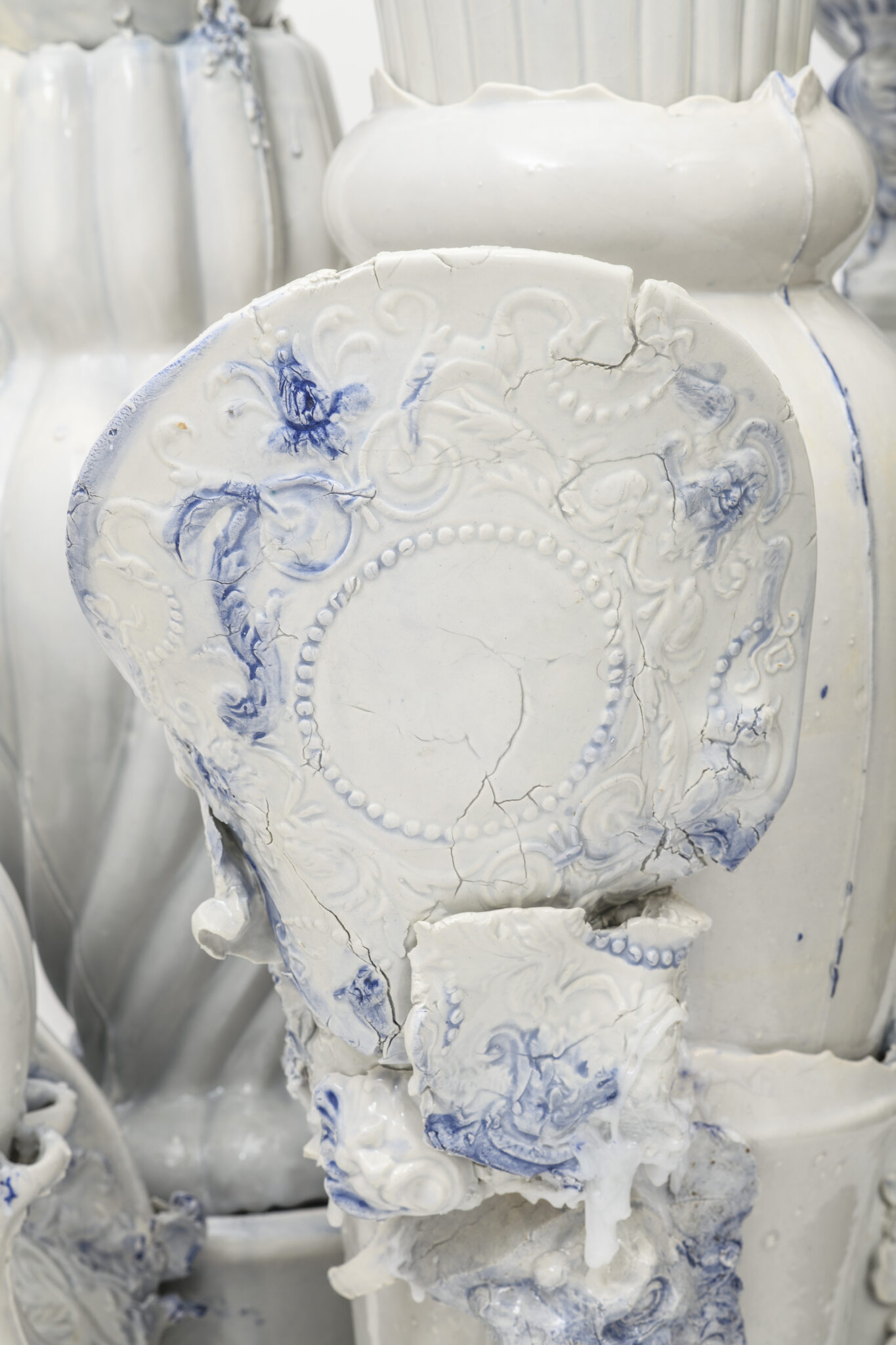
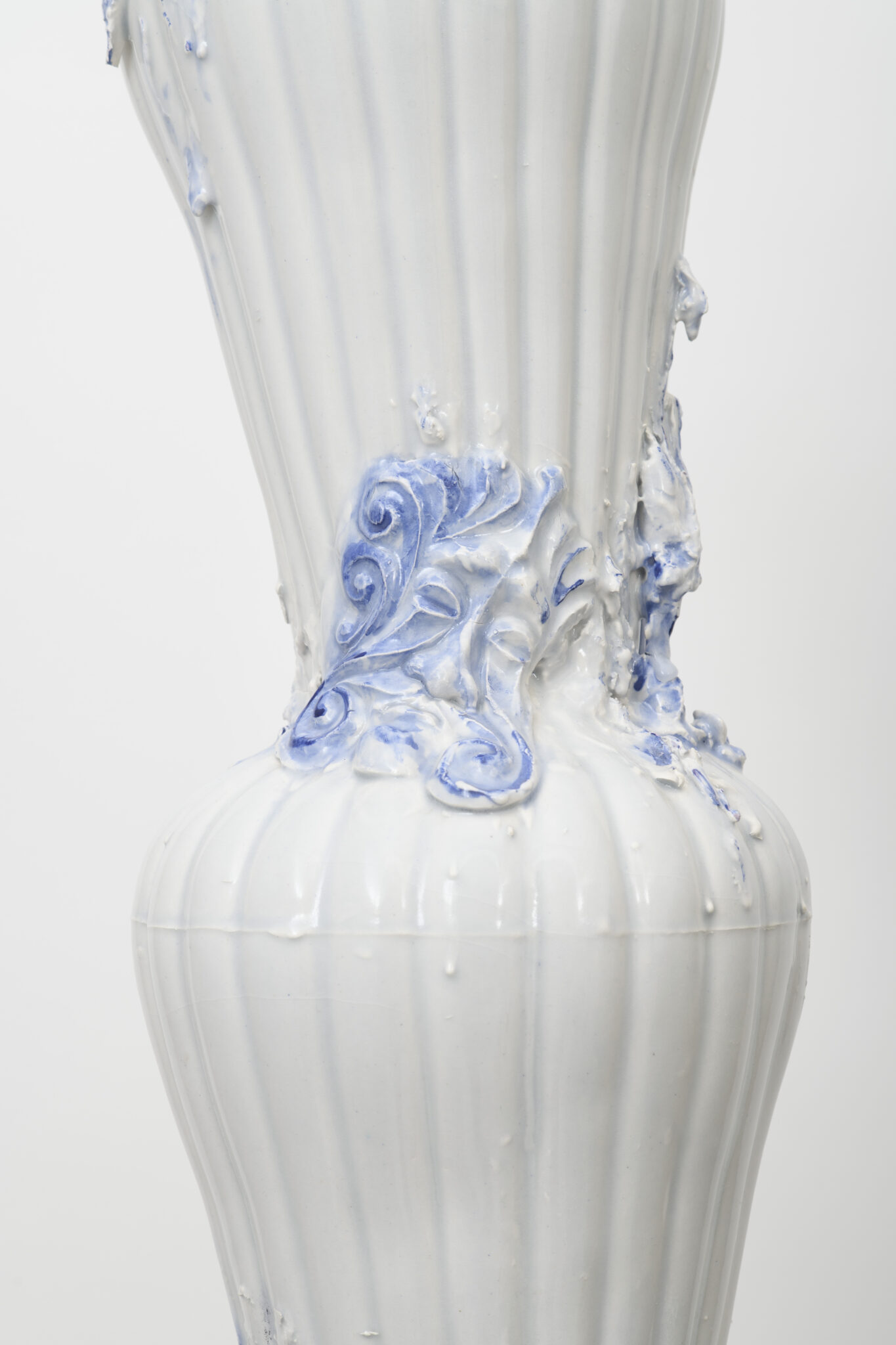
Last Saturday at Arte Fiera, at the booth of z2o Sara Zanin Gallery, I had the pleasure of interviewing Guglielmo Maggini, winner of the 2025 Talent Prize with his work Titano mio.
Guglielmo Maggini in conversation with Lorenzo Ilari, Arte Fiera, Bologna, 2026;
Lorenzo Ilari: In your work, materials often appear in a state of instability, as if on the verge of transformation or collapse. Are you more interested in the finished object, or in that moment of tension when matter is “not yet” fully defined?
Guglielmo Maggini: In my creative process, my intention meets the will of the material itself. In seeking to expand ceramics into an environmental, spatial, and installation-based dimension, the encounter with space becomes essential, and the creative process is deeply shaped by this dialogue. My interest, therefore, lies less in the object than in the journey — the space where an intimate relationship with the medium is formed.
You work with materials that react, absorb, and remember — such as memory foam and polymers.
Yes, they retain the memory of gesture and action. My practice brings clay into dialogue with plastic polymers. This encounter—or collision—between two worlds, the organic realm of clay and the chemical realm of plastics, evokes distinct imaginaries. Ceramics carry a maternal quality; resins, polymers, and my memory foam works— materials drawn from everyday objects like pillows—are porous, absorptive, and, I like to think, capable of retaining traces of the unconscious.
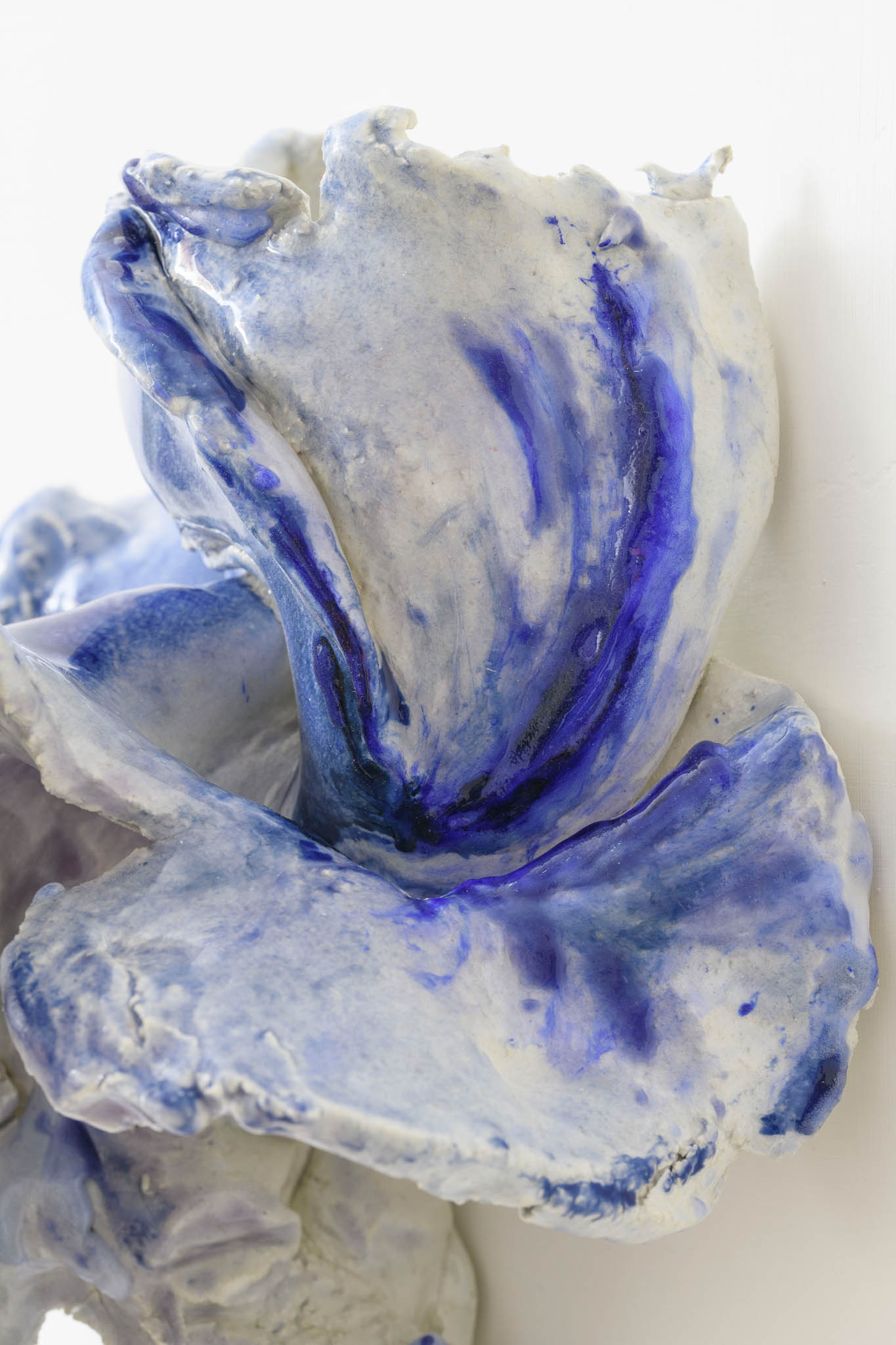
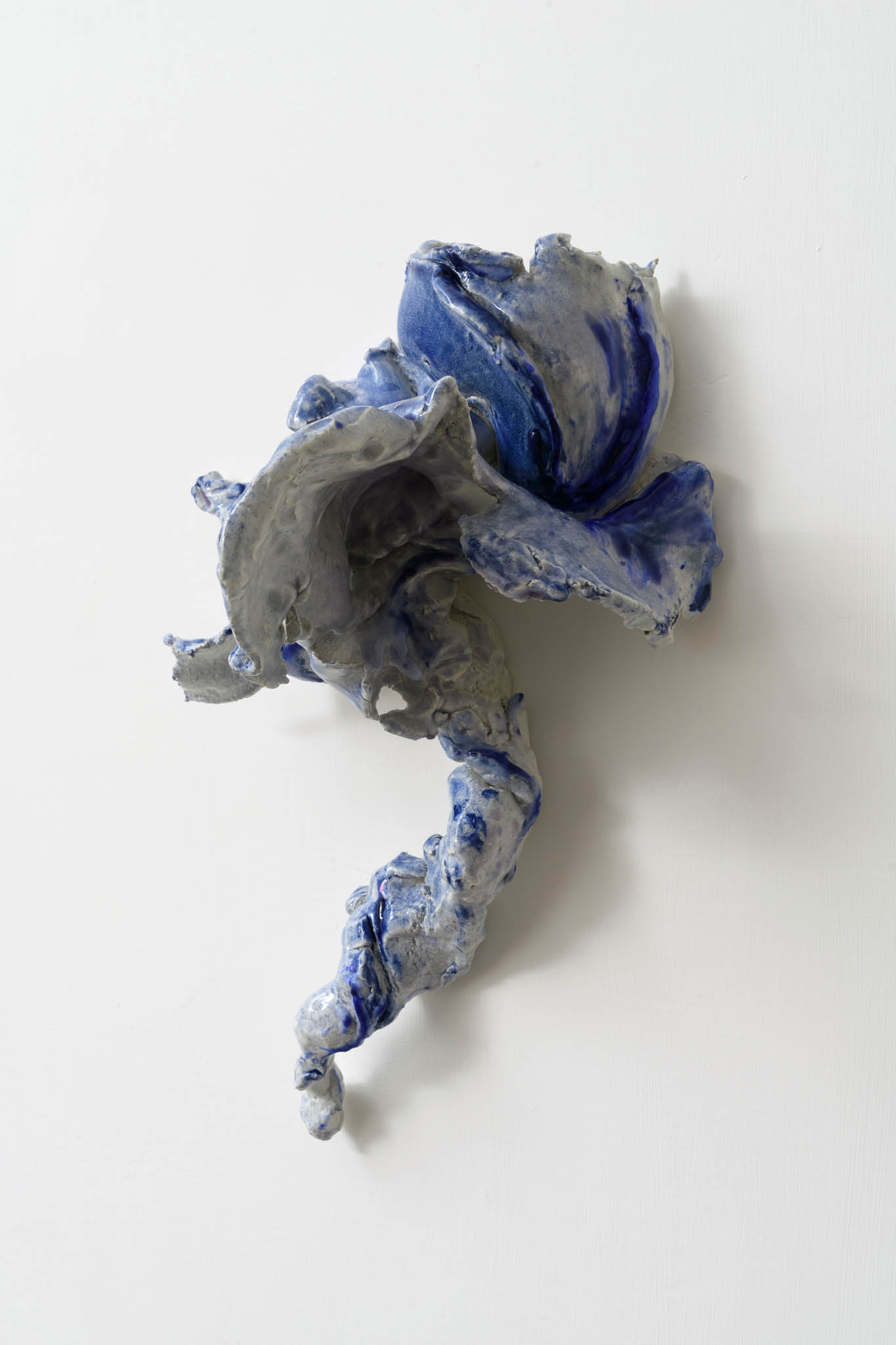
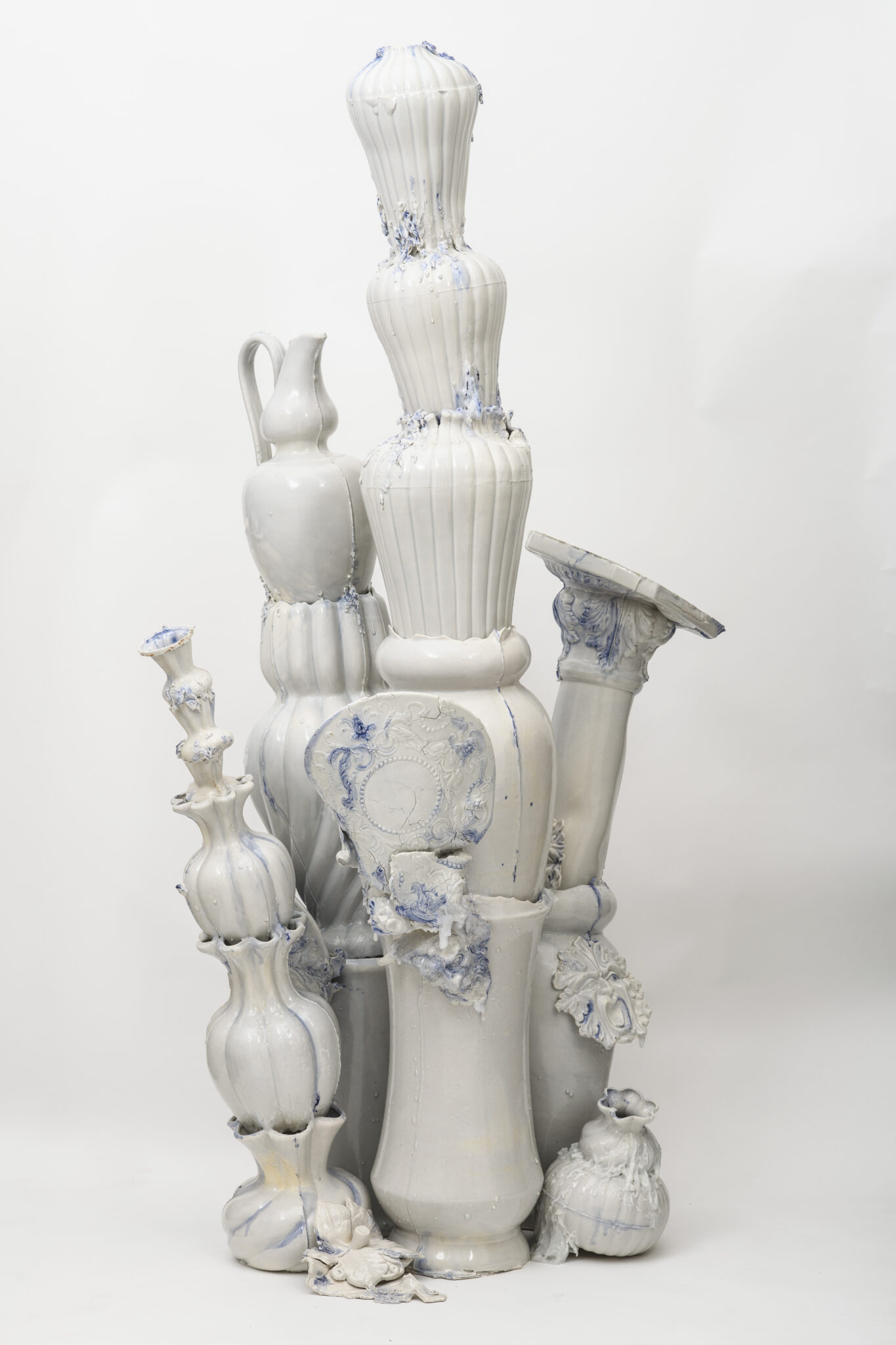
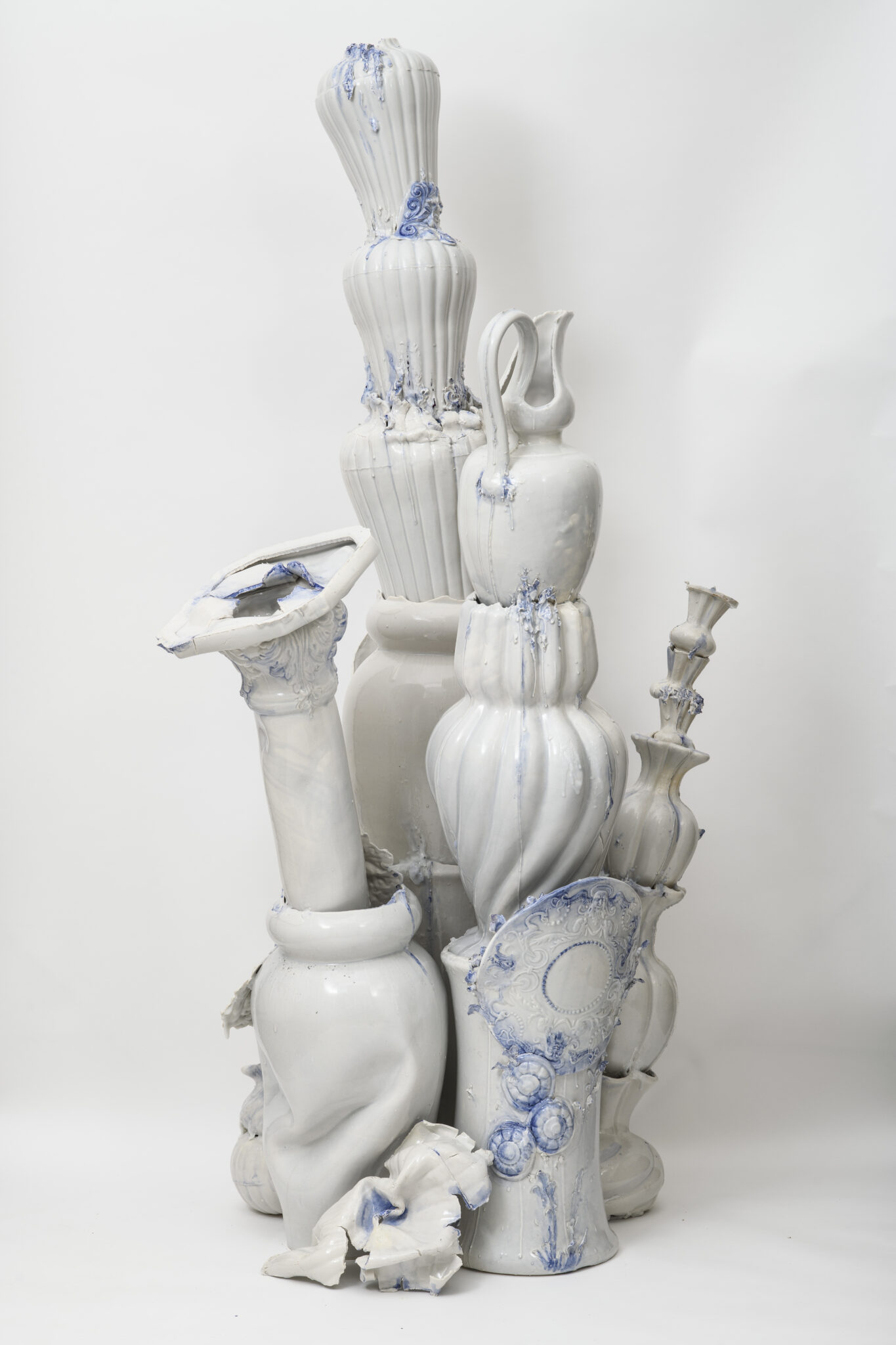
Gugliermo Maggini, Forget Me Not, glazed ceramic and resin, 2026
How important is the idea to you that a work can hold an experience, almost as a body does?
It is fundamental. I feel very strongly about the relationship between the restitution of memory and what might be described as a lapse—a slippage that betrays conscious intention and allows the medium to function as a conduit. Through this process, I am able to relate to myself, to understand myself, and to discover new environmental possibilities within the work.
In your practice, highly physical gestures coexist with a strong mental and emotional dimension. Do you usually begin with an image, a sensation, or a problem to be solved?
I don’t think of it as a problem, but rather as an opportunity to test myself—to understand what I am searching for. The process is often instinctive and gestural. I believe action precedes thought; my work is therefore a form of decoding, onto which matter leaves its imprint. It is like dreaming: first we dream, and only afterward do we interpret. This logic applies both to the work itself and to my approach to material and modeling.
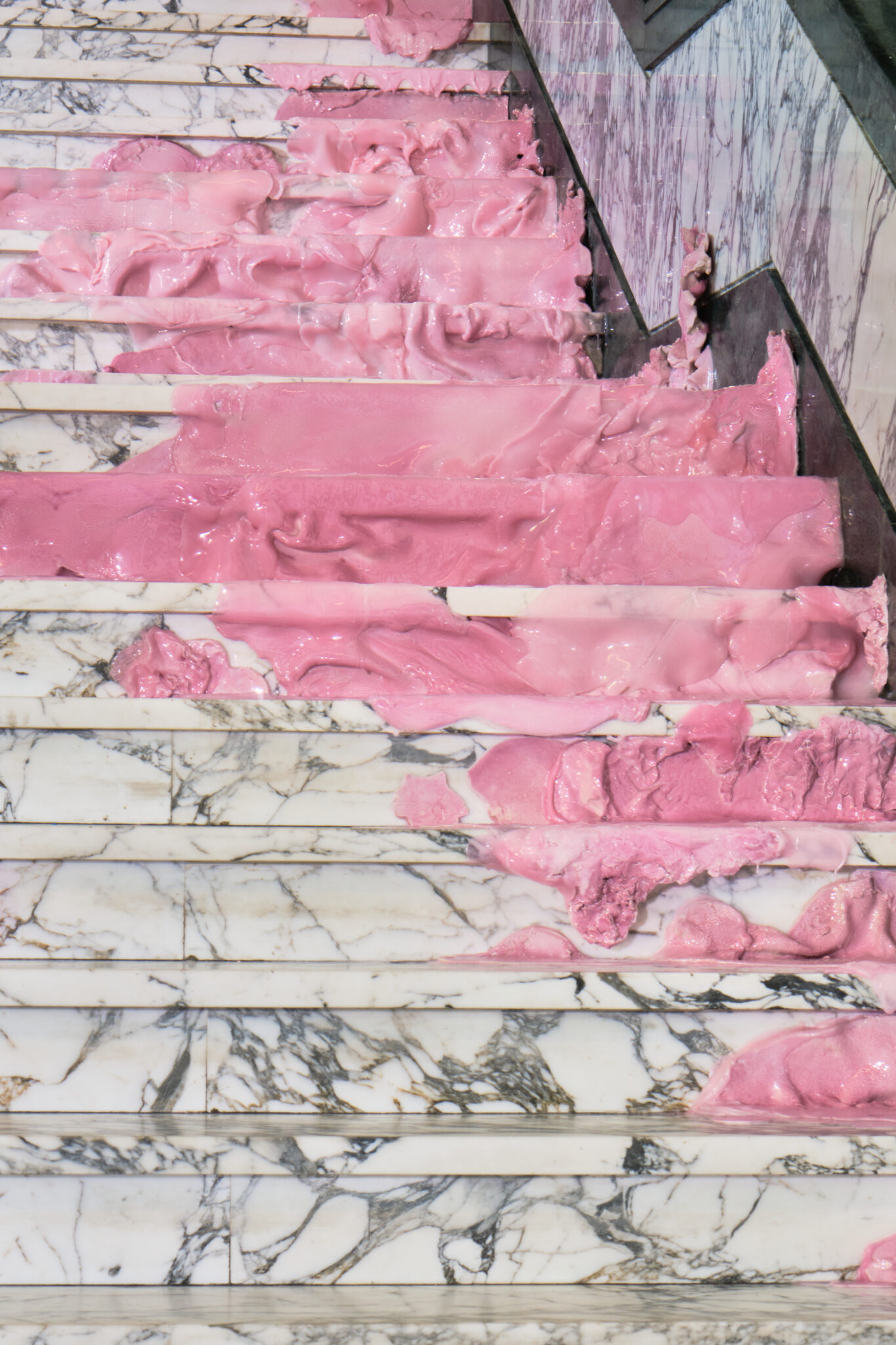
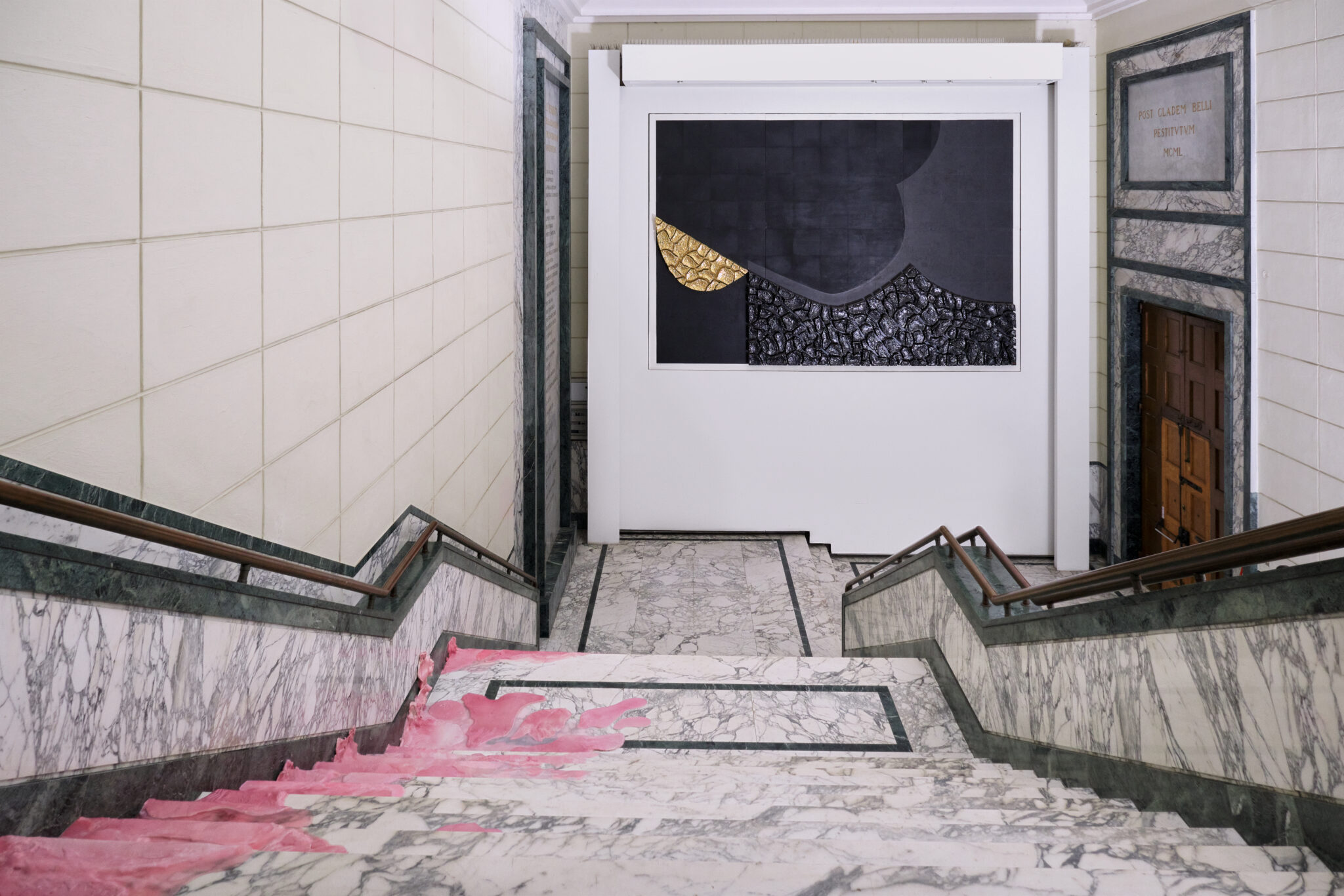
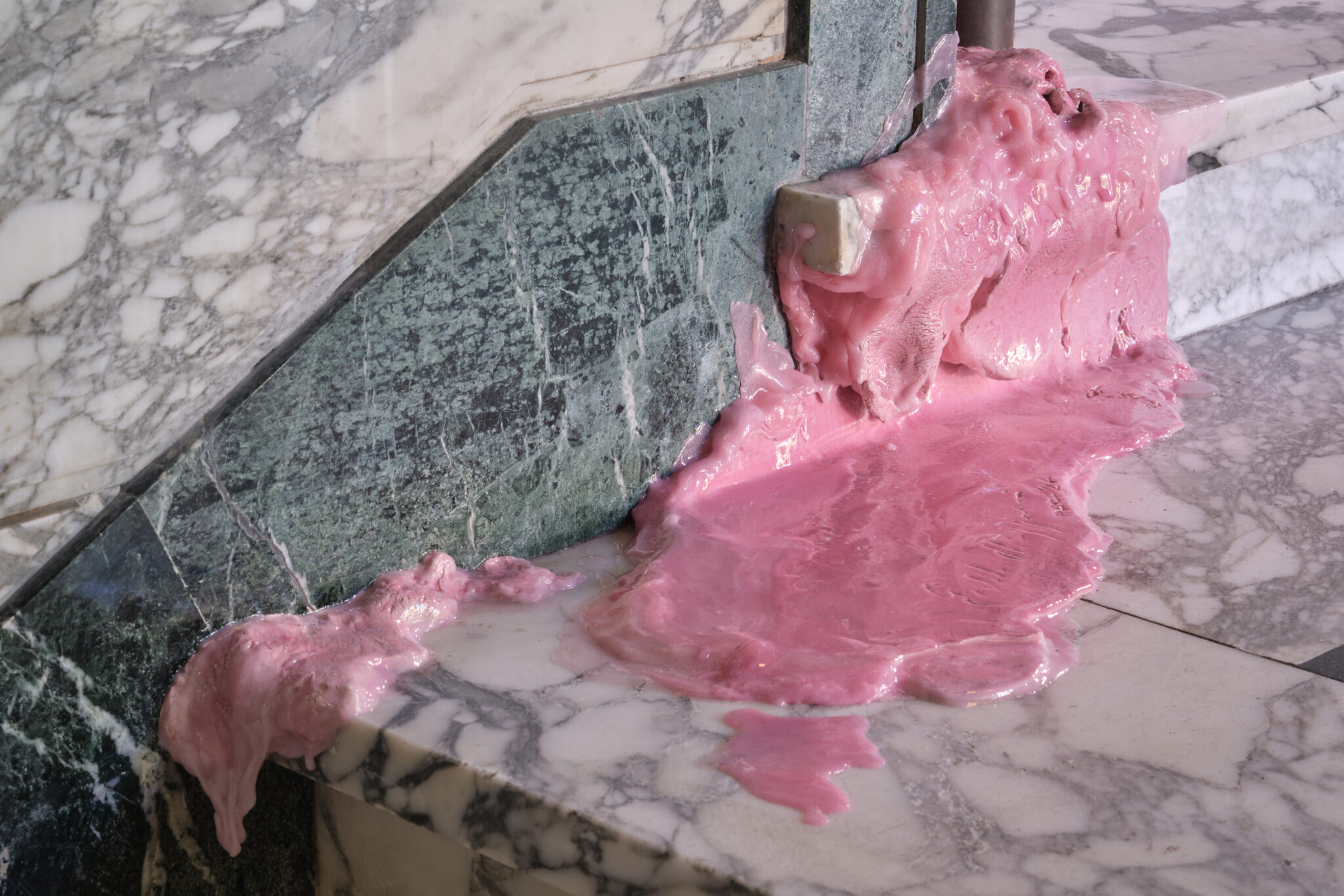
Gugliermo Maggini, Stairing, Museo Internazionale della Ceramica di Faenza, ph credit Francesco Bondi
Looking at your trajectory so far, do you feel your practice is becoming more controlled or more open to unpredictability?
I try not to repeat myself. I attempt to keep in check that tendency—and this is particularly relevant in a context like this—to construct a fixed image of one’s work, tied to recognizability, marketability, and sales. I aim instead to diversify. Rather than exerting control, I reposition myself in relation to the work: through color, through form, by physically reassembling elements. Ultimately, my practice is about putting pieces back together. It becomes more systematic, perhaps, but I continually try to shift and surprise myself. Otherwise, I would lose interest.
Guglielmo Maggini, Titano mio, the winning work of The Talent Prize 2025, ph credits Giulia Benni
In a fair such as Arte Fiera, where everything is fast-paced and saturated with stimuli, what kind of relationship would you like to establish between your works and the viewer?
I hope the works operate viscerally—that they strike the viewer in the gut and create a moment of suspension. Whether in the “Multiples” section with Spazio Giallo or here with Sara Zanin (z2o), my aim is to generate an energetic field around the works, restoring a sense of context that the fair environment often erases. Even a minimal setting—such as the transport crate, materially continuous with the work itself—can invite viewers, if only briefly, into my imagined world.
Guglielmo Maggini, Titano mio, the winning work of The Talent Prize 2025, ph credits Giulia Benni