


If Only…
Self-care.
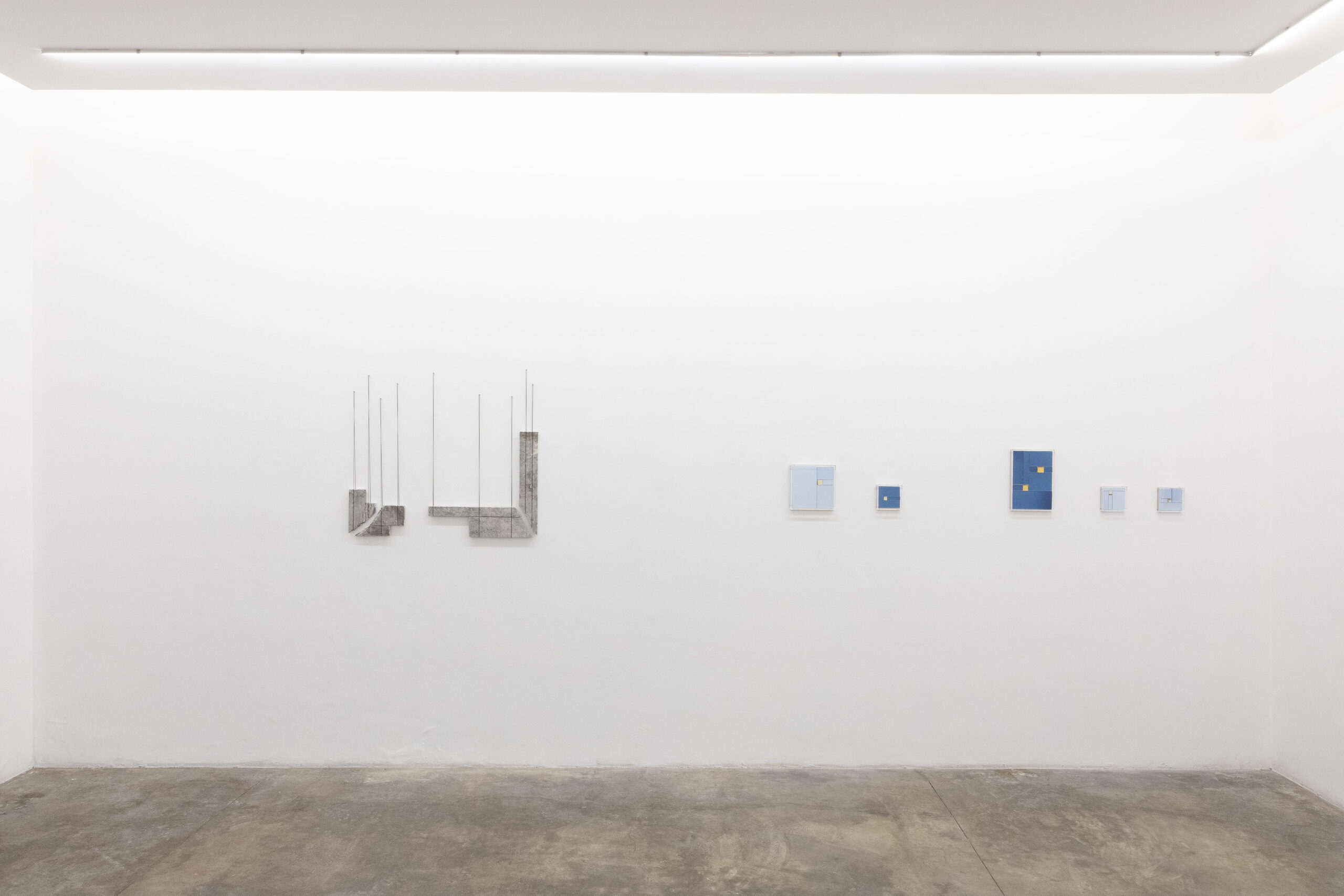
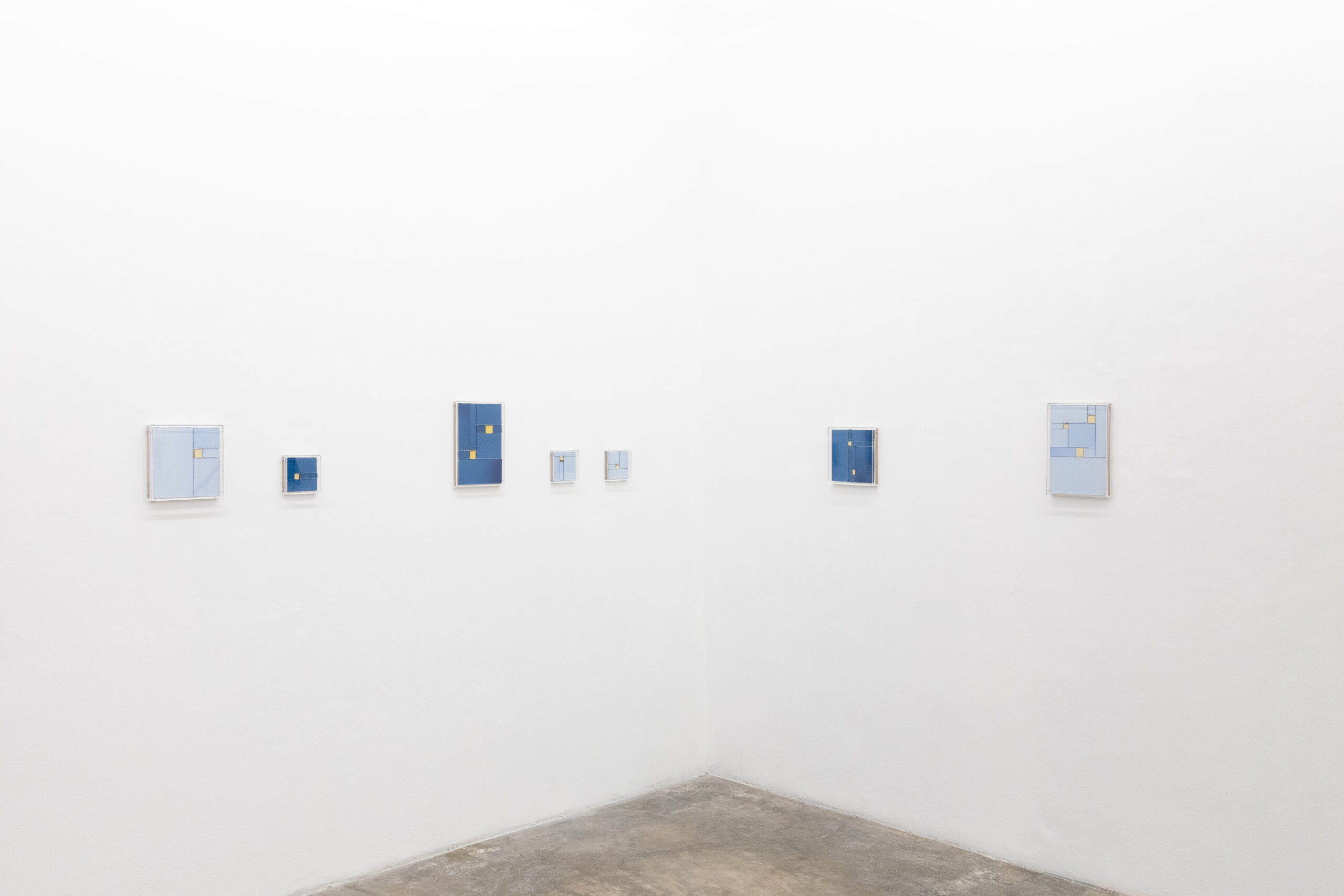
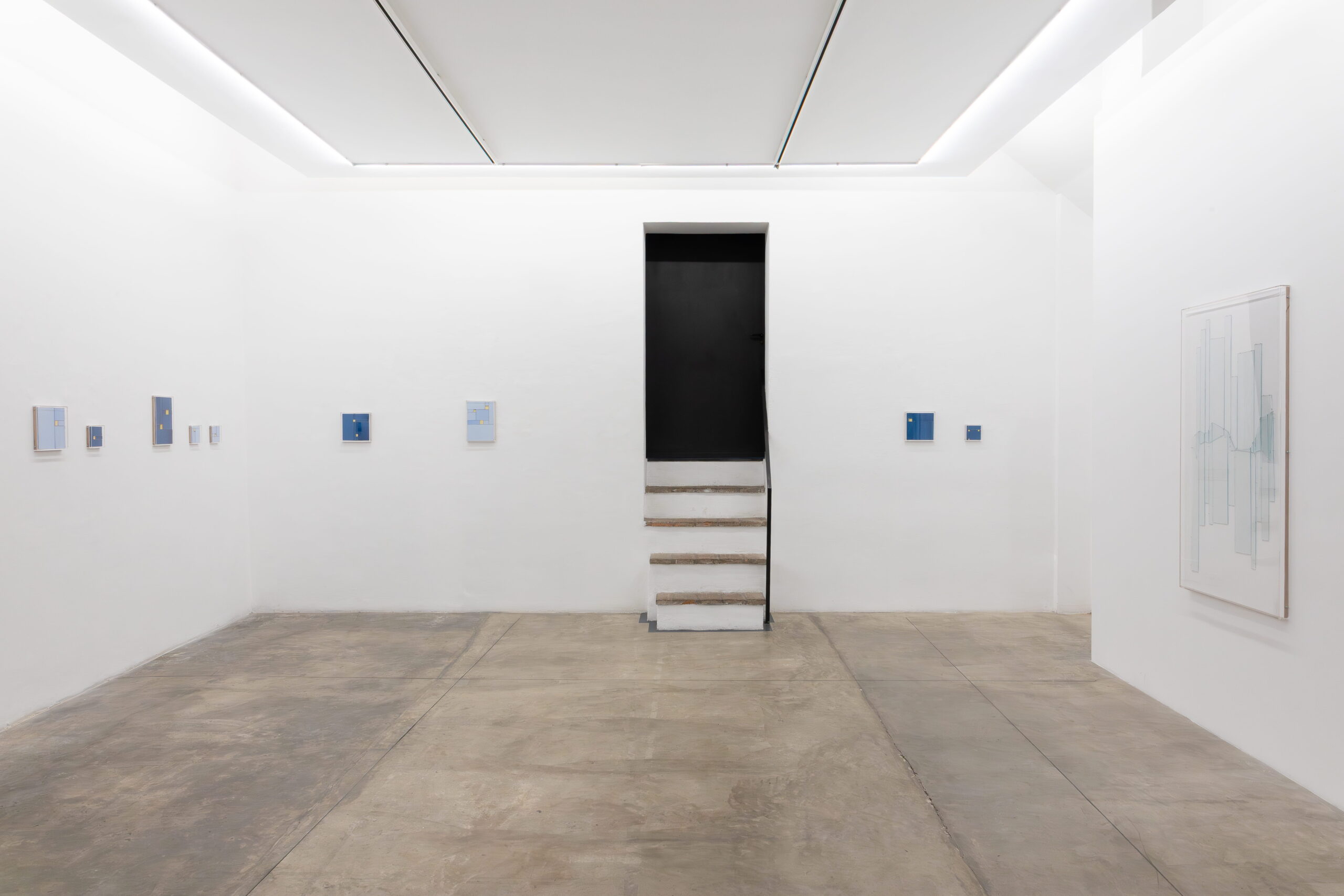
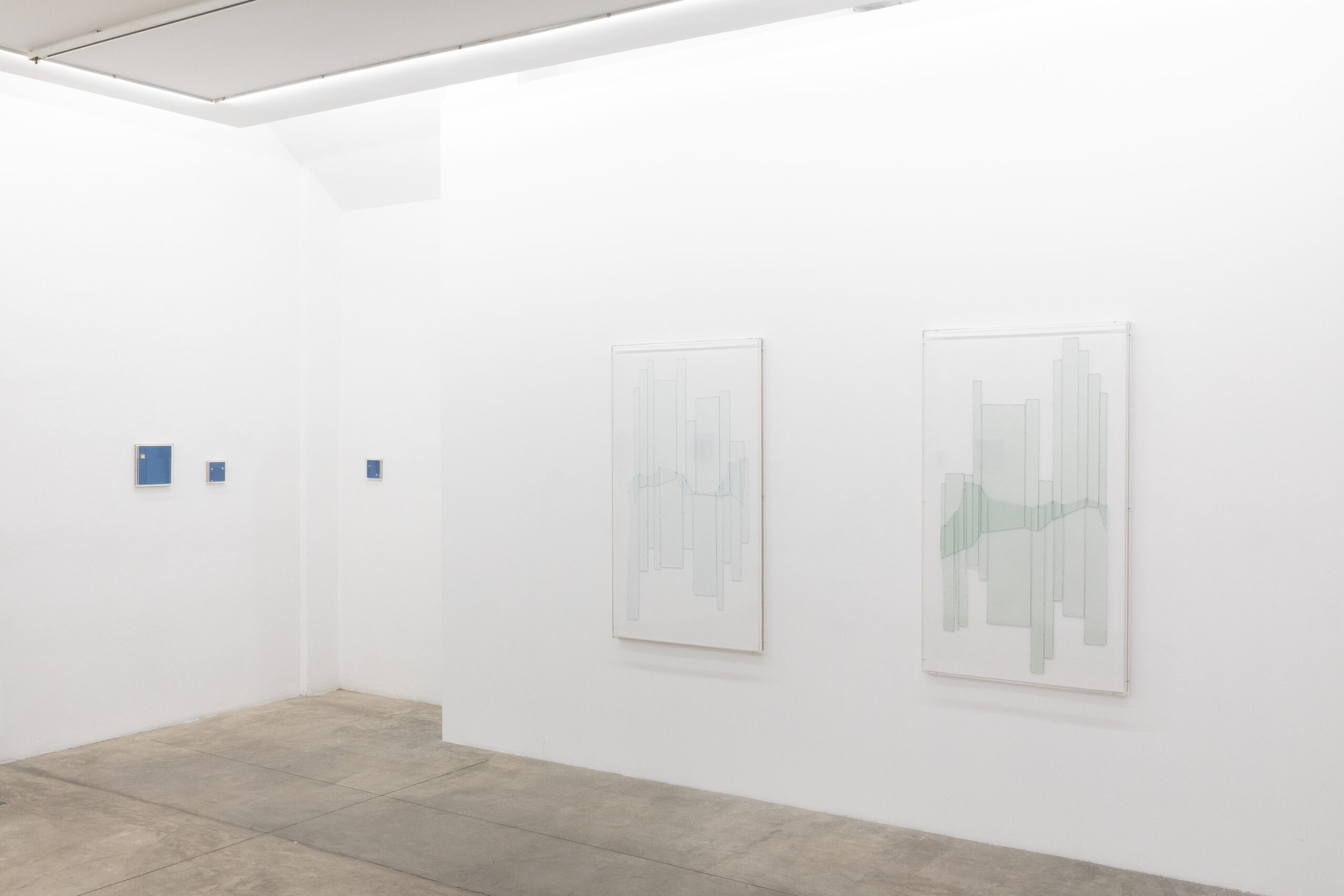
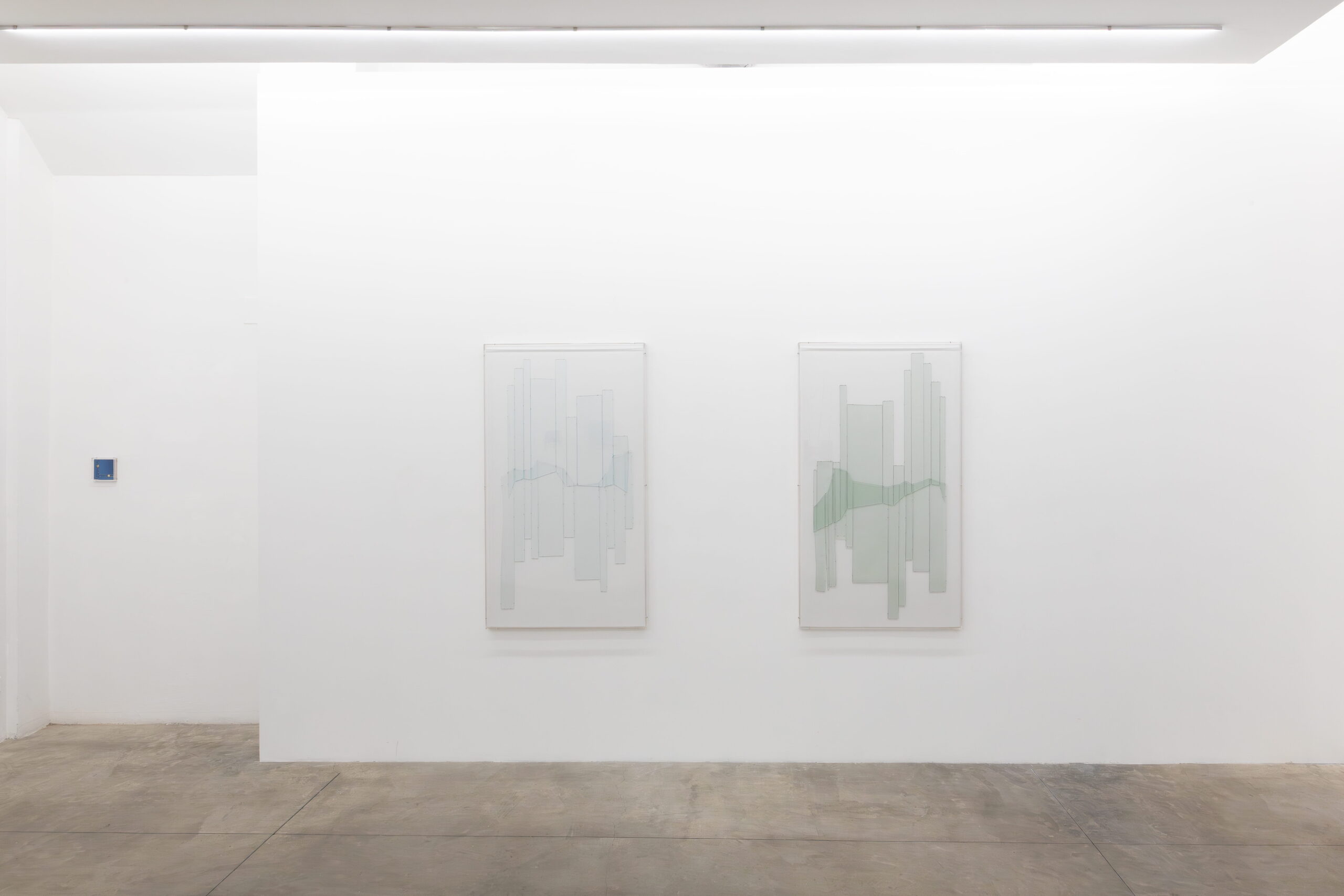
As humans, we tend to move, to cross borders and boundaries, to go beyond spaces. We are constantly in motion; first through evolution and then out of curiosity, necessity, compulsion. The fact is our organism does not recognize borders; it’s not in our DNA. Limits are made to be overcome. That’s the only way it works. But imposing spatial limitations is a social construction: a need to delimit the borders within which we are confined. Outlines marking property, thus designating power. Anneke Eussen questions this. How far does our jurisdiction actually extend? Which spaces belong to us? And to others? Can they be shared? Through her work, she offers a tentative answer to these questions. From her pieces (both the small ones and the large-scale), made of discarded materials, we distinguish grids, passages, horizontal and vertical lines, as if to enclose spaces, but, in fact, define one another. The structures Anneke has created might seem like pathways, where movement (both of the eye of the observer and the movement of the material itself) is constantly circulating. Each portion of a piece is the prelude or beginning of another. Like doors opening infinitely, the sculptural spaces constructed by the artist represent a surface which is at once single yet fragmented and often returns back onto itself. The interlocking interplay between the elements plays out in always new and varied combinations. Delicate, yet inherently essential. Almost as if Anneke Eussen‘s creations spring from a natural urgency: as if they had originally been landscapes which had been reconstructed. The artist has reassembled them, placing their parts in equilibrium with one another and with their surroundings. Sometimes the change in form is evident by the artist’s choice of color: light blue portions intersecting with darker ones; pieces of cut or curved glass forming black frames; fragments painted dark blue and cuts made into the material; voids and solids applied within the materials; overlapping fractures on flat surfaces, and vice versa. Pieces of glass may sometimes be meticulously broken, or otherwise shaped into curves with unplanned fractures which, according to their placement by the artist, create new movement and new spaces. They create geography. Maps. Paintings. They are compositions made of plexiglass, iron, glass, wood. In a recent body of work she also employed marble, a more precious material, recovered from abandoned sites.
Anneke therefore uses industrial or natural materials, often gathered from areas in need of renovation, and carefully grants them new life and forms. “…to be lost is to be fully present, and to be fully present is to be capable of being in uncertainty and mystery. And one does not get lost but loses oneself, with the implication that it is a conscious choice, a chosen surrender…” Rebecca Solnit, A Field Guide to Getting Lost . 1
I think of her work as traces and fragments to be reassembled leading to new roads so that we do not get lost in the present. Anneke Eussen often provides us with keys into interpreting her works, even through her choice of titles. She creates a dual dialogue: between her materials in their layers and combinations and therefore with the observer who decides how to proceed into reading them based on the elements provided.
Control.
Eussen considers her work to be composed of various levels of life. There may be two or three levels layered uniting recognizable elements and others which remain anonymous. Rebecca Solnit, A Field Guide to Getting Lost, Canongate books ltd, 2006 1 Anneke Eussen, “If Only…,” with a text by Rossella Farinotti
This act of reanimating a material is essential to this artist, as if it could compensate for the emptiness that the broken surfaces represent. The lines in her sculptures remain as traces of the steps she took to create them. One thing that never changes for Anneke, not even after she has formed these found elements into sculptures, is the energy of the materials themselves. That is a constant. The energy of the materials is controlled by the conscious way the artist works to combine the surfaces to create a sense of security which, once the piece has interacted in a new space or even created a totally new context, is then lost. The sense of being lost in a finished work of art is normal and perhaps even necessary… it is as if Eussen had created a hitherto unknown investigation space where glass, plexiglass, hooks, wood, bit and pieces of recycled materials, find a way to live with new possibilities with new stories to tell. The artist’s repeated actions are never quite the same, never exactly replicated, always diversified.
Transparency.
This is how the material takes on new life and new forms: time passes and the movement is tangible in the lines and figures of each sculpture, when it has been completed. But there remains a sense of transition, of pause and silence. Is it from the movement (cuts, lines, breaks, curves)? Or from the sense of transparency that runs through so much of her work? This is another recognizable element in Eussen’s work. Much like in Duchamp, glass symbolizes creativity and the past. But under Anneke’s hand, it also symbolizes light. A muted light, perhaps, as Douglas Crimp might have written. The artist creates sculptures that evoke surfaces balanced between two dimensions: between flatness and three dimensionality. These works take up space. Anneke Eussen investigates space, exploring where one margin ends and another begins. And she finds herself back at those borders and boundaries where it all began. And transparency may provide another means to cross them. “Transparence is the highest, most liberating value in art — and in criticism — today. Transparence means experiencing the luminousness of the thing in itself, of things being what they are.” Susan Sontag, Against Interpretation.2 Memory, sight and love, will. “The symbolic order is guaranteed insofar as images exist—images in which belief is unavoidable, because the act of believing is itself an image. Image and belief are governed by the same processes and grounded in the same presuppositions: memory, sight, and love, or will.” Julia Kristeva . 3 Each of these elements make me think about Anneke’s work, about the processes leading up to the finalization of one or more forms that, after all, are totally new and have taken on their own credibility. Each sculpture provides a new image. By choice. Each work tells a new story. This is not insignificant: it is the artist’s task, if she so desires, to take care of one past by recognizing the traces it has left in order to re-create a new one. “If only” there were more attempts and proposals, then there would be more ways not to get lost.