

Too hot for Heaven too cold for Hell
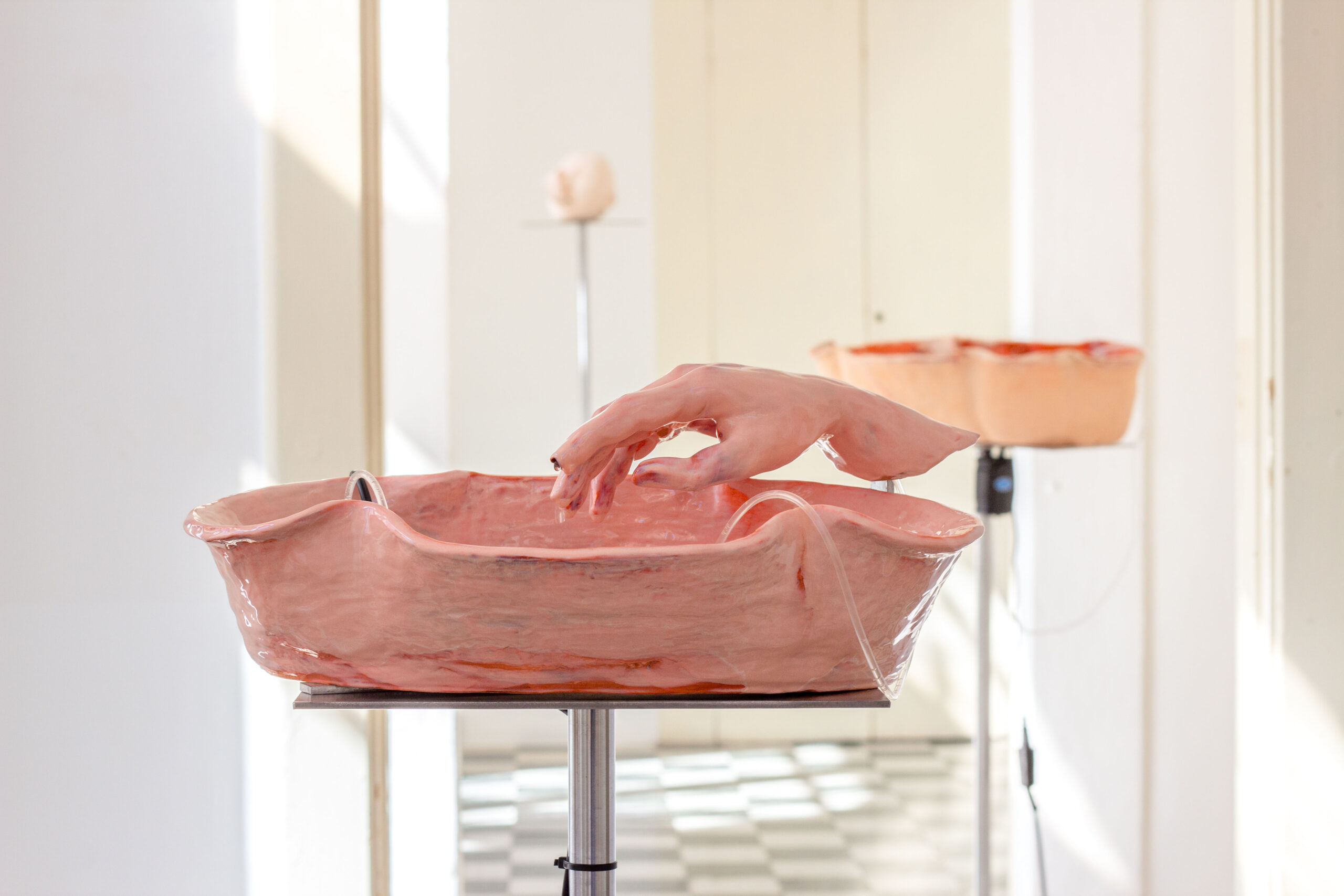
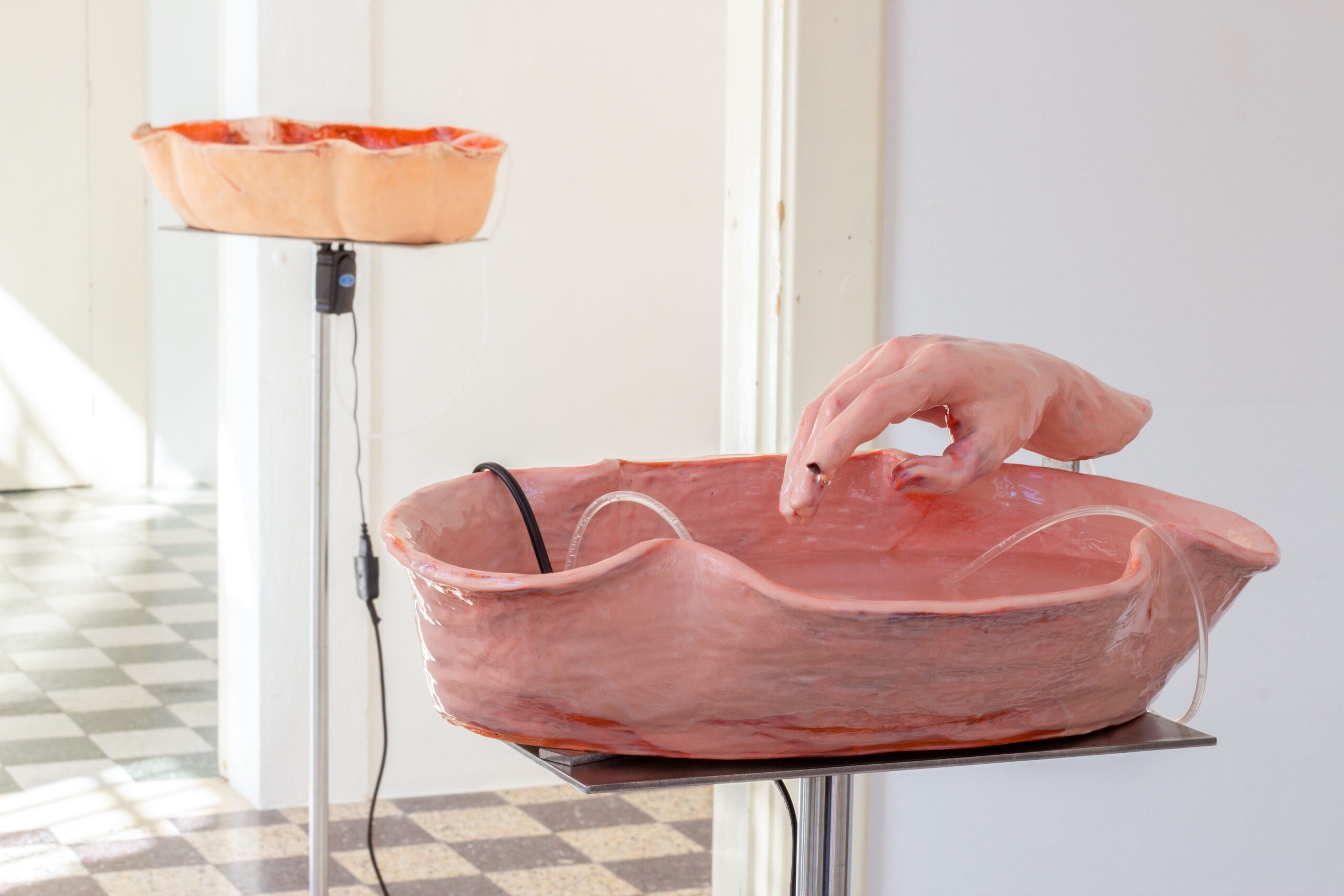
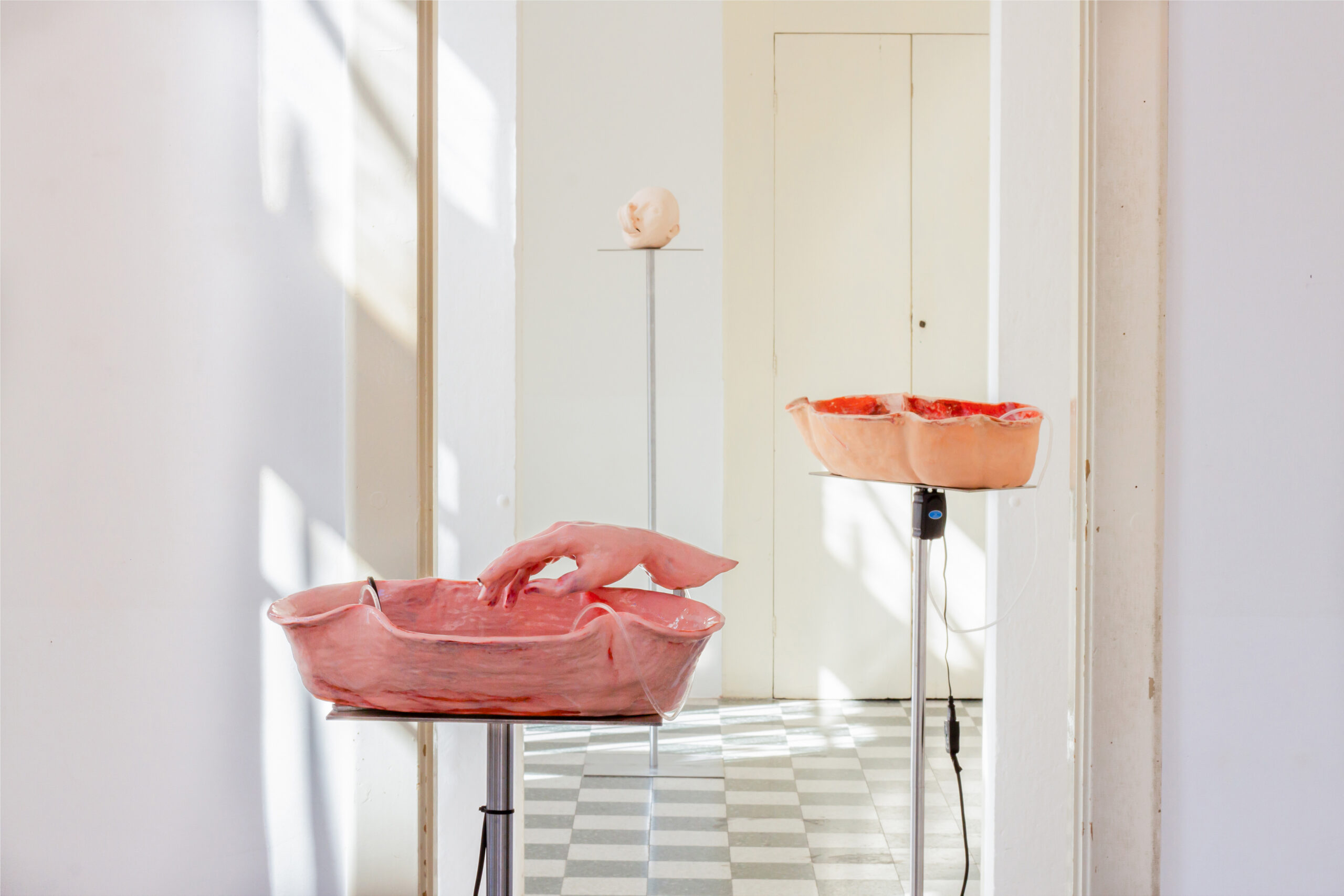
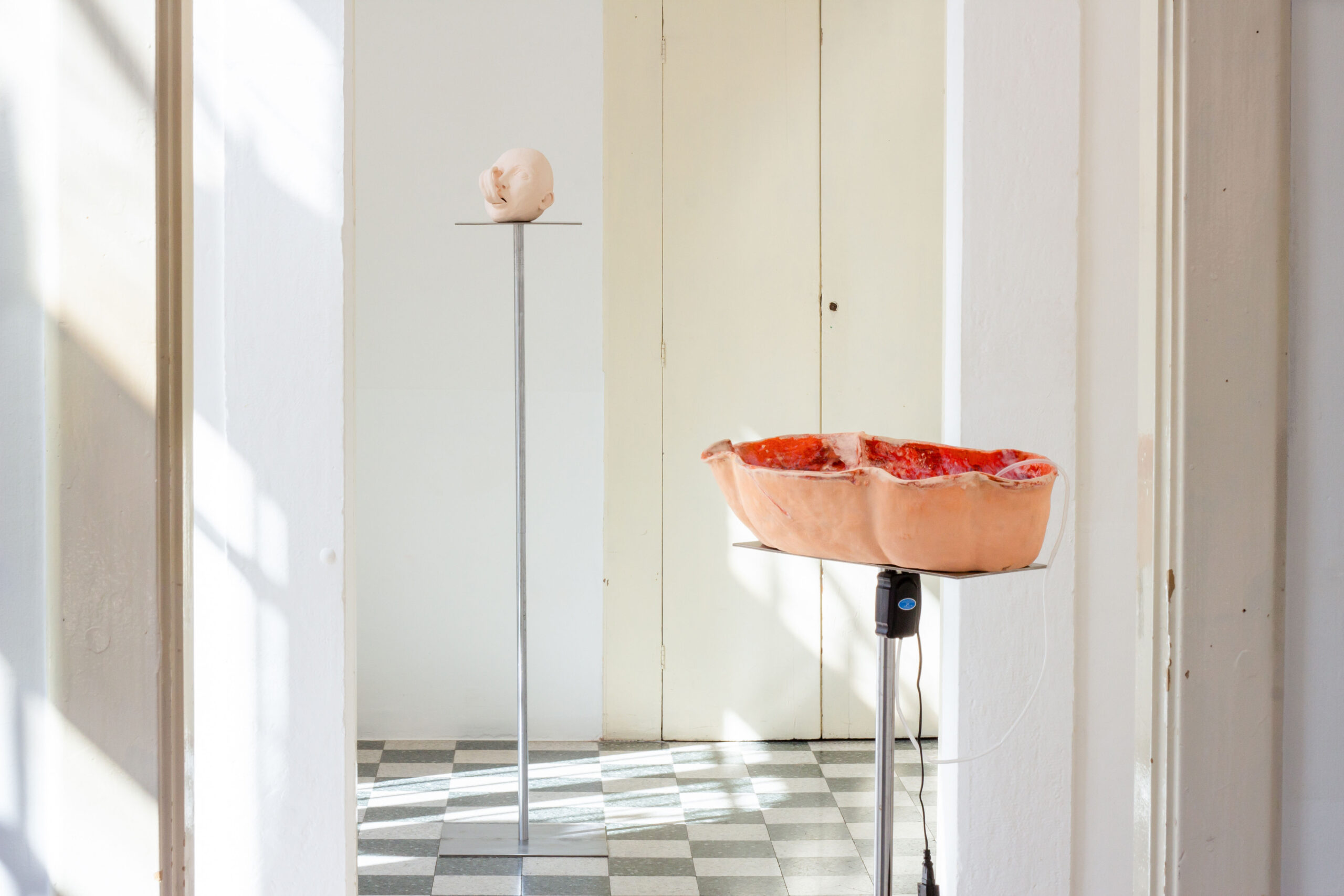
Too hot for heaven too cold for hell is a solo exhibition project by artist Arianna Ladogana, conceived specifically for the spaces of Flusso Project. The exhibition takes the form of an immersive installation bringing together light, sound, and three interconnected ceramic sculptures.
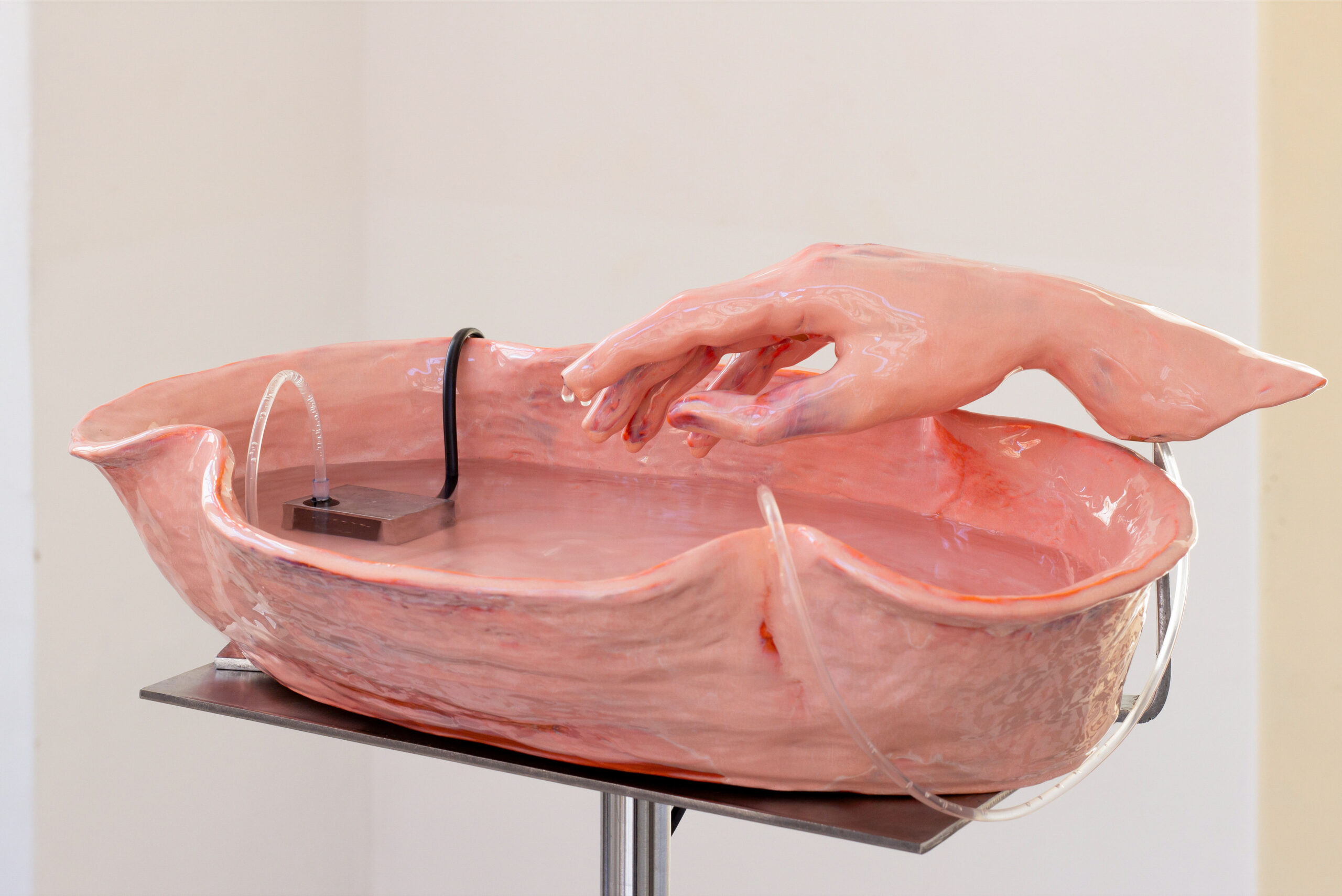
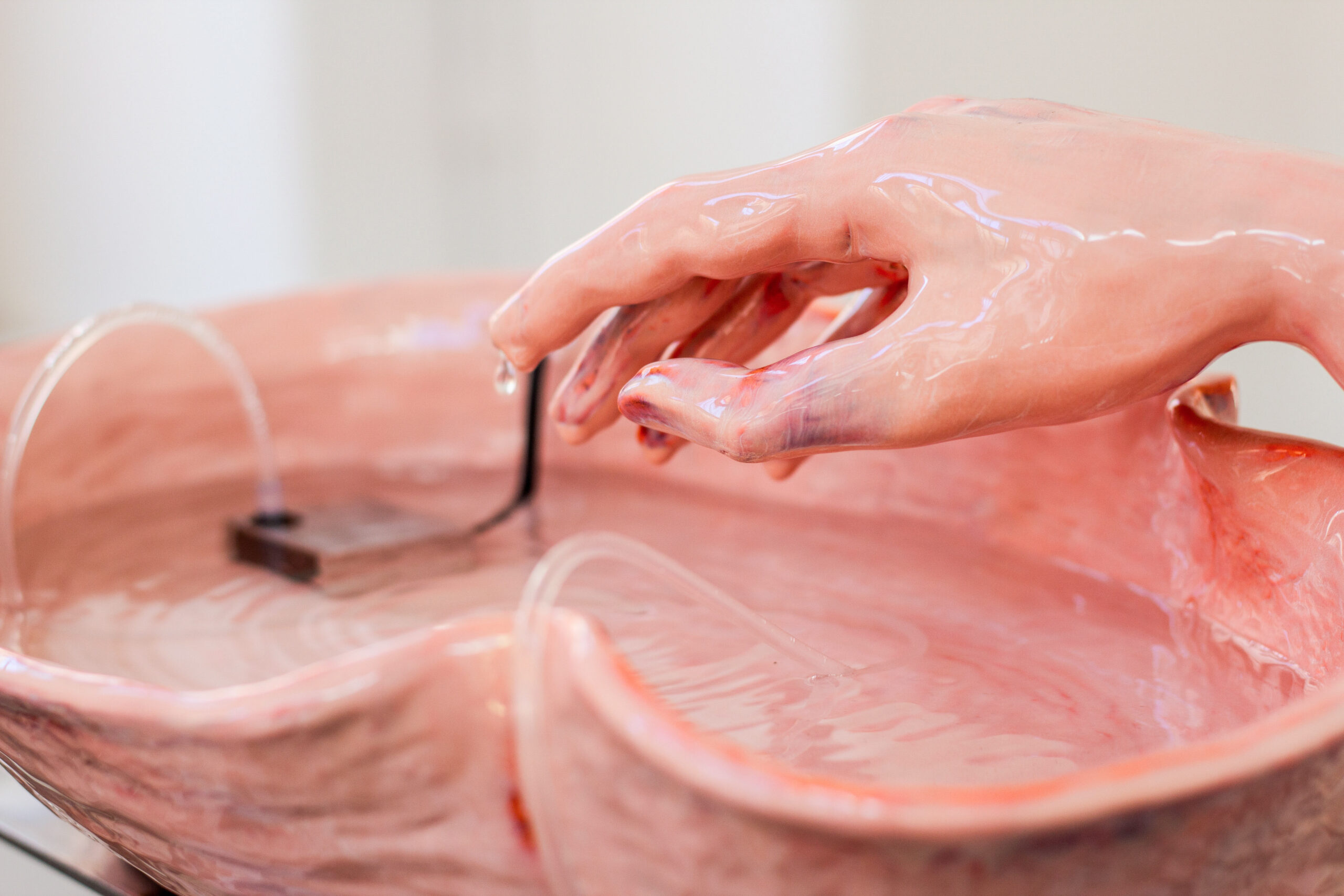
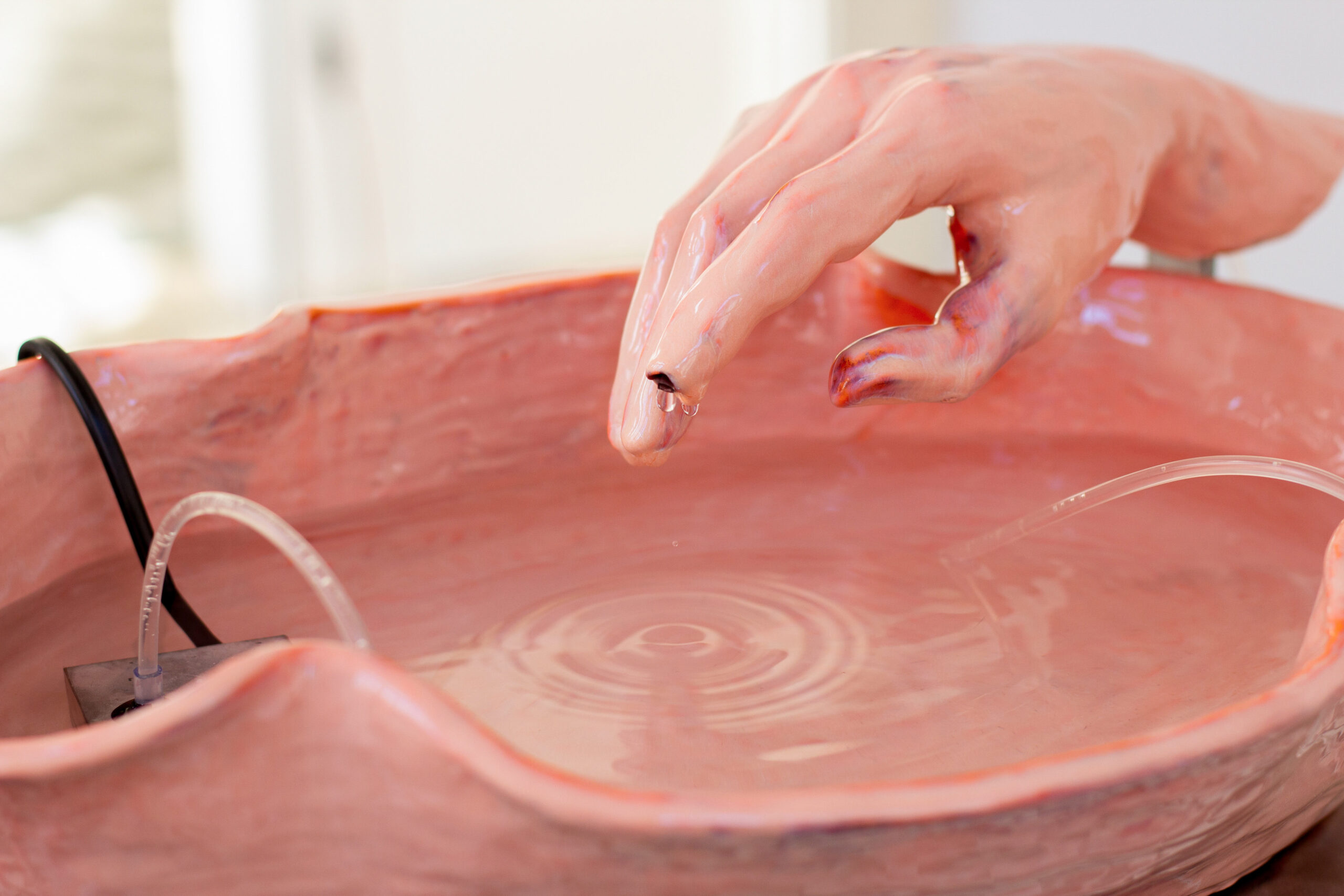
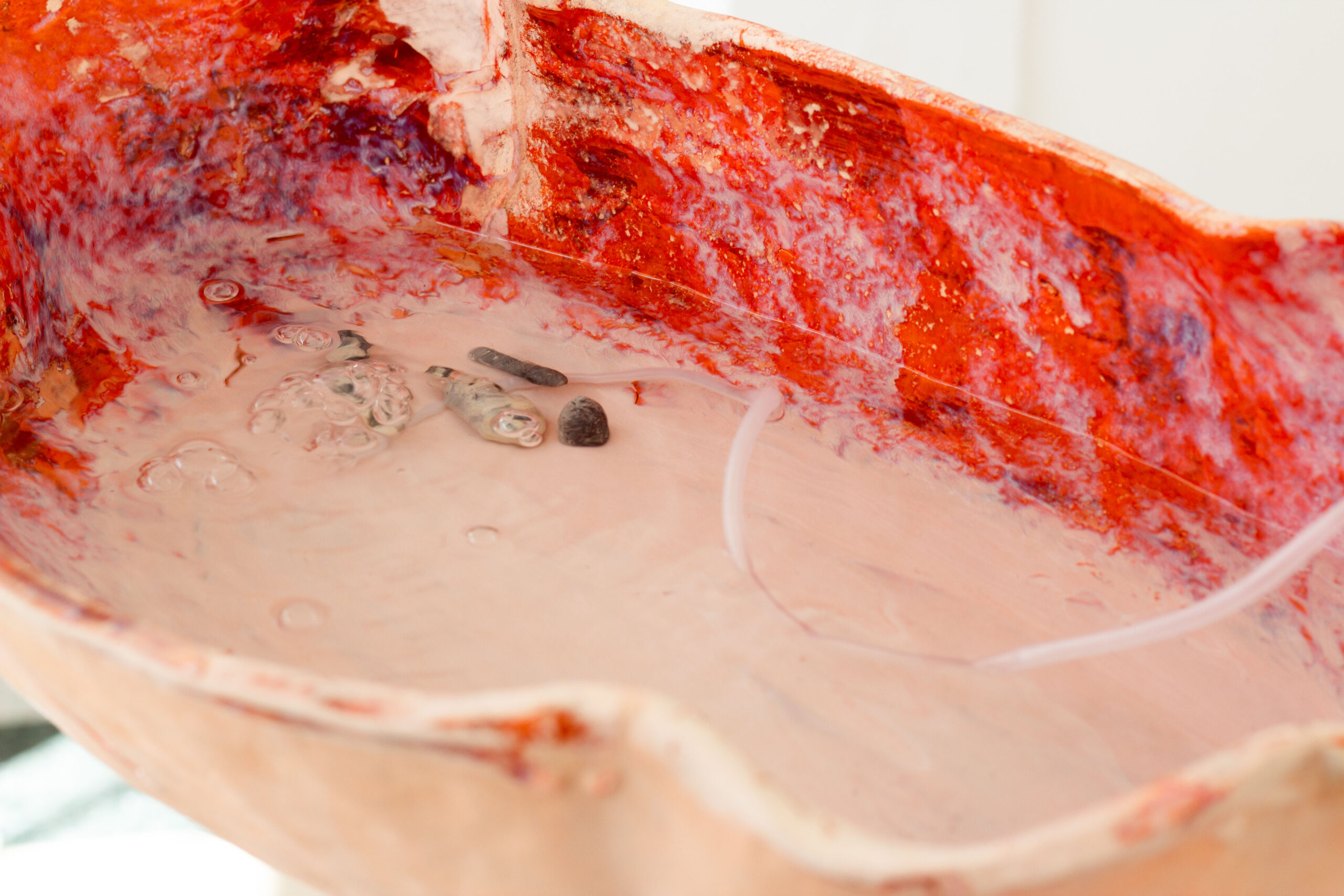
The first takes the form of a holy-water font, inspired by those found in churches throughout Southern Italy. A sleeping hand rests inside the basin, from which a continuous thread of water flows. The ceramic structure remains “alive” thanks to a submersible pump, invisible yet essential to the functioning of the work. The holy-water font inhabits a threshold between sacred and profane, intimacy and ritual, body and landscape. The hand becomes a porous interface through which matter, technology, and human presence meet. Traditionally a place of purification and passage, the font becomes here a source without a certain origin: a point at which the idea of belonging gives way to that of relation.
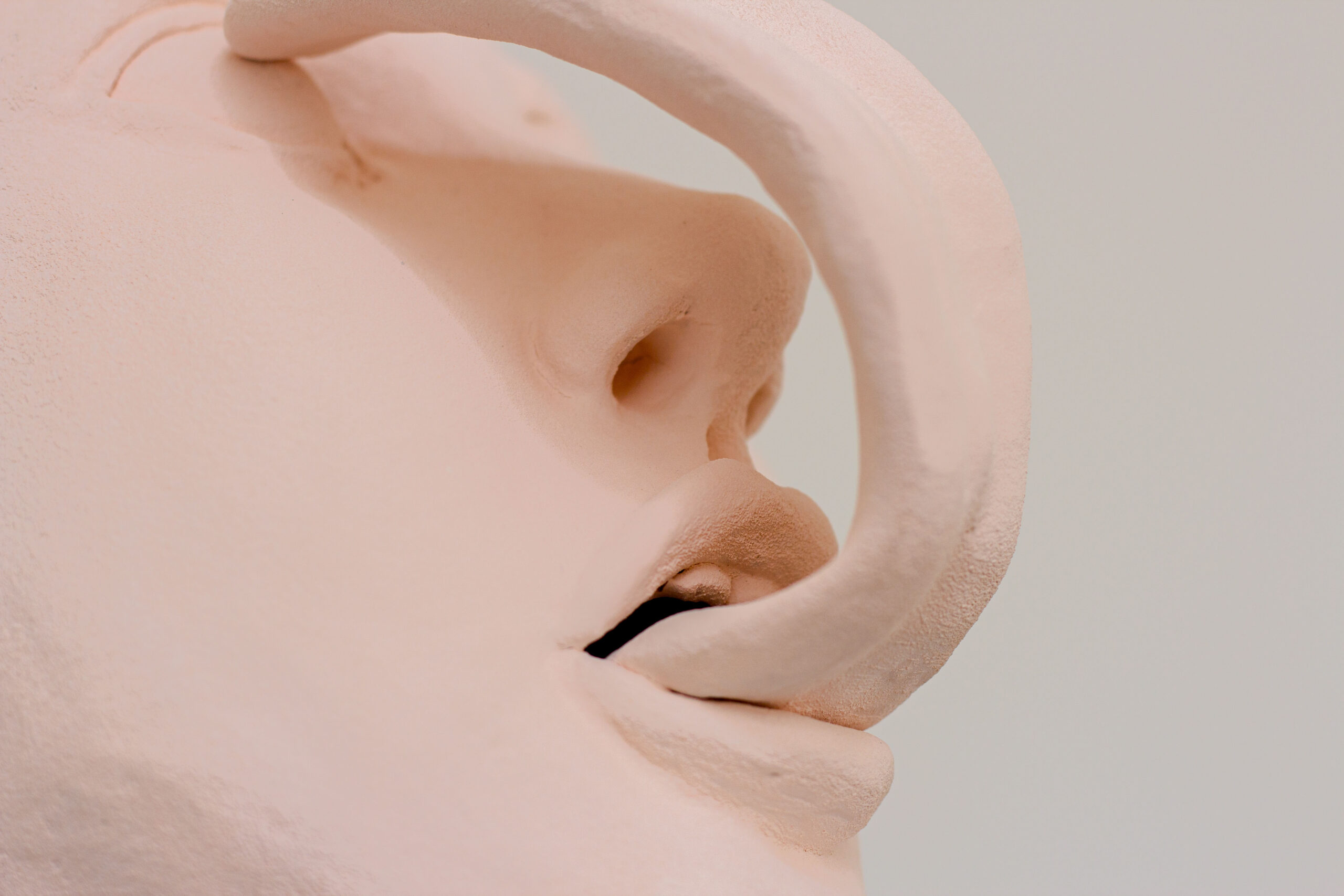
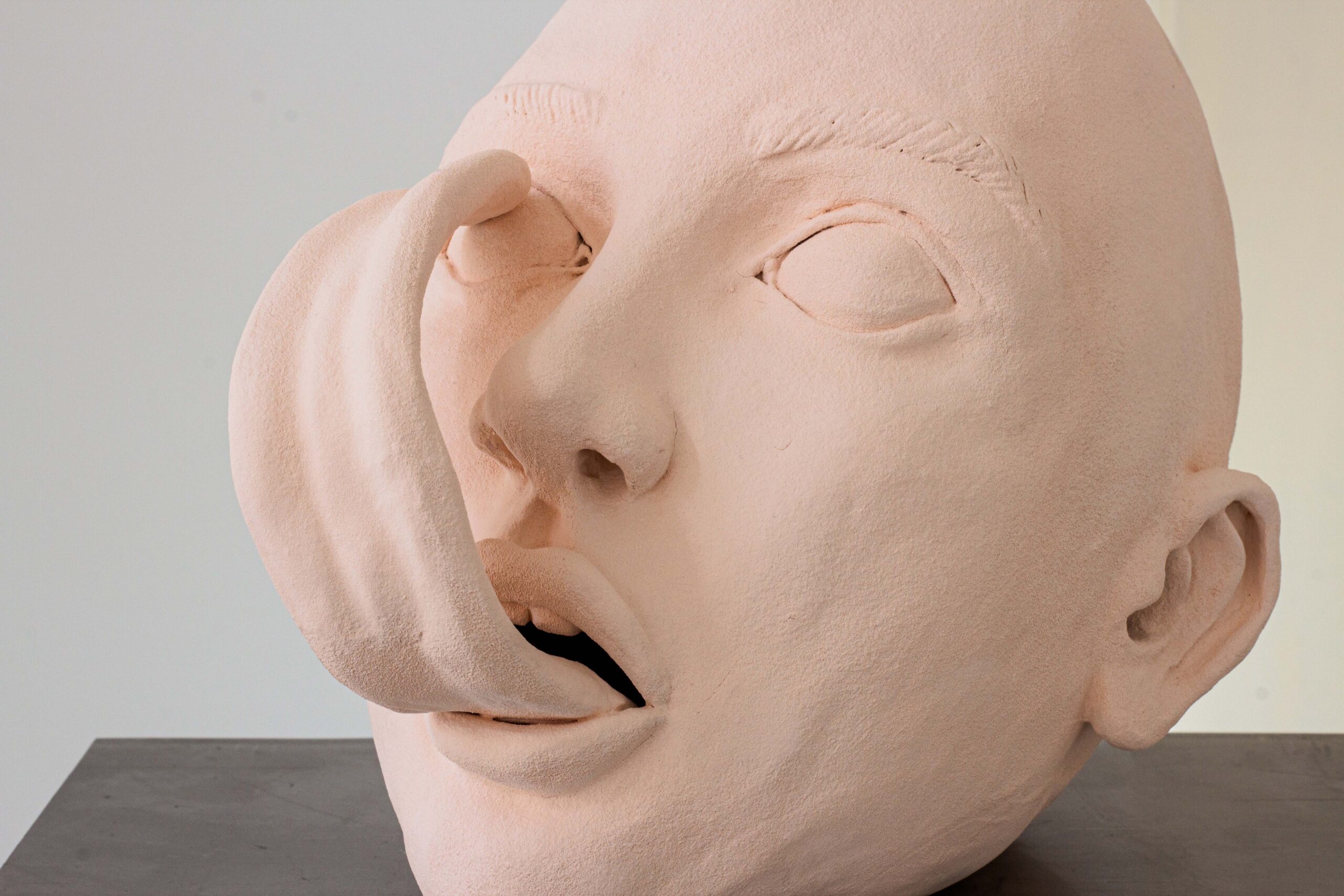
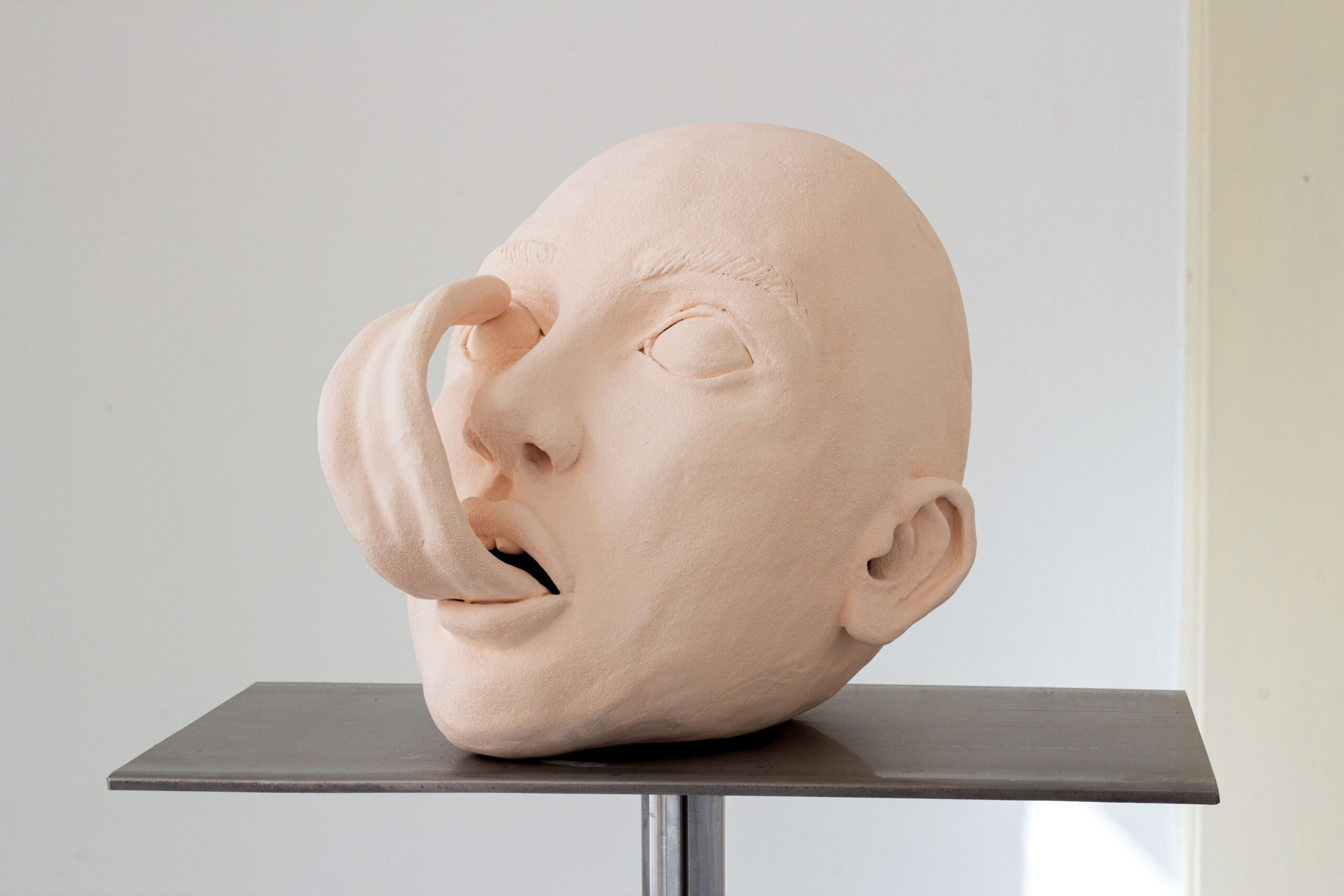
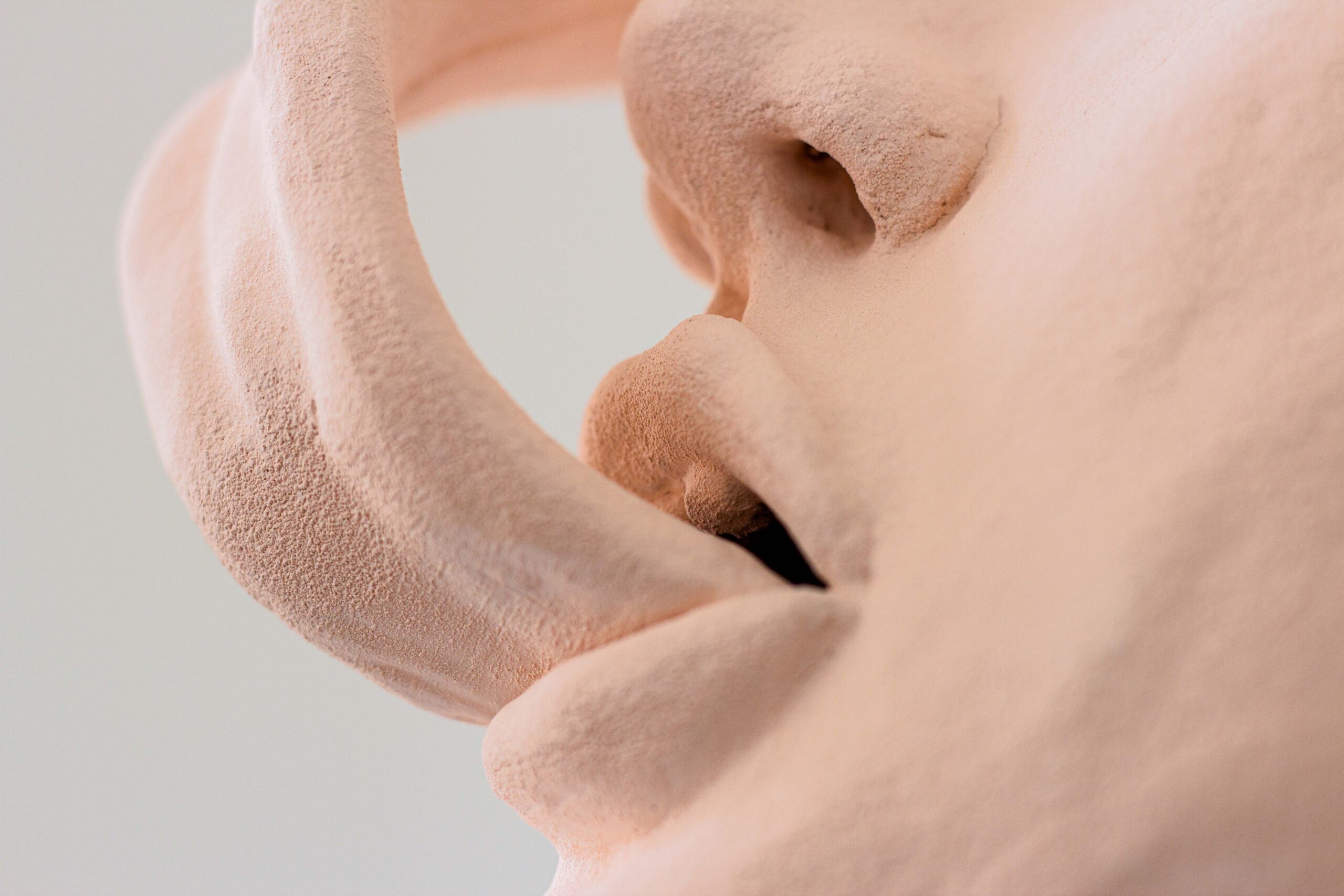
Behind it emerges a head, a fragment of the same disarticulated body. The figure is at once humanoid and alien, perhaps a deity, perhaps a chimera, perhaps what remains of an organism after the distinction between human and non-human has collapsed. From its mouth protrudes a disproportionate tongue, almost an autonomous organ, reaching towards the liquid flowing from the eye, from tears, from the sea.
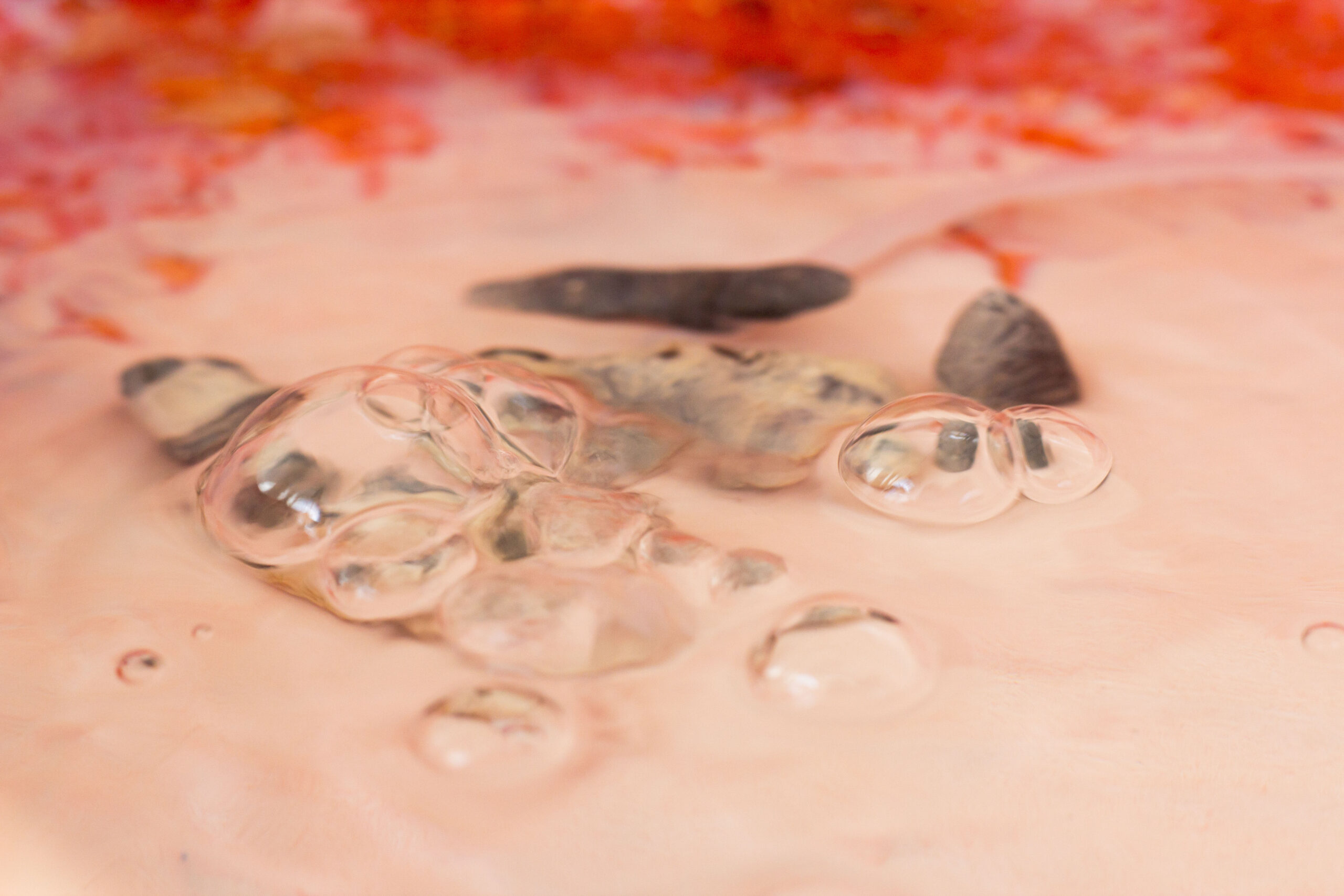
Alongside these two sculptures emerges a third form: a large basin, a source larger than the holy-water font, containing water and a technological device capable of continuously generating bubbles of oxygen. The form evokes both a womb and a lung: a primordial organ that breathes, but seems to do so through water. This sculpture, too, belongs to the same dispersed body, as though it were another of its organs, suspended between terrestrial anatomy and a marine memory.
An impossible anatomical relationship is thus established among the three sculptures. Physical distance is traversed by an invisible continuity: what appears separate belongs to a single system. One part releases, another seeks; one generates, another reaches towards what is missing; another still breathes, producing oxygen within the water.
The source thus becomes a question about origin. Where does that which constitutes us come from? Where does a body begin, and where does what we call the individual end?
The work evokes a marine, pre-individual origin, a condition in which organism and environment were not yet clearly separated. The contemporary body retains a trace of it: it is made of membranes, fluids, exchanges, and permeability. Blood, saliva, tears, and lymph become variations of a matter older than the individual. The tongue reaching towards the source seems to be searching not only for what is missing, but for that from which the body itself originates.
It is here that the idea of a sea emerges—not as an external environment, but as an expanded condition of life, a flow of exchanges through which organisms and materials transform one another. The installation constructs a hyper-marine body, extending beyond its own anatomy, in which ceramic, metal, organic matter, electricity, machinery, and fluids participate in the same metabolism.
The machine is part of this organism. Without it, the flow would stop; without the flow, the three sculptures would remain separate. Technology thus assumes the function of an internal organ, revealing that the artificial and the natural are no longer opposing categories, but components of the same system. The sounds of the work also emerge from its own functions: the flow of water and the rhythm of the oxygen bubbles become a kind of ancestral breathing, natural sounds nevertheless produced by the machine. Technology does not reproduce nature, but becomes the organ through which nature manifests itself.
The space, too, is incorporated into the work. The environment becomes a primordial cave, a rock-hewn church suspended between geology, ritual, and prehistory. The sound of water and bubbles reverberates through the space; the sacred is no longer concentrated in an image: it disperses throughout the entire environment.
The cave becomes a womb, a cavity, a place of gestation. Sound constitutes a kind of invisible body; light, an almost metabolic phenomenon. The viewer does not simply observe three sculptures, but enters their relational field, sensing the distance between the hand, the tongue, and the basin, the movement of the water, the rhythm of the bubbles, and the presence of the machine.
It is in this condition of immersion that the title takes on its most radical meaning.
Too hot for heaven too cold for hell names an impossible temperature, an intermediate condition that escapes classification. It is not a moral condition, but an ontological one: a zone in which oppositions—sacred and profane, nature and technology, human and animal, organism and machine, inside and outside—cease to be stable.
The source, the head, and the basin inhabit precisely this interval: separate and inseparable, fragments of a body that continues to exist through relation.
Too hot for heaven too cold for hell thus becomes a ritual machine without religion, a source without origin, a body without boundaries.
Not origin as the point from which everything comes, but origin as process. Not a return to a lost place, but an awareness that we are still permeated by that from which we believe we have separated ourselves.