


5 Exhibitions to See in October
Our Guide to Exhibitions in Italy
By Maria Vittoria Pinotti Published 06/10/2026
Everything is always also something else. In the same way, critical re-readings of contemporary art demonstrate how artists who have by now been confined to particular lines of research need to be reinterpreted. Among the exhibitions selected for October, a series of established artists are subjected to the critical gaze of curators who offer a new, stimulating, and unprecedented reading of their work. In all cases, the exhibition project proves to be a research tool capable of moving beyond its own boundaries and taking on a fluid form, in which painting, photography, environmental installation, and philosophy contribute to the construction of new perspectives for study. The premise shared by these projects is clear: how can we reread a great contemporary artist today? What previously unexplored aspects of their research still remain to be investigated?
Luciano Fabro. Abitare lo spazio (Inhabiting Space), Pirelli HangarBicocca, Milan, through 21 February 2027
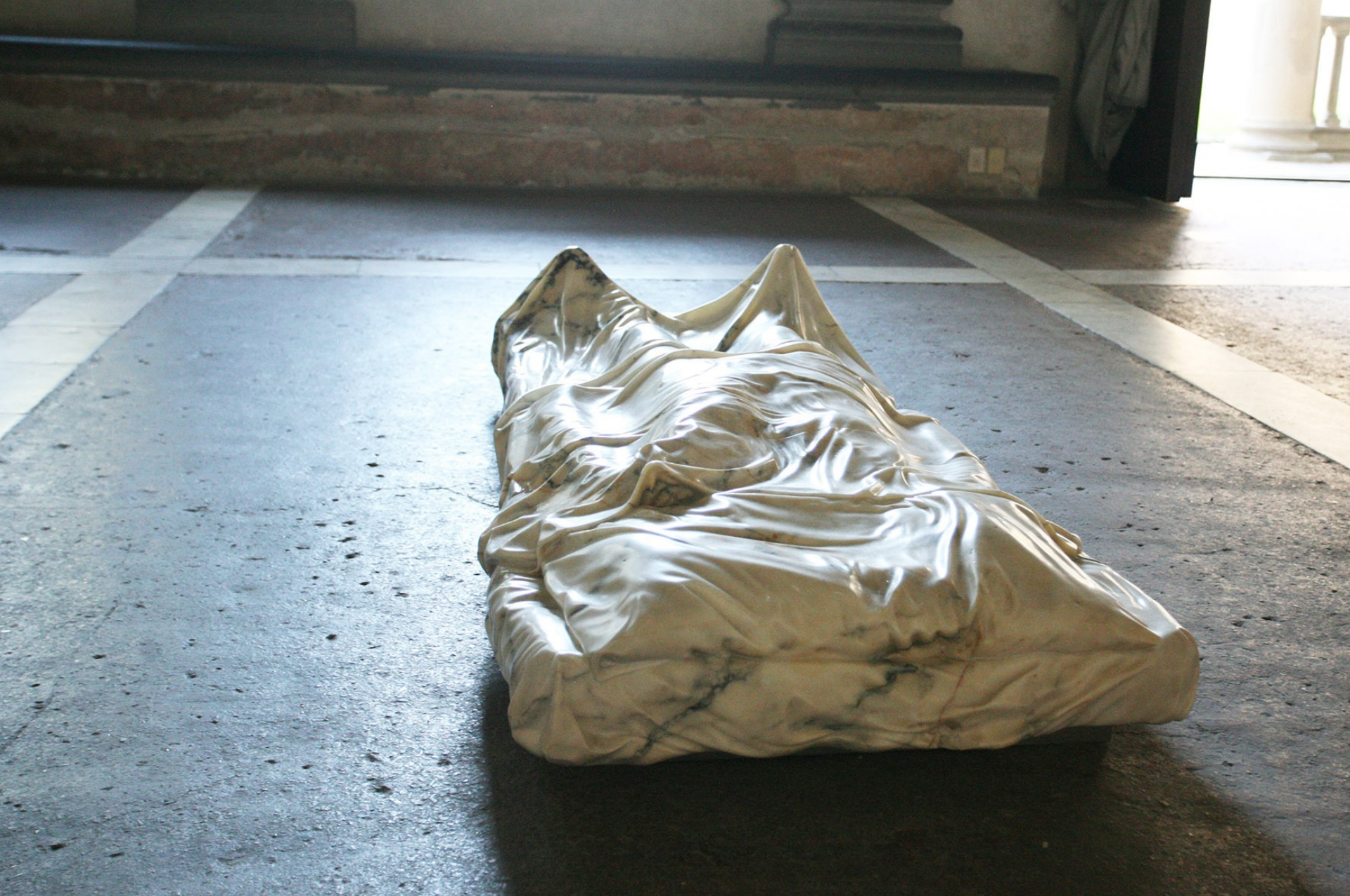
Luciano Fabro, Io rappresento l’ingombro dell’oggetto nella vanità dell’ideologia. Lo Spirato, 1968-73. Installation view, “YTALIA. Energia Pensiero Bellezza. Tutto è connesso,” Cappella Pazzi, Florence, 2017. Courtesy Archivio Luciano e Carla Fabro, Photo Silvia Fabro.
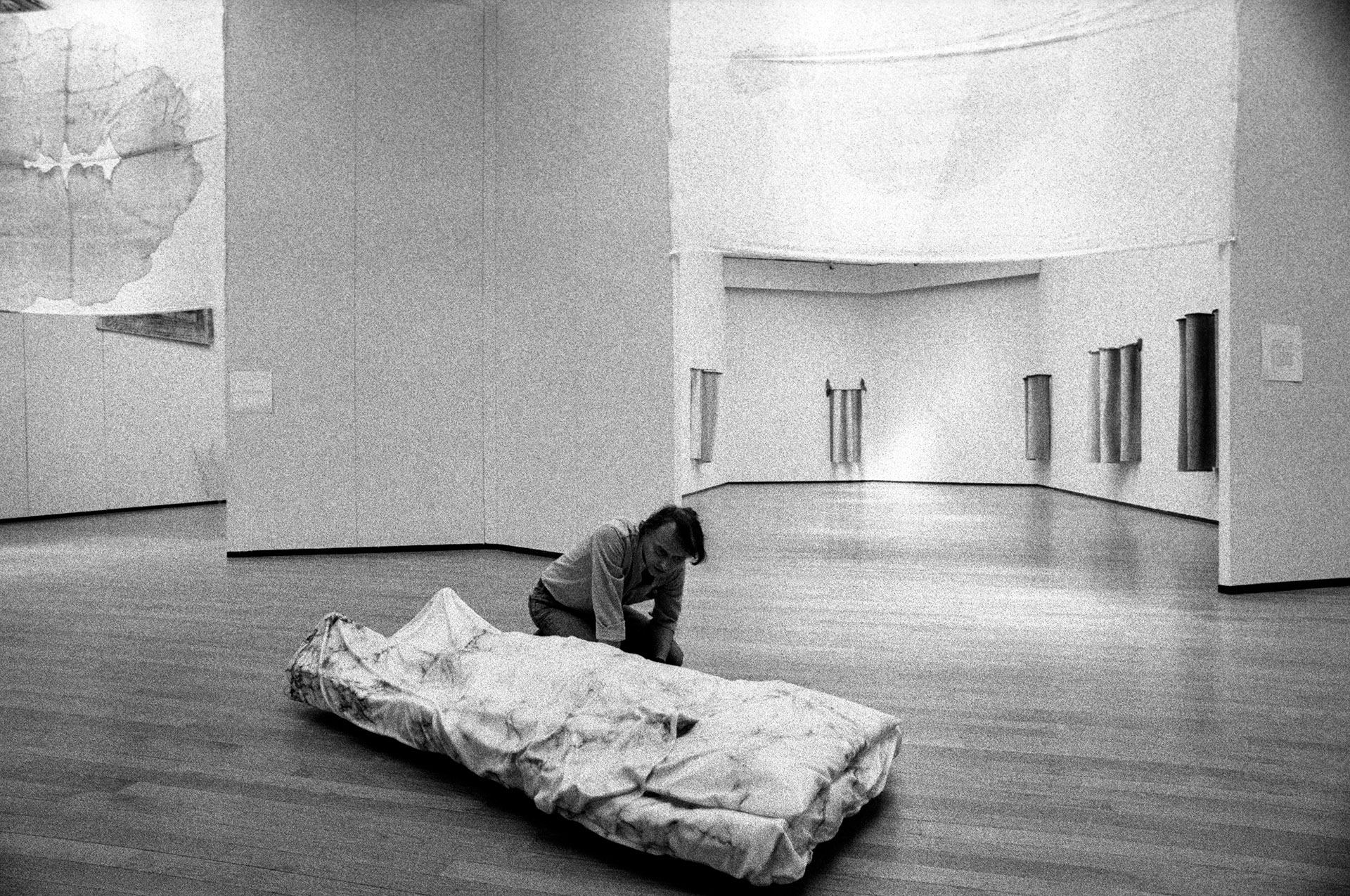
Luciano Fabro with Io rappresento l’ingombro dell’oggetto nella vanità dell’ideologia. Lo Spirato, 1968-73, during the installation of the solo exhibition “Letture parallele IV,” PAC Padiglione d’Arte Contemporanea, Milan, 1980, © Archivio Fotografico A. Guidetti e G. Ricci, Photo Giovanni Ricci.
From the death of Luciano Fabro in 2007, shortly before the opening of the exhibition dedicated to him at Museo Madre in Naples, to the retrospective at Museo Reina Sofía in Madrid in 2014, his work has not been the subject of monographic projects of comparable scope. More than a decade later, Pirelli HangarBicocca in Milan, with the exhibition Luciano Fabro. Abitare lo spazio (Inhabiting Space), curated by Fiammetta Griccioli, Roberta Tenconi, and Vicente Todolí and realized in collaboration with Silvia Fabro (Archivio Luciano e Carla Fabro), offers an unprecedented and far from static reading of Luciano Fabro’s work, focusing on the relationship the artist established with space and his experimentation with materials. The exhibition provides a necessary survey of his research, with particular attention to the construction of immersive environments and installations that develop a fundamental investigation into perception and the relationship between space, body, and matter. The exhibition brings together around fifty sculptures and installations, spanning Fabro’s production from the 1960s and following the development of his exploration of the concept of habitat, which the artist developed from the 1980s onward.
D is for Duchamp the Deep Dyed Deceiver, Arsenale Institute for Politics of Representation, Venice, through 22 November
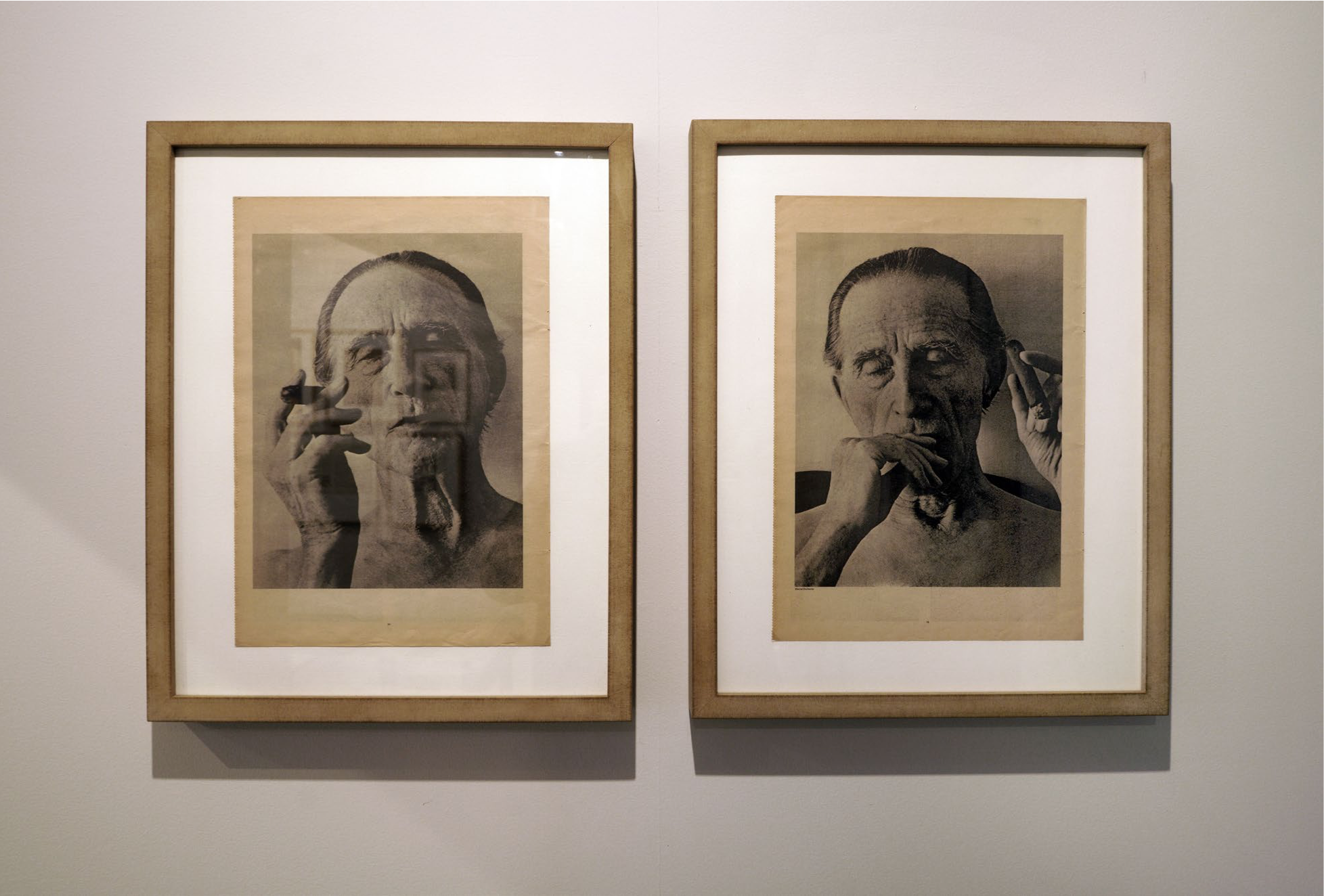
Christer Stromholm, Marcel Duchamp, 1961, print on paper
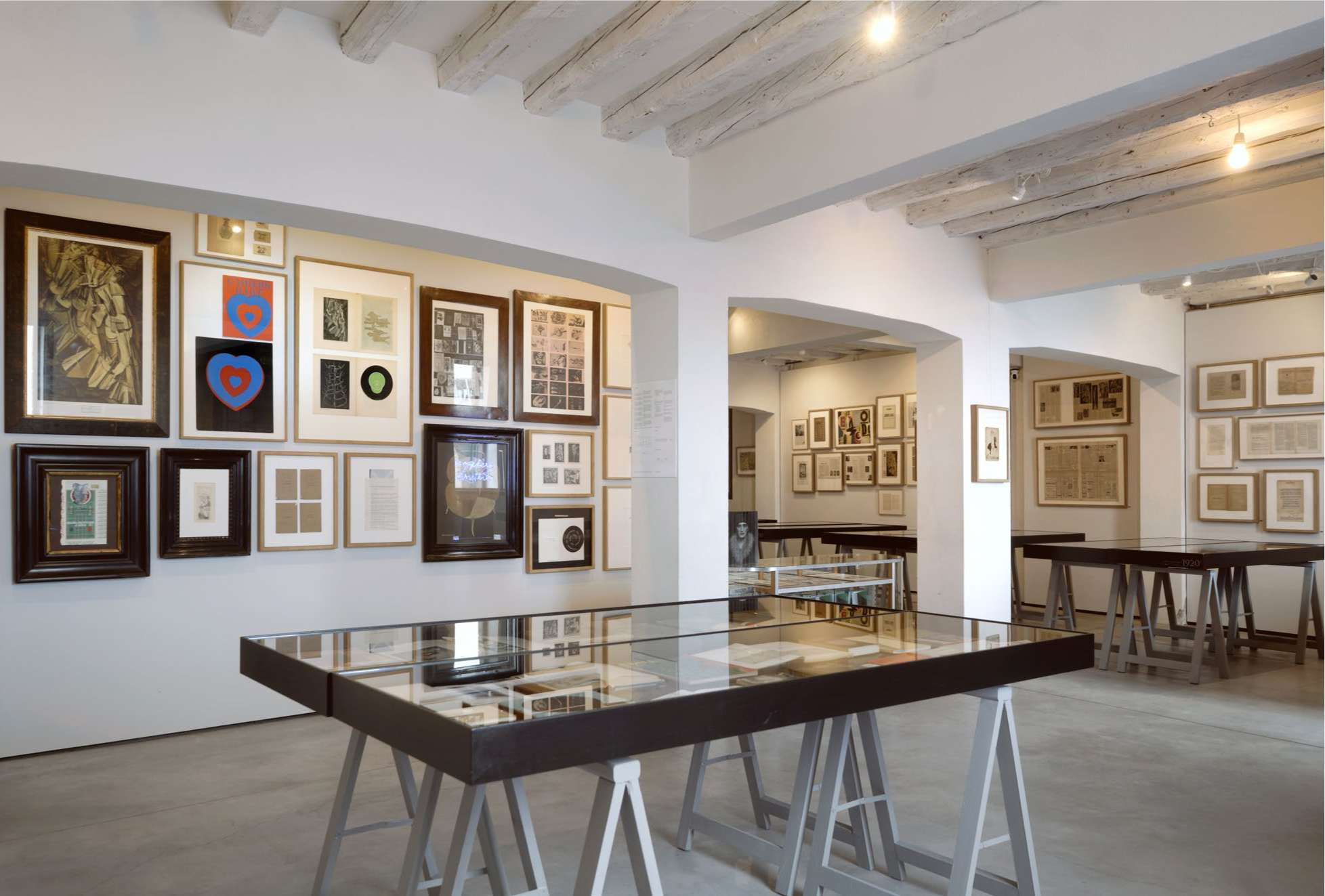
D is for Duchamp the Deep Dyed Deceiver, view of the installation, Arsenale Institute, Venice
Although the Venice Biennale brings with it numerous lively cultural initiatives, it also gives rise to unusual exhibition formats capable of opening new fields of study and offering unprecedented theoretical perspectives. At the Arsenale Institute for Politics of Representation, an independent international research center founded in 2006 and dedicated to philosophical and cultural studies, D is for Duchamp the Deep Dyed Deceiver is currently on view, curated by Wolfgang Scheppe with Bastiaan van der Velden, Zoë Wismeth, and Max Glader. The exhibition brings together a body of documents and materials that trace the historical reception of Marcel Duchamp’s work. The question guiding the project is clear and unequivocal: what aesthetic experiences can Duchamp’s works generate, and how have they been read and interpreted? This survey, conducted through philosophical tools, is accompanied by more than twenty works by the artist, including an example from 1971 that was useful to the initial conception of the ready-made. The project thus takes on a far from superficial dimension, aiming to reconstruct, through a philological approach, three decades of historical and critical research focused entirely on the reception and mediation of Marcel Duchamp.
Adrian Ghenie. Capricci romani, Istituto Centrale per la Grafica, Palazzo Poli, Rome, through 15 November
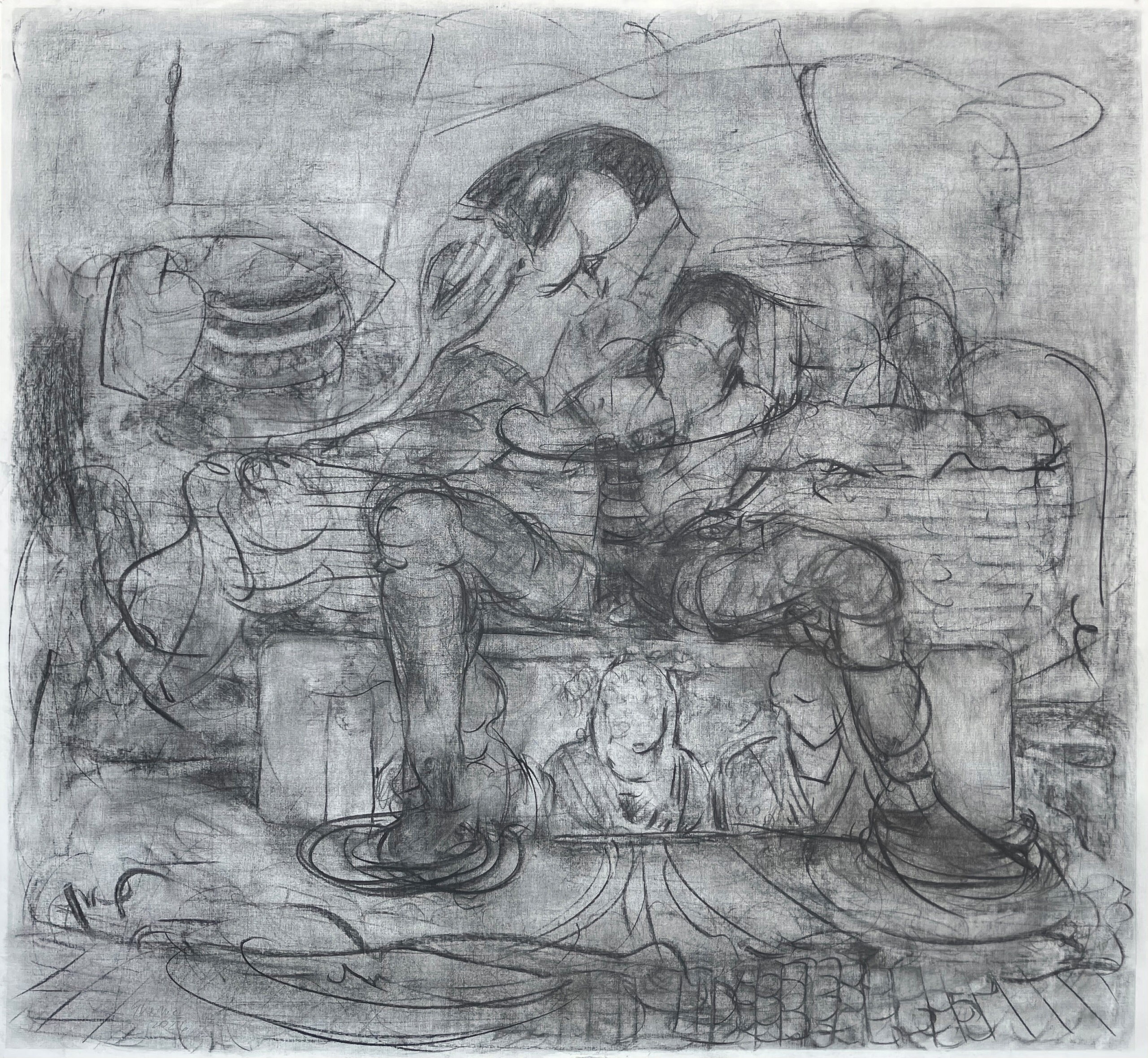
Figure with funerary stele, at Adrian Ghenie. Capricci romani, courtesy of the artist.
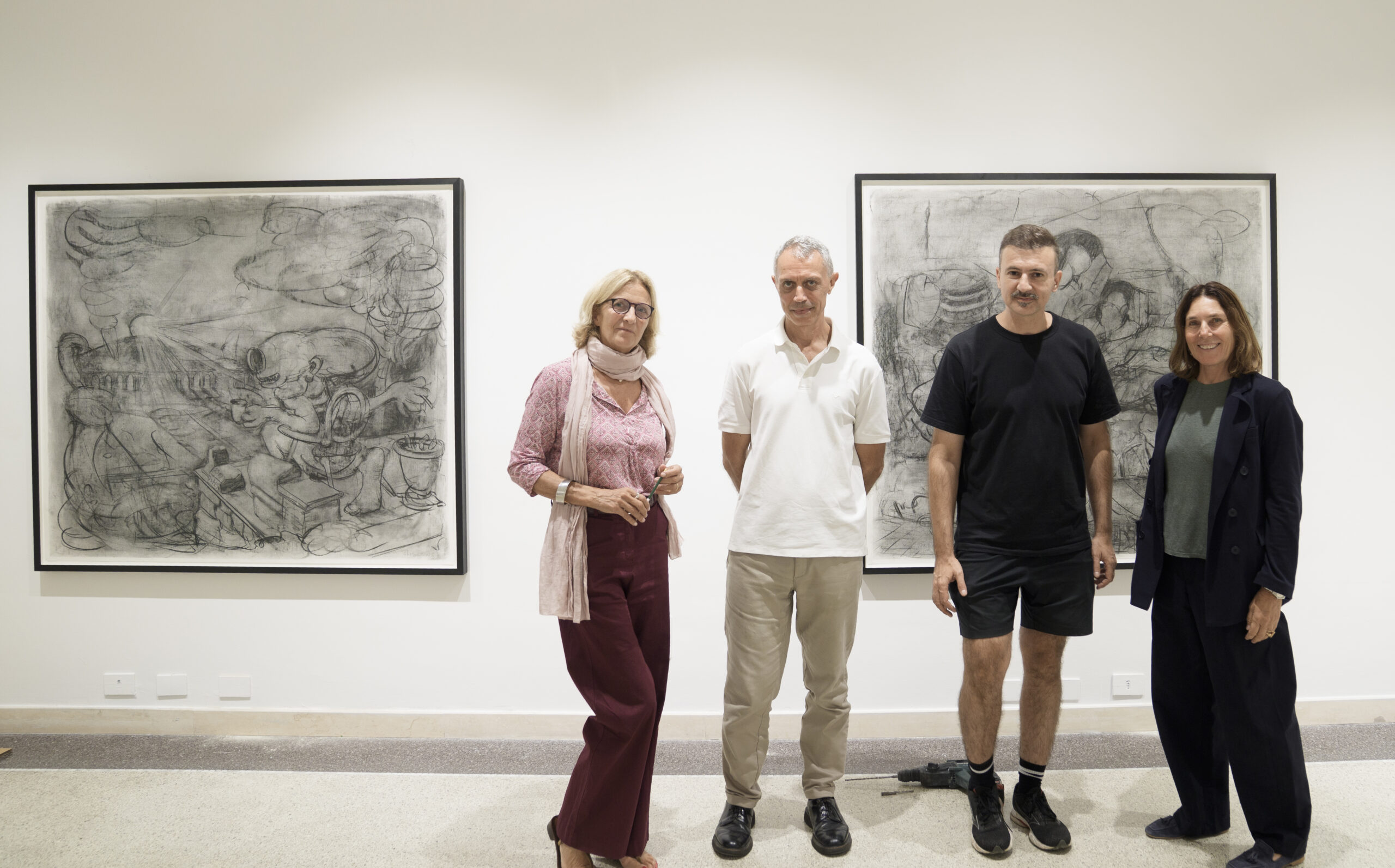
Ilaria Savinio, Pier Paolo Pancotto, Adrian Ghenie, Alessandra Borghese; Palazzo Poli.
Rome has consistently had a profound influence on artists’ imaginaries. Just think of the era of the seventeenth-century Grand Tours and the long-standing tradition of the painted capriccio. At Palazzo Poli, home to Rome’s Istituto Centrale per la Grafica, the exhibition Adrian Ghenie. Capricci romani, curated by Fabio De Chirico and Pier Paolo Pancotto, is on the agenda. Drawing on the long-standing exhibition tradition of investigating the relationship between the aesthetic perception of landscape and the practice of drawing, the exhibition presents a previously unseen group of works on paper and cardboard conceived in close relation to the landscape of the Via Appia, where the artist has his studio. On the occasion of the exhibition, Ghenie also presented an etching made during his residency at the institute, which will become part of its permanent collection. Stones, ancient inscriptions, fragments of the landscape, and traces of history become starting points for the artist’s reworking, which does not simply represent what he observes but instead conveys a deeper and more imaginative dimension. Known for a painting characterized by visceral, distorted forms often marked by strong material tension, Ghenie brings a figurative matter to his works on paper that seems to dissolve before the eye, transforming into something unstable and never reducible to a simple narrative dimension.
Jannis Kounellis. Io sono un pittore (I Am a Painter), Collezione Giancarlo e Danna Olgiati, Lugano, through 17 January 2027
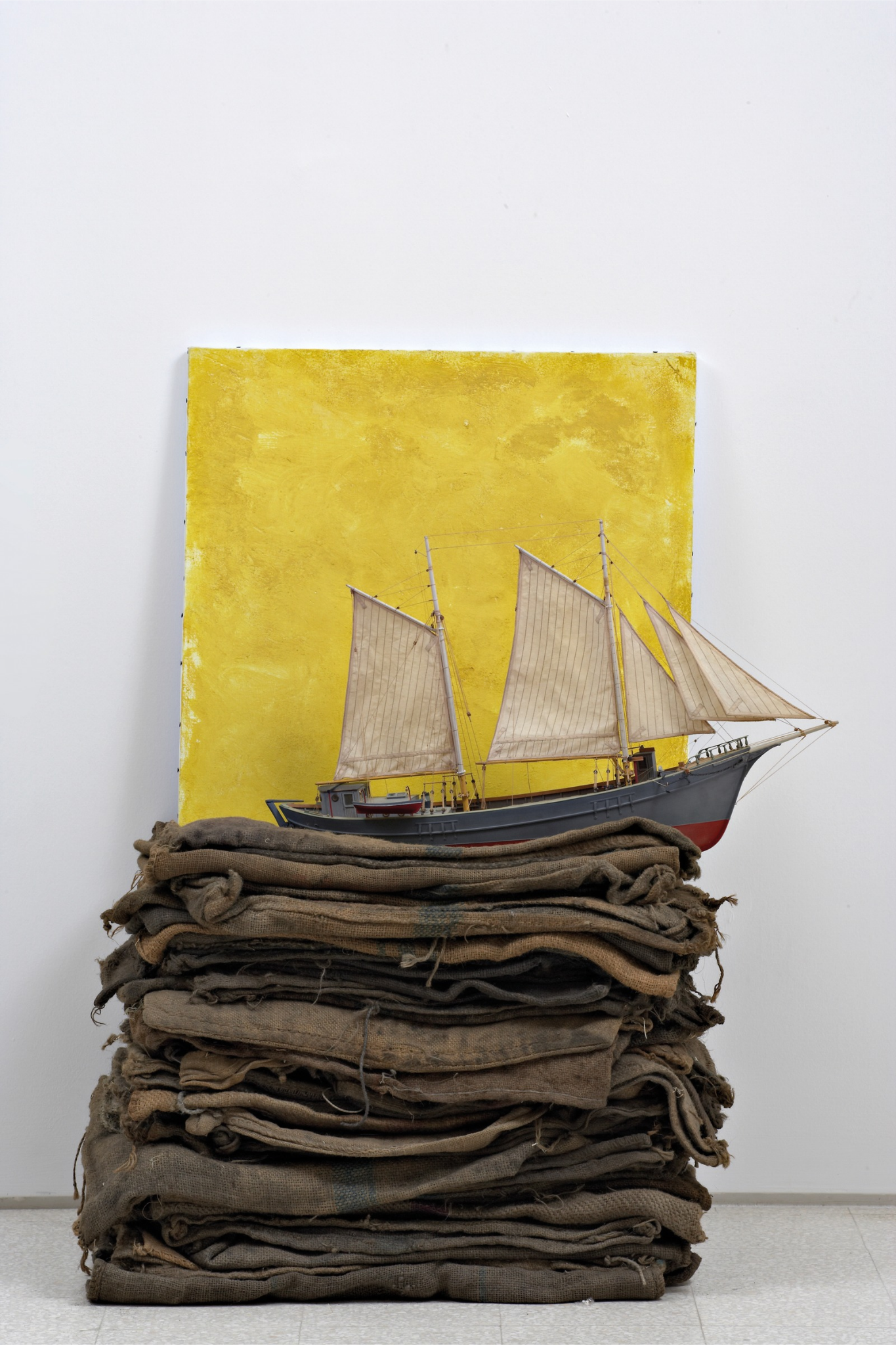
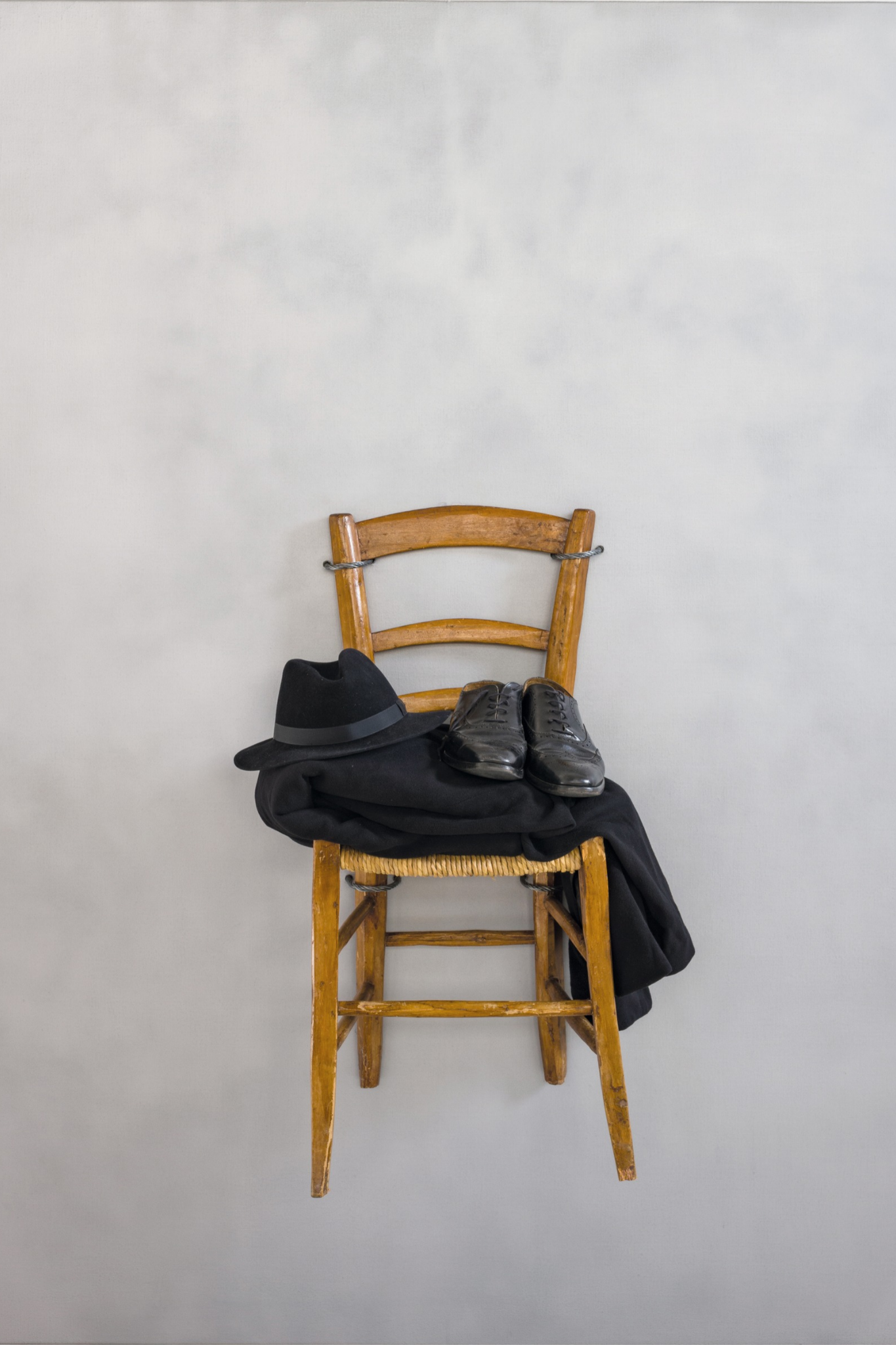
Jannis Kounellis, Senza titolo (Untitled), 1978, Jute sacks, boat model, pigment on canvas, 132 x 78 x 59 cm, Collezione Maramotti, Reggio Emilia, © Estate of Jannis Kounellis; 2026, ProLitteris, Zurich, Photo: Carlo Vannini (left); Jannis Kounellis, Senza titolo (Untitled), 2007, Iron, spray paint on canvas, chair, coat, hat, shoes, 200 x 180 x 41 cm, Collezione Gianfranco D’Amato, © Estate of Jannis Kounellis; 2026, ProLitteris, Zurich, Photo: Pedicini fotografi (right);
The Collezione Giancarlo e Danna Olgiati in Lugano presents the exhibition Jannis Kounellis. Io sono un pittore (I Am a Painter), curated by Vincenzo de Bellis. The project takes its starting point from a statement by the artist that gives the exhibition its title and considers painting not so much as a claim for the technical medium, but as a living stance toward reality. Following a path organized thematically rather than chronologically, the exhibition demonstrates how Kounellis’s research opens up the possibility of painting space with materials foreign to the painting tradition, such as coal, iron, jute sacks, and the scent of coffee. Breaking away from the classical and academic mimetic interpretation of painting, the works on view invite visitors to move through the space, while also revealing Jannis Kounellis’s relationship of study and interest with twentieth-century painting by Van Gogh, Malevich, Mondrian, James Ensor, and Hans Arp. The exhibition brings together more than thirty-five works created from the late 1950s through 2014, inviting viewers to reconsider Kounellis beyond the interpretive stereotype that has always associated him with the Arte Povera movement.
Fan Ho. Il maestro della fotografia di Hong Kong (The Master of Hong Kong Photography), Palazzo Falletti di Barolo, Turin, through January 10, 2027
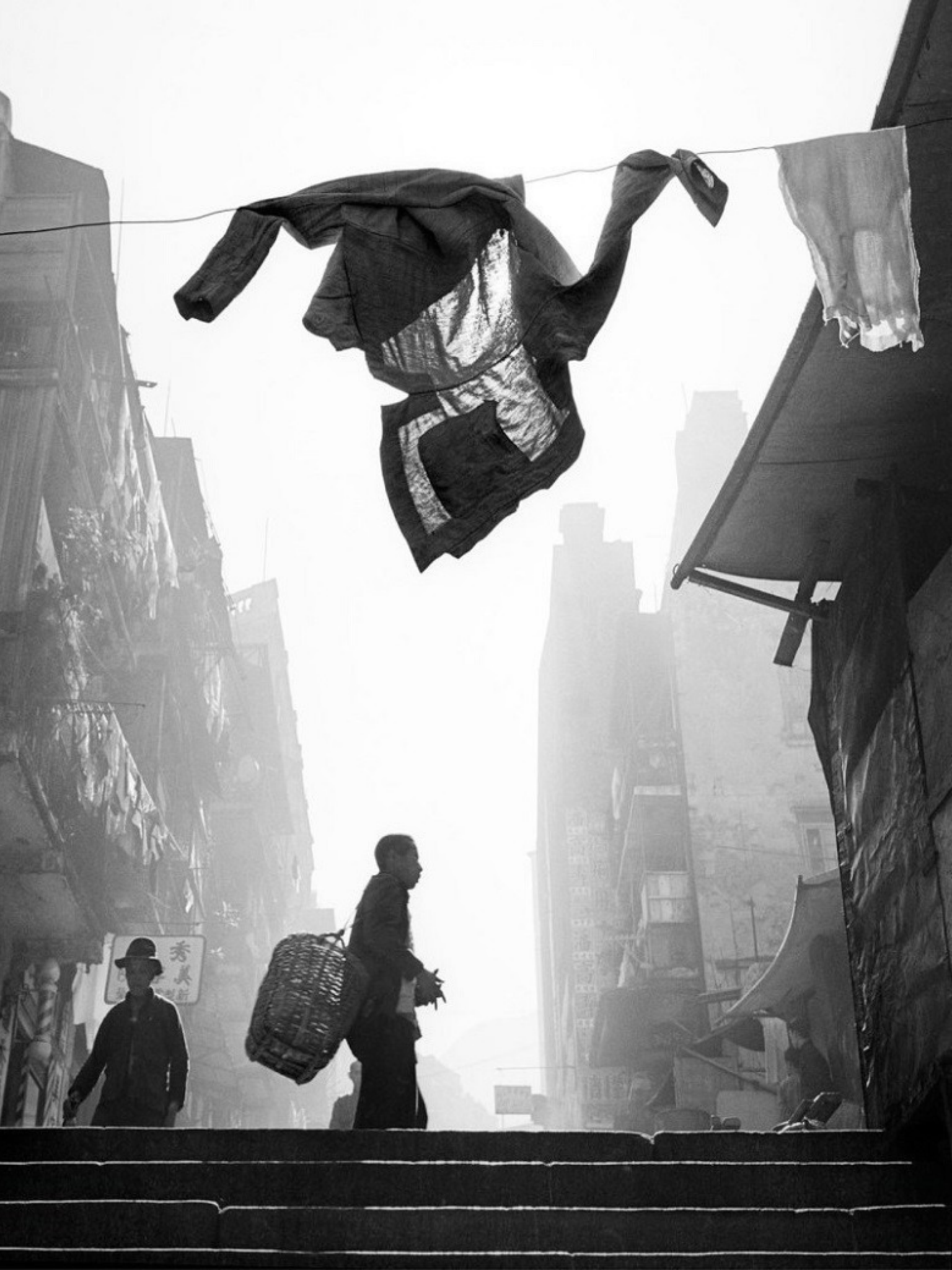
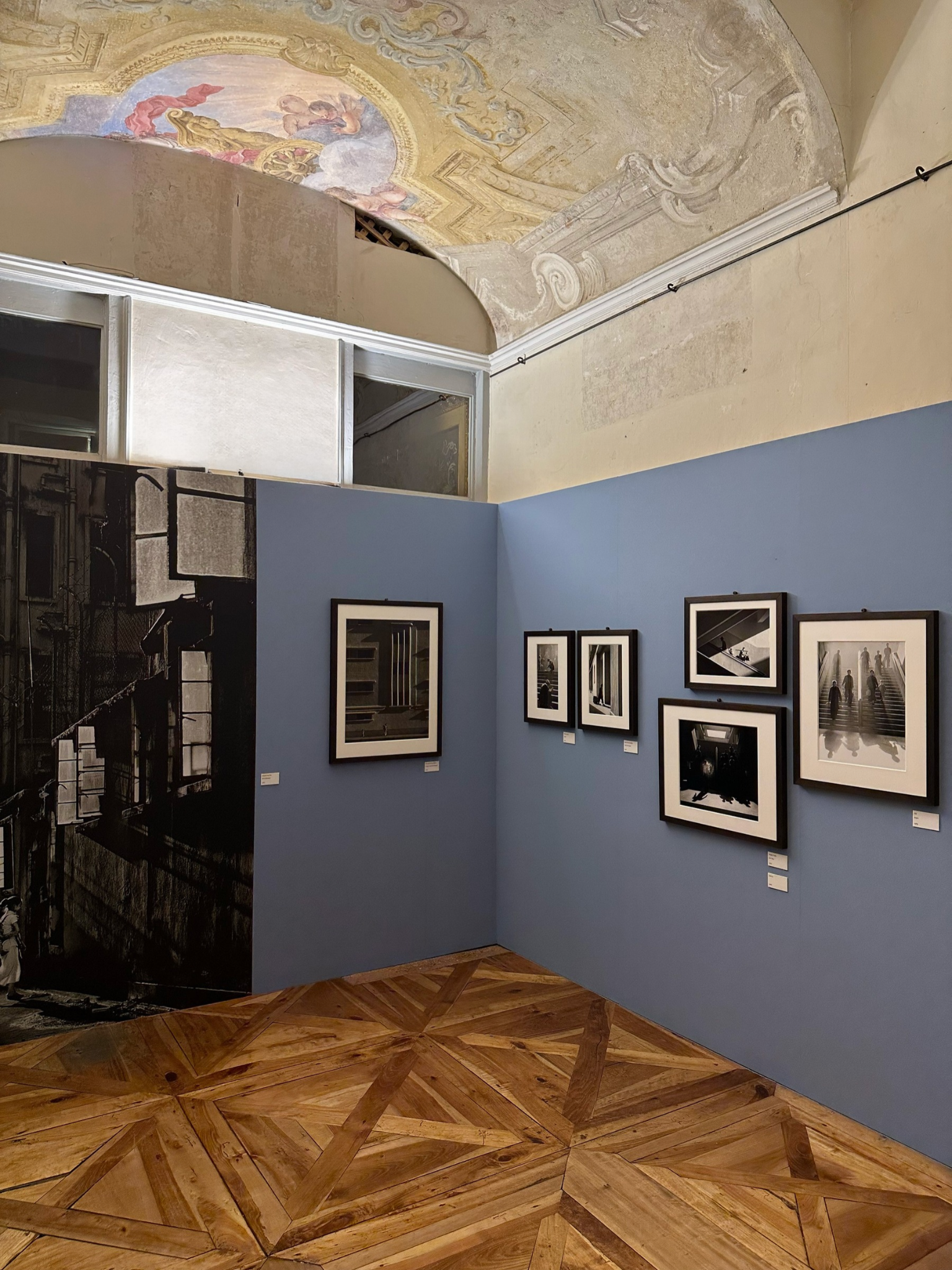
Fan Ho, The Omen, 1964 © Fan Ho Estate, Blue Lotus Gallery (left); Fan Ho. Il maestro della fotografia di Hong Kong, exhibition view (right)
Subtly melancholic and harmoniously structured around angles, diagonals, and carefully calibrated lines of shadow, Fan Ho’s photographs of everyday life in Hong Kong, taken between the 1950s and 1960s, are on view in the retrospective Fan Ho. Il maestro della fotografia di Hong Kong (The Master of Hong Kong Photography), curated by Elisa Maupas and Sarah Van Ingelgom. The exhibition brings together one hundred photographs, mostly in black and white, tracing glimpses and fragments of the city and capturing the rhythms of urban life in a balance between formal rigor and poetic sensitivity. For Fan Ho, photography becomes a means of portraying an urban landscape suspended between the concreteness of street reportage and the enchanted dimension of a mental space; it is a suspended reality, at times heroic and mysterious, nourished by humble details and figures caught in everyday life: architecture, streets, passages of light, and sudden areas of shadow. Among the most celebrated photographs in the exhibition are Approaching Shadow and Street Scene, in which the photographer captures, with rare sensitivity, the metaphysical dimension of silence and urban spaces.
Translated to English by Dobroslawa Nowak