


3 Exhibitions to See in May
Biennale Arte 2026, Collateral Events
12.05.2026
The strike staged by around thirty national pavilions in response to the appeal launched by ANGA (Art Not Genocide Alliance), together with the resignation of the jury just days before the opening ceremony — which was consequently cancelled — were symptomatic responses to a climate already overflowing with tension from the outset, following the death of curator Koyo Kouoh on May 10, 2025, exactly one year before the opening of Biennale Arte. The curatorial team selected by Kouoh nevertheless chose to carry forward the project entitled In Minor Keys: “In refusing to witness horror passively, the time has come to listen to minor keys, to tune in softly to whispers and lower frequencies; to find the oases, the islands, where the dignity of all living beings is preserved,” reads the statement by the Cameroonian curator.
There are still those who claim that there is no place in art for politics. Yet today we are witnessing a Biennale whose long-standing mechanisms and authoritative structures are being challenged by the spontaneous reactions of artists, workers, and curators to what is happening in the world. Attempting to separate art from politics means denying the profoundly human, practical, and social nature of contemporary art. Keeping it “clean” and “pure” is not only an obsolete aspiration but a potentially violent one, leading to the exclusion of entire categories of people.
What is happening in Venice these days is not a polemic — it is politics. The tensions running through the Giardini, the Arsenale, and the city itself stem from demands for visibility and calls to be heard. The three exhibitions selected from the 31 collateral events, seem to respond directly to this tension, placing at their center lived experiences, real histories, and overlooked subjectivities — from queer communities and gender politics to marginalized geographies.
Scotland + Venice: Bugarin + Castle - Olivolo, Castello 59/C, Venice (9 May – 22 November)
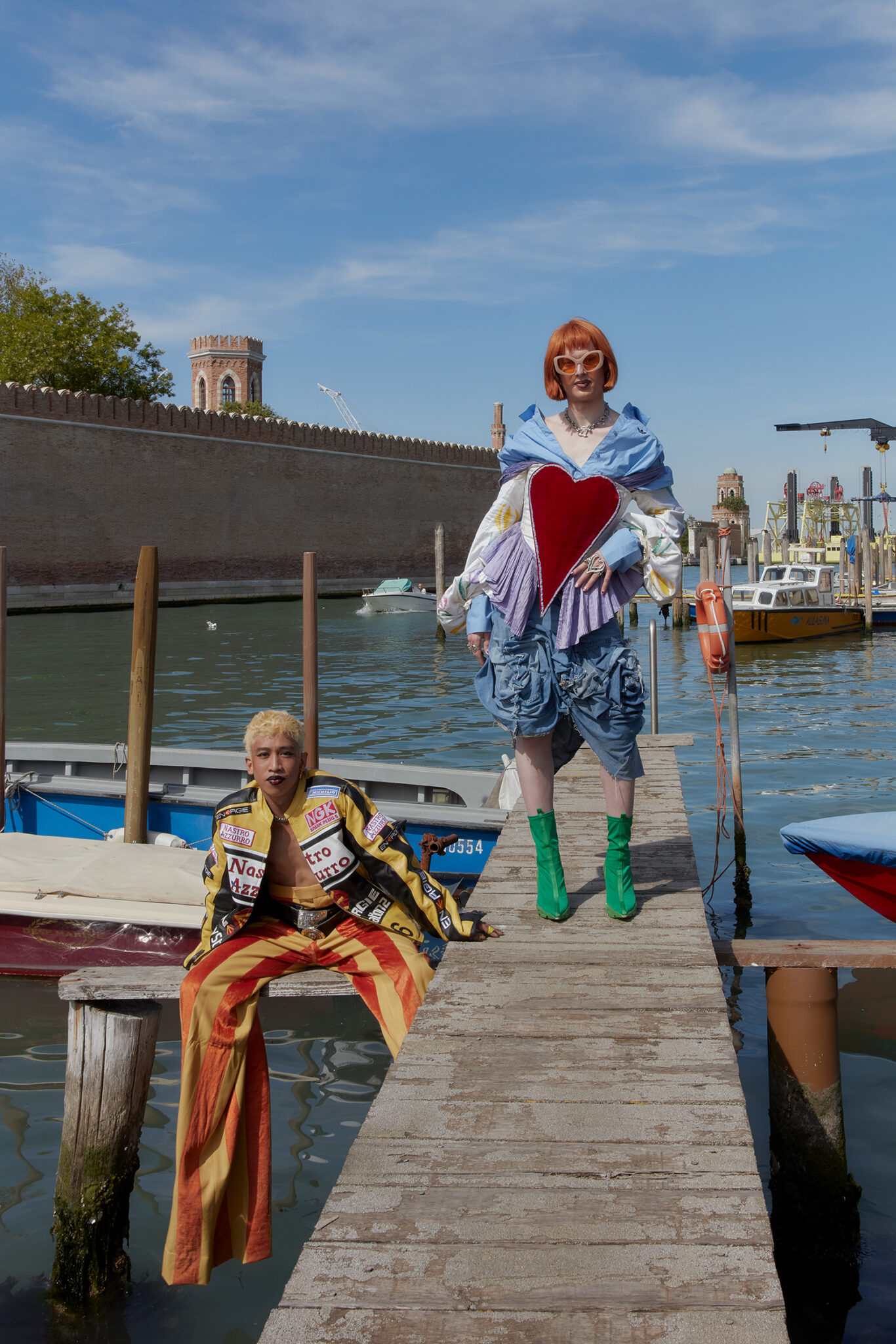
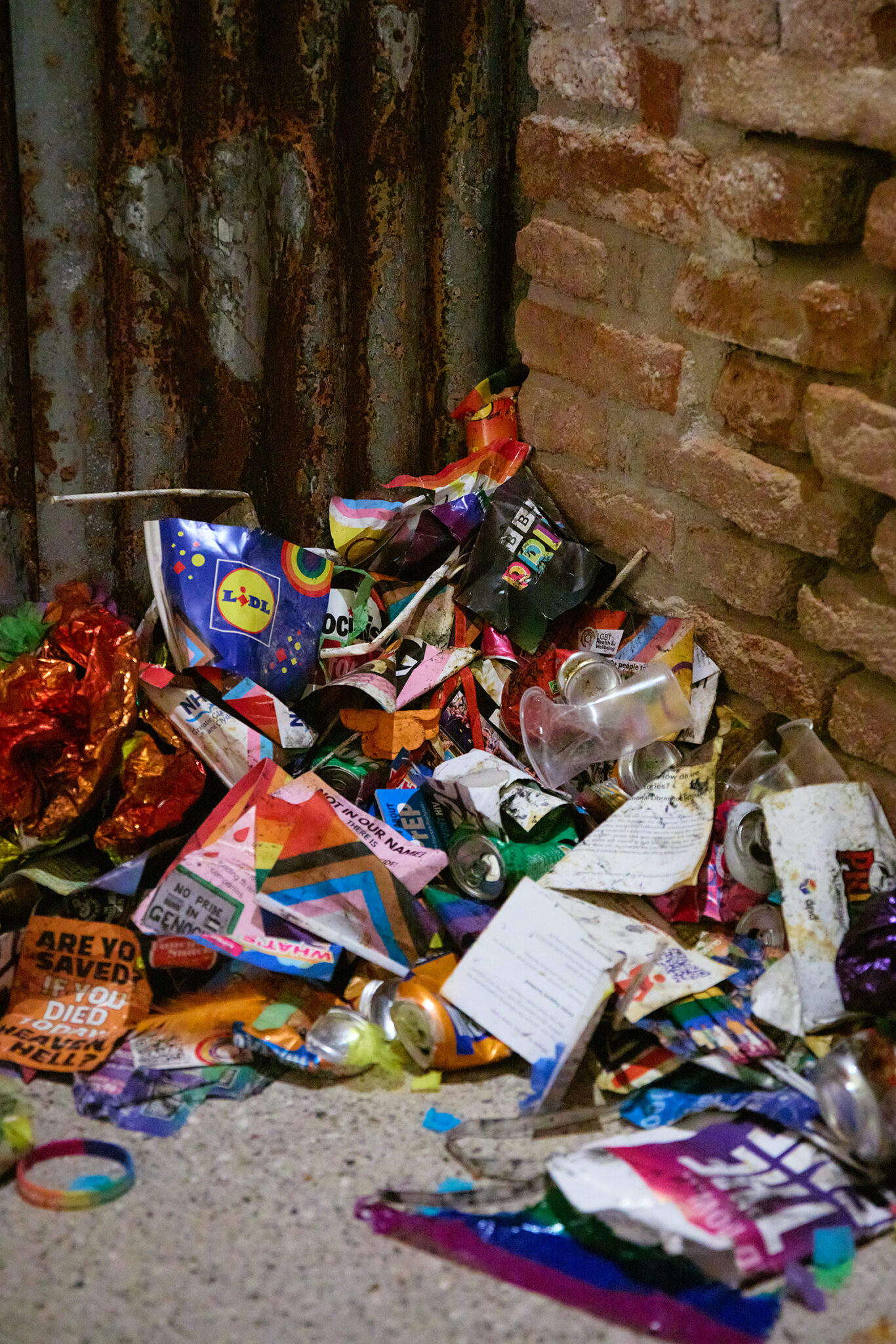
(left) Bugarin + Castle and Dr Morven Gregor on the occasion of Shame Parade opening at Scotland + Venice during the 61st International Art Exhibition – La Biennale di Venezia. Image by Dimitri D’Ippolito. Courtesy of the Artists and Scotland + Venice;(right) Bugarin + Castle, Nocturnal Amusements, part of the exhibition Shame Parade curated by Mount Stuart Trust for Scotland + Venice at La Biennale di Venezia in 2026. Image by Dimitri D’Ippolito. Courtesy of the artists and Scotland + Venice.
What mechanisms trigger shame? Who decides what is shameful and what is not?
In the Middle Ages, public humiliation functioned as a form of spectacle employing sound, costumes, and masks, transforming cruel punitive practices into popular performances. Reserved for social transgressors — “the rebellious woman, the cuckold, the prostitute, the sodomite” — public shaming sought to strip selected groups of their humanity, turning them into theatrical objects.
Today, queer and trans communities endure similar treatment through different means: media hostility, lack of healthcare access, and the near-total absence of education around difference and identity. The Glasgow-based duo Bugarin + Castle (Davide Bugarin and Angel Cohn) revisits these primitive and barbaric systems of punishment through a contemporary queer lens, developing a layered, rich, and deeply ambiguous visual language. Fourteenth-century court transcripts, eighteenth-century satirical engravings, ballads, and medieval armor converge to overturn accepted hierarchies, reclaiming tools of control — above all disguise — and transforming them into instruments of self-expression.
If today the social transgressor is the one who loves freely, rejects the colonization of their body, and resists externally imposed definitions, then in Bugarin + Castle’s work the transgressor becomes narrator, storyteller, and gravitational center.
“For the restless and passionate, by a restless and passionate duo,” reads the artists’ statement. “We make our work in a contemporary context where the lives of trans people and sex workers are debated and shaped in courts and parliaments.”
Aware that “the artwork does not erase shame,” the artists instead embrace “the complexity, viscosity, and collision between sound, voice, and shame.”
Nalini Malani – Of Woman Born - Kiran Nadar Museum of Art Magazzini del Sale n. 5, Fondamenta Zattere ai Saloni, Dorsoduro 262, Venice (9 May – 22 November)
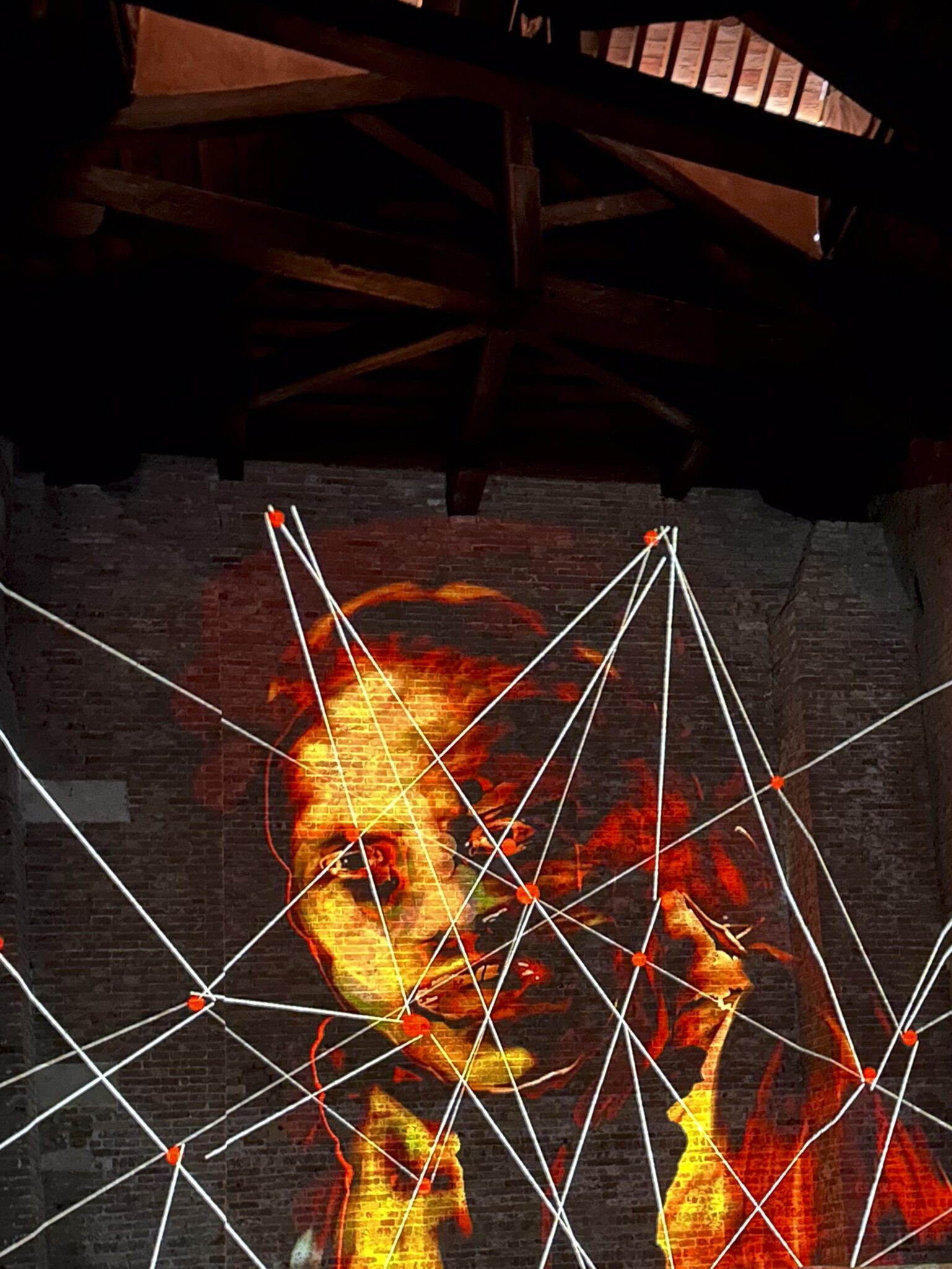
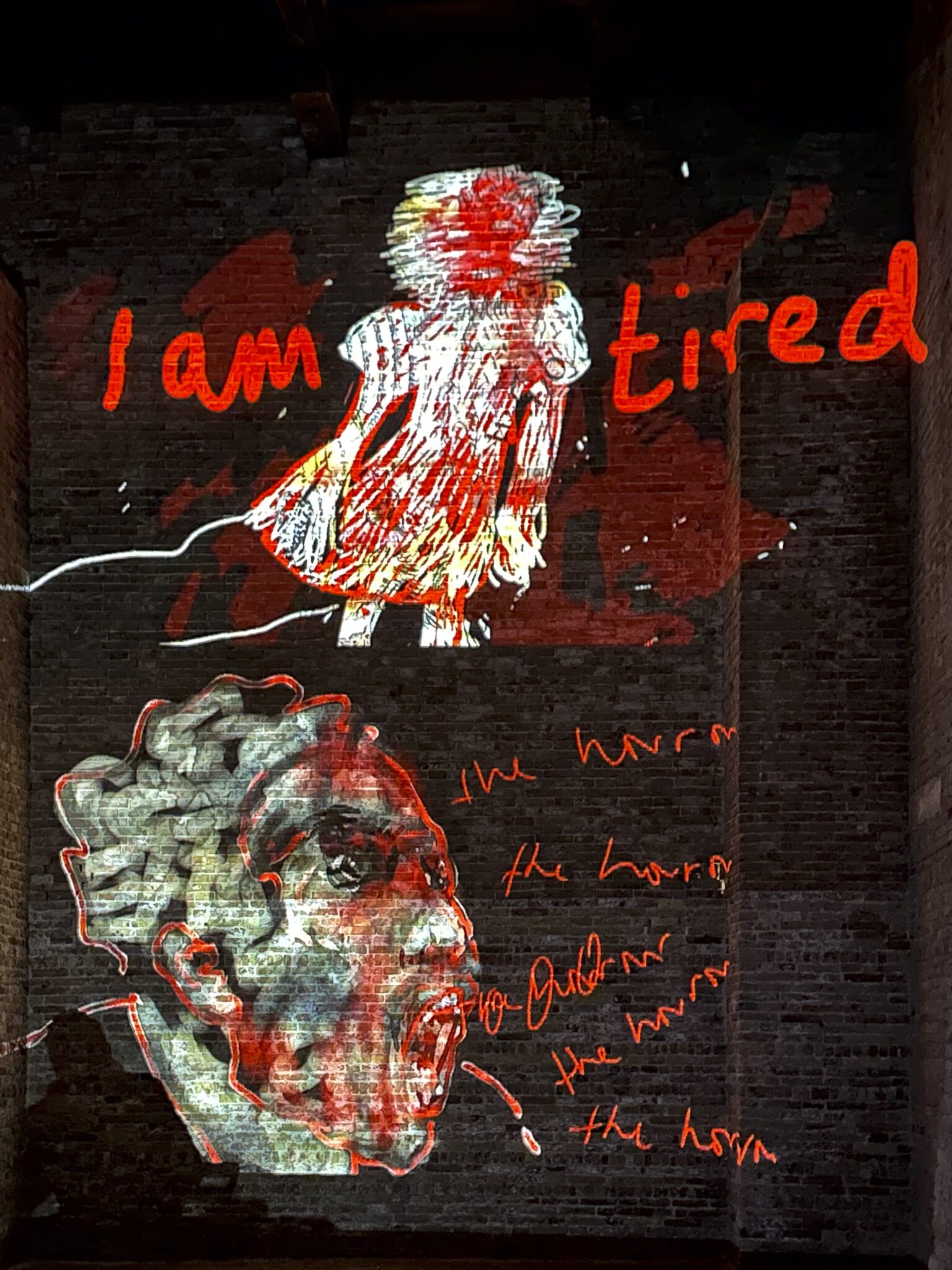
Nalini Malani – Of Woman Born, Biennale Arte 2026, courtesy the artist and the gallery
“The daily experiences unfolding in the world make you want to clench your fists, grit your teeth, scream — in a moment of hysteria.”
Indian artist Nalini Malani reaches far back into the fifth century BCE to read the present and attempt to resist this tension.
Orestes, Euripides’ tragedy from 408 BCE, becomes for Malani a mirror of contemporary catastrophe. In order to avenge the death of his father Agamemnon, the Greek prince murders his mother Clytemnestra and her lover Aegisthus, only to later receive Athena’s forgiveness.
For the artist, the myth bears striking similarities to our own time, where wars are waged in the name of “self-defense” and perpetrators remain unpunished. She therefore asks: for whom is History written? What would happen if those who endured violence without ever being granted the right to respond were the ones to tell it? For Malani, women bear the burden of global conflict. Brutally silenced and delegitimized, their stories are placed at the center of the exhibition curated by Roobina Karode. Inside an immersive chamber, sixty-seven animated figures appear and overlap, all generated from approximately 30,000 iPad drawings. The recurring image is The Skipping Girl, a symbol of freedom and movement, untouched by coercion or control.
Malani adopts a feminist perspective to reinterpret conflict, tension, injustice, and inequality. The untamed figures occupying the walls of the Magazzini del Sale are shifting presences, protagonists of an urgent and necessary rewriting of history.
TURANDOT: To the Daughters of the East - Parasol Unit Foundation for Contemporary Art Palazzo Franchetti, San Marco 2847, Venice (9 May – 31 October)
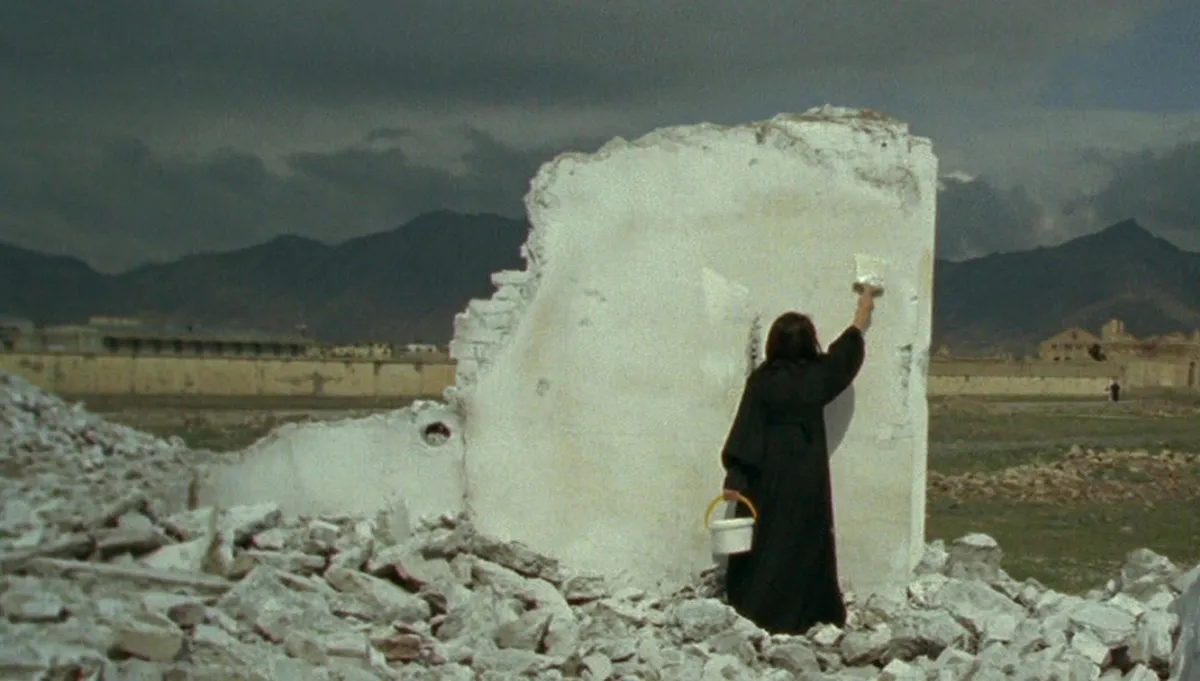
Lida Abdul, White House, 2005, Photographic still from the artwork. © Lida Abdul. Courtesy the artist and Galleria Giorgio Persano
Turandot has been imagined in many forms: first as a Slavic princess, then Russian, and later Chinese. She has crossed centuries of mythology, literature, and opera, continuously changing name, personality, and origin. First appearing in Persian literature in Nezami Ganjavi’s Haft Paykar (Seven Beauties), she eventually reached Giacomo Puccini, who intertwined her story with the Italian dramatic tradition to create one of the most powerful operas in musical history.
In Farsi — modern Persian — “Turandot” means “daughter of Turan,” a region northeast of Iran now known as Central Asia. It encompasses Kazakhstan, Kyrgyzstan, Tajikistan, Turkmenistan, and Uzbekistan, territories once part of the Persian Empire.
Hosted at Palazzo Franchetti and curated by Dr. Ziba Ardalan, the exhibition presents works by eleven women artists from the territories that Turandot, like a protective maternal figure, symbolically shelters and contains.
Turandot’s identity is as fluid as borders and geographical morphologies, as mutable as mountain passes shifting under the pressure of time and history. Her language changes over time, just as every living body does. Hybrid and welcoming, she neither confines nor suppresses those who inhabit her world. Through video, installation, sculpture, painting, text, textile works, and sound pieces, the “daughters” of Turandot bring to Venice stories of collective creativity and shared conviction.
Translated by Dobroslawa Nowak