


3 Exhibitions to See in June
Our guide to exhibitions in Italy
02.06.2026
The vitality of contemporary art lies in its ability to provoke doubt and confusion, to be uncomfortable and unsettling, not to comfort its audience but to challenge and destabilize it. At the same time, within popular culture, even truth seems to have become a prepackaged and marketable product, ready to be pulled from one’s pocket during a debate or a family dinner.
The three exhibitions selected for the month of June can be seen as counter-narratives to what we take for granted, as windows onto unexplored territories often dismissed as absurd, inappropriate, useless, or simply too complex to confront. One challenges the language of Hollywood cinema, another proposes sabotaging anthropocentric worldviews, while a third finds poetry and depth in spaces that are deliberately left incomplete.
Each, in its own way, suggests that truth may be found precisely where no one has thought to look—or perhaps that it does not exist at all. Rather than something that can be extracted, grasped, and sold, truth emerges as something to be negotiated anew each time.
Atlas Studios - Istituto Svizzero, Rome (until July 5)
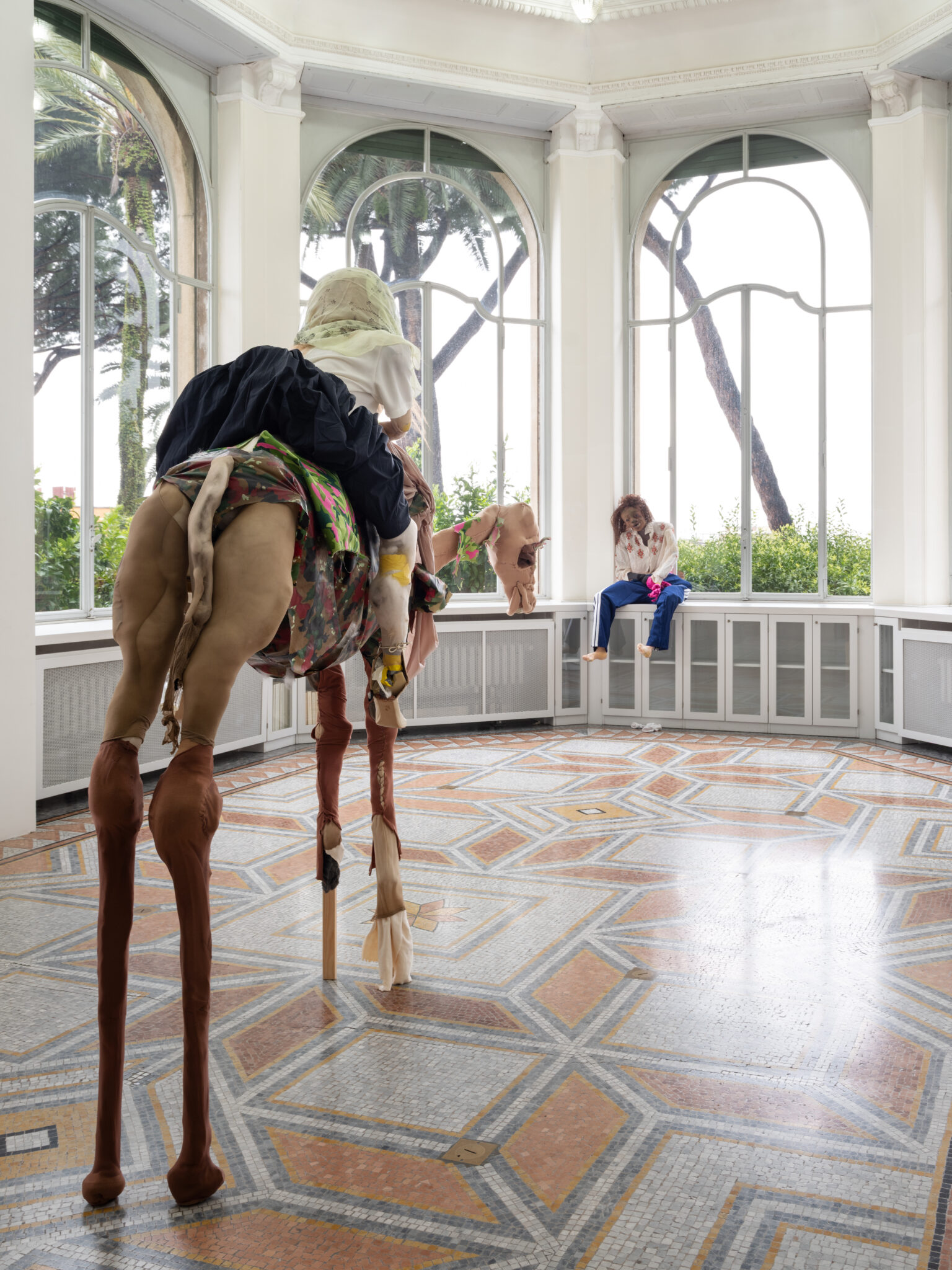
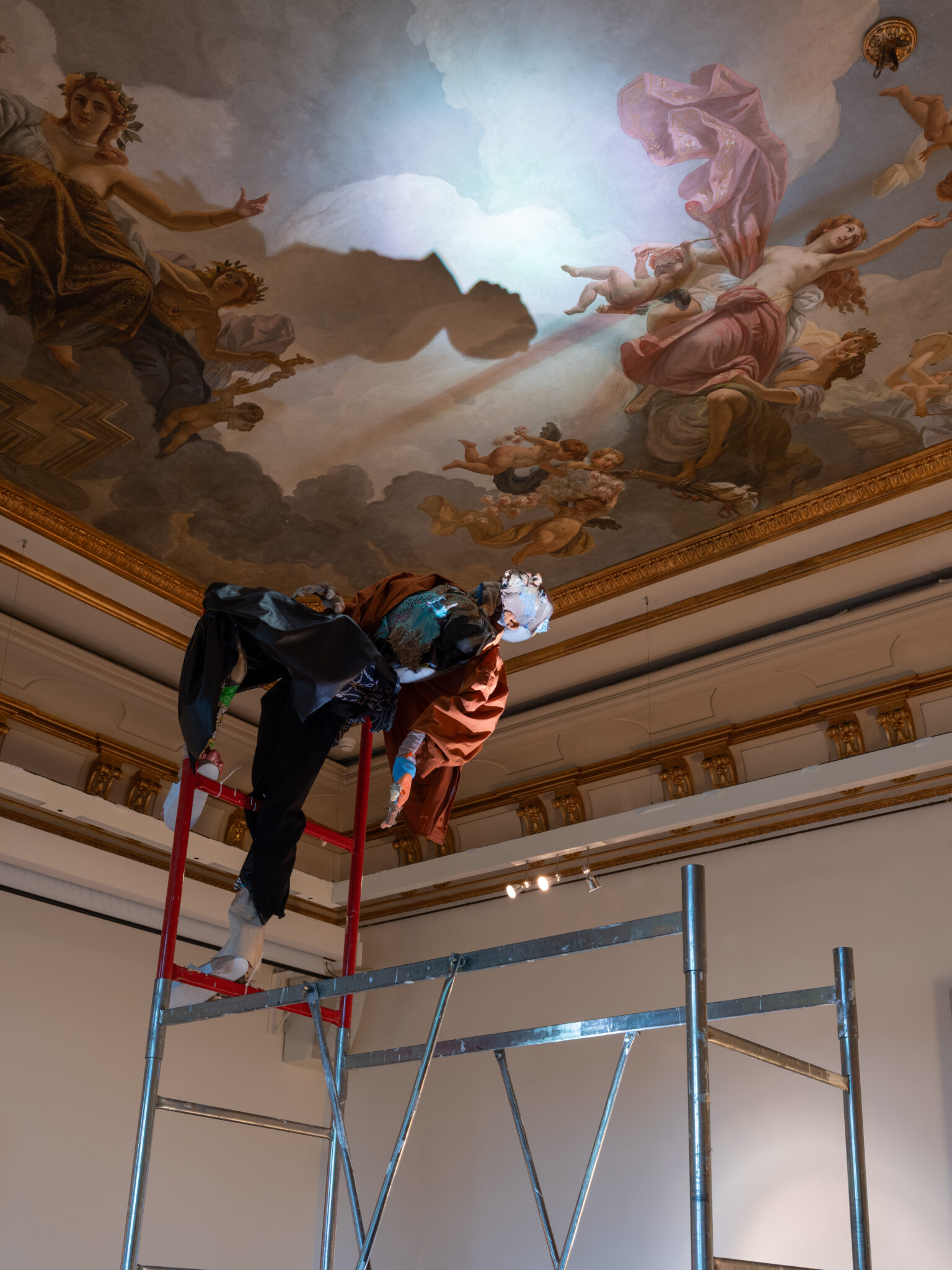
Latefa Wiersch, Re:I had a fun idea (2026) installation view, Atlas Studios, Istituto Svizzero, Roma, 2026 © Daniele Molajoli (left); Latefa Wiersch, House on fire (2026), installation view Atlas Studios, Istituto Svizzero, Roma, 2026 © Daniele Molajoli (right)
Since the 1980s, the Atlas Studios in Morocco have served as the filming location for successful international productions that recreated settings from the ancient imperial world. Films such as The Mummy, Gladiator, and Prince of Persia were shot here—works shaped by stereotypical, Western, and Eurocentric reconstructions of distant worlds and civilizations.
In her first solo exhibition in Italy, Latefa Wiersch, who was born in Germany and is of Amazigh and Arab descent, reflects on the influence that cinema has had on our understanding of the past.
Built around a series of simulated film sets, the exhibition challenges the narrative frameworks through which we have come to know the ancient world and seeks to disrupt the comforting and captivating imagery we have long seen on the big screen. It is the very same imagery that has allowed us to confine the foreigner within an aesthetic and cultural boundary, making them familiar, acceptable, and easy to narrate: a puppet. Yet Wiersch’s puppet-like dolls, with their distorted faces and disproportionate features, are bodies in revolt—ugly and unsettling precisely because they are finally free from the cages tailor-made for them by the film industry, which has colonized their histories, traditions, places, and customs.
SUPERFLEX. There Are Other Fish in the Sea - Palazzo Strozzi, Florence (until August 2)
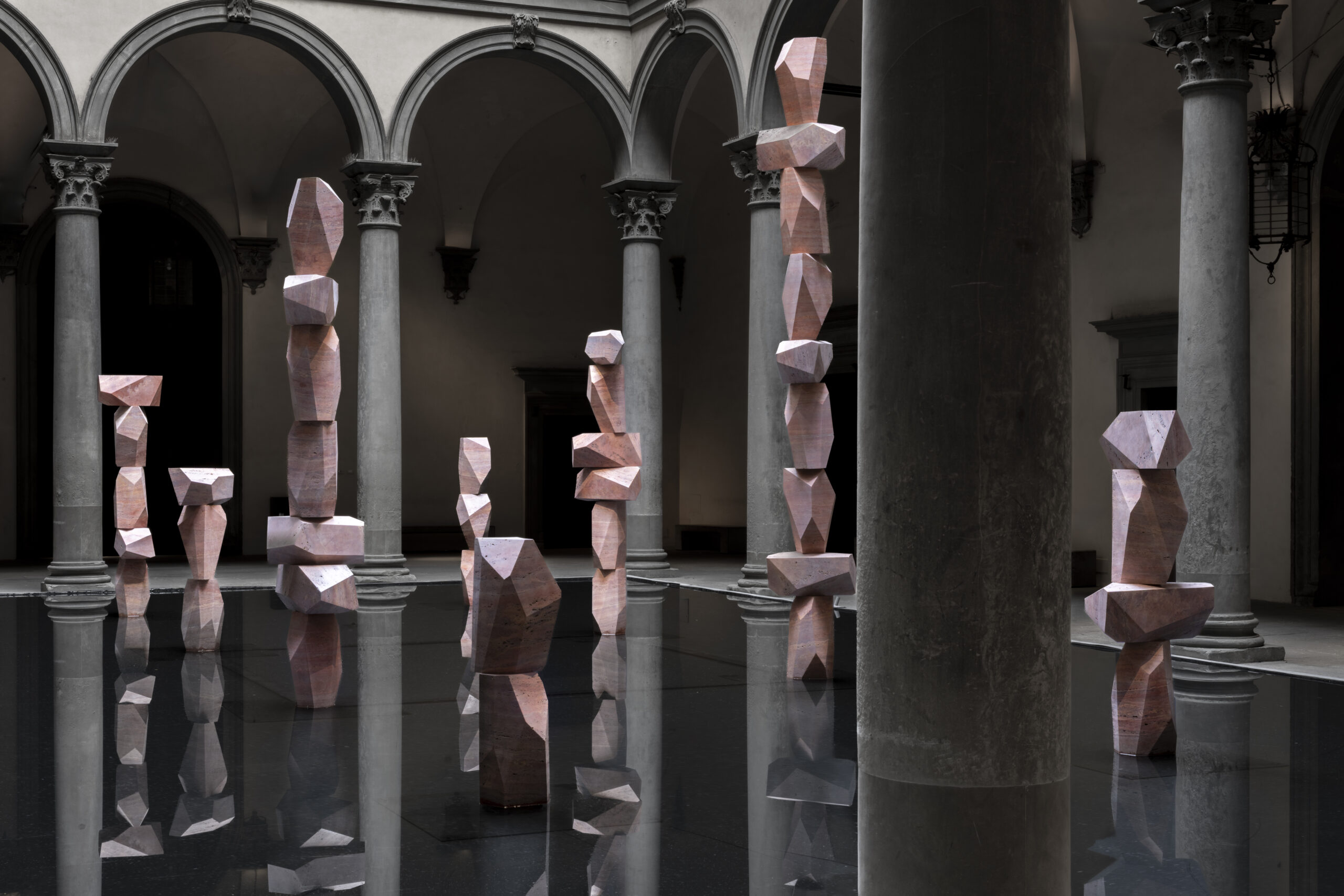
SUPERFLEX. There Are Other Fish In The Sea installation view, Photo Ela Bialkowska, OKNO Studio. Courtesy Fondazione Palazzo Strozzi, Florence
The phrase “There are plenty of fish in the sea” is an invitation to look around, not to remain stuck in a situation with few ways out, and to seek solutions where one has never looked before.
In the latest project by the Danish collective SUPERFLEX, this saying, although slightly modified, is taken quite literally: the solution to some of the greatest challenges of our time might indeed come from a fish. Internationally renowned for projects that rethink the role of art in relation to the social, economic, and environmental issues of the present, the three artists have created a site-specific installation at Palazzo Strozzi that reflects on the threat posed by rising sea levels.
Within the harmonious Renaissance architecture designed by Antonio da Sangallo, eight pink columns of varying sizes and irregular surfaces disrupt the balance, standing within a pool of reflective water. In this way, a new habitat is created—a project of “multispecies architecture”—based on the idea that solutions to environmental problems may not come from humans, but from non-human beings.
By challenging the authority of anthropocentrism, SUPERFLEX asks whether it might be time to consult fish, mollusks, amphibians, or even smaller and more marginal organisms—beings that may, perhaps, be wiser than we are.
Giorgio Griffa. Omaggio per i 90 anni - GAM, Turin (until November 1st)
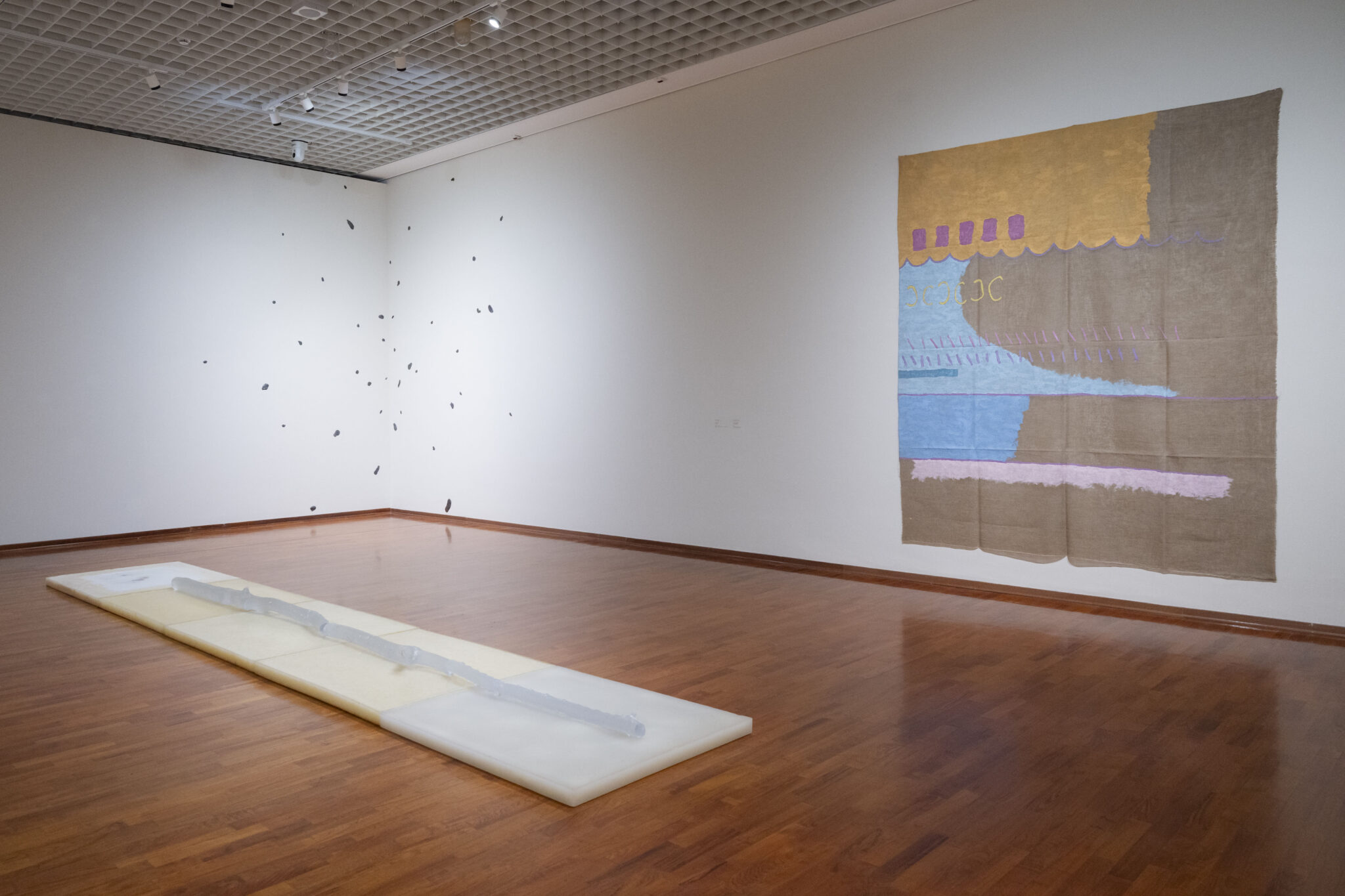
Giorgio Griffa. Omaggio per i 90 anni installation view, ph Perottino
Leaving things unfinished is often regarded as a sign of laziness. For Giorgio Griffa, however, the unfinished is a place of richness and possibility: abruptly interrupted sequences, truncated lines, and partially completed fields of color transform his works into open, suspended spaces that reflect on the immediacy of the creative gesture, the passing of time, and the construction of the image. In this way, the artwork is fulfilled through its potential and through the infinite versions it could become—if only someone were to complete the gesture.
Celebrated at the GAM on the occasion of his ninetieth birthday, Griffa engages in dialogue with the analytical and conceptual artistic practices of the second half of the twentieth century through a form of painting that explores time and space, immediacy and progression, using a visual language based on primary elements—marks, lines, color—and regular rhythms.
With an essential visual alphabet, the artist reflects on the moment before things happen, on the second of silence that precedes thunder, an explosion, or an insight. Painting thus evokes both the experience of everyday anticipation and the tireless process that leads to creation and ideas—the fertile space where life proliferates and everything comes into being.
In the face of a society obsessed with performance and the accumulation of tangible, measurable results, Griffa’s canvases free us from the urgency of completing at all costs what may hold greater value when left unfinished.
Translated by Dobroslawa Nowak