


Namsal Siedlecki. Shape in Time
19.06.2026
An excerpt from Dobrosława Nowak’s essay published in hus magazine SUMMER (2) 2026
Sculpture remains in a constant relationship with time and its surroundings in Namsal Siedlecki’s practice. The result of the artist’s actions is often not a clearly defined, stable form, but rather a dynamic configuration whose transformation we can observe with the naked eye. Siedlecki approaches the question of time – a variable he frequently employs – both literally and more symbolically: by travelling into the distant past, from which he extracts meanings and attributes, or by accelerating processes that in nature would take thousands of years, yet within the framework of a given project unfold over the course of just a few months.
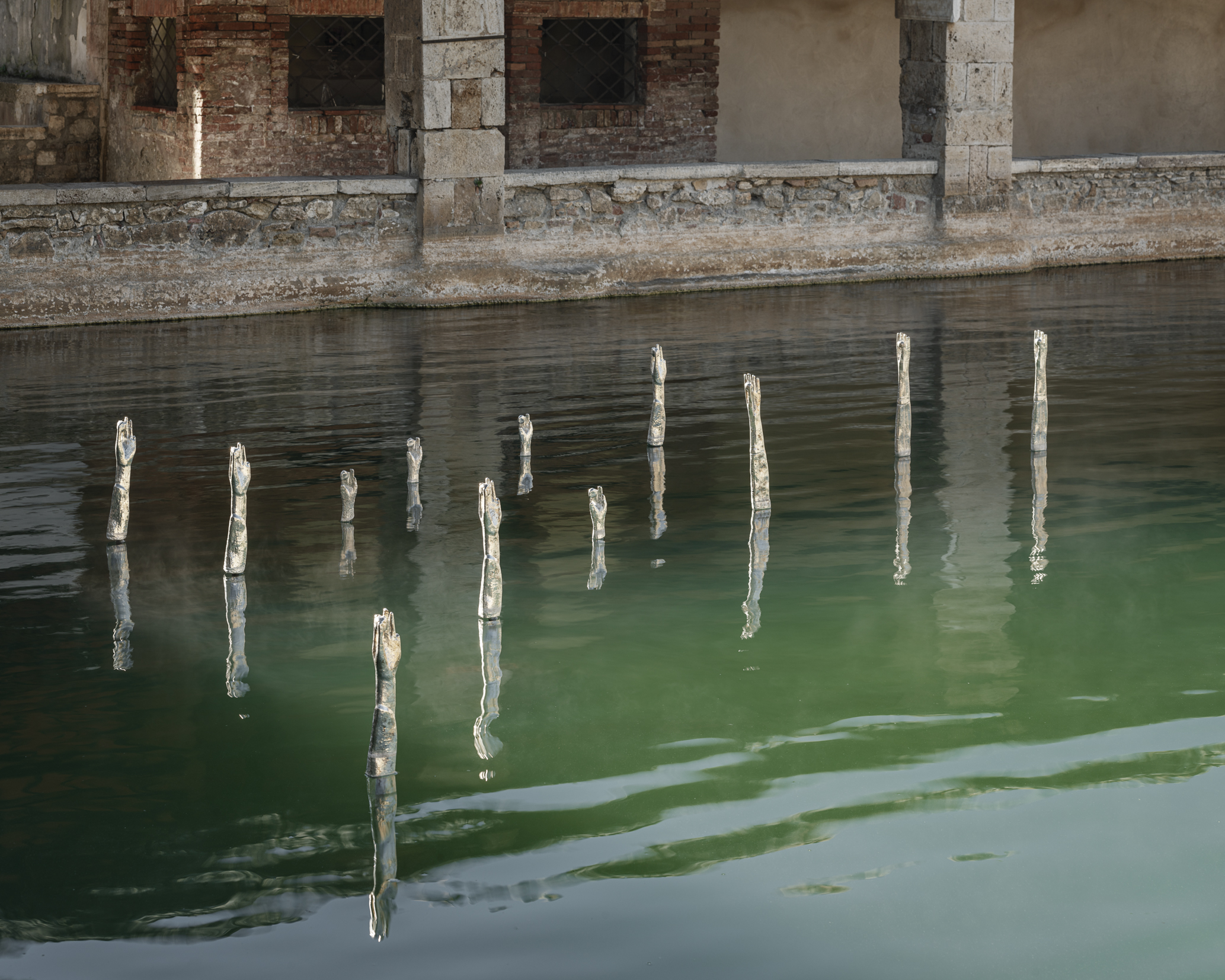
Namsal Siedlecki, Trevis Maponos, 2020, silver, dimensions variable, installation view at Bagni Vignoni. Photo: Flavio Pescatori. © Namsal Siedlecki
Equally subversive is Siedlecki’s use of nature, another crucial element in his sculptural practice. The artist tirelessly devises ever new chemical, biological and physical processes that become the ecosystem of a given artwork. On a broader level, he regularly collaborates with craftspeople across the globe, celebrating local folklore, analysing customs, exploring languages, and drawing on traditional techniques and materials. With respect for their origins, he integrates the knowledge he acquires into the language of contemporary art.
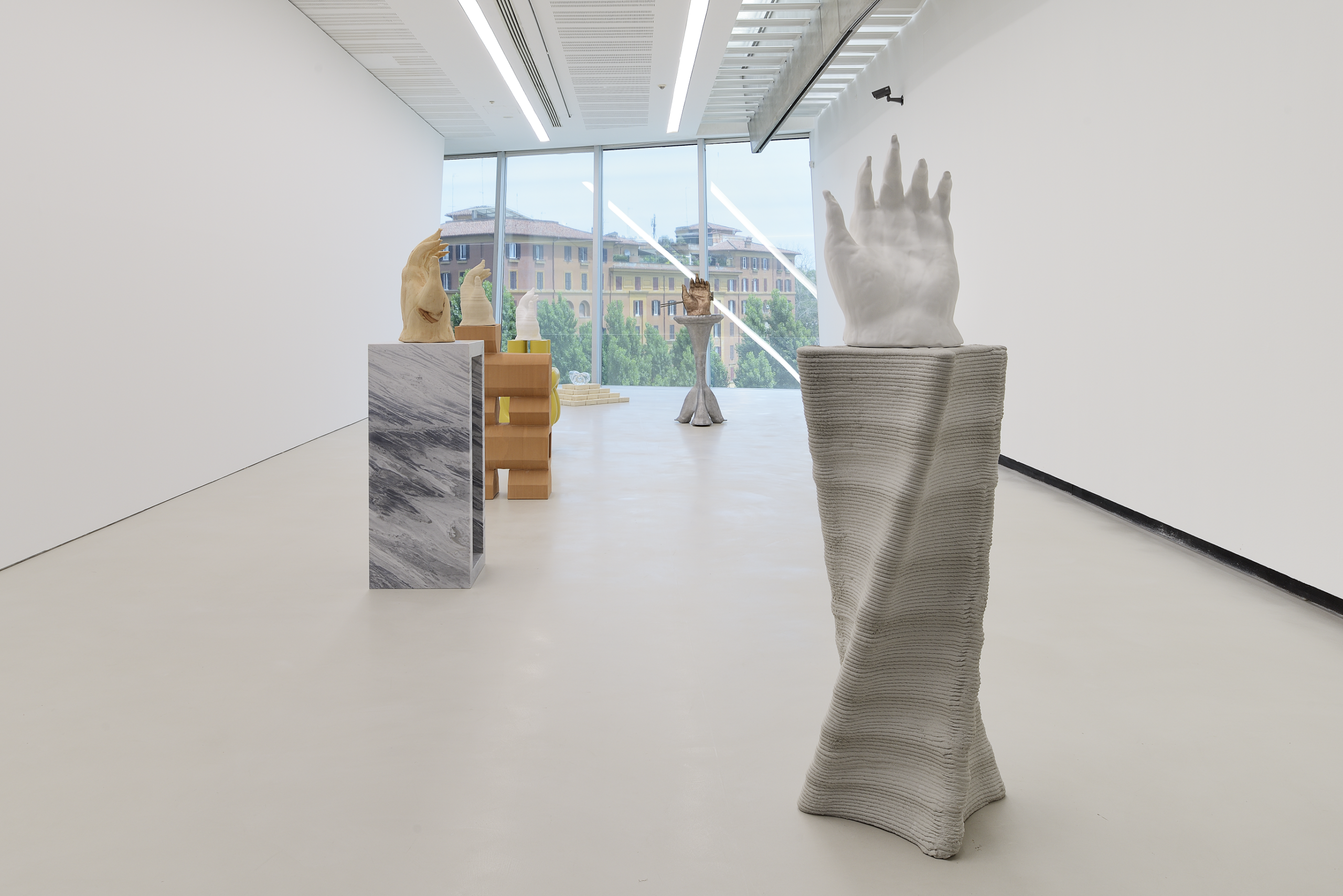
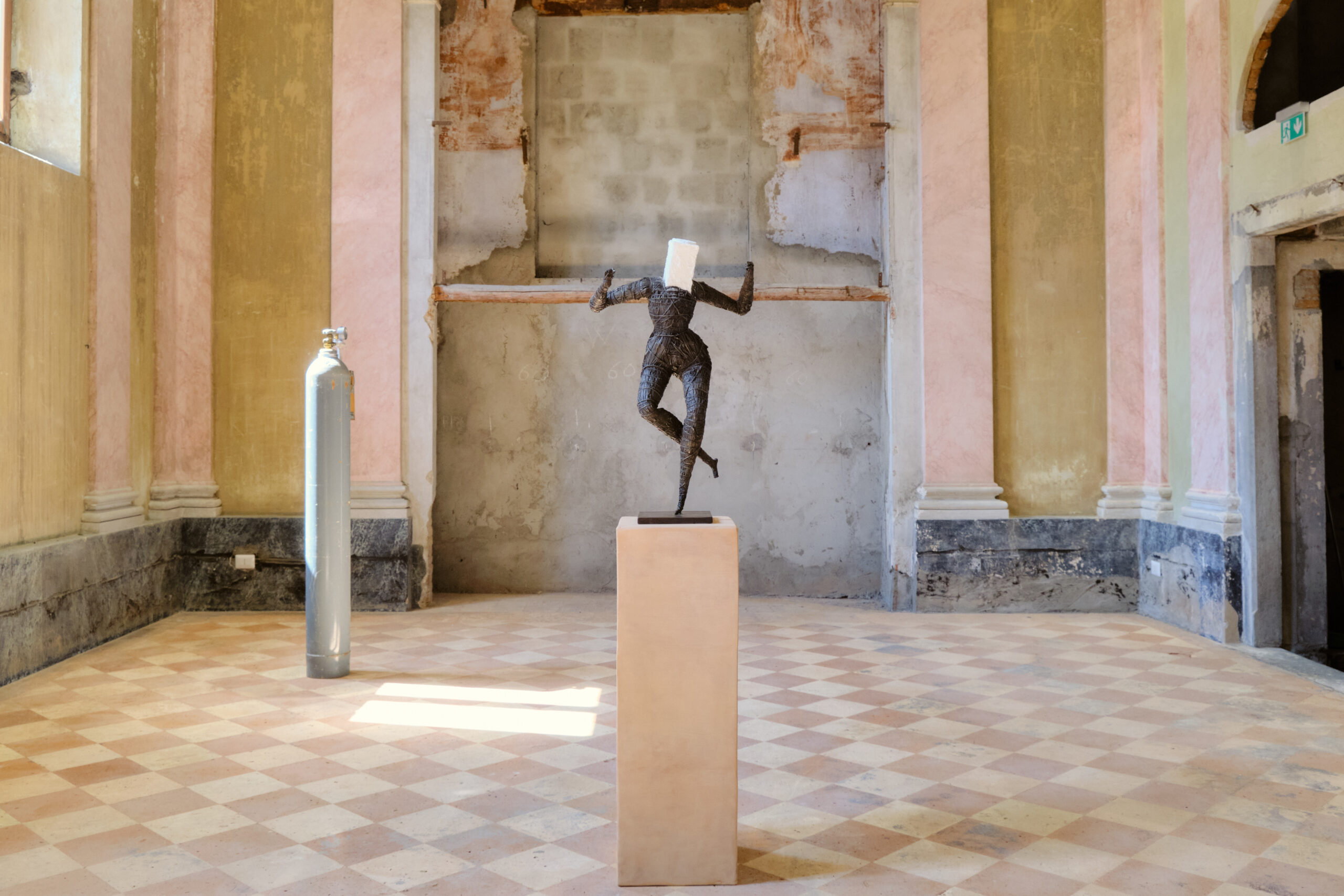
Namsal Siedlecki, Nuovo positivo, 2022, installation view at MAXXI BVLGARI PRIZE, MAXXI, Rome. Photo: Roberto Luigi Apa. © Namsal Siedlecki / Namsal Siedlecki, Sublimi, 2025, installation view at Chiesa di San Rocco, Bergamo. Photo: Andrea Benedetta. © Namsal Siedlecki
‘I like discovering how objects are made and how materials react with one another,’ Siedlecki explained while presenting the installation Viandanti (2020).[1] The work consists of sculptures that, although they begin as finished objects, ‘live’ within the artist’s practice in a state of endless transformation. Inside an electroplating tank are two identical reproductions of ex-voto figures from the French city of Clermont-Ferrand, depicting a human figure in a cloak, catalogued as a wanderer. They were cast from zinc obtained by melting down coins collected from the Trevi Fountain. The resulting sculptures are completely submerged in liquid and attached to brass rods connected to a current running through an electronically programmed circuit that reverses polarity every 12 hours. During this time, one of the two sculptures acts as the anode (releasing the metal), while the other functions as the cathode (receiving the metal). The metal thus periodically deposits in a different area, which is why the form of both works is undergoing continuous transformation and will never be the same. Two elements created to be in motion – wanderers and coins – coexist here in an endless electrochemical dialogue. Like many of Siedlecki’s other works, this piece grows out of a careful observation of matter and of the processes set in motion when various materials come into contact. Asked what he expects from Viandanti, he replied that he would like to know the future of the installation: how it will transform over time and what shape it will assume once its form has undergone a complete change.[2]
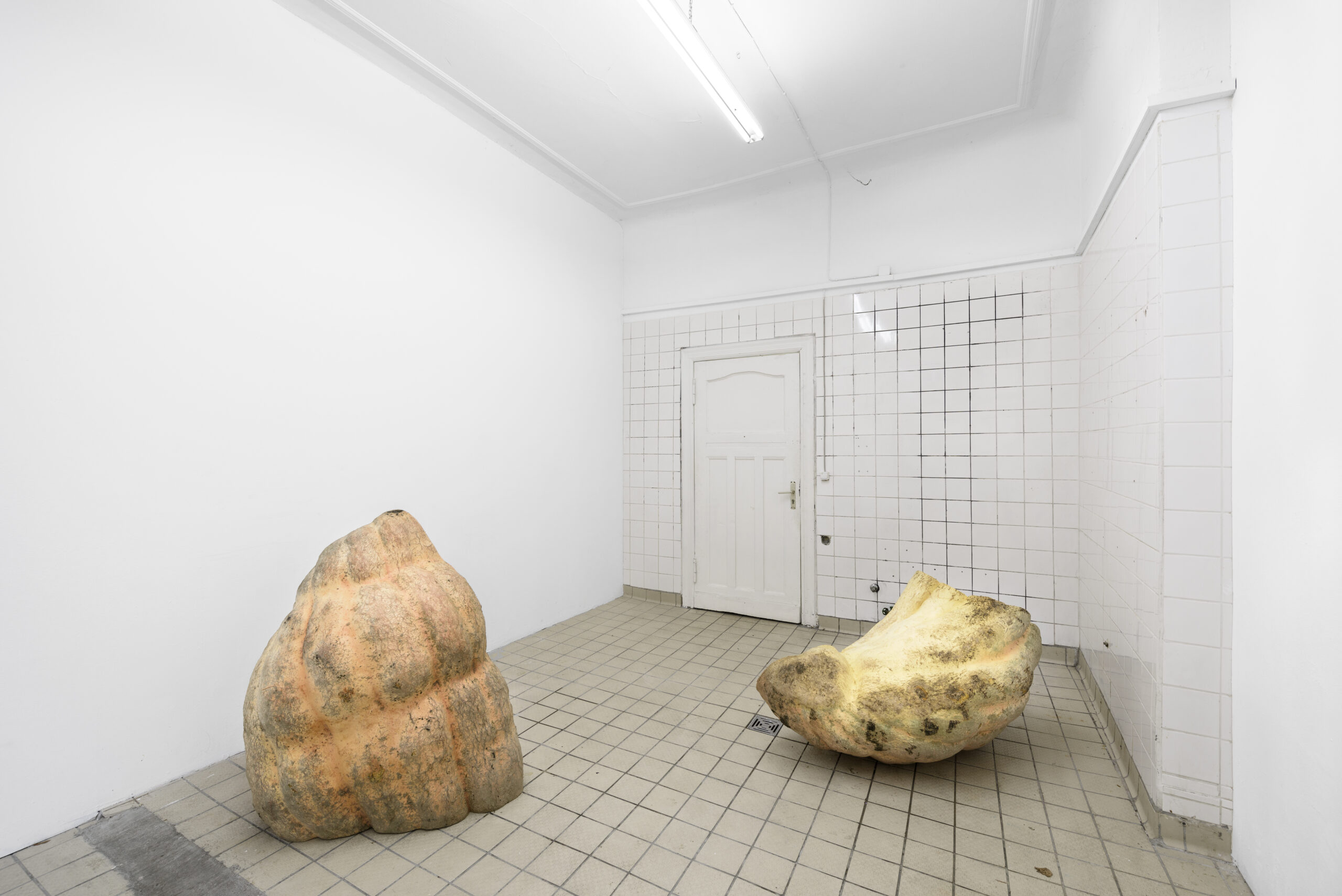
Namsal Siedlecki, Spermoderm, 2016, giant pumpkin, electroplated zinc, dimensions variable, installation view at Frankfurt am Main, Berlin. © Namsal Siedlecki
From creating faithful ‘reproductions’ of ex-voto figures from Clermont-Ferrand, through organising a six-month process during which calcite crystals accumulated on the surface of canvas at the so-called Petrifying Fountains of Saint-Nectaire[3] (Deposizione III, 2020), to cultivating and subsequently copper-plating the seeds of a giant pumpkin (Spermoderm, 2016–2020), Siedlecki draws viewers into an ongoing process of transformation – one he merely initiates. In doing so, he makes them participate in the process, rather than simply inviting them to contemplate the results of his work.
[1]TOAST Project Space #8 HABITAT / Namsal Siedlecki, an interview with Namsal Siedlecki conducted by Manifattura Tabacchi, https://youtu.be/xs8u4O63oaU?si=PdOzxqo41ippEPm1
[2] Ibid.
[3] Les Fontaines Pétrifiantes are located in France, in the town of Saint-Nectaire in the Auvergne region. They are mineral springs whose calcium-rich water gradually ‘petrifies’ objects submerged in it. See https://www.fontaines-petrifiantes.fr/en/