


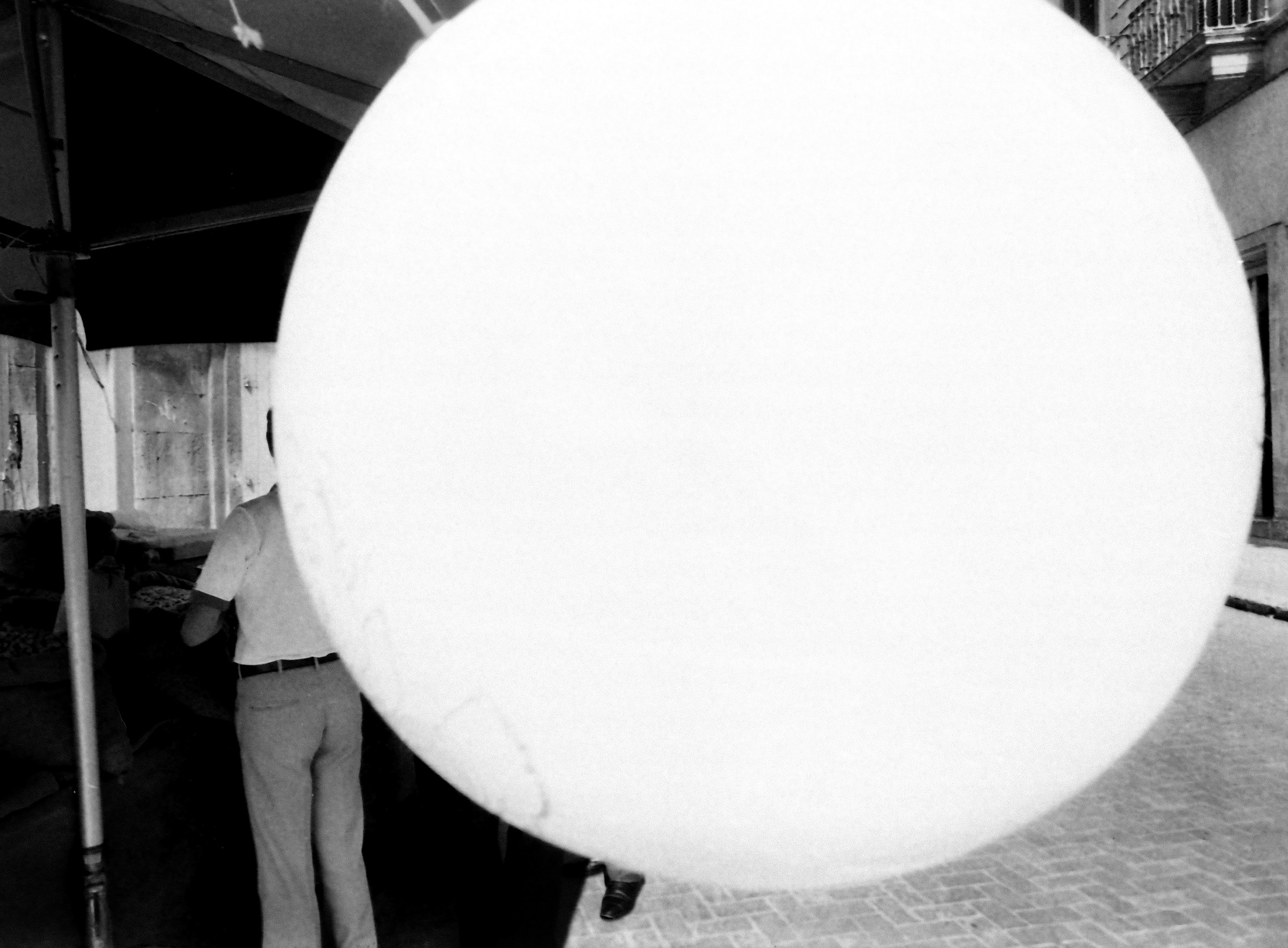
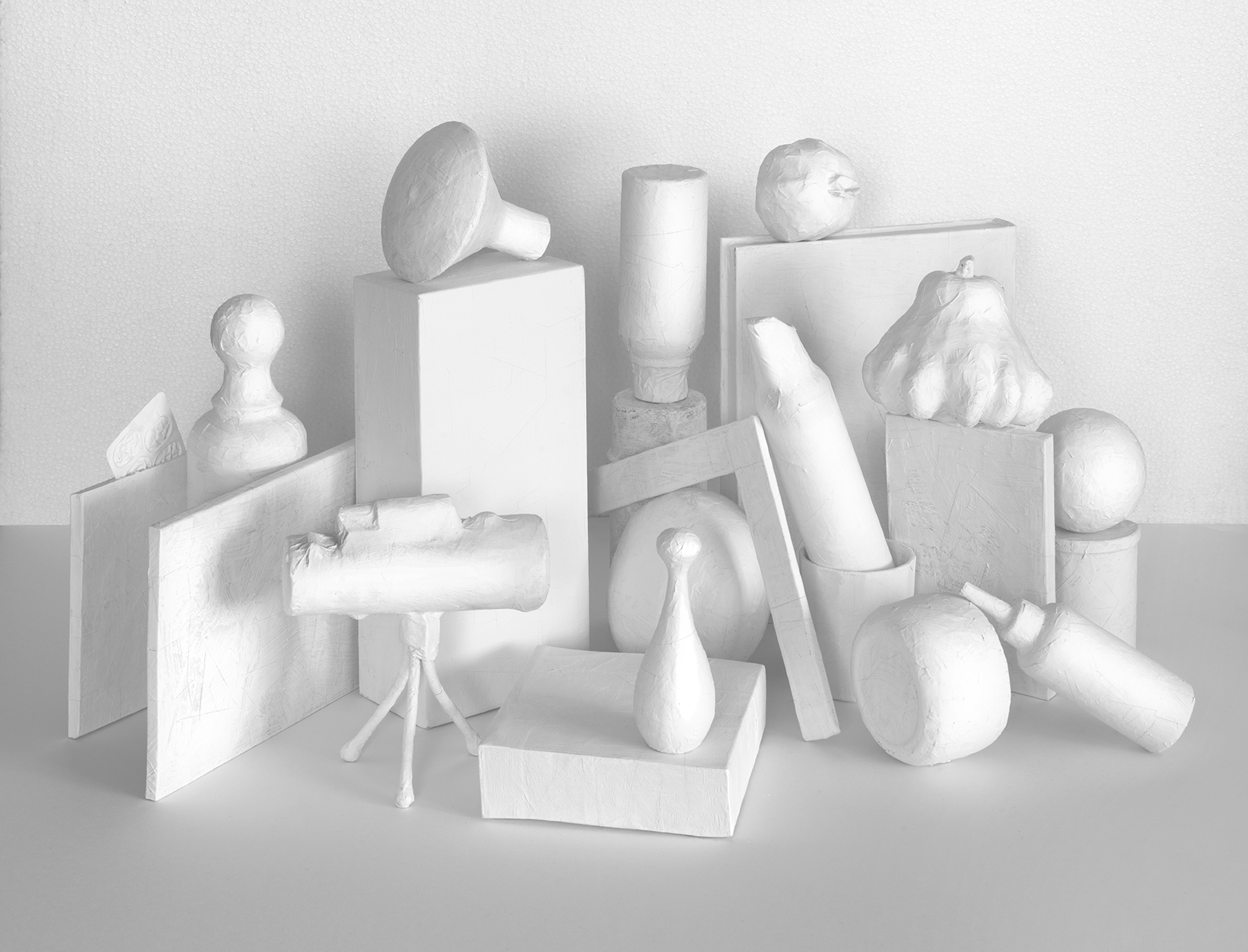
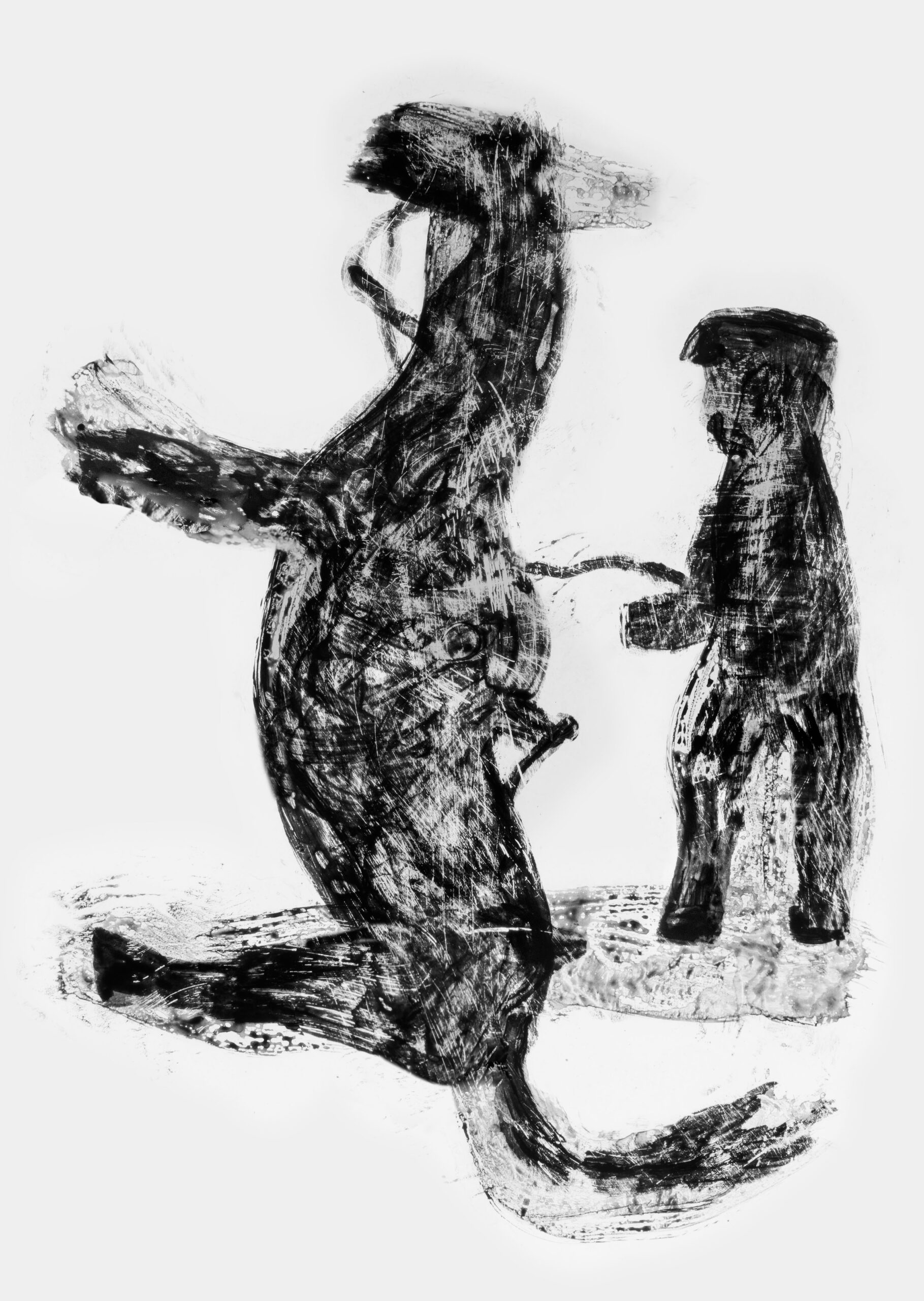
I luoghi del possibile marks Mario Cresci’s second solo exhibition with Matèria, realised in dialogue with People I care about, presented at Large Glass gallery in London. Bringing together a selection of previously unseen works spanning mixed media, drawing, sculpture and photography – reflecting the full complexity of his artistic practice – the exhibition focuses in particular on a lesser-known dimension of Cresci’s work, tracing the role that objects, forms and gestures have played as a constant presence throughout his research.
The starting point of the project is the artist’s studio, understood not simply as a place of work but as a space where visual thought settles and accumulates. Materials, objects gathered over time, fragments and images coexist within an ever-evolving domestic landscape, from which many of the exhibited works originate. Rather than revealing what lies behind the image, the exhibition moves through the very place in which the image takes form, tracing the continuity between everyday experience and the construction of the artist’s visual language.
The title I luoghi del possibile refers both to the threshold between the material world and its representation, and to access into that space – physical and mental – where images take shape. A threshold that coincides with the artist’s studio, but also with that territory of passage in which an object becomes an image, a fragment becomes a composition, and experience is translated into visual language.
Through a body of work that extends beyond the photographic medium, I luoghi del possibile reveals the deeply interdisciplinary nature of Mario Cresci’s research. Photography emerges not as an autonomous discipline, but as one of the possible manifestations of a broader reflection on memory, time and the formation of the image, in a continuous movement between presence and representation.
Throughout his career, Mario Cresci has continually questioned the boundaries of photography, conceiving the image as an open process rather than a definitive outcome. His research has developed through an ongoing dialogue between different languages, in which photography, drawing, object and sculpture contaminate one another, giving rise to a system of relationships in constant transformation. In Cresci’s work, the object is always a form in becoming, never simply the subject of the image: it is a presence capable of activating new relationships between memory, perception and representation. Drawings, assemblages, sculptures and photographs give rise to recurring forms that run through the artist’s entire body of work, resurfacing time and again in different configurations, and outlining an ongoing reflection on the ways in which reality is observed, interpreted and reconstructed.