


Better Times

It has always been said, and in all likelihood will continue to be said, that better times are coming.
It is a belief that seems to remain unchanged. It passes through generations, survives crises and failures, and accompanies the transformations of society. Everything we fail to achieve, along with everything we continue to desire, is deposited in a place we call the future. Yet while promises go unfulfilled, the idea of a better tomorrow persists. Sometimes it seems on the verge of coming true, only to remain just a little further ahead.
The need to imagine a better existence first allowed religions to envision life beyond death, and later allowed progress to offer the prospect of a world capable of perfecting itself. Two notions of salvation, one directed towards the afterlife and the other towards history, have gradually drawn closer together. The Paradise of Christian tradition and the Elysian Fields of ancient mythology, despite their differences, share the promise of a happy existence after death. As these certainties have weakened, expectations have increasingly come to focus on the present. We have begun to demand of our brief and fleeting lives what once belonged to eternity.
The thought of achieving such a profound state of peace, happiness and fulfilment within such a short span of time can give rise to a sense of anxiety. Every failure or setback is perceived as a missed opportunity, one less possibility. We feel the need to live every moment passionately, as though the hands of the clock were moving at twice their usual speed. The urgency to fulfil ourselves and seize every opportunity becomes a personal goal that ultimately generates new forms of dissatisfaction, or a certain presumption that we can control our own destiny.
This legacy has brought with it a growing disillusionment with the idea of future progress, giving rise to the feeling that things can only get worse or, at best, remain as they are. The space once occupied by desire is now filled with fears of crises, wars, instability, catastrophes… but I will stop here, as the list could fill far too many pages. From this perspective, it seems as though the only full-time occupation of the new neoliberal individual, an employee of their own self, is to survive circumstances beyond their control.
It becomes difficult to imagine better times when our thoughts are driven by the need to protect ourselves from the world we inhabit. External pressures become so intense that they shift our attention from a collective dimension to an increasingly private one. Yet, even as our shared horizon stretches further and further away, we continue to evoke promises of a future, addressing them both to others and to ourselves. We find them in everyday reassurances, such as “Everything will be all right,” once written on banners, or “You’ll see, sooner or later it will all work out,” spoken at a bar counter. We repeat them almost out of habit, perhaps without really believing them anymore, yet we find it difficult to do without them. We cannot stop imagining a better future, because doing so would mean letting go and accepting that the world can be no better than it is. But where do all these promises go, the ones we receive and the ones we make to ourselves? Perhaps they continue to accumulate somewhere, and there is still someone stubborn enough to preserve them.
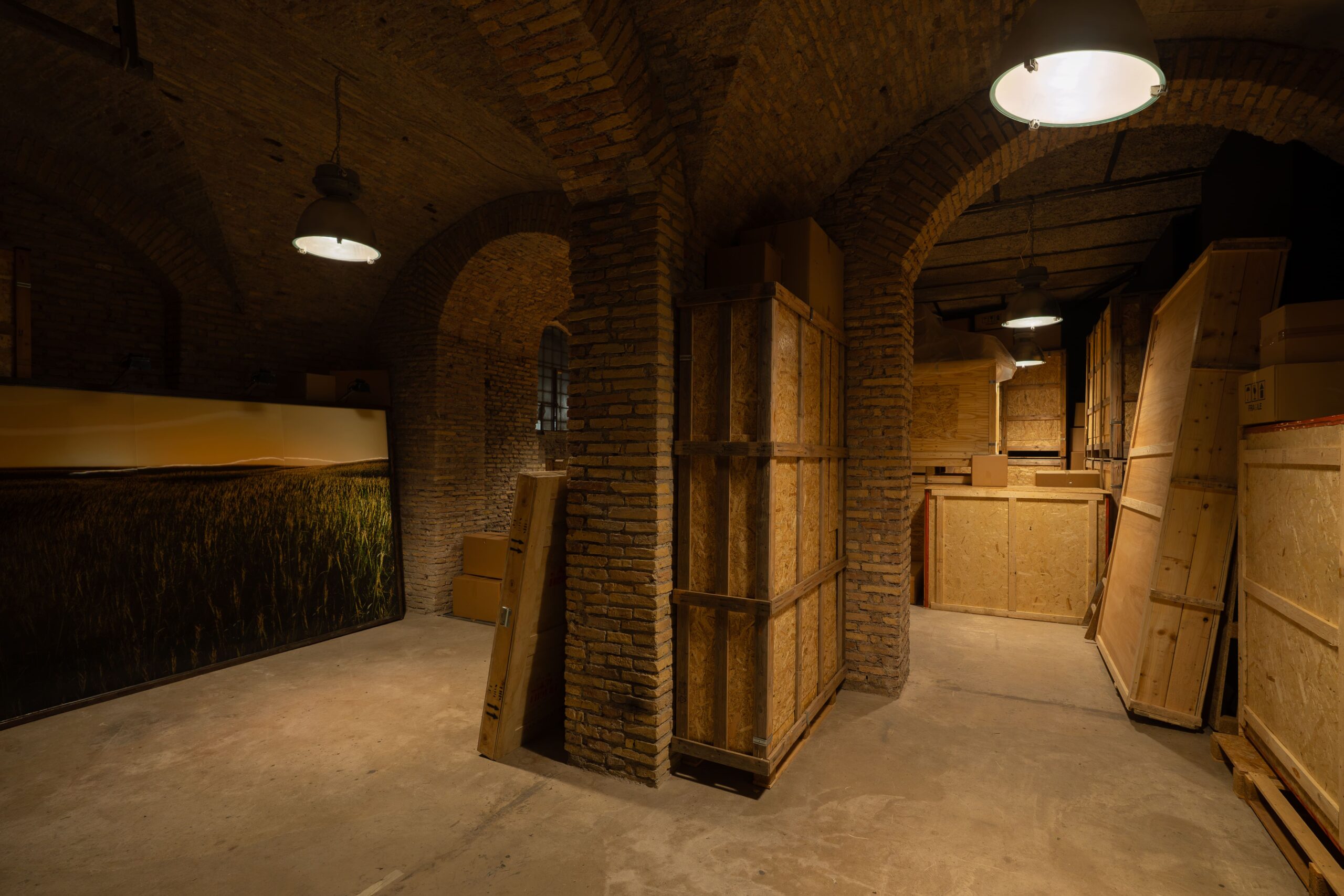
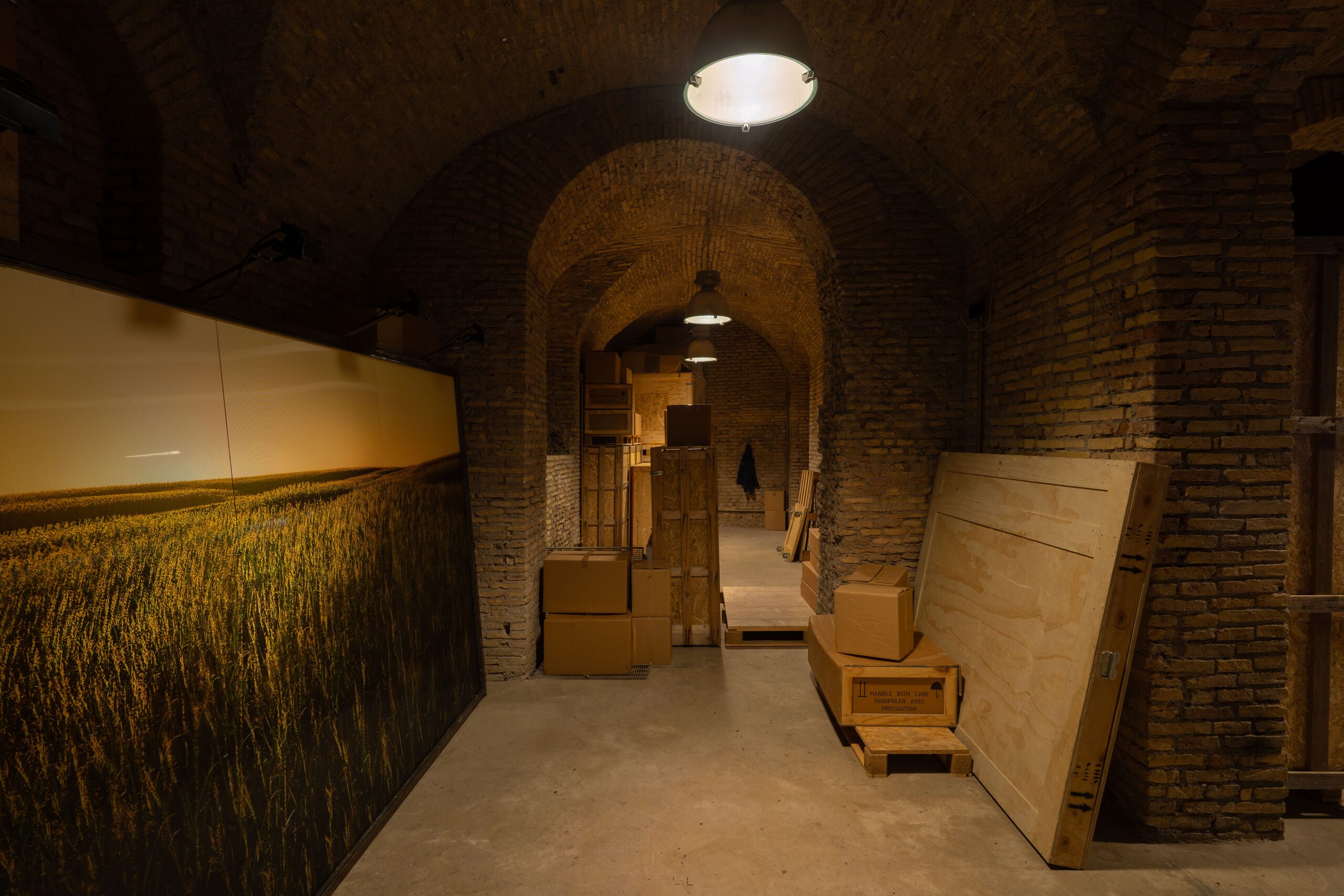
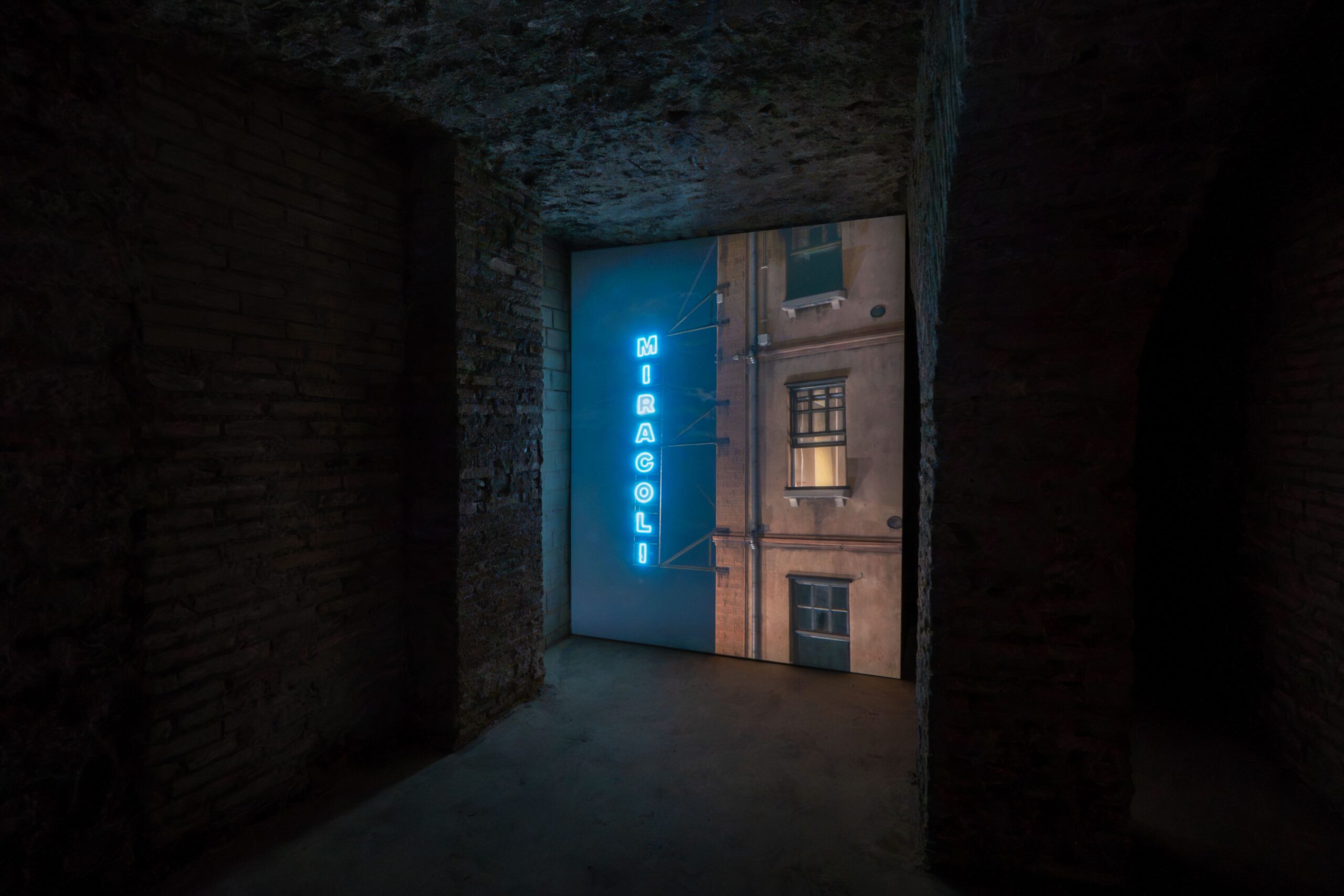
In Better Times, Federico Grilli seems to inhabit this condition, where the memory of an imagined future takes the form of the storeroom of a now-closed hotel, Hotel Miracoli, a place where all sense of time has been lost. These desires resemble objects belonging to a vanished city, once inhabited by a society that had cast a spell to preserve the collective imagination of a better tomorrow. They remain stored in a timeless space, a makeshift warehouse, waiting for someone to come and reclaim them, to give them a new place. A layer of dust makes the passage of time visible, settling without asking permission, according to its own precise yet uncontrollable rules. Outside, the city moves on according to its own.
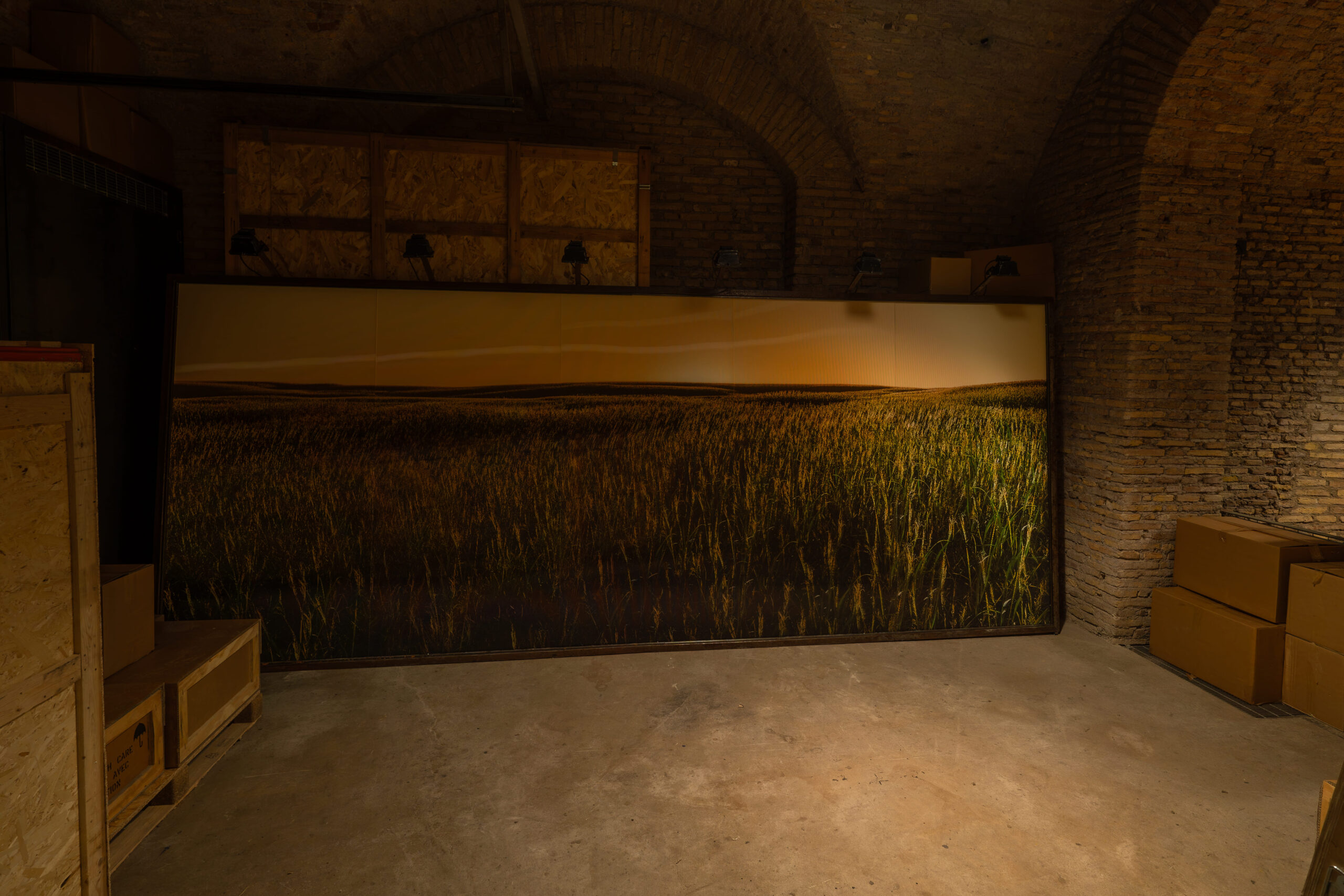
Among the wooden crates and cardboard boxes, an advertising billboard emerges, depicting an idyllic landscape, a sunrise over the Elysian Fields, probably removed from a motorway. The landscape itself becomes the bearer of an expectation, a message: Better Times (2026). What was once a promise of happiness beyond earthly life now comes to resemble the promise of a holiday. It has taken on a new life, but its intention remains much the same. After all, advertising aims to make us desire what we need (or what we do not yet know we want), inviting us to imagine what our lives would be like if we obtained it. This is not so different from the aspirations of the ancients. Once removed from the flow of traffic, the billboard ceases to indicate a destination and instead becomes a relic of a society that had invested in a dream it hoped to reach. With a certain melancholy, we sense how the landscape preserves an unfulfilled promise, one that someone still considered worth safeguarding, in anticipation of a new dawn.
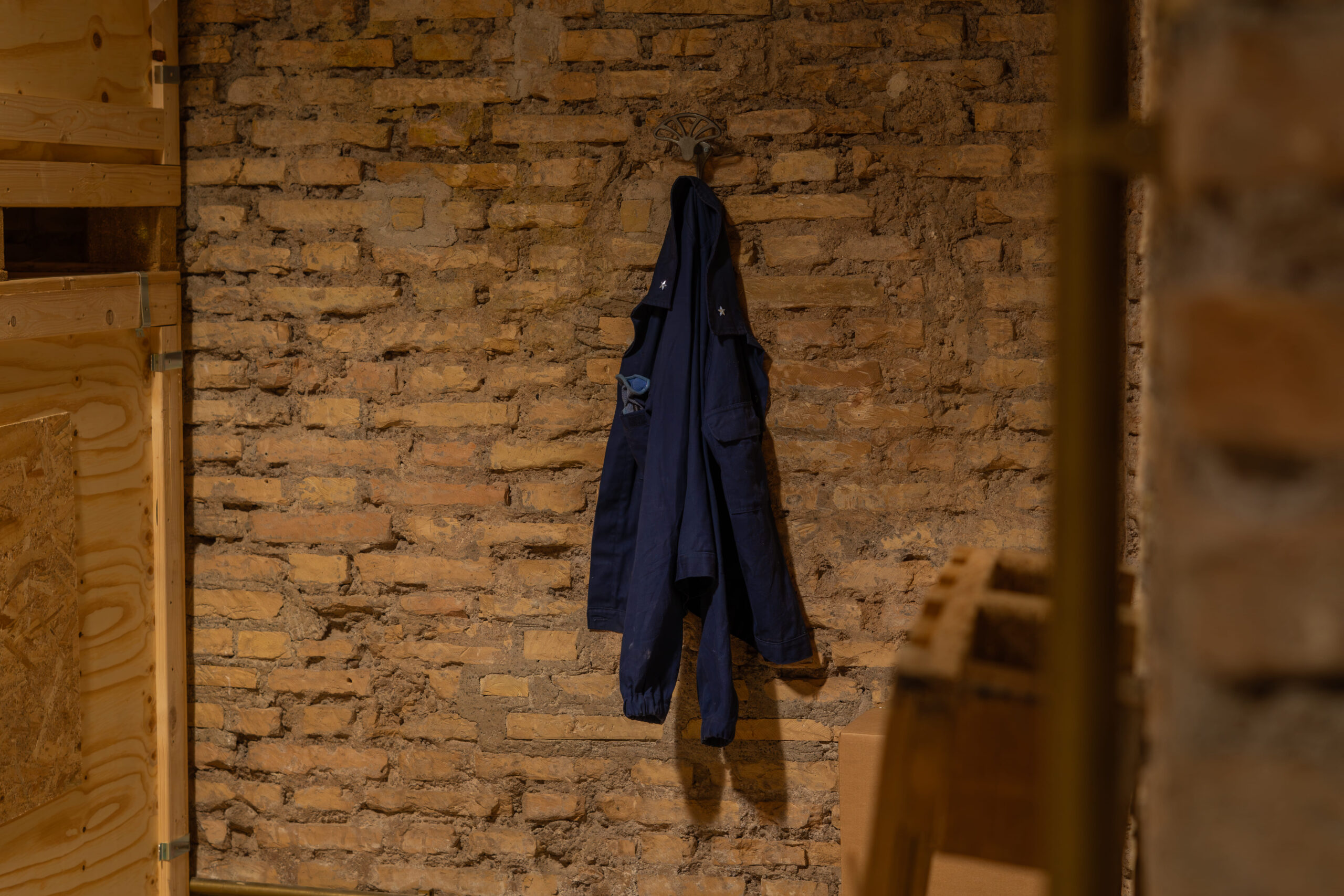
Perhaps hope lies in the way we look at things, and in this place, someone is still there. Of the caretaker, Giorgio Desideri (2026), we find only the small stars, like military rank insignia, on the collar of his blue work jacket. As though, to reward himself for preserving this potential, he had awarded himself a rank. His task is to maintain order and ensure that nothing is lost. To safeguard something means to care for it, but above all to recognise the value of something that has apparently lost its usefulness. Dedication and trust. Perhaps the value of what is being preserved lies precisely in its potential, in the possibility that one day the hotel might once again work its miracles.
What is troubling, yet at the same time deeply intriguing, is that the caretaker ends up trapped in the very place he was supposed to protect, bound to something from which he can no longer separate himself. He cannot, will not, or does not know how to do anything else. Having spent so long preserving the hopes of others, he can no longer distinguish his own fate from that of the objects he cares for. His devotion takes on the contours of an obsession.
Somewhere, behind an illuminated window, two people continue talking. Theirs is an ordinary conversation, shaped by the small tensions of life as a couple, the monotony of everyday habits and the shared excitement of travelling somewhere new. Unaware that they are being overheard, they discuss seemingly trivial matters. We find ourselves in an undefined time within the Hotel Miracoli. It is an early summer night, 27 giugno (2026): does it belong to a distant memory, or to something that might happen in the future?
Their words mingle with the sounds of the city and the intermittent hum of the neon sign. We might feel as though we are intruding upon a private moment without having been invited, yet it is their own voices that spill into someone else’s space. Seen from the outside, their intimacy appears as a frozen image, of which we can perceive only the surface. Even in the most intimate relationships, there are promises we cannot always keep, expectations that go unfulfilled or follow different paths. Yet we continue talking, arguing, searching in others for the understanding we long for.
In that night which continues to repeat itself, the hotel is still open, even though its rooms have been emptied and its contents gathered in the warehouse. On that night, the future still holds all its potential, both past and future. The neon sign, too, flickers, accompanied by a faint electrical crackle, as though it were struggling to stay lit. As if taking its last breaths, it stubbornly continues trying to keep the promise of its miracles alive.
The very name Hotel Miracoli draws us into a dimension where even what seems impossible can suddenly become real. Beyond any logic of plausibility, we may find ourselves caught in a permanent state of waiting, one in which an entire lifetime could pass. But the point is not simply to accept this condition, let alone resign ourselves to it. It is about deciding how to inhabit the meantime. To entrust tomorrow with the responsibility of resolving what seems unbearable today. There is a form of immobility even in the desire for transformation, as Giorgio Desideri demonstrates, unable to separate himself from what he has spent his life preserving.
The contradiction worth holding on to lies in the question of how to preserve the potential of a better future without trapping it in what it was supposed to become. To be prepared for disappointment and failure, to inhabit an unfinished present and attempt to transform it. But whatever happens, tomorrow there will still be someone imagining a better future.