


Guilty Party *in three acts*

Guilty Party *in three acts* Guilty Party *in three acts* Taking the form of a performative inquiry, the exhibition explores how mythologies—understood through Roland Barthes’ lens—transform collective emotions such as guilt, shame, and others into tools of manipulation. Myth, in Barthes’ terms, is not a lie or fiction but a depoliticized form of speech that […]
GESTO E SEGNO
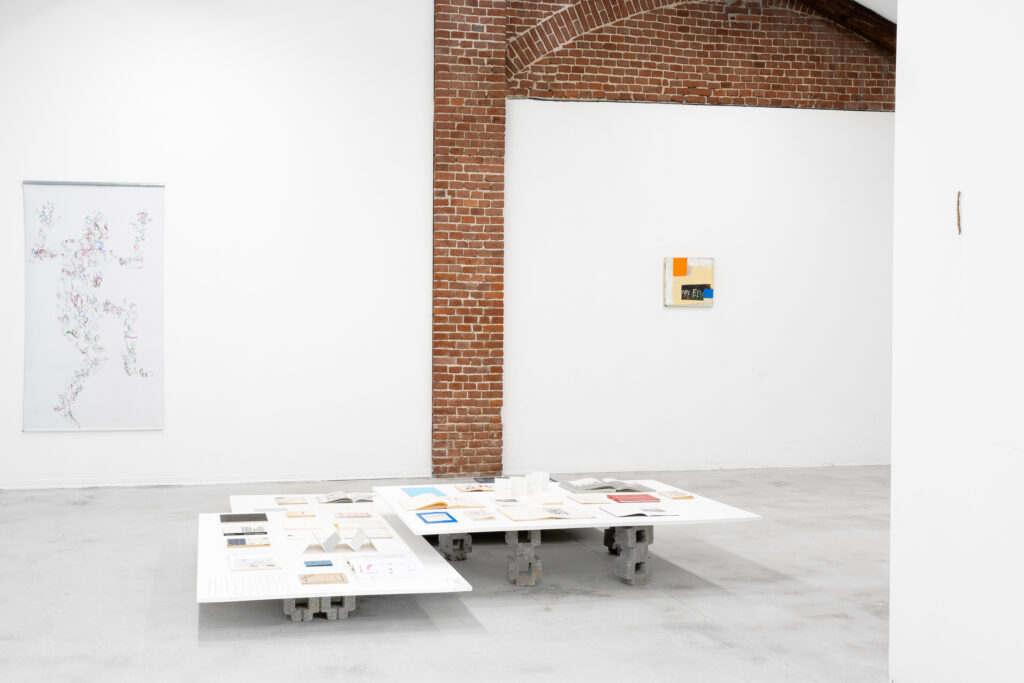
“Gesto e Segno” takes the form of a visual manifesto that explores the artistic gesture and mark in various registers: physical, political, playful, poetic and aesthetic. In this dialectic, the exhibition explores the psychological and dynamic expression of the body through actions that are at times emphatic, at other times minimal and part of the everyday, and occasionally charged with a deep sense of political tension and revolt. Despite their apparent semantic proximity, gesture and mark reveal fundamentally different natures and functions: gestures are spontaneous and uncoded acts, rooted in corporeality and emotion. They can accompany or even replace verbal language. Marks, by contrast, are mostly conventional and codified elements with recognisable meanings within systems. Yet marks, too, can appear ungrounded — as a pure presence, as an act that simply is — much like poetic language, which strives to speak the unspeakable, to signify beyond signification itself.
Stef Fusani – Goffamente Beati

Stef Fusani – Goffamente Beati Candy Snake Gallery è lieta di presentare Goffamente Beati, progetto dell’artista e designer sperimentale Stef Fusani, accompagnato da un testo di Sofia Gotti. Residente a Madrid dal 2008, Fusani sviluppa una ricerca che indaga il rapporto tra individuo e realtà, ponendo al centro il corpo come strumento di metabolizzazione […]
Occhio, Malocchio, Prezzemolo e Carota
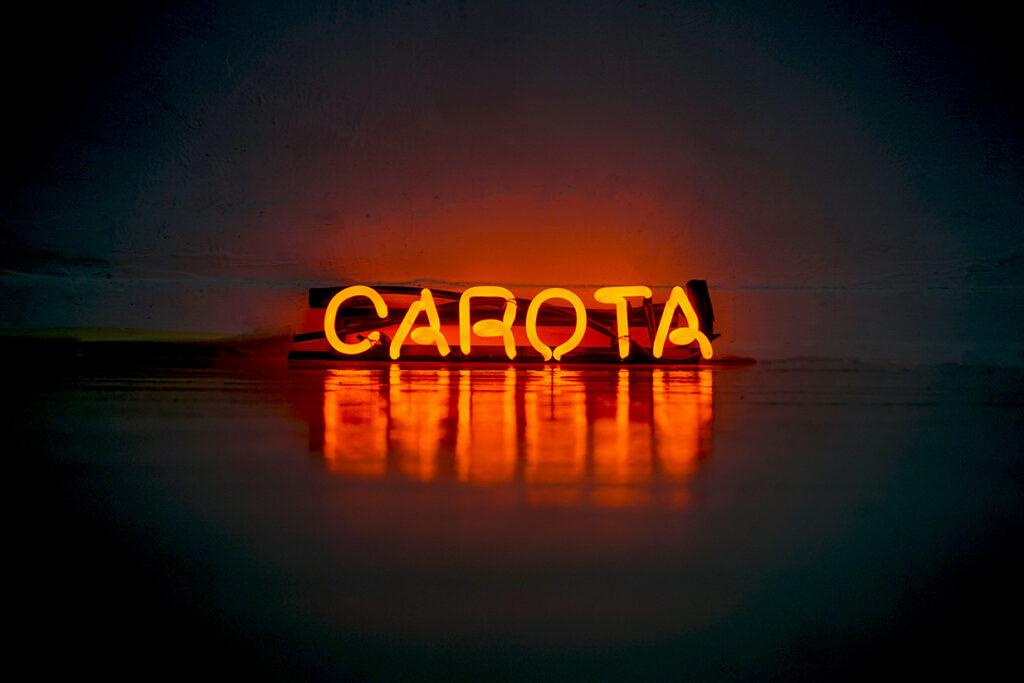
A neon illuminates a word, while an installation of gleaming surfaces and childish forms stands without explanation. Nearby, a duck and a book remain still, as if waiting for something.
Il difficile è dimenticare ciò che si è visto per casa (ritratto di Pescara per caso)
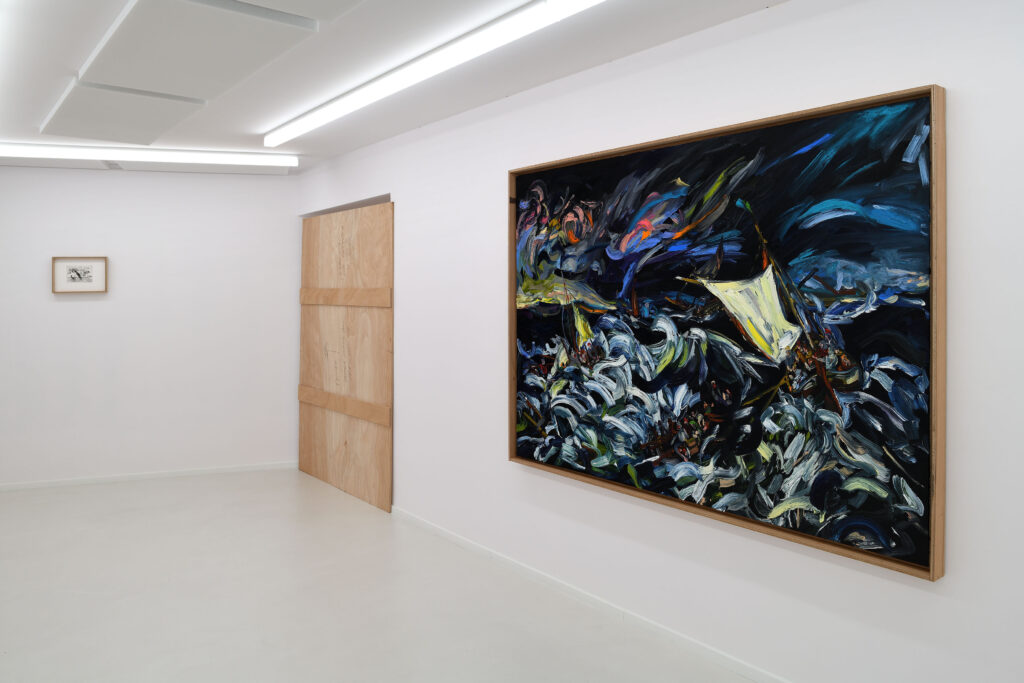
Sixteen years after his last solo exhibition, Matteo Fato returns to exhibit in the city where he was born and still lives. The exhibition takes shape from his connection to place, developing a reflection on the relationship between the artist and the territory. It unfolds across various sites in Pescara: from the spaces of Fondazione La Rocca, producer of the exhibition to key city museums, extending to temporary interventions in public space. Each venue reflects on intertwined themes—the natural and urban landscape, the history of Abruzzo, and the history of art—forming a personal portrait of the city. The title— What’s difficult is to forget what one has seen around the house (Portrait of Pescara by chance)—combines two quotes by Pescara-born writer Ennio Flaiano, asserting the lasting presence of the images one grows up with and is habitually surrounded by. The exhibition’s starting and returning venue, Fondazione La Rocca, hosts an anthology that brings together the themes developed in the other venues. Unpublished works created for the occasion are presented alongside earlier pieces, touching on the genres central to the artist’s practice: portraiture, landscape, still life, and d’après (reinterpretations of existing works). The diversity of media reflects Fato’s expansive approach to painting: installation, video, printmaking, and sculpture. On this occasion, Fondazione La Rocca also unveils a new space: the Project Space/FLR, a former fishermen’s cooperative shed adjacent to the main office. It houses an immersive installation conceived as an archive and Wunderkammer (chamber of wonders), bringing together a heterogeneous array of materials—from paintings and sculptures to documentation videos and study objects. The artist envisions this space as a “staging of painting” that reveals the truth of the medium.
Re:humanism 4 — Timeline Shift

Timeline Shift is the title of the group exhibition for the fourth edition of the Re:humanism Art Prize, the international contemporary art award that, since 2018, has explored the intersections between artistic practices and artificial intelligence. Curated by Daniela Cotimbo, the 2025 edition will take place at Fondazione Pastificio Cerere in Rome, a symbolic site for experimentation and research in the contemporary art scene, and will be open to the public from June 19 to July 30, 2025.
ECCPROJECTS #28
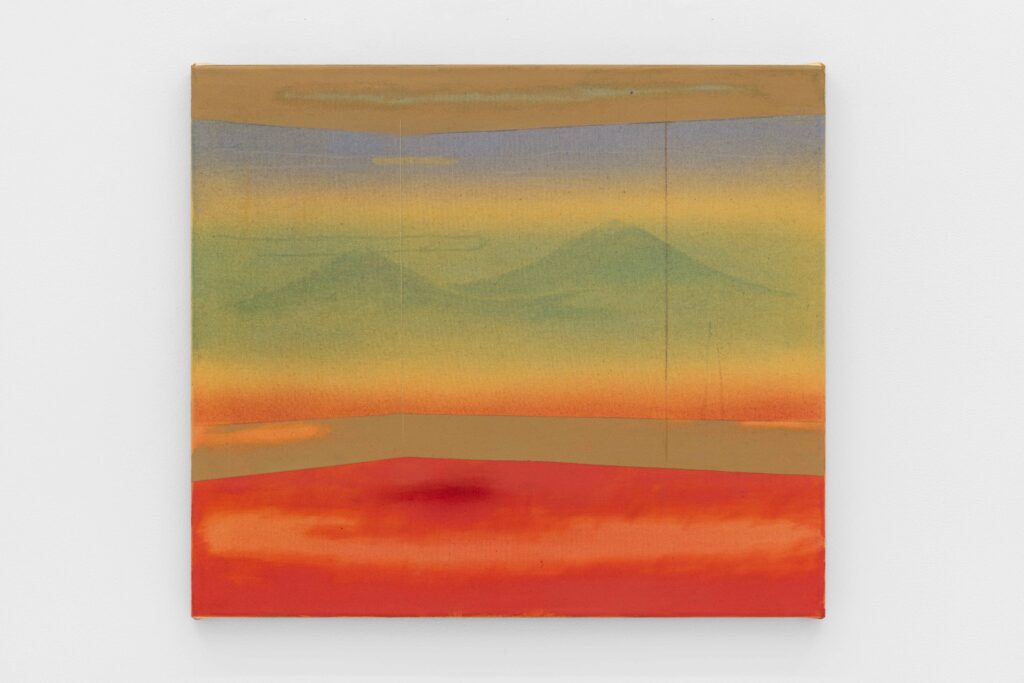
ECCPROJECTS #28 ECCPROJECTS #28 Annabell Häfner 09 June – 13 July 2025Open by appointment only ECC Project RoomVia Martiri della Libertà 210023 Chieri TO Italy Captions of the works exhibited:Annabell Häfner, Fleeting Space 4, 2025, acrylic, chalk, oil on canvas, 52 x 60 cm Annabell Häfner (1993, Bonn) lives and works in Berlin.In her artistic […]
TAPPABUCHI

Irene Baita, Tappabuchi, fotografia analogica stampata su alluminio bianco 3 mm, 30.5 x 50.3 cm © Silvia Mantellini Faieta (@silviamantellinifaieta) 📸 Marco Erpete (@marco.erpete) @irenatabai @elizfsblgg @cafferubik_official
Revelations of Divine Love

Hyperobjects is thrilled to inaugurate the first event of the Hembryo 2025 exhibition program, To create a small flower, with the performance Revelations of Divine Love by VVXXii & Cityofbrokendolls, featuring sound by Meuko! Meuko! curated by Camilla Giaccio Darias . Following the open call The Anthropocene Will Collapse, a jury composed of philosopher Timothy Morton, researcher and writer Laura Tripaldi, artists Evelyn Natalia Bencicova and CROSSLUCID, and curator and scholar Ginevra Ludovici, selected four artists who will transform Hembryo into a living installation—envisioning new affective landscapes beyond the Anthropocene.
ALTROVE
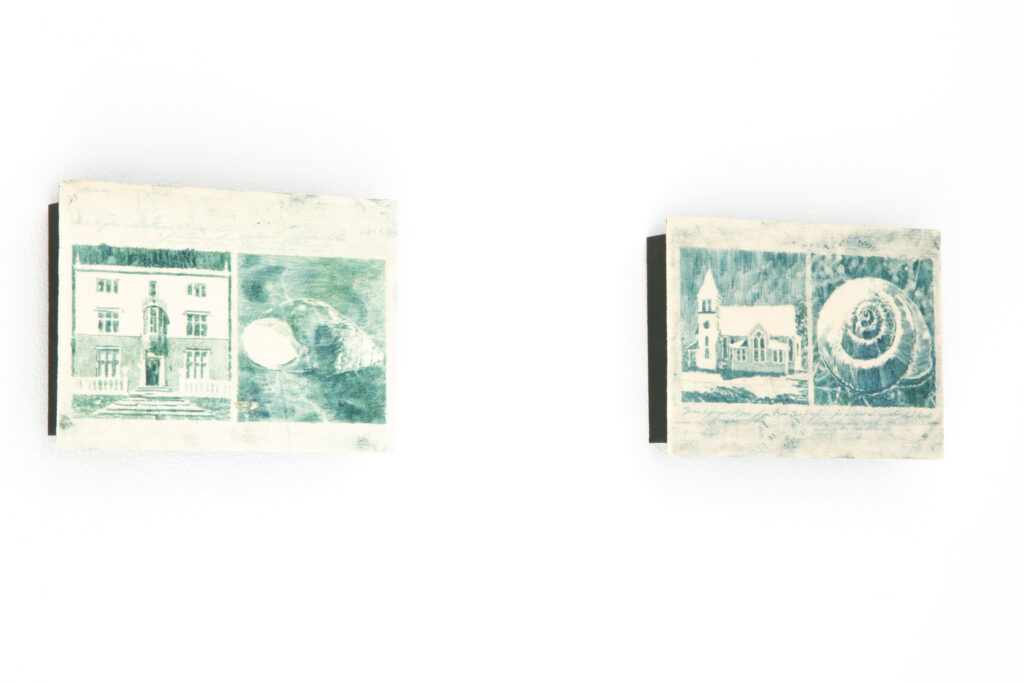
Tre artisti — Federico Catagnoli, Margherita Marzani e Mauro Valsecchi — ci invitano a esplorare un altrove che sfugge al visibile, che si insinua tra le pieghe della memoria e della percezione. Le loro poetiche, seppur distinte, convergono in una comune indagine sull’archetipo, sulla sensorialità e sulla natura elusiva della realtà. Insieme, ci guidano oltre la soglia del tangibile, là dove il ricordo si fa visione e la visione si fa interrogativo.