


3 Exhibitions to See in March
Our guide to exhibitions in Italy
03.03.2026
Anger can unite more powerfully than love. It propels us toward action, toward movement — in the best of cases, toward change. Love, instead — like happiness and all forms of contentment — invites us to settle. To grow comfortable.
“If you do not feel anger, it is because you are not paying attention,” one often reads online and on protest banners. Choosing not to feel anger is, in many ways, a convenient choice — a way of avoiding a sentiment that is by nature conflictual, at times violent and destructive. It saves energy; it grants us permission not to commit to anything. Our relationship with anger resembles a modern love affair: if I don’t commit, I am obliged to nothing; if I refuse anger, I can pretend I don’t see.
The three artists featured this month have known anger well — and have neither concealed nor disowned it. An artist can hardly afford to ignore what they feel.
For each of them, anger has taken on its own inflection and physiognomy: a melancholic portrait, a cynical juxtaposition of images, a steadfast sculpture.
And yet all three have forged with anger a relationship that is healthy, solid, enduring — perhaps far more so than any they have known with love.
Alice Neel. I am the century - Pinacoteca Agnelli, Turin (until 6 April)
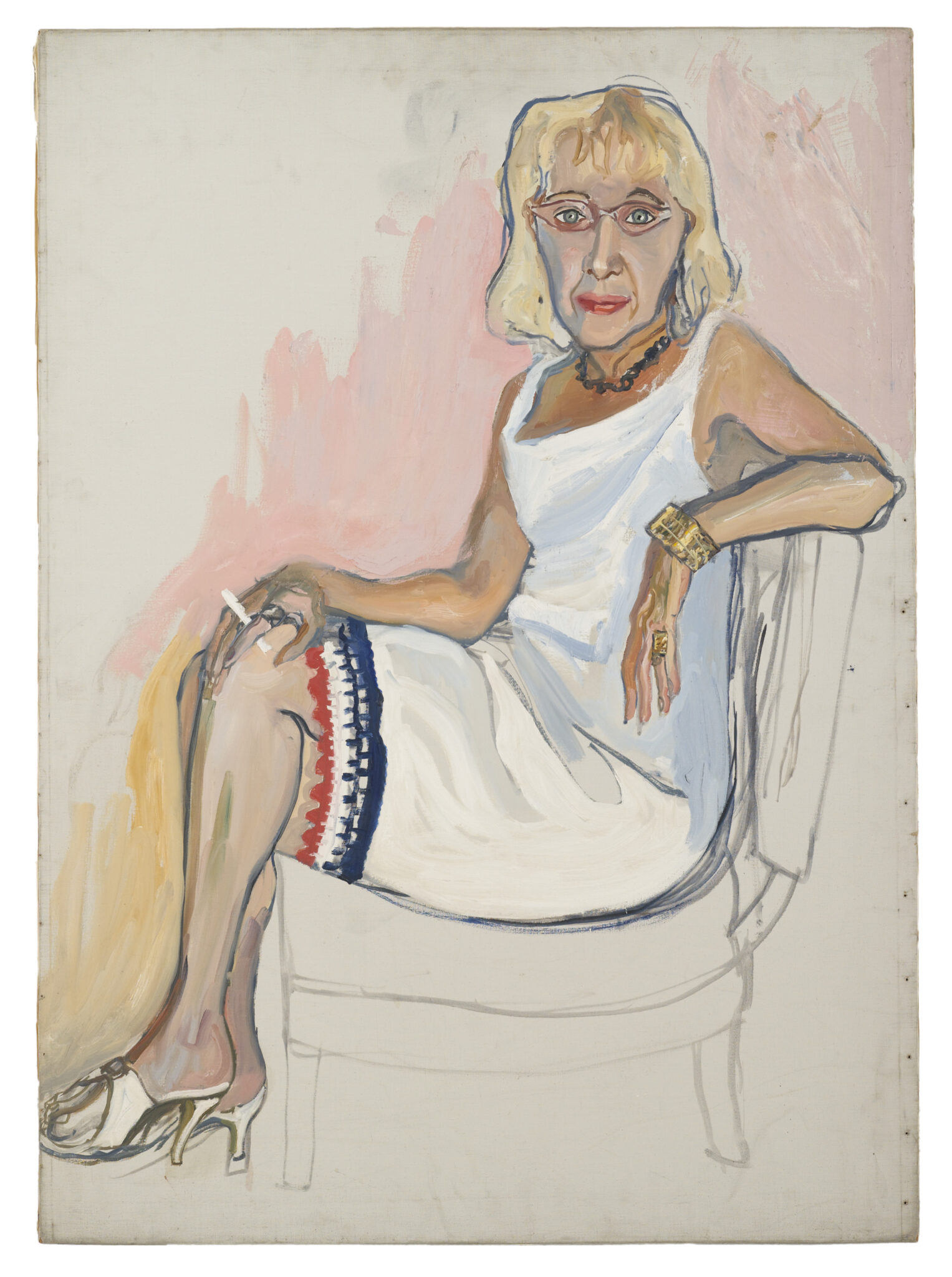
Alice Neel, Irma Seitz, 1963, oil on canvas, 111.8 × 81.3 cm
In a twentieth century that pursued abstraction, Alice Neel’s convinced figurative art made its revolution with portraits, landscapes and still lifes.
Her canvases are crowded with the profound solitudes of the new society: lost, afflicted gazes, yet never desperate, in a kind of resigned acceptance that life was what it was—and that it would remain so. Her soul, that of a hardened expressionist, translated the weakest and most precarious lives into bold, decisive strokes, letting color roam freely in accord with feeling.
Born at the turn of the century in Pennsylvania, the painter found human material to portray throughout her life in the social theater of New York’s Harlem. Her subjects came from the Black, queer, and Hispanic communities, but also included intellectuals and wealthy figures of the bourgeois class slowly sliding into the Great Depression.
And then countless women: elderly, pregnant, girls, the sick; sagging breasts nursing, awkward legs, naked and ungainly bodies. Within her own “human comedy,” Alice Neel redefined the female imagination of the twentieth century with the naturalness and conviction of someone who wished that imaginary world were never imposed.
The verb “ritrarre” has two meanings: “to depict faithfully, to create a likeness,” but also “to pull out, to extract.” For Neel, a portrait is precisely this: to bring forth what is unseen and display it on the canvas in a fleeting moment of truth.
Fotoromanzo (Nicole Gravier) - Villa Medici, Rome (until 4 May)
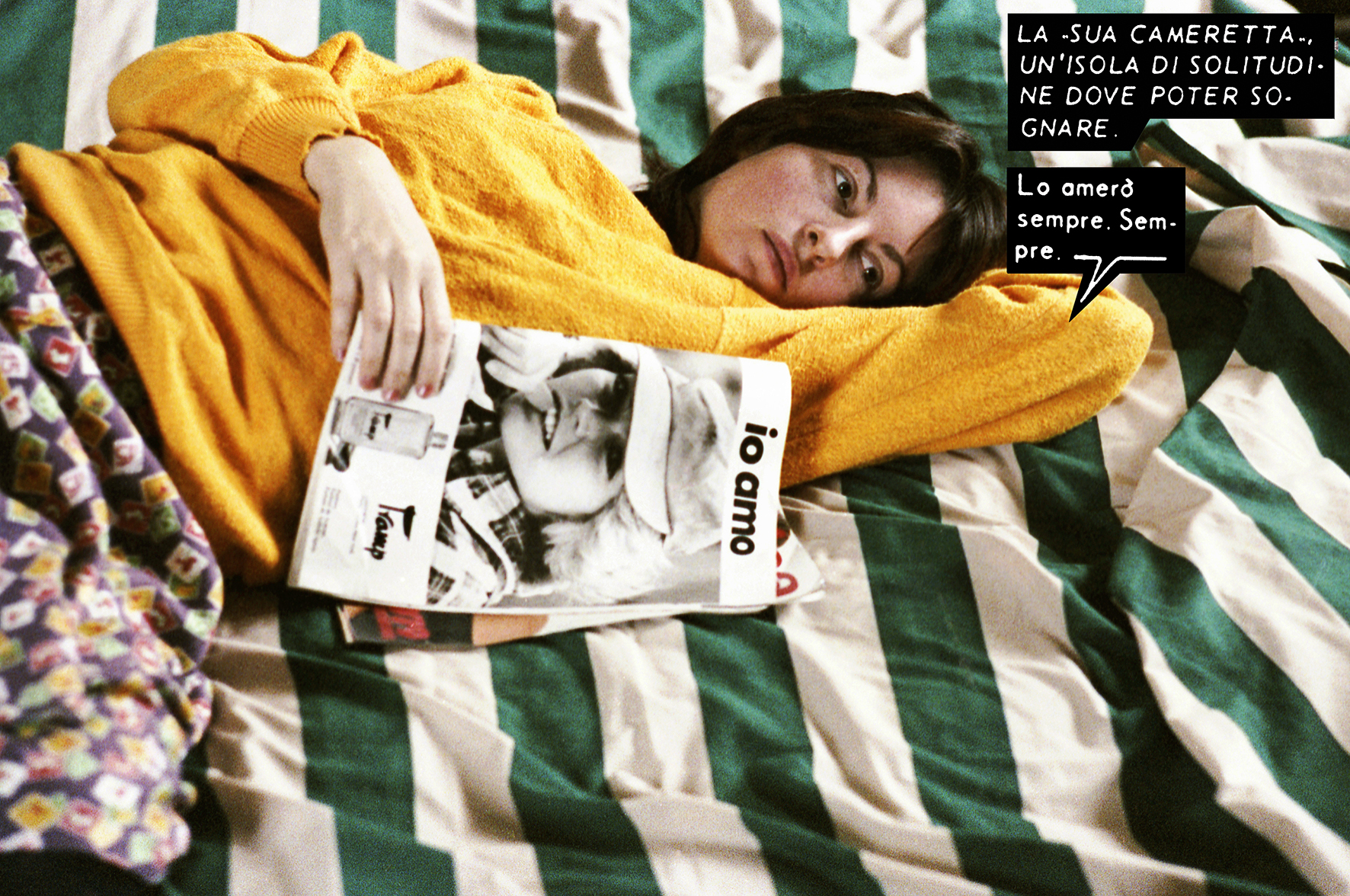
Nicole Gravier, Lo amerò sempre, “Miti e cliché: fotoromanzi” series, 1976–1978, C-print photocolor with collage, 50×75 cm, courtesy of the artist and ERMES ERMES, Rome
It is the perfect, silent women of advertising that we find in Nicole Gravier’s collages: groomed and polished, ready to be sad, in love, expectant, hopeless. They can be anything, any type of woman that is required of them. This is how advertising works.
The artist works with their faces and their broken poses, dissecting the media images of commercials and Italian photo-romances to lay bare stereotypes and clichés: family, femininity, economic and social subordination to men, the myth of beauty. Everything is unmasked with a play of irony and irreverence through the practice of visual détournement, of which Gravier was a pioneer. The French artist takes and relocates—a “copy and paste” of standardized poses and repetitive clichés—to deconstruct from within a visual language founded on patriarchal control, one that shapes aesthetics, relationships, emotion, and politics.
Her first retrospective in Italy pays tribute to an artist who, born in Arles, chose Italy—first Milan, then Rome—to study, train, and observe the world, sharing spirit and purpose with the colleagues of the Italian feminist revolution.
Pamela Diamante. Le invisibili. Esistenze radicali - Pinacoteca Metropolitana “Corrado Giaquinto”, Bari (until 21 April)
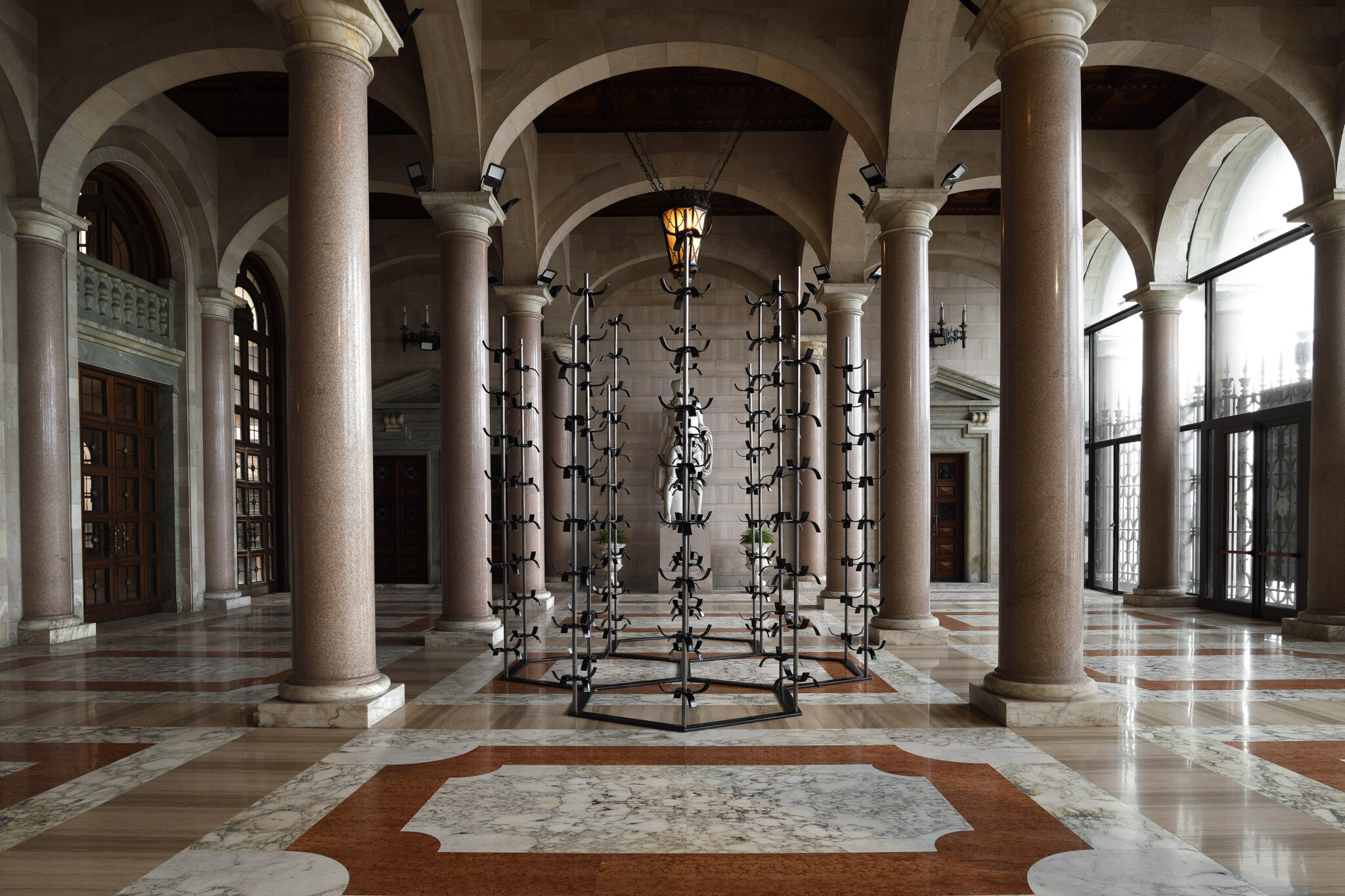
Pamela Diamante, Le Invisibili. Esistenze radicali, 2026, Environmental installation, ceramic and iron, 500 x 450 x 360 cm, Work acquired by the “Corrado Giaquinto” Metropolitan Art Gallery of Bari with the support of PAC2025 – Plan for Contemporary Art, promoted by the General Directorate for Contemporary Creativity of the Ministry of Culture. Photo by Michele Alberto Sereni, courtesy of Magonza.
In the seasonal harvest fields of southern Italy, the female farmworkers form a single body: plural, collective, a unified force, a swarm of bees. Faces always lowered under the weight on their backs, without identity or personal stories. They work the land—a substance that creates, protects, warms, preserves. They do it with their bodies, with hands buried in the soft soil, extracting its finest and most precious fruits.
Pamela Diamante, an artist born in Puglia, renders their bodies in metal—a strong and assertive material, exposed to the elements without ever bending. Sixteen iron rods support metal discs and small hoes forged in ceramic, symbolic references to agricultural machinery.
The artist transforms a condition of invisibility, exploitation, and isolation into a choral song and collective dance. She issues a social critique through the immediate language of contrast: in the splendid Sala del Colonnato, the unyielding metal rods are a stark, almost romantic presence, bodies animated by a force decidedly different from the stately, marble, and glorified forms of Giulio Cozzoli’s Marinaio and L’Agricoltore, located nearby. Their presence is silent and without sentiment. In this way, the female laborers of southern Italy become a disorienting presence, uncomfortable truth, an iron composition.
English translation by Dobroslawa Nowak