

5 Exhibitions to See in November
Our Guide to Exhibitions in Italy
By Dobrosława Nowak | Published 06/11/2026
With the many year-end roundups and retrospectives already set to appear in December, we want to dedicate the beginning of November to taking a look at Italy’s exhibition scene. A journey from north to south, offering an overview of the diversity of contemporary artistic production and the different ways in which it takes shape within the spaces that host it. From Bressanone to Naples, here are five exhibitions to discover this month.
Arcangelo Sassolino, La gravità del presente, b art h – spazio arte, Bressanone, until 23 December
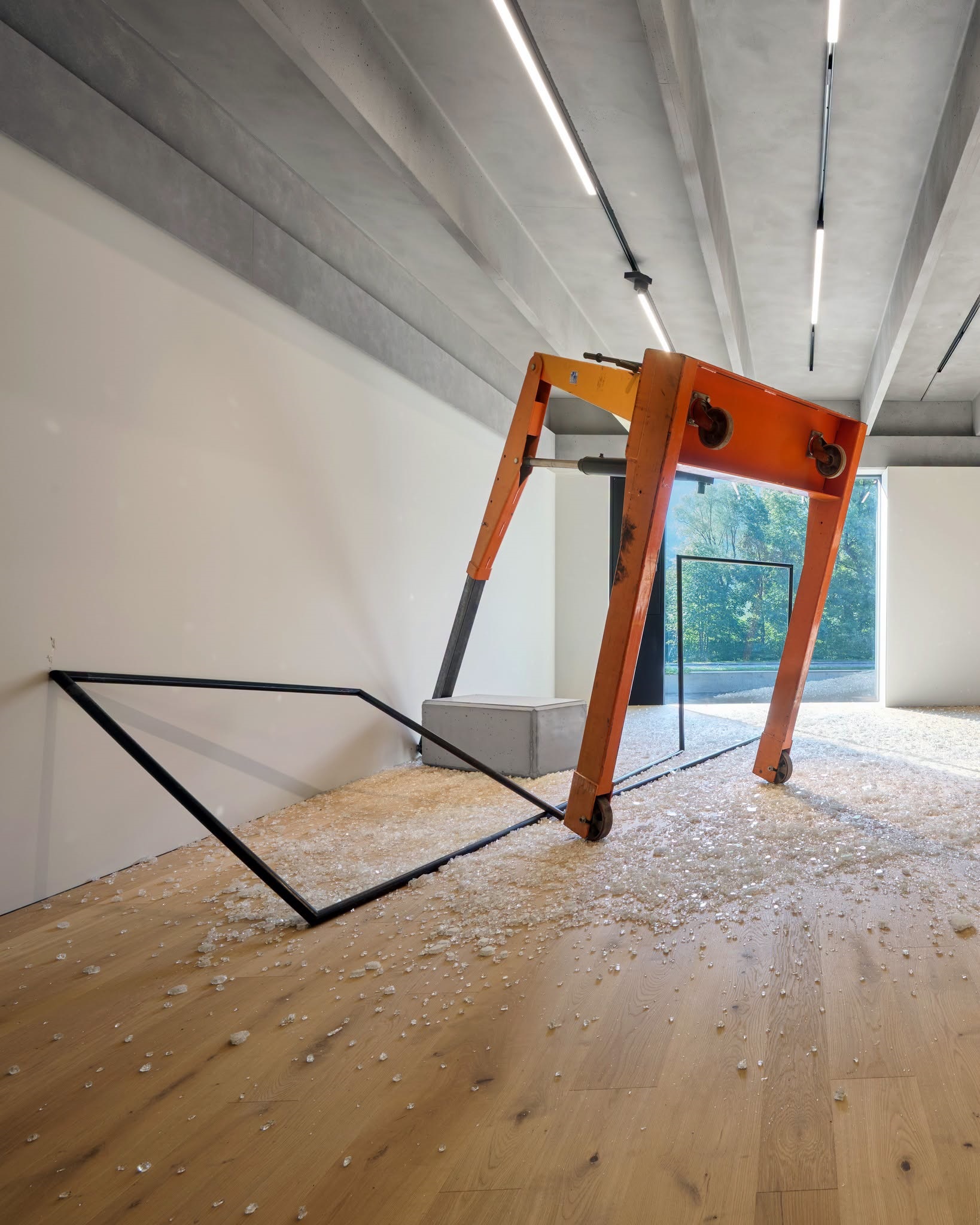
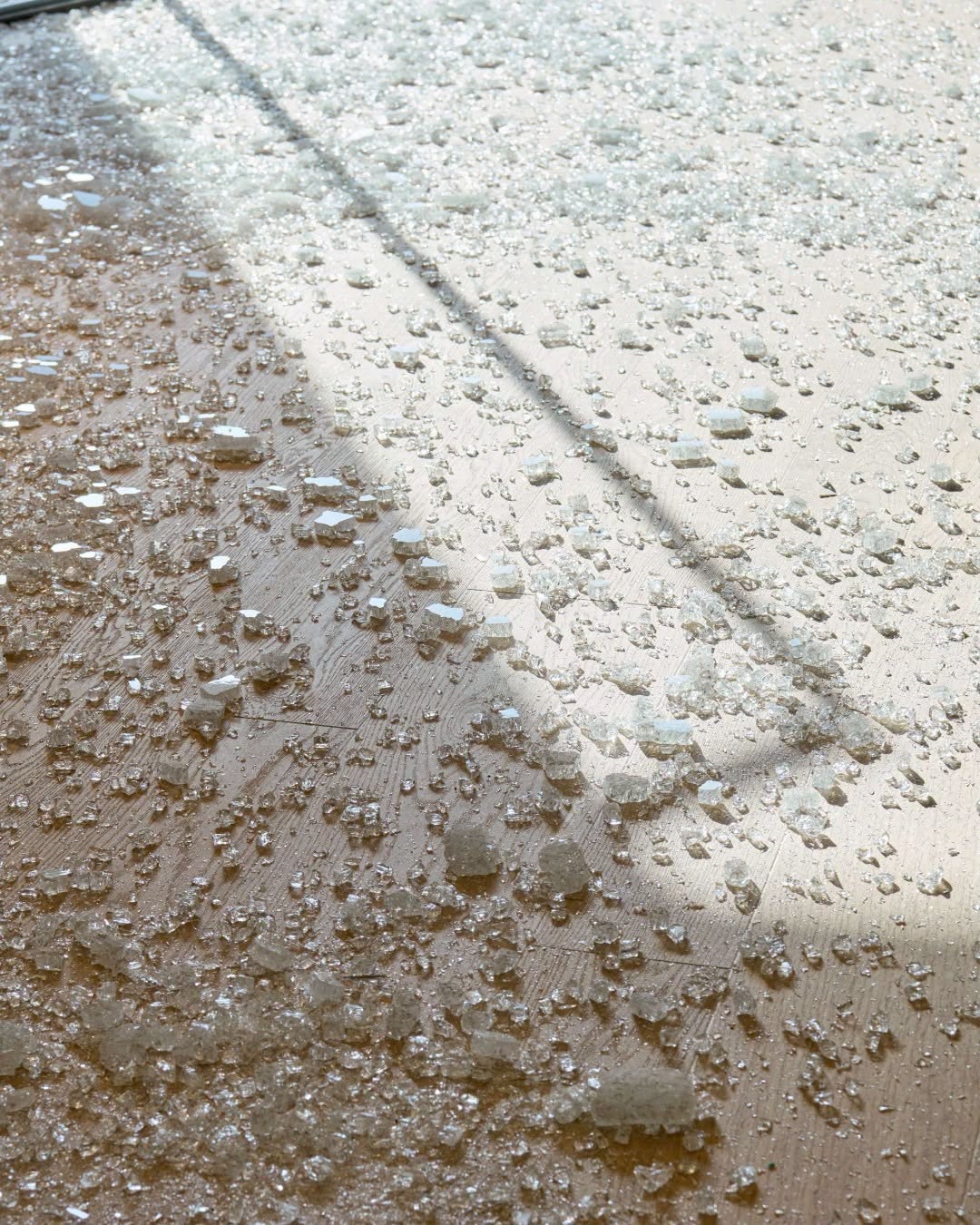
Open to the public until December 23, La gravità del presente, a solo exhibition by Arcangelo Sassolino, is on view in Bressanone.
Two wordplays are at work here. The first is the artist’s own: the title invokes gravity not only in its metaphorical sense, the one that most readily comes to mind when speaking about art, but also in its physical meaning—as an “invisible yet determining presence”1.
The artist’s research unfolds through the relationship between matter, whose properties can be investigated, and reality, which is constantly subject to the effects of gravity. Weight, tension, pressure, movement, and resistance lead Sassolino to engage with the limits of physical materials, introducing an intrinsic dynamic into sculpture through which they become animated. The second wordplay, meanwhile, lies in the name of the space hosting the exhibition, the b art h – spazio arte gallery. Behind it is Ivo Barth, a passionate art collector and head of Barth, a long-established family business specializing in the design and creation of bespoke interiors.
Ogni pittura è paesaggio, Fondazione Bevilacqua La Masa, Sala del Camino in the SS. Cosma e Damiano complex, Giudecca, Venice, until November 21


Ogni pittura è paesaggio exhibition views, Fondazione Bevilacqua La Masa, courtesy the artists and the gallery
Curated by Stefano Coletto, with the participation of Chiara Peruch, Eric Pasino, and Jacopo Zambello, the event is described by its organizers as “an unprecedented exhibition intervention.” And when painting meets the idea of landscape (“The way painting is arranged creates a landscape and therefore becomes a landscape itself”2, as the curator explains), the premises could hardly be more promising.
At the heart of the exhibition’s experimental approach are display methods historically used in seventeenth-century picture galleries. In contrast with the model of the essential, pared-down exhibition space that has become established over recent decades, these methods propose a different way of encountering painting: one that is more expressive and sensory than symbolic.
Within this context, Eric Pasino’s highly dynamic, layered works feel particularly at home, alongside Chiara Peruch’s enigmatic settings, where natural elements, animal presences, and everyday objects coexist beyond any clearly defined time or place. Jacopo Zambello’s work, meanwhile, turns towards the exploration of the psyche and its various dimensions.
In Space No One Can Hear You Laugh (Stay Human) – Ten Years Later, Galleria Giovanni Bonelli, Milan, on view until November 14
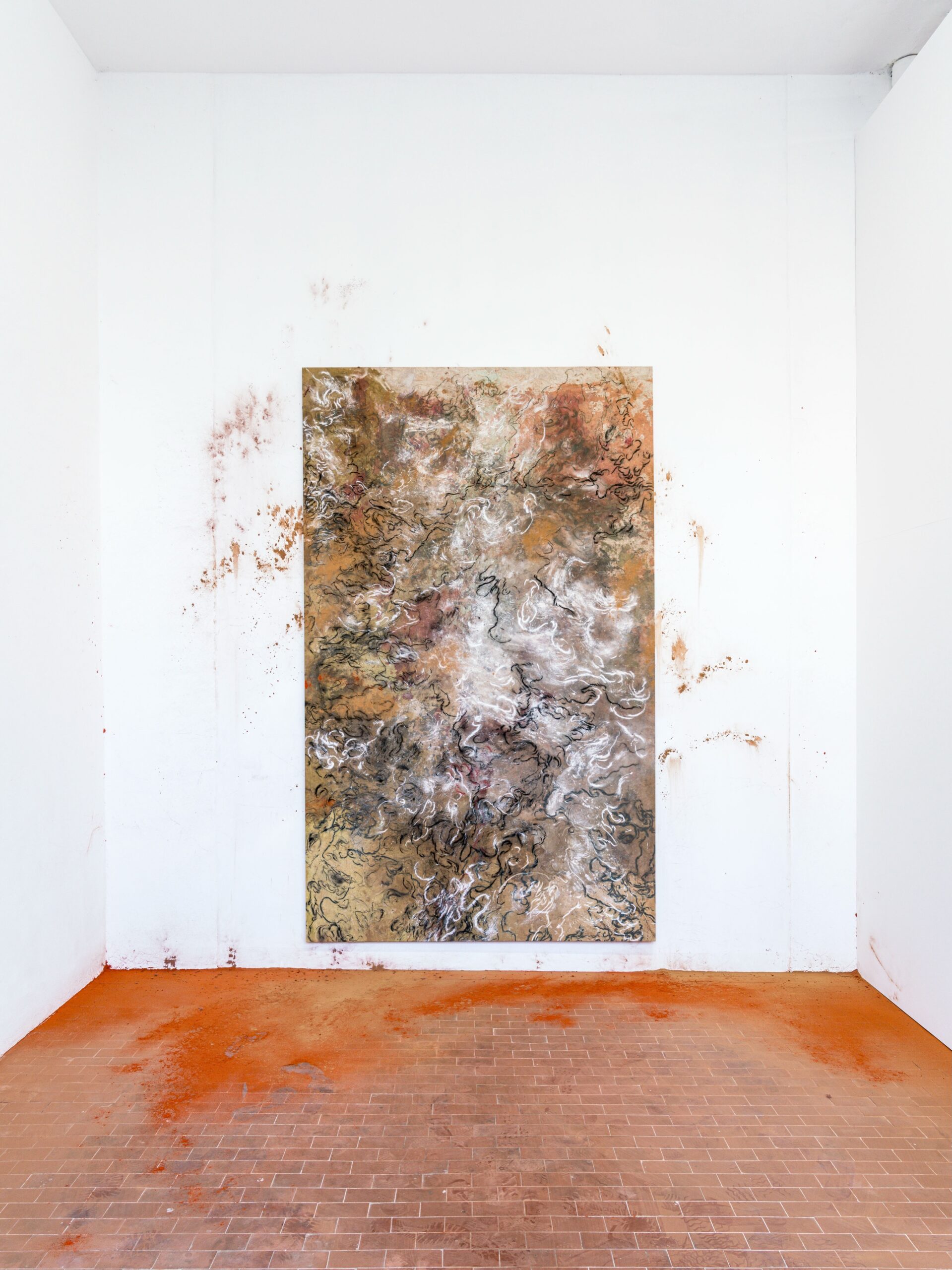
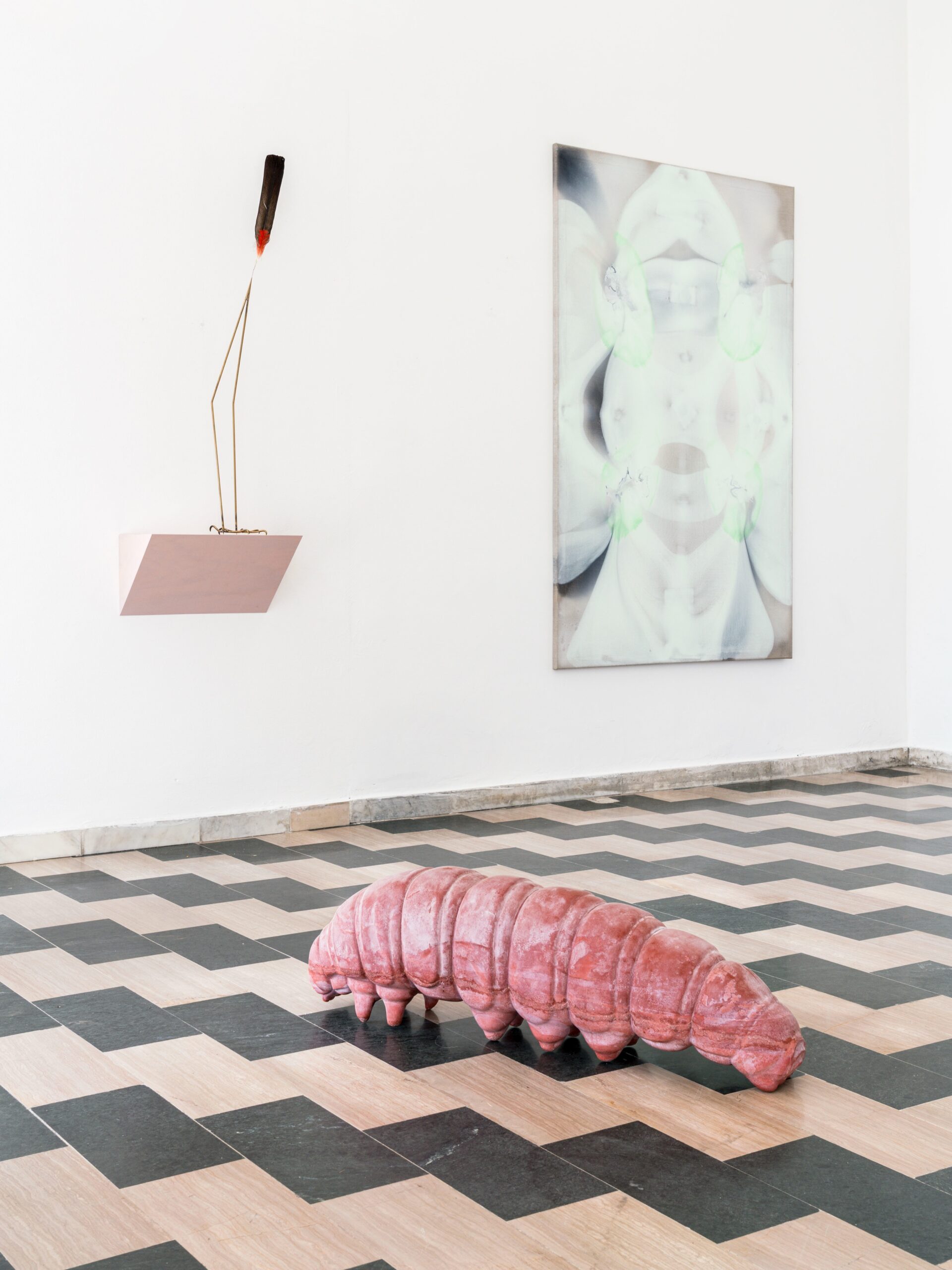
In Space No One Can Hear You Laugh (Stay Human) exhibition views, courtesy the artists and Galleria Giovanni Bonelli
Ten years later, In Space No One Can Hear You Laugh returns to Milan, once again curated by Clarissa Tempestini. One of the exhibition’s main strengths is its extensive list of participating artists, many of whom are particularly active and well established on the contemporary art scene: all the more reason to visit, while there are still a few days left before it closes. They include Michele Gabriele, Petrit Halilaj, Monia Ben Hamouda, Sofia Salazar Rosales, Corinna Gosmaro, Michela Nosiglia, Mattia Moreni, Selma Selman, Francesca Dimina, Julius von Bismarck, Tyra Tingleff, Chiara Calore, Kasia Fudakowski, CCH, Heike Kabisch, Alvaro Urbano, and Stephanie Comilang.
Revisiting the same title ten years later is no coincidence. It is a way of measuring the distance—and, at the same time, the continuity—between two moments: “pausing to look, for a moment, at what has happened to us and to the world over a relatively short and, at the same time, paradoxically infinite period of time.”3
Particularly intriguing is the addition of Stay Human this time around. It underscores an awareness of the profound changes that have taken place in recent years and recalls George Orwell’s 1984, in which “remaining human becomes a form of resistance against a system capable of controlling not only behaviour, but also thought, memory, desire and, ultimately, our very perception of reality.”
Over the past decade, however, the issue has become more complex. It is no longer simply a matter of opposing a system: these changes seem to have seeped into the very fabric of the forces that, at least in theory, should be resisting them, adding another, perhaps even more significant, layer of complexity.
Song Dong. Soul Out, MAO – Museo d’Arte Orientale, Turin, on view until June 27, 2027
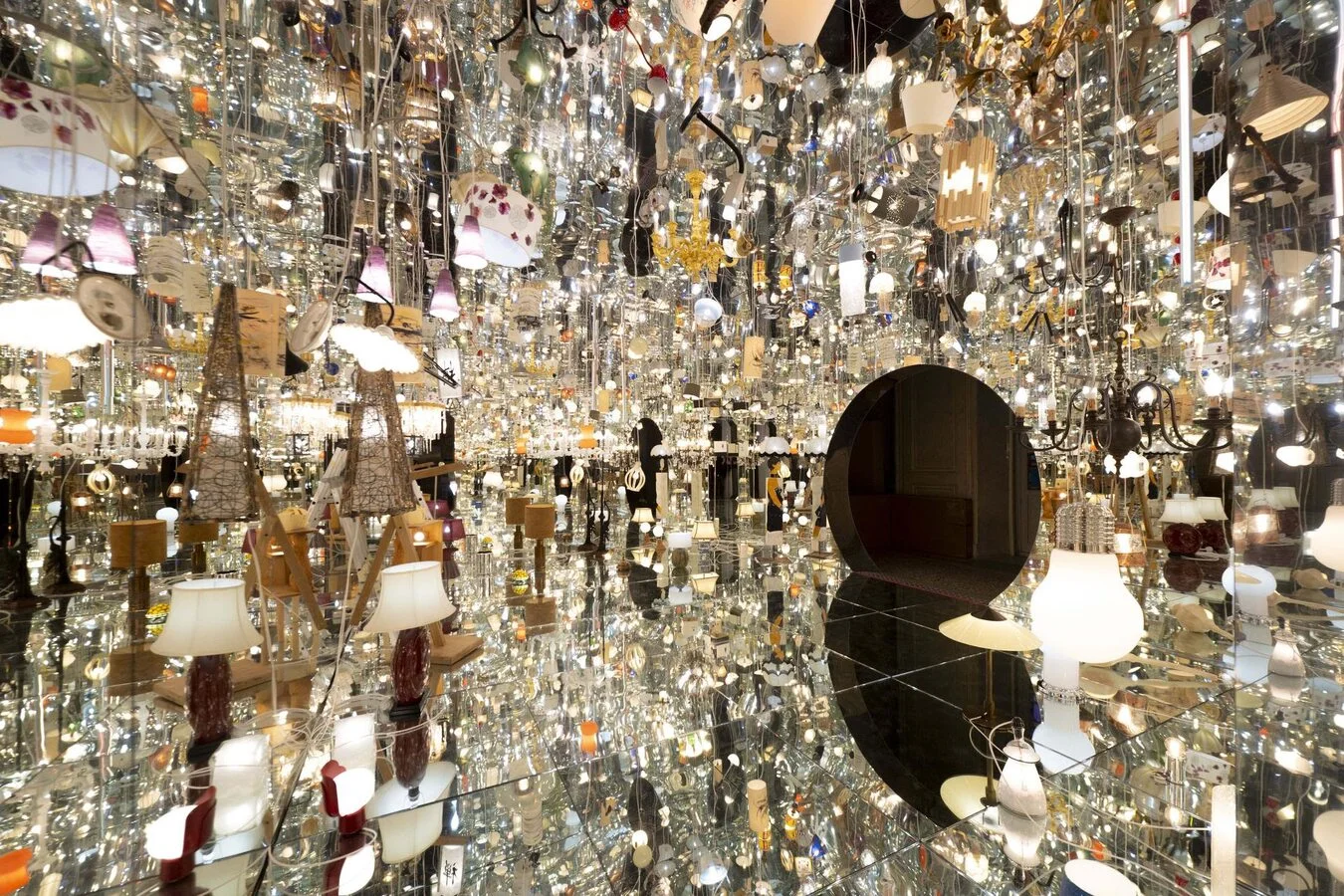
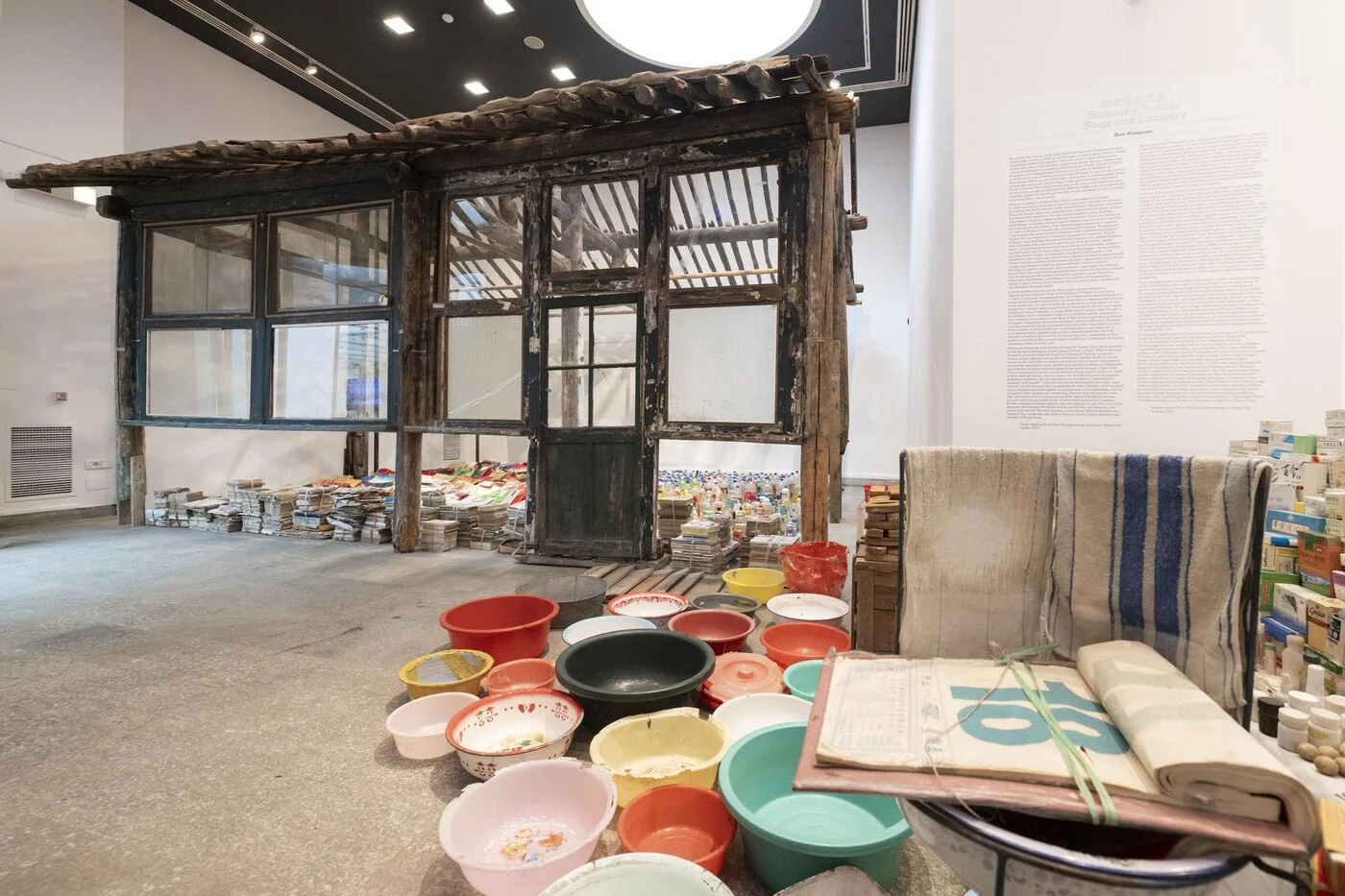
Song Dong. Soul Out exhibition view, MAO Museo d’Arte Orientale, Torino – 2026 – ph. Giorgio Perottino
The site-specific exhibition, curated by Li Zhenhua and Davide Quadrio, with Francesca Filisetti and Rebecca Ricci, transforms the entire museum into a system of relationships, in which the artist’s works engage in dialogue with the permanent collections and the historic architecture of Palazzo Mazzonis.
The exhibition traces more than thirty years of the artist’s practice, from the 1990s to the present day, revisiting some of their most iconic installations and presenting an archive of photographs and videos documenting their performances. At the same time, it offers an insight into contemporary China.
The artist’s visual language is rooted in the philosophy of the great Taoist masters and develops through a dialogue with some of the major international art movements of the second half of the twentieth century, from Italian Arte Povera and the Japanese Mono-ha movement to American Minimalism and Conceptual Art.
Living Collapse, Museo Madre, Naples, on view until 16 November
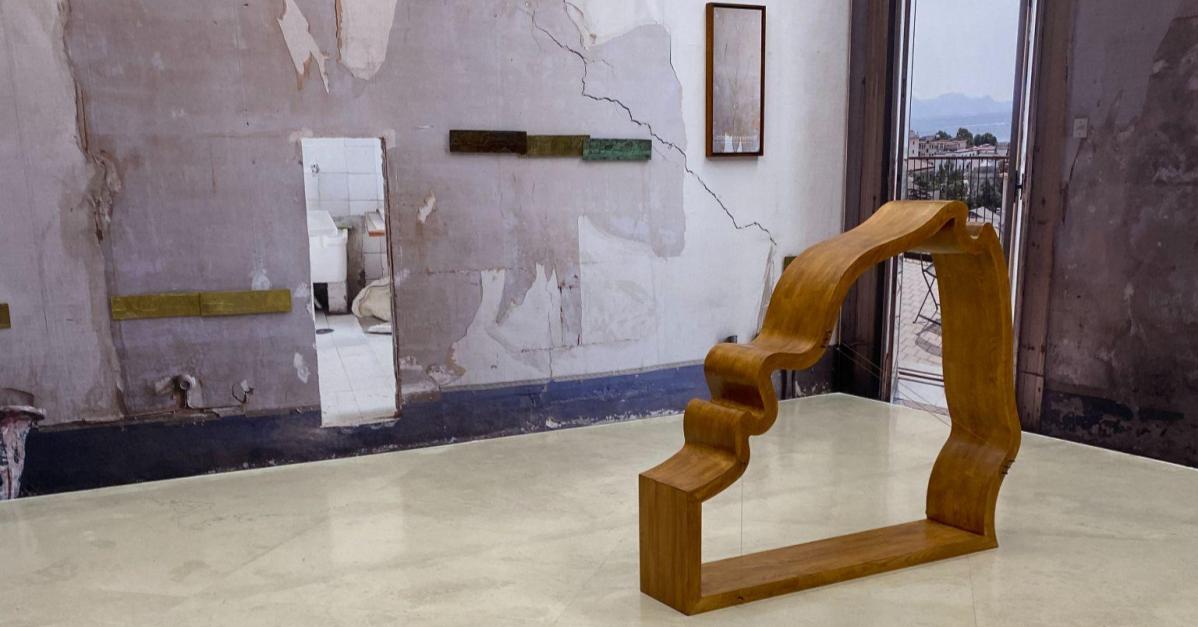
Raffaella Naldi Rossano, Tentacular Bed, Living Collapse exhibition view, courtesy the artists and Museo Madre
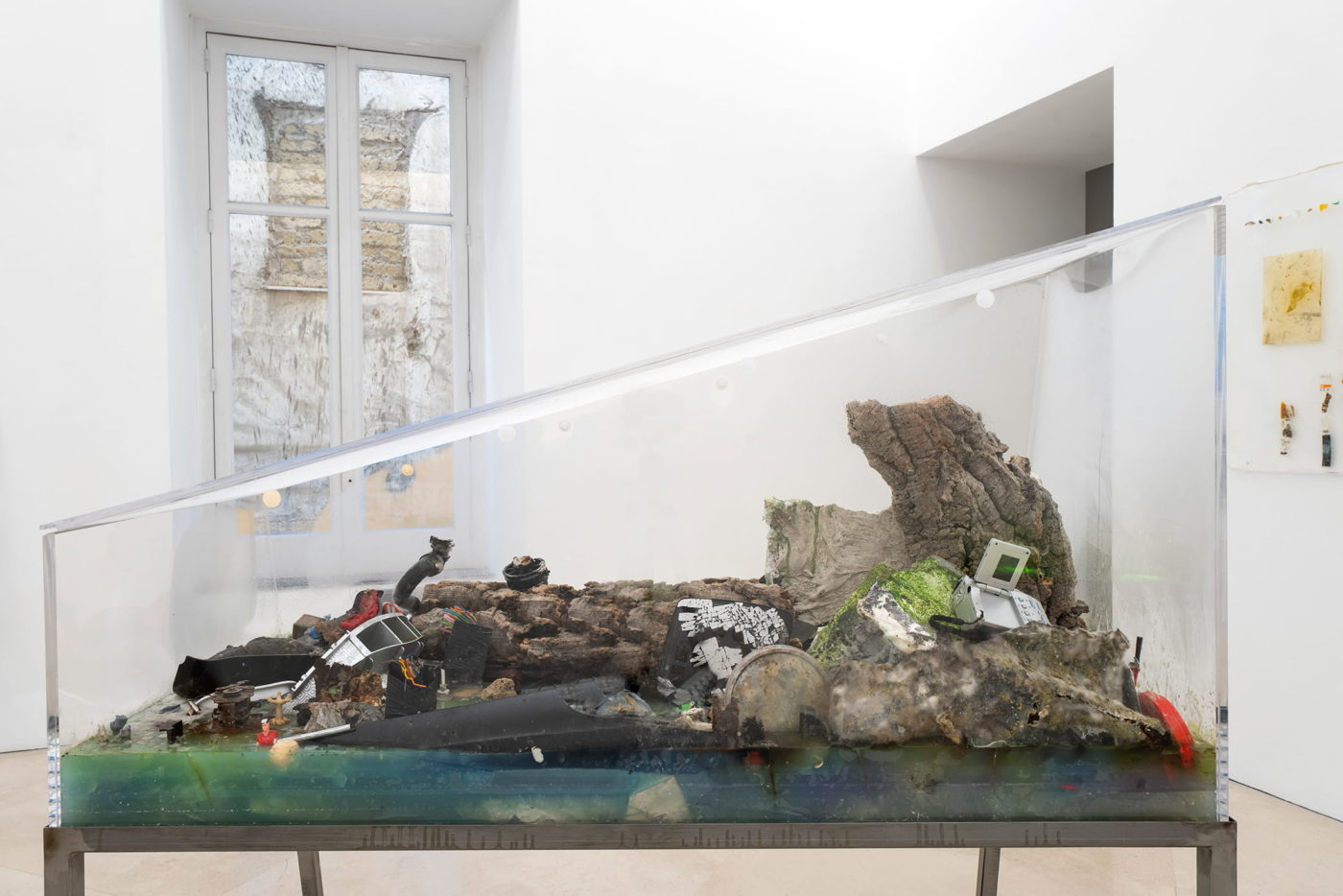
Andrea Bolognino, Biorama, 2026; Un viaggio che non farò più, 2026, Fondazione Donnaregina per le arti contemporanee – Museo Madre, Napoli, ph Amedeo Benestante, Living Collapse exhibition view, courtesy the artists and Museo Madre
The second exhibition of the Meridiana Prize, Living Collapse, curated by Samuele Piazza, brings together works by Andrea Bolognino, Effe Minelli and Raffaela Naldi Rossano. Its curatorial concept takes as its starting point a reinterpretation of the Neapolitan nativity scene tradition and, in particular, Jimmie Durham’s Presepio, held in the Madre’s permanent collection. This historical reference becomes a starting point for exploring the complexities of the present through the perspectives of the artists and curator, all born between the 1980s and 1990s.
Promoted by Museo Madre and Amici del Madre, with the support of Antony Morato and Fondazione Tridama, the Meridiana Prize, curated by Mario Francesco Simeone, aims to support curatorial research and the emerging art scene, with a particular focus on Campania and Southern Italy. It seeks to foster dialogue between different generations, contexts and artistic languages. 4
References:
1. “Arcangelo Sassolino, La gravità del presente”, Galleria Continua. [https://www.galleriacontinua.com/news-detail/arcangelo-sassolino-la-gravita-del-presente-1378]
2. “La Fondazione Bevilacqua La Masa invita a ripensare l’atto stesso del guardare”, Alessia De Michelis, Il Giornale dell’Arte, 23.09.2026. [https://www.ilgiornaledellarte.com/Mostre/La-Fondazione-Bevilacqua-La-Masa-invita-a-ripensare-latto-stesso-del-guardare]
3. “In Space No One Can Hear You Laugh (Stay Human) – Dieci Anni Dopo”, The Italian Art Guide. [https://theitalianartguide.com/in-space-no-one-can-hear-you-laugh-stay-human-dieci-anni-dopo]
4. “Mostra Living Collapse a cura di Samuele Piazza”, Museo Madre.[https://www.madrenapoli.it/mostre/living-collapse/]