


Error as a Form of Creative Freedom: Ugo La Pietra at Fondazione La Rocca
21.07.2026
One of the defining qualities a contemporary artist should possess is the ability to move fluidly across different disciplines, without fearing the possibility of error. Although Ugo La Pietra (Bussi sul Tirino, Pescara, 1938) trained as an architect, his practice has long extended beyond these boundaries, establishing him as a multifaceted artist whose work encompasses drawing, painting, photography, ceramics, video, and textile art with remarkable intelligence and inventiveness. La Pietra’s ability to bring together different artistic languages has developed since the 1960s, in step with broader developments on the international art scene. During that decade, the crossing of disciplinary boundaries, experimentation, and even error became privileged modes of inquiry, capable of opening up new expressive possibilities. Within this context, movements such as Fluxus, Happenings, Arte Povera, and Conceptual Art helped dissolve the boundaries between artistic disciplines, making the hybridization of media one of the defining principles of contemporary artistic practice. The exhibition Alla finestra (At the Window), curated by Giacinto Di Pietrantonio, which Fondazione La Rocca in Pescara is dedicating to Ugo La Pietra through October 3, 2026, not only explores the relationship between different forms of knowledge and the fluidity between the public and private spheres—according to La Pietra’s celebrated statement, “to inhabit is to feel at home everywhere”—but also opens up a broader reflection on space as a place of reciprocity and multifacetedness.
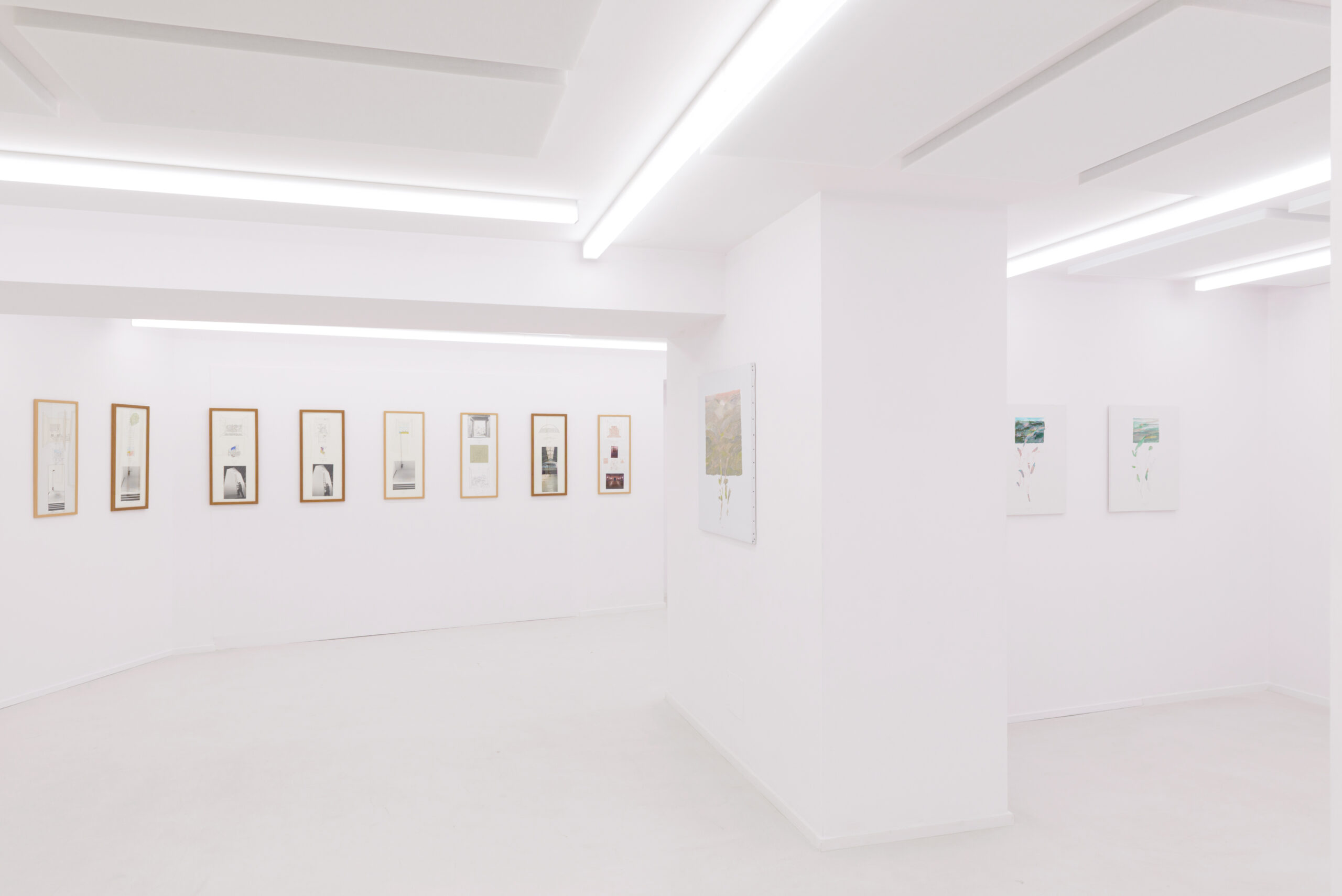
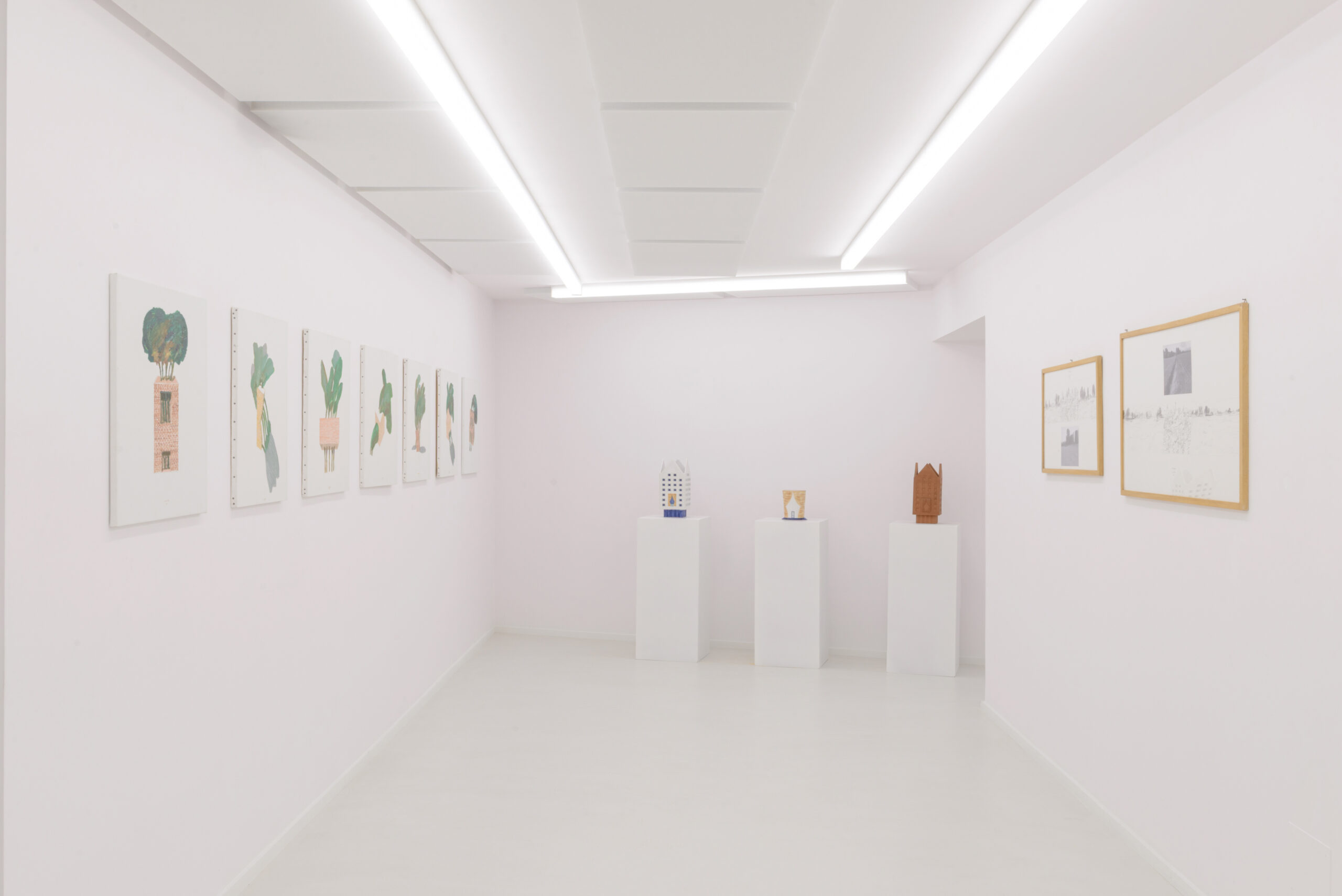
Installation views, Alla finestra, Ugo La Pietra, © Iacopo Pasqui/Courtesy Fondazione La Rocca Pescara e Studio Ugo La Pietra
Ugo La Pietra possesses an extraordinary creative energy expressed through a natural and cross-disciplinary interweaving of languages. In particular, the theme of the window has always served as a unifying element, capable of lending continuity to a body of research that, over the years, has never ceased to develop and overlap with other themes. The works on view reveal the value of an unpredictable personality, characterized by an exploratory rather than dogmatic approach, in which error is not feared but embraced as an integral part of the creative process, as though it were the successful outcome of an ongoing complicity between different methods and disciplines. It is an aesthetic experience that does not fear mistakes but welcomes them as a vital condition of freedom, experimentation, and fruitful evolution. For Ugo La Pietra, boundaries are not created to enclose and constrain; rather, they emerge as an invitation to be crossed over, generating continuous intersections and cross-pollinations. Accordingly, the artist recognizes the physical act of looking out the window both as a natural necessity for studying space and as an investigation into the various everyday actions, both individual and collective. Such an undifferentiated form of unfolding toward every practice of life reveals a broad and multifaceted project, both in terms of the formal qualities of the works and the richness of their ideas. Perhaps the most significant core of the entire project consists of the works on paper produced between the late 1970s and the early 1980s, of which the exhibition presents an extensive selection, inviting visitors to grasp the internal relationships among them.
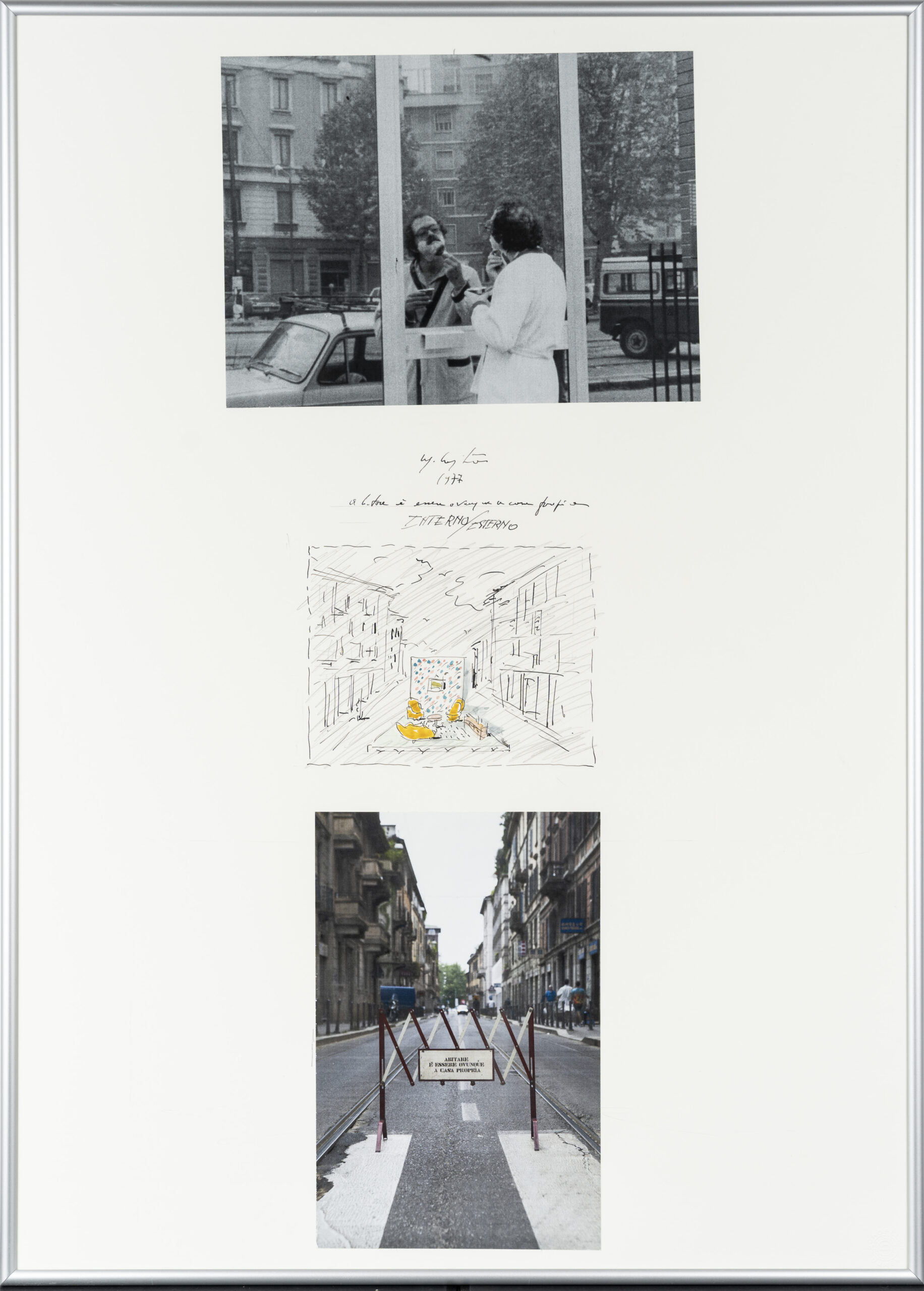
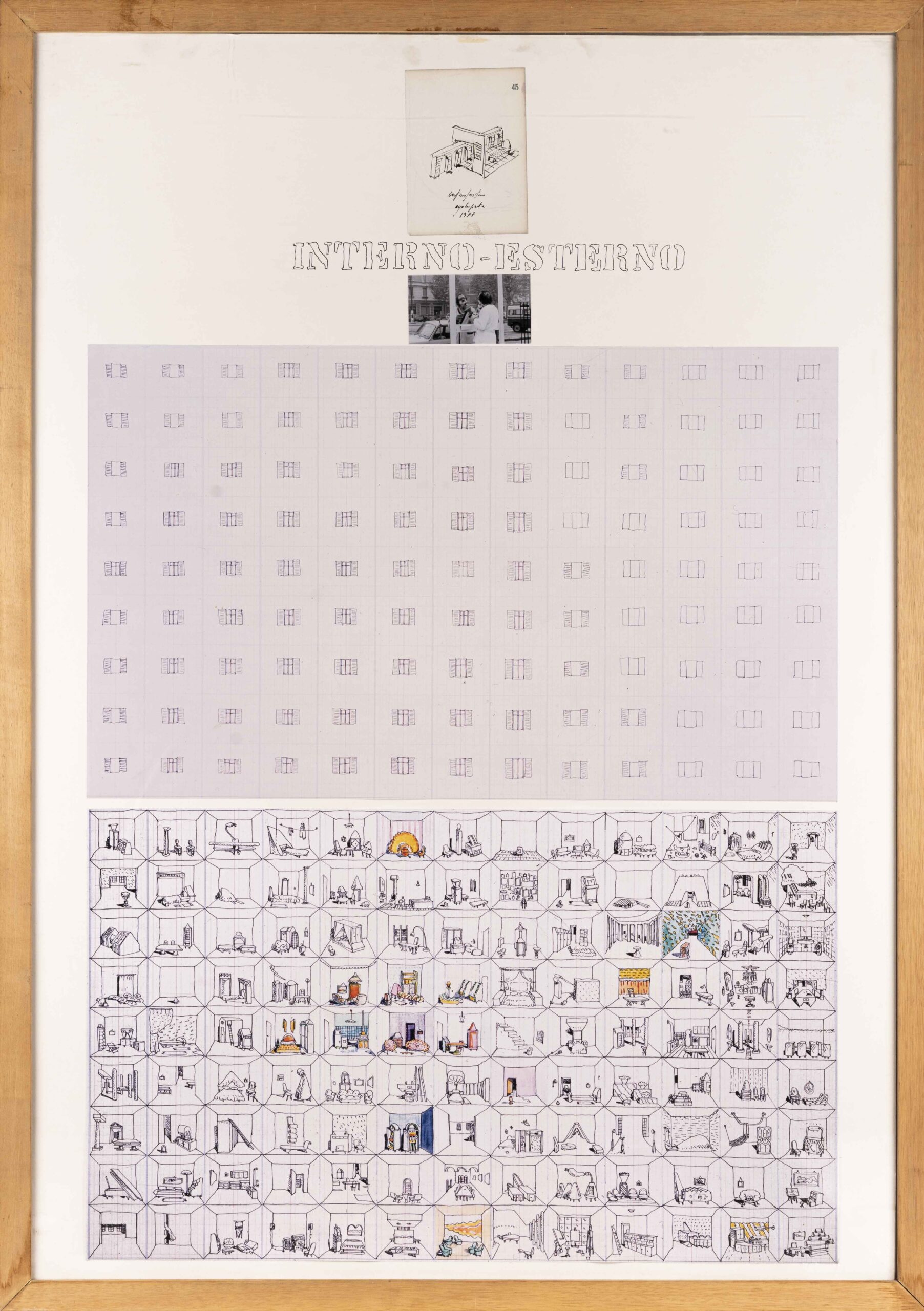
Ugo La Pietra, Interno/Esterno. Abitare è essere ovunque a casa propria, mixed media on paper, 70×50 cm, 1977, © courtesy Archivio Ugo La Pietra, Milano / Ugo La Pietra, Interno/Esterno, mixed media on paper, 100×70 cm, 1977, © courtesy Archivio Ugo La Pietra, Milano
These works, characterized by a rectangular format, develop the theme of interaction through a dialogue between photography, newspaper clippings, hand-drawn sketches, and concise, incisive phrases. Within this context, the theme of error emerges with compelling significance as a generative and creative possibility, to the extent that each sheet of paper is transformed into a space for experimenting with new languages. It is precisely these mistaken juxtapositions that touch upon the most varied issues which, although they date back some forty years, continue to resonate with the present day. Among these aspects, the ontological dynamics of art also come to the fore, together with their own mechanisms and convergences, raising questions about the path of growth that the artist must build independently. A possible answer emerges from Ugo La Pietra’s own attitude: he has always remained outside the structures of power that govern this system, remaining faithful to an independent position that has enabled him to observe its mechanisms critically from within, without ever fully adhering to them.
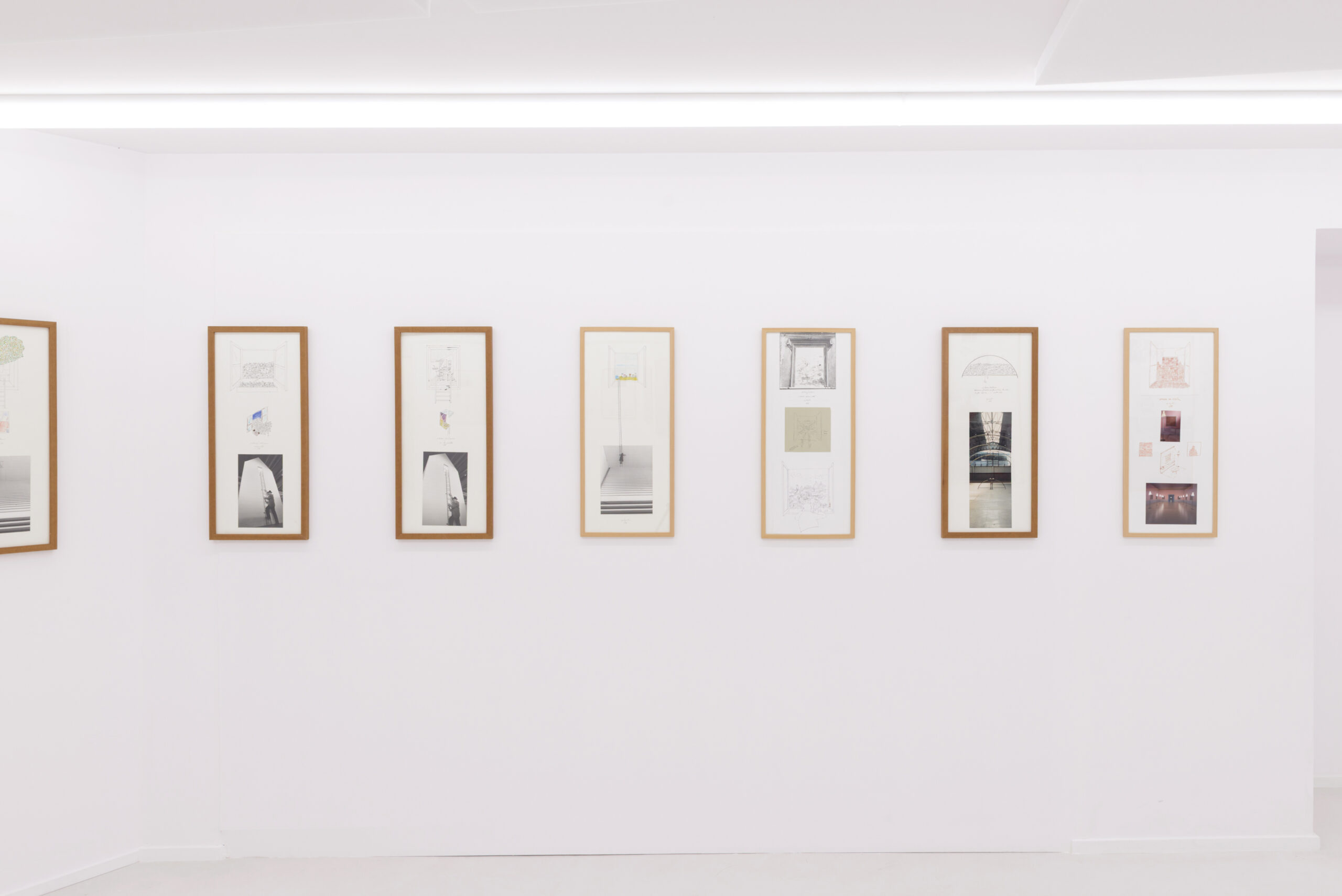
Installation views, Alla finestra, Ugo La Pietra, © Iacopo Pasqui/Courtesy Fondazione La Rocca Pescara e Studio Ugo La Pietra
Visiting the exhibition, one discovers that the state in which art finds itself today is not so different from that of the 1960s, particularly when observing the works on paper Interno/Esterno (Interior/Exterior) (1980), where the still frames from the video La grande occasione (The Great Opportunity) (1973) once again assume a predominant role. The film, created for the 15th Triennale di Milano, shows the artist walking through those spaces, observing, waiting for something, and handling a wooden ladder as a necessary tool for crossing an imaginary threshold, or, alternatively, for reaching an objective. The repetition of the same sequence, across different techniques and formats, reveals a distinctive diversity that could be connected to Claude Lévi-Strauss’s concept of structure, according to which the value of an object does not lie in its intrinsic qualities but rather in the system of relationships that constitutes it and in its infinite possible transformations. Despite the complexity of the themes and the diversity of the language, the exhibition could not have been conceived in such an articulate and accomplished manner. Its organization into thematic sections allows one to perceive how the artist, by dialogically analyzing disparate elements, generates further categories of thought; thus, the subject of the individual dwelling is placed in relation to everything that surrounds it, the city to the countryside, and the urban environment to the vegetal ecosystem.
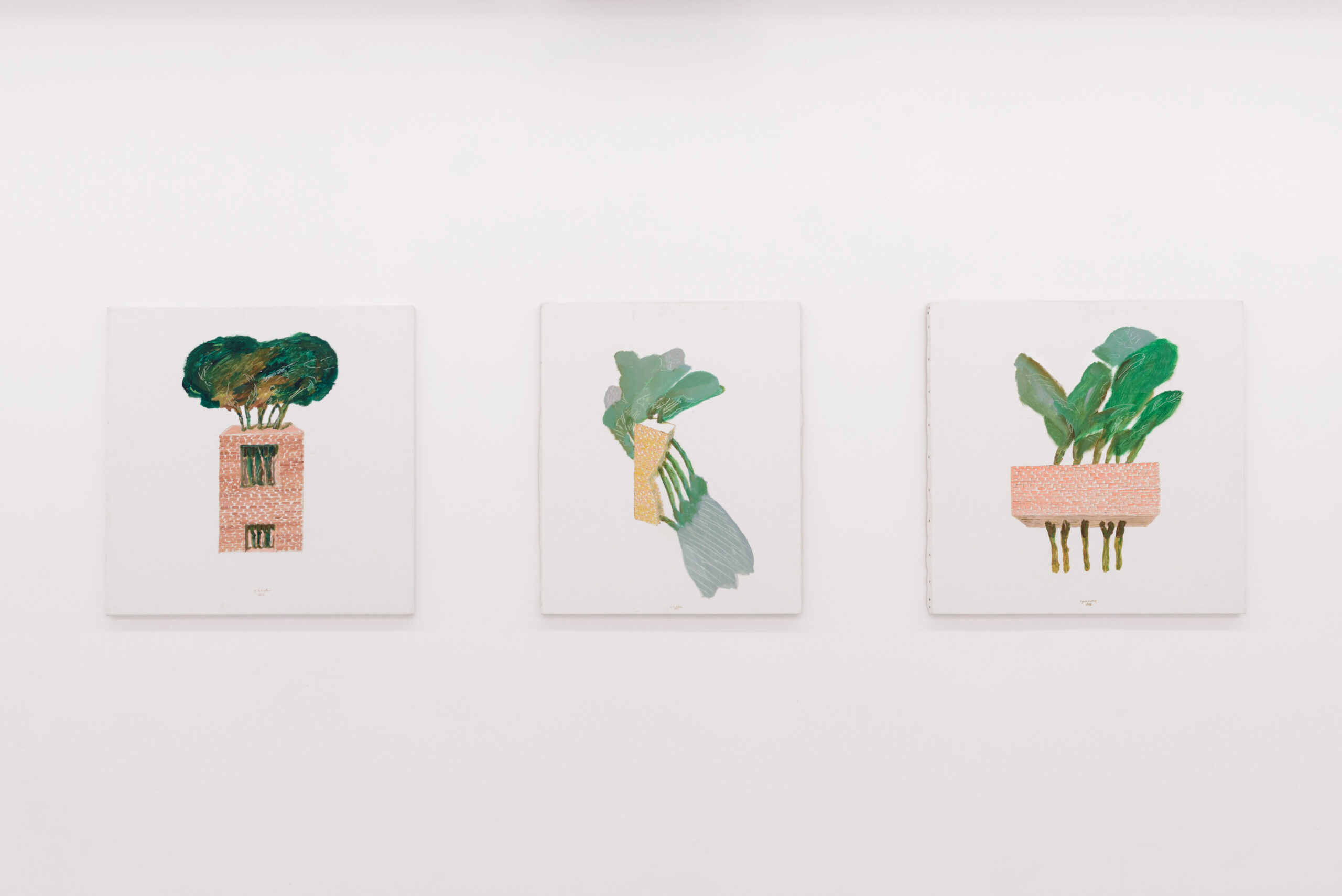
Ugo La Pietra, Architettura/Natura, acrilico su tela, 60×50 cm, 2024, installation view, Alla finestra, Ugo La Pietra, © Iacopo Pasqui/Courtesy Fondazione La Rocca Pescara e Studio Ugo La Pietra
Ugo La Pietra reveals an open mechanism of thought—of which the window may be considered the most significant iconography—so that when a theme comes into focus, it does not tend toward simplification but instead reveals a progressively broader complexity, almost indefinite and incalculable, entering into dialogue with further investigations and fields of research. This is evident in the subject of the garden and the landscape, which the artist addresses in his paintings with a rare attention to the vegetal fabric, its ever-changing mantle, and its capacity to generate perceptual interruptions in the relationship between figure and ground, with particular attention to the theories of Gestalt philosophy. Of particular imaginative intensity are the watercolor works on paper depicting gazebos, conceived as visionary and utopian structures that offer themselves to habitation. It is certain that visiting the Foundation is tantamount to encountering an extraordinary body of work, poised on the threshold between the fanciful and the surreal, one that makes it possible to transcend reality with a rare evocative intensity.
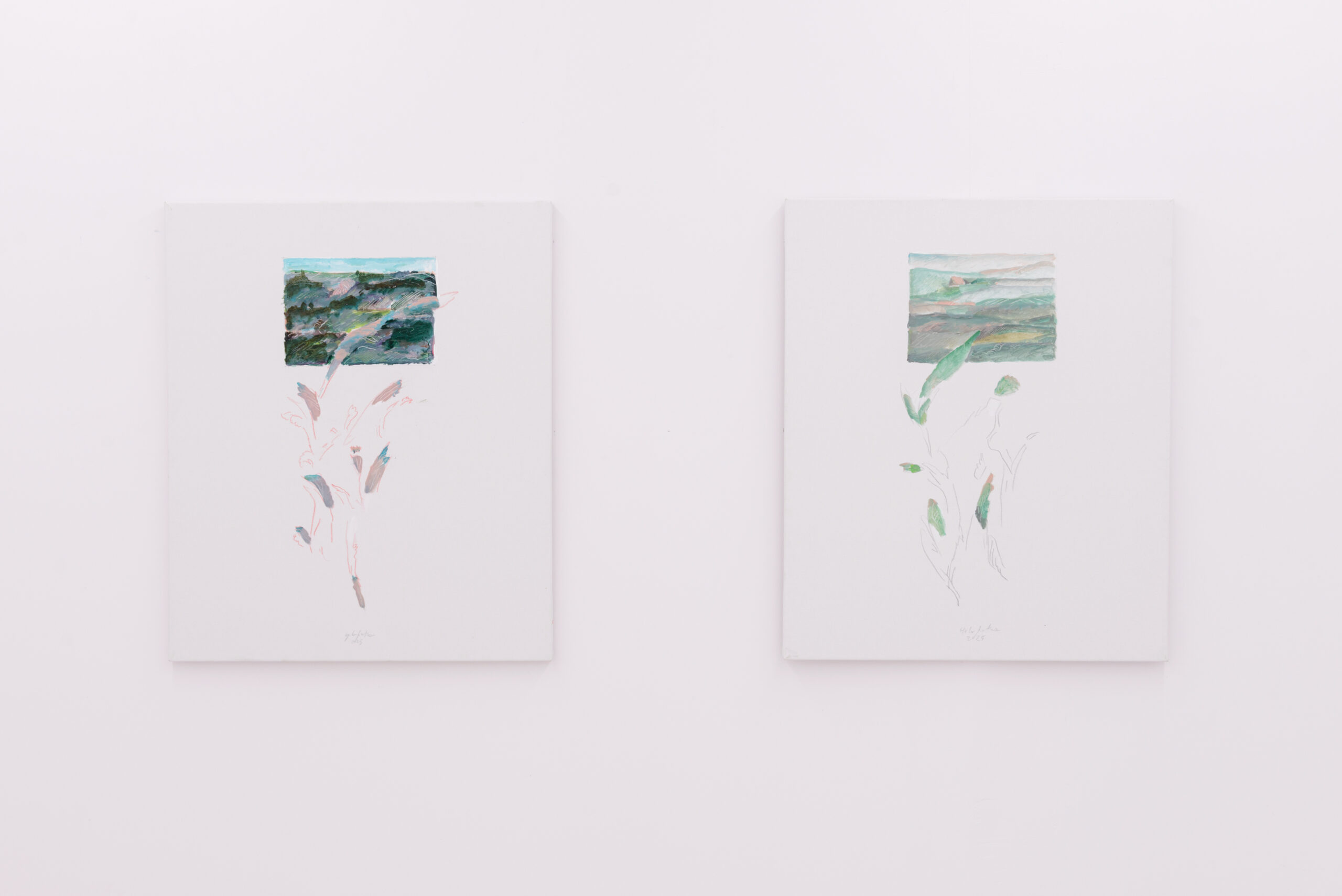
Ugo La Pietra, Paesaggio, acrilico su tela, 60×50 cm, 2025, Paesaggio, acrilico su tela, 60×50 cm, 2025, installation view, Alla finestra, Ugo La Pietra, © Iacopo Pasqui/Courtesy Fondazione La Rocca Pescara e Studio Ugo La Pietra
And it is precisely this boldness of Ugo La Pietra, fueled by a creative energy free from the fear of error, that transforms his very existence into a work in progress, a story to be read, understood, and traversed, a journey that invites connection by stimulating visual anomaly as an exploratory practice, thus inducing imagination as a discipline of freedom. His paintings in particular demonstrate how the artist transcends the boundary between experience and representation, and especially the works conceived at his home in Milan prompt him to return to the natural landscapes reminiscent of his native Abruzzo countryside in the Valle del Tirino.
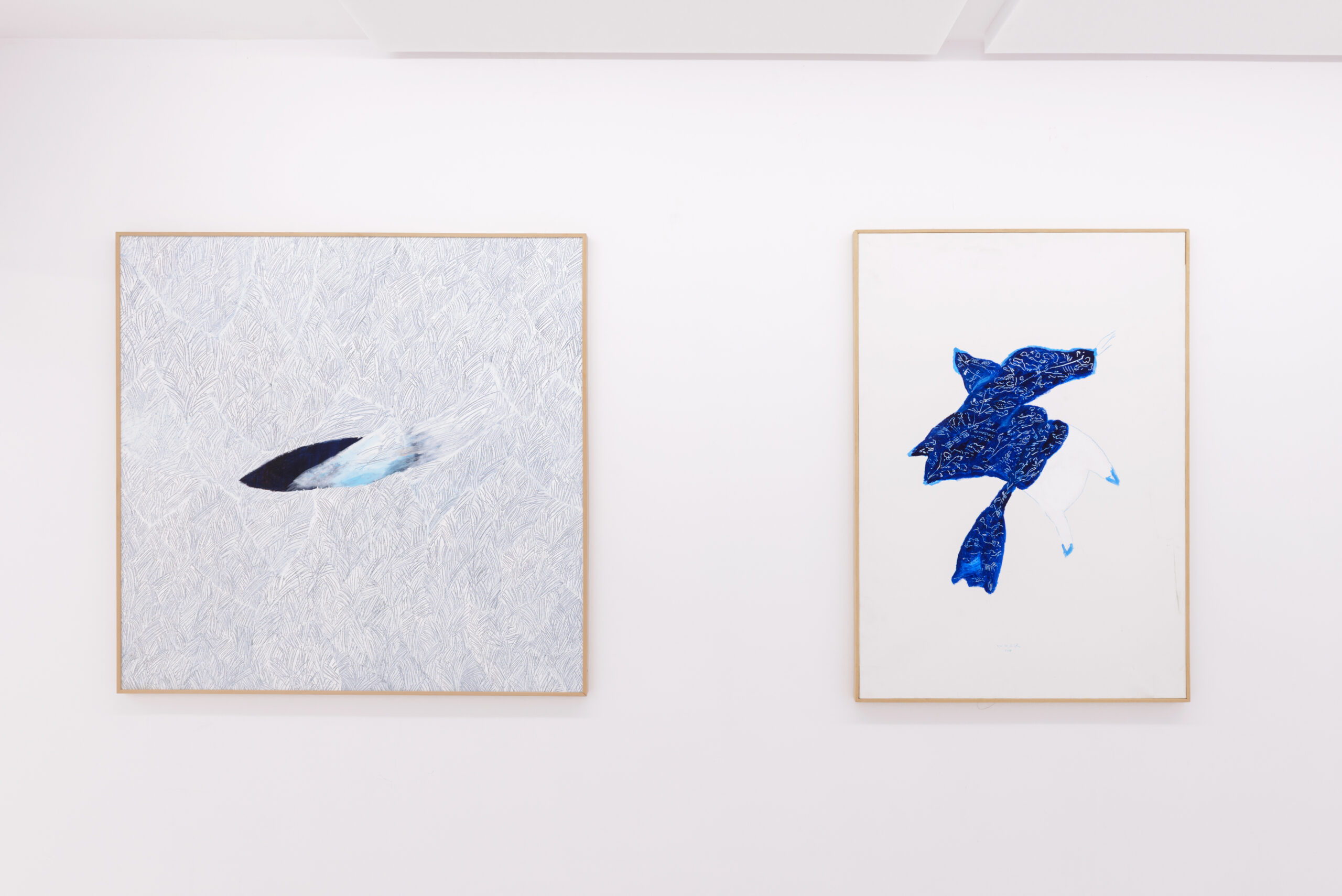
Ugo La Pietra, Natura perduta, acrylic on canvas, 100×100 cm, 2019, Il giardino delle delizie (bianco/blu), acrylic on canvas, 100×70 cm, 2018, installation view, Alla finestra, Ugo La Pietra, © Iacopo Pasqui/Courtesy Fondazione La Rocca Pescara e Studio Ugo La Pietra
The paintings of these landscapes disperse across the support like volatile and fantastic elements in the air, transforming into a mutable and inconsistent material, similar to a cloud. In Natura perduta (Lost Nature, 2019), a small chasm opens up in a field of vegetation, which appears to be a “glitch” compared to the uniform ivory-colored mesh that surrounds it: it is an error, a temporary malfunction of a spontaneous earthly energy, which speaks to us and whispers: come, see, this is an invitation to live.
English translation: Dobrosława Nowak
Information
Alla finestra, Ugo La Pietra
Curated by Giacinto Di Pietrantonio
Fondazione La Rocca, Via Raffaele Paolucci, 71, 65121, Pescara
From Tuesday to Saturday from 16.00 to 20.00
www.larocca.foundation
From 16/06/2026 to 03/10/2026