



Matèria: Photography is Political—Positive and Constructive Dissent
21.01.2026
When a project does not close in on itself but opens up to the world through photography as a form of feeling—not as a reassuring perception, but as an experience of a problem—it becomes capable of conveying partial political readings, based on what is felt, noticed, observed, and thus thought. This is what characterizes the exhibition In Plain Sight: Photography, Power and Public Space in Britain, on view at the Roman gallery Matèria until 31 January 2026.
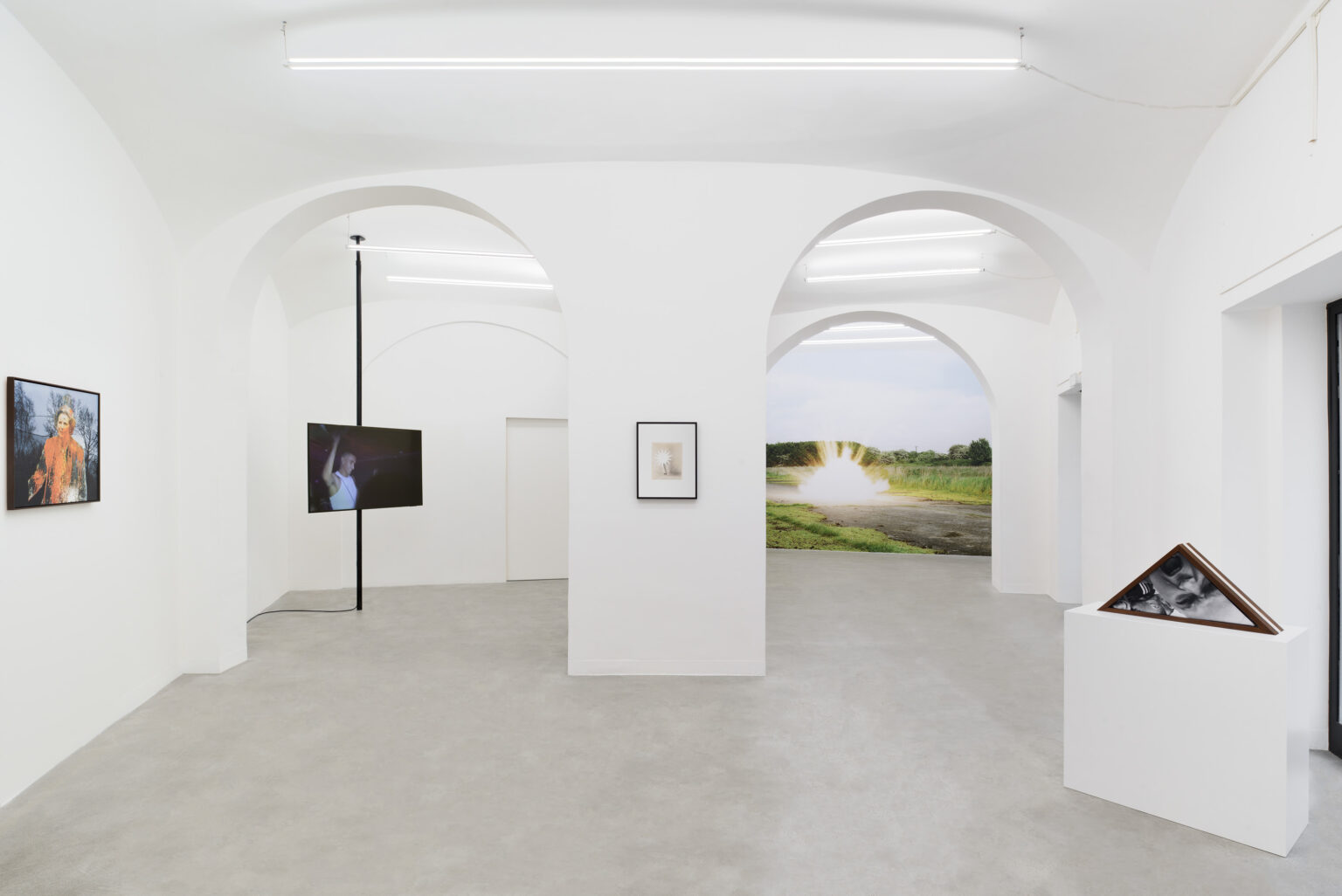
In Plain Sight Photography, Power and Public Space in Britain, 2025, exhibition view, Matèria, Roma, Courtesy Matèria, Rome, Photo by Roberto Apa
The exhibition connects to the 2000s in the United Kingdom, a formative period for the Matèria gallery’s founder, Niccolò Fano, who began a dialogue with the co-curator of the Roman project, Christiane Monarchi, which later developed into a lasting collaboration in the fields of publishing and artistic research. While presenting the works of eight very different artists, the exhibition aims to offer a critical reconstruction of the British photographic landscape over the past twenty years. The project therefore highlights a dual rupture: on one hand, contemporary Britain’s reaction to what was happening in the 1980s, in contrast to the cynicism of the conservative government of the time; on the other, an extremely experimental photographic practice, characterized by interventions that subvert the medium’s conventional use. For these reasons, photography is not merely a tool for recording and documentation; rather, it emerges as a form of judgment capable of revealing new structures of meaning, transcending the boundaries of the medium through evocative practices of manipulation. In all the works, it becomes clear that behind every image there is always another—whether as a vision or even a hallucination—unreal in perception, yet extraordinarily true in its timing.
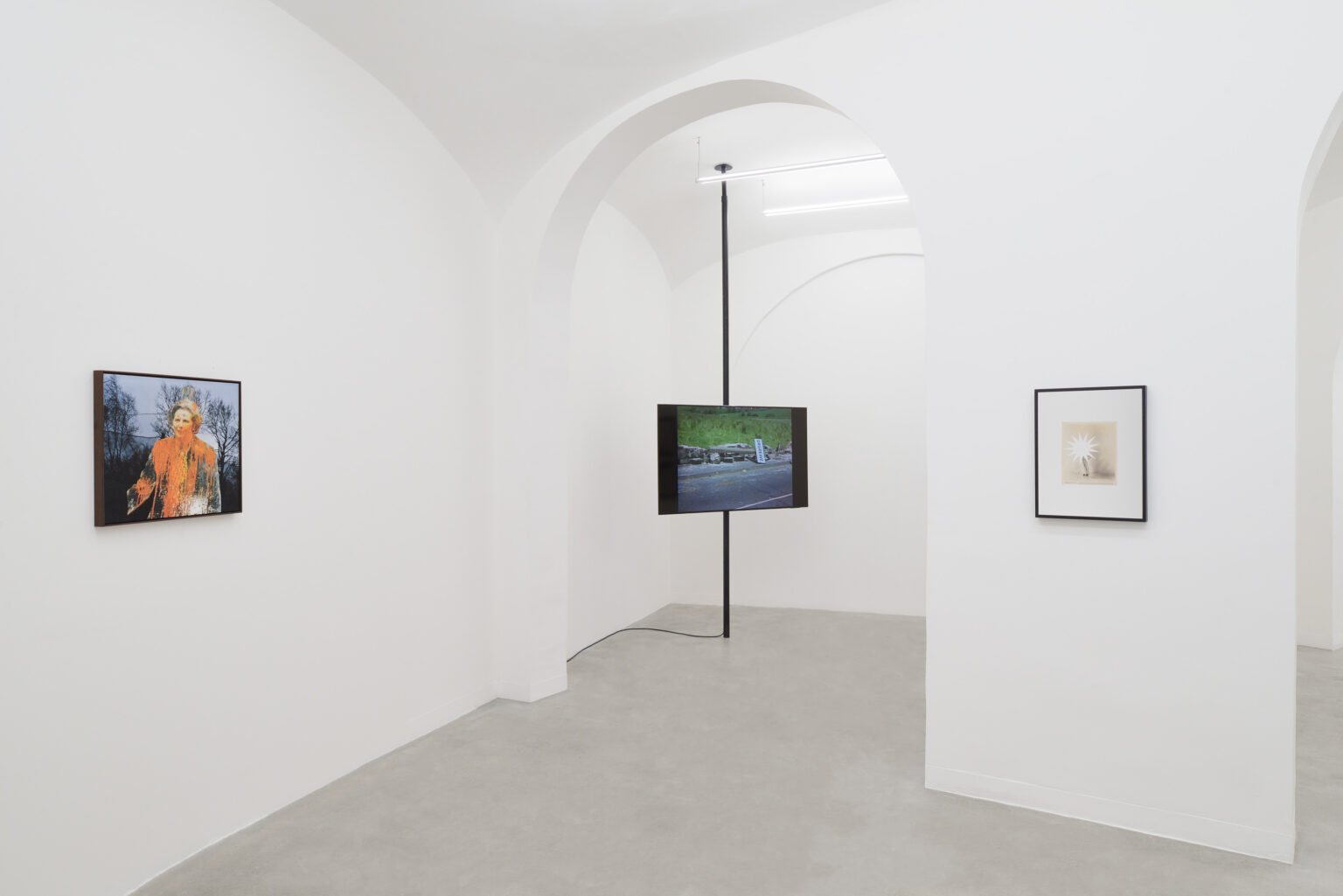
In Plain Sight Photography, Power and Public Space in Britain, 2025, exhibition view, Matèria, Roma, Courtesy Matèria, Rome, Photo by Roberto Apa
None of this would have been possible without the atypical curatorial approach of Christiane Monarchi, co-director of the biannual magazine HAPAX and an active researcher in contemporary photographic practice, to whom the following questions are addressed. By privileging digression, Monarchi invites us to explore the artists and their political and social content through unexpected lateral connections. In this way, the curatorial approach thus conceived breaks with convention, transforming into the art of merging different disciplines, contexts, and perspectives—a testament to a desire unafraid to understand photography as a form of questioning rather than as an assertion. Therefore, the strength of the project lies in the various ways in which photography is interpreted and transformed. It is a tension between the obsessive desire for complete documentation, the wish to rework the mechanism of historical reading of the past, and the deep—sometimes frustrating—awareness of its effects in the contemporary moment. In particular, there are numerous historical references to the 1980s, marked by the rise of Conservative Prime Minister Margaret Thatcher, who pursued uncompromising economic liberalism and whose privatization policies led to the gradual collapse of the Welfare State. These were periods that had a profound political, economic, and cultural impact on contemporary Britain, giving rise to a lively debate about the legacy of “Thatcherism.” For this reason, Anna Fox (1961, Alton, England) photographs a shooting silhouette typically used in paintball games depicting Thatcher herself in elegant ceremonial attire. The result is a surreal image, both in tone and subject matter, rendered objective by an unadorned sharpness.
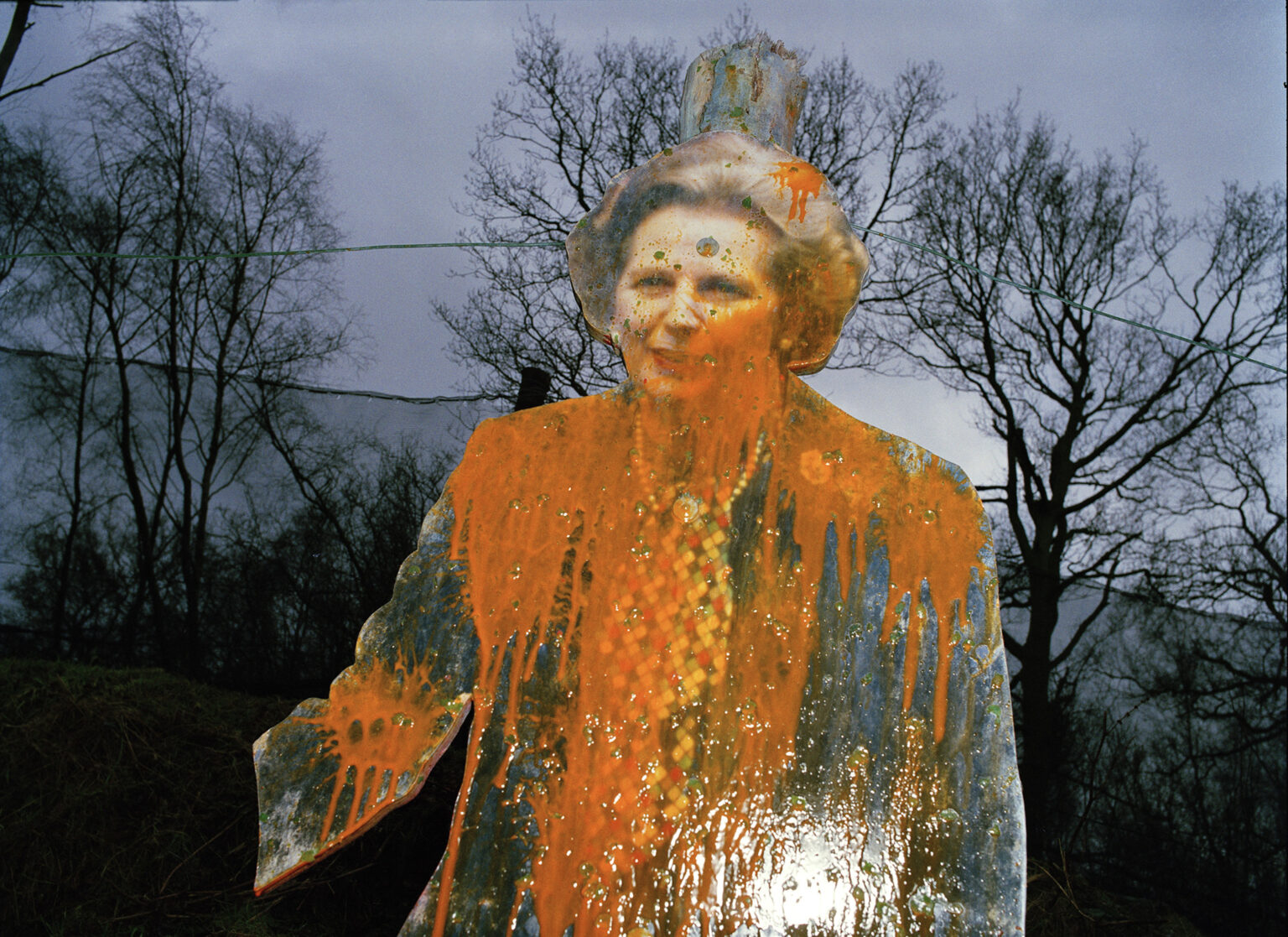
Anna Fox, Thatcher, from the series Friendly Fire (1989), 2025, Giclée print on Hahnemühle Photo Rag Satin, 50 x 60 cm
Karen Knorr (1954, Frankfurt am Main, Germany) also offers a satirical representation of the social hierarchies of the period, reconstructing the habits of the London aristocracy: the landscape becomes the ideal frame for a naturalistic lifestyle, with gentle, poetic views oscillating between the Arcadian and the bucolic. For both Fox and Knorr, the photographic apparatus represents a tool used to address social and political issues. Employed as an investigative and manipulative device, it is used with both cunning and ingenuity to interpret and convey issues such as the weakening of the sense of community in favor of individualism, liberalism, and the private economy. Moreover, by calling into question every form of guarantee and certainty, even at a visual level, these techniques—rather than fixing a familiar and appealing scenario—conceal dimensions that are difficult to configure visually. This is the case with the installation-based photography of Sarah Pickering (1972, Durham, England): although at first glance the explosion may appear as a festive scene, the artist in fact depicts staged detonations used in training exercises for the British police and army. The Britain portrayed by these artists is jarring, violent, unfiltered, and photography—employed beyond its conventional use—transforms into an alarm system, an anthropological deterrent capable of narrating and confronting the social, historical, and political transformations of a nation. By contrast, Jermaine Francis works with the documentary dimension of archives; through a sequence of video images, he narrates a postcolonial Britain in which a sense of risk constantly emerges, and in which the only way to preserve collective freedom lies in subjective danger.
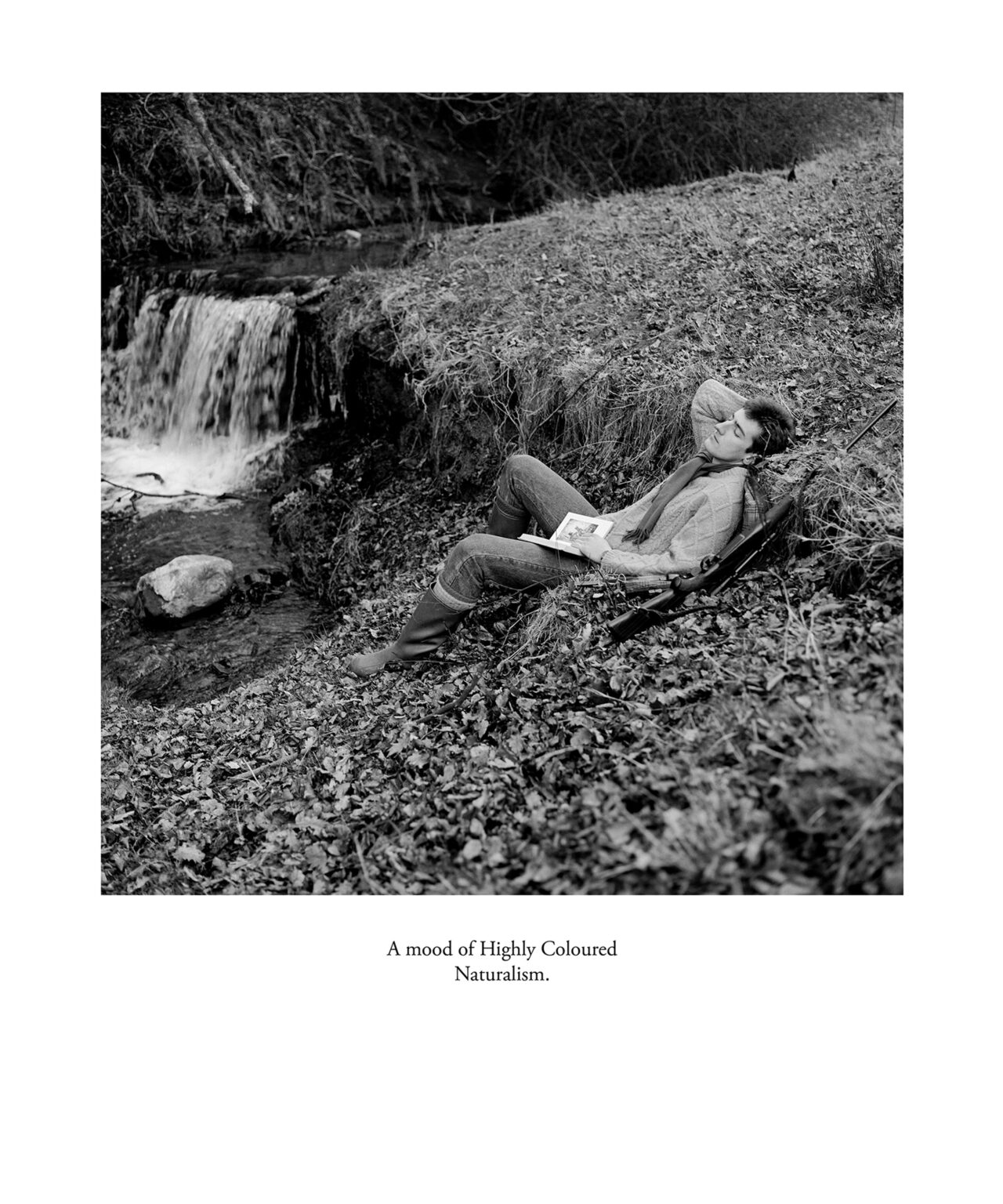
Karen Knorr, A mood of Highly Coloured Naturalism, from the series Country Life (1983–1985), 2025, Giclée print on Hahnemühle Photo Rag Baryta, Courtesy the artist and Matèria, Roma
A gentler and more balanced vision—less concerned with redefining the use of the medium than with questioning documentary referentiality—is proposed by Sunil Gupta (1953, New Delhi, India). Through a sequence of digitally photomontaged images, the artist portrays East London and Essex, a territory marked by multiculturalism, while simultaneously offering a personal view of that world and an unconditional acceptance of that reality. In a different way, photography merges with collage in the work of John Stezaker (1949, Worcester, England), giving rise to a process of image saturation in which the relationship between the fragmentation of representation and that of subjectivity is central, thereby stimulating visionary and imaginative faculties. A perspective grounded in the poetics of illusion characterizes the work of Bettina von Zwehl (1971, Munich, Germany). The work on display is created by painting and imprinting tea bags onto glass, establishing unusual relationships with a material symbolic of British culture. It also plays with the ambiguity of unstable relationships between reality and representation, as well as between the object and its trace. Thus, the deviation of the photographic medium from its customary use, in relation to more conventional visual devices, tends to confer an autonomous and self-referential dimension even upon the visual symbols representative of a country.
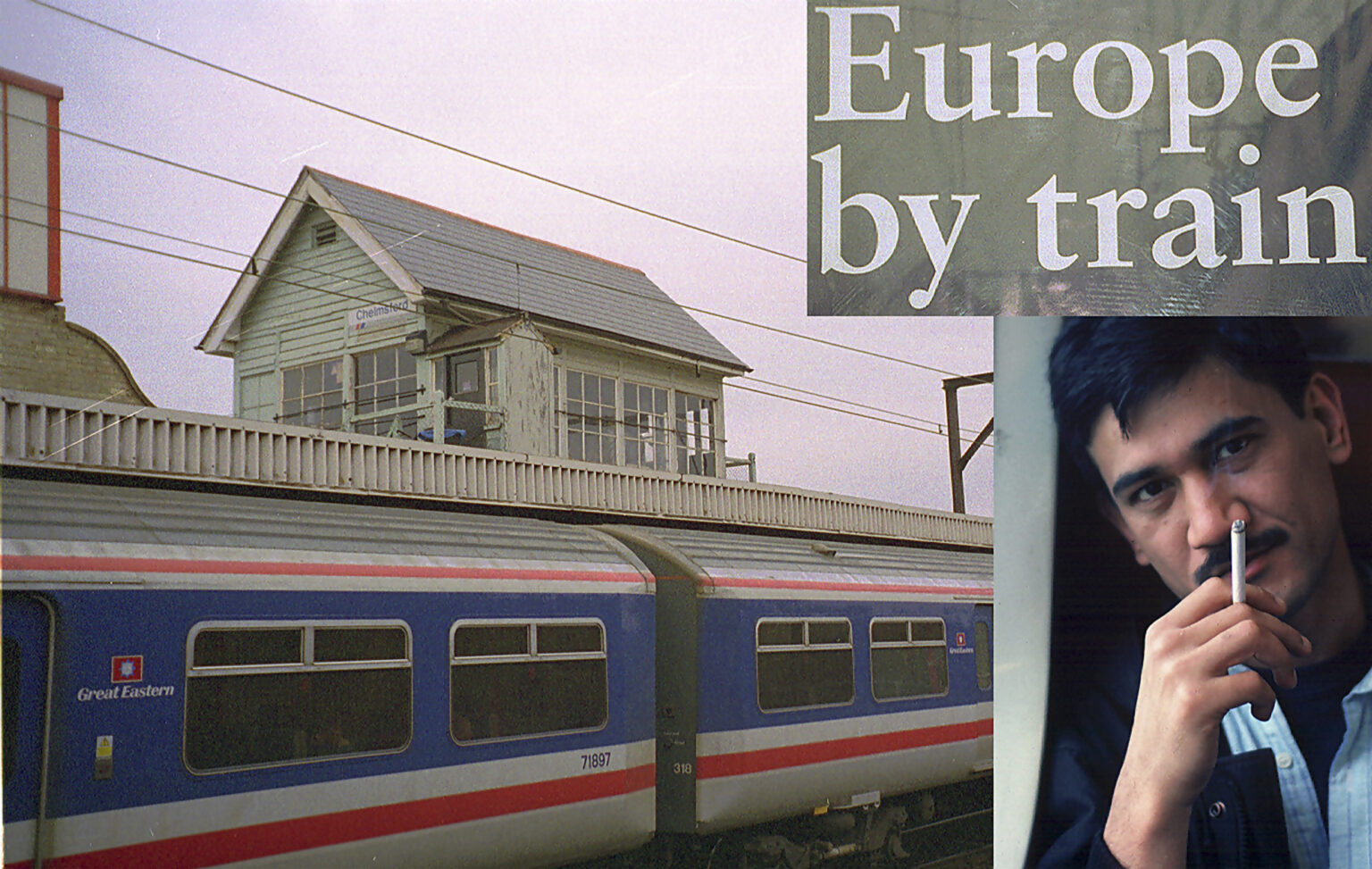
Sunil Gupta, from the series Trespass (1992-95), 2025, Giclée print on Hahnemühle Photo Rag Baryta, 70 x 110 cm, Courtesy the artist and Matèria, Roma
MacDonaldStrand (the duo formed by Gordon MacDonald and Clare Strand, active since 1992) works with the flag and its iconoclasm, reconnecting it to the new concept of nation redefined by the conservative politics of Margaret Thatcher. It therefore becomes evident once again that conservative progress is a bearer of tensions: the choices undertaken by this political orientation, while invoking the defense of national sovereignty, have favored certain aspects while exacerbating others, generating cultural and economic divides among social classes. Here, a strong and collective reflection raised by the artists returns, asserting that historical, political, and civic memory cannot be separated, severed, or erased through the construction of a fanciful montage of a past era—one that remains, even today, a significant factor in the ideological thinking of British culture. Therefore, although Brexit formally dates to 2020, its historical and political roots trace back to the concept of national sovereignty upheld by Margaret Thatcher, who opposed the sharing of economic and legal principles within the European Union. It is undeniable that all of this has also shaped the contemporary art system, as customs and tax changes have affected the circulation of artworks; consequently, the market has coincided with a reorganization of cultural relations with Europe, reestablishing new geographical centers of interest. By exploring the capacity of art to reconcile and transcend contradictions and differences, the exhibition is grounded precisely in this dialectical principle. Despite the diversity of styles, the artists share an experimental approach to photographic language, based on the autonomy of the medium and the recovery of a political and social dimension. Thus, the past is powerfully evoked through the interpretation of contemporary social, political, and cultural connotations, bringing forth more solid yet simultaneously consoling core ideas—capable of generating a positive and constructive dissent.
Translated to English by Dobroslawa Nowak
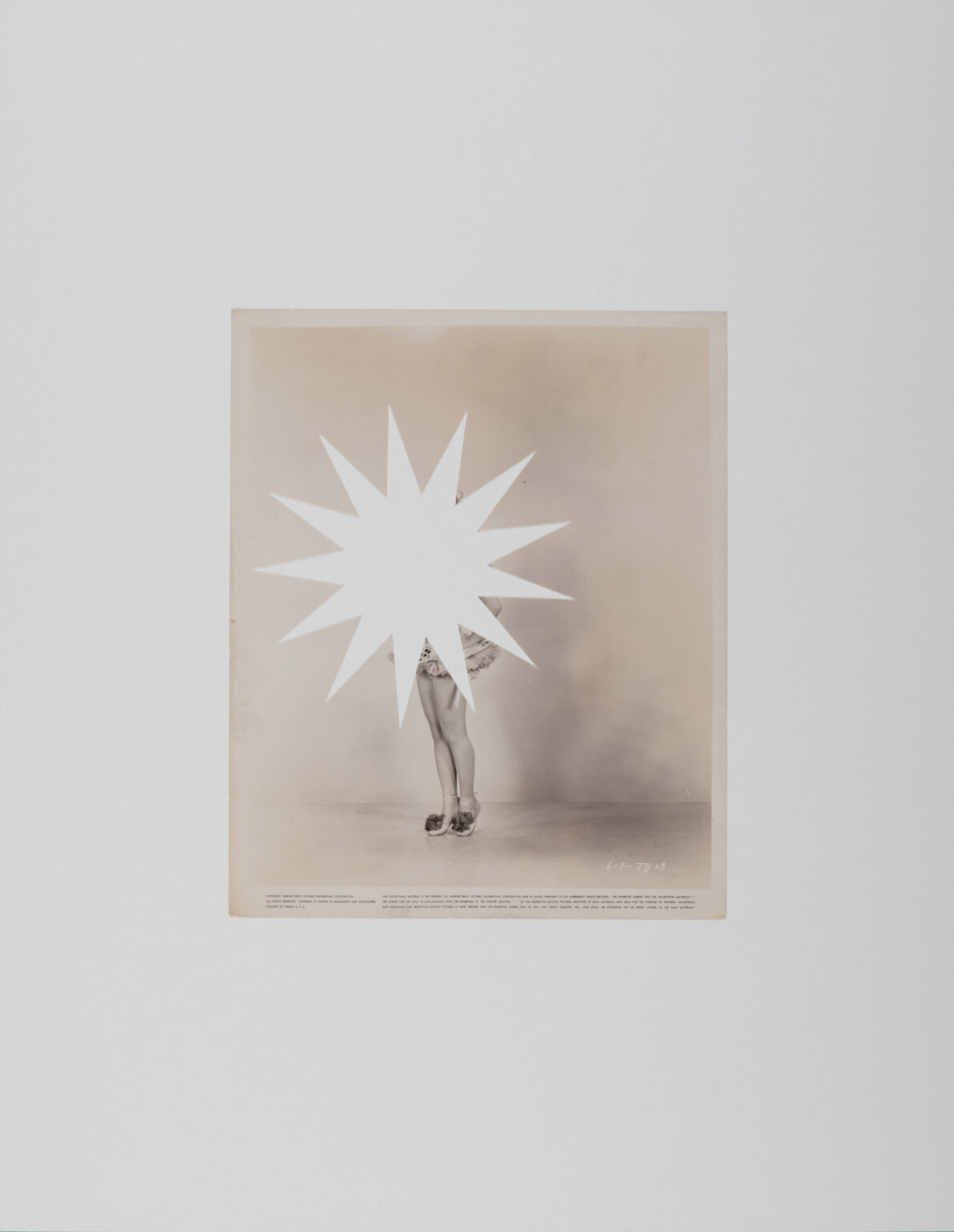
John Stezaker, Star, 2017-2018, collage, 51.8 x 40.3 cm, 53.5 x 42 x 4 cm, Courtesy of the artist, The Approach and kaufmann repetto, Milan / New York
In Conversation with Christiane Monarchi for The Italian Art Guide
Article by Maria Vittoria Pinotti
Rome 18/12/2025
1. How did you approach the co-curatorial work for this exhibition, and more generally, how do you believe this work should be carried out?
It was an honour to be asked by Niccolò and Rossana to collaborate on this exhibition, celebrating ten years of Matèria Gallery and highlighting the importance of photographic artists to the gallery’s programme. Important to all of us was creating an open-ended concept that could welcome works from the 1980s right up to the present, and with a constructive discourse we finished with the present roster of important artists — several of whom had not exhibited works in Rome before. We welcome the viewers into this unique experience of a sort of ‘time capsule’ of Britain, themes highlighted several decades ago intermingling with and informing those which are highly current, and all very relevant today.
2. The exhibition features artists who work with the photographic medium to the point of subverting and distorting it, while in other cases it emerges as a tool of rupture. In relation to what is on display, what has happened to photography?
Central to this exhibition is the idea that these photographic works convey a poetic story through their visual elements, allowing the viewer space to interpret and complete it. The forms of images in the exhibition range from handmade vintage prints to sculptural pieces, from pole-mounted video to expansive wall vinyl — engaging the haptic senses at every turn. It was a great pleasure to work with the spaces within Matèria, exploring how viewers physically engage with the works. Unlike a traditional photographic exhibition, here the pieces function as distinctive sculptural statements within the space.Inclusion of documentary compositions that are subverted through text or abstract images that take on historical weight when considering their origins, each piece offers stories resonating long after leaving the space. Such is the power of photography to convey multiple viewpoints and readings, even while purporting to show an image in plain sight.
3. The project presented is courageous: it addresses social, civic, and political issues and offers a far from peaceful vision of Great Britain. What is the exhibition’s main strength?
Considering works made from the 1980s to the present, the exhibition brings together ideas that are persistently current in Britain, communicated with the authenticity of these artists who are living and working in the UK. Could we have a daily discourse on politics, race, class, representation, protest, military, post-industrial entertainment? Absolutely. We are surrounded by these ideas in the UK, and now we have been lucky enough to be able to invite some of these artists to share these ideas here in Rome, to celebrate pluralistic voices through the power of photography and lens-based media.
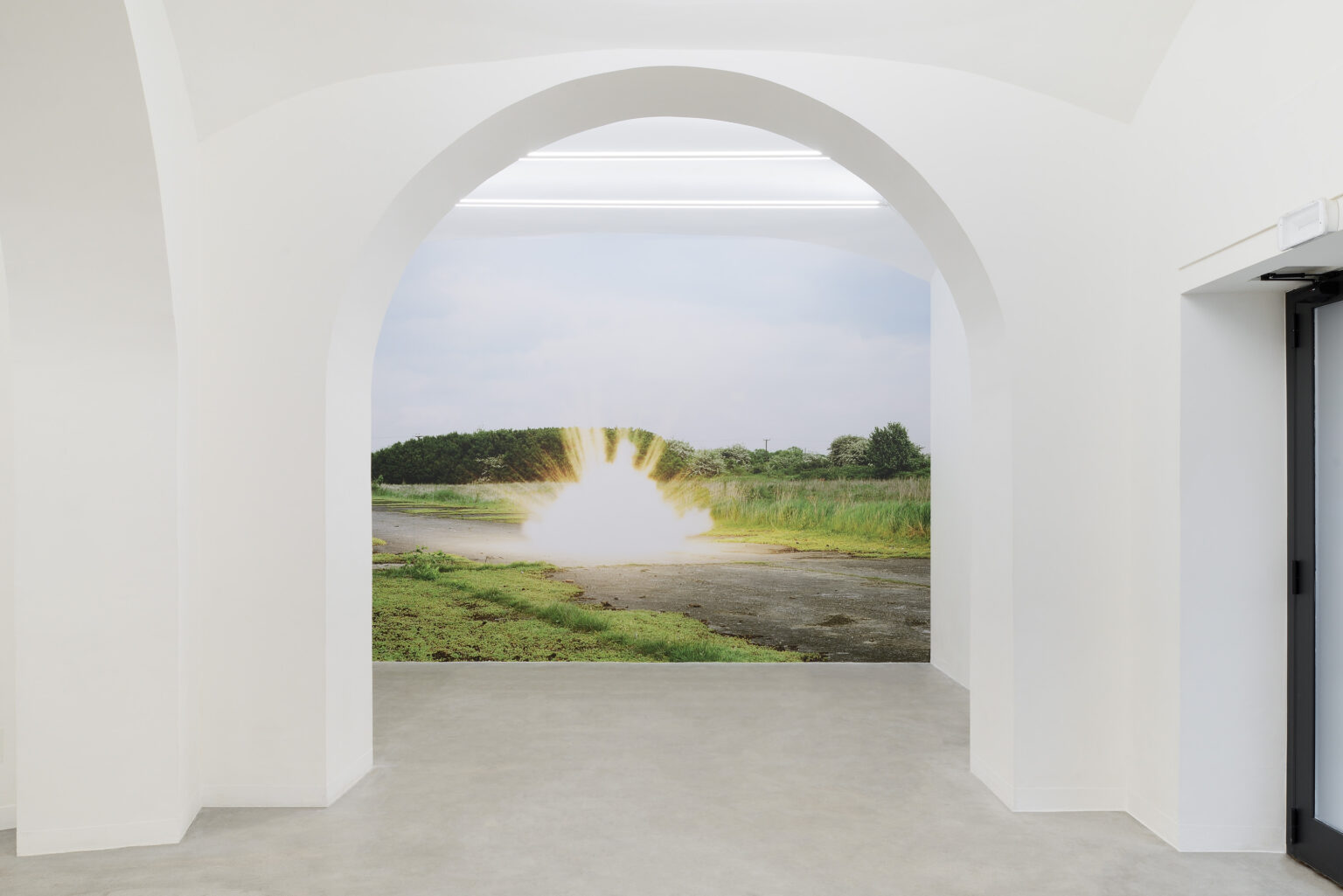
In Plain Sight Photography, Power and Public Space in Britain, 2025, exhibition view, Matèria, Roma, Courtesy Matèria, Rome, Photo by Roberto Apa
Information:
In Plain Sight: Photography, Power and Public Space in Britain
Anna Fox, Jermaine Francis, Sunil Gupta, Karen Knorr, MacDonaldStrand, Sarah Pickering, John Stezaker, Bettina von Zwehl
In collaboration, co-curated by Christiane Monarchi
Matèria, Via dei Latini 27, 00185, Rome
From Tuesday to Saturday, 11am-7pm
www.materiagallery.com
From 04/12/2025 to 31/01/2026