



Who’s Afraid of Nan Goldin?
by Dobroslawa Nowak
28.01.2026
Between October 2025 and mid-February 2026, Nan Goldin, together with curator Fredrik Liew and HangarBicocca’s in-house curators Roberta Tenconi and Lucia Aspesi, presented This Will Not End Well, the first exhibition dedicated to her work as a filmmaker. The show featured a large collection of her slide shows—set to music—alongside a new sound installation.
Goldin’s work collapses the distance between viewer and subject, drawing us into intimate, often uncanny proximity with her friends and family. The exhibition is not a traditional retrospective or a linear overview of her career; it unfolds as a series of immersive environments where photography, sound, and time converge.
Though the presentation is formally updated, the core message remains the same; what has changed is the world around her. Raw, diaristic exposure that once shocked now reads as familiar visual grammar, so pervasive that it shapes contemporary aesthetics. In a culture where private lives are endlessly recycled as public content, the snake eats its tail. Perhaps instead of asking Who’s Afraid of Nan Goldin?, we should ask: what does it mean that we are no longer? We once feared her because she revealed too much; now we may fear her because she reminds us how little there is left to reveal.
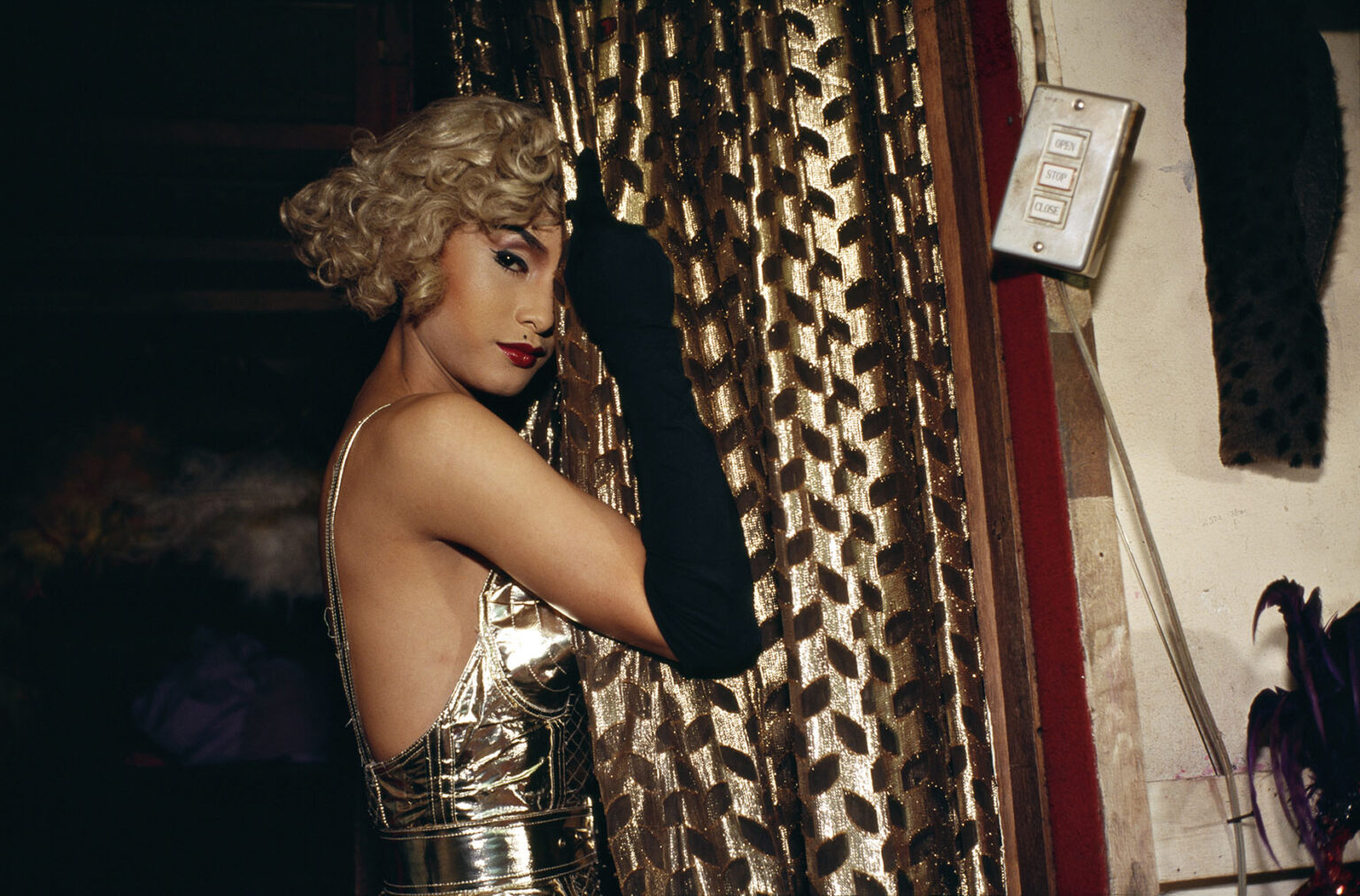
Nan Goldin, C as Madonna in the dressing room, Bangkok, 1992, courtesy Pirelli HangarBicocca
The dark, expansive halls of Pirelli HangarBicocca are ideal for Chen Zhen’s experiments, Sheela Gowda’s ritualistic references, and Cerith Wyn Evans’s light-based environments. Yet, perhaps surprisingly, the space proves uniquely suited to exhibitions that breathe intimacy.
One might assume that a former industrial complex is right for everything except the delicate fabric of human psychology and emotion. Yet the balance it provides seems perfectly attuned to works that demand deep engagement. Mirosław Bałka’s CROSSOVER/S (2017) and Nan Goldin’s This Will Not End Well (2025) demonstrate how situating the human—psychologically and emotionally—within an industrial context generates profound resonance.
Nan Goldin’s iconic work has long explored the human experience, influencing generations of artists. Her seminal project, The Ballad of Sexual Dependency (1981–2022)—also featured in this exhibition—traces life in Provincetown, New York, Berlin, and London from the 1970s and ’80s to the present day. Her photographs blend quiet domestic moments with wild nights out, revealing the tension between freedom and dependency. For a generation living before AIDS and outside mainstream norms, Goldin’s work also stands as an essential historical document.
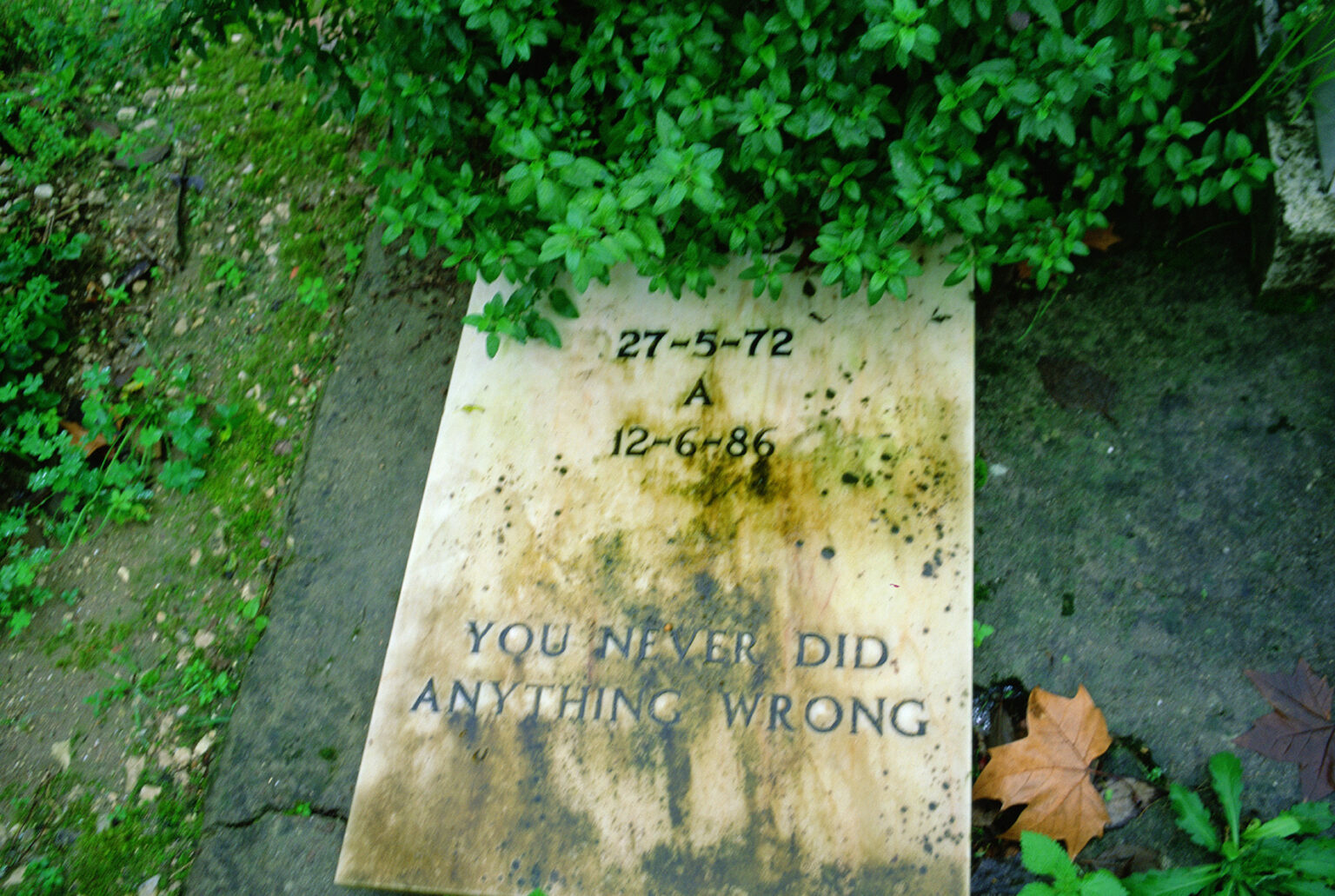
Nan Goldin, Gravestone in pet cemetery, Lisbon, 1998, courtesy Pirelli HangarBicocca
Goldin’s practice has always been grounded in participation, leaving no room for the neutrality often associated with documentary photography. In the 1980s, this meant blurring the line between reality and illusion; today, that line has dissolved entirely. Yet there is a crucial difference between the endless stream of intimate portraits saturating the digital world—images that, by the very meaning of “intimate,” often contradict themselves—and what Goldin proposes. For her, the camera is not merely an instrument of capture; it is a medium of relation. Her camera famously “disappears,” leaving us with the people she photographed, still uncannily alive in the frame, even though many have since passed. She gives us their trust and affection.
Loss is central to both this exhibition and Goldin’s work. Death from AIDS, addiction, and suicide tore through her community. Yet neither this exhibition nor her broader oeuvre functions as a memorial. The people she photographed—who lived intensely and for fleeting moments pierced the lens—remain vividly present. If Goldin’s photography no longer speaks solely of intimacy, it continues to speak of resistance. Life is larger than its ending, and her love and care for friends, lovers, and family follow her camera into moments of extreme vulnerability, illness, and death.
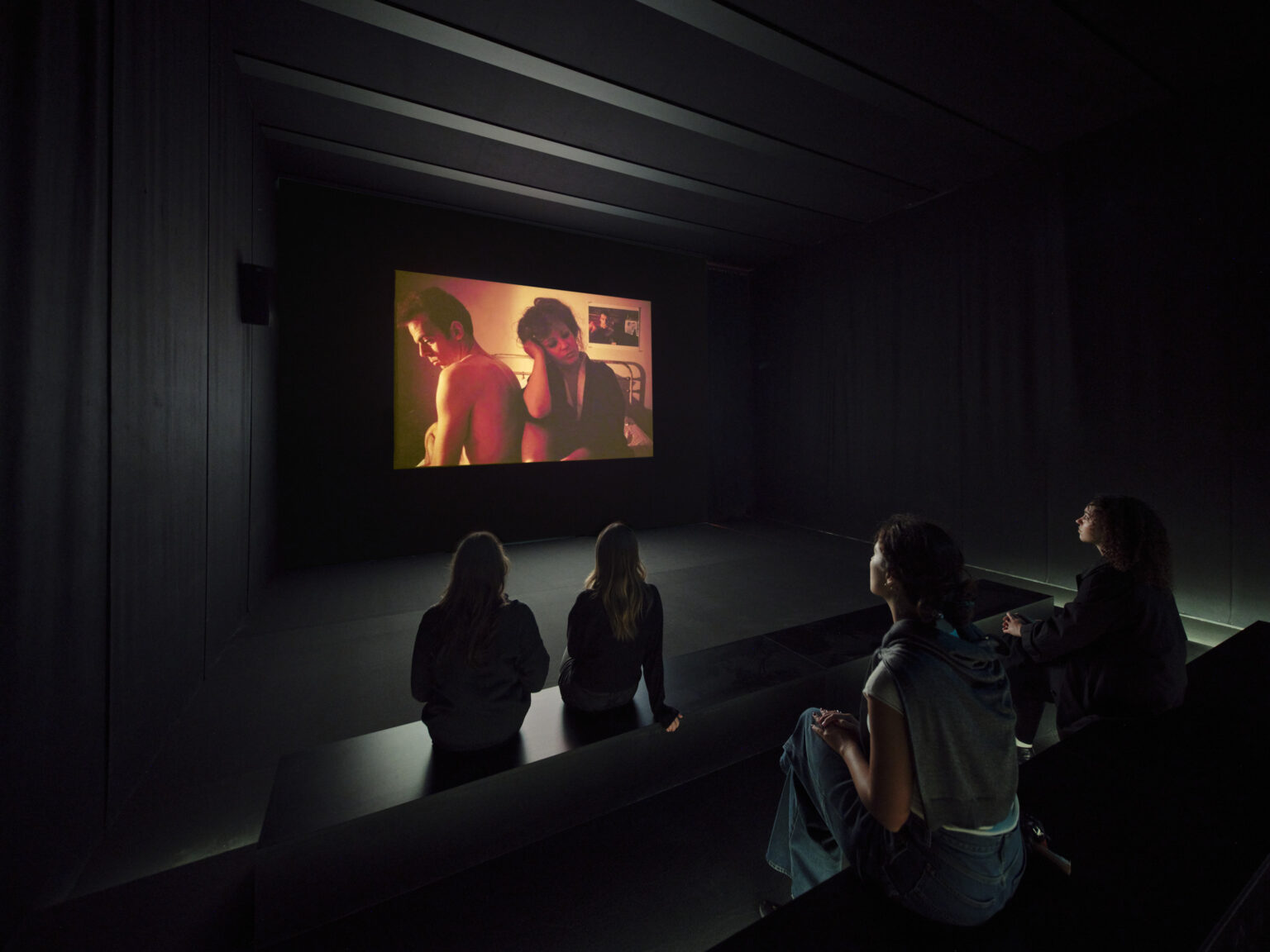
Nan Goldin, The Ballad of Sexual Dependency, 1981-2022, Installation view, Pirelli HangarBicocca, Milan, 2025 © Nan Goldin, Courtesy the artist, Gagosian, and Pirelli HangarBicocca, Milan, Photo Agostino Osio
In the exhibition, large-scale projections and immersive soundtracks transform rhythmically appearing still images into temporal experiences. Each presentation occupies a distinctive building, designed in response to the specific work by architect Hala Wardé, a frequent Goldin collaborator. Fully engaging with each piece requires time and endurance; these works cannot be skimmed or experienced out of the order Goldin intended for her storytelling. Goldin’s photographs are intensely saturated with color, and flashes of light illuminate bars, messy beds, and other intimate scenes. Color rarely aims to replicate reality; it is deliberately manipulated to heighten emotional intensity.
Her radical truth-telling now extends beyond the personal, linking private suffering to collective histories of violence and injustice. Political urgency enters through lived experience, filtered with the same affective intensity that characterized her earlier work. In Milan, her solidarity with Palestinians appeared in Gaza (2025), a looped montage of social-media footage documenting the war without narration.
From her early explorations of friendship, desire, and loss to her recent engagement with collective histories of injustice, Goldin’s photography refuses detachment. It insists on seeing, feeling, and bearing witness.
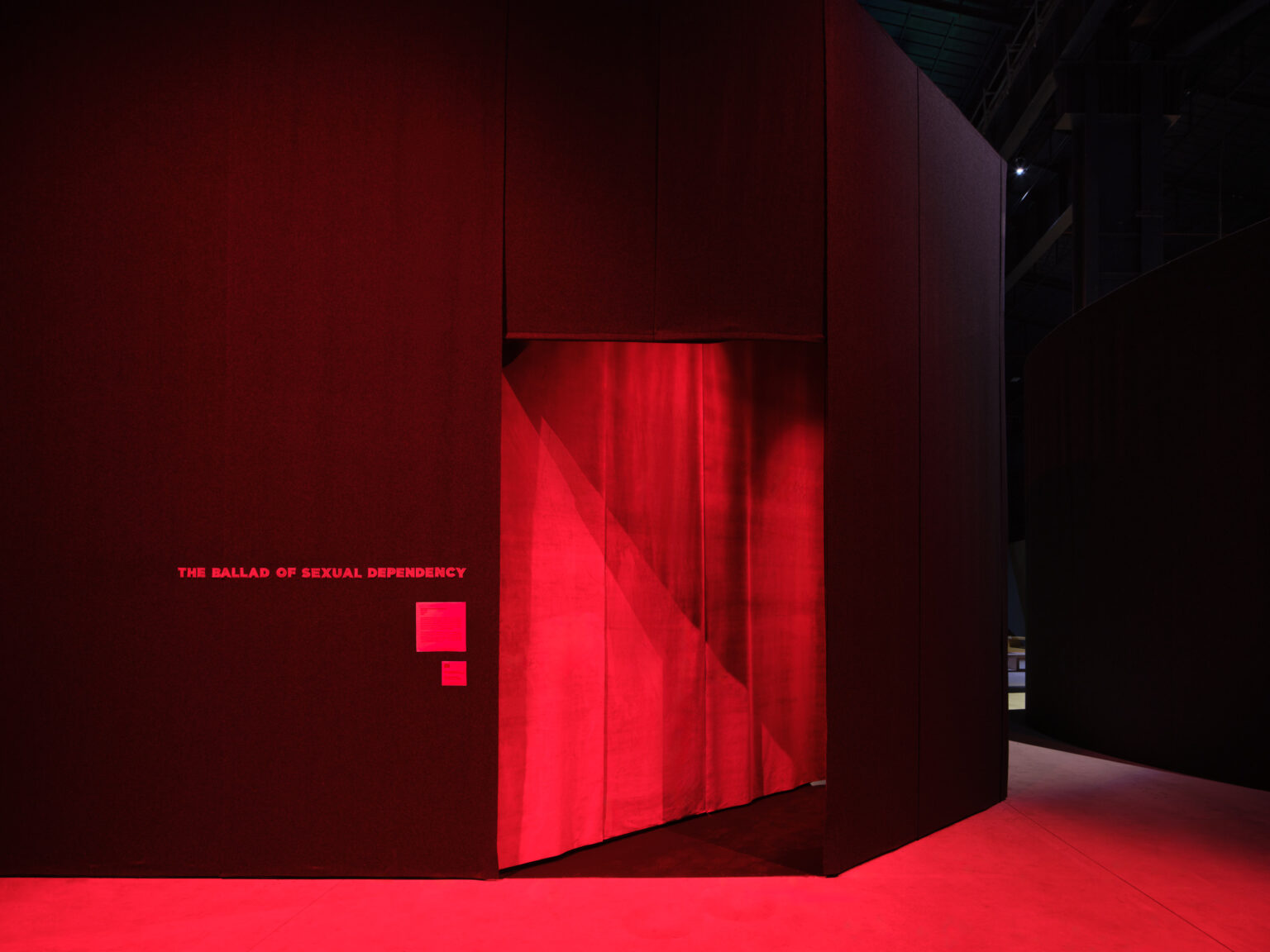
Nan Goldin This Will Not End Well Exhibition view, Pirelli HangarBicocca, Milan, 2025 © Nan Goldin, Courtesy the artist, Gagosian, and Pirelli HangarBicocca, Milan, Photo Agostino Osio
Information:
This Will Not End Well
Nan Goldin
Fondazione Pirelli HangarBicocca
via Chiese 2, 20126 Milan
From 11/10/2025 to 15/02/2026