



Why Collect Art Today?
Maria Vittoria Pinotti in conversation with Clara Datti, president and co-founder of the D’ARC Foundation
17.03.2026
This is not the story of a collection, nor does it aim to recount the strategic and market choices that some believe shape the making of an art collection. Rather, it is a conversation with Clara Datti, president and founder, together with her husband Giovanni Floridi, of the D’ARC Foundation, which operates in the area of Rome’s Tiburtina. The reason for the meeting was to understand what drives a collector to welcome works into their collection, ultimately resulting in, as in this case, a collection that encompasses masterpieces of Arte Povera and Transavanguardia, with a significant selection of works from Optical Art, and even pieces by young artists from the 1990s generation.
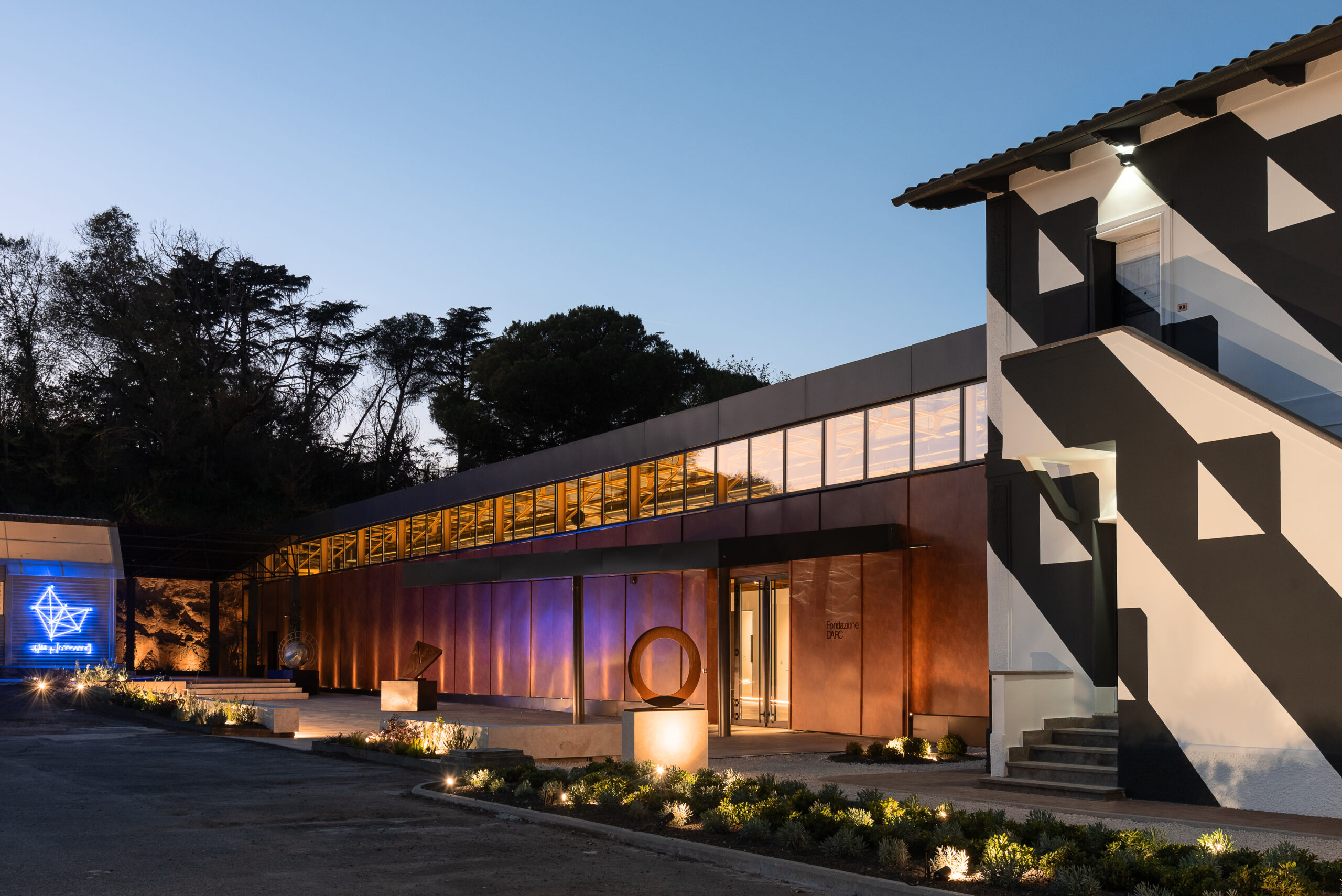
Fondazione D’ARC, view of the exterior. ph Eleonora Cerri Pecorella
It is clear that Clara Datti and Giovanni Floridi belong to an iconic minority of collectors, both for the way they pursue collecting out of genuine passion—rather than conceiving it as a speculative activity or a tool for financial gain—and for a sincere commitment to sharing and promoting selected forms of contemporary art. It was precisely these reasons that led them, in 2024, to open the D’ARC Foundation – Refuge for Contemporary Art, whose name derives from an air-raid shelter near Piazza Bologna in Rome, where the collection was originally kept. Today the collection has been transferred to Via dei Cluniacensi, within a renovated industrial building that once housed a factory producing concrete artifacts. The restoration project—conceived as an intervention in industrial archaeology—has preserved the original profiles and character of the spaces intact.
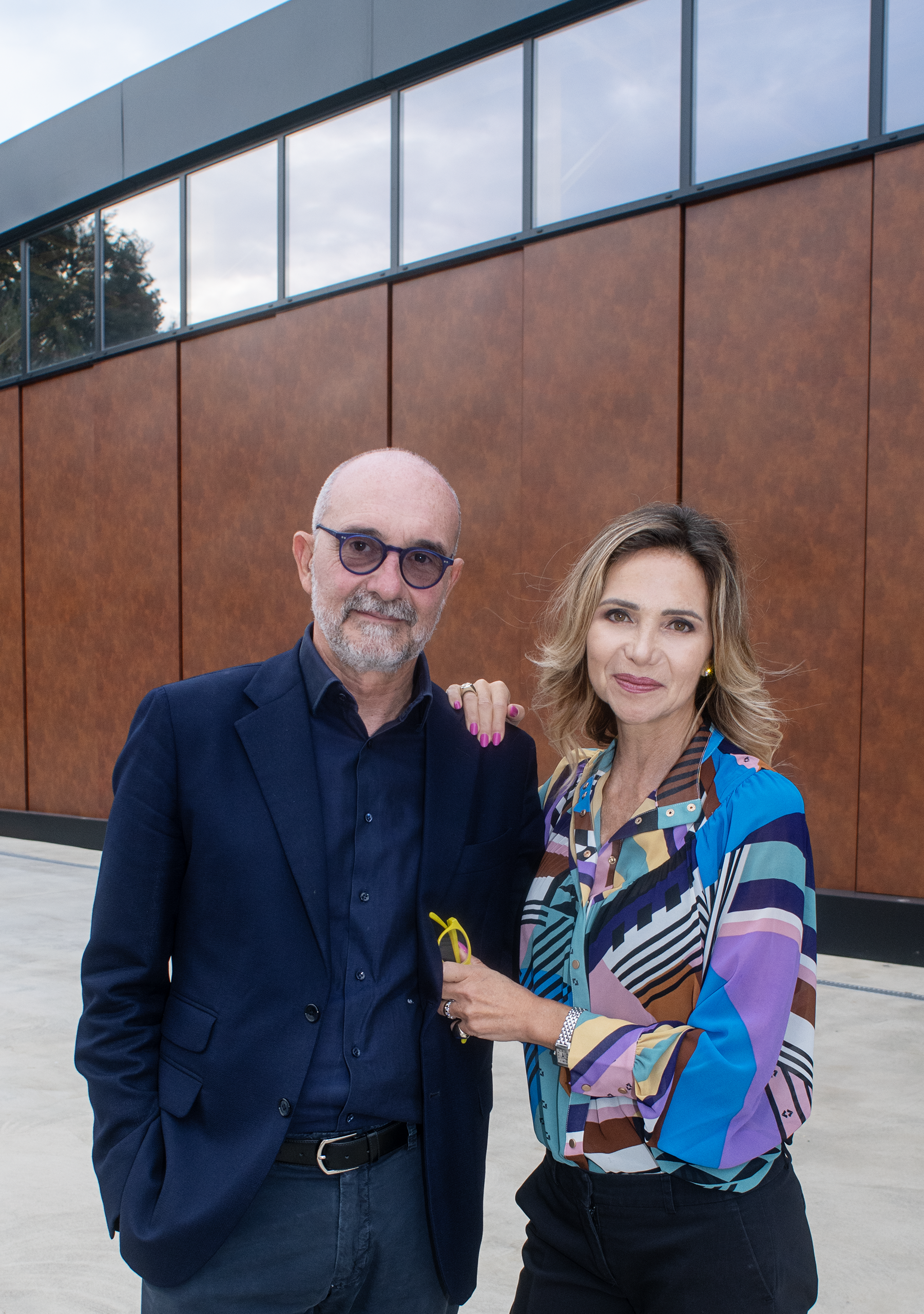
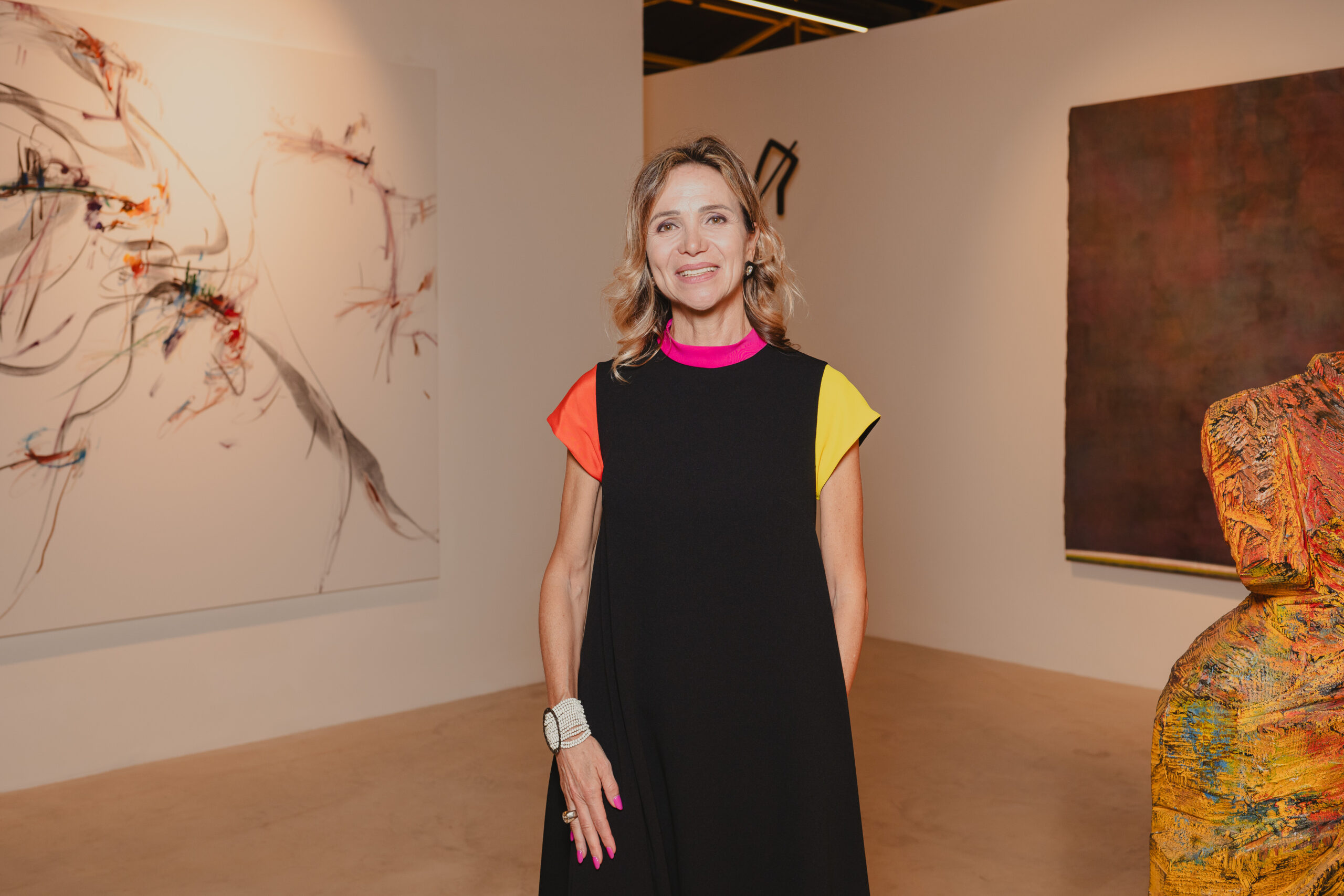
Portrait of Clara Datti. ph SayWho, Niccolò Campita / Portrait of Giovanni and Clara Floridi. ph Niccolò Berretta
The intentionally non-chronological layout of the spaces is designed to create a lively dialogue between the geometries, forms, and hues of the works, intended to reconstruct the relationship of interest and passion that guided the acquisition decisions. It is a compelling invitation to retrace a narrative with endless variations of themes, aesthetics, and languages, following the instinct and intuition of the two founders. The curatorial direction of the Foundation is entrusted to Giuliana Benassi, who presents—until 24 May 2026—the exhibition All’improvviso by Aneta Grzeszykowska (1974, Warsaw, Poland), the outcome of an artist residency held at the Foundation’s house-studio.
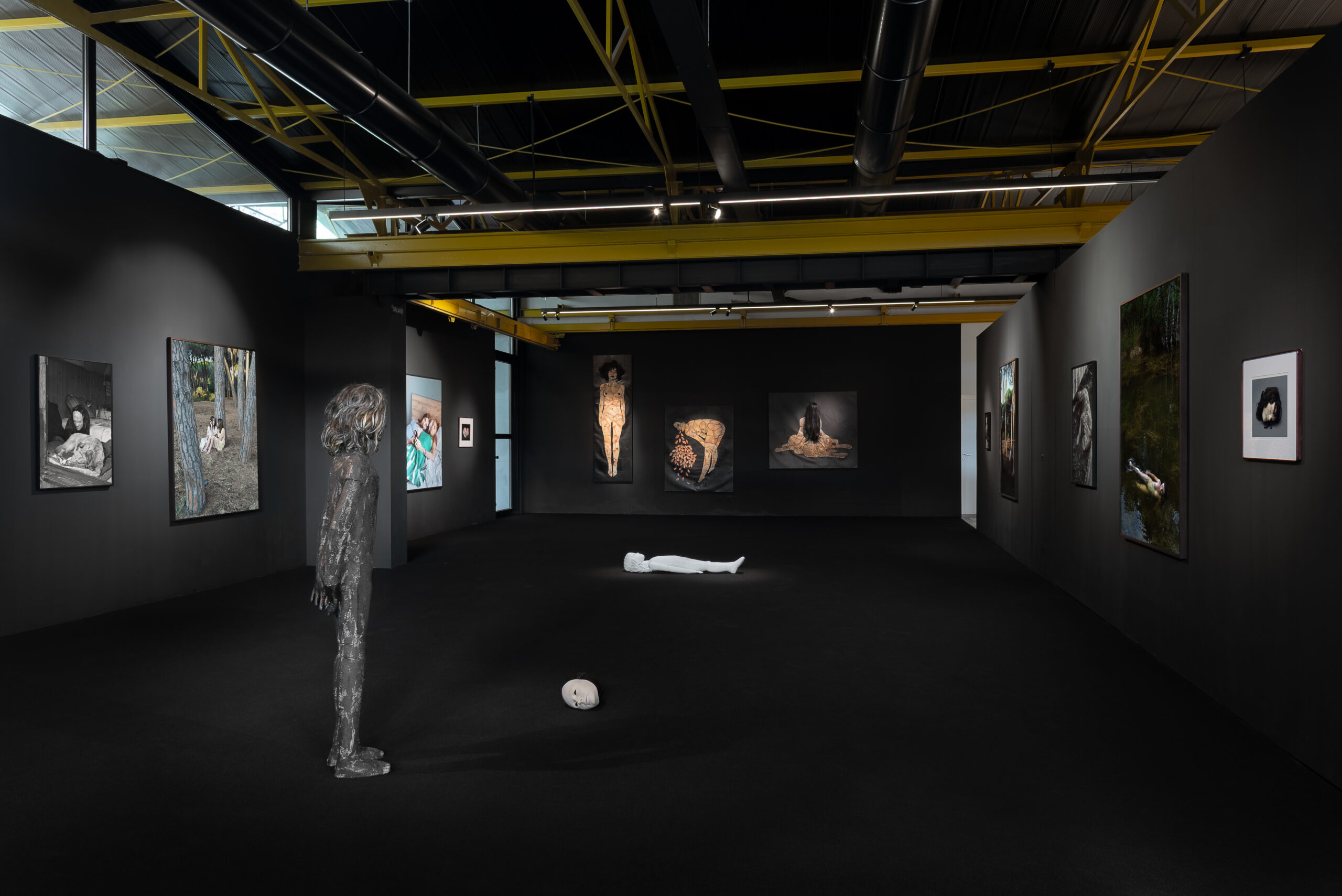
Aneta Grzeszykowska, All’Improvviso, 2026, exhibition view, Fondazione D’ARC, Roma 2026, ph Eleonora Cerri Pecorella
During the conversation with president Clara Datti, a constant commitment emerged that accompanies her legal practice and sees her actively involved in the life of the Foundation. To the question, “Why collect art today?”, the answer outlines an independent vision, firmly rooted in the values of research and support for forms of expression capable of touching emotional states—something deeply felt even before it is shared. From this perspective, collecting does not mean accumulating for economic interests, but rather accompanying creative processes, recognizing languages that question the present, and offering space to new and diverse sensibilities. All of this demonstrates how art, intellectual passion, and curiosity must be cultivated daily; and as long as we are able to experience them in the same way as Clara and Giovanni Floridi—as a form of listening and discovery—they will still have much to tell us.
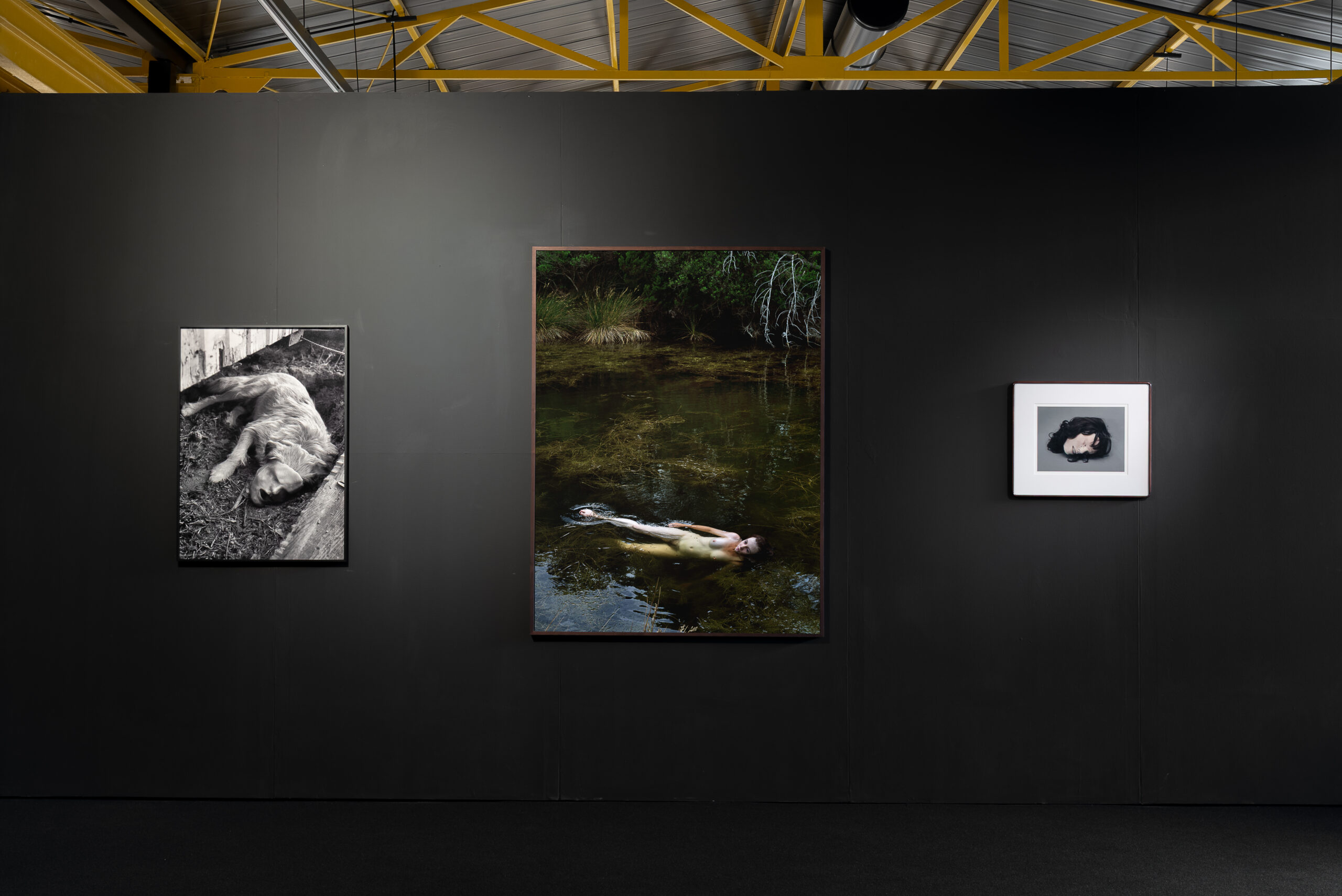
Aneta Grzeszykowska, All’Improvviso, 2026, exhibition view, Fondazione D’ARC, Roma 2026, ph Eleonora Cerri Pecorella
Maria Vittoria Pinotti in conversation with Clara Datti
Maria Vittoria Pinotti: Let’s begin with a very simple question: why collect, and above all, what does it mean for you to do so?
Clara Datti: Actually, the idea of collecting came over time, because what initially brought us closer to art was curiosity and pure passion. I remember that it all began with seeing a painting that was different from the conventions we were used to, since our families only had works from the eighteenth and nineteenth centuries in their homes. One day, while walking, we were struck by a nocturnal landscape with a figurative appearance, but an unusual one. It was a view of Venice, which we still keep above our bed in our seaside house today. In this almost unconscious way, our path as collectors began, nurtured by visits to exhibitions, fairs, and museums, by the purchase of books and catalogues, and by getting to know artists, curators, and gallerists.
Could you tell me what criteria guide the selection of works in your collection?
Clara Datti: The purchase of a work is, above all, a gut decision—a choice guided by instinct and emotion. Each acquisition is primarily dictated by the visual impact the work has on us and by the wonderful feeling of enrichment it brings to the soul. Yet there is also a rational aspect: before making the final choice, we gather information, understand who the artist is, and consider the path they have followed and are pursuing. Every significant artist has their own creativity and language that must be discovered. There is a certain aura of mystery waiting to be revealed.
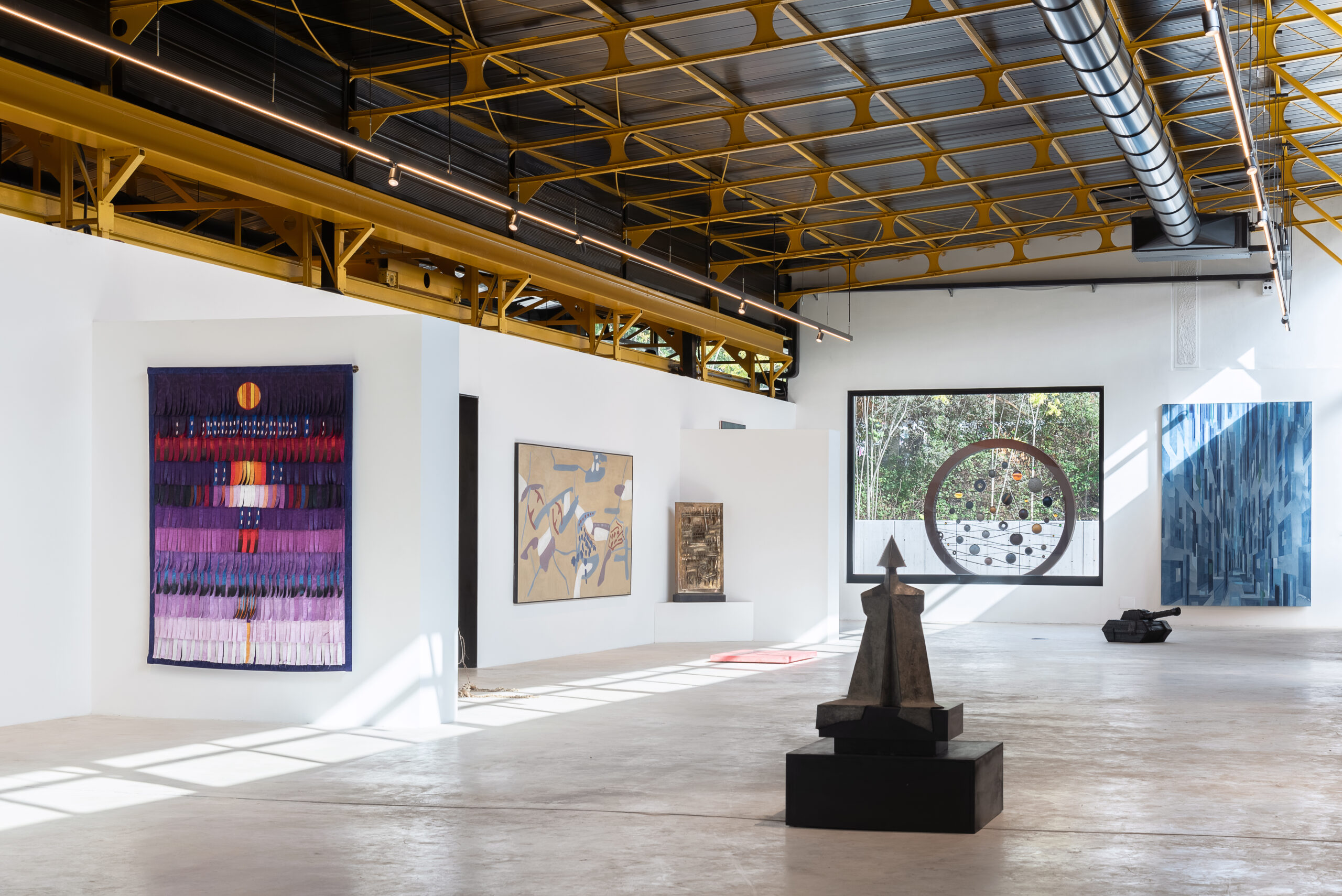
Fondazione D’ARC, la permanent collection. ph Eleonora Cerri Pecorella
So you also do studio visits out of personal interest, without having a purchase planned?
Clara Datti: Of course. Even beyond a potential acquisition, we are always interested in deepening our understanding of the artist and their thinking. There is no predetermined order or sequence between a studio visit and a possible purchase. Sometimes the visit happens after an acquisition; other times, we get to know the artist purely out of interest in their work. Or, as often happens, the studio visit takes place after one of their works has already entered the collection.
Why do you think that knowing the artist is an added value? Moreover, having the ability to truly listen during a studio visit is, in itself, a rare quality.
Clara Datti: Getting to know artists is always enriching. I believe it is important to be able to listen to them when they talk about their work, their personal vision of life, and what lies behind the creative gesture. It offers a different way of seeing reality, opening new perspectives and providing special moments of reflection.
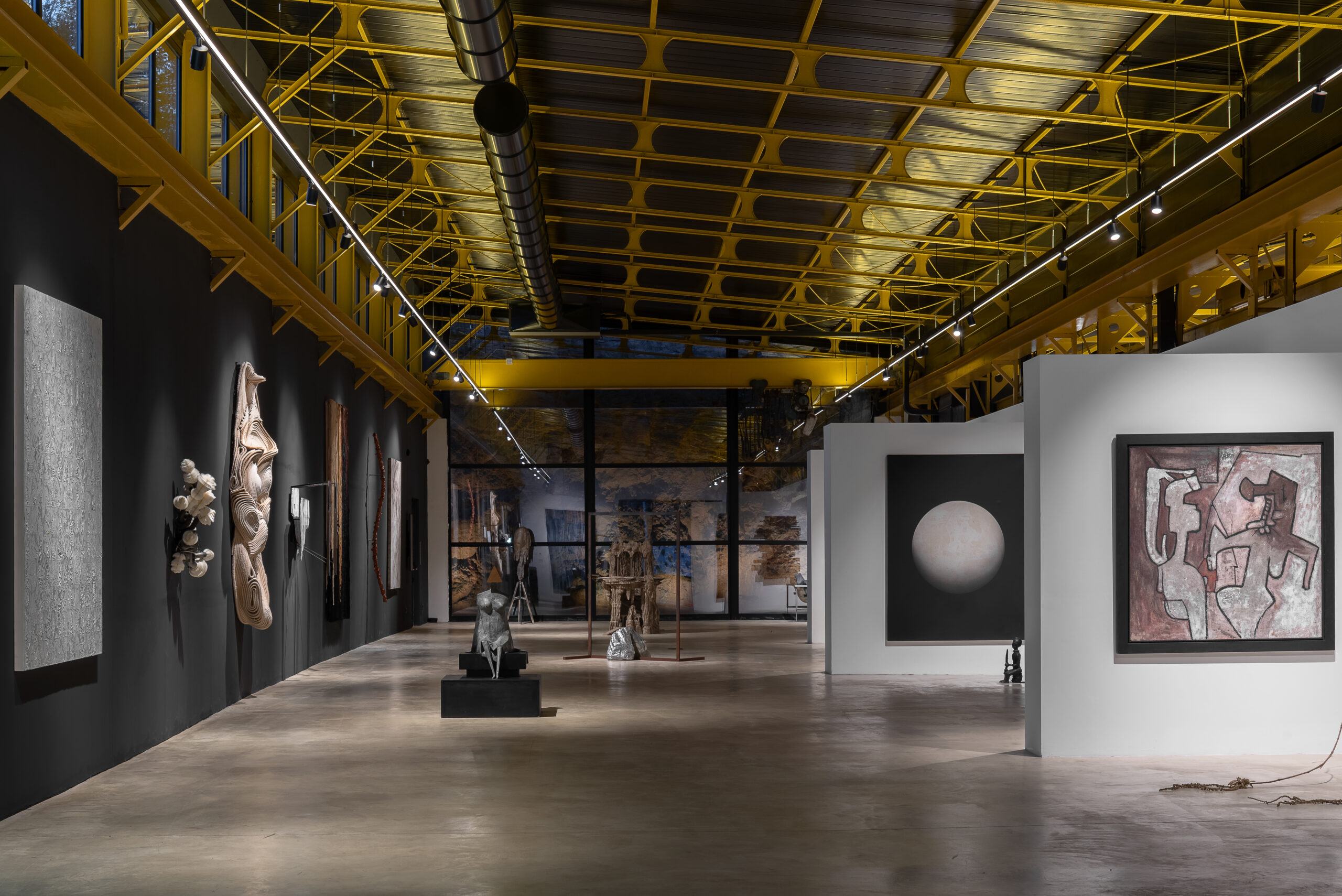
Fondazione D’ARC, la permanent collection. ph Eleonora Cerri Pecorella
What was the first work of art you ever purchased?
Clara Datti: It was a view of Venice by the painter Fabio Aguzzi—a very finely sketched piece. The subject was unusual, depicting gondolas on a very dark blue sea, a contemporary nocturne. Later, our interest turned toward abstract, gestural, and textural painting: the first acquisition in this direction was a work by Emilio Scanavino.
What advice would you give to a young collector?
Clara Datti: At a conference, I once heard someone say that a collector must necessarily have substantial financial means. Well, that is certainly not the starting point. Only with genuine passion can a true collection be built. One of the most cited examples is that of a pair of American postal workers who, in the 1950s, driven solely by curiosity and enthusiasm, began visiting emerging artists in New York and buying their small works in installments. Today, their collection is one of the most important in America. So the simplest and most sincere advice is to follow your instinct, to open your heart even to less accessible languages, to avoid preconceptions, and to broaden your perspective: travel, visit, meet people—these are the key words. Purchases should not be motivated by financial gain: if you want to make money, it’s better to invest in the stock market. If you buy artworks only to increase your personal wealth, it is no longer collecting—it’s investing. When interest in art becomes instrumental to financial return, the meaning of owning a work changes completely.
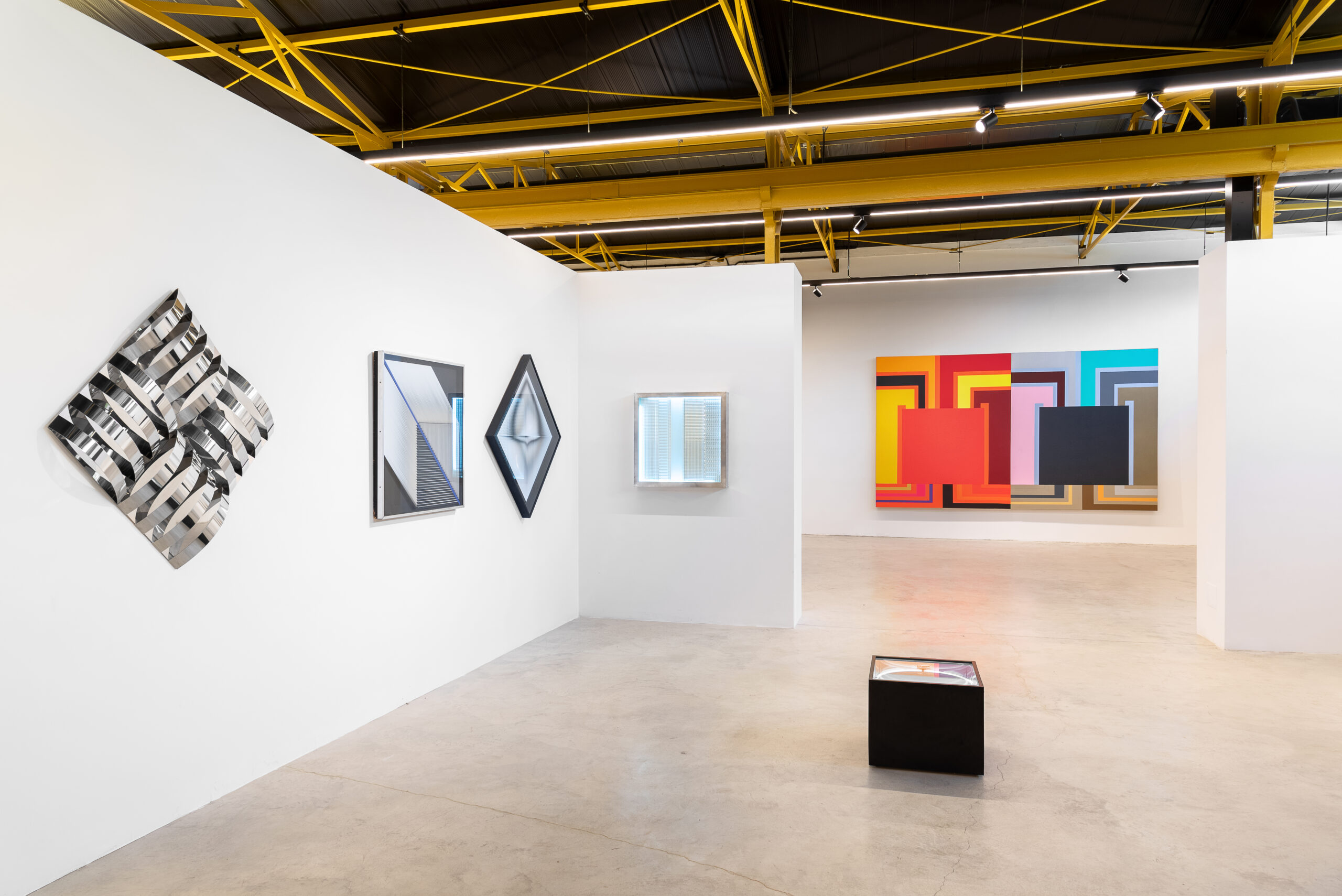
Fondazione D’ARC, permanent collection. ph Eleonora Cerri Pecorella
What is your opinion on art fairs? How would you assess the Italian art scene?
Clara Datti: Art fairs are an important element of the contemporary art system. They are places to discover new galleries and artists, to deepen relationships with many gallerists you wouldn’t otherwise meet, and—especially—to connect with foreign galleries and artists working in languages very different from those we normally encounter. Today, the number of fairs may even be excessive, and attending them all regularly would require an impossible amount of free time. Still, a selective and balanced participation can provide moments of discovery and inspiration.
To what extent does your legal background influence your approach to collecting?
Clara Datti: I don’t believe our legal training has influenced our collecting choices, because when there is engagement and passion, many decisions are freed from constraints and, in a way, even from reason. If we had relied solely on reason, we probably would never have started collecting. That said, our legal background has certainly been useful, as it has helped us manage relationships with institutions, handle loans, and navigate all the legal aspects related to the collection.
What motivated you to open the D’ARC Foundation? And why in the Tiburtina area?
Clara Datti: It is a place especially dear to my family. I consider this urban space a great resource: it is not easy to find such a large area in the city dedicated to culture. Moreover, the neighborhood is extremely vibrant and constantly evolving, and the local community is very welcoming. We are truly proud and honored to have brought to life such an important project of urban regeneration.
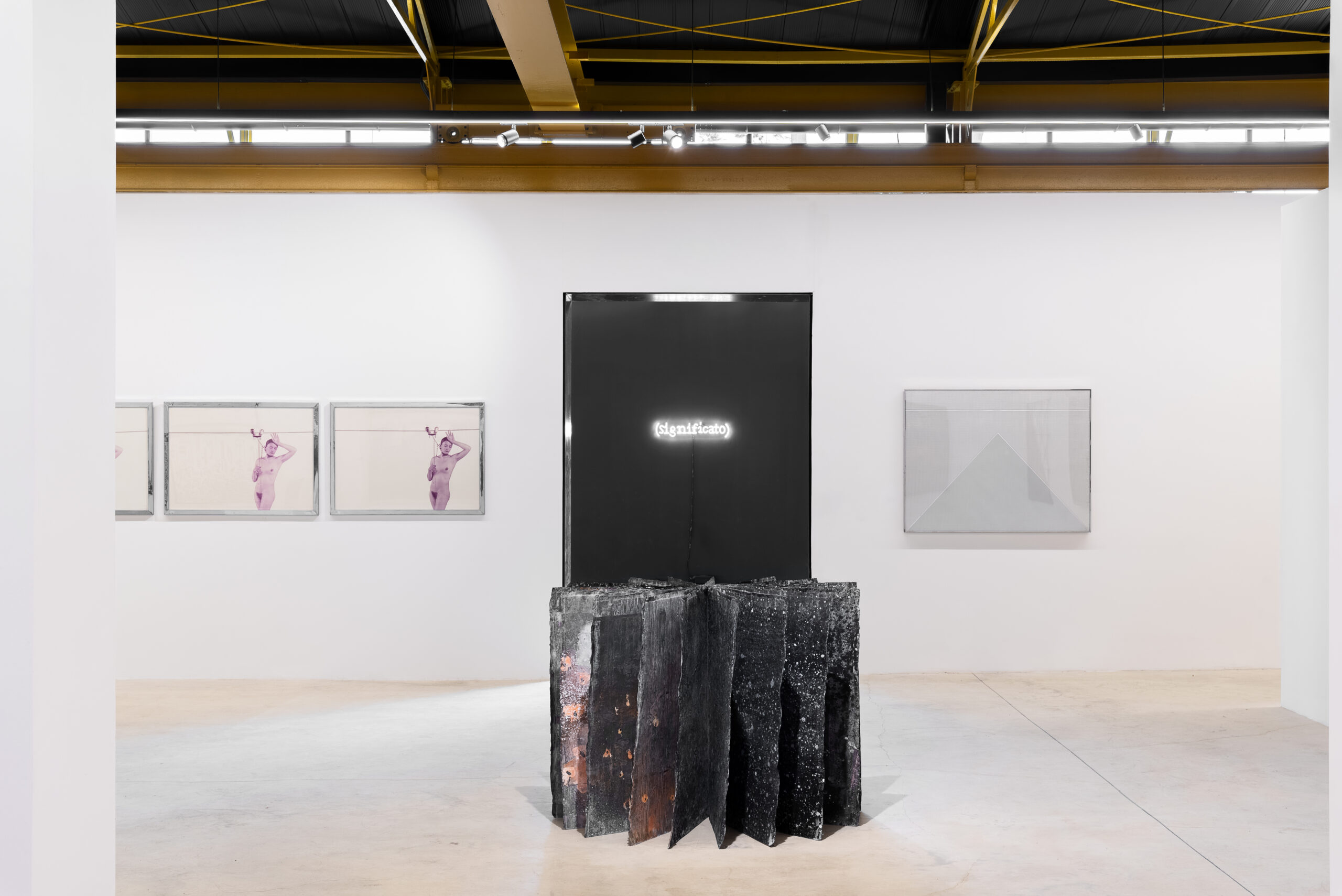
Fondazione D’ARC, permanent collection. ph Eleonora Cerri Pecorella
So we can say that the D’ARC Foundation is for both the public and the artists?
Clara Datti: Absolutely, yes. We made this choice because contemporary art is often perceived as distant and elitist, whereas we want the public to be able to understand and appreciate it. At the Foundation, we also organize guided visits so that visitors can follow a journey through art history from the 1940s to the present—the same journey that the artists we host in residence engage with and respond to.
If you could go back, would you ever have imagined opening a Foundation?
Clara Datti: No, certainly not on this scale. Everything has grown very slowly—we’ve been collecting for 35 years—but until a few years ago, we truly had no intention of becoming promoters of contemporary art. These steps have been unexpected, complex, but joyful. Our energy comes from the enthusiasm and the genuine wonder of the public discovering us.
English translation by Dobroslawa Nowak
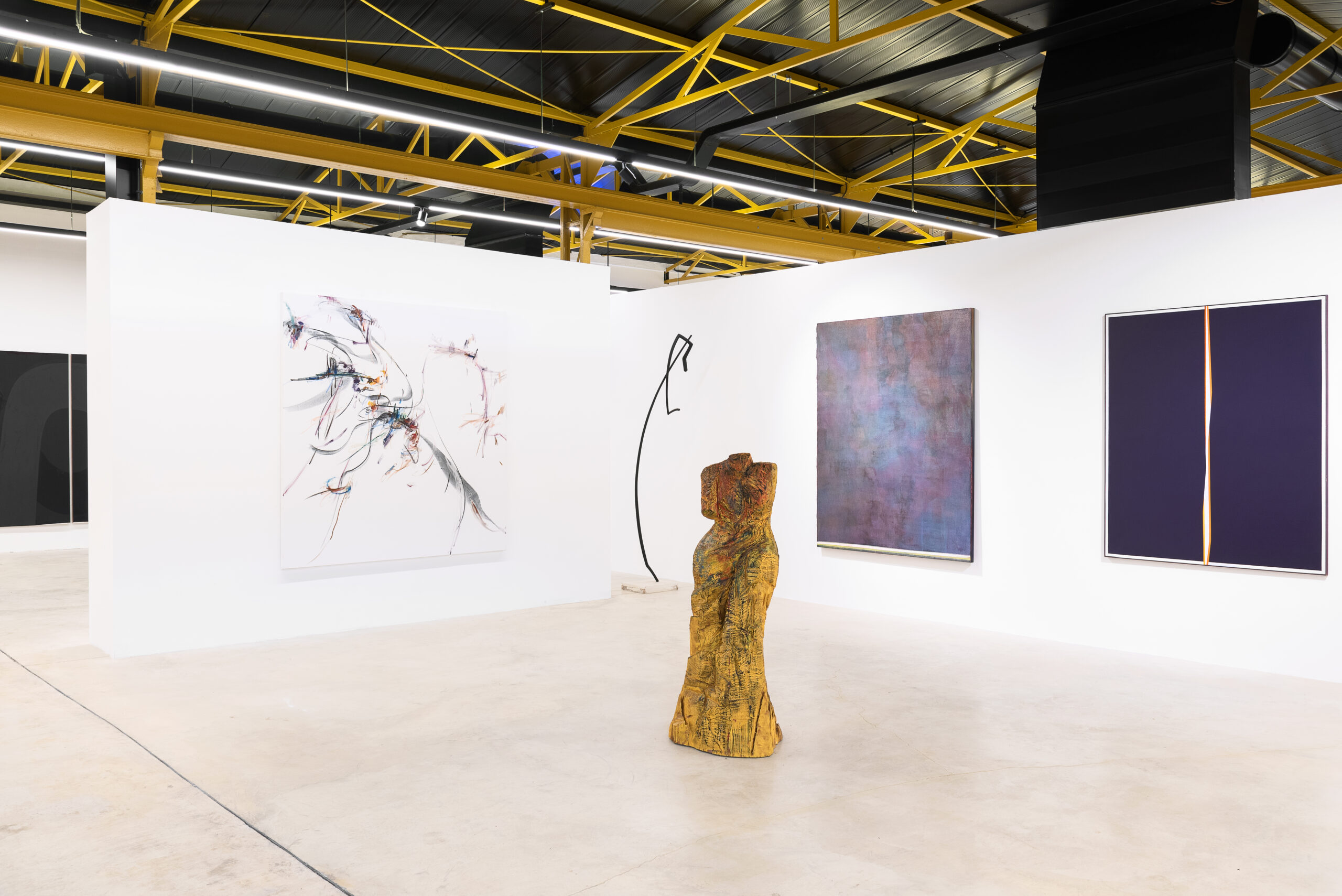
Fondazione D’ARC, permanent collection. ph Eleonora Cerri Pecorella