


Among the Bonds of Many Things "With You, With Everything": The Italian Pavilion at the 61st International Art Exhibition of La Biennale di Venezia
Maria Vittoria Pinotti in conversation with Cecilia Canziani and Chiara Camoni
26.06.2026
It is possible that we tend to avoid whatever appears complex; yet what presents itself as simple often proves otherwise. If we are convinced that the world is structured through intricate relationships, we are equally certain that it can be understood, unfolded, and thus simplified through a free narrative of correspondences. Chiara Camoni’s Italian Pavilion, curated by Cecilia Canziani for the 61st International Art Exhibition of La Biennale di Venezia, invites us to think of everything that converges within the flow of life—including its very residues—as a form of complexity made legible through its expanded unfolding. The project offers a narrative itinerary that is not predetermined but rather constructed through each visitor’s own perspective, much like the creation of a light, precise, and intelligent game to be played. For both Cecilia Canziani and Chiara Camoni, simplification may mean grasping the essential aspect even within the smallest ordinary fragment, recognizing in reality something more elemental and, for that very reason, naturally open to narration. Within the Pavilion, the first tesa (warehouse-like structure of the Arsenale, originally used for shipbuilding and storage), conceived as a forest of sculptures, introduces the second, where the section Dialoghi (Dialogues) reaches a degree of synthesis that allows each work to intertwine with the others, sharing and reflecting particular qualities while contributing to the construction of the distinctly naturalistic character of an existential space.
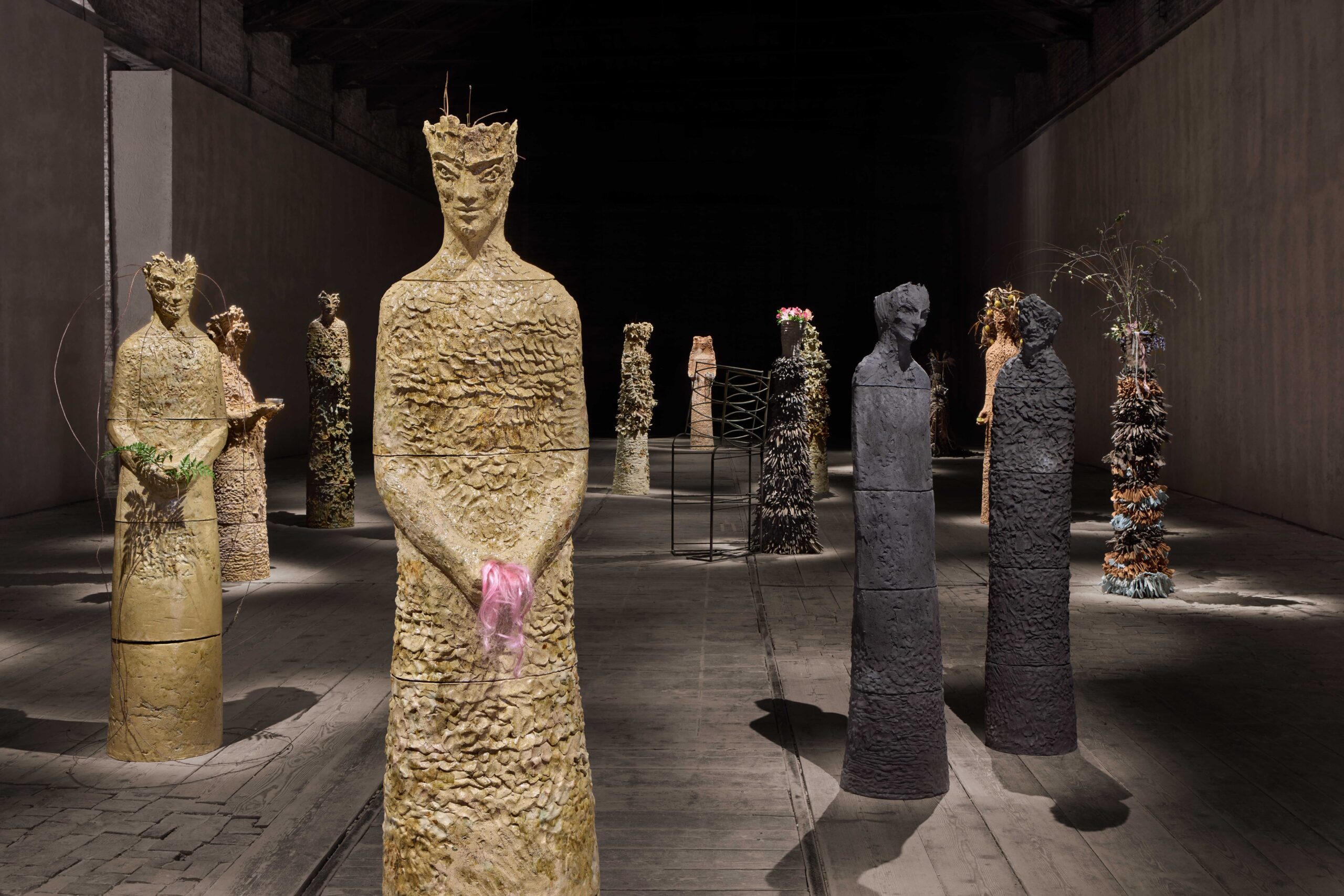
Installation view, CON TE CON TUTTO, Chiara Camoni and Cecilia Canziani, first exhibition room, photo by Camilla Maria Santini
As suggested by the title of the project, With You, With Everything, and by Cecilia Canziani’s own words, together with the Public Program—which includes performances and activities running until 31 October 2026—the Pavilion embodies a curatorial approach that embraces diversity, enveloping, welcoming, and liberating the possibility of listening to multiple voices simultaneously, thereby creating a dynamic, vibrant, and sincere atmosphere. One’s state of mind, like space, is a matter of movement; every emotional nuance generates a different spatial configuration. Within this relational framework, Chiara Camoni’s sculptures establish spatial dynamics and further correspondences around something that must necessarily signify rather than represent. The materials of stoneware and terracotta, porous and malleable by nature, retain traces and return them through light, which softens their reading and lends the sculptures the aura of a divine presence. For Chiara Camoni, the artwork possesses an expansive form of transmission that does not occur solely on surfaces but also propagates through the vertical, horizontal, and oblique spaces of the tese. No form is autonomous; each is part of a network of relations that traverses it. Consequently, within the imaginary forest constructed in the Pavilion, nothing appears isolated. Bodies, materials, and objects participate in the same field of forces, where every element exists by virtue of the relationships that constitute it. The busts, faces, and joined hands of the Colonne (Columns) and Sister invite touch. Visible are the marks left by those who shaped the material—delicate impressions that remain intact like traces on sand, granting each work a rare sense of intimacy. The question addressed to Chiara Camoni regarding the tactile engagement with matter seeks to reflect upon the living relationship the artist establishes with her materials: a layered sensory connection that embraces every nuance of expression.
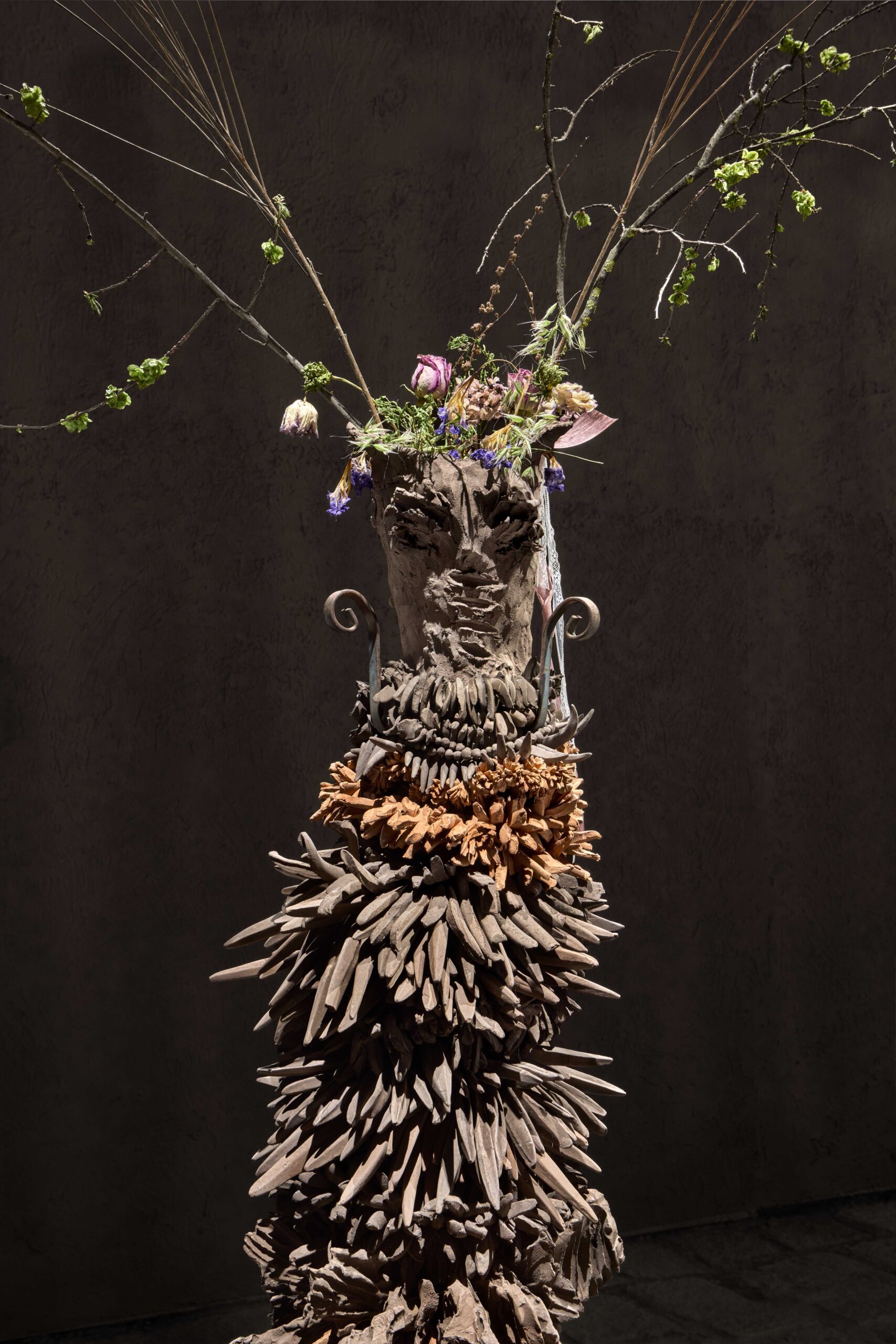
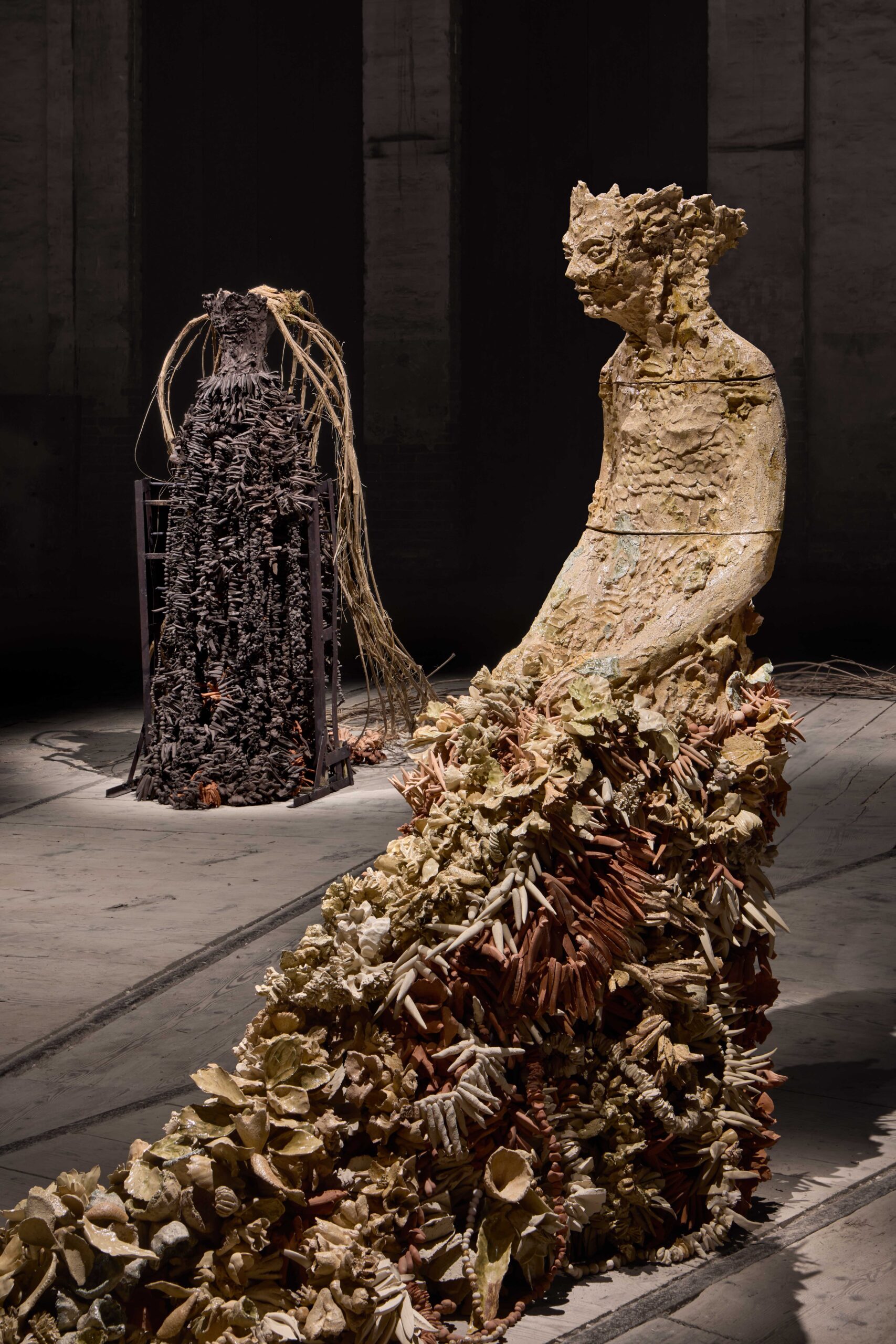
Installation view, CON TE CON TUTTO, Chiara Camoni and Cecilia Canziani, first exhibition room, photo by Camilla Maria Santini
This conversation with both artist and curator let better understand several aspects of the project, including the curatorial process, their relationship to space, and the decisions that led to the installation of the Dialoghi section. Particular attention was given to the latter because the strength of the Pavilion lies precisely in the relationships it creates: subtle and understated bonds that reveal the interdependence between historical memory and the world that currently surrounds us. One of the Pavilion’s greatest strengths undoubtedly resides in its capacity to exploit immersion. Yet it is above all the narrative dimension—remaining deliberately elusive—that allows visitors to construct their own associations. Upon leaving, one has the impression of having acquired a new way of seeing, a sensitivity characteristic of those who can read natural forms—fire, earth, air, and the most diverse vegetal morphologies—and render them simple. It is a capacity belonging to those who are attentive to knowledge while simultaneously embodying both an underground and a luminous disposition.
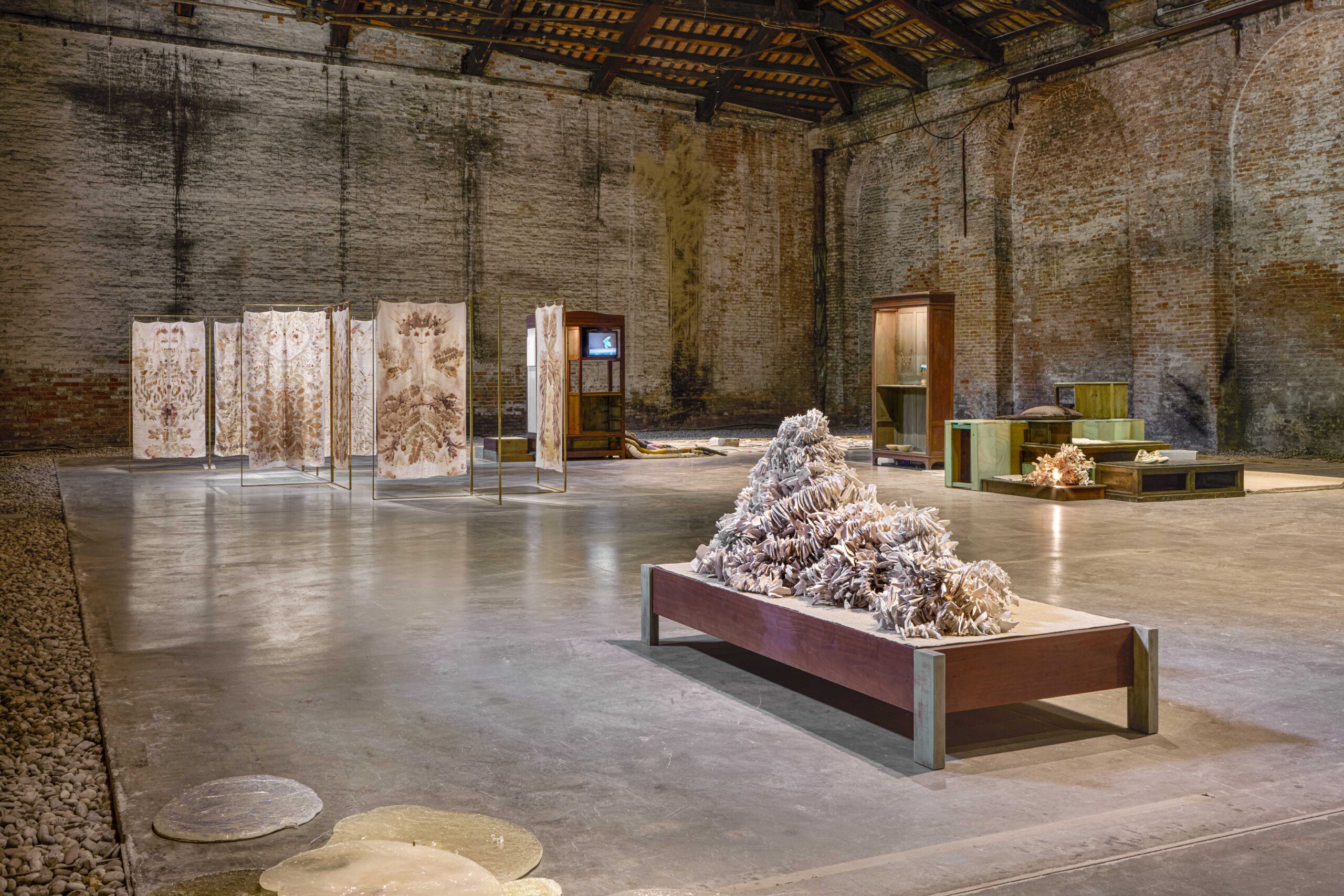
Installation view, CON TE CON TUTTO, Chiara Camoni and Cecilia Canziani, second exhibition room, photo by Camilla Maria Santini
Maria Vittoria Pinotti in Conversation With Cecilia Canziani and Chiara Camoni
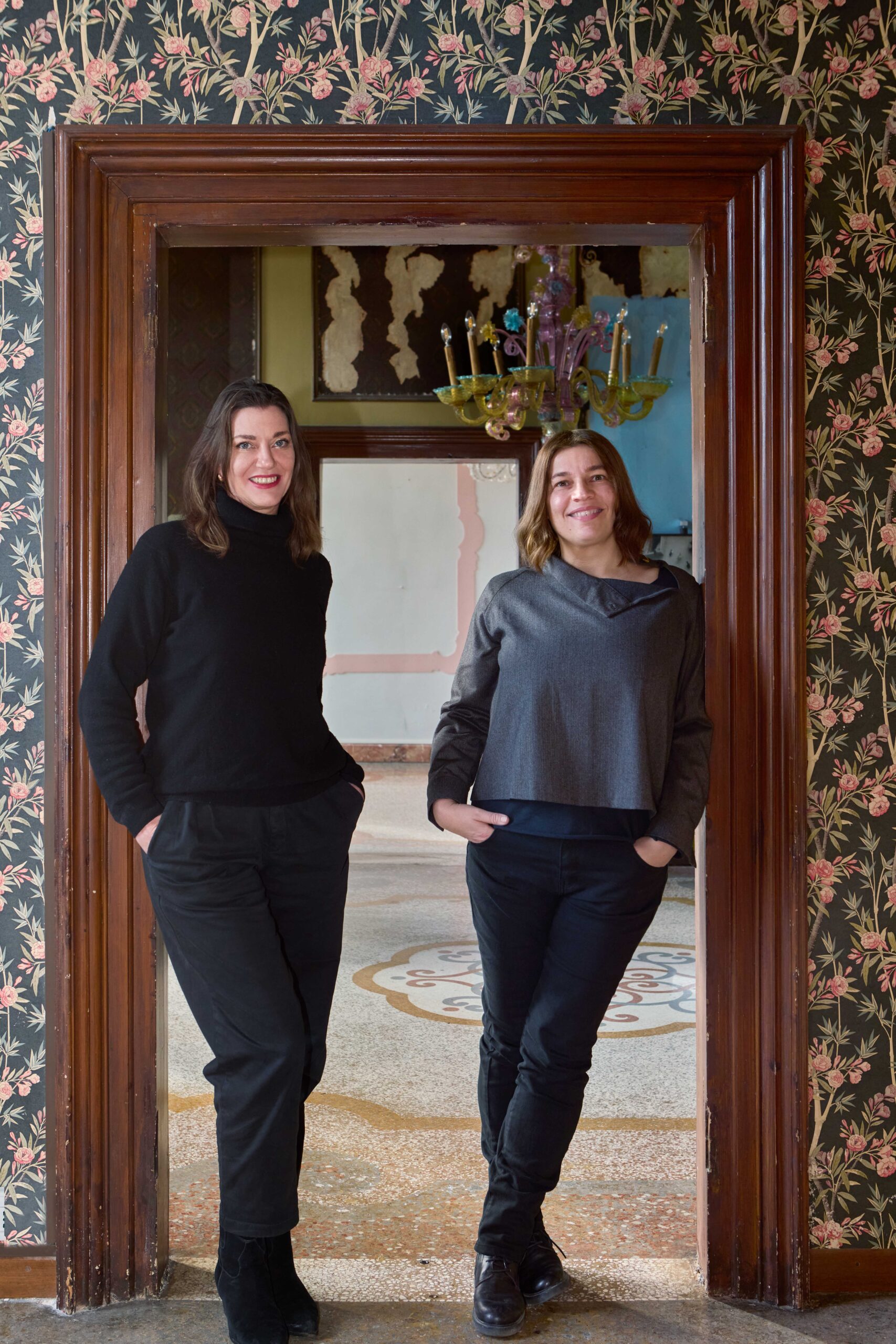
Cecilia Canziani and Chiara Camoni, ph Camilla Maria Santini
The curator: Cecilia Canziani
Maria Vittoria Pinotti: The title With You, With Everything evokes a dimension of inclusivity and collectivity that runs through both Chiara Camoni’s artistic practice and the curatorial decision to present the Dialoghi section. Across the two tese, the meaning and value of experience shape an identity-based fabric whose traces bring forth the delicate strength of enduring common bonds. What does the “everything” invoked in the title encompass?
Cecilia Canziani: Through the title, we wanted to summarize two complementary movements that run through the Pavilion and the project as a whole. On the one hand, there is an appeal to each individual person: With You. It is as though the works speak to and engage with each of us in a unique way. With Everything, on the other hand, refers to all that made this work possible: affections, light, difficulties, time, the journey that brought us here. It is a term capable of alluding to plurality as well as complexity. It certainly indicates a poetic vision and a curatorial attitude, but it also guided some concrete decisions, such as our strong commitment to accessibility—we are the first Italian Pavilion to have worked on it in this way.
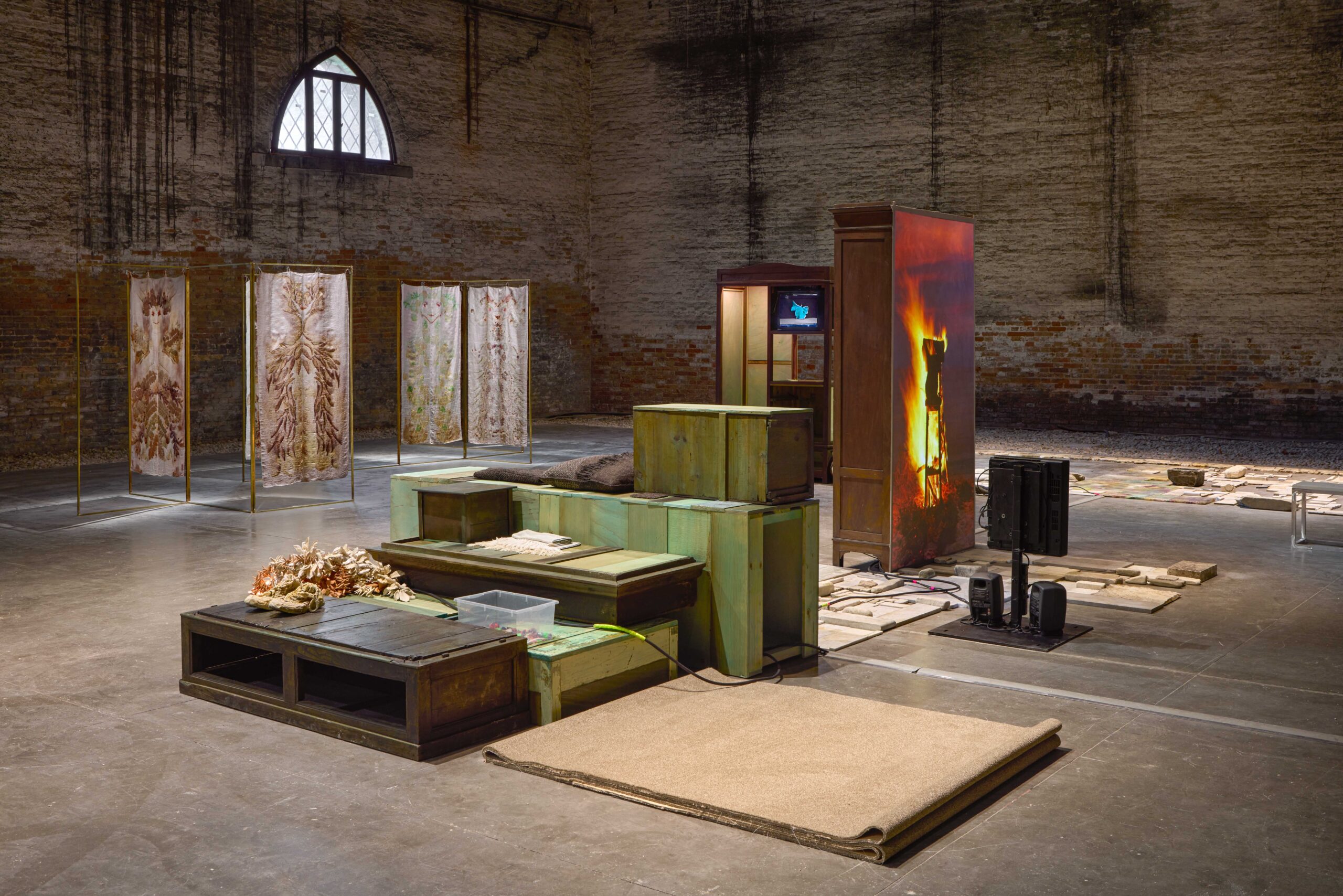
Installation view, CON TE CON TUTTO, Chiara Camoni and Cecilia Canziani, second exhibition room, photo by Camilla Maria Santini
Maria Vittoria Pinotti: While visiting the Pavilion, one senses a profound harmony both within the exhibition spaces and in the selection of works on display. A living, sensitive, and continuous dialogue between you and the artist emerges. How did you work together with Chiara Camoni?
Cecilia Canziani: Over the years, I have worked with Chiara on many different projects: exhibitions, seminars, publications. We have exchanged books, shared ways of thinking, and I have written about her work—and often with her work in mind. At the foundation of this Pavilion lies an exchange that has lasted around fifteen years, during which we developed mutual trust, often relying on each other’s instincts and inclinations. I know Chiara’s sensitivity towards space, materials, and things; sometimes very little needs to be said between us…
Maria Vittoria Pinotti: The Pavilion is a territory of creative freedom, traversed by correspondences among form, light, and matter, where transience, lightness, and ephemerality enter into dialogue with the value of trace. Manual making and contemplative thought intertwine until the relationship between idea, gesture, and reflection becomes perceptible. Which curatorial choices made it possible to construct such a balanced equilibrium?
Cecilia Canziani: Making and thinking are complementary aspects both of the artist’s work and of the work of those who, like you and me, write and curate exhibitions. Chiara and I wanted to make this visible and to put it into practice together with others through a project very dear to both of us called La giusta misura (The Right Measure), and I believe that some of that experience has remained within the architecture of the Pavilion.
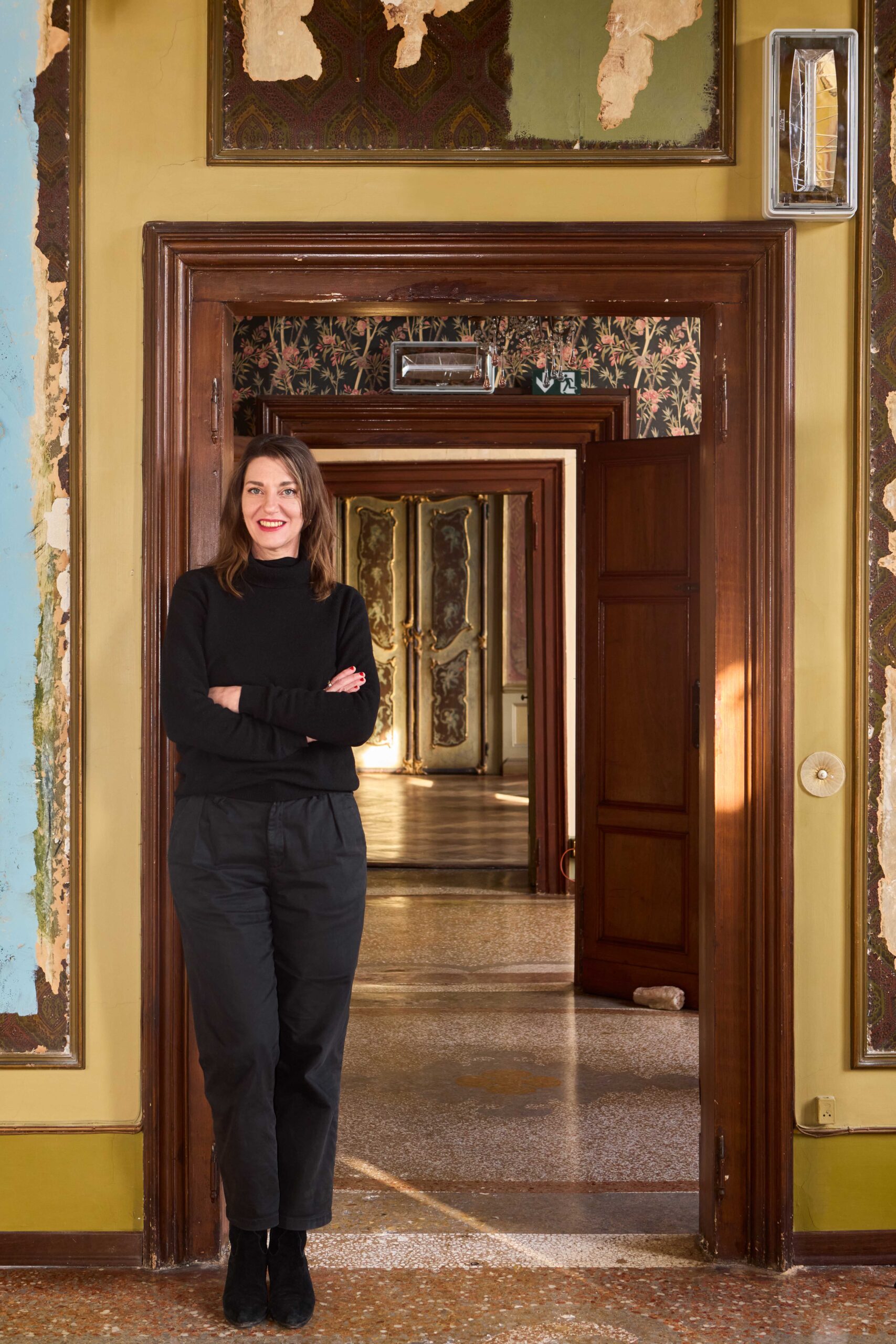
Cecilia Canziani, ph Camilla Maria Santini
The artist: Chiara Camoni
Maria Vittoria Pinotti: I would like you to speak about the value of relationship within your practice. The Pavilion demonstrates how your work is built through connections and references, shaping possible narratives that emerge from materials, forms, and their arrangement in space, where the works resonate with one another. What does relationship mean to you?
Chiara Camoni: Relationship unfolds on several levels: within the creative process, within the process of planning and design, and among the works themselves within the exhibition. For some time now, I have been experimenting in my daily practice with a form of authorship that can sometimes open itself to include other people or translate into a dialogue with materials. I always begin with an intuition, a desire; then form reveals itself as I work, thanks also to the suggestions of the people around me, the material itself, and, not least, the environment in which I work. The context of my work is never neutral; it fully enters the creative process as a compositional element. The Italian Pavilion project was born first and foremost through dialogue with Cecilia Canziani, with whom I share a deep friendship, but also through conversations with many other figures, particularly the studio team and curators Lucia Aspesi and Fiammetta Griccioli, with whom we developed a kind of exhibition within the exhibition. My work enters explicitly into dialogue with that of other artists: the works look at one another, they touch one another…
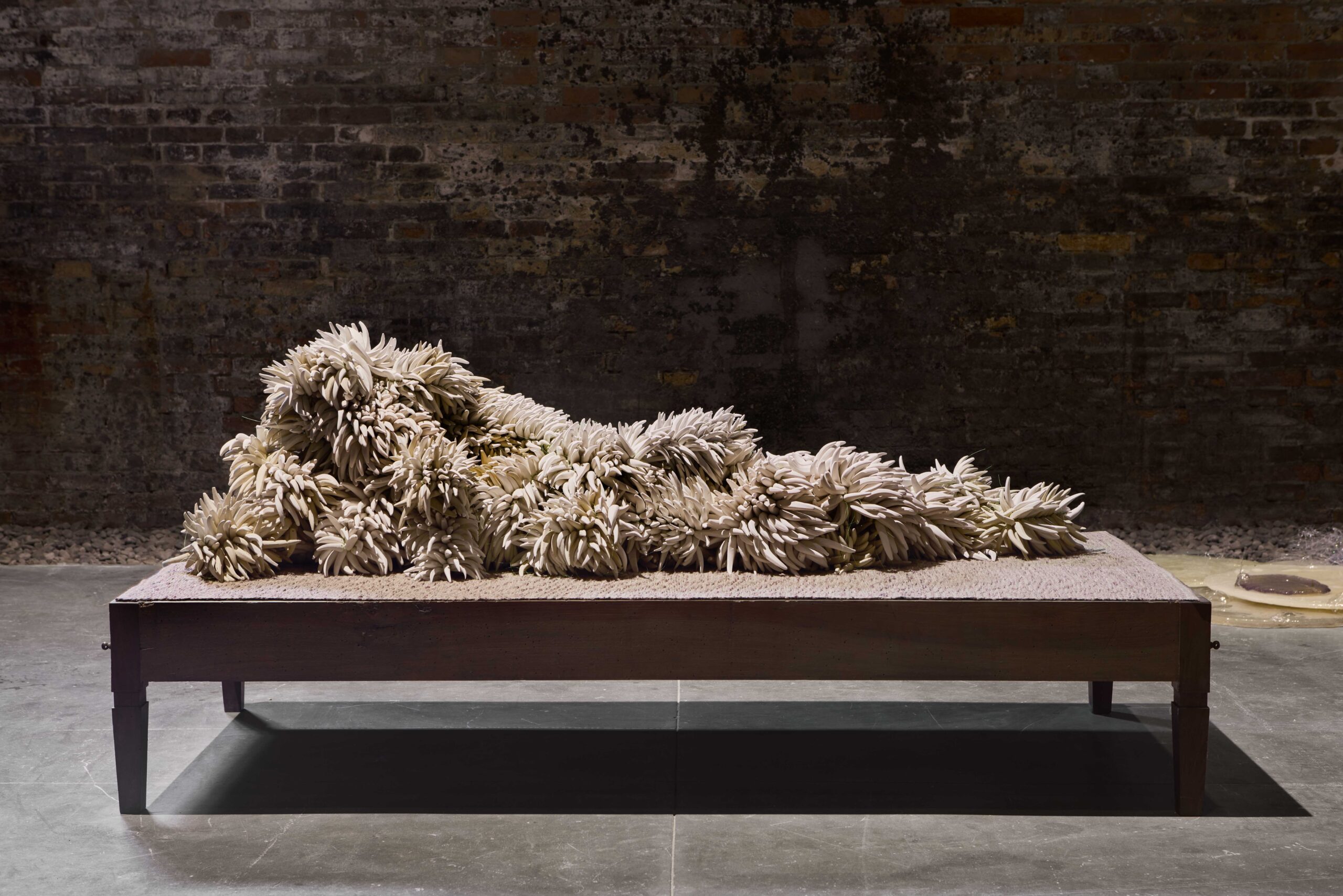
Installation view, CON TE CON TUTTO, Chiara Camoni and Cecilia Canziani, second exhibition room, photo by Camilla Maria Santini
Maria Vittoria Pinotti: In several of the exhibited works, the traces left by fingers remain visible, recounting the physical gesture as a direct contact with the living matter of terracotta and stoneware. This visible tactility seems to become a form of narration of the bond you establish with materials. What relationship do you have with the tactile dimension in the works presented at the Pavilion?
Chiara Camoni: My relationship with gesture is extremely strong and characterizes almost all of my work. For this exhibition in particular, I felt the need to return to trust the works themselves by redefining what sculpture means to me. I immersed myself in the tradition of statuary, and therefore in the question of style—which remains something of a taboo in contemporary art. My works are not produced through moulds or procedures that transfer the gesture, distancing the artist from the final result. On the contrary, they require presence—not only in the overall composition but also in every individual gesture, down to the tips of the fingers. So yes, absolutely: all of my work is a sequence of decisions—or perhaps non-decisions. More likely, it is an ongoing negotiation between myself and the material.
Maria Vittoria Pinotti: In the second tesa, works by artists who enter into dialogue with you create a particular play of interactions, spontaneous and natural. Is there a relationship between your works and these pieces, and to what extent do they narrate your own artistic research?
Chiara Camoni: Some of the works included in the exhibition were long-held wishes of mine, while others were proposed by Lucia Aspesi and Fiammetta Griccioli, opening up entirely new scenarios even for me. In those cases, it became a process of response, leading me to model and construct sculptures capable of hosting the works included in the Dialoghi section. An emblematic example is the Demone in the First Tesa, which supports two bowls by Melotti. These extremely fragile ceramic objects are held in the hands of a two-metre-tall stoneware figure that I modelled specifically for them. In this way, a short circuit is created between the glazed and fragile ceramics and the material, fiery presence of stoneware: material coming into contact with other material.
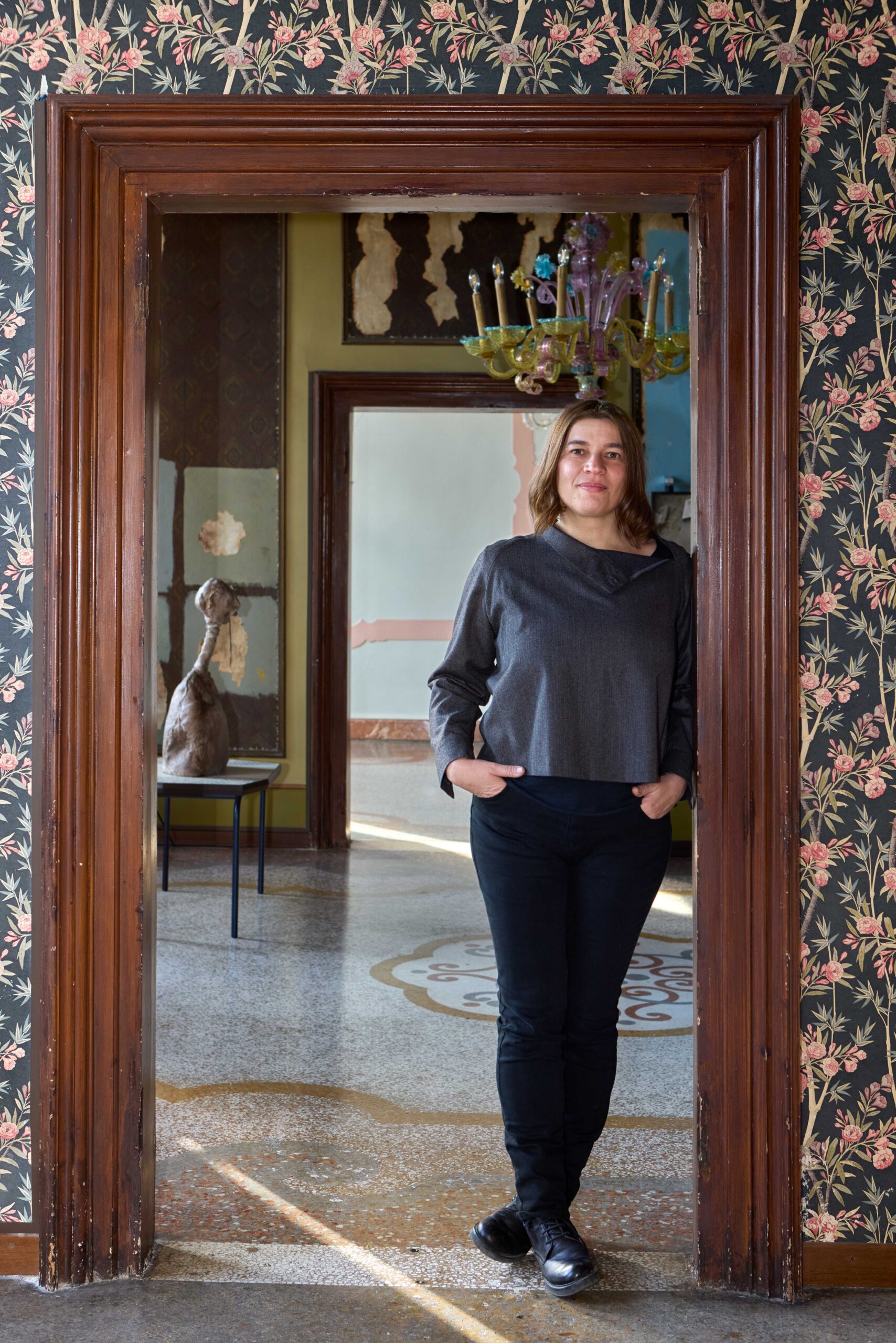
Chiara Camoni, ph Camilla Maria Santini
English translation Dobroslawa Nowak
Information
Italian Pavilion, Biennale Arte 2026
Tese delle Vergini, Arsenale, Venice
From 09/05/2026 to 22/11/2026
www.contecontutto.it