

Beneath the Black Sun
"Black sun: Oil and Contemporary Art", French Academy in Rome – Villa Medici
Dobrosława Nowak | 13/11/2026
This November, even before stepping through the doors of Villa Medici in Rome—the official headquarters of the French Academy in Rome, located on the Pincian Hill and offering splendid views of some of the historic city center’s most celebrated landmarks, including Piazza del Popolo and the dome of St. Peter’s Basilica—I had imagined several ways in which the exhibition Sole nero, petrolio e arte contemporanea (Black Sun, Oil and Contemporary Art) might unfold. On the one hand, a predominantly educational approach could have been applied, in which the artworks would serve as teaching tools, almost like illustrations in a lesson on oil and its consequences. On the other, art might have appropriated a highly relevant subject only to pursue a more independent direction, leaving its implications in the background. I encountered neither of these approaches, but rather a synthesis of the two, striking a balance between in-depth exploration and expressive freedom that exceeded my expectations.
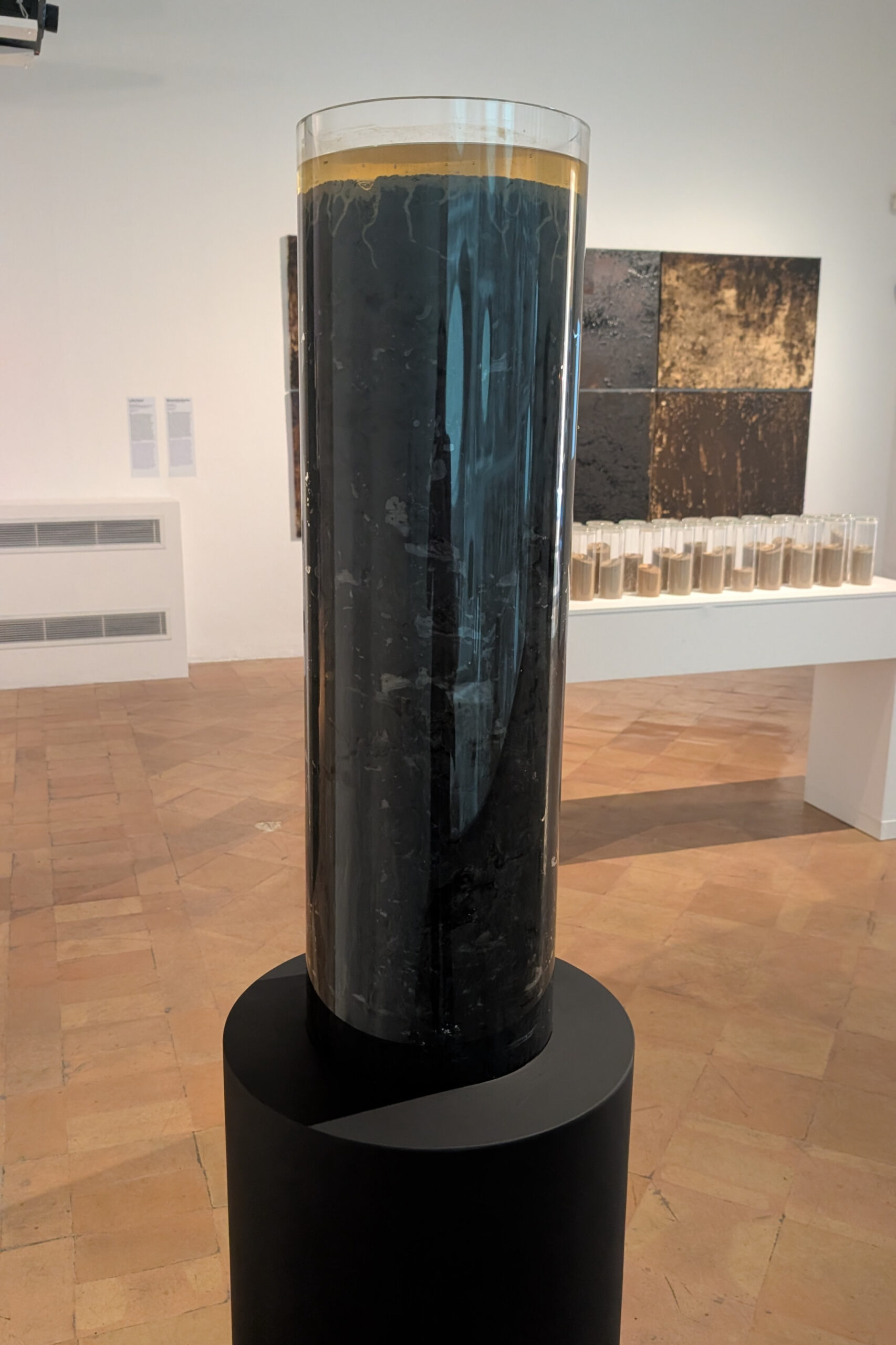
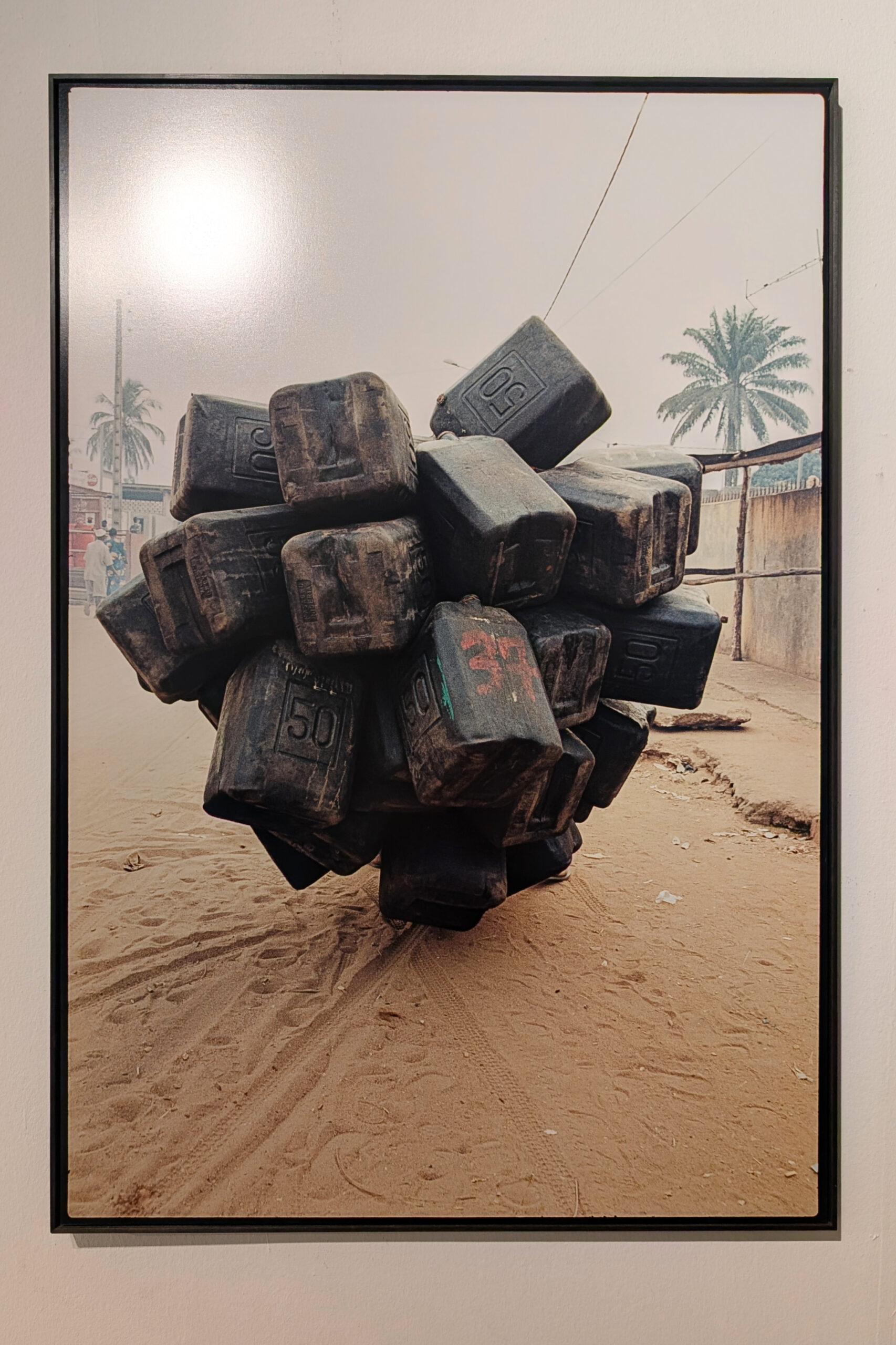
Sole nero, petrolio e arte contemporanea, exhibition views, courtesy French Academy in Rome – Villa Medici, 2026, ph Dobroslawa Nowak
On view from October 9, 2026, to January 18, 2027, Sole nero, petrolio e arte contemporanea marks another chapter in the series dedicated to the elements, launched by Villa Medici in 2022. Following Storie di pietre (Stories of Stones, 2023–2024), inspired by Roger Caillois, and Il canto delle sirene (The Song of the Sirens, 2024–2025), dedicated to water, this new exhibition takes oil as its starting point for investigating one of the forces that has most profoundly transformed modern civilization. Seemingly worlds apart, contemporary art and the oil industry turn out to intersect in a surprising number of ways, through the work of around forty artists and seven thematic sections.
Curators Morad Montazami, Madeleine de Colnet, and Caroline Courrioux use the expression “Black Sun” as a layered metaphor for oil and its role as a driving force in the modern world, capable, at the same time and paradoxically, of blinding us. The exhibition builds on Morad Montazami’s research into what is known as “petromodernity,” now placed at the center of the exhibition.
Just as the sun is a source of light, warmth, and life for the planet, oil has taken on the role of a sun for the modern age. The resource that revolutionized transportation, powered industry, made the widespread use of plastic possible, and helped generate enormous economic wealth has illuminated the twentieth and twenty-first centuries, both metaphorically and materially. And yet this same source of prosperity is black, underground, toxic, and finite. Its centrality extends beyond energy production: oil has helped shape the way we produce, consume, travel, and organize our societies.
Petromodernity, in fact, describes a model of civilization that has progressively organized its production systems, forms of mobility, consumption patterns, and even aspirations for well-being around this resource. The poetic expression “Black Sun” thus represents more than a development of the image of oil as “black gold.” It evokes a reversal of the symbolism of the natural sun: its dark side, a force extracted from organic matter transformed over millions of years, which continues to fuel a civilization built on the promise of seemingly inexhaustible growth.
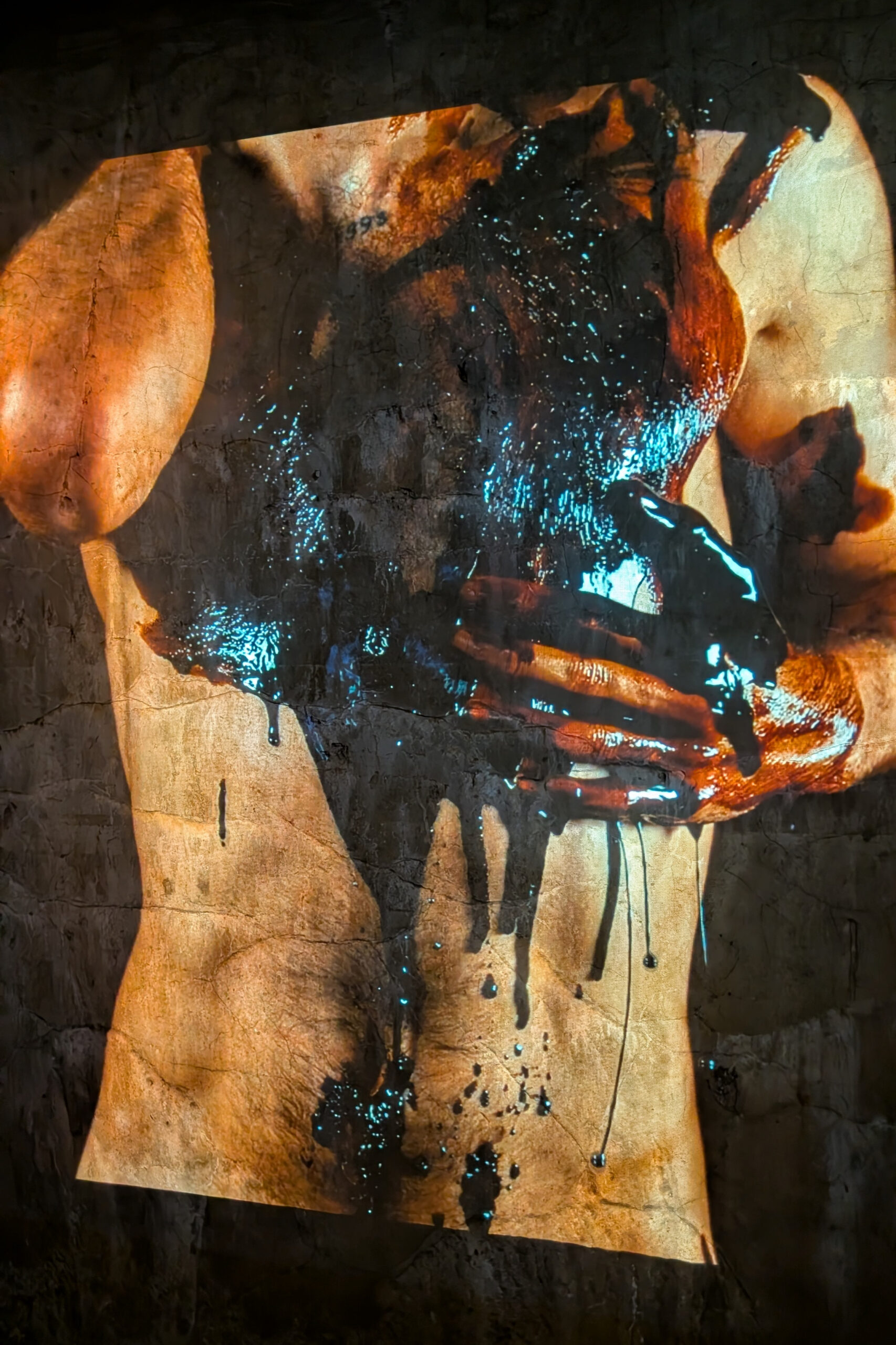
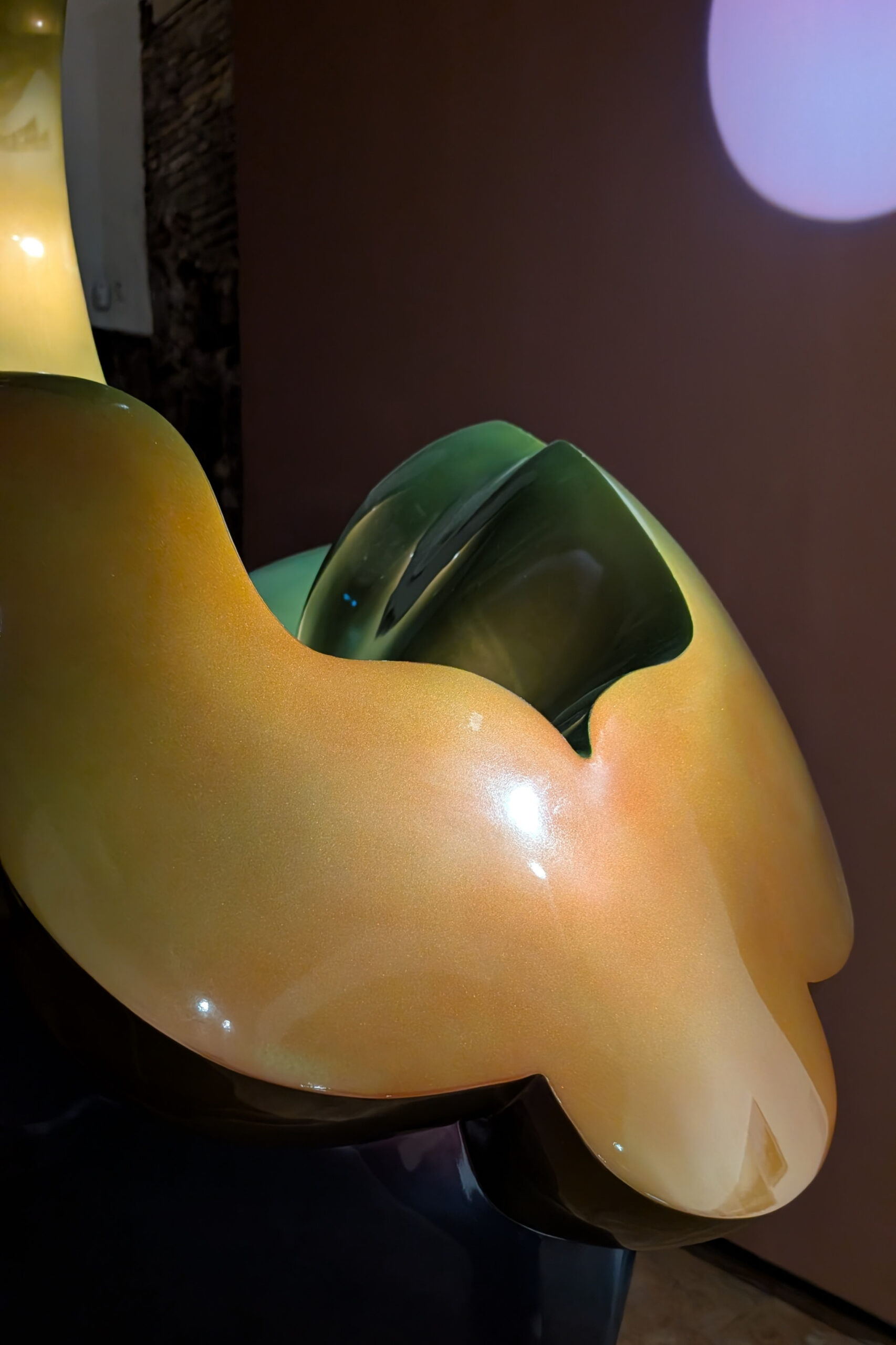
Sole nero, petrolio e arte contemporanea, exhibition views, courtesy French Academy in Rome – Villa Medici, 2026, ph Dobroslawa Nowak
In terms of the exhibition experience, the show alternates between works that call for close, sustained observation and others that immediately capture the eye, acknowledging the different ways in which contemporary audiences engage with art. Perhaps, in an age when we are accustomed to moving rapidly from one image to another, an exhibition devoted to a crisis with such profound and long-lasting consequences might also serve as an invitation to slow down and recover a less fragmented form of attention.
Experiences take very different forms: from the tiny objects displayed in Shirin Sabahi’s cubic vitrine (Pocket Folklore, 2018) to the same artist’s large-format videos (Mouthful, 2018); from Michael Hirschbichler’s series of abstract paintings on canvas made with oil sludge (Oil Field Paintings, 2017) to Ismaïl Bahri’s plexiglass column filled with sediment sludge (Prélèvement II, 2026); and from Rossella Biscotti’s enormous steel sculpture (Circulations, 2024–2026), which extends along the staircase, to Monira Al Qadiri’s enigmatic, futuristic-looking “rolling object” (Future Past 3, 2023).
Among these works, it is particularly interesting to observe how matter itself can become a tool for reflection. In Hirschbichler’s paintings, oil sludge, normally associated with industrial processes and extraction waste, is transferred into the language of abstract painting.
Rossella Biscotti’s Circulations also takes on particular significance within this exhibition. Its monumental structure evokes the infrastructural dimension of the oil industry, reminding us that oil is not merely a system of circulation, connections, and dependencies that cuts across territories and borders. Pipelines, transportation networks, and industrial infrastructure constitute a geography that often remains invisible in everyday life, yet is fundamental to the functioning of contemporary society.
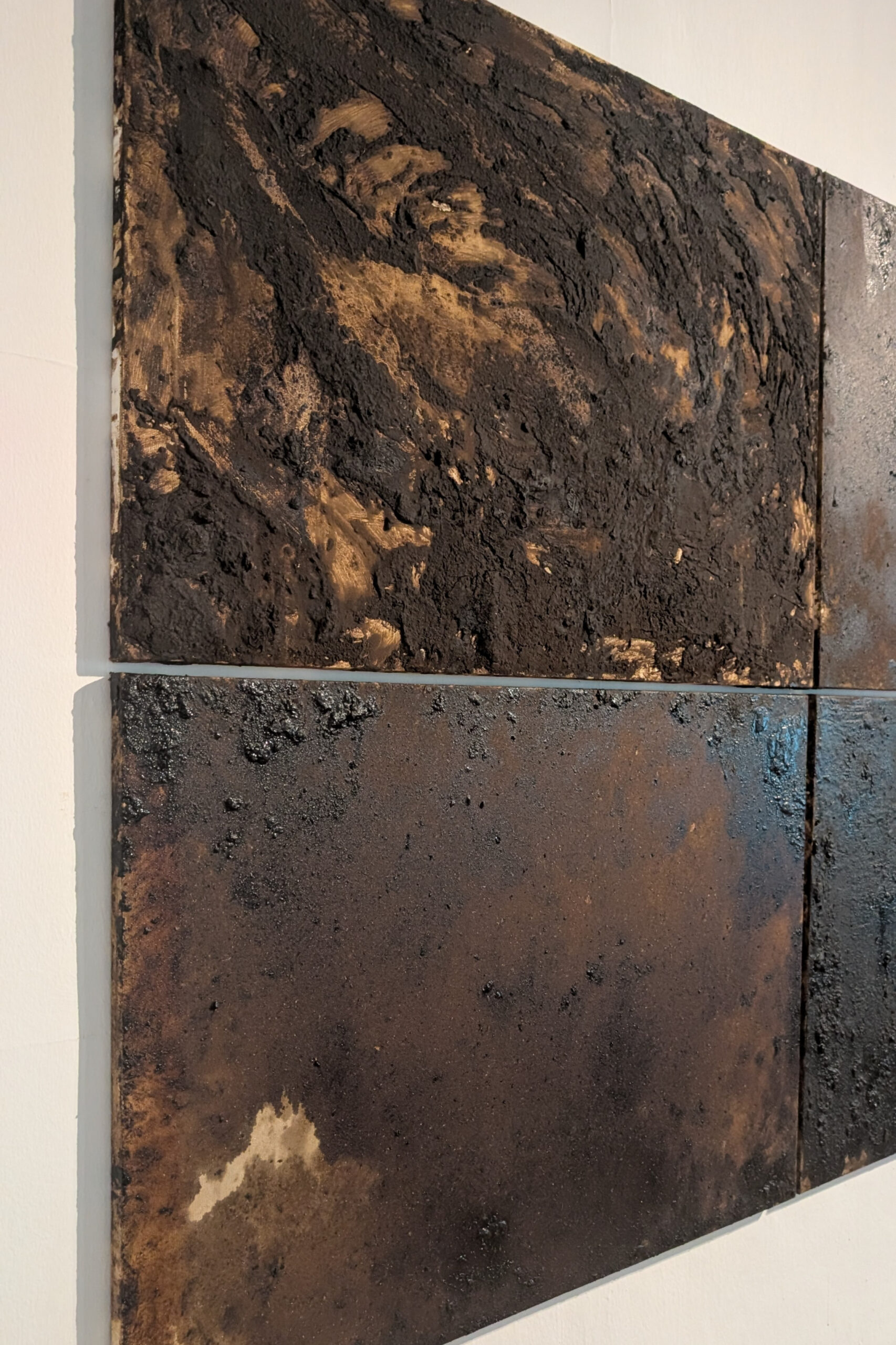
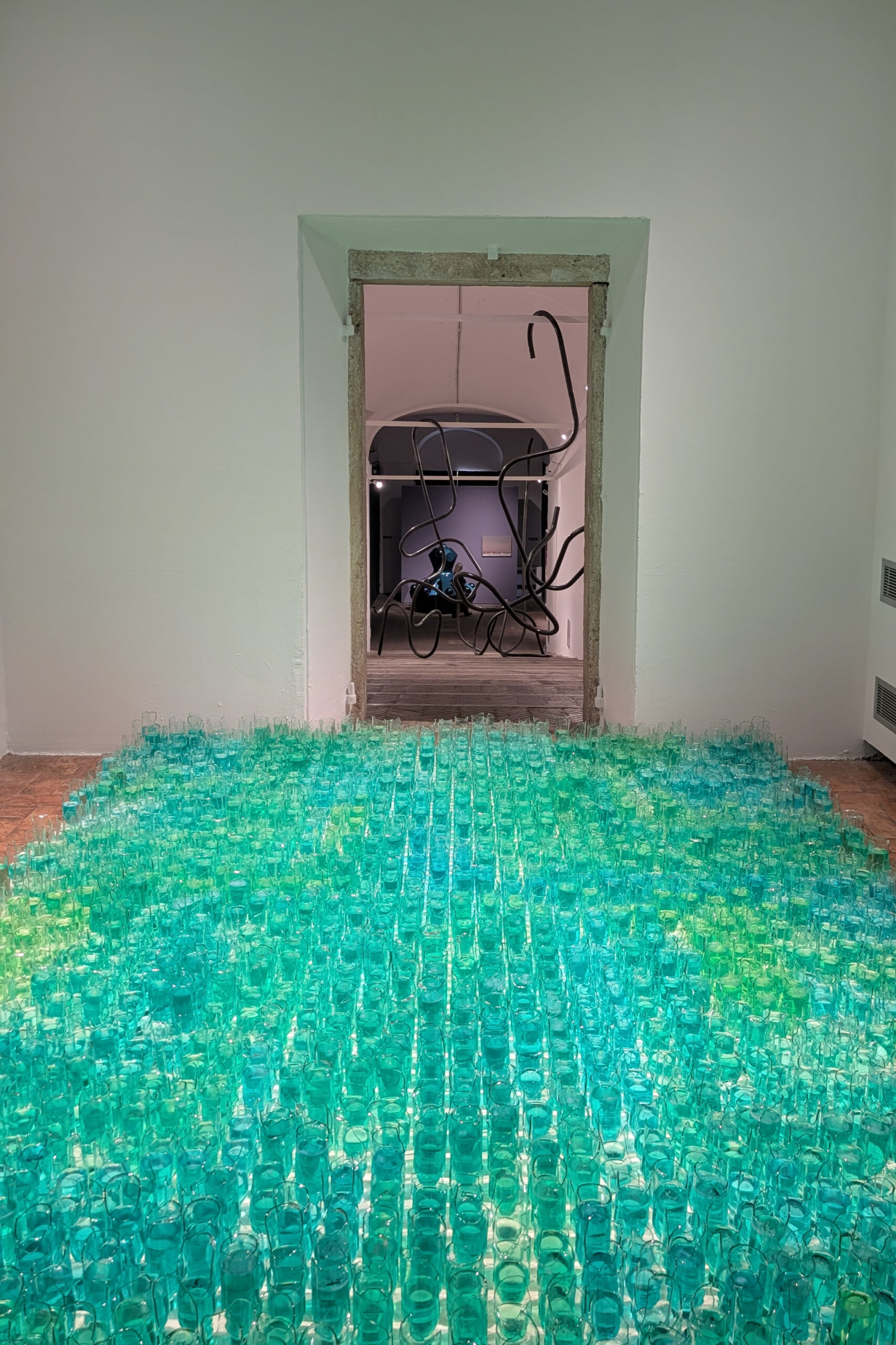
Sole nero, petrolio e arte contemporanea, exhibition views, courtesy French Academy in Rome – Villa Medici, 2026, ph Dobroslawa Nowak
The exhibition thus explores the influence of black gold and petromodernity on contemporary artistic practices, ecological awareness, and the global collective imagination, profoundly transformed by modernity and now confronted with the climate crisis. It brings to light the far from innocent connections between art and oil, focusing on how the oil industry has shaped power relations between the Global North and South through the intensive exploitation of natural resources, particularly in the postcolonial period. Oil thus emerges as both an economic resource and a political force, capable of reshaping territories, influencing international balances of power, and perpetuating forms of dependency.
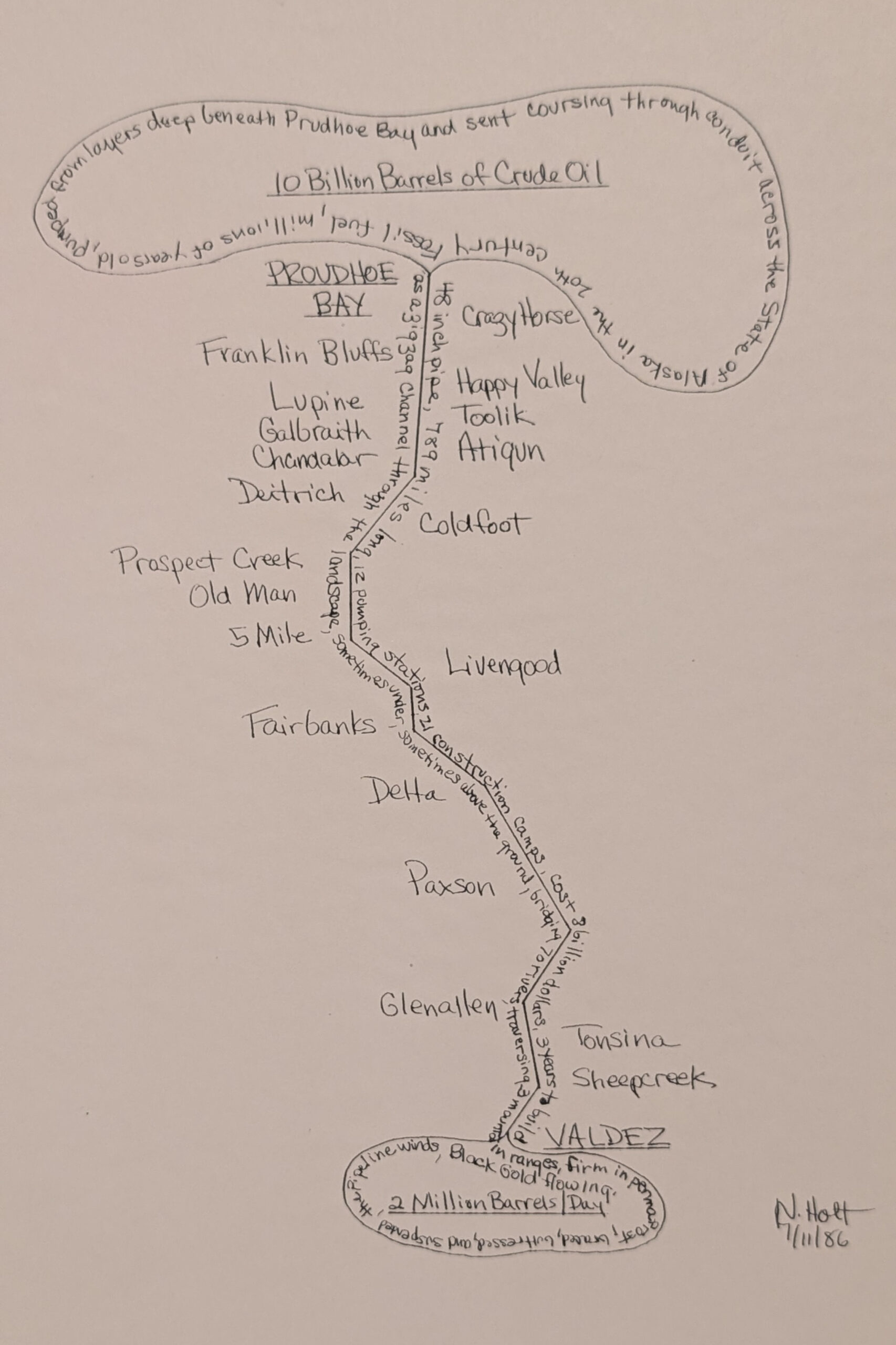
Perhaps one of the most significant works among the many pieces on display, both large and small, is Nancy Holt’s: a small framed sheet of paper bearing black ink inscriptions, titled 10 Billion Barrels of Crude Oil (1986). The work belongs to her research into so-called “concrete poems,” conceived as a way of bringing the structures of language into dialogue with those of natural and built environments. The text follows the geographical route of the Trans-Alaska Pipeline in a zigzag pattern, weaving together economic and environmental data relating to the construction and operation of the infrastructure. To read it, viewers are forced to change position and physically follow the path of the words, a movement that makes tangible the unease produced by the information contained in the work. The result is a kind of cartographic calligram, in which language becomes a visual representation of an industrial system.
Through works like this, the exhibition succeeds in bringing to light what normally remains hidden behind the infrastructure of contemporary life. And the argument can be taken a step further: cultural institutions, too, are not entirely separate from the economic and material systems they sometimes call into question. Museums and exhibitions depend on energy-intensive buildings, lighting, air conditioning, the international transportation of artworks, installation materials, and complex logistical networks. This raises a contradiction that is difficult to ignore: to what extent can an institution critically examine the oil economy while remaining, at least in part, dependent on the infrastructure it has made possible?
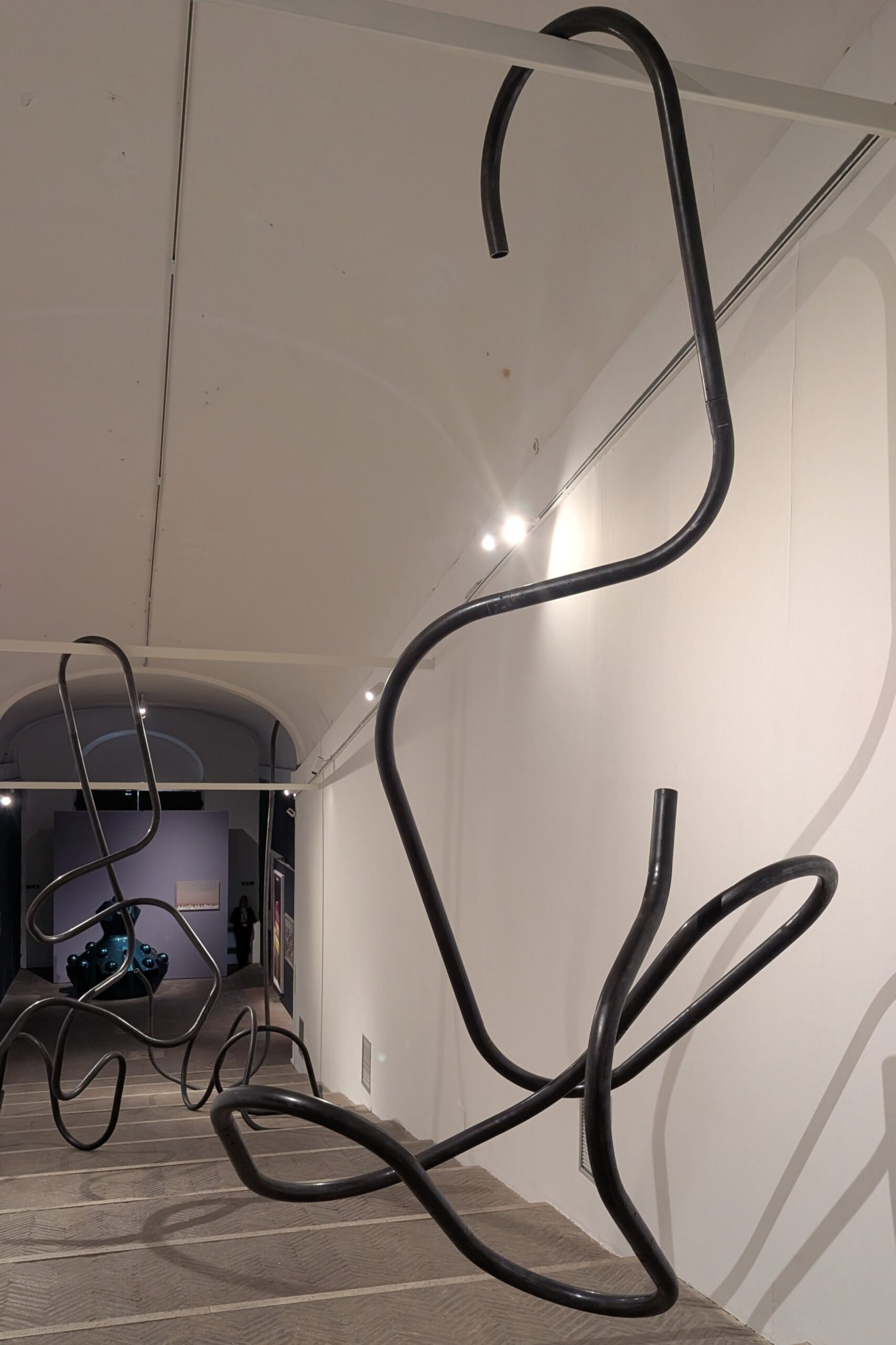
Sole nero, petrolio e arte contemporanea, exhibition views, courtesy French Academy in Rome – Villa Medici, 2026, ph Dobroslawa Nowak
The growing desensitization to the images that surround us leads us to ask how we can effectively communicate an environmental crisis that we often perceive as distant, abstract, or belonging to an indefinite future. Perhaps, for what we want to communicate to truly reach us, it must become part of our experience and touch us personally, prompting a reaction. In this context, two concepts are particularly relevant: “solastalgia” and “petromelancholia.”
Solastalgia, a term coined in 2003 by Australian philosopher Glenn Albrecht, refers to the psychological and existential distress caused by the negative transformation of the environment in which we live, the place we recognize as home. It is a form of nostalgia experienced without having left one’s surroundings: a sense of loss that arises precisely while we continue to inhabit a place that is changing. Long before I knew the term, I had experienced this feeling deeply as part of my own life. I remember the sea during a storm, as it washed layers of waste onto the beach—plastic and glass bottles, caps, bags, sandals, hairbands—intertwined with the remains of marine organisms, along the otherwise beautiful eastern coast of Thailand. This accumulation was not merely a visible sign of environmental degradation, but also the result of a global system of production and consumption in which oil, either directly or through the petrochemical industry, continues to play a fundamental role. Plastic, in particular, makes it clear just how deeply fossil fuels have entered our everyday lives, often in forms whose origins we no longer associate with them.
Petromelancholia, a concept developed by American scholar Stephanie LeMenager in her 2014 book Living Oil: Petroleum Culture in the American Century, describes a sense of loss and mourning for a modernity that, despite promising progress, well-being, and freedom, has also proved to be a source of environmental destruction. It is not simply nostalgia for the end of the oil age or for a high-energy-consumption lifestyle, but an ambivalent emotional relationship with the world that fossil fuels have made possible: a world on which we continue to depend, whose contradictions we recognize, and to which we nevertheless remain deeply attached. In this sense, petromelancholia is not only about what we are losing, but also about the difficulty of imagining a form of well-being different from the one built around fossil fuel consumption.
Although distinct, the two concepts converge in a shared feeling: the awareness that the world we live in is changing, coupled with the difficulty of coming to terms with the loss of what we have known and, in some cases, helped transform. While solastalgia arises from the direct experience of the deterioration of one’s environment, petromelancholia invites us to confront the emotional and cultural legacy of an entire energy-based civilization.
Oil continues to be an imposing presence, both in the material structures of our society and in our collective imagination. Its history is intertwined with that of inequalities, geopolitical dependencies, and the environmental transformations we are now called upon to confront. Recognizing its legacy means coming to terms with a relationship that is anything but simple: we cannot simply condemn the world built beneath the Black Sun without acknowledging how deeply we are still part of it.
English translation by Dobroslawa Nowak