

Destroying Without Making a Sound
Dobrosława Nowak in Conversation with Marco Rossi
Dobrosława Nowak | 27/10/2026 | Listen to the extended version of this interview in Italian on our Spotify account.
Relentless in his dedication to research, Bergamo-based artist Marco Rossi is the first guest in the series of conversations that The Italian Art Guide is launching on its new Spotify channel. The extended version of the conversation is available in audio format, while a shorter written version can be read below. The audio conversation is in Italian.
Dobrosława Nowak: We meet at a moment when the form of your work is undergoing an interesting transformation: after exploring painting and drawing in various ways, so much so that you earned the nickname “punk painter”1, you seem to be wandering increasingly towards sculpture with your new series Giocattoli (Toys). What happens to the line you have worked with for so many years when, all of a sudden, it acquires volume, weight, and gravity?
Marco Rossi: I’ve actually been assembling these Giocattoli for several years, starting with scraps of canvas, stretcher frames, and objects I find in everyday life, but I’ve always considered them a divertissement that I didn’t give too much weight to. Lately, though, I’ve realized that the number of these small sculptures was growing steadily, and eventually they became a more structured body of work with an identity of its own.
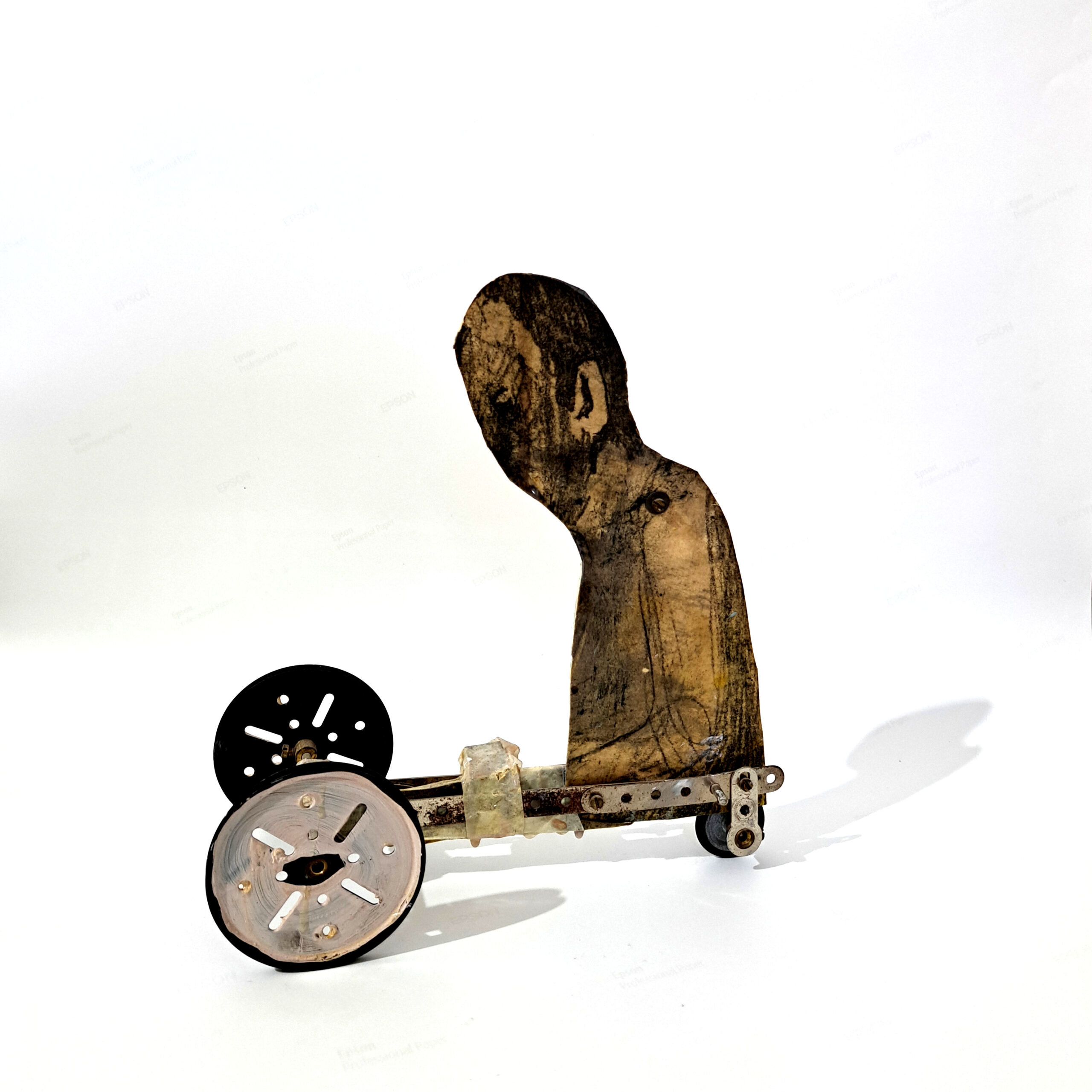
Marco Rossi, Tricipede sculpture from the series Giocattoli, 2026
D.N.: Your work has often engaged with bodies that seem to transform or dissolve. Sometimes they plunge into water or disappear into cosmic space; at other times, they appear whole but heavily distorted. Why does the body keep returning in your work, and why in this way? Are you interested in the body more as an image or as a psychological condition?
M.R.: Both. For me, the body is an excuse to investigate the mark, the gesture, and the relationship between positive and negative space on the page. I try to remain on the borderline so as not to slip, on the one hand, into the informal and, on the other, into illustration; it is precisely within this tension that a psychological, and perhaps even dramatic, dimension of my work emerges.
D.N.: Your works are often raw, far removed from aestheticization, and in this sense free and courageous. What kind of relationship do you want viewers to establish with the physicality of the work: intimacy, discomfort, attraction, distance? And what frightens you more: creating something nobody understands or creating something everyone understands immediately?
M.R.: I don’t ask myself that question. It all comes from a personal need. A person’s response to a work largely depends on who is looking at it—their own experiences and what they are looking for at that particular moment.
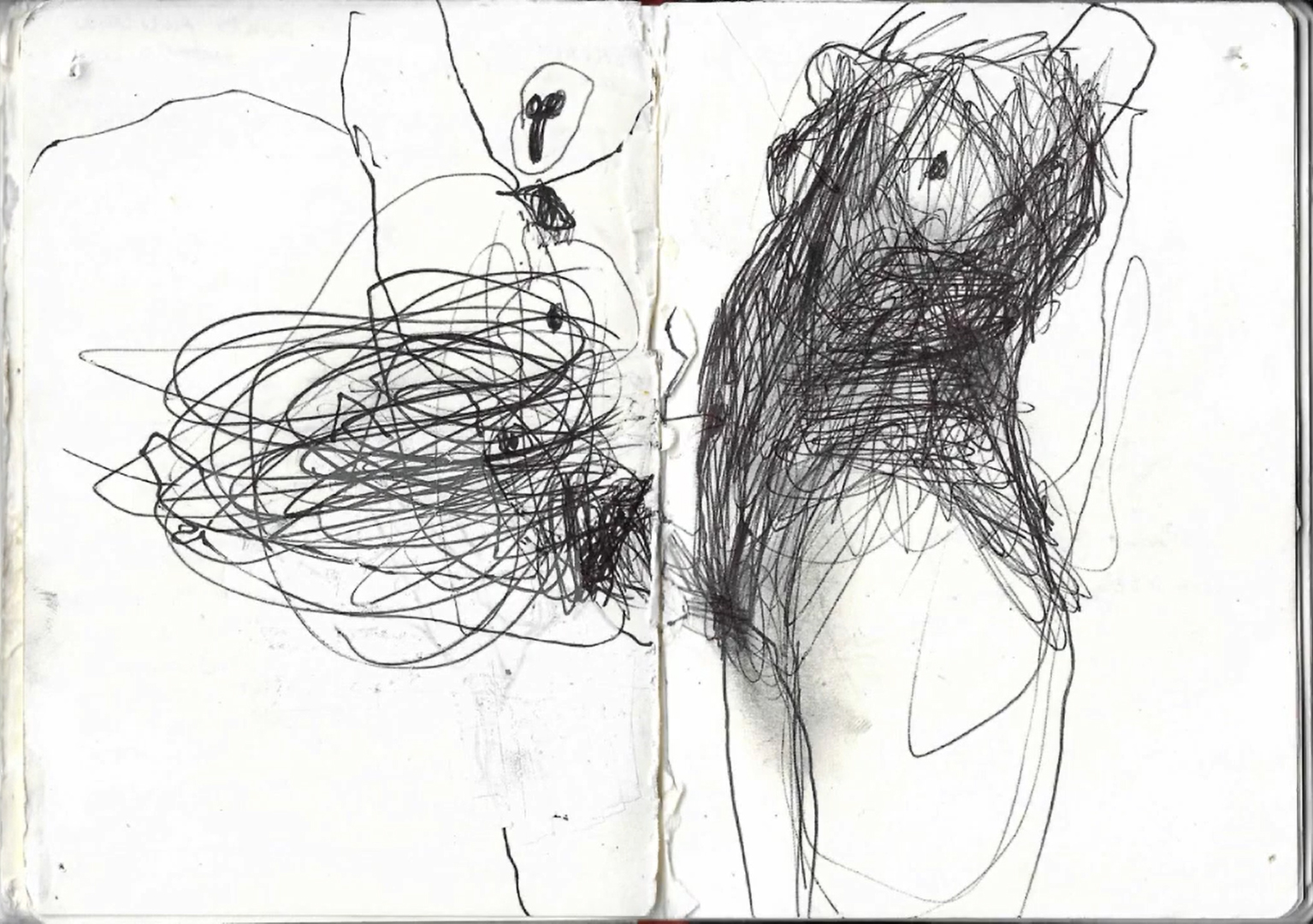
Marco Rossi, notebook Waiting For Superman, 2023
D.N.: After studying painting at the Brera Academy and spending around ten years in Milan, you decided to continue developing your artistic practice outside the metropolis and move to Romano di Lombardia. What led you to make this decision? Do you have a general view on city life versus life outside the city for an artist? What have you had to unlearn from your academic training?
M.R.: Living in a city certainly gives you the advantage of being able to cultivate many more connections and engage in more public relations. The downside is that you can get distracted more easily and that studio costs are five times higher! As for my training at the Academy, I haven’t had to unlearn anything—in fact, quite the opposite! Simply, as I mentioned earlier, when I notice that my drawing is becoming too “illustrative,” I try to negate technique in favour of a more emotional and instinctive approach, which is what interests me most.
D.N.: When Alex Urso asked you in an interview for Artribune,1 published in January 2026, whether you think art is still a tool for “awakening” collective consciousness, you replied, among other things, that it “concerns the ability of artworks to create ruptures in the way we perceive the world.” Would you tell us more about this idea?
M.R.: In that case, I think the question was about the artist’s “social” role, but I can reaffirm that statement: all the greatest works of art by the great artists have had the ability to break with everyday perception and offer us a reading of what surrounds us from a different point of view.
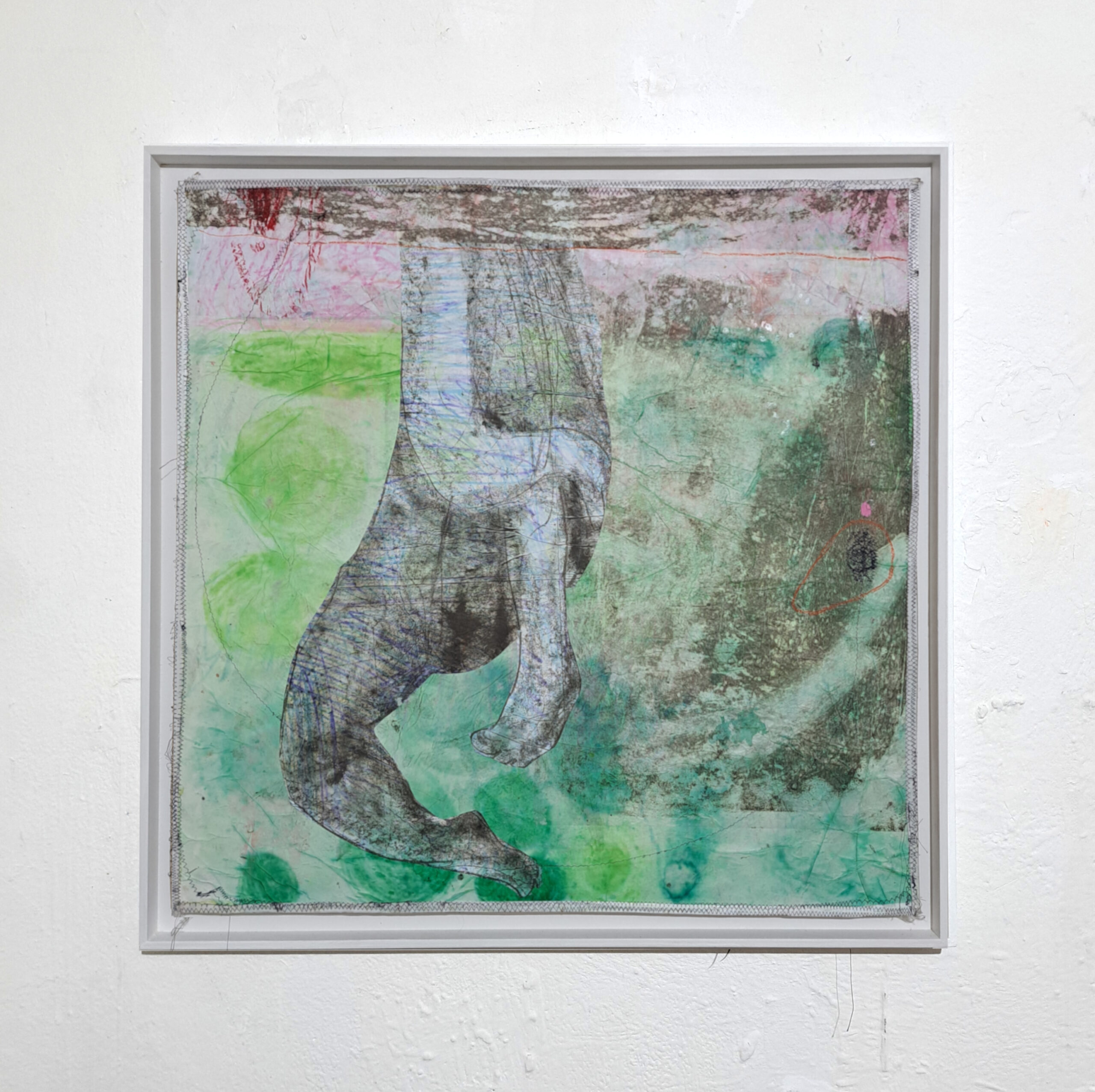
Marco Rossi, Senza Titolo III from the series THE SQUARE PROJECT
D.N.: In Italy, we can find several examples of display windows presenting art in different ways and for different purposes: in Rome, there is the well-known Una Vetrina on Via del Consolato 12; in Chieri, near Turin, there is ECCPROJECTS, which has a more commercial orientation; while in Lombardy, you started your project Tempo-rari Place, which has already presented several artists in a space accessible 24 hours a day.2 I understand that the space has changed over time: how has the idea evolved, and how do you imagine the project’s future?
M.R.: It’s a project I started a few years ago with the aim of connecting with artists whose work interests and intrigues me from every possible angle. After four intense years, I had to stop because the space where Tempo-rari was located was sold. I reorganized things in a small niche with a more “street” spirit. I’m also allowing more time between one artist and the next, because in the meantime my son was born and I’ve just moved house. I’ll be back soon, anyway!
English translation: Dobrosława Nowak
Bibliography:
1 Alex Urso, “Provincia Cosmica. Intervista all’artista che ha aperto una vetrina d’arte nella bergamasca,” Artribune, 3 gennaio 2026. https://www.artribune.com/arti-visive/2026/01/intervista-pittore-marco-rossi/
2 Exposed artists: Giovanni Gaggia, Elena and Alicya Ricciuto, Denis Riva, Angelo Bellobono, Adinda-Putri Palma, Ettore Pinelli